
TROUBLESHOOTING
Why Flowers Don’t Bloom — or Bloom Poorly
Troubleshoot weak or missing flowers in a logical order by checking maturity, season, sun, water, roots, fertility, spacing, weather, pests, disease, and harvest practices.
FlowersTroubleshootingBeginner → advanced
Published by Hollowstead Seed Co. · How this guide is prepared
Quick answer
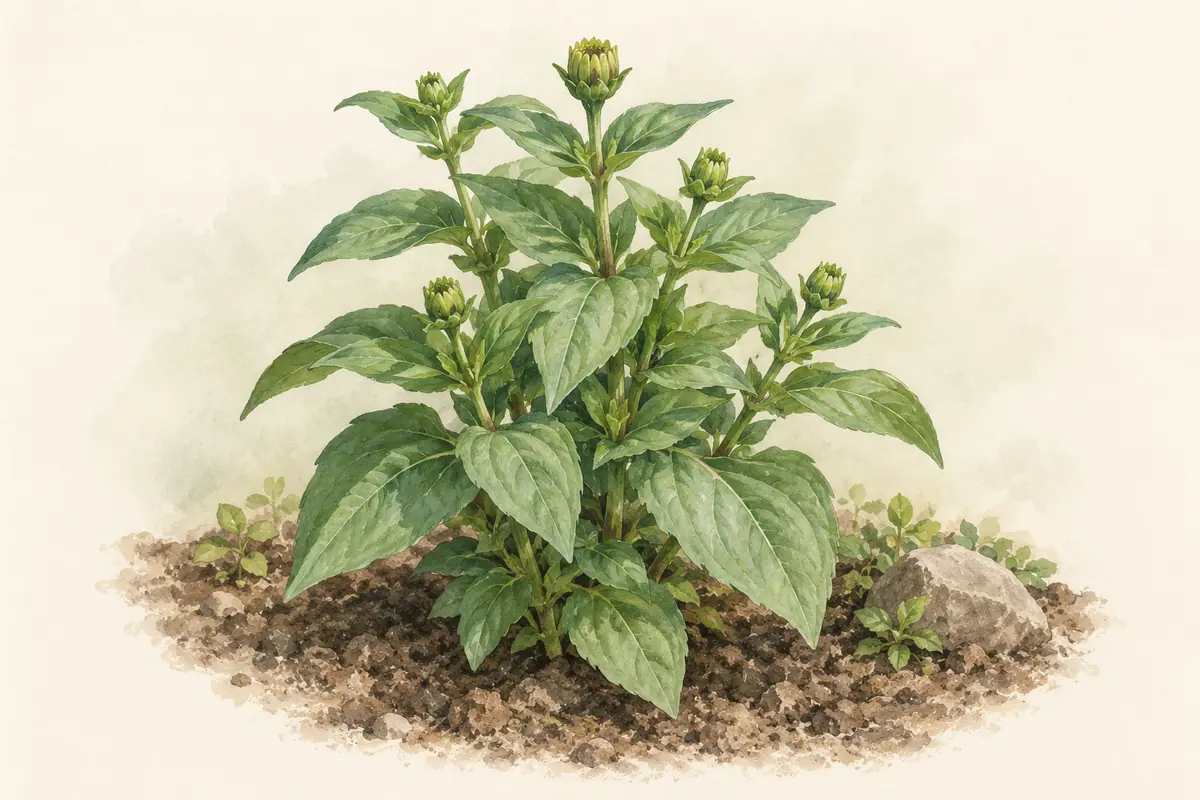
When an annual flower is not blooming, diagnose in order: is the plant old enough and in the right season, does it receive enough sun, are the roots functioning, is water reasonably steady, is fertility excessive or deficient, is the canopy crowded, and has weather or disease interrupted growth? Changing all of those at once makes the real cause harder to see.[1][2]
Healthy leaves are not proof that a plant should already be flowering. Some non-blooming plants are stressed; others are simply immature, overfed, too shaded, or waiting for weather that suits the species.
At a glance
| Pattern | Check first |
|---|---|
| Big green plant, few buds | Sun + nitrogen + maturity |
| Many buds, few open flowers | Weather + water + pest injury |
| Bloom stopped suddenly | Heat/cold + seed set + root stress |
| Weak plant and few flowers | Roots + water + soil + disease |
| Only shaded side lacks bloom | Light limitation |
| Old planting fading | Deadhead, cut back, or succession sow |
Use a poor-bloom diagnostic order
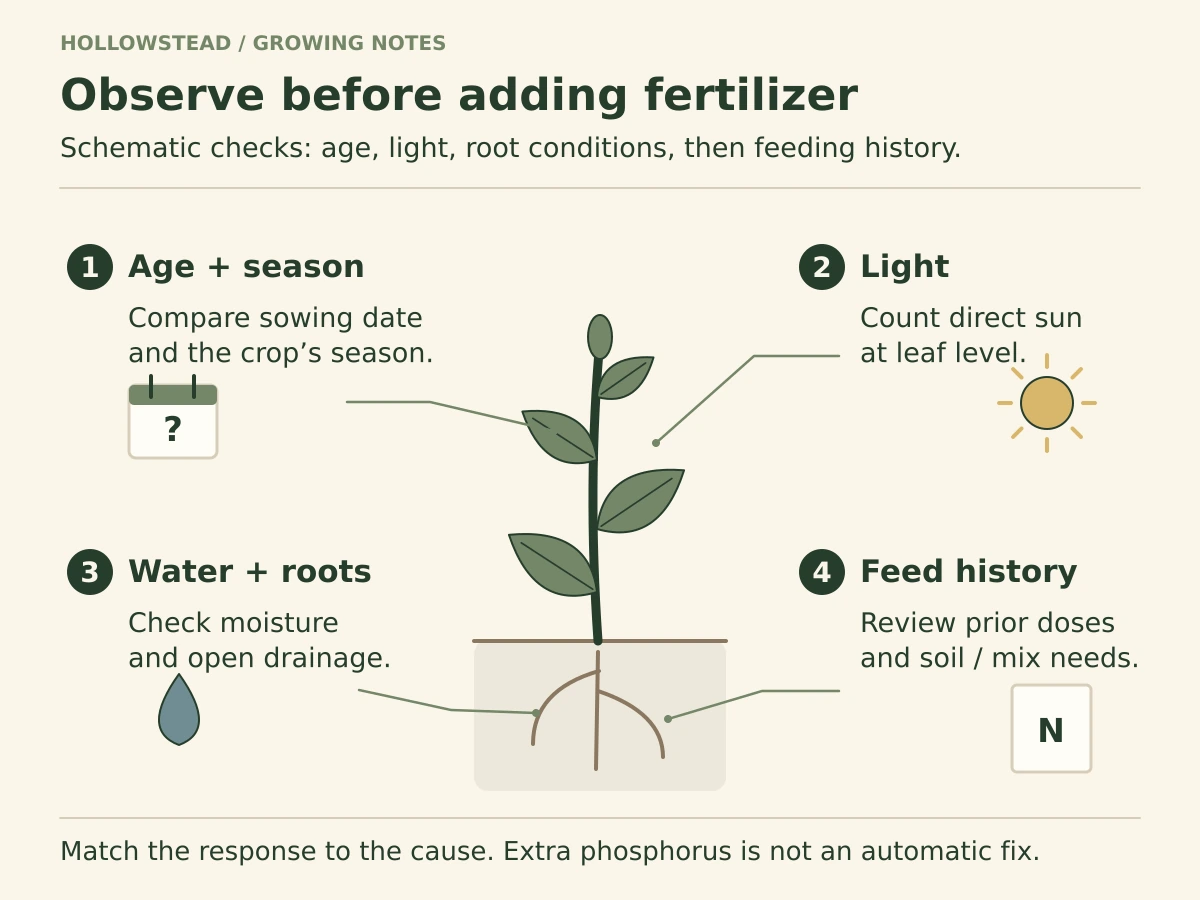
Ask which crop you have before feeding: a healthy calendula may pause in summer heat; leafy cosmos may be getting too much fertility; a sunflower may still be immature; and a zinnia full of aging seed heads needs cutting or deadheading. Verify light, season, and root moisture before changing fertilizer.
Start with things you can observe without buying anything. Is the plant still juvenile? Was it recently transplanted? Is the crop in its preferred season? How many hours of direct sun actually reach the leaves? Does the soil stay saturated or repeatedly dry hard? What fertilizer has already been applied? Has the plant been forming seed for weeks?
Diagnose before feeding
- Check age and season, direct sun, root drainage and moisture before nutrients.
- A lush plant with few flowers may already have excess nitrogen. Cosmos often needs no routine garden feeding.
- Use a soil test or the container-mix instructions to establish need; higher phosphorus is not an automatic fix.
Maturity, season, and light come before fertilizer
A newly established flower plant may be doing exactly what it should: making roots and leaves. Days-to-bloom ranges are estimates, not appointments. Cold spring weather can delay warm-season zinnias and sunflowers; extreme heat can slow cool-preferring calendula.[3]
Then measure light honestly. “Sunny yard” and “six hours of direct sun on this plant” are not the same statement. Missouri Extension notes that most annual flowers bloom best in full sun, although shade-tolerant species exist.[4] Hollowstead’s sunflower, zinnia, cosmos, and calendula are all best treated as sun-loving crops.
Root-zone stress can look like a flower problem
Maryland Extension recommends watering the full root zone but not leaving flower beds soggy, and favors drip or soaker irrigation where possible.[1] A plant that cycles from waterlogged to wilted is spending resources surviving root stress. Container plants can experience the same cycle in a single hot day if the pot is too small.
Crowding compounds the issue by increasing competition and keeping foliage wet longer. Thin direct-sown plants, maintain access for airflow, and avoid planting a tall crop so tightly that the lower canopy never dries.
When fertilizer is not the answer
Illinois Extension advises fertilizing annuals based on need rather than assuming every plant requires constant feeding, and Missouri Extension warns that excess nitrogen can create lush vegetative growth with poor or delayed flowering.[2][4] That pattern is especially relevant to cosmos, which Utah State says can become weak-stemmed and sparsely flowering in rich soil.[5]
Do not diagnose “no flowers” as “needs bloom booster.” Phosphorus-heavy products cannot create sun, repair waterlogged roots, cool an overheated calendula, or mature a juvenile plant.
In ground, use a soil test if fertility is genuinely uncertain. In containers, follow the fertilizer program for the potting mix and crop because nutrients leach from a limited root volume. In either setting, change one variable at a time when possible.
Weather affects different flowers differently
Species matter. Calendula is comfortable in cooler weather and may stop blooming in extreme heat.[3] Zinnias and sunflowers are tender warm-season annuals that perform after frost and warm conditions arrive.[4] Cosmos can grow enormous in rich conditions and may bloom later than a gardener expects.[5]
This is why the same July weather can produce excellent zinnias and disappointing calendula. Diagnose the crop you actually have rather than applying a generic “flowering plant” rule.
Pests, disease, and canopy loss
If flower production drops along with spotted leaves, mildew, distorted new growth, chewing, or widespread yellowing, the bloom problem may be secondary. Identify the pest or disease before treatment. Repeated leaf loss reduces the photosynthetic canopy that supports new stems and buds.
Use preventive habits where they help: clean tools, well-drained soil, appropriate spacing, base watering, sanitation, and removal of diseased annual debris. Maryland cautions that wet foliage can favor disease, particularly when overhead irrigation keeps leaves wet.[1]
Match the response to the cause
- Restore suitable light and root conditions; remove exhausted blooms if seed is not wanted.
- Heat can pause calendula bloom; fertilizer does not remove that heat limitation.
- Feed only for an identified need, at the relevant soil-test or container-label rate.
Choose the least disruptive fix that matches the cause
If the plant lacks light, correct placement. If roots stay wet, fix drainage. If a container dries twice a day, increase soil volume or irrigation reliability. If fertilizer has been heavy, stop adding more. If the crop is healthy but old and full of seed heads, deadhead, cut back where appropriate, or start a succession.
The advanced gardener’s advantage is not a larger shelf of inputs. It is keeping enough notes to recognize whether poor bloom is tied to a date, weather pattern, location, cultivar, or management decision.
Record one change at a time
Write down sowing date, actual hours of direct sun, the last fertilizer application and whether the root zone is wet or dry below the surface. Correct the clearest limitation, then watch new growth. Add nutrients only for an identified need, using the soil-test recommendation or the potting-mix and fertilizer labels. A higher-phosphorus bloom product is not the default response to a healthy plant without flowers.
GROW BETTER BLOOMS
Turn diagnosis into a better flower patch.
The variety and care guides help translate a general diagnosis into crop-specific action for Hollowstead flowers.
HOLLOWSTEAD SEED
Lemon Queen Sunflower Seeds
$3.99
HOLLOWSTEAD SEED
Sensation Mixture Cosmos Seeds
$3.99
HOLLOWSTEAD SEED
California Giant Mix Zinnia Seeds
$3.99
HOLLOWSTEAD SEED
Zeolights Calendula Seeds
$3.99KEEP LEARNING
Related Hollowstead guides
SEED STARTING
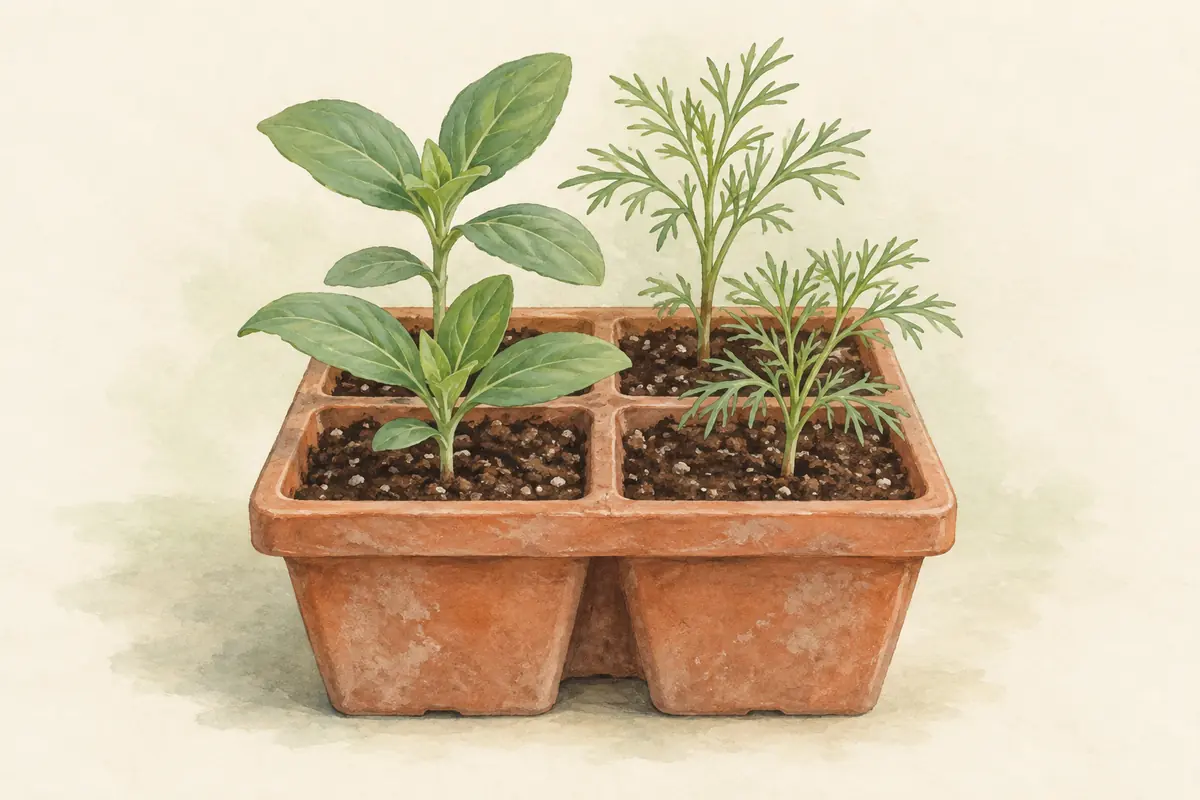
Growing Four Annual Flowers From Seed
Grow annual flowers from seed with a crop-by-crop plan for sowing, germination, thinning, transplanting, soil preparation, watering, pinching, bloom care, cutting, troubleshooting, and seed saving.
Read the guide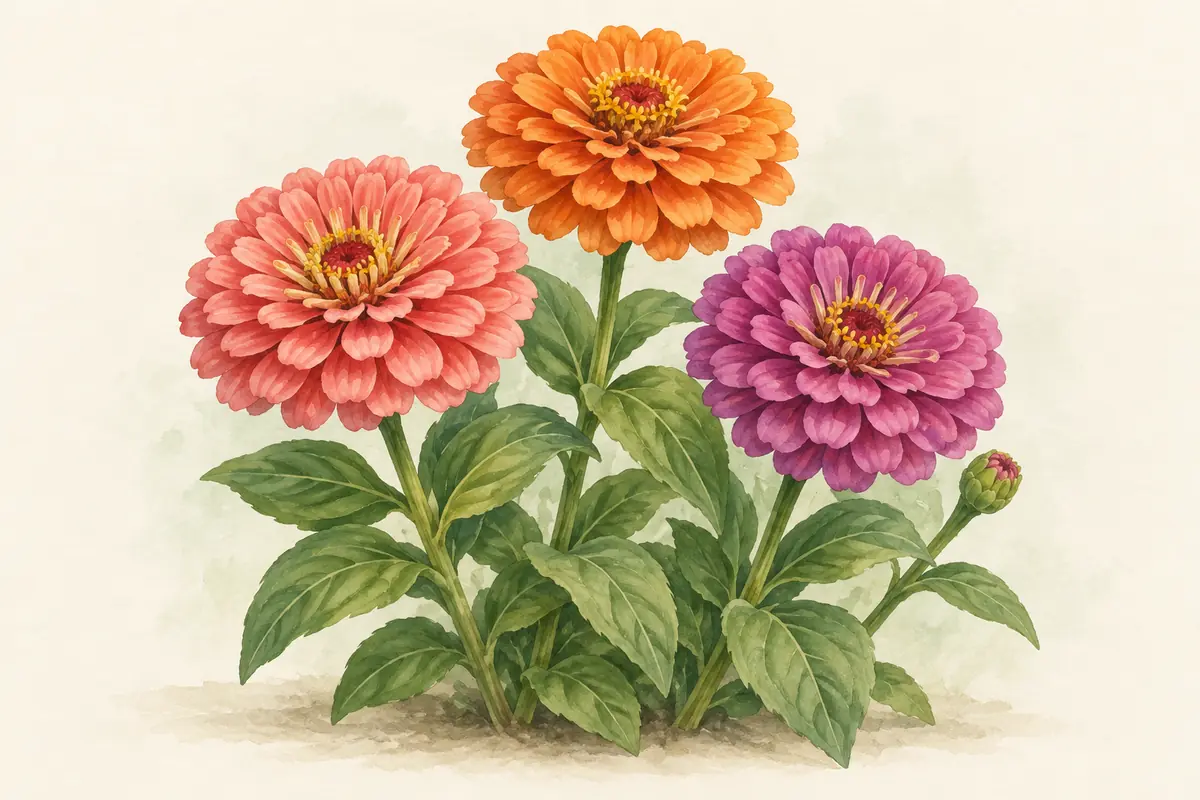
ZINNIA GUIDE
California Giant Mix Zinnia Growing Guide
Grow California Giant Mix zinnias for tall summer color and cutting stems with warm-soil sowing, spacing, pinching, support, base watering, disease prevention, harvesting, and seed saving.
Read the guide
FLOWER CARE
How to Deadhead Flowers for More Blooms
Deadhead annual flowers more precisely by learning where to cut, how each crop responds, how often to revisit plants, what diseased material to remove, and when to stop for seed saving.
Read the guideFrequently asked questions
Why is my flower plant huge and green but not blooming?
Check excess nitrogen, low light, immaturity, and species-specific timing before adding more fertilizer.
Can too much water reduce flowering?
Yes. Saturated roots lack oxygen and chronic overwatering can reduce plant vigor; some flowers such as cosmos also bloom poorly when overwatered.
Should I use a bloom-booster fertilizer?
Not automatically. First identify whether fertility is actually limiting growth. Light, roots, water, temperature, and maturity cannot be fixed with phosphorus.
Why did my calendula stop flowering in summer?
Calendula prefers cooler weather and can pause bloom during extreme heat.
When should I give up and replant?
If an annual is badly diseased, root-damaged, or simply exhausted late in its normal cycle, a healthy succession can outperform repeated rescue attempts.
Sources & further reading
- University of Maryland Extension Care of Annuals and Perennials https://extension.umd.edu/resource/care-annuals-and-perennials
- Illinois Extension Caring for Annuals https://extension.illinois.edu/flowers/caring-annuals
- Utah State University Extension How to Grow Calendula in Your Garden https://extension.usu.edu/yardandgarden/research/calendula-in-the-garden
- University of Missouri Extension Flowering Annuals: Characteristics and Culture https://extension.missouri.edu/publications/g6629
- Utah State University Extension Cosmos in the Garden https://extension.usu.edu/yardandgarden/research/cosmos-in-the-garden
Hollowstead Growing Notes
A little help for your next growing season
Practical sowing advice, help choosing seeds, and occasional Hollowstead shop news. Usually one or two emails a month, plus a short welcome note.
Choose your topics and frequency after you confirm. Our guides and planting calendar are always free.