
FLOWER CARE
How to Deadhead Flowers for More Blooms
Deadhead annual flowers more precisely by learning where to cut, how each crop responds, how often to revisit plants, what diseased material to remove, and when to stop for seed saving.
FlowersGrowing guideBeginner → advanced
Published by Hollowstead Seed Co. · How this guide is prepared
Quick answer
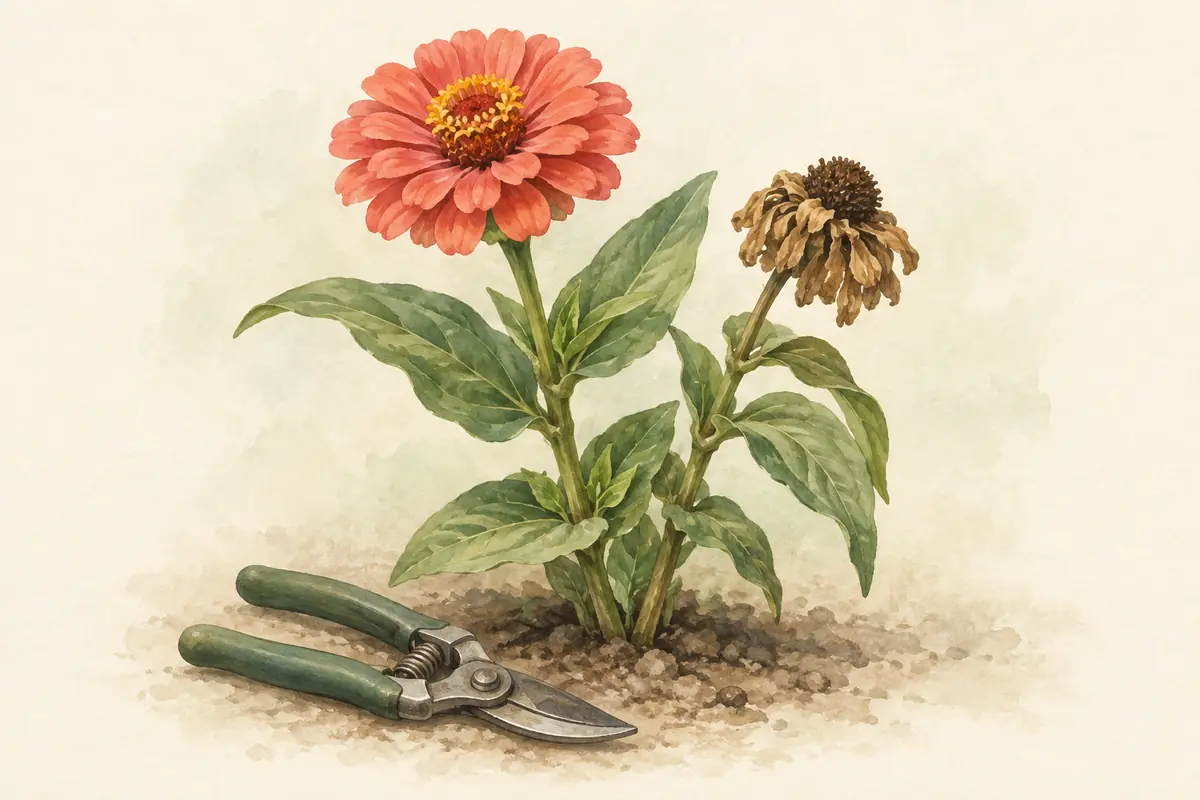
Deadheading means removing finished flowers before the plant commits fully to seed. Make the cut back to a healthy leaf pair, side shoot, or branching point instead of snapping off only the petals. Zinnias, cosmos, and calendula generally respond well; branching sunflowers can be cut selectively, while any flower you want for seed must eventually be left alone.[1][2]
Deadheading is selective harvest. You are deciding which stems keep growing, which flowers become seed, and which plant material should leave the garden.
At a glance
| Crop | Deadheading approach |
|---|---|
| Zinnia | Cut spent stems back to a healthy branch/node |
| Cosmos | Remove faded blooms or harvest stems regularly |
| Calendula | Frequent flower harvest works as deadheading |
| Branching sunflower | Remove finished side heads selectively |
| Seed-saving plants | Stop deadheading selected heads |
Deadheading interrupts seed production
Illinois Extension explains that after flowers fade, plants begin investing in seed; removing spent blooms often encourages additional flower production in responsive annuals.[1] The effect is strongest on plants genetically capable of continued branching and flowering. Deadheading does not reset a dying plant to spring or force a cool-season annual through hostile summer heat.
Cutting flowers for bouquets often accomplishes the same thing because the flower and developing seed structure leave the plant before maturity. In a cutting garden, a separate “deadheading day” may mainly be cleanup for stems you did not harvest fresh.
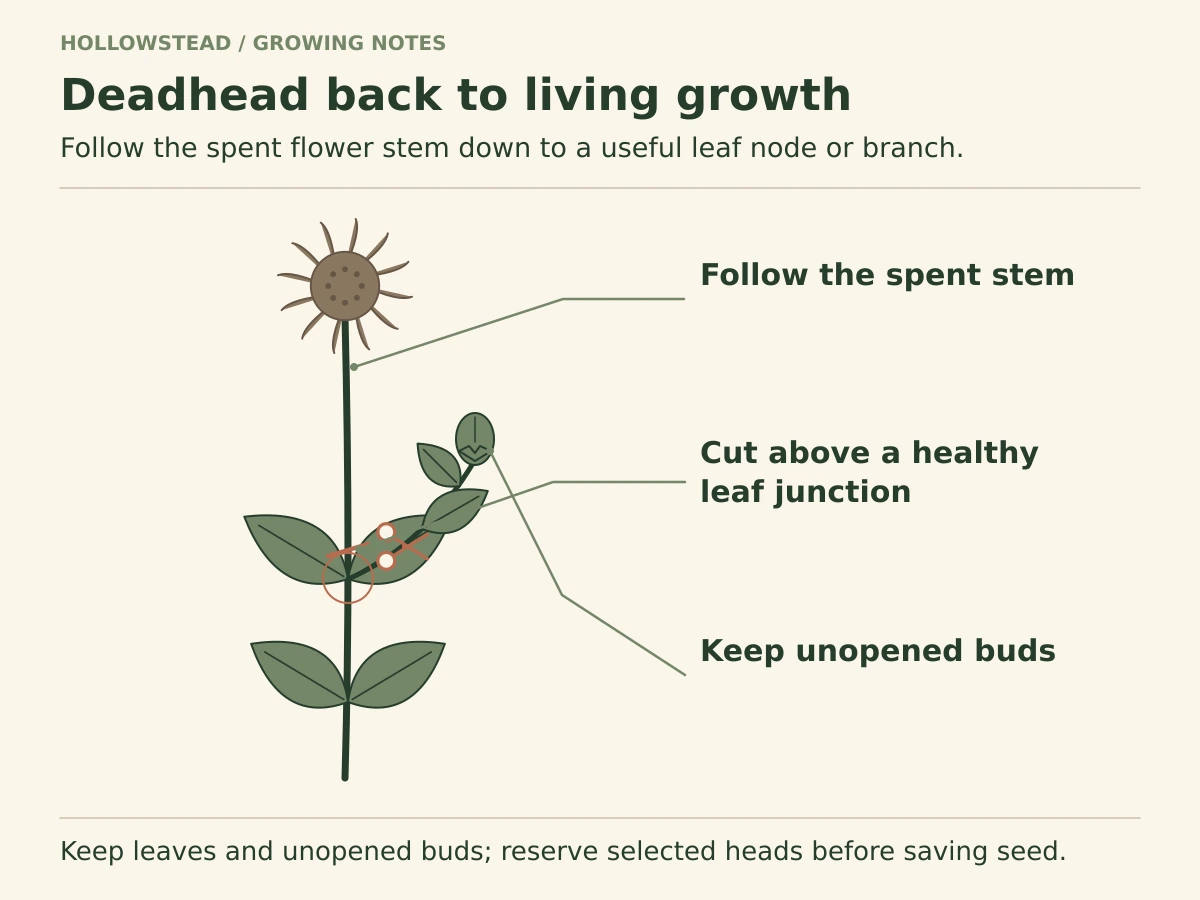 View full-size diagram
Where to make the cut
Trace the spent flower down the stem until you reach a healthy leaf pair, lateral bud, or side shoot that can continue growth. Illinois Extension recommends cutting back to healthy leaves, a lateral bud, or a side shoot rather than leaving a long bare stub.[1] Iowa State gives the same general principle for herbaceous ornamentals.[2]
On a branching annual, the position of that cut changes the next flush. A shallow cut preserves more stem but can leave weak, twiggy growth. A deeper cut to a strong junction produces fewer but often more useful replacement branches. For bouquet production, think about the next stem you want, not only the dead flower you are removing.
Do not deadhead by pulling petals. Petals can fall while the seed-forming center remains attached. Remove the reproductive structure and enough stem to make a clean, useful cut.
Zinnia, cosmos, calendula, and sunflower respond differently
For the crop’s cool-season rhythm and flower picking, see the Zeolights Calendula growing guide. Deadheading helps manage spent flowers; it does not remove the plant’s response to summer heat.
Deadhead or save seed?
You cannot maximize continuous bloom and mature every seed head on the same stem. Decide which plants are production plants and which are seed parents. Seed Savers recommends selecting healthy, vigorous flowers to leave for full seed maturity rather than saving whatever happens to remain at season’s end.[3]
For varietal seed, also consider pollination. Sunflowers, cosmos, calendula, and zinnias can cross with compatible varieties, so a mature seed head is not automatically true-to-type seed.[3] If purity matters, plan isolation or controlled pollination before flowering.
Keep the stage that serves your goal
- Open flowers offer pollen or nectar; mature sunflower seed feeds seed-eating birds and other wildlife.
- For sunflower seed: faded petals → browning head back → firm filled seed.
- Mark healthy heads for seed and keep them out of the deadheading routine.
Sanitation: some spent flowers belong in the trash
Clean, sharp pruners make easier cuts and reduce crushed tissue. When plants show suspicious leaf spots, stem lesions, or mildew, avoid moving from diseased tissue to healthy plants without cleaning tools. Illinois Extension advises discarding diseased deadheaded material rather than treating it like ordinary clean garden waste.[1]
Whether diseased plant matter belongs in a hot compost system depends on the disease and your composting process. For a home gardener who cannot confirm adequate compost temperatures, removing heavily diseased annual debris is the conservative choice.
A practical deadheading routine
A node is where a leaf or branch meets the stem. For a clean cut, trace the spent flower stem down to a healthy branching point, then leave enough foliage for the plant to recover. Save identified seed parents before routine deadheading.
Walk the flower patch every few days with clean pruners and a bucket. First harvest any bouquet-quality stems. Second, remove spent flowers from plants you want to keep producing. Third, leave marked seed heads alone. Fourth, pull or flag diseased plants for separate handling.
This routine prevents the common mistake of deadheading the exact flower you meant to save for seed. A clothespin, twist tie, or small label on selected seed stems is enough to make the decision visible.
Flowers now, wildlife seed later
Open flowers provide pollen or nectar to visiting insects. Mature sunflower seeds principally feed seed-eating birds and other wildlife. Keep some heads flowering before reserving selected heads for seed; a dry seed head does not provide the same resource as an open bloom. For a sunflower seed sequence, watch petals fade, then the back of the head brown as filled seeds firm up. Mark heads to keep so they do not disappear during routine deadheading.
KEEP THEM BLOOMING
Put deadheading to work.
Use the variety guides to combine deadheading with the right harvest stage, support, and seed-saving plan for each Hollowstead flower.
HOLLOWSTEAD SEED
Lemon Queen Sunflower Seeds
$3.99
HOLLOWSTEAD SEED
Sensation Mixture Cosmos Seeds
$3.99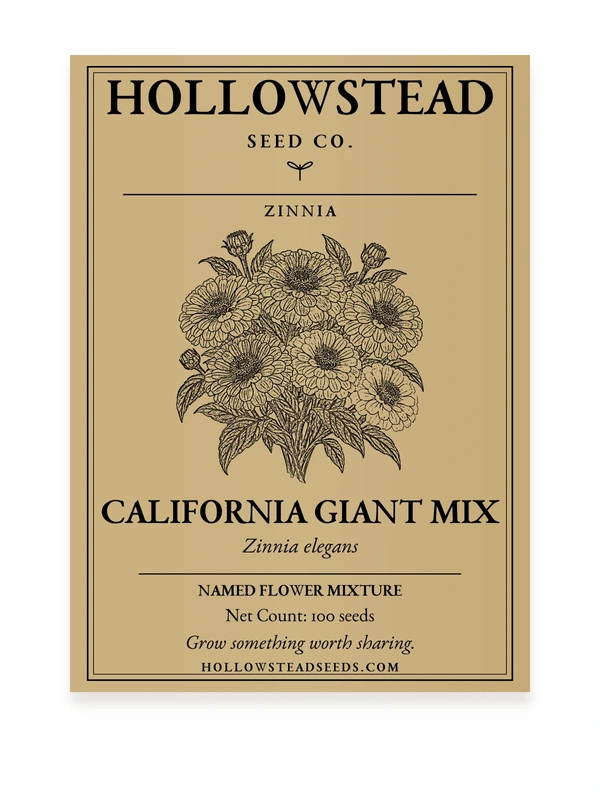
HOLLOWSTEAD SEED
California Giant Mix Zinnia Seeds
$3.99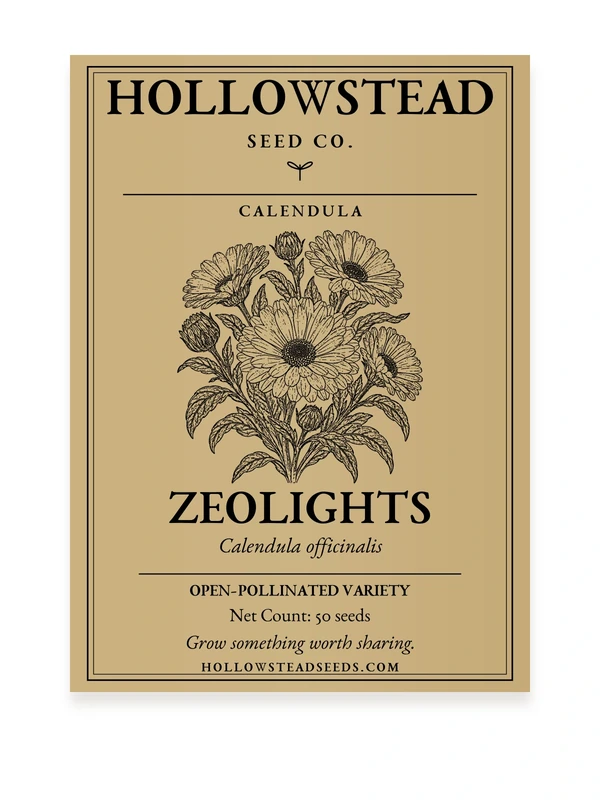
HOLLOWSTEAD SEED
Zeolights Calendula Seeds
$3.99KEEP LEARNING
Related Hollowstead guides
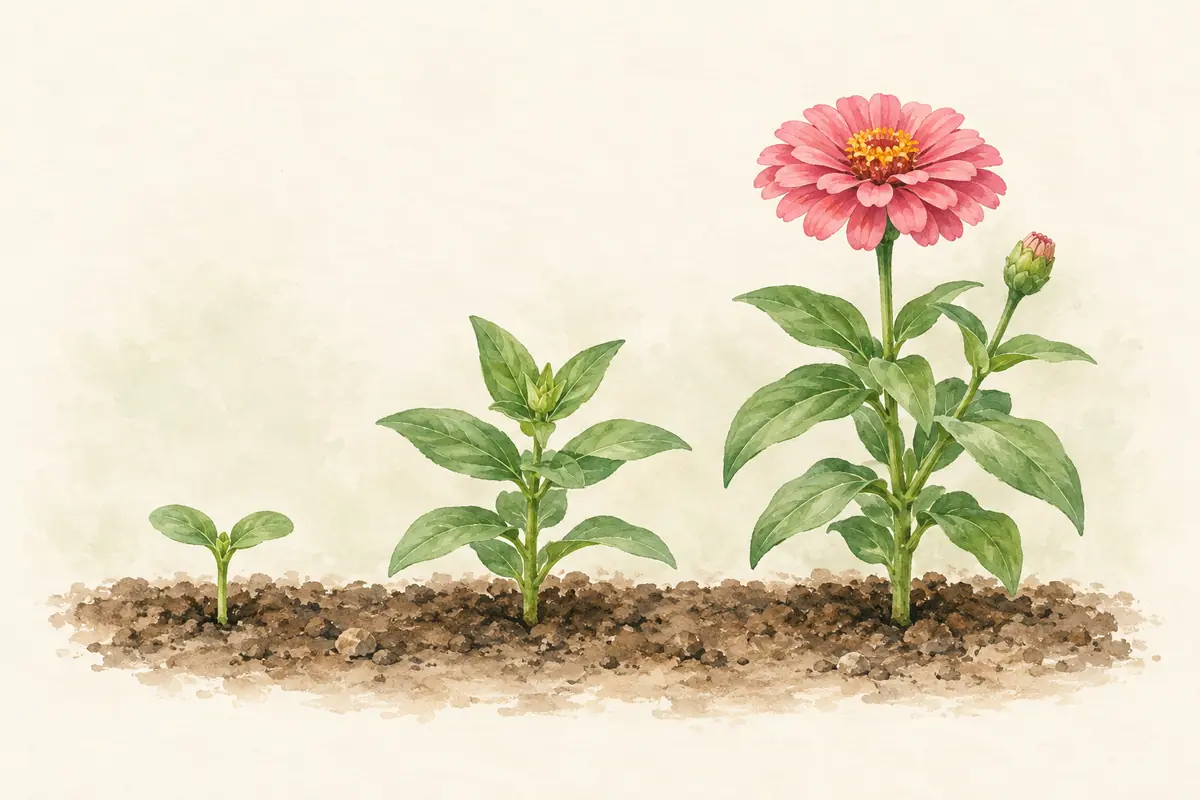
GARDEN PLANNING
Succession Planting Flowers for Continuous Blooms
Build continuous flower harvests with repeat sowings, overlapping generations, crop-specific intervals, frost-date planning, bed resets, and records for sunflowers, zinnias, cosmos, and calendula.
Read the guide
HARVEST GUIDE
When and How to Cut Flowers for Bouquets
Harvest better homegrown bouquets by cutting at the right flower stage, using clean tools and buckets, conditioning stems quickly, protecting foliage from vase water, and managing vase conditions.
Read the guide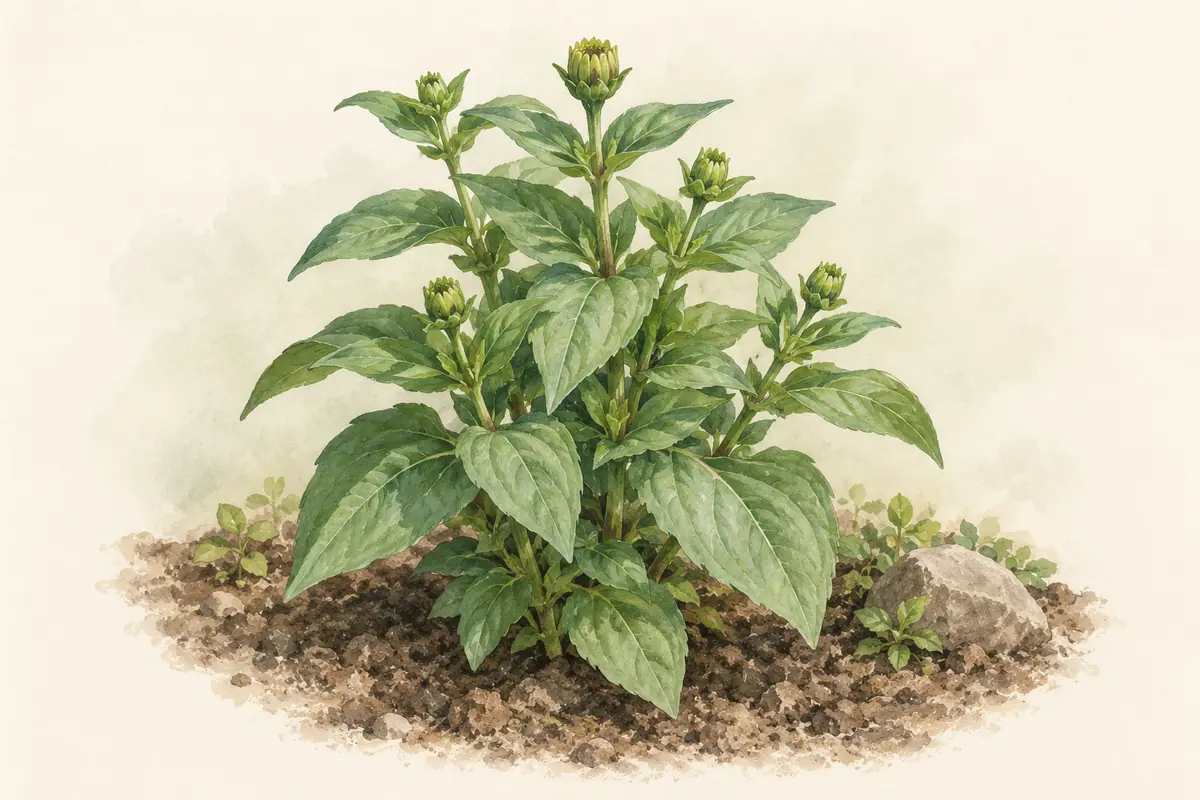
TROUBLESHOOTING
Why Flowers Don’t Bloom — or Bloom Poorly
Troubleshoot weak or missing flowers in a logical order by checking maturity, season, sun, water, roots, fertility, spacing, weather, pests, disease, and harvest practices.
Read the guideFrequently asked questions
How far down should I cut a dead flower?
Trace the stem to a healthy leaf pair, lateral bud, or branch that can support the next growth.
How often should I deadhead?
Check productive annuals every few days to weekly during peak bloom. The useful interval depends on how fast the crop flowers and sets seed.
Does deadheading always make more flowers?
No. It often helps responsive annuals, but it cannot overcome plant age, severe heat/cold, disease, poor light, or dead roots.
Should I deadhead sunflowers?
On a branching sunflower, you can remove finished side heads while leaving other buds. Leave selected heads if you want mature seed or wildlife value.
How do I save seed if I am deadheading regularly?
Mark several healthy seed-parent stems and stop cutting those flowers so the heads can mature fully.
Sources & further reading
- Illinois Extension Deadheading for More Blooms https://extension.illinois.edu/blogs/good-growing/2026-07-17-deadheading-more-blooms
- Iowa State University Extension and Outreach Deadheading Herbaceous Ornamentals and Roses https://yardandgarden.extension.iastate.edu/how-to/deadheading-herbaceous-ornamentals-and-roses
- Seed Savers Exchange Flower Seed Saving Profiles https://seedsavers.org/flower-seed-saving-profiles/
- University of Minnesota Extension Zinnia https://extension.umn.edu/garden-and-home/yard-and-garden/gardening-in-minnesota/zinnia
Hollowstead Growing Notes
A little help for your next growing season
Practical sowing advice, help choosing seeds, and occasional Hollowstead shop news. Usually one or two emails a month, plus a short welcome note.
Choose your topics and frequency after you confirm. Our guides and planting calendar are always free.