
TRELLISING
How to Trellis Cucumbers
Train cucumber vines vertically with a row trellis, teepee, panel, or fence. Learn support height, anchoring, planting layout, vine training, and harvest access.
CucumbersSupport guideBeginner → advanced
Published by Hollowstead Seed Co. · How this guide is prepared
Quick answer
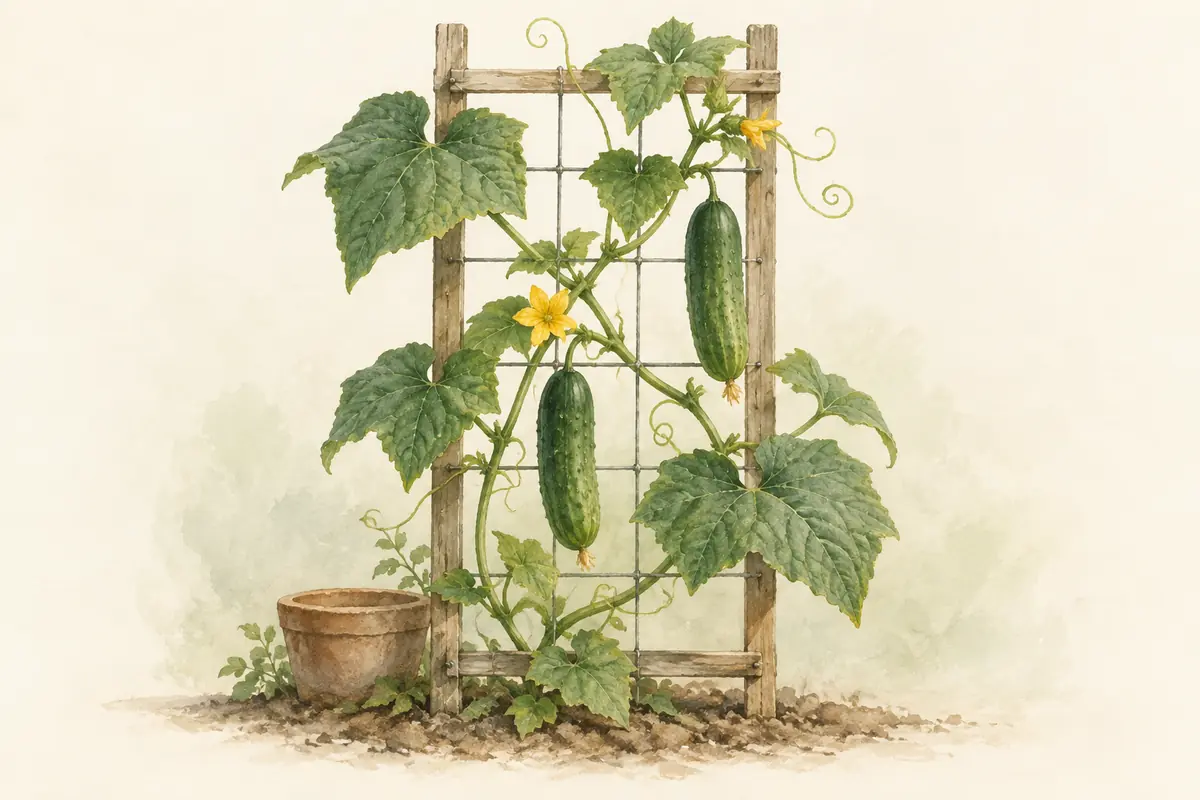
Install cucumber support before vines begin running. A sturdy row trellis, fence, panel, arch, or teepee all work as long as tendrils can grab the structure and the support will not collapse under mature vines.[1][2]
Trellising is not mandatory, but it saves ground space, improves access, lifts fruit away from soil, and can help long fruit develop straighter.[1] Train young vines gently and avoid tight ties that can cut into expanding stems.
The short version: build the support first, plant at the base, give tendrils something easy to grab, and guide—not force—the vine upward.
Trellis choices at a glance
| Question | Useful starting point |
|---|---|
| Row trellis | Best for long beds and easy harvest access |
| Teepee | Compact footprint for a small bed |
| Fence/panel | Fast, strong, and easy for tendrils to grab |
| Height | 3–4 feet works; taller supports give vigorous vines more room |
| Install | Before vines tangle |
| Ties | Loose only; tendrils usually do most of the work |
| Harvest access | Leave room to reach both sides when possible |
A worked trellis for three Lemon Cucumber plants
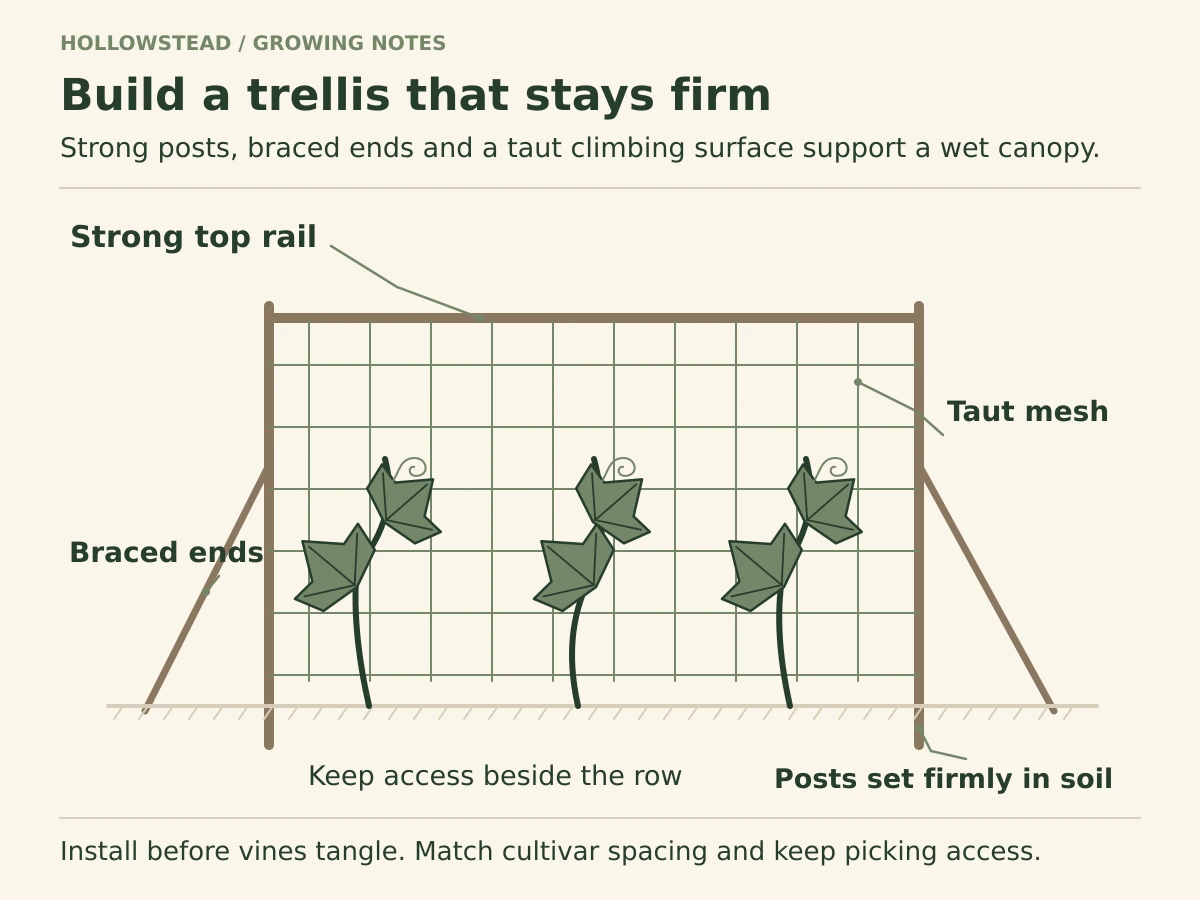
Use a 6-foot-long × 2-foot-wide bed strip, with a 3-foot access lane on the picking side. Install three sound posts—one at each end and one at the center—with 5–6 feet above ground. Attach climbing mesh with approximately 6-inch openings to a firm top rail and the posts. Use exterior hardware suited to the materials, cap sharp ends, and brace the end posts; set the buried depth and anchors to the support maker’s recommendations for your soil and exposure. A wobbling post is not ready to carry a wet vine.
Place three final Lemon plants at 24-inch centers, 12 inches inside each end. Sow about 1 inch deep; if sowing two seeds at each station, thin to one by clipping the extra. Guide young tips to the mesh, use loose soft ties only as needed, and retain access behind the canopy so fruit does not disappear against a fence.
For a teepee alternative, use four poles around a 4-foot-diameter circle, joined firmly at a reachable 5–6-foot height and securely anchored. Keep one final Lemon plant per pole, four plants total; do not leave every seedling from a multiple-seed sowing. Allow a 3-foot path around it. These are example layouts, not wind-load guarantees; assess supports after storms.
Choose a cucumber trellis by the job it has to do
- Height
- 3–4 feet works; vigorous vines can use more
- Grip
- Mesh, wire, string, or small-diameter slats tendrils can catch
- Anchor
- Strong enough for wet foliage, fruit, and wind
- Access
- Reach both sides or leave a harvest lane
- Timing
- Install before vines sprawl and root along the soil
Why trellis cucumbers?
Vertical training keeps sprawling vines from claiming the entire bed. University of Minnesota notes that cucumbers can be trained on a three- to four-foot trellis, allowing rows to be placed more closely while fruit hangs more freely.[1] Trellising also makes flowers and developing fruit easier to inspect.
A trellis does not make the plant drought-proof or disease-proof. It simply organizes growth and improves access.
Choose materials that match the season length
For a one-season support, biodegradable twine or inexpensive netting may be adequate if it can carry a wet mature canopy. For a permanent structure, welded wire, cattle panel, or durable mesh is easier to inspect and re-use. Very large openings can let fruit and hands pass through; very fine mesh can make old vines tedious to remove. The best material is not simply the strongest—it is the one you can train, harvest, and clean.
Avoid thin bare wire or narrow ties used as the only support for heavy stems. Tendrils can grip small surfaces, but the main vine should not be forced against a cutting edge as the plant sways.
Build a row trellis
For a straight bed, use strong end posts with a top support and netting, wire panel, or vertical strings between them. Brace the ends if the row is long. Cucumber foliage becomes surprisingly heavy after rain, so a trellis that feels barely adequate when empty may sag later.
 View full-size diagram
Use a teepee in compact beds
A teepee concentrates several climbing paths into a small footprint. Set sturdy poles in a circle, bind the tops securely, and plant around the base. Add horizontal twine if the poles are too smooth or widely spaced for young tendrils to bridge easily.
Example teepee for four Lemon Cucumber plants
- For the worked example, use four poles around a 4-foot-diameter circle, 5–6 feet above ground, and one final Lemon plant per pole. Thin extras and leave a 3-foot access path.
Train young vines gently
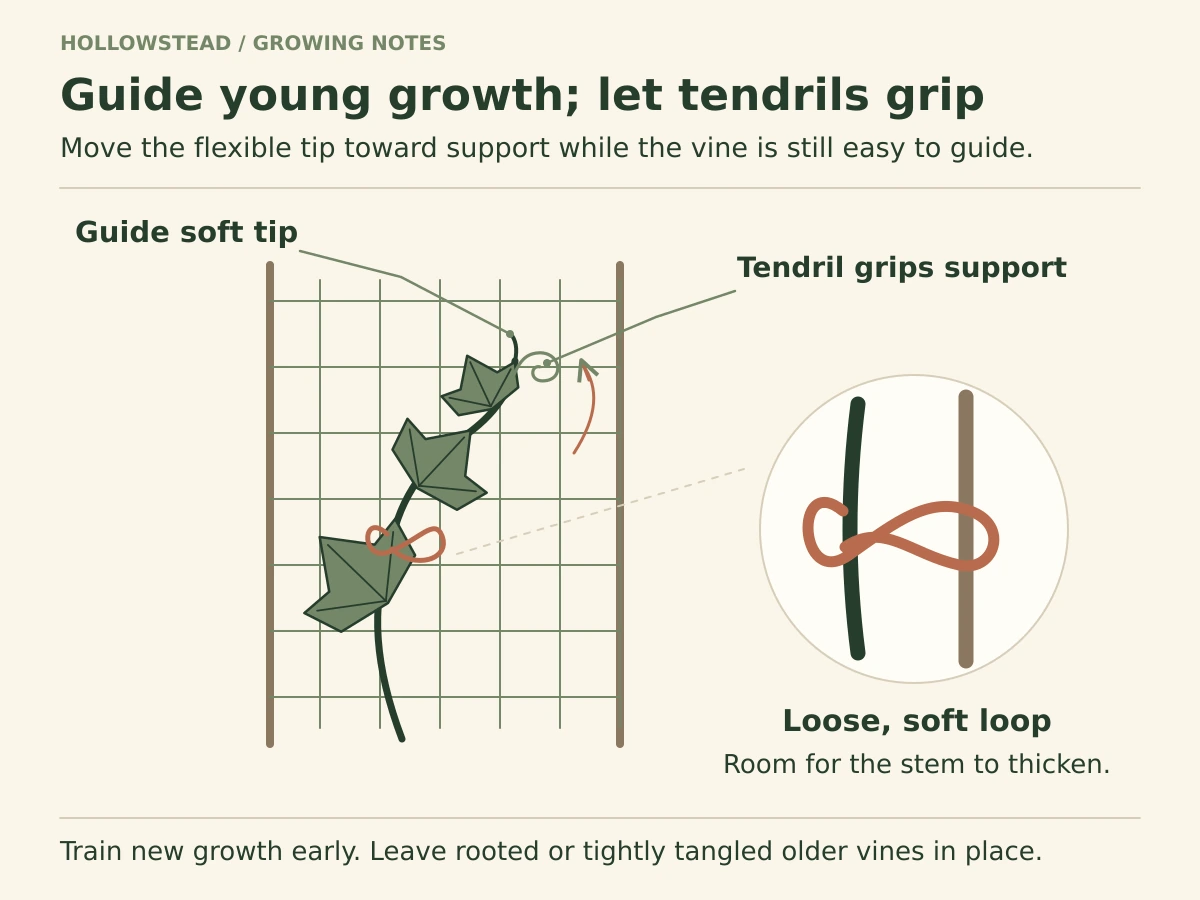
Young cucumber tendrils will usually attach on their own once they contact a suitable support. Redirect wandering shoots onto the structure by laying them against the mesh or loosely wrapping the vine around a broad support. If a tie is needed, leave room for the stem to thicken.
 View full-size diagram
Anchoring, training, and rooted vine nodes
A cucumber trellis is light when you install it and much heavier after several feet of vine, wet leaves, and fruit cover it. Set posts deeply enough for your soil and brace freestanding structures before the crop reaches full size. Wind loads act on the leaf canopy like a sail; the weak point is often the post-to-soil connection rather than the mesh.
Train only the young, flexible portion of a vine. Guide the growing tip toward the support and let tendrils do most of the holding. If a temporary tie is necessary, use a loose soft loop rather than cinching the stem.
Minnesota Extension notes that cucumber vines can produce additional roots where nodes contact soil. Once a sprawling vine has rooted along the ground, pulling the whole plant upright can break those roots and stress the plant.[1] That is another reason to install support at planting and train early instead of trying to “rescue” a mature tangle.
Do not untangle mature vines by force. Move the growing end you can see and reach; leave rooted or tightly interwoven older growth alone unless there is a compelling reason to disturb it.
Planting at the trellis
Use the spacing appropriate to your variety and structure. Illinois Extension uses about 12 inches between plants in standard rows, while Lemon Cucumber packets may recommend more room per plant.[2] The important idea is to avoid turning a trellis into a solid wall of overcrowded foliage.
Think about shade before you place a tall trellis
A cucumber wall can become dense by midsummer. In a mixed bed, consider where that shadow will fall rather than treating the trellis as a neutral structure. Tall supports are often easiest to manage along an edge or on the north side of shorter sun-loving crops, but buildings, slope, and your local sun path can change the best orientation.
Do not compensate for vertical growing by packing plants excessively close together. Trellising saves ground space because vines use height, not because leaves stop needing light and airflow. If pruning is not part of your management system, leave enough spacing for the natural canopy.
Design for harvest access
Leave a path or reach space beside the trellis. Cucumbers hide behind leaves, and frequent harvest is one of the best ways to keep fruit from becoming oversized. A beautiful trellis that cannot be reached from either side is harder to manage than a simpler structure with clear access.
Match access to the fruit you will pick. National Pickling needs frequent checks to catch small fruit, while Marketmore 76 needs space for long slicers to hang clear of the mesh. The cucumber comparison helps set the harvest goal before you build.
Airflow, harvest access, and end-of-season cleanup
Vertical growth is useful only if the trellis remains open enough to inspect flowers, fruit, pests, and leaves. Do not use closer spacing merely because the plants are vertical. Maryland Extension lists better airflow, cleaner fruit, easier picking, and longer harvest as advantages of trellising.[3]
At season’s end, strip diseased vines rather than weaving them deeper into permanent fencing. Clean reusable supports of plant debris, repair loose fasteners, and store removable netting dry. A trellis that is easy to clean is more useful over many seasons than one that looks elegant but traps a year’s worth of dead vines.
GROW THIS CUCUMBER
Put the guide to work.
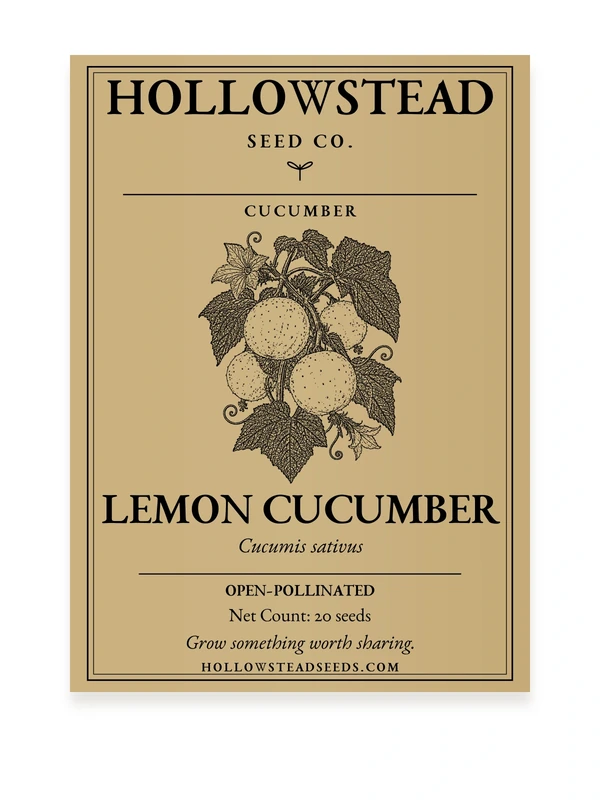
Choose Lemon for round salad fruit, Marketmore 76 for long green slices, or National Pickling for smaller pickling fruit; compare the three cucumber varieties to match your garden and harvest routine.

HOLLOWSTEAD SEED
Marketmore 76 Cucumber Seeds
$3.99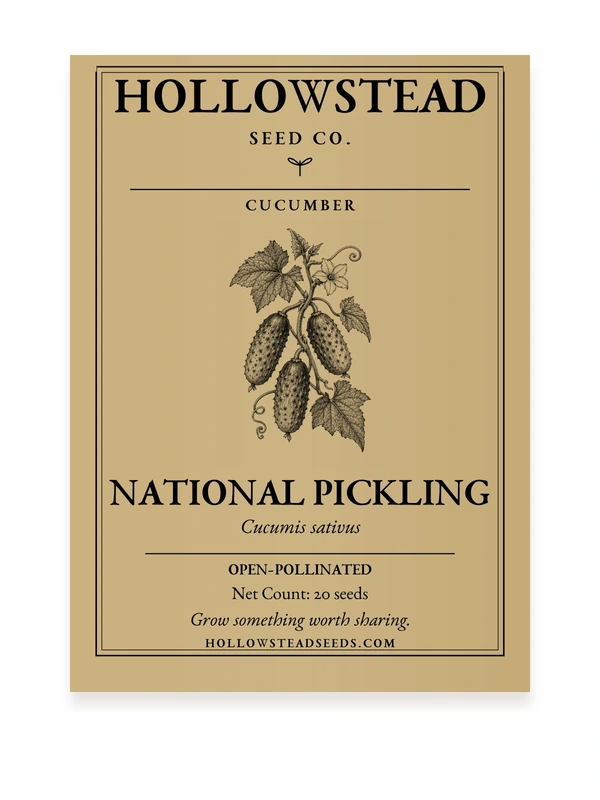
HOLLOWSTEAD SEED
National Pickling Cucumber Seeds
$3.99KEEP LEARNING
Related Hollowstead guides
CUCUMBER SEED STARTING
Growing Cucumbers From Seed: The Complete Guide
Grow cucumbers from seed with warm-soil timing, direct sowing or careful transplanting, steady moisture, trellising, pollination, and frequent harvest.
Read the guide
CUCUMBER VARIETY GUIDE
Lemon Cucumber Growing Guide
Lemon Cucumber produces round fruit that ripens from pale green toward lemon yellow. Learn sowing, spacing, vine support, pollination, watering, and the best harvest stage.
Read the guide
CONTAINER GUIDE
Growing Cucumbers in Containers
Grow cucumbers on a patio or small space with enough root volume, a draining potting mix, full sun, steady moisture, vertical support, and frequent harvest.
Read the guideFrequently asked questions
How tall should a cucumber trellis be?
Three to four feet is enough to train cucumbers vertically, but vigorous vines can use a taller structure. Build for stability first.
Will cucumbers climb by themselves?
Mostly. Tendrils attach readily to netting, wire, twine, and narrow supports. Young shoots may need occasional guidance.
Can I use cattle panel for cucumbers?
Yes. Rigid wire panels are strong, durable, and give tendrils many attachment points.
Do Lemon Cucumbers need a special trellis?
No. A normal sturdy cucumber trellis works. Their round fruit can hang from the vine just like other cucumbers.
Sources & further reading
- University of Minnesota Extension Growing cucumbers in home gardens https://extension.umn.edu/garden-and-home/yard-and-garden/gardening-in-minnesota/growing-cucumbers
- Illinois Extension Cucumber | Home Vegetable Gardening https://extension.illinois.edu/gardening/cucumber
- University of Maryland Extension Growing Cucumbers in a Home Garden https://extension.umd.edu/resource/growing-cucumbers-home-garden
Hollowstead Growing Notes
A little help for your next growing season
Practical sowing advice, help choosing seeds, and occasional Hollowstead shop news. Usually one or two emails a month, plus a short welcome note.
Choose your topics and frequency after you confirm. Our guides and planting calendar are always free.