
CUCUMBER GUIDE
Marketmore 76 Cucumber Growing Guide
Grow Marketmore 76 for dark-green slicing cucumbers. Learn warm-soil sowing, trellising, pollination, harvest size, watering, common problems, and saving seed.
CucumbersVariety guideBeginner → advanced
Published by Hollowstead Seed Co. · How this guide is prepared
Quick answer
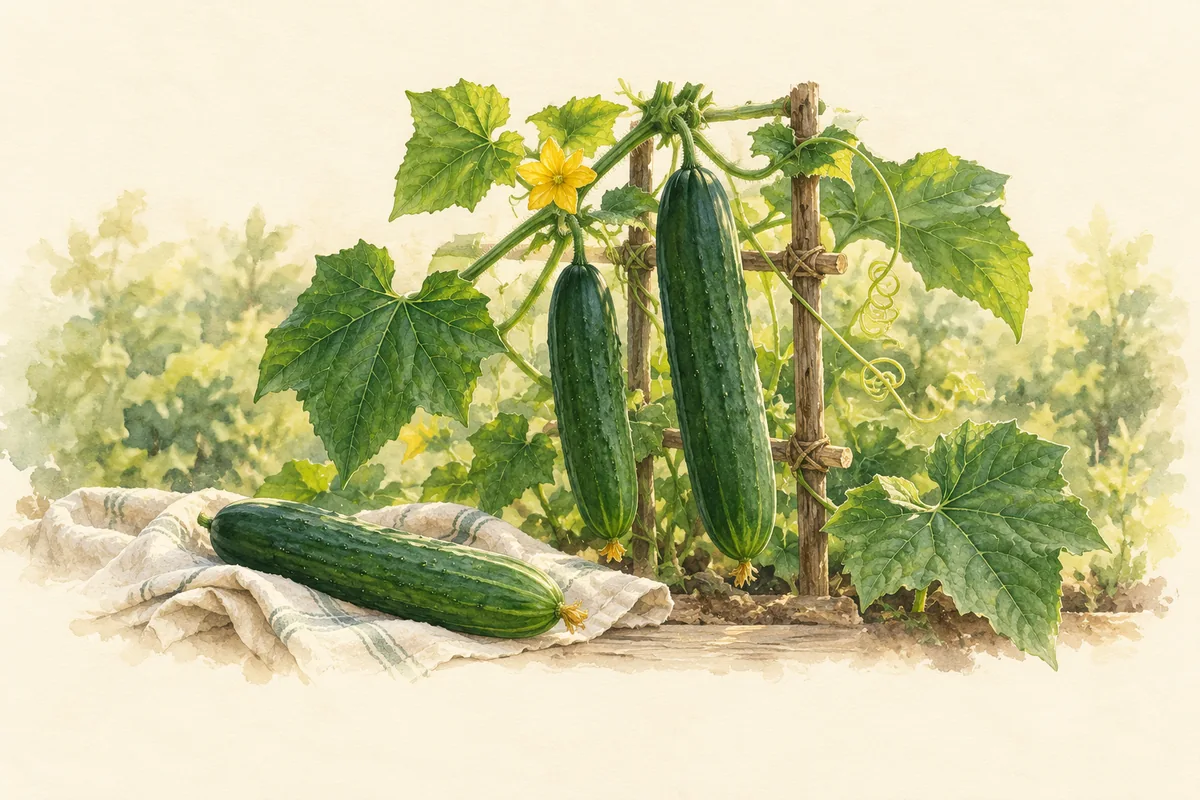
Marketmore 76 is an open-pollinated slicing cucumber for gardeners who want familiar long, dark-green fruit. Cornell’s cultivar record describes slender fruit around 8–9 inches long.[1] It grows on vigorous vines,[2] so give it a defined bed edge or a trellis and a route from which to pick. Hollowstead uses an 8–9-inch harvest target and about 67 days from sowing as practical starting points.
Sow after frost in warm soil, keep moisture steady, allow pollinators access to flowers, and harvest before the fruit becomes swollen or yellow. A larger cucumber is not necessarily a better slicer.
At a glance
| Planning point | Useful starting point |
|---|---|
| Botanical name | Cucumis sativus |
| Type | Open-pollinated, vining slicer |
| Packet | 20 seeds |
| Sow / germination | 1 inch deep; usually 4–10 days in warm conditions |
| Final spacing | 18–24 inches with a managed vine area or trellis |
| Light | Full sun |
| First harvest estimate | About 67 days from sowing |
| Harvest cue | Firm, dark-green fruit around 8–9 inches |
SAVE FOR SOWING DAY
Five-step crop plan for Marketmore 76
Open the sow-to-harvest plan
- StartDirect sow 1 inch deep after frost when soil at seed depth is about 70°F; keep the seed zone evenly moist. Guide details
- PlantThin to 18–24 inches along an anchored trellis or managed vine area; handle any young transplants with intact root balls. Guide details
- MaintainGuide the vines, maintain steady root-zone moisture, and remove insect-excluding covers when flowers need pollinator access. Guide details
- HarvestPick firm dark-green slicing cucumbers around 8–9 inches before yellowing or prominent seeds; clip stems and check vines often. Guide details
- Next sowing or seedReserve separately marked fruit for seed; isolate or protect hand-pollinated flowers, allow fruit beyond eating maturity, then clean, dry and label seed. Guide details
- Space
- Allow 18–24 inches between plants with a trellis or managed vine area, plus space for paths; ground-grown vines need a wider dedicated patch.
- Timing
- Hollowstead lists about 67 days from sowing to first harvest. A short indoor start is included in that sowing-based count; transplanting does not restart it.
Full growing guidehttps://hollowsteadseeds.com/marketmore-76-cucumber-growing-guide/Seed packethttps://hollowsteadseeds.com/product/marketmore-76-cucumber-seeds/Find planting dates by ZIP code
What to expect from Marketmore 76
Marketmore 76 is a straightforward choice for cucumber slices, salads and sandwiches. Its recognizable shape makes harvest checks easy: look for a fruit approaching useful length while it remains firm and relatively slender. Pick a sample, slice it crosswise, and examine the seed cavity. That first harvest gives you a better local reference than measuring every later fruit to an exact fraction of an inch.
The cultivar registry published by the Cucurbit Genetics Cooperative lists Marketmore 76 at 67–70 days to maturity.[2] Hollowstead’s estimate of about 67 days from sowing is a planning guide; judge the developing fruit rather than treating it as a guaranteed harvest date. Cool soil, delayed planting and a slow start after transplanting can move the real date. Fruit load and picking frequency then affect what arrives in the kitchen.
Plan for ongoing access. A vine crossing a path becomes hard to avoid, and a vine hidden behind taller plants becomes hard to inspect. Place Marketmore where you can see its lower canopy as well as the sunny front of the support. For a side-by-side choice, see Lemon, Marketmore 76 and National Pickling compared.
Sowing and transplanting
Use warm soil as the planting signal. Minnesota Extension recommends waiting until after frost and until the soil is at least about 70°F at seed depth.[3] A sunny afternoon does not prove that the seedbed has warmed; check in the morning as well, especially in a raised bed that cools overnight.
Sow 1 inch deep and keep the seed zone moist until emergence. Hollowstead’s 4–10-day germination range follows Seed Savers Exchange’s general cucumber guidance.[4] If you sow extra seeds at each station, thin by snipping surplus seedlings so that you do not pull against the roots of the keeper.
For a short indoor start, aim for young plants rather than large vines. Move them outside with an intact root ball after gradual acclimation. Iowa State recommends starting cucumbers about three to four weeks before outdoor planting and avoiding damage to their roots.[5] A crowded seedling with long tendrils may be harder to establish than a smaller plant started later.
Write both the sowing and transplanting dates on your garden record. If you started in a pot, the packet’s sowing-based estimate still begins with sowing; it is not an additional 67 days after the plant moves outdoors.
Spacing and trellising
 View full-size diagram
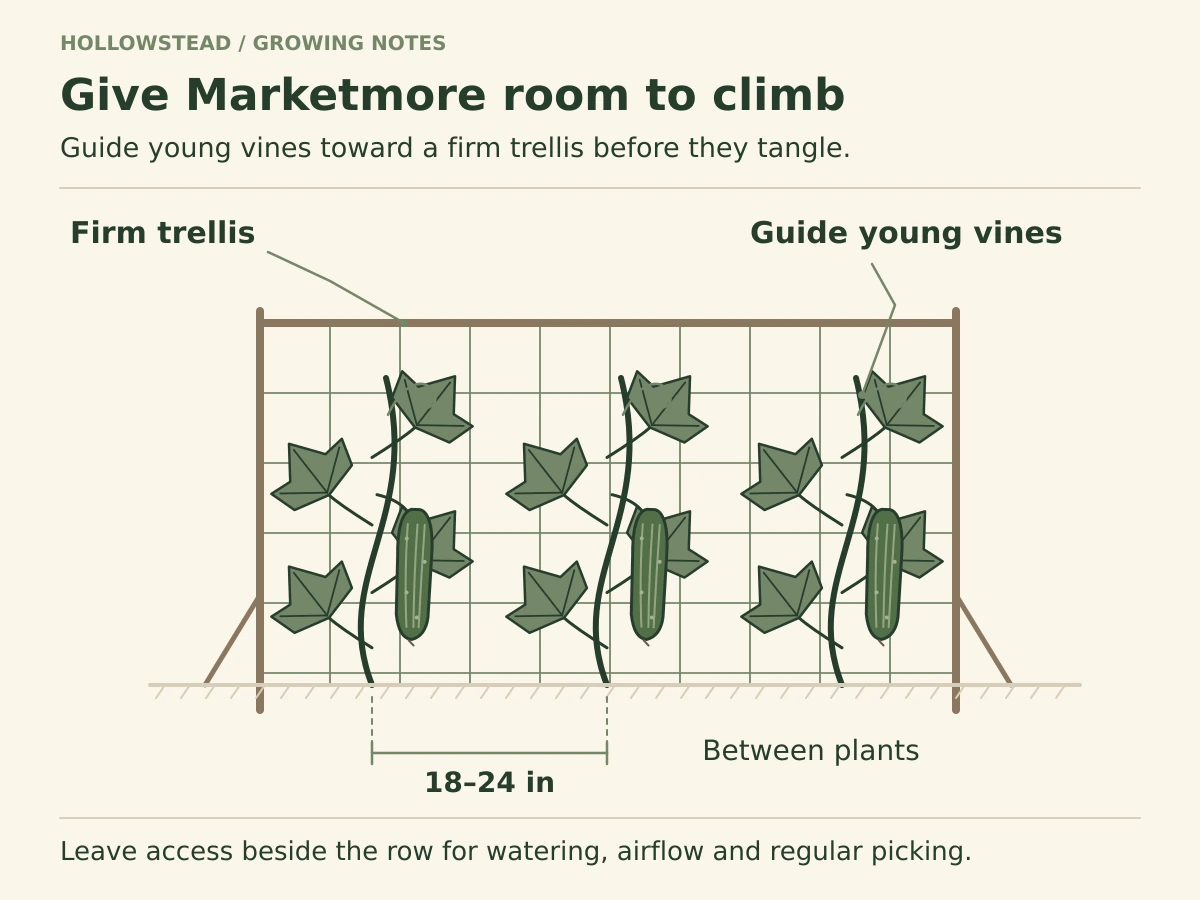
Set the trellis where it can remain for the season and anchor both ends. The frame has to hold wet foliage as well as fruit, and broad leaves catch wind. Mesh openings should let you reach through comfortably without forcing fruit through a narrow gap.
Give plants 18–24 inches along the support as the packet starting point. That does not mean neighboring rows or unrelated plants should occupy the next 18 inches on every side. Reserve a working aisle. If you let vines run on the ground, dedicate a wider patch and keep feet and tools away from the stems.
Guide young tendrils toward the mesh; avoid trying to untangle an established vine all at once. Check where developing cucumbers touch wires or adjoining stems. Straightening or freeing them early is easier than moving a large fruit later. See how to trellis cucumbers for structure choices.
Flowers and pollination
These are garden cucumbers that need pollination. A female flower has a tiny cucumber-shaped ovary immediately behind the petals; a male flower has a thin stalk. Male flowers often appear before female flowers, so the first blossoms may not signal an immediate harvest.[6]
Remove insect-excluding row covers when flowers need bee access. If a covered planting has plenty of leaves and flowers but no enlarging fruit, inspect the cover before buying fertilizer. In a sheltered container area, watch whether pollinators actually visit the flowers rather than assuming that an open balcony guarantees access.
Incomplete pollination can contribute to poor fruit shape or failed fruit set.[7] It is one possibility, not a diagnosis for every curved cucumber. A fruit caught against the trellis or a stressed vine can complicate the picture. Compare several new fruits and the plant’s recent conditions before making a change.
Water and feeding through the harvest
Give the roots a reliable supply of moisture without keeping the soil waterlogged. Check moisture beneath the surface, especially when leaves create a shaded area that looks cool while the root zone dries. Water the soil rather than repeatedly splashing the canopy.
Illinois Extension emphasizes regular water and avoiding moisture stress during cucumber growth.[8] Mulch can reduce surface drying once the soil is warm. Keep the main stem visible enough to inspect, and avoid pressing damp mulch tightly around it.
Feed according to soil-test recommendations or the container fertilizer label. If growth slows, first distinguish dry roots, saturated mix, shade and a heavy fruit load from a nutrient shortage. Adding several products at once makes it harder to know what helped. A useful weekly routine is to inspect new growth, check moisture, guide escaping vines and remove overlooked fruit during one visit.
After heavy rain, look for standing water and soil washed away from roots. After wind, check ties and frame stability. Those small checks matter more than keeping a rigid watering calendar through changing weather.
When to harvest Marketmore 76 cucumbers
 View full-size diagram
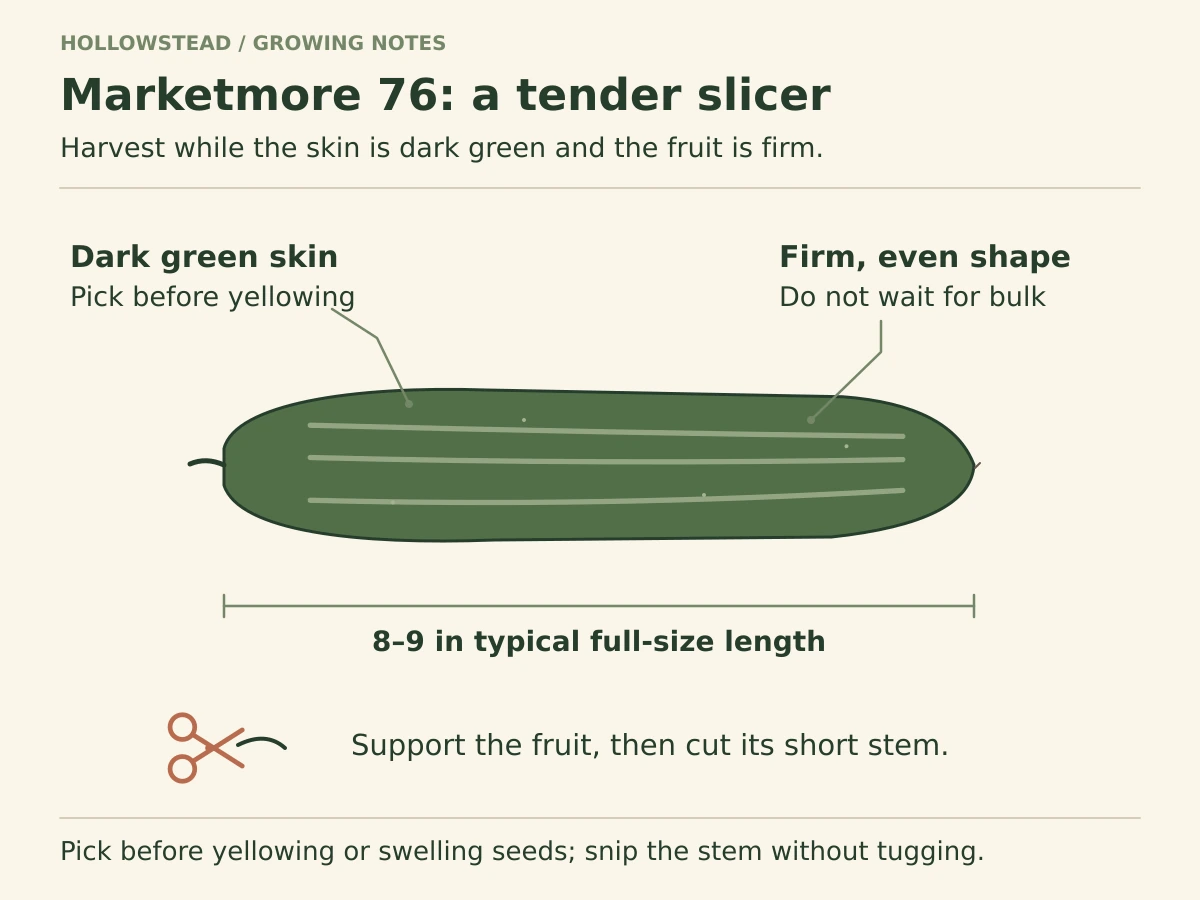
Begin checking before the first fruit reaches full length. Harvest a firm, dark-green cucumber around 8–9 inches, then adjust slightly earlier or later to suit its texture. Do not wait for yellowing. Cucumbers for eating are picked before botanical seed maturity, so a fully mature seed fruit is a different crop goal.
Clip or carefully cut the stem while supporting the cucumber. Pulling a fruit can lift or tear the vine. Look along the soil or behind the trellis as well as at eye level. Iowa State recommends checking and picking every two to three days because fruits can pass the desired stage quickly.[5] In fast growth, look more often.
Keep the harvest shaded and cool it promptly. Slice a fruit from the largest size class occasionally; if its center has become coarse or the seeds prominent, move your next picking earlier. Remove oversized fruit even when you do not want it for the kitchen.
Troubleshooting Marketmore 76
A disease-resistance description is useful variety information, but it is not a guarantee that a plant will remain healthy under every local disease pressure. Continue inspecting leaves and stems. This guide does not translate older catalog resistance codes into a promise of immunity.
| Observation | Check first | Next step |
|---|---|---|
| Seed never emerges | Cold or saturated soil; whether the seed zone dried | Improve the seedbed conditions before resowing. |
| Flowers, no enlarging fruit | Flower type, cover removal and bee visits | Allow pollinator access; watch the next female flowers. |
| Sudden wilt | Soil moisture, stem damage and cucumber beetle activity | Use a diagnostic guide; wilt is not always thirst. |
| White coating or angular leaf damage | Both leaf surfaces and the pattern across the plant | Compare symptoms and request local identification if uncertain. |
| Coarse or seedy slices | Age and size at picking | Harvest the next flush earlier. |
Maryland’s cucumber diagnostic key includes bacterial wilt, beetle feeding, mildews and other causes of damaged foliage.[9] When requesting help, include a whole-vine image, a close-up of both sides of a damaged leaf and a note about how quickly symptoms appeared.
Containers and saving seed
For a container, choose a generous pot with drainage, potting mix and a separately secured trellis. Keep one plant as the simple starting layout. You need access to water, access to harvest and room for the vine; a container does not remove any of those requirements. See growing cucumbers in containers for planning the root space.
If saving seed, make a separate pollination plan. Marketmore 76, Lemon and National Pickling are the same species and can cross. The cucumber you eat this season retains the maternal plant’s fruit type, but seedlings from crossed seed may differ. Minnesota’s seed-saving guidance explains why insect-pollinated vine crops need special care to retain a variety.[10]
Choose and label seed fruit deliberately, then allow it to become fully overmature. Do not collect seed from an ordinary firm slicing cucumber and expect mature seed. Use a protected pollination method or appropriate isolation, and keep the selected fruit out of your regular harvest basket. The cucumber seed-saving notes explain isolation and cleaning in more detail.
GROW FROM SEED
Grow this variety
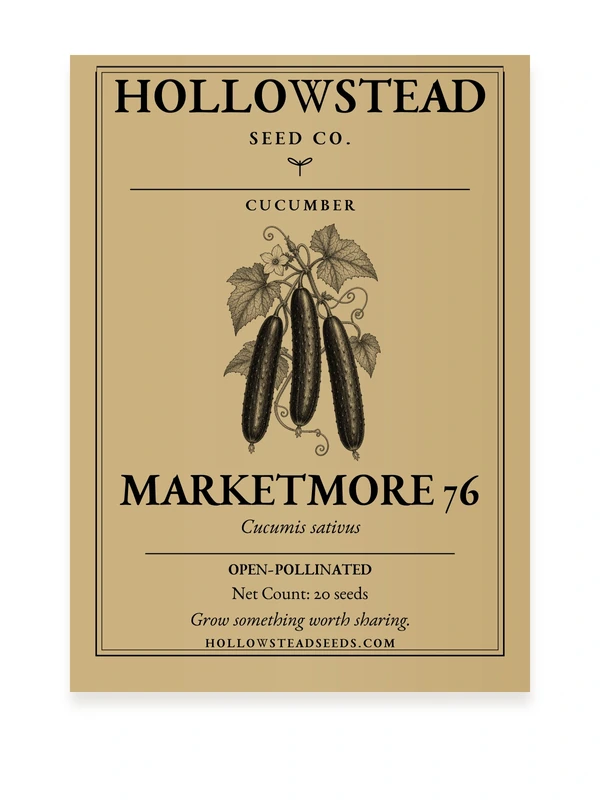
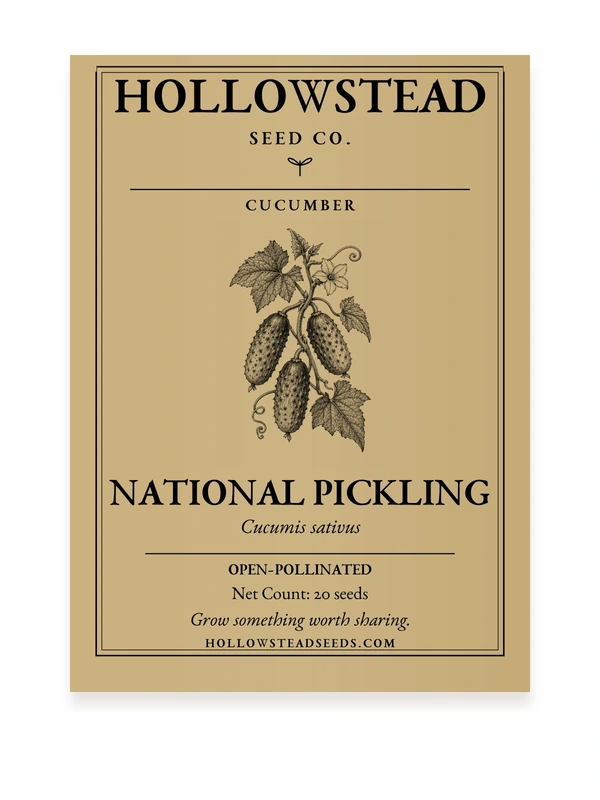
Marketmore 76 Cucumber Seeds come in a 20-seed packet. Compare its slicing role with Lemon and National Pickling before laying out the bed.
HOLLOWSTEAD SEED
Marketmore 76 Cucumber Seeds
$3.99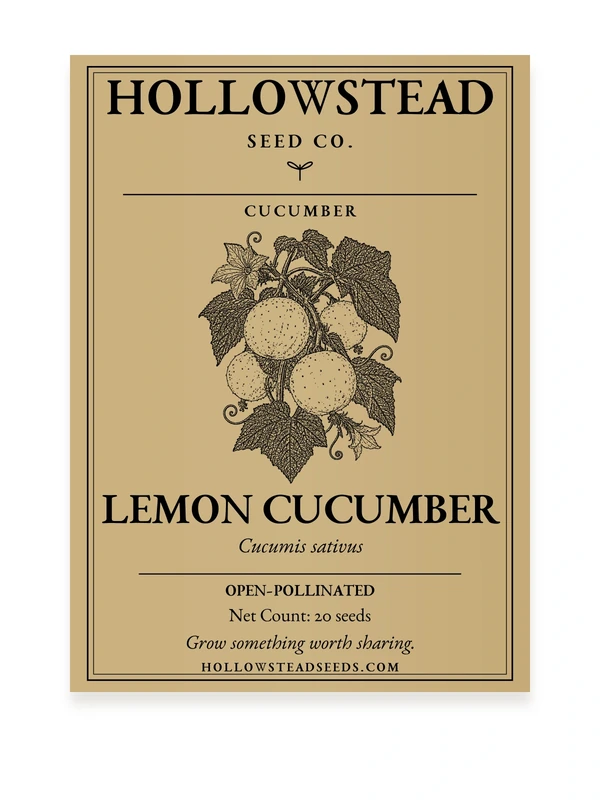
HOLLOWSTEAD SEED
National Pickling Cucumber Seeds
$3.99Frequently asked questions
Does Marketmore 76 need a trellis?
It can sprawl, but a trellis organizes the vine and makes harvest easier. Ground-grown plants need a dedicated patch and room to reach fruit without stepping on stems.
How big should I let the cucumbers get?
Start around 8–9 inches while fruit is firm and dark green. Slice a sample and harvest earlier if seeds or the central cavity are becoming coarse.
Can Marketmore 76 be used for pickles?
It can be used in some fresh or sliced preparations. For a specific preserved product, follow a tested recipe’s cucumber type, size and processing directions. National Pickling is the more purpose-focused garden choice.
Why are there only male flowers?
Cucumber plants commonly produce male flowers before female flowers. Keep the plant growing well and watch for flowers with a small cucumber behind the petals.
Can I grow Marketmore beside Lemon Cucumber?
Yes. They can share a garden for fresh harvest. If you want true-to-type saved seed, plan isolation or protected hand pollination.
Will every cucumber arrive on day 67?
No. The packet number estimates first harvest under suitable conditions. Later fruit develops over time, and weather can move the schedule.
Sources & further reading
- Cornell Cooperative Extension. Vegetable Varieties for Gardeners: Marketmore 76 cucumber. https://vegvariety.cce.cornell.edu/main/detail.php?filterBy=0&variety_id=687
- Cucurbit Genetics Cooperative. Vegetable Cultivar Descriptions for North America — Cucumber (J–R): Marketmore 76. https://cucurbit.info/2016/06/cucumber-j-r/
- University of Minnesota Extension. Growing cucumbers in home gardens. https://extension.umn.edu/garden-and-home/yard-and-garden/gardening-in-minnesota/growing-cucumbers
- Seed Savers Exchange. Growing and saving cucumber seeds. https://seedsavers.org/grow-cucumber/
- Iowa State University Extension and Outreach. Growing Cucumbers in the Home Garden. https://yardandgarden.extension.iastate.edu/how-to/growing-cucumbers-home-garden
- University of Maryland Extension. Growing Cucumbers in a Home Garden. https://extension.umd.edu/resource/growing-cucumbers-home-garden
- University of Minnesota Extension. Fruits and vegetables that require pollination. https://extension.umn.edu/agriculture/specialty-crops/pollination/requirements
- Illinois Extension. Cucumber: Home Vegetable Gardening. https://extension.illinois.edu/gardening/cucumber
- University of Maryland Extension. Key to Common Problems of Cucumbers. https://extension.umd.edu/resource/key-common-problems-cucumbers
- University of Minnesota Extension. Saving vegetable seeds. https://extension.umn.edu/garden-and-home/yard-and-garden/gardening-in-minnesota/saving-vegetable-seeds
Hollowstead Growing Notes
A little help for your next growing season
Practical sowing advice, help choosing seeds, and occasional Hollowstead shop news. Usually one or two emails a month, plus a short welcome note.
Choose your topics and frequency after you confirm. Our guides and planting calendar are always free.