
BEAN COMPARISON
Bush Beans vs. Pole Beans vs. Yardlong Beans
Bush, pole, and yardlong beans can all produce tender pods, but they use the garden very differently. Compare support, space, harvest pattern, summer heat preference, and the situations where each growth habit makes sense.
BeansComparison guideBeginner → advanced
Published by Hollowstead Seed Co. · How this guide is prepared
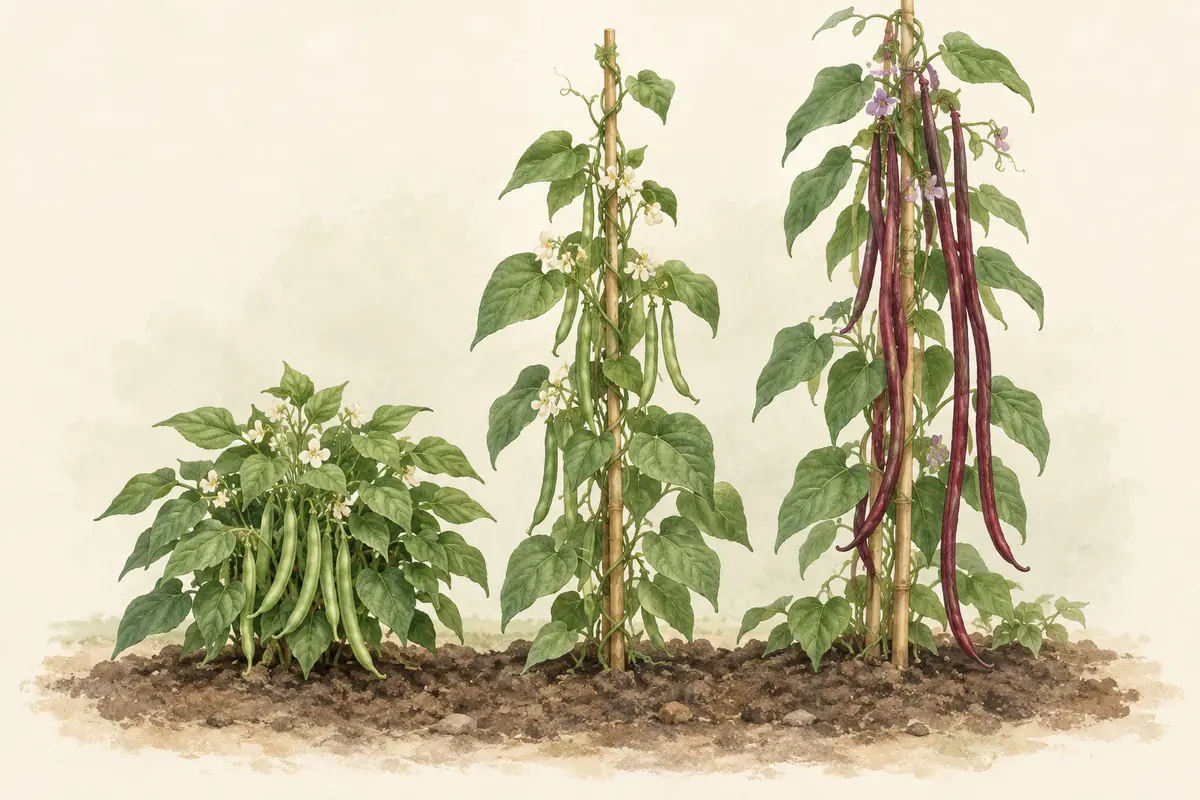
Quick answer
Choose bush beans when you want compact plants and a concentrated harvest, pole beans when you want a longer harvest from vertical space, and yardlong beans when you have a sturdy trellis and sustained summer heat. Missouri Extension notes the basic tradeoff: bush beans yield heavily at once, while pole beans continue producing a steadier supply.[1]
There is no universally “best” bean type. The right one depends on your season, vertical space, harvest style, and how often you want to pick.
Comparison at a glance
| Trait | Bush (P. vulgaris) | Common pole (P. vulgaris) | Yardlong (V. unguiculata) |
|---|---|---|---|
| Support | Usually none | 6–8 ft sturdy support | Sturdy tall trellis |
| Harvest rhythm | Concentrated | Extended | Extended in hot weather |
| Season preference | Warm | Warm | Very warm |
| Vertical space | Low | High | Very high |
| Succession value | High | Moderate | Usually seasonal rather than frequent |
- Small bed
- Bush packs closely; pole uses height
- Long harvest
- Pole/yardlong advantage
- Hot summer
- Yardlong advantage
- No trellis
- Bush advantage
- One big picking
- Bush advantage
Bean type decision matrix
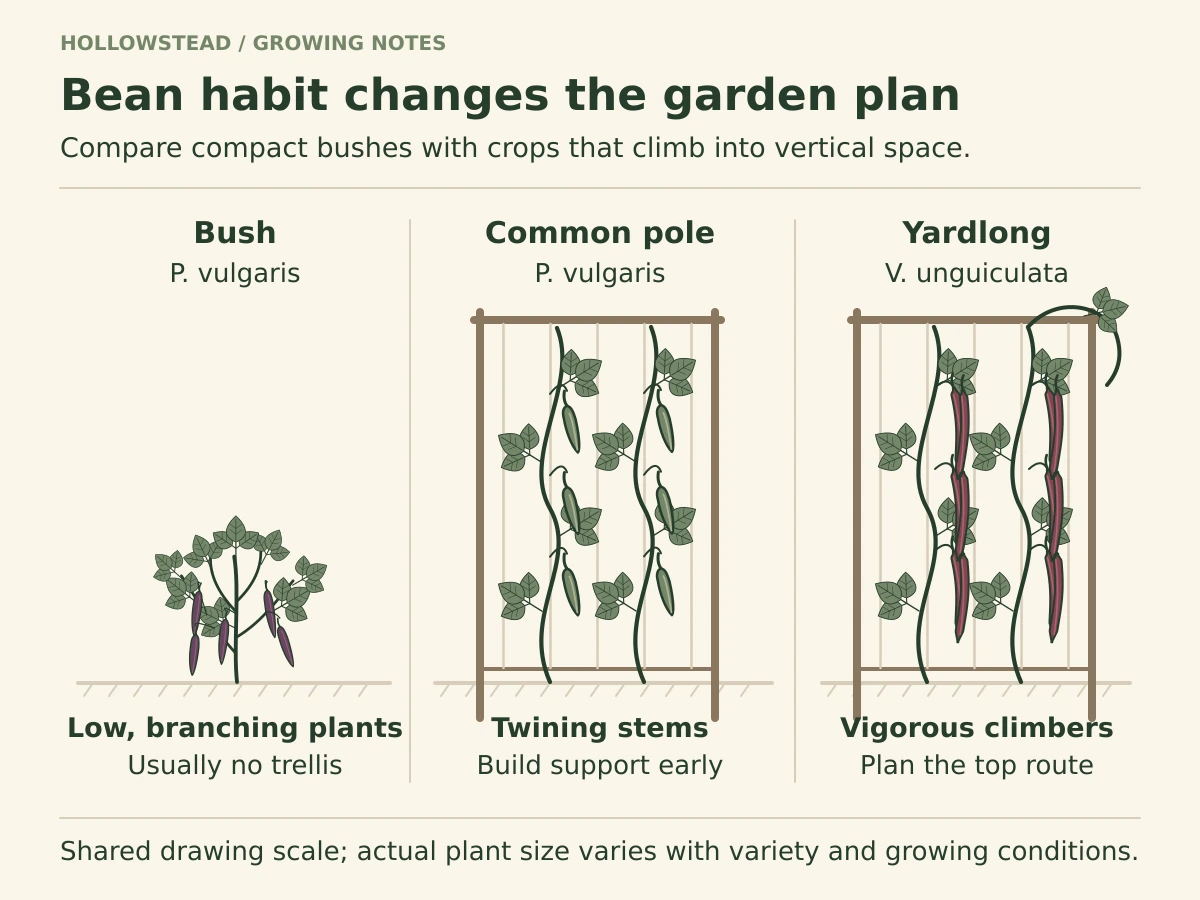
Bush beans: compact and concentrated
Bush beans stay relatively short and put much of their crop into a concentrated period. Maryland describes bush snap beans as early and compact, and its garden-planning guidance notes that a bush bean planting often produces for about three weeks before declining.[2][4]
That rhythm is useful when you want a big batch for the kitchen, when you do not want to build support, or when a tall bean wall would shade other crops. It also makes succession sowing more valuable.
 View full-size diagram
Pole beans: vertical and persistent
The common pole beans compared here are climbing Phaseolus vulgaris; “pole” also describes climbing forms of other bean species, including lima beans.[5] Maryland notes that they generally yield over a longer period in less ground area than bush types and recommends 6–8-foot sturdy trellises.[2] Their vertical habit can make harvesting easier, but it shifts work toward structure building, training, and frequent picking.
“Efficient use of space” is not automatic. Missouri points out that tall pole beans may shade neighboring crops in a very limited garden.[1] Put the trellis where its afternoon shadow will not smother shorter sun-loving plants.
Yardlong beans: not just a longer pole bean
Yardlong beans are Vigna unguiculata, closely related to cowpeas. Maryland notes that they require warm temperatures and a long growing season, while UF/IFAS describes vines capable of reaching 9–12 feet.[2][3] They deserve a separate category because climate response, pod growth, and seed-saving relationships differ from common beans.
What about half-runner beans?
Not every bean fits a clean bush-or-pole binary. Maryland describes half-runner beans as an intermediate growth habit with runners around three feet; they can be grown without a tall trellis, though support may improve production.[2] If a packet says half-runner, treat its support needs as a cultivar-specific middle case rather than forcing it into the bush column.
Species matters as much as growth habit
“Pole” describes architecture, not botanical identity. A pole common bean and a yardlong bean both climb, but one is Phaseolus vulgaris and the other is Vigna unguiculata. That difference affects heat response and seed-saving compatibility. Two crops can need similar trellises while still being different biological systems.
Workload, yield rhythm, and space
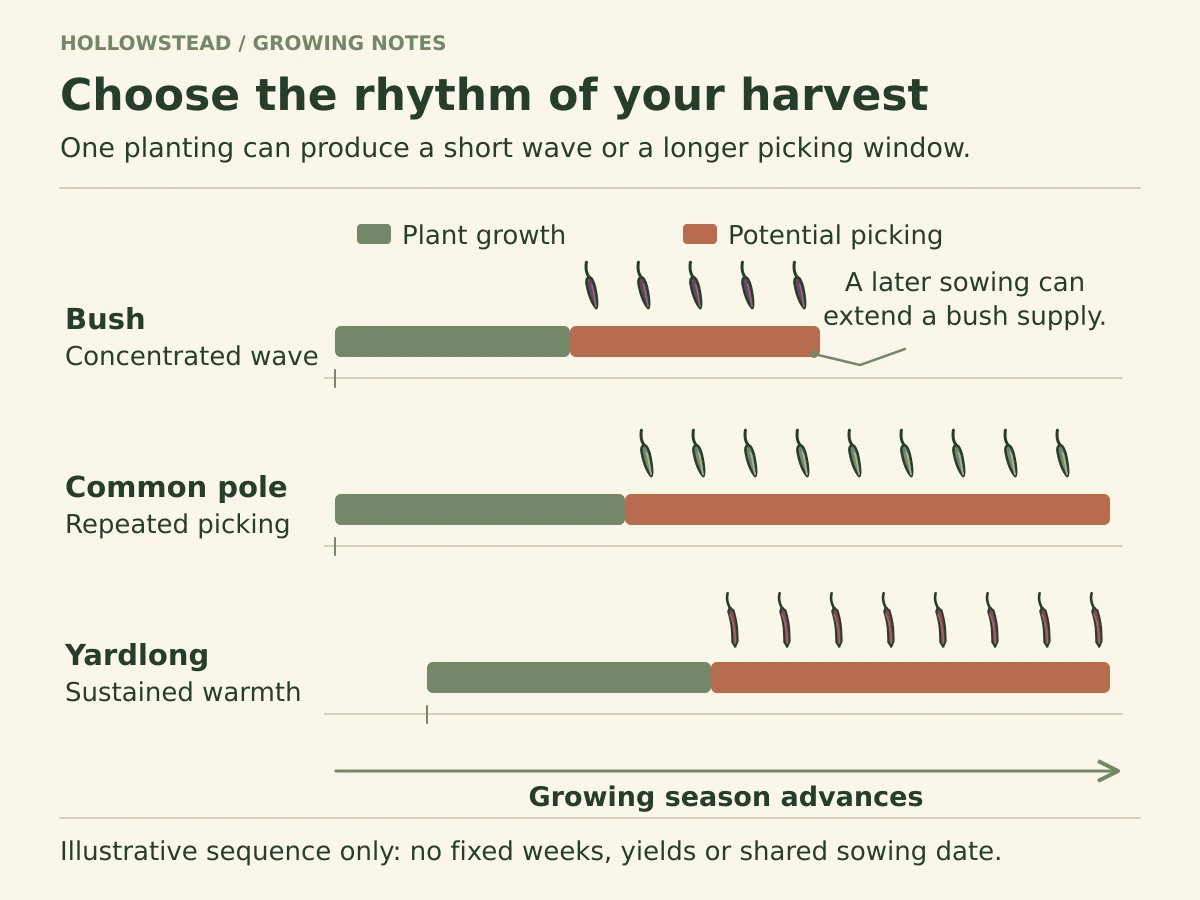
Bush beans front-load work into sowing and later into a concentrated harvest. Pole beans front-load work into trellis construction and then spread harvest labor over a longer period. Yardlong beans add even more vine management but can become the easiest bean to keep productive during genuinely hot weather.
If you preserve beans in batches, a concentrated bush harvest may be an advantage. If you want a handful of beans for dinner several times a week, pole or yardlong types can better match that rhythm—provided you actually pick them often.
 View full-size diagram
Which type fits your climate?
All three are warm-season crops, but yardlong beans are the most heat-demanding of this group. Common beans can be planted once soil warms to roughly 60–65°F; yardlong beans are better treated as a summer crop that wants sustained warmth.[1][2][3]
In a long season, there is no reason to choose only one. A practical sequence is common bush beans for an earlier crop, pole beans for an extended middle-season harvest, and yardlong beans for peak summer.
Seed-saving implications of the choice
Common bush and common pole beans are the same species, so different varieties can occasionally cross even though they are primarily self-pollinating. Yardlong beans instead cross within the cowpea/yardlong group. This can actually simplify a small seed-saving garden: a Royal Burgundy common bean and a Red Noodle yardlong bean are not competing as varieties of the same species.
If genetic purity matters, manage isolation by species first, then by variety within that species. Do not assume “one bush and one climber” means they cannot cross; growth habit is not the isolation boundary.
How to choose for your garden
- Choose bush beans for compact beds, containers, batch harvests, and no-trellis simplicity.
- Choose pole beans for long production, vertical gardening, and repeated harvests.
- Choose yardlong beans for a hot-season climbing crop and very long tender pods.
- Grow more than one type if you want to spread risk and harvest across changing summer conditions.
Choose the harvest rhythm as much as the plant. A bean that technically fits your bed can still be a poor match if its picking schedule does not fit how you cook, preserve, or visit the garden.
COMPARE TWO HABITS
Bush or climber?
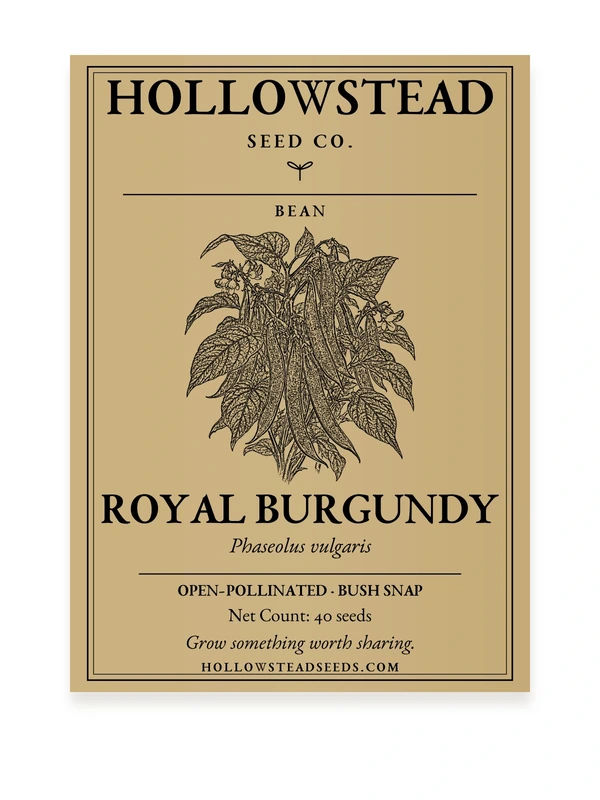
Royal Burgundy gives you the compact bush option; Red Noodle gives you the tall, heat-loving yardlong option.
HOLLOWSTEAD SEED
Royal Burgundy Bush Bean Seeds
$4.49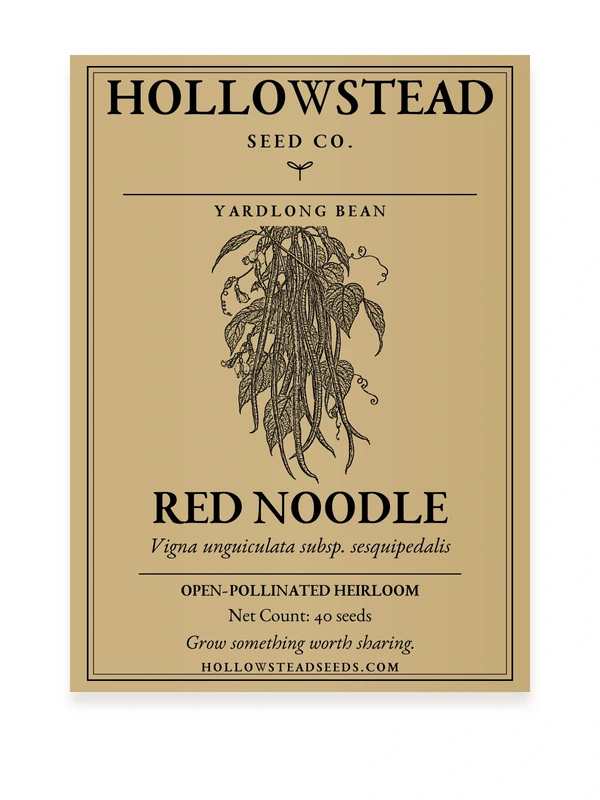
HOLLOWSTEAD SEED
Red Noodle Yard Long Bean Seeds
$4.49KEEP LEARNING
Related Hollowstead guides
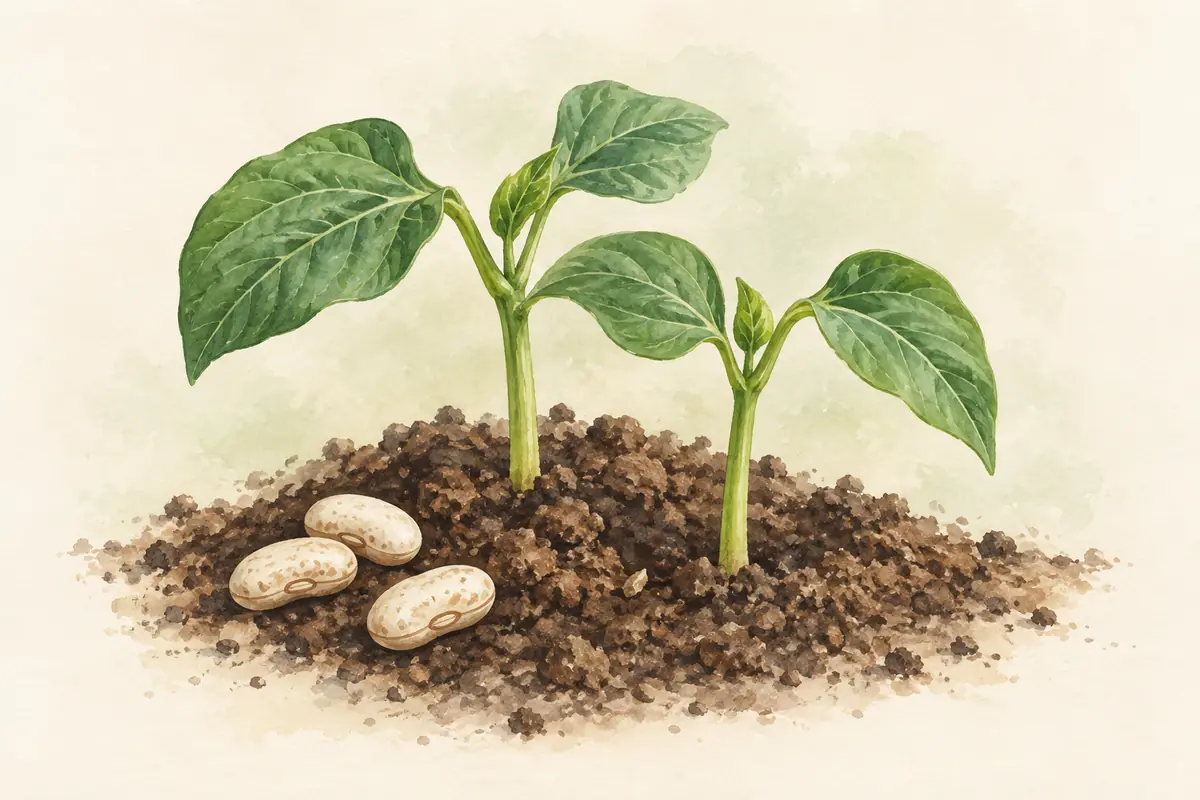
BEAN GROWING
Growing Beans From Seed: The Complete Guide
Grow beans with confidence from direct sowing through harvest. Learn when soil is warm enough, how deeply to sow, when climbing beans need support, how succession planting works, and how to diagnose common early problems.
Read the guide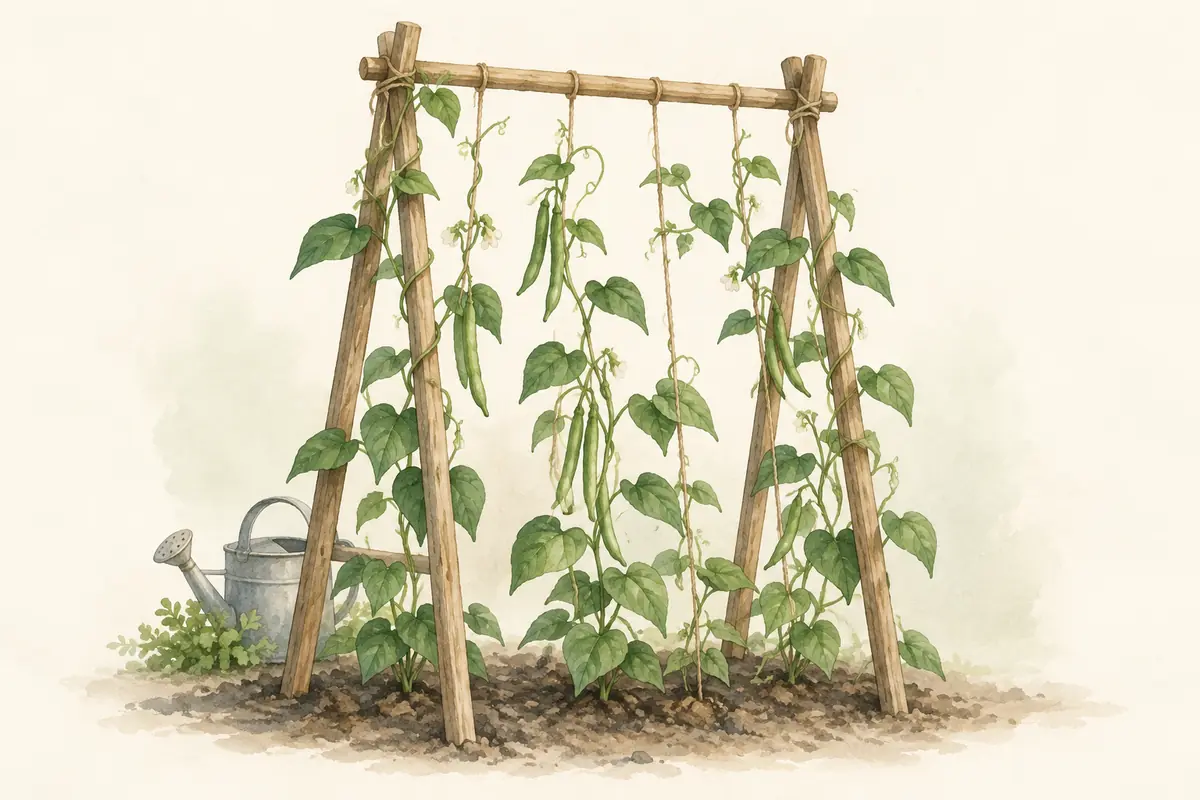
TRELLISING
How to Trellis Pole and Yardlong Beans
Build bean support before the vines need it. Compare teepees, row trellises, panels, and arches; learn how tall to build for pole versus yardlong beans; and plan anchoring, training, spacing, and harvest access.
Read the guide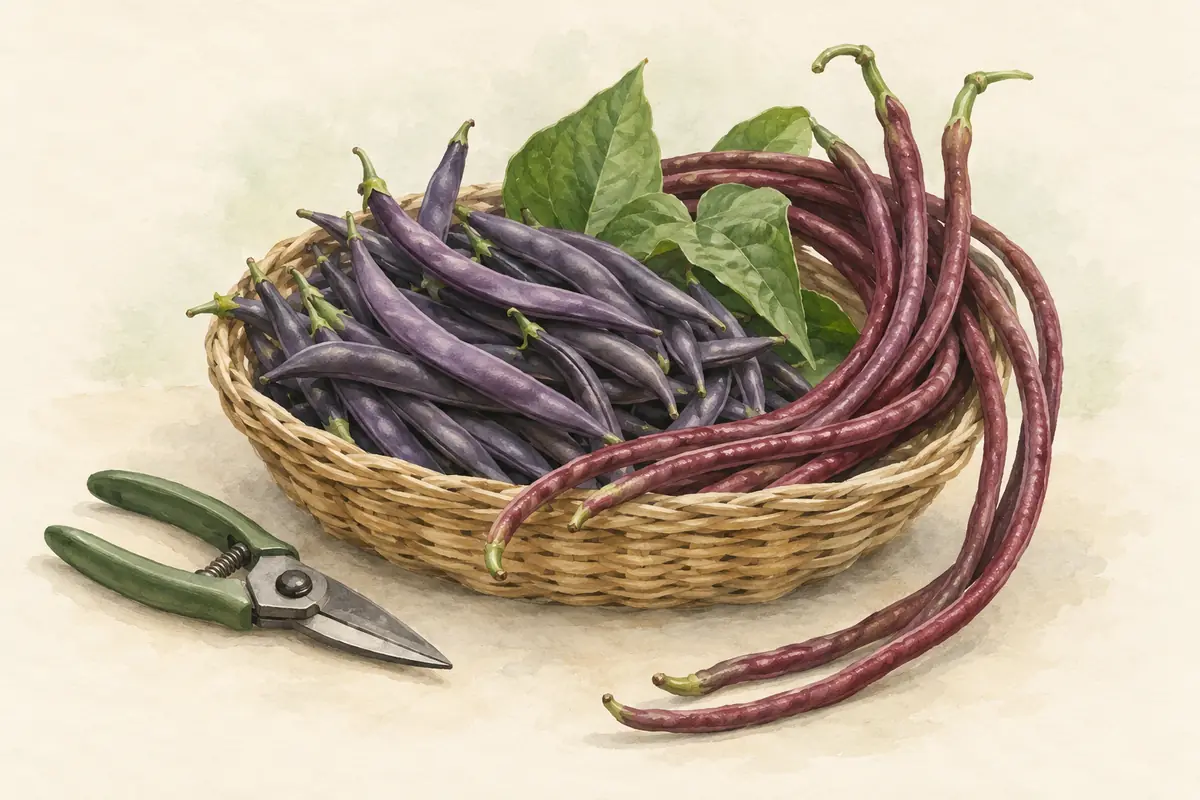
HARVEST GUIDE
When and How to Harvest Beans
Bean harvest quality depends more on pod stage than the date on a packet. Learn the cues for tender snap beans and yardlong beans, how often to pick, how to avoid breaking stems, and when a pod has moved toward shell or dry-bean maturity.
Read the guideFrequently asked questions
Are yardlong beans pole beans?
They are pole-like in growth habit, but botanically they are not common beans. Yardlong beans are Vigna unguiculata; ordinary pole beans are usually Phaseolus vulgaris.
Which produces more beans?
That depends on variety, season length, heat, disease pressure, planting density, and how often you harvest. The more useful distinction is that bush beans concentrate production while climbers generally spread it across a longer window.
Which is easier for a beginner?
Bush beans remove the support question, so they are mechanically simpler. Climbing beans are also easy once a strong trellis is in place.
Can I grow bush and climbing beans together?
Yes. Just place tall trellises where they will not shade the bush planting excessively, and remember that different bean species or varieties may have different harvest timing.
Sources & further reading
- University of Missouri Extension Frequently Asked Vegetable Questions https://extension.missouri.edu/publications/g6400
- University of Maryland Extension Growing Beans in a Home Garden https://www.extension.umd.edu/resource/growing-beans-home-garden
- University of Florida IFAS Extension Long Bean—an Asian Vegetable Emerging in Florida https://edis.ifas.ufl.edu/publication/HS1268
- University of Maryland Extension Planning a Vegetable Garden https://extension.umd.edu/resource/planning-vegetable-garden-0
- Purdue Extension Growing Beans in the Home Garden https://ag.purdue.edu/department/hla/extension/extension-publications-library/ext-pubs/ho-175-w.html
Hollowstead Growing Notes
A little help for your next growing season
Practical sowing advice, help choosing seeds, and occasional Hollowstead shop news. Usually one or two emails a month, plus a short welcome note.
Choose your topics and frequency after you confirm. Our guides and planting calendar are always free.