
HARVEST GUIDE
When and How to Harvest Herbs
Harvest basil, cilantro, dill, and shiso without cutting away the plant’s future. Learn when to pinch, snip, gather leaves, harvest flowers, and leave stems for mature seed.
HerbsHarvest guideBeginner → advanced
Published by Hollowstead Seed Co. · How this guide is prepared
Quick answer
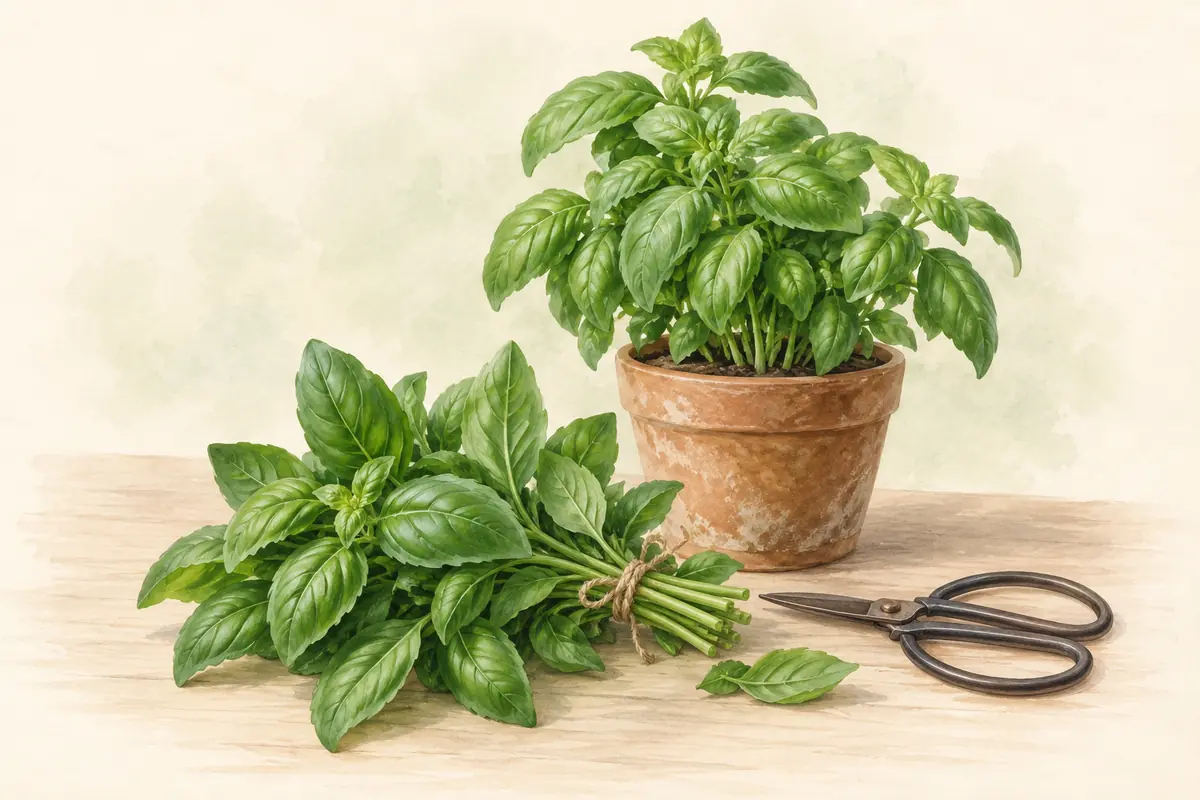
Harvest leafy herbs when plants are dry, healthy, and actively growing. For basil, cut stems just above a leaf pair; for cilantro, take outer leaves or short stems before bolting; for dill, snip feathery foliage before heavy flowering; for shiso, pick young outer leaves or stem tips. Frequent moderate harvest is usually better than repeatedly stripping a plant bare.[1][2][3]
Flowers and seed are different harvests. Dill umbels, coriander seed, and seed-saving stems need to remain on the plant longer than a tender leaf crop.
The short version: pick leaves while tender, cut in a way that leaves growing points behind, harvest often, and let selected plants mature only when flowers or seed are the goal.
Herb harvest at a glance
| Question | Useful starting point |
|---|---|
| Basil | Cut stems just above a leaf pair |
| Cilantro | Take outer leaves before bolting |
| Dill | Snip foliage; harvest flowers or seed later |
| Shiso | Pick tender outer leaves and tips |
| Best condition | Dry foliage after dew has evaporated |
| Amount | Moderate harvests that leave enough foliage to regrow |
| Flowers | Harvest only when the flower stage is useful |
| Seed | Allow complete maturity before dry seed harvest |
- Leaf quality
- Young, healthy, actively growing foliage
- Cut location
- Species-specific; preserve growing points when repeat harvest is desired
- Heat
- Keep harvested herbs out of hot sun
- Seed harvest
- Wait for full maturity and drying
- Fresh storage
- Match storage to the herb; basil dislikes prolonged chilling
Harvest leaves without removing the plant’s future
The best cut leaves enough healthy foliage and growing points for recovery. Harvesting more often does not mean harvesting more brutally. A young plant should lose less at one time than a mature, vigorously growing plant.
Use the same care with a salad planting, but choose the cut for lettuce’s growth habit: harvesting leaf lettuce and romaine shows outer-leaf picking, baby-leaf cutting and whole-head harvest. A basil stem cut above a leaf pair is not the pattern to copy onto a lettuce center.
Take a little, then watch regrowth
- Thai Basil: cut a tender tip above a leaf pair. Green Shiso: pick a few outer leaves or a tip.
- Cilantro: take outer stems and leave the center. Dill: snip outer fronds.
- About one-third is an upper guide for vigorous established plants, not a target for small or stressed plants.
- Wait for replacement leafy growth before picking again; a final whole-plant harvest is a separate choice.
Harvest stage by herb
Use the first cut to match the crop: basil above a leaf pair, shiso tender outer leaves, cilantro usable leaves before the flowering stalk, and dill fronds before or apart from green pickling heads and fully dry seed. See the crop-specific rows and storage guidance below.
Basil: cut above a leaf pair
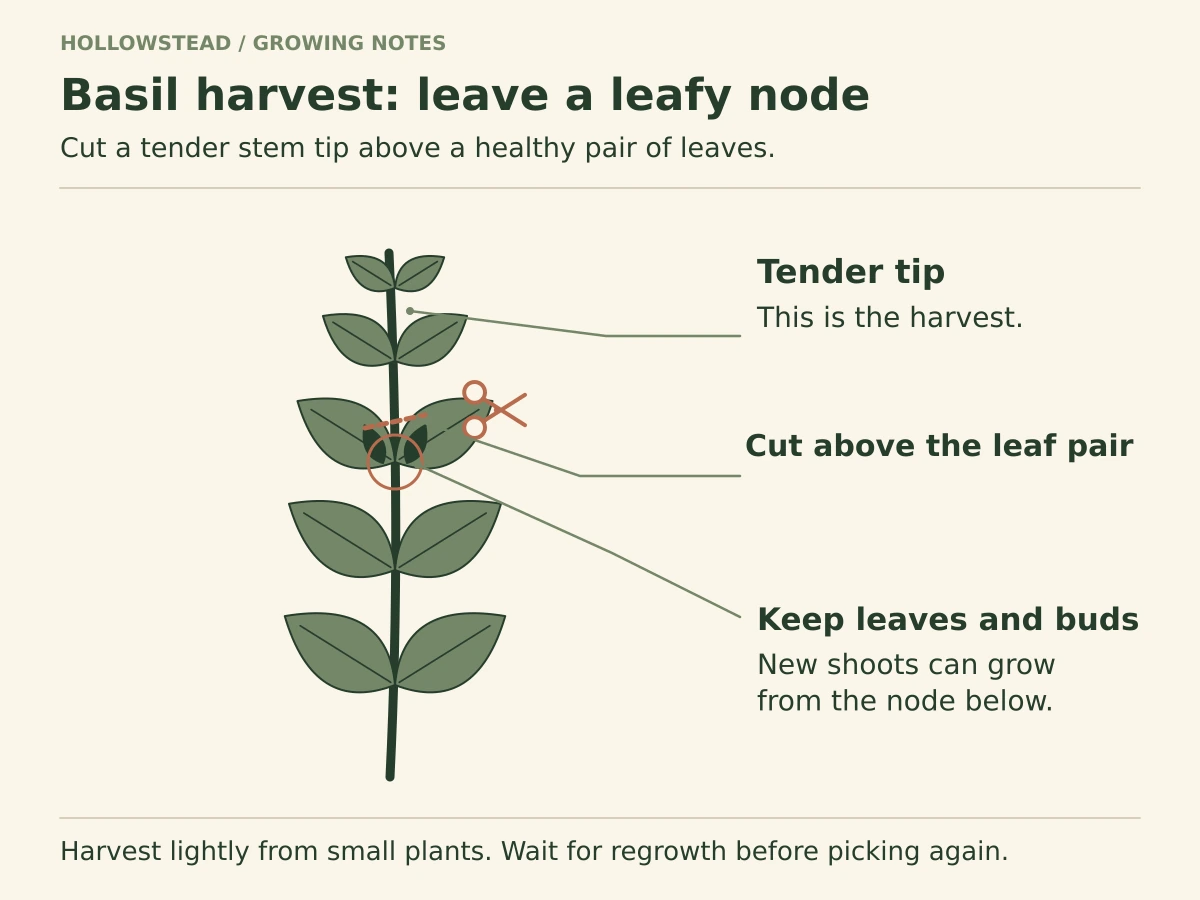
UMN recommends cutting whole basil stems just above a pair of leaves. New shoots form below the cut, making each harvest part of plant training as well as kitchen harvest.[1]
Cilantro: harvest before the flower stalk wins
Take outer leaves while the plant is compact and tender. Once the central flower stalk stretches upward, leaf production changes quickly. Keep a younger sowing coming if you want a continuing leaf crop.[2]
Dill: separate foliage, flowers, and seed
Snip foliage as needed before heavy bloom. Harvest umbels separately for flowers. Leave other heads long enough to brown and dry if you want mature dill seed.[3]
Shiso: pick tender leaves and tips
Harvest outer leaves and stem tips while they are tender. Leave the center of the plant growing so repeated leaf harvest remains possible.
Flowers, coriander, and storage harvests
A mature seed harvest requires patience. Let coriander and dill seed heads dry on the plant before collecting them. Basil intended for drying is usually best harvested before heavy flowering, when leaves are still in good condition.[1]
Dill flowers are not mature seed
- Yellow flowers: a flower-stage harvest; match any culinary use to the recipe.
- Green developing seed: UMN’s pickling-head guidance uses flexible green heads after flowers have given way to seed.
- Tan-brown firm seed: collect near maturity before shattering and finish drying with airflow.
- Drying a yellow flowering umbel does not turn it into mature planting seed.
Handle the harvest gently
Keep cut herbs out of hot sun. If they need washing, rinse gently and dry thoroughly before storage or preservation. For long-term storage, use the dedicated preservation guide rather than improvising with damp leaves in sealed containers.
Fresh storage and post-harvest handling
Harvest quality can be lost after the cut. Keep herbs shaded and cool while you work, remove damaged material, and avoid sealing wet foliage into storage. Illinois Extension recommends harvesting herbs throughout the growing season and handling leaf crops according to their plant type rather than using one severe cut for everything.[6]
Basil is a special case in the refrigerator. University of Minnesota lists tender basil for room-temperature storage with cut stems in water and notes chilling injury/discoloration with long cold storage.[5] For short-term kitchen use, treat a basil bunch more like cut flowers than lettuce. Cilantro and dill tolerate cool storage better, but excessive free moisture still accelerates deterioration.
Wash timing depends on what happens next. If you wash before storage or preservation, dry the herbs thoroughly. Surface water trapped in a container is not the same thing as useful root-zone moisture on a living plant.
First picking and short-term storage
For repeat harvest, an approximate one-third of leafy growth is an upper limit for a vigorous established plant, not a target. Pick much less from small, stressed or seed-saving plants. Let fresh growth replace the cut before returning. A final whole-plant harvest is a separate choice and ends repeat picking.
| Herb | Start small | Keep fresh |
|---|---|---|
| Thai Basil | Once established with several leaf pairs, take one or two tips above a node. | Keep stems in clean water away from hot sun; cold refrigeration can discolor leaves. |
| Green Shiso | Take two or three tender outer leaves while leaving center growth. | Refrigerate in a loosely closed container with a barely damp towel; inspect daily. |
| Slow Bolt Cilantro | Take a few outer stems at about 4–6 inches of usable leaf growth. | Refrigerate without excess surface water; use promptly. |
| Mammoth Dill | Snip one or two outer fronds from an established leafy plant. | Refrigerate loosely protected from drying; use soon or freeze surplus. |
Dill has three separate stages: yellow flowers, green developing seed, then tan mature seed. For pickling, follow the recipe’s required head stage; drying a flowering umbel is not a shortcut to mature planting seed.
GROW THESE HERBS
Put the guide to work.
Explore Hollowstead’s herb varieties and put these techniques into practice.
HOLLOWSTEAD SEED
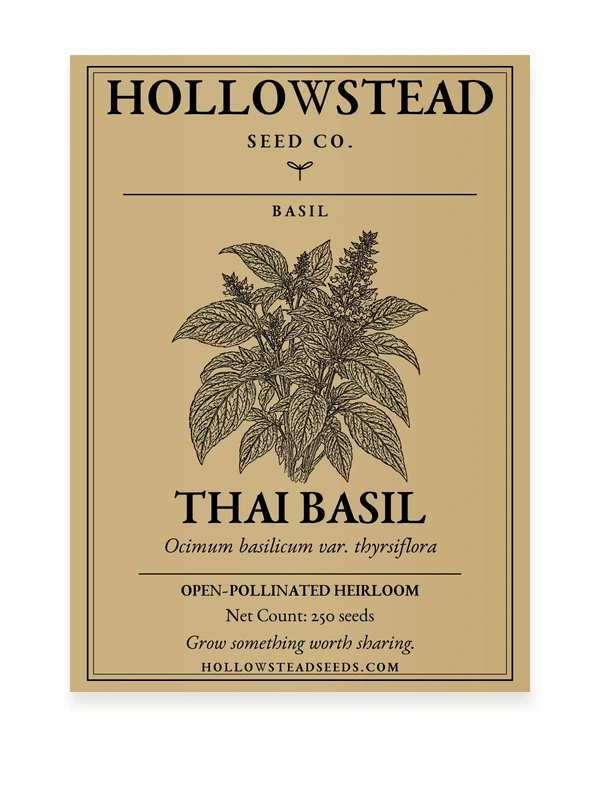
Thai Basil Seeds
$3.49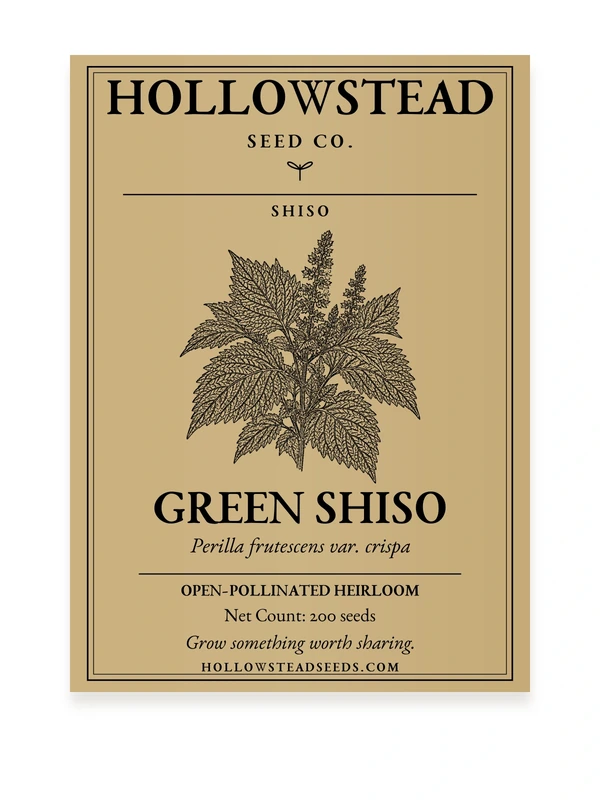
HOLLOWSTEAD SEED
Green Shiso Seeds
$3.49
HOLLOWSTEAD SEED
Slow Bolt Cilantro Seeds
$3.49
HOLLOWSTEAD SEED
Mammoth Long Island Dill Seeds
$3.49KEEP LEARNING
Related Hollowstead guides
THAI BASIL GUIDE
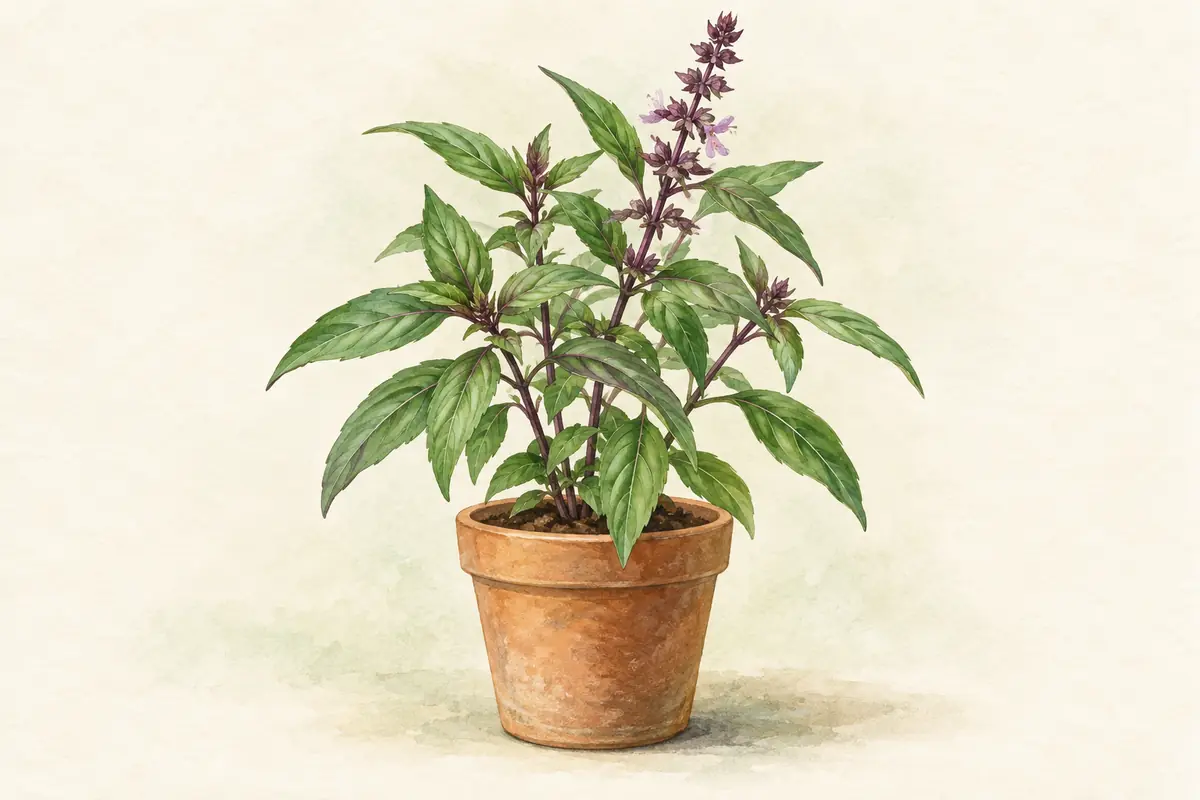
Thai Basil Growing Guide
Grow Thai basil for fragrant summer leaves and distinctive purple stems. Learn how to start seed, manage warmth and moisture, pinch for branching, handle flower spikes, and harvest for the kitchen.
Read the guide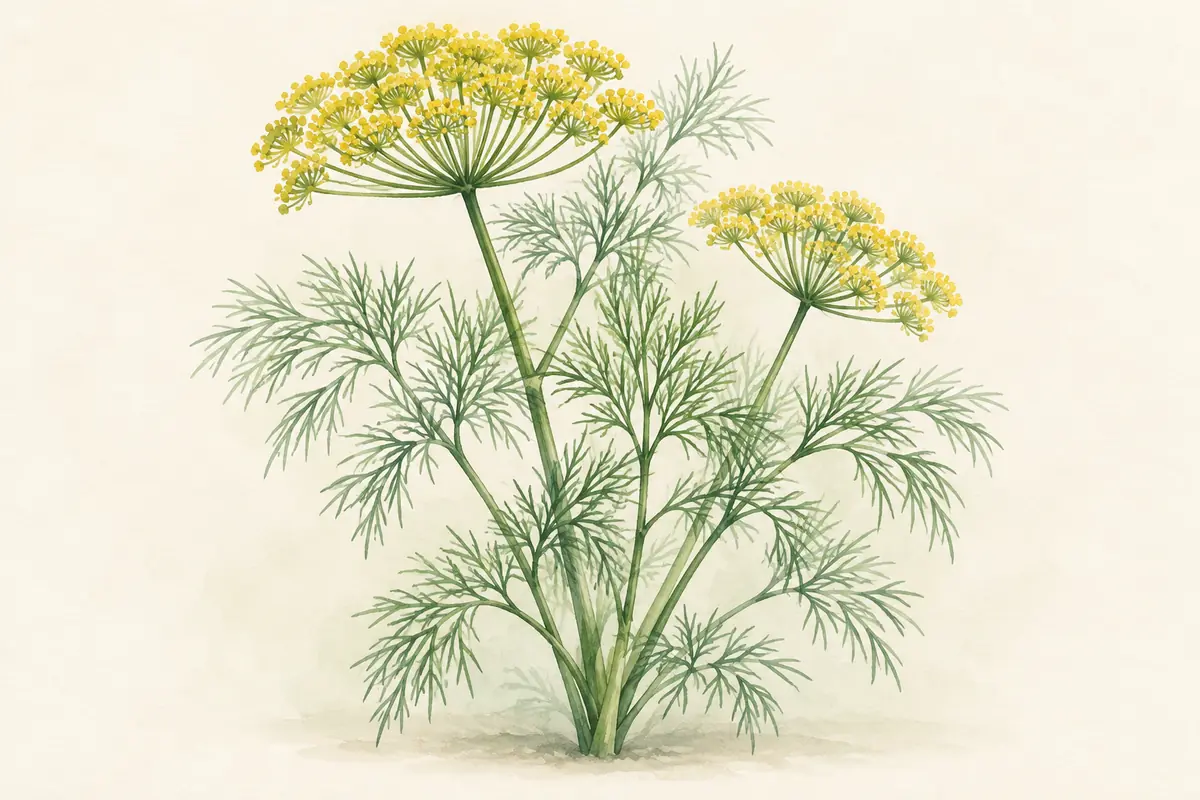
DILL GUIDE
Mammoth Long Island Dill Growing Guide
Mammoth dill is a tall annual for feathery foliage, yellow umbels, and later seed. Learn direct sowing, spacing, staking, leaf harvest, flower harvest, and mature seed collection.
Read the guide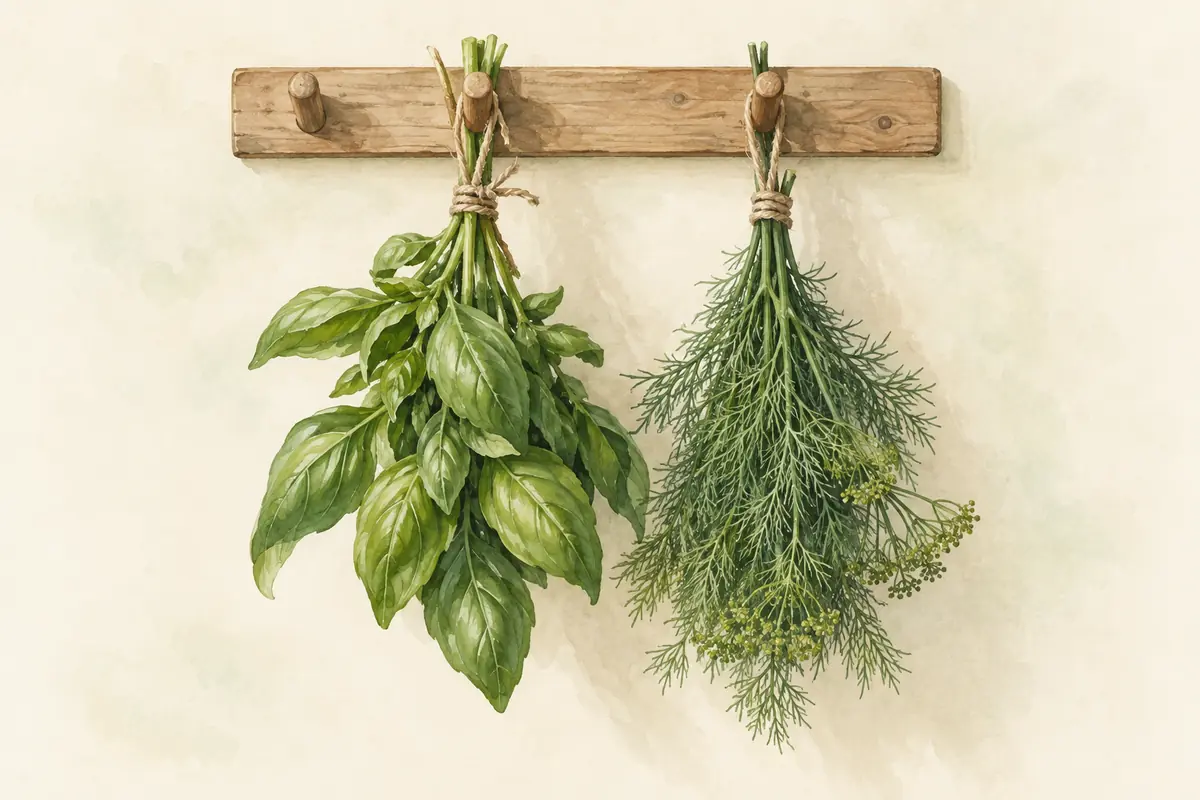
PRESERVING HERBS
How to Dry and Preserve Garden Herbs
Preserve garden herbs safely with air drying, dehydrator drying, freezing, and dry storage. Learn when to harvest, how to avoid mold, and how to store dried leaves and seed.
Read the guideFrequently asked questions
What time of day should I harvest herbs?
A dry morning after dew has evaporated is a good general window, especially for herbs you plan to preserve.
How much can I cut at once?
Take a moderate amount and leave enough healthy foliage for recovery. Small plants need a lighter hand than mature vigorous plants.
Should I harvest basil flowers?
You can use or remove them, but if leaves are the priority, harvest stems and pinch flowers before bloom dominates.
When do I harvest coriander seed?
Let cilantro flower, form seed heads, and dry until the seed is mature and tan before collecting.
Sources & further reading
- University of Minnesota Extension Growing basil in home gardens https://extension.umn.edu/garden-and-home/yard-and-garden/gardening-in-minnesota/yard-and-garden-problems/growing-basil
- Utah State University Extension Cilantro / coriander in the garden https://extension.usu.edu/yardandgarden/research/cilantro-coriander-in-the-garden
- University of Minnesota Extension Growing dill https://extension.umn.edu/vegetables/growing-dill
- National Center for Home Food Preservation Herbs — drying https://nchfp.uga.edu/how/dry/recipes/herbs/
- University of Minnesota Extension Harvesting and storing home garden vegetables https://extension.umn.edu/garden-and-home/yard-and-garden/gardening-in-minnesota/harvesting-and-storing-home-garden-vegetables
- Illinois Extension Gardeners Corner Spring 2022 — Herb care and harvesting https://extension.illinois.edu/newsletters/gardeners-corner/gardeners-corner-spring-2022
Hollowstead Growing Notes
A little help for your next growing season
Practical sowing advice, help choosing seeds, and occasional Hollowstead shop news. Usually one or two emails a month, plus a short welcome note.
Choose your topics and frequency after you confirm. Our guides and planting calendar are always free.