
SUNFLOWER GUIDE
Lemon Queen Sunflower Growing Guide
Grow Lemon Queen sunflower as a tall, branching annual for pale-yellow blooms, cut stems, pollinator value, succession sowings, mature seed heads, and intentional seed saving.
FlowersVariety guideBeginner → advanced
Published by Hollowstead Seed Co. · How this guide is prepared
Quick answer
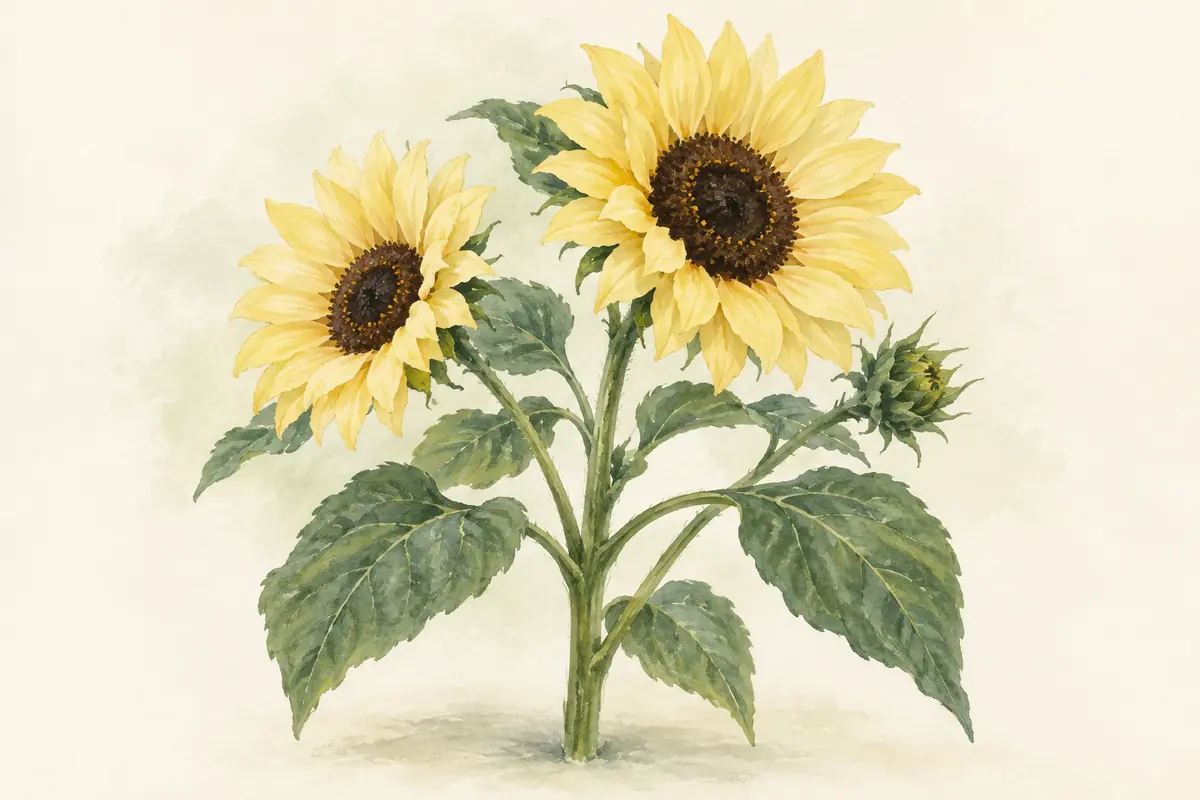
Lemon Queen is an open-pollinated, branching Helianthus annuus sunflower grown for multiple pale lemon-yellow blooms rather than one single exhibition head. Give it full sun, direct sow after frost when practical, leave room for branches, support exposed plants, and decide early whether each head is destined for a bouquet, pollinators, birds, or seed.[1][3]
Renee’s Garden describes this annual Lemon Queen as bearing both nectar and pollen. It serves bouquets and visiting insects; choose a documented pollenless selection instead if fallen pollen indoors matters most.[6]
Give the branching plant a strong framework. Lemon Queen builds a tall branching plant. Root room, spacing, wind support, and repeated harvest matter more than chasing one oversized head.
At a glance
| Trait | Useful starting point |
|---|---|
| Species | Helianthus annuus |
| Habit | Tall, branching annual |
| Height | About 5–7 feet (60–84 inches); varies by site |
| Light | Full sun |
| Sowing | Direct sow after frost preferred |
| Depth | About ½ inch for Hollowstead seed |
| Spacing | About 12 inches; widen for more branch room |
| Bloom estimate | About 80–100 days; weather changes timing |
| Support | Useful in exposed sites |
- Sun
- Full sun
- Architecture
- Branching, multiple flower heads
- Root handling
- Direct sow is simplest
- Wind
- Stake or corral where exposed
- Fresh cut
- Harvest as the head begins opening
- Seed
- Reserve selected mature heads
SAVE FOR SOWING DAY
Five-step crop plan for Lemon Queen Sunflower
Open the sow-to-harvest plan
- StartDirect sow after frost where the mature branching plant will stand; current guide uses about ½ inch depth. Guide details
- PlantThin toward about 12 inches as a baseline, or 18–24 inches for broader branch access; install support in exposed sites. Guide details
- MaintainKeep branches supported; leave the first central flower if it matters, or selectively pinch young plants when more side branches are the goal. Guide details
- HarvestCut side stems as petals begin opening while leaving healthy branches; keep other heads open for pollinators or later seed. Guide details
- Next sowing or seedA second batch can extend flowers if warm season remains; for seed, mark healthy heads, manage pollen from other sunflowers, and protect ripening seed from birds. Guide details
- Space
- Tall branching plant: about 12 inches baseline or 18–24 inches for larger plants and picking access; support may help in wind.
- Timing
- About 80–100 days to bloom is a weather-sensitive estimate; assess any repeat sowing against local frost timing.
Full growing guidehttps://hollowsteadseeds.com/lemon-queen-sunflower-growing-guide/Seed packethttps://hollowsteadseeds.com/product/lemon-queen-sunflower-seeds/Find planting dates by ZIP code
Variety reference photo
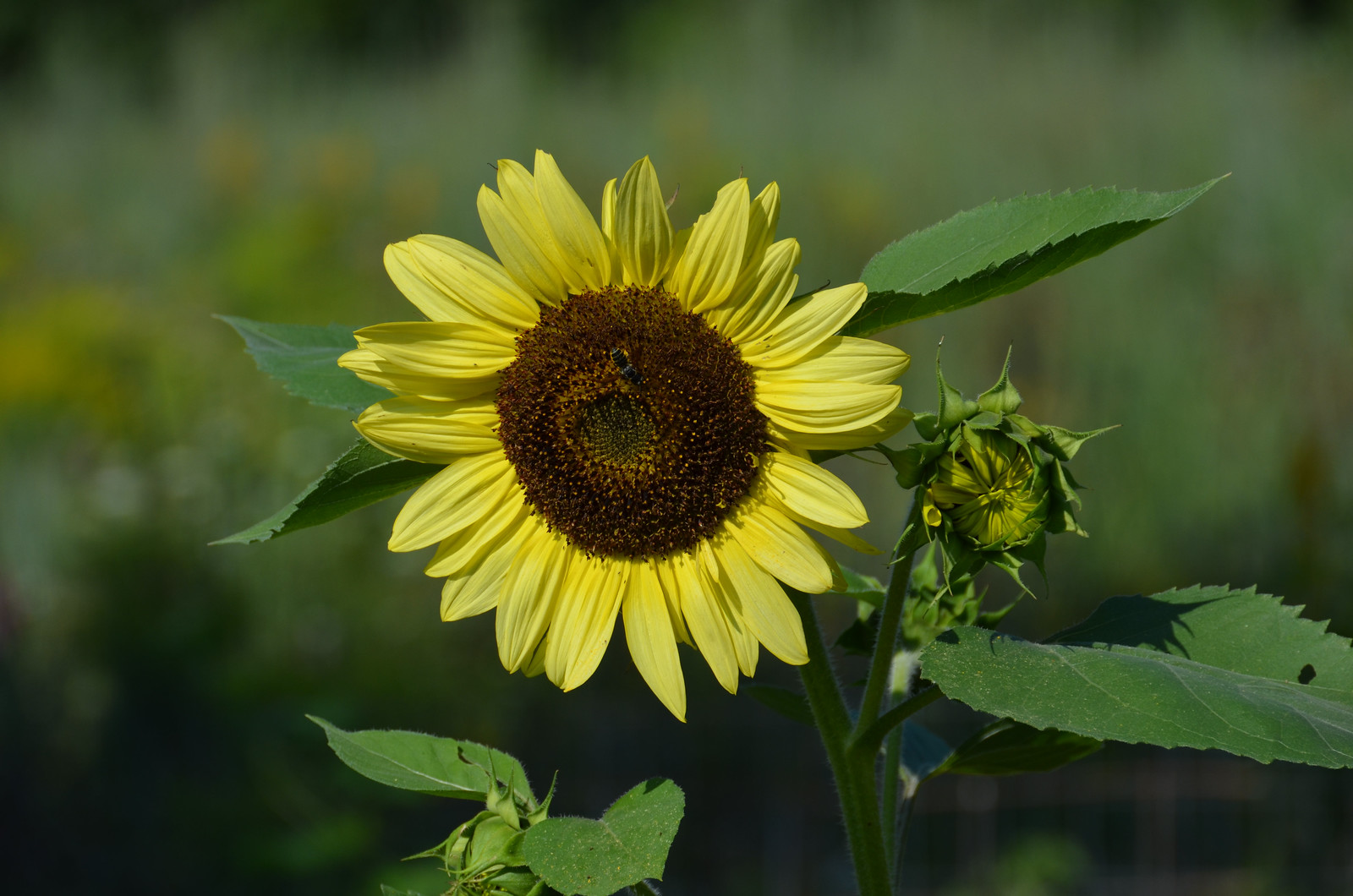
A branching sunflower is managed differently from a single-stem crop
For planning, allow roughly 60–84 inches of height and flower heads about 3–5 inches across for annual Lemon Queen. These are variety estimates, not measurements of this Hollowstead lot or limits on site-to-site variation; allow a tall, branching backdrop.
Sunflower cultivars vary from dwarf plants to very tall forms and from single-stem types to multi-branching plants. Lemon Queen belongs in the branching camp. The value is a longer sequence of blooms on side branches, but the trade-off is a wider, more wind-catching plant that needs space to build its framework.
Illinois Extension describes sunflowers as fast-growing annuals that thrive in full sun and tolerate a wide range of soils as long as the site is not consistently soggy.[1] That broad tolerance is useful, but it does not eliminate the basics: a tall plant still benefits from a deep, aerated root zone and consistent establishment moisture.
Lemon Queen Sunflower
- Branching annual Helianthus annuus; full sun and room for side stems.
- Current catalog: about ½-inch depth, about 12-inch starting spacing, 80–100 days from sowing to bloom as an estimate.
- Direct sow after frost; support before storms and widen spacing for a broader framework.
Direct sow after frost, or transplant very young
Illinois Extension recommends direct seeding sunflowers after frost and notes that indoor starts are possible a few weeks early if roots are handled carefully.[1] For Lemon Queen, direct sowing is usually the lowest-friction option: place the seed where the mature plant can remain, keep the seed zone evenly moist, then thin to the strongest stand.
If birds or rodents repeatedly remove seed, protect the row temporarily or start seedlings in individual cells that minimize root disturbance. Do not turn a two-week head start into a six-week root-bound transplant.
Spacing, branching, and support
The Lemon Queen catalog baseline is about 12 inches between plants. For a broader branch framework and easier cutting access, consider 18–24 inches—the general spacing Johnny’s gives for branching sunflowers.[5] This is a goal-based adjustment. Dense single-stem sunflower spacing describes plants raised for one main cut, so it should not be carried across automatically to Lemon Queen.
Choose 12 inches as a supplier starting spacing for sturdy branching plants, or 18–24 inches when access around broad side branches and airflow matter more than plant count per bed.[6]
Install a post-and-twine corral or other suitable support while the planting is young. Seed Savers notes that large sunflower plants may need this support.[3] Leave ties loose enough for stems to expand, and check them as heads develop.
Should you pinch it?
Lemon Queen branches naturally. If keeping the first central flower is your priority, leave it intact. Johnny’s recommends pinching branching types when the goal is stronger branching and longer side stems.[5] For a first home planting, try that choice on only part of a healthy, established row. It removes the central growing point, so it changes the first-flower plan. Do not apply the same advice to a single-stem sunflower.
Succession planting Lemon Queen
A branching sunflower can flower across several side stems, so one sowing already spreads bloom more than a single-cut crop. For a longer season, Illinois Extension suggests sunflower sowings one to three weeks apart; Johnny’s branching-type guidance uses two to three weeks.[1][5]
| Your goal | A workable approach |
|---|---|
| A few garden plants and occasional bouquets | Start one manageable batch. Its branches may supply enough flowers without another planting. |
| Flowers over a longer period | Sow a small second batch two or three weeks later in its own space. Keep notes on first bloom; weather can narrow or widen the interval. |
| A late-season bouquet | Work backward from the usual killing frost using the 80–100-day bloom estimate, plus a margin for weather. A last-minute sowing may produce foliage but no usable flowers. |
| Mature seed as well as flowers | Allow time beyond first bloom and leave selected heads uncut. The flowering estimate does not describe dry seed readiness. |
Summer sowings need attention at seed depth: a tall established sunflower and a newly emerging seedling do not have the same root reach. Check the new row through hot, drying weather. When days cool and shorten, do not assume the latest batch will follow the first batch’s schedule exactly.
Cutting stems without ending the whole plant
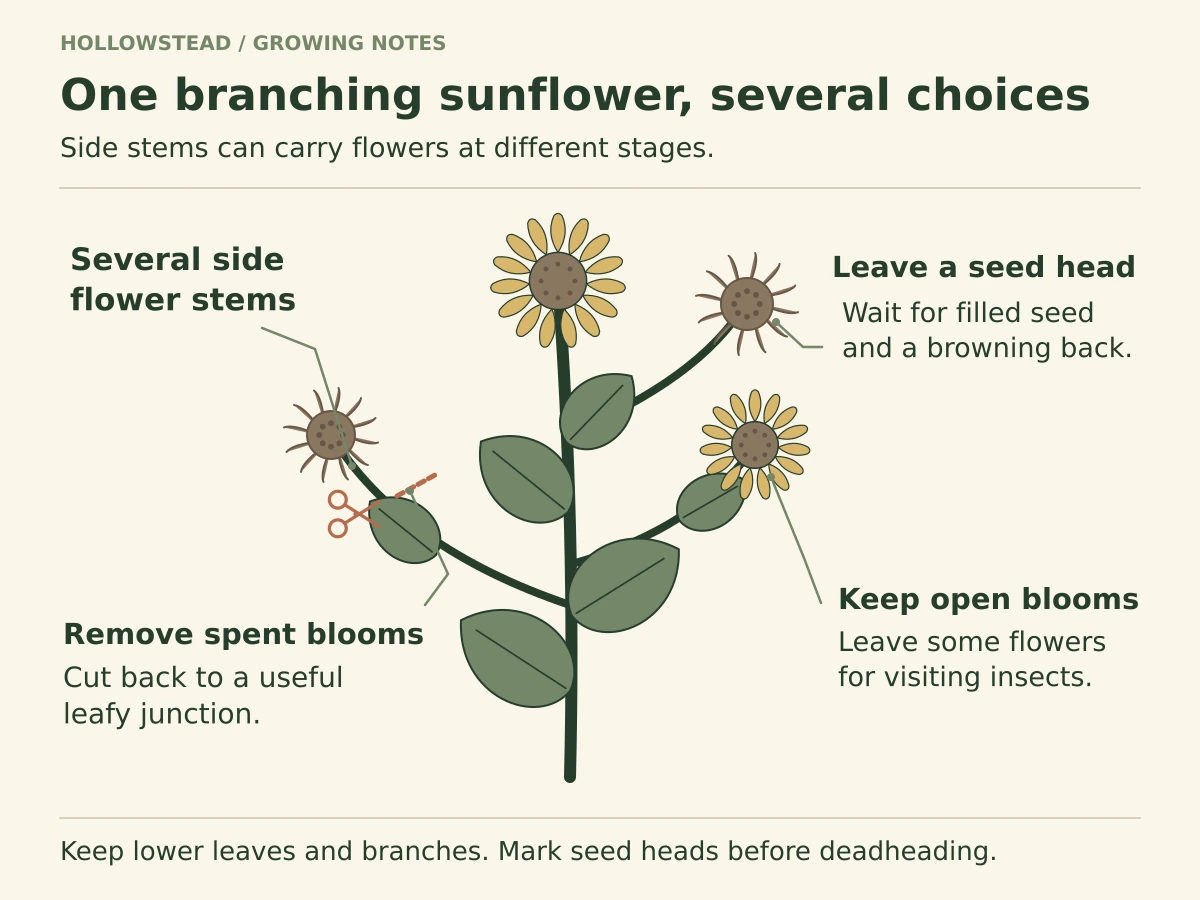
On a branching plant, harvest a side stem back to a useful junction while leaving healthy foliage and developing branches below. Seed Savers recommends fresh sunflower harvest as florets begin to rise from the head; Illinois Extension similarly advises cutting when petals are beginning to open.[3][2] Move stems into clean water promptly and remove foliage that would sit below the waterline.
Cut selected young heads for a vase and leave others open for insects and later seed-eating birds. To save seed that stays true to Lemon Queen, plan distance isolation before flowering and leave the seed heads accessible to pollinators during bloom. Add bird-protection covers only after flowering; they cannot undo earlier crossing.
If pollinator value is part of the goal, allow some heads to remain open in the garden. A branching plant lets you divide the crop: some flowers can be cut young, while others mature outdoors.
Lemon Queen: choose heads by purpose
- Cut young opening heads for bouquets and hydrate immediately.
- Leave open flowers for visiting pollinators.
- Reserve separate heads until filled seed matures and the back of the head browns; breathable covers can protect ripening seed.
- A cover placed after flowering cannot prevent crossing that already occurred.
Lemon Queen troubleshooting
Saving Lemon Queen sunflower seed
Lemon Queen is open-pollinated, which means saved seed can reproduce the variety when pollen is managed—but it also means bees can carry pollen from other Helianthus annuus cultivars. Seed Savers lists sunflower as insect-pollinated and gives a ½-mile isolation distance from other compatible sunflowers for maintaining variety purity.[3] Treat that as a planning guideline; nearby wild sunflowers, other gardens and local pollinator movement also affect crossing risk.[4] If you grow several sunflower varieties nearby and do not control pollination, the seed can still be fun to grow, but the offspring may not stay true to Lemon Queen.
For a first seed-saving attempt, use distance isolation where it is feasible and keep the selected flowers open to insects. Simply bagging unopened heads also excludes pollinators: covered flowers still need a controlled-pollination method to receive suitable pollen and set seed.[4] If you cannot isolate the planting or carry out controlled pollination, save the seed as a possible cross and label it accordingly.
Choose vigorous, healthy plants with the traits you want to keep. Leave selected heads on the plant until the back of the head and stem dry and seeds are mature. Seed Savers suggests covering ripening heads with a paper bag where birds threaten the crop, then finishing drying indoors.[3]
Store only thoroughly dry seed. Label it with variety, year, and whether other sunflowers were flowering nearby—that last note tells future-you how much confidence to place in varietal purity.
A growing checklist by stage
- Before sowingPlace the row so tall plants will not shade shorter crops. Mark your chosen spacing and an approach for cutting. Direct sow about ½ inch deep after frost.
- During emergenceKeep the seed zone moist and check for wildlife damage. For indoor starts, plan only a brief head start in individual cells and move plants before roots circle heavily.
- As branches developInstall or adjust support. Decide whether to leave the central growing point intact or try pinching on a few healthy plants; match that choice to your first-flower goal.
- As petals liftChoose side stems for the vase, cutting above healthy junctions and leaving other branches. Strip submerged leaves, hydrate promptly, and keep the bucket out of hot sun.
- After floweringLet marked seed heads mature on the plant. Once pollination is finished, a breathable cover can protect ripening seed from birds; it cannot prevent crossing that has already occurred.
For a mixed bouquet, compare the cutting stages of zinnia, cosmos, calendula, and sunflower. They should not all be harvested at the same degree of openness.
One workable container plan
For a conservative patio design, allow 15–20 US gallons; about 18 inches deep for 1 plant. These are planning allowances rather than a cultivar trial or a minimum-size guarantee. Demanding container project; anchor pot and stems, with daily moisture checks in heat. Use a potting mix with open drainage, leave the whole volume available to roots, and check below the surface before watering. Match feeding to the mix’s existing fertilizer and the label. See container flower plans.
A small home seed-saving workflow
For a first learning batch, mark 5–10 healthy representative plants if space permits and save modest amounts from each. This is a practical sampling exercise, not a conservation population standard; one or two plants may give usable seed but capture little diversity. Choose plants for the desired crop traits rather than saving only whichever plant produces seed first.
Watch for a browning back of the head and firm, filled seeds beneath dry florets. Protect ripening heads from birds with a breathable cover after flowering; finish drying under cover, then rub the seeds into a tray and separate empty hulls. Spread cleaned seed thinly in a sheltered, dry, ventilated place until fully dry before sealing. Label crop, variety, harvest year, parent plants and possible crossing. Keep cool, dry and dark. Before committing next season’s bed, germinate a small counted sample; that checks usefulness, not varietal purity.
Keep compatible volunteers and nearby varieties in mind when saving a named strain: crossing may occur before a seed bag is applied. Label uncertain garden seed honestly and consult seed-saving principles for isolation and parent-diversity planning.
Sourced grower observation
The Artistic Gardener reported a desert raised-bed trial in which transplanted Lemon Queen seedlings failed during a heat wave above 115°F, while a later direct sowing established; branching heads then became top-heavy enough to merit a stake. By contrast, Sage Osterfeld documented plants at least 8 feet tall on another site. These independent gardens underline why height and establishment vary; neither account is a comparative trial or an emergence promise for Hollowstead seed. Read the original grower account; compare the Illinois Extension sunflower guidance. These are independent accounts, not a Hollowstead trial of the offered seed lot.
GROW LEMON QUEEN
Grow the variety you just learned.
Use Lemon Queen when you want an open-pollinated branching sunflower with softer yellow color and multiple flower heads.
HOLLOWSTEAD SEED
Lemon Queen Sunflower Seeds
$3.99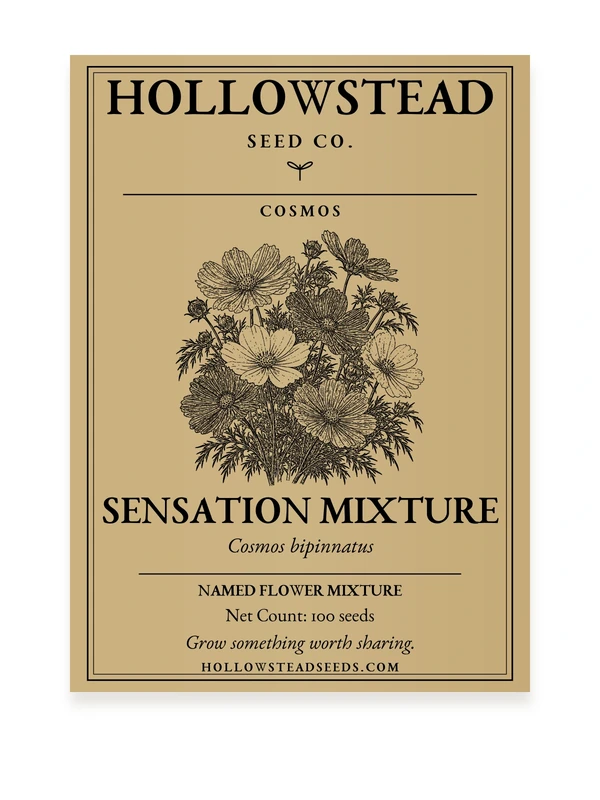
HOLLOWSTEAD SEED
Sensation Mixture Cosmos Seeds
$3.99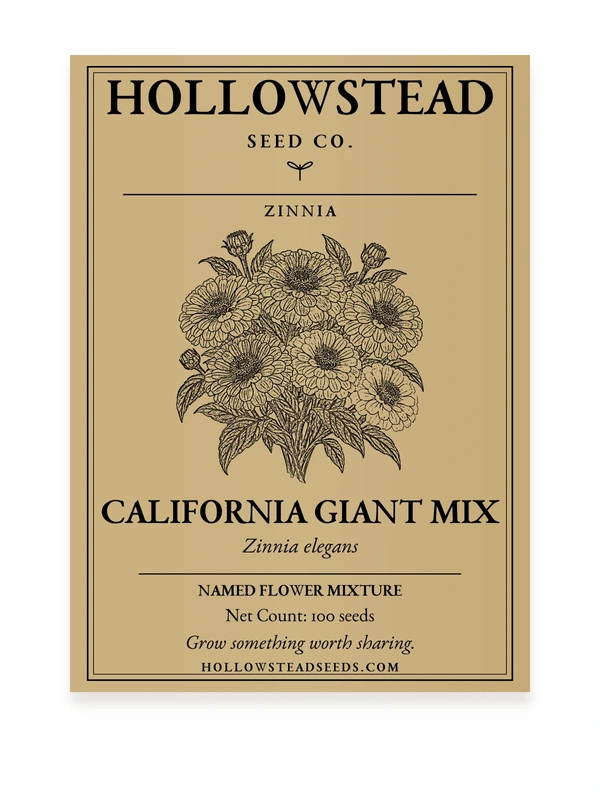
HOLLOWSTEAD SEED
California Giant Mix Zinnia Seeds
$3.99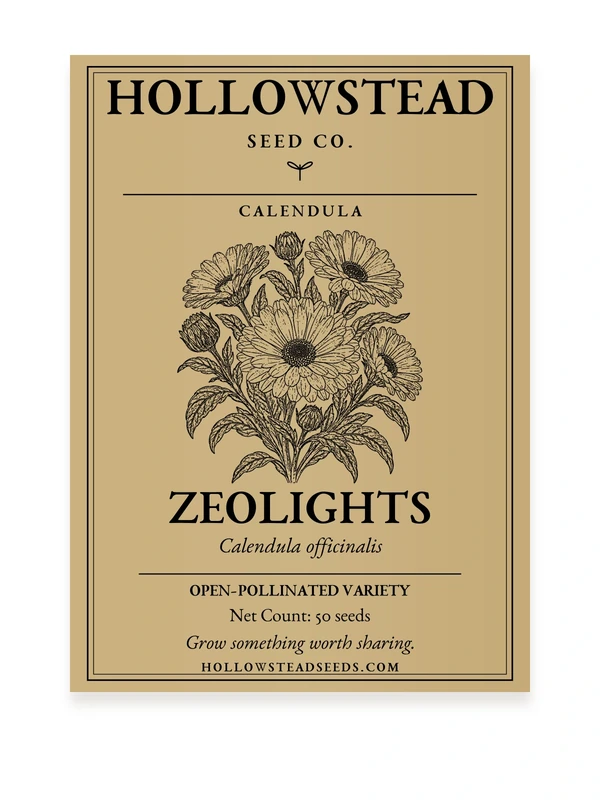
HOLLOWSTEAD SEED
Zeolights Calendula Seeds
$3.99KEEP LEARNING
Related Hollowstead guides
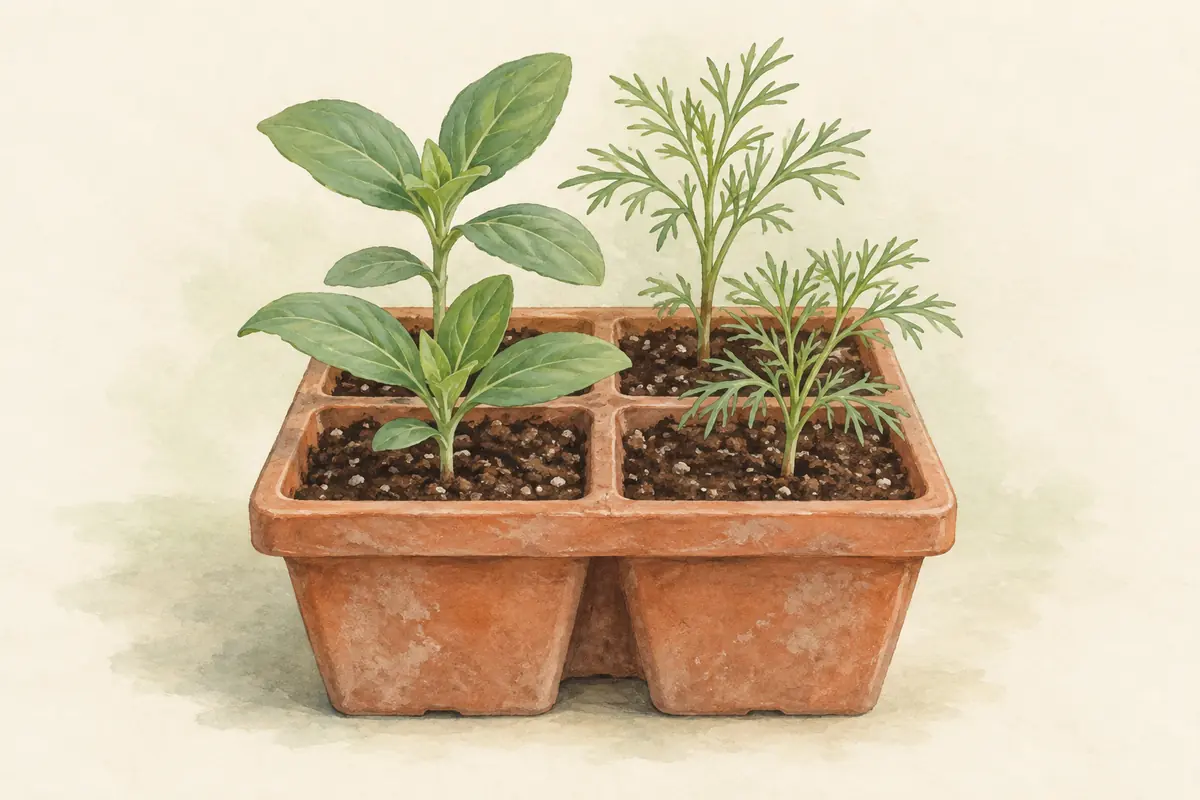
SEED STARTING
Growing Four Annual Flowers From Seed
Grow annual flowers from seed with a crop-by-crop plan for sowing, germination, thinning, transplanting, soil preparation, watering, pinching, bloom care, cutting, troubleshooting, and seed saving.
Read the guide
HARVEST GUIDE
When and How to Cut Flowers for Bouquets
Harvest better homegrown bouquets by cutting at the right flower stage, using clean tools and buckets, conditioning stems quickly, protecting foliage from vase water, and managing vase conditions.
Read the guide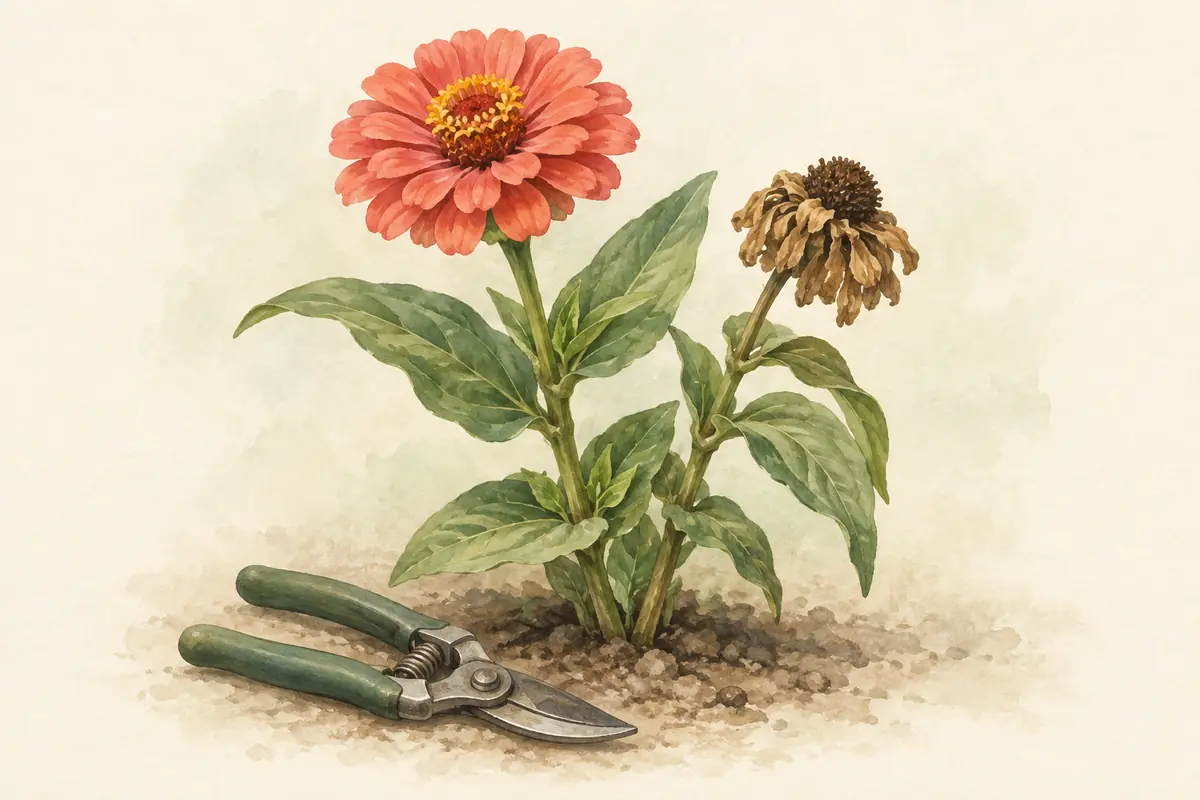
FLOWER CARE
How to Deadhead Flowers for More Blooms
Deadhead annual flowers more precisely by learning where to cut, how each crop responds, how often to revisit plants, what diseased material to remove, and when to stop for seed saving.
Read the guideFrequently asked questions
Is Lemon Queen a perennial sunflower?
No. Hollowstead Lemon Queen is Helianthus annuus, an annual sunflower.
Should I pinch Lemon Queen sunflower?
It is naturally branching, so pinching is optional in a home garden. Leave it unpinched to keep the central flower, or pinch healthy plants when longer side stems are the goal. See the branching and support section.[5]
Can I succession sow Lemon Queen?
Yes. Small repeat sowings can extend bloom, but stop early enough for later plantings to mature before frost.
When should I cut Lemon Queen for a bouquet?
Cut while the head is young and beginning to open, then get the stem into clean water quickly.
Will saved seed stay true?
It can when pollination is controlled, but sunflower is insect-pollinated and crosses readily with other compatible sunflower varieties.
Sources & further reading
Reviewed September 24, 2026. Variety references inform identity and planning; crop guidance is adapted to a home garden.
- Illinois Extension — How to Grow Sunflowers at Home.
- Illinois Extension — Plant Sunflowers for Summer Beauty and Pollinator Power.
- Seed Savers Exchange — Flower Seed Saving Profiles.
- Seed Savers Exchange — Isolation Methods.
- Johnny’s Selected Seeds — Branching Sunflowers Growing Information.
- Renee’s Garden — annual Lemon Queen sunflower Its 12-inch thinning, nectar and pollen, cut flowers and seed for birds. https://www.reneesgarden.com/collections/attracts-pollinators/products/lemon-queen
Read Our Story for how Hollowstead sources seed, or get in touch with a question about the offered lot.
Hollowstead Growing Notes
A little help for your next growing season
Practical sowing advice, help choosing seeds, and occasional Hollowstead shop news. Usually one or two emails a month, plus a short welcome note.
Choose your topics and frequency after you confirm. Our guides and planting calendar are always free.