
ZINNIA GUIDE
California Giant Mix Zinnia Growing Guide
Grow California Giant Mix zinnias for tall summer color and cutting stems with warm-soil sowing, spacing, pinching, support, base watering, disease prevention, harvesting, and seed saving.
FlowersVariety guideBeginner → advanced
Published by Hollowstead Seed Co. · How this guide is prepared
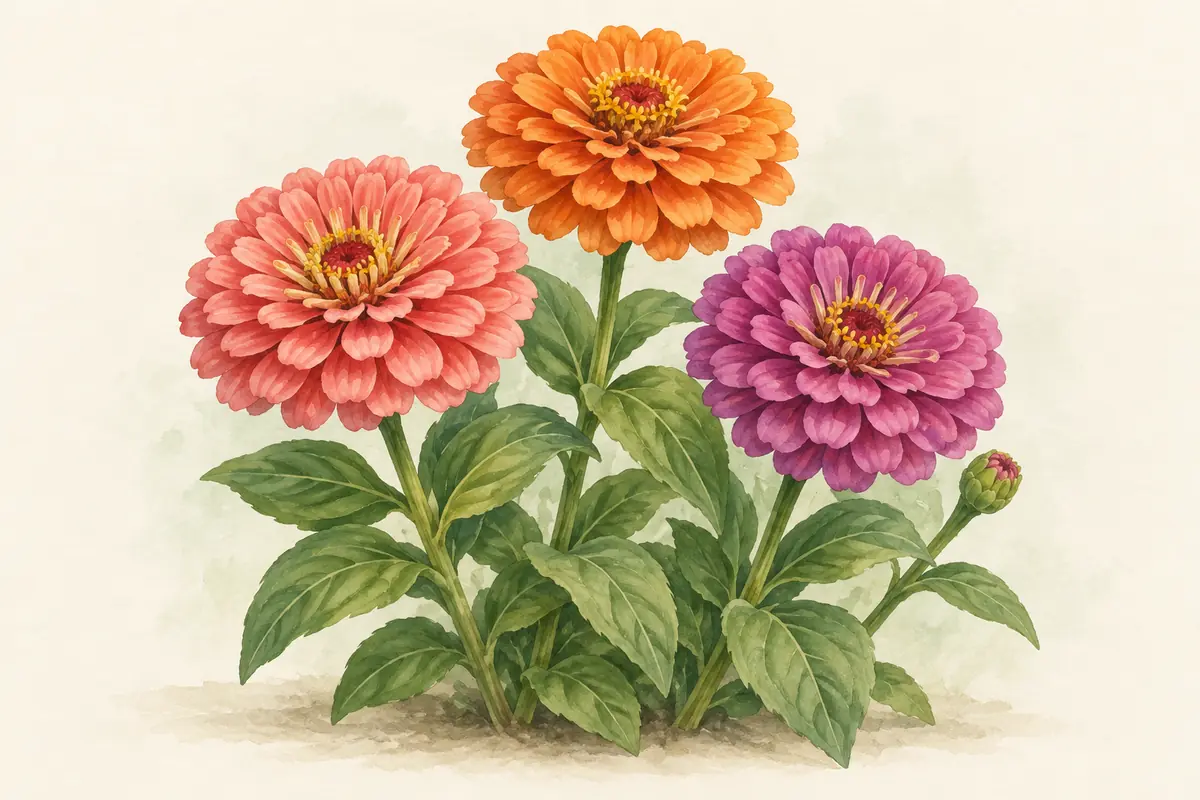
Quick answer
California Giant Mix is a tall Zinnia elegans selection built for warm weather, bright sun, and repeated cutting. Wait until frost danger has passed, sow into warming soil, thin for airflow, pinch healthy young plants if you want more branches, water the root zone instead of repeatedly wetting leaves, and harvest frequently once stems are ready.[1][2]
Zinnias want heat without stagnation. Give them sun and warmth, but also enough spacing and clean watering habits that humid summer weather does not leave the canopy wet for long periods.
At a glance
| Trait | Useful starting point |
|---|---|
| Species | Zinnia elegans |
| Habit | Tall annual; about 30–48 inches |
| Light | Full sun |
| Sowing depth | About ¼ inch |
| Spacing | About 12–15 inches for Hollowstead seed |
| Bloom estimate | About 75–90 days from sowing |
| Pinching | Useful for branching; optional by goal |
| Cut stage | Stem below bloom should be firm |
- Warmth
- Plant after frost in warm conditions
- Sun
- Full sun
- Airflow
- Space for a drier canopy
- Water
- Root zone first; avoid unnecessary leaf wetness
- Harvest
- Cut when stems are firm
- Sanitation
- Remove diseased debris and keep the soil surface clean
SAVE FOR SOWING DAY
Five-step crop plan for California Giant Mix Zinnia
Open the sow-to-harvest plan
- StartAfter frost danger, sow into warming soil about ¼ inch deep; thin seedlings early for airflow. Guide details
- PlantAllow about 12–15 inches for tall plants in full sun; put optional support in before heavy blooms. Guide details
- MaintainWater at the root zone, keep foliage aired, and pinch healthy young cutting plants above a leaf pair if extra branching suits the goal. Guide details
- HarvestCut when the flower is open and the stem below its head is firm, leaving healthy nodes for new stems. Guide details
- Next sowing or seedWhere enough warm season remains, start a small replacement batch; reserve selected dry brown heads for labeled seed, allowing for mix variation. Guide details
- Space
- Tall 30–48-inch cutting mix; 12–15-inch spacing favors access and airflow over a dense wall.
- Timing
- About 75–90 days from sowing to bloom is a planning estimate; decide on late sowings against remaining warm weather and frost risk.
Full growing guidehttps://hollowsteadseeds.com/california-giant-zinnia-growing-guide/Seed packethttps://hollowsteadseeds.com/product/california-giant-mix-zinnia-seeds/Find planting dates by ZIP code
Variety reference photo
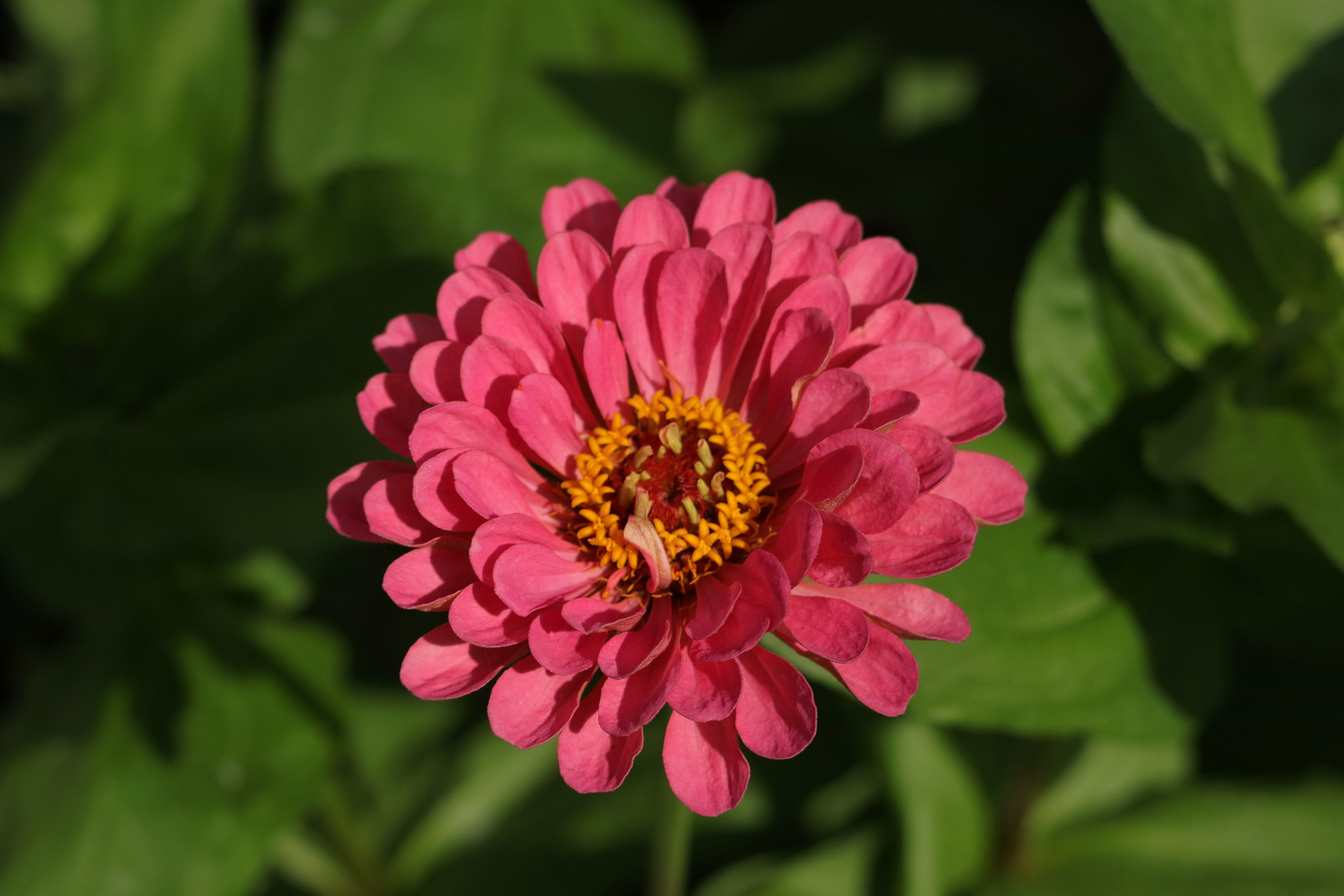
California Giant is supposed to be tall
Clemson Extension describes the California Giant series as a historic selection developed in 1926, commonly reaching about 3–4 feet tall with large flowers in a range of colors.[1] Hollowstead’s current catalog guidance uses a slightly broader 30–48 inch range as a planning range; weather, spacing, fertility, and harvest style affect final plant size.
Bed or patio? Botanical Interests describes its California Giants blend with 4–6-inch blooms. That is a reference for a tall mixed cutting type, not a promised diameter or color distribution for every flower here. For a tight patio pot choose a named compact zinnia; for stems, reserve bed room and decide whether to pinch or support.[9]
That height is useful in a cutting garden but deserves planning. Put tall zinnias where they will not shade short crops, leave access for cutting, and consider support in storm-prone locations before stems are carrying several large blooms.
California Giant Mix Zinnia
- Warm-season, full-size cutting zinnia; roughly 30–48 inches tall in the catalog.
- Sow about ¼ inch deep; use the current catalog 12–15-inch spacing baseline.
- Thin early, install support if exposed, and pinch only established vigorous plants if more branches are wanted.
Sow after frost and do not bury the seed deeply
University of Minnesota Extension recommends sowing zinnia seed about ¼ inch deep and reports germination in roughly 4–8 days around 70–75°F under controlled conditions.[2] Outdoors, emergence varies with soil temperature, moisture, crusting, and seed depth. Direct sowing after frost is straightforward; a short indoor start can move bloom earlier if seedlings are given strong light and hardened carefully.
Thin early enough that selected plants can develop their own root systems. A crowded row may look efficient at seedling stage but can become a humid wall of foliage once summer growth accelerates.
Pinch for more branches when that matches the goal
Pinching removes the growing tip so lower buds can form branches. Seed Savers recommends it for cutting zinnias; Utah State gives a practical stage of about 8–12 inches tall.[3][7] Wait until the plant is rooted and growing strongly. Remove the tip above a healthy leaf pair, retaining several leafy nodes below.
Choose by goal: pinch part of a cutting patch for side stems, and leave a few plants unpinched if an earlier central bloom matters. Skip a stressed plant and reconsider pinching a late sowing with little season left. Put a twine corral or horizontal support in place before tall stems carry heavy blooms.
Airflow, watering, and disease prevention
Zinnias are warm-season workhorses, but leaf disease can shorten the show. Minnesota recommends keeping the soil surface clean and removing old blooms; Minnesota and Maryland flower-care guidance both emphasize reducing prolonged leaf wetness and maintaining airflow.[2][4] Water at the base when practical, preferably early enough that any splashed foliage dries quickly.
Spacing does not make disease impossible, and overhead rain is unavoidable. The goal is to avoid adding preventable leaf wetness to a dense canopy. Remove badly diseased leaves or plants when appropriate, disinfect tools after cutting obviously diseased tissue, and do not save seed from a plant that performed poorly because of suspected systemic disease.
Powdery-looking foliage is not a reason to fertilize harder. Diagnose the leaf problem first. More soft growth can make a dense, disease-prone canopy even harder to manage.
Harvest when the stem can hold the flower
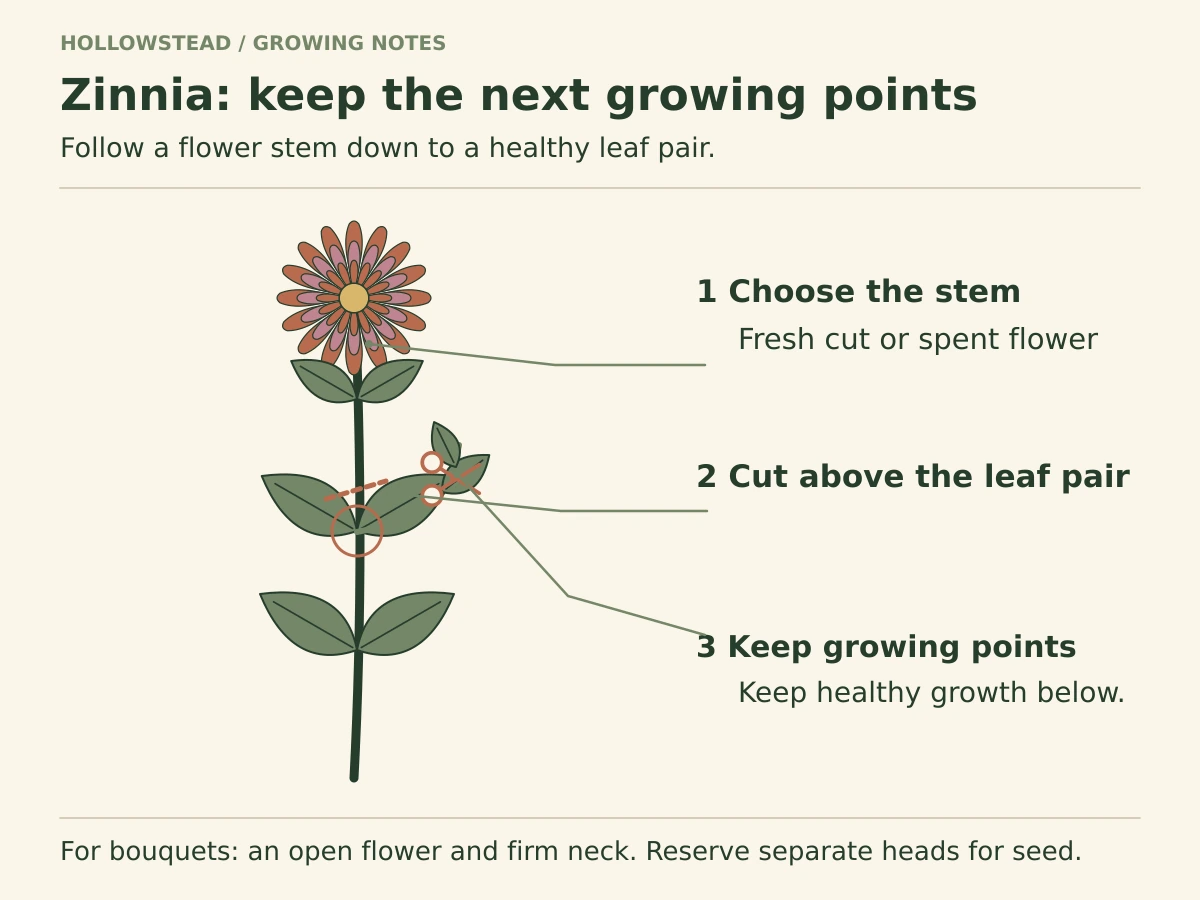
Judge the flower and stem together. An open, well-colored flower can still have an immature neck; Seed Savers uses a stiff stem below the head as the readiness test.[3]
- Check the neck.Hold the stem below the flower and gently move it. Wait if the head nods on a flexible neck; choose a firm, upright stem.
- Make a useful cut.Follow the stem down to a healthy junction rather than snipping just below the bloom. Utah State recommends cutting two to four nodes below the head for longer replacement stems; retain enough healthy foliage below.[7]
- Hydrate and maintain.Cut in the cooler part of the day, remove leaves that would be underwater, and place the stem in a clean bucket. Check vase water daily and change it about every two days.[2][7]
Deadhead flowers you leave out of bouquets unless you have marked them for seed saving. Cutting an immature flower cannot provide mature planting seed.
Zinnia health and cutting
- Start at 12–15-inch spacing; widening toward 18 inches is an optional humid-site adjustment.
- Base watering reduces splash and leaf-spot risk. Powdery mildew can infect dry leaves; sun, airflow and avoiding excess nitrogen matter.
- Cut open flowers only when the neck below the bloom is stiff. Remove diseased debris and diagnose before treating.
Keep an older patch or start another?
Johnny’s recommends successive zinnia sowings about two weeks apart for a continuing supply of fresh stems.[8] In a home garden, two small batches may be more manageable than a summer-long schedule. Leave a little space for the younger batch before the first one fills the bed.
| Your patch | Useful next move |
|---|---|
| Healthy foliage, new buds, usable stems | Keep cutting. A new sowing is optional when the existing patch still meets your needs. |
| Older plants losing quality, with a long warm season ahead | Start a small replacement patch in a prepared space. Correct crowding or watering problems before repeating them. |
| Only a short period remains before the usual killing frost | Prioritize current plants. Count back the variety’s 75–90-day bloom window and allow a weather margin before committing to another sowing. |
Warmth helps zinnias establish, but a hot seedbed can dry much faster than a mature plant’s root zone. Monitor the newly sown row separately. A succession planting is a timing tool, not a cure for unidentified disease in the first patch.
California Giant zinnia troubleshooting
Use the symptom to choose the next check. A white coating, discrete brown spots, and wilt in wet soil call for different responses.
Saving California Giant zinnia seed
Zinnias can self-pollinate but insects also move pollen between flowers. Seed Savers recommends substantial isolation when maintaining a specific zinnia variety.[3] California Giant Mix is already a color mixture, so saved seed will not reproduce a fixed color percentage even when the variety remains genetically recognizable.
Choose healthy, vigorous parent plants before you stop deadheading. Leave selected heads until they are brown and fully dry; the stem below the head should also be mature. Rub or break apart the dry head, separate obvious chaff, then dry the seed thoroughly before storage.[3]
If other zinnia varieties were flowering nearby, label the seed accordingly. You can still grow it, but the next generation may show unexpected colors or flower forms.
A growing checklist by stage
- Before sowingChoose full sun and a reachable bed. Mark 12–15-inch planting spaces; toward 18 inches is a reasonable home-garden adjustment when canopy access and humid conditions matter more than packing the bed.[2]
- At emergenceThin selected plants early. If nothing appears after roughly two weeks in warm, moist soil, inspect a few seeds before resowing. Controlled-temperature emergence estimates are not a deadline for a cold outdoor bed.
- At established growthDecide which plants to pinch and install support. Check the root zone before irrigation; a dry surface alone does not tell you what is happening deeper in the bed.
- At first bloomUse the neck test, then make a cut that leaves leafy nodes. Record the first cutting date so next year’s timing comes from your own garden.
- Before late-season sowingCompare the remaining frost-free season with the bloom window. Keep harvesting healthy plants while the younger batch grows; do not remove a useful patch simply because a calendar says to.
One workable container plan
For a conservative patio design, allow 5 US gallons or more; about 12 inches deep for 1 plant. These are planning allowances rather than a cultivar trial or a minimum-size guarantee. Full-size cutting plant; stake if exposed. Use a potting mix with open drainage, leave the whole volume available to roots, and check below the surface before watering. Match feeding to the mix’s existing fertilizer and the label. See container flower plans.
A small home seed-saving workflow
For a first learning batch, mark 5–10 healthy representative plants if space permits and save modest amounts from each. This is a practical sampling exercise, not a conservation population standard; one or two plants may give usable seed but capture little diversity. Keep a mix’s color forms represented rather than saving only the first flower or earliest bolting plant.
Watch for completely dry, brown flower heads with firm seeds at the petal bases. Break the dry head apart over a tray, separate filled seeds from petal fragments and discard soft or moldy material. Spread cleaned seed thinly in a sheltered, dry, ventilated place until fully dry before sealing. Label crop, variety, harvest year, parent plants and possible crossing. Keep cool, dry and dark. Before committing next season’s bed, germinate a small counted sample; that checks usefulness, not varietal purity.
Keep compatible volunteers and nearby varieties in mind when saving a named strain: crossing may occur before a seed bag is applied. Label uncertain garden seed honestly and consult seed-saving principles for isolation and parent-diversity planning.
Sourced grower observation
A gardener who identified their cut flowers as California Giant zinnias reported plants about 3½ feet tall and advised putting them toward the back of the bed. That garden observation sits within published variety height estimates, but actual size varies with season and site. Read the original grower account; compare the Wisconsin Extension zinnia guidance. This is one grower’s account, not a Hollowstead trial of the offered seed lot.
GROW CALIFORNIA GIANT
Grow the variety you just learned.
California Giant Mix is a tall cutting zinnia for gardeners who want large, colorful summer blooms and enough stem length for bouquets.
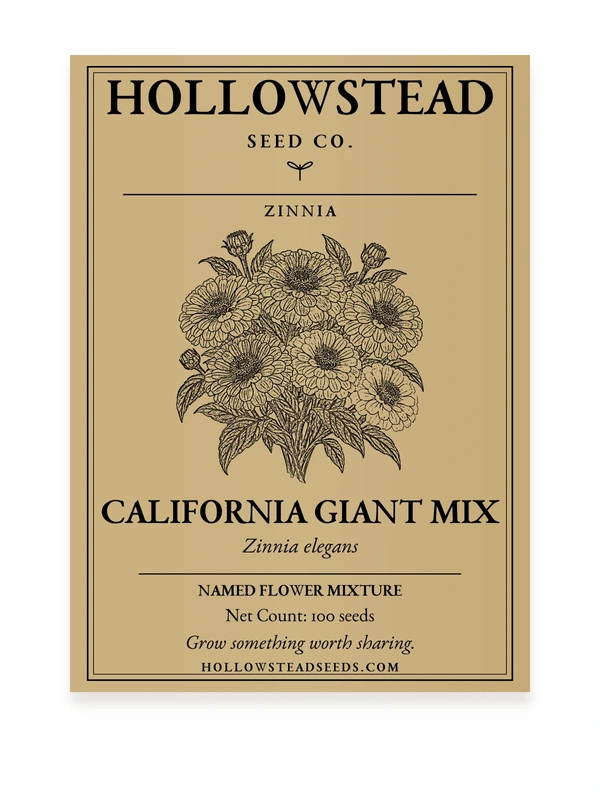
HOLLOWSTEAD SEED
California Giant Mix Zinnia Seeds
$3.99
HOLLOWSTEAD SEED
Lemon Queen Sunflower Seeds
$3.99
HOLLOWSTEAD SEED
Sensation Mixture Cosmos Seeds
$3.99
HOLLOWSTEAD SEED
Zeolights Calendula Seeds
$3.99KEEP LEARNING
Related Hollowstead guides
TROUBLESHOOTING
Why Flowers Don’t Bloom — or Bloom Poorly
Troubleshoot weak or missing flowers in a logical order by checking maturity, season, sun, water, roots, fertility, spacing, weather, pests, disease, and harvest practices.
Read the guide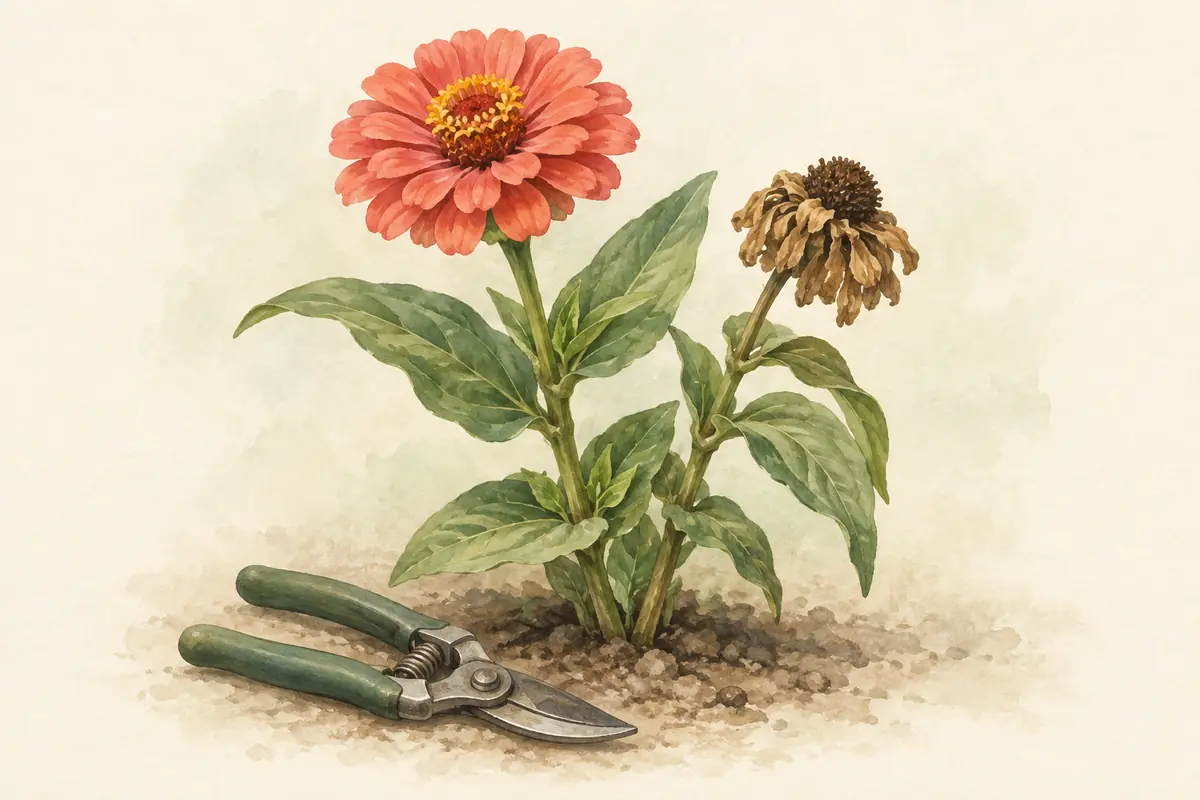
FLOWER CARE
How to Deadhead Flowers for More Blooms
Deadhead annual flowers more precisely by learning where to cut, how each crop responds, how often to revisit plants, what diseased material to remove, and when to stop for seed saving.
Read the guide
HARVEST GUIDE
When and How to Cut Flowers for Bouquets
Harvest better homegrown bouquets by cutting at the right flower stage, using clean tools and buckets, conditioning stems quickly, protecting foliage from vase water, and managing vase conditions.
Read the guideFrequently asked questions
Can California Giant zinnias be direct sown?
Yes. Direct sow after frost once the soil is warm enough for quick establishment.
Should I pinch California Giant zinnias?
Pinching is useful for branching and repeated cutting, but it is optional if your priority is the earliest central bloom.
Why do my zinnia leaves turn white?
Powdery mildew is common on zinnias. Unlike many leaf-spot diseases, it does not need a film of water on leaves to infect; humid air and crowded, shaded growth can favor it even when foliage is dry. Watering at the base helps reduce splash and leaf-spot risk, but does not guarantee freedom from mildew. Improve airflow and sun exposure, remove badly affected debris, and identify the disease before choosing a treatment.[5]
When is a zinnia ready to cut?
Use the stem, not just petal color: the stem directly below the bloom should feel firm and support the head.
Can I save seed from California Giant Mix?
Yes, but color proportions vary and nearby zinnia varieties can cross through insect pollination.
Sources & further reading
Reviewed September 24, 2026. Variety references inform identity and planning; crop guidance is adapted to a home garden.
- Clemson Cooperative Extension — How to Grow Zinnias.
- University of Minnesota Extension — Zinnia.
- Seed Savers Exchange — Flower Seed Saving Profiles.
- University of Maryland Extension — Care of Annuals and Perennials.
- University of California IPM — Powdery Mildew on Ornamentals.
- Seed Savers Exchange — Isolation Methods.
- Utah State University Extension — Zinnia Cut Flower Production in Utah (PDF).
- Johnny’s Selected Seeds — Zinnia Growing Information.
- Botanical Interests — California Giants zinnia blend Its tall cutting blend and 4–6-inch flower description. https://www.botanicalinterests.com/products/california-giants-zinnia-seeds
Read Our Story for how Hollowstead sources seed, or get in touch with a question about the offered lot.
Hollowstead Growing Notes
A little help for your next growing season
Practical sowing advice, help choosing seeds, and occasional Hollowstead shop news. Usually one or two emails a month, plus a short welcome note.
Choose your topics and frequency after you confirm. Our guides and planting calendar are always free.