
HARVEST GUIDE
When and How to Harvest Cucumbers
Cucumbers move from perfect to overgrown quickly. Learn how size, color, firmness, variety, picking frequency, and gentle harvest technique tell you when fruit is ready.
CucumbersHarvest guideBeginner → advanced
Published by Hollowstead Seed Co. · How this guide is prepared
Quick answer
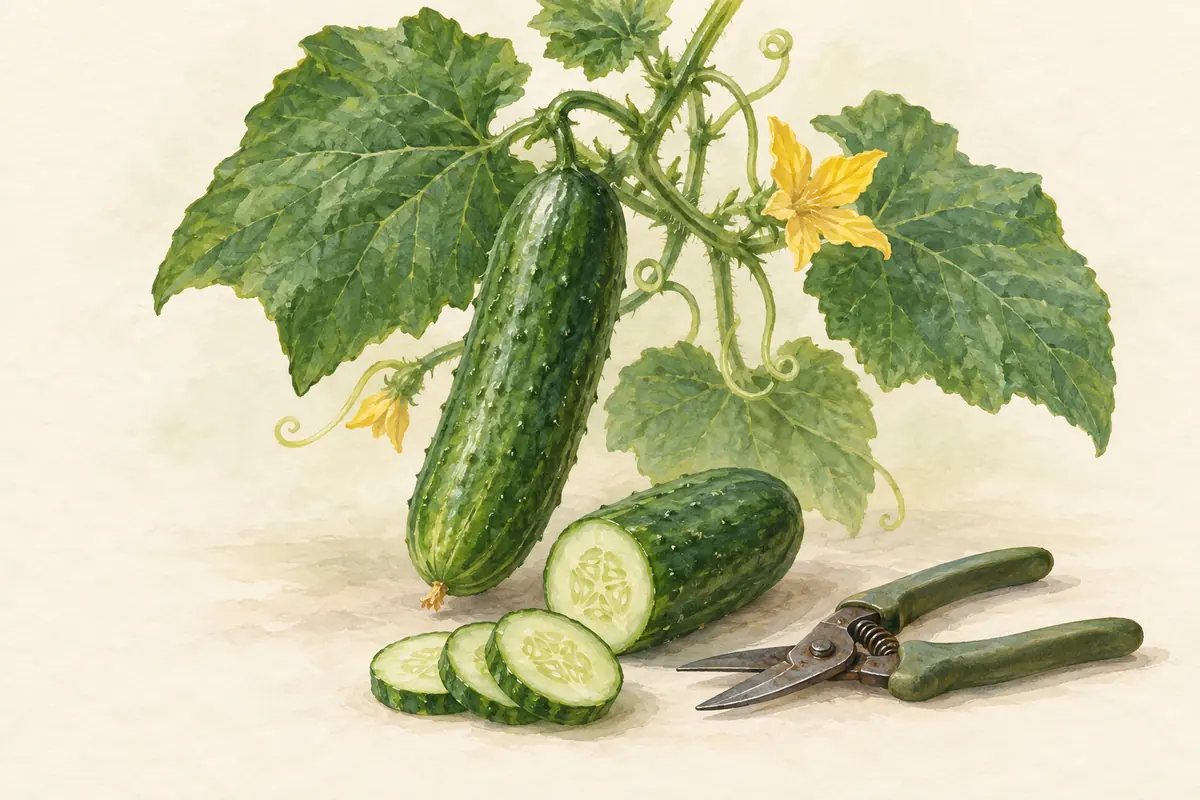
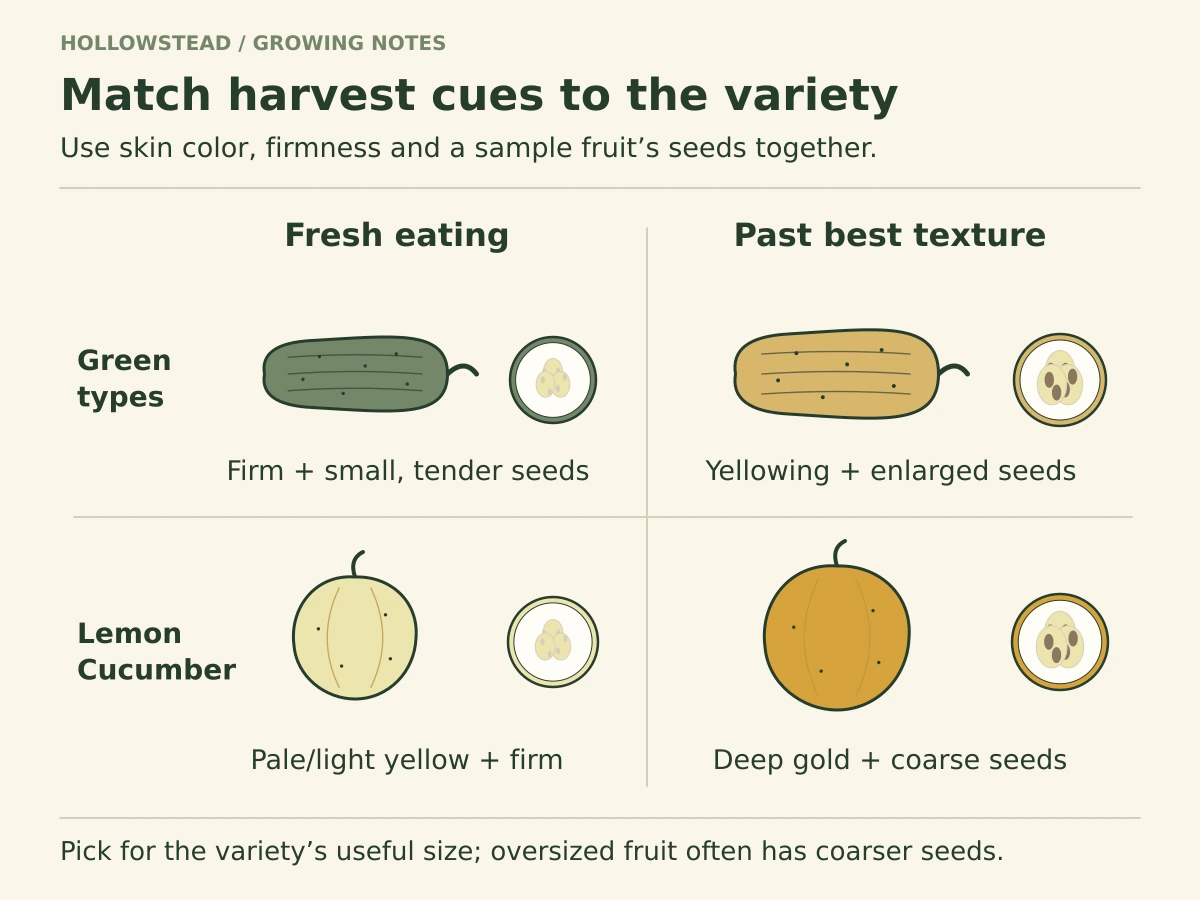
Pick standard green cucumbers while firm and before yellowing or large seeds. Lemon Cucumber is normally picked pale to light yellow; avoid deep gold fruit with enlarged seeds and declining texture. The ideal size depends on the variety and how you plan to use it; Illinois Extension lists roughly 6–8 inches for many slicing cucumbers, while pickling types are often harvested smaller.[1]
During peak production, check vines frequently. Cucumbers size up fast, and leaving oversized fruit on the plant can reduce continued production. Cut or twist fruit gently while supporting the vine so you do not tear stems or disturb rooted vine joints.[1][2]
The short version: harvest for the variety’s intended size, use firmness and color as cues, pick often, and handle the vine gently.
Harvest cues at a glance
| Question | Useful starting point |
|---|---|
| Slicing cucumber | Firm, glossy, variety-appropriate size |
| Lemon Cucumber | Round, firm, pale to light lemon yellow |
| Avoid | Oversized, deep-yellow, seedy fruit for fresh eating |
| Frequency | Check every day or two during peak production |
| Method | Snip or gently twist while supporting the vine |
| Wet vines | Avoid unnecessary handling when foliage is wet |
- Picklers
- Often harvested small and uniform for the intended recipe
- Slicers
- Firm and green before seeds enlarge and skin yellows
- Lemon
- Firm and lightly yellow before deep-gold overmaturity
- Frequency
- Check vines every day or two in peak production
- Seed fruit
- Left far beyond eating maturity on selected plants
Cucumber ripeness chart
Harvest size depends on cucumber type
There is no single correct cucumber length. Pickling cucumbers are often harvested small, while slicing cucumbers are allowed to become larger. Illinois Extension lists 6–8 inches as a common slicing range and emphasizes harvesting before seeds harden.[1]
Pick for the use, not for maximum size
A cucumber can be technically edible across a wide size range, but quality changes as the seed cavity expands. Pickling recipes often depend on a uniform small fruit size for texture and processing consistency. Slicers can remain useful longer, but “bigger” eventually means coarser seeds, softer texture, and reduced continued production on the plant.
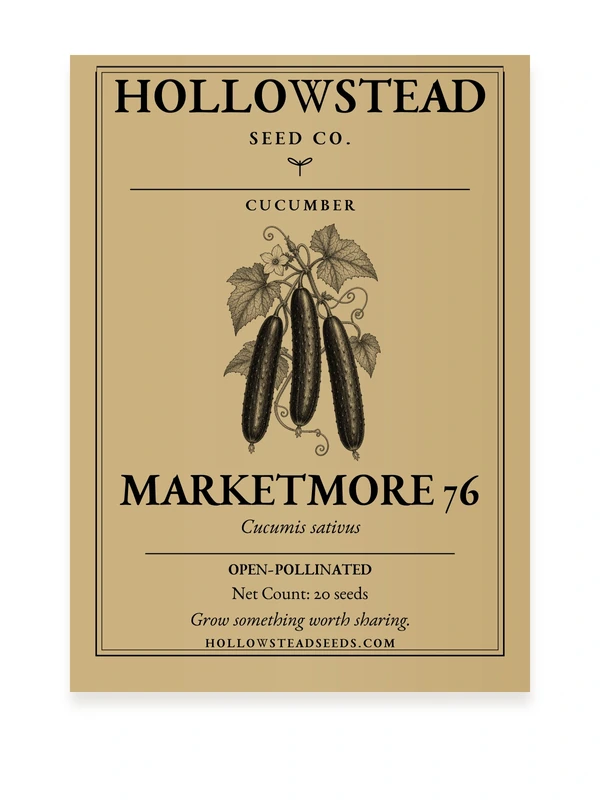
For a mixed planting, keep a harvest target for each variety: check Marketmore 76 around 8–9 inches while still firm and green, and pick National Pickling to the size your tested recipe requires. The Lemon, Marketmore 76 and National Pickling comparison explains why one universal length or color rule will not work.
Use color and firmness together
A good fresh-eating cucumber should feel firm and look like the mature color expected for its variety. Standard green slicers should not be allowed to become yellow. Lemon Cucumber is the exception: yellow is part of its normal harvest color, but very deep yellow and enlarged seeds indicate later maturity.
 View full-size diagram
Pick often to keep fruit coming
Cucumber fruit grows rapidly in warm weather. Illinois Extension recommends picking at least every other day during heavy production.[1] Regular harvest prevents fruit from disappearing under leaves until it is oversized.
Harvest when foliage is dry when you can
Illinois, Minnesota, and Maryland Extension all caution against working cucumber vines while they are wet because handling can help spread disease.[1][2][3] You do not need to sacrifice a crop because rain fell, but when harvest can wait until dew or rain dries, that is the cleaner routine.
How to remove cucumbers cleanly
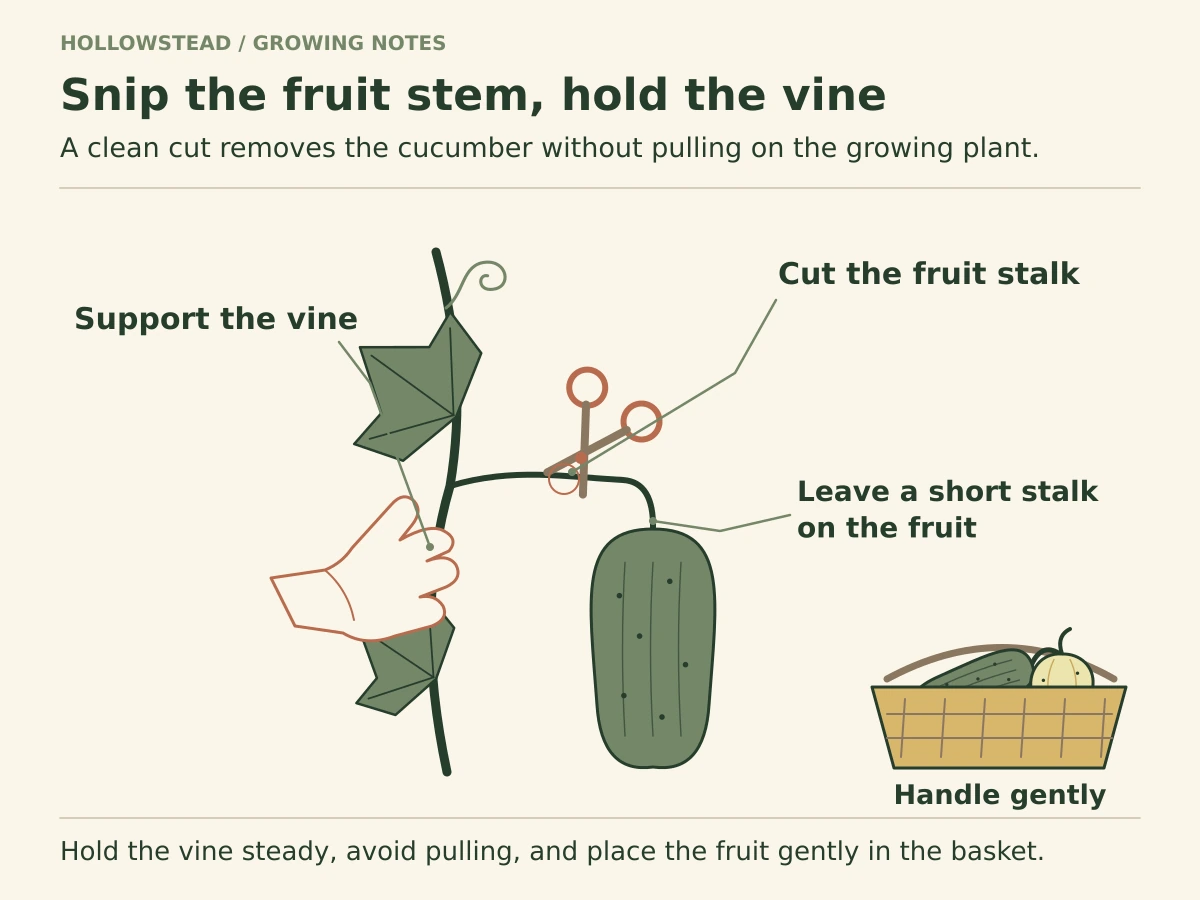
Use garden snips or pruners when stems are tough, or twist gently while supporting the vine. Avoid yanking. Cucumber vines can root at nodes touching soil, and rough handling can break those roots or tear productive stems.[2]
 View full-size diagram
Harvesting Lemon Cucumber
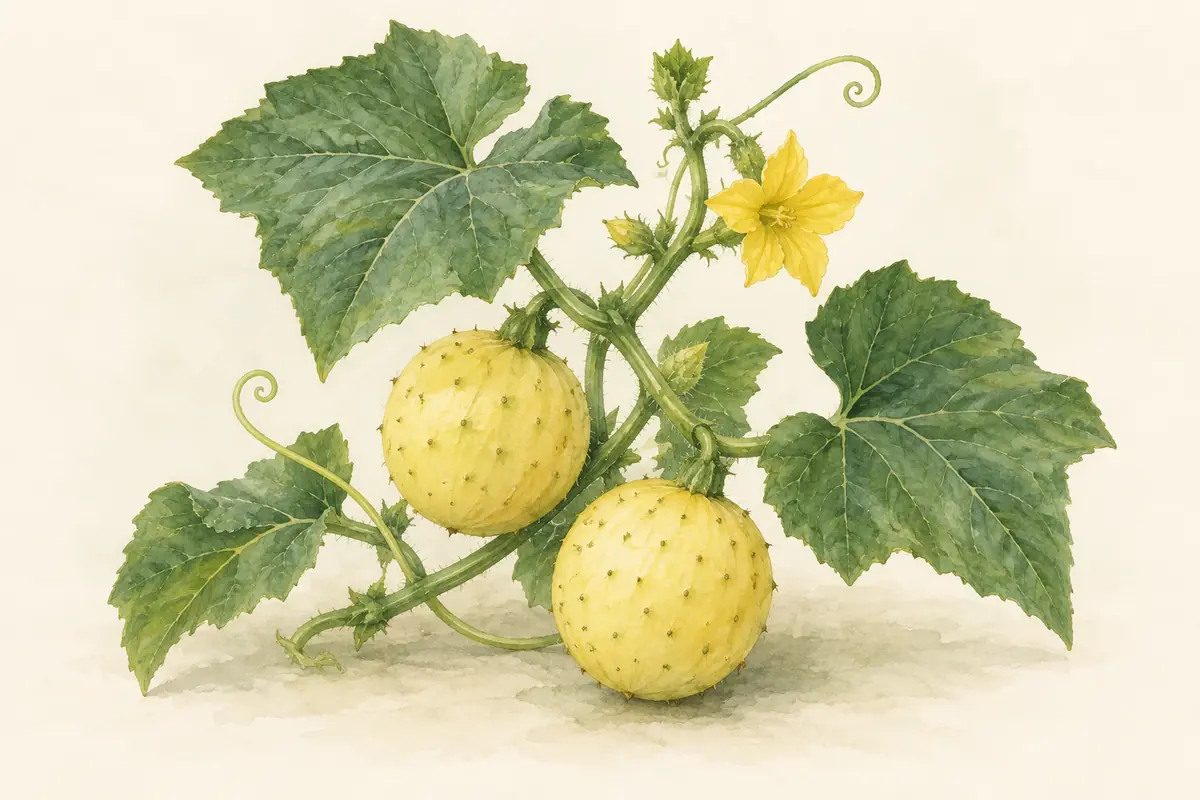
Pick Lemon Cucumber when the fruit is round, firm, and transitioning from pale green to a light lemon yellow. If the skin becomes very deep yellow and the seeds are large and hard, the fruit has moved beyond its best fresh-eating texture. See the variety guide for the full progression.
Short-term storage
Cucumbers lose quality relatively quickly after harvest. Minnesota Extension notes that common household refrigeration can hold cucumbers for roughly a week, though ideal cucumber storage is warmer and more humid than most refrigerators.[2] For longer preservation, use an appropriate tested pickling recipe, such as the National Center for Home Food Preservation’s sliced bread-and-butter pickles. Follow its cucumber size, slicing, vinegar strength, and processing directions; a large or overmature fruit is not a substitute for the specified ingredients.
Cucumbers prefer storage conditions most kitchens cannot provide
Minnesota describes ideal cucumber storage as humid and around 55°F—warmer than a typical refrigerator but cooler than most kitchens.[2] That is why home storage is a compromise. Refrigeration is practical for short periods, but the best quality strategy is still to harvest what you can use and preserve surplus promptly.
Harvest for seed, not for the kitchen
To keep saved seed true to a named variety, plan pollination before flowers open: varieties of Cucumis sativus can cross with each other. Use adequate isolation or protected hand-pollination, following the complete guide’s isolation and controlled-pollination method.[4]
For variety maintenance, save from 5–10 healthy, representative plants when possible; one plant can give viable seed, but it preserves a narrower sample. Retain the original supplier/lot and parent labels. Seed fruit must pass the eating stage, change to its mature yellow/orange color and lose firmness; Seed Savers advises waiting several weeks after that mature color change before extraction. For Lemon, the first pale-yellow eating color is too early. When plant health and weather allow, leave marked fruit on the vine as it matures; otherwise finish holding physiologically mature fruit under cover until it softens.[4]
Seed-saving cucumbers reverse the normal harvest rule. Instead of picking young, you leave a selected fruit until it is fully mature, often large and yellow or dull. Seed Savers Exchange then recommends opening the fruit, extracting seed and pulp, fermenting for about one to three days, rinsing, and drying the cleaned seed thoroughly.[4]
Reserve only a few seed fruits on plants chosen for health and true-to-type traits. A mature seed fruit can reduce continued kitchen production, so mark it clearly and harvest the rest of the vine normally.
Two harvest windows, two goals: tender immature fruit is for eating; fully mature fruit is for seed. Trying to use one stage for both compromises one of the goals.
GROW THIS CUCUMBER
Put the guide to work.
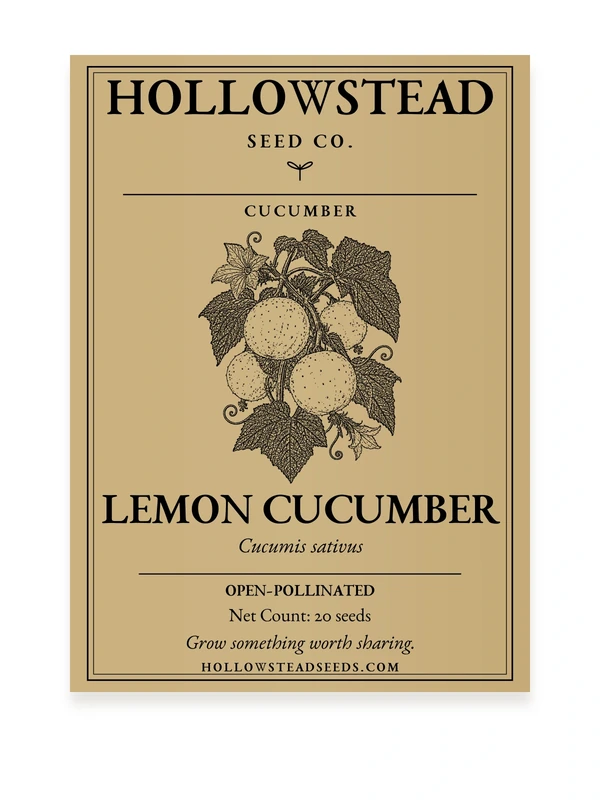
Choose Lemon for round salad fruit, Marketmore 76 for long green slices, or National Pickling for smaller pickling fruit; compare the three cucumber varieties to match your garden and harvest routine.
HOLLOWSTEAD SEED
Marketmore 76 Cucumber Seeds
$3.99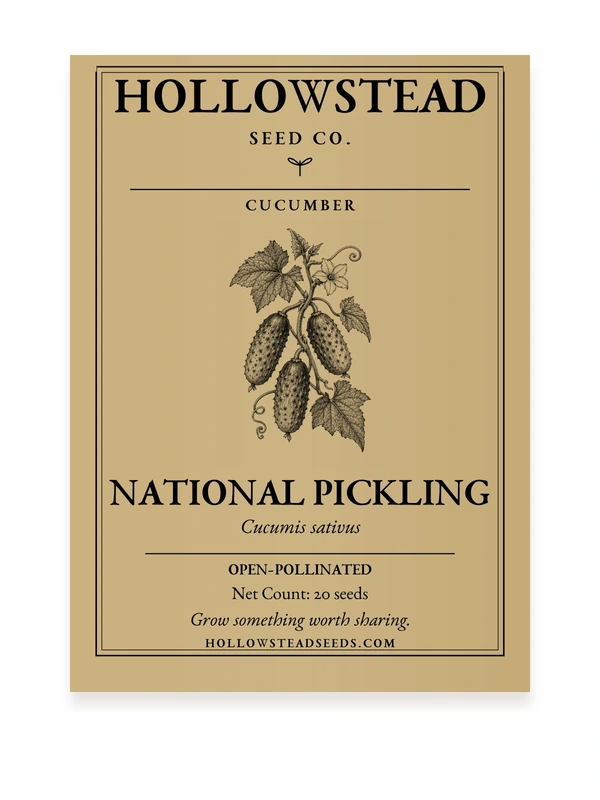
HOLLOWSTEAD SEED
National Pickling Cucumber Seeds
$3.99KEEP LEARNING
Related Hollowstead guides
CUCUMBER VARIETY GUIDE
Lemon Cucumber Growing Guide
Lemon Cucumber produces round fruit that ripens from pale green toward lemon yellow. Learn sowing, spacing, vine support, pollination, watering, and the best harvest stage.
Read the guide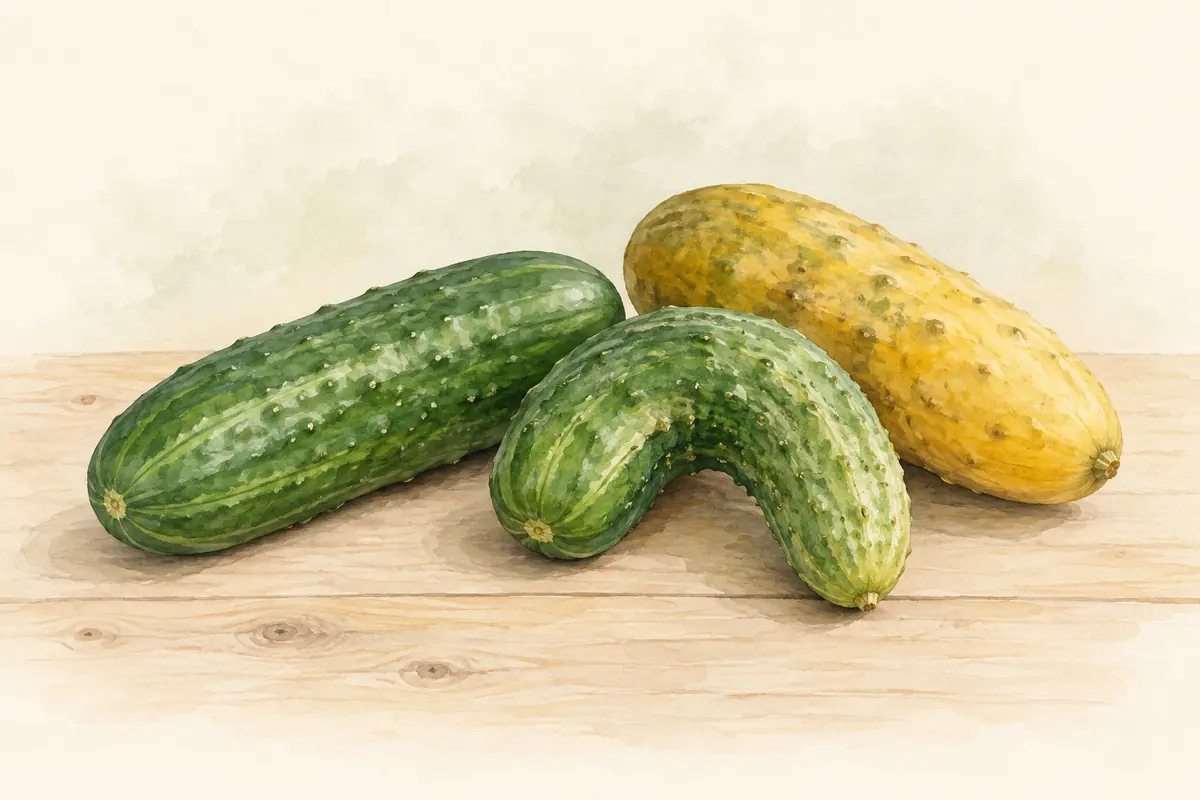
TROUBLESHOOTING
Why Cucumbers Turn Bitter, Yellow, or Misshapen
Bitter flavor, yellow fruit, and crooked cucumbers are useful clues. Learn how stress, overripeness, water, and incomplete pollination affect fruit quality and what to change.
Read the guide
CUCUMBER SEED STARTING
Growing Cucumbers From Seed: The Complete Guide
Grow cucumbers from seed with warm-soil timing, direct sowing or careful transplanting, steady moisture, trellising, pollination, and frequent harvest.
Read the guideFrequently asked questions
Can I pick cucumbers too early?
Yes, but young cucumbers are generally edible. The trade-off is smaller size and less developed variety character.
Why should I pick cucumbers so often?
Warm weather can take fruit from ideal to oversized quickly. Frequent picking also prevents mature fruit from slowing continued production.
Should I pull cucumbers off the vine?
Avoid hard pulling. Snip the stem or twist gently while supporting the vine.
When should I pick Lemon Cucumber?
When the fruit is round, firm, and pale to light lemon yellow—not after it has become very deep yellow and seedy.
Sources & further reading
- Illinois Extension Cucumber | Home Vegetable Gardening https://extension.illinois.edu/gardening/cucumber
- University of Minnesota Extension Growing cucumbers in home gardens https://extension.umn.edu/garden-and-home/yard-and-garden/gardening-in-minnesota/growing-cucumbers
- University of Maryland Extension Growing Cucumbers in a Home Garden https://extension.umd.edu/resource/growing-cucumbers-home-garden
- Seed Savers Exchange Growing Guide: Cucumber https://seedsavers.org/grow-cucumber/
Hollowstead Growing Notes
A little help for your next growing season
Practical sowing advice, help choosing seeds, and occasional Hollowstead shop news. Usually one or two emails a month, plus a short welcome note.
Choose your topics and frequency after you confirm. Our guides and planting calendar are always free.