
TROUBLESHOOTING
Why Pepper Flowers Fall Off or Don’t Set Fruit
Diagnose pepper blossom drop with temperature thresholds, moisture and fertility checks, pollination context, early-flower guidance, container heat clues, and a fast fruit-set decision chart.
PeppersTroubleshootingBeginner → advanced
Published by Hollowstead Seed Co. · How this guide is prepared

Quick answer
Pepper flowers most often fail to set because the plant is under temperature or moisture stress, not because it needs a mysterious “fruit-set” product. Maryland Extension notes that pepper flowers and tiny fruit may drop when nights fall below about 60°F or rise above about 75°F, or when days exceed about 95°F; Missouri gives a similarly broad warning that temperatures above roughly 94°F or below 50°F can reduce fruit set.[1][2]
Keep roots evenly moist, avoid excess nitrogen, preserve a healthy canopy, and give the plant time to resume production when weather improves.
Fruit set at a glance
| Possible cause | Useful clue |
|---|---|
| Hot nights | Flowers drop during a heat wave; plant otherwise healthy |
| Cold nights | Early-season flowers drop or stall |
| Dry root zone | Wilting, small fruit drop, repeated dry/wet swings |
| Excess nitrogen | Very lush leafy plant with poor fruiting |
| Poor pollination | Less common first suspect; peppers self-pollinate but benefit from movement/insects |
| Disease/pests | Distortion, spotting, severe stunting, or damage beyond flower drop |
- Cold warning
- Nights below ~60°F can interrupt set
- Hot-night warning
- Nights above ~75°F can trigger drop
- Hot-day warning
- Days above ~95°F can reduce set
- Water rule
- Steady moisture beats feast-and-famine watering
Heat and cold can both interrupt fruit set
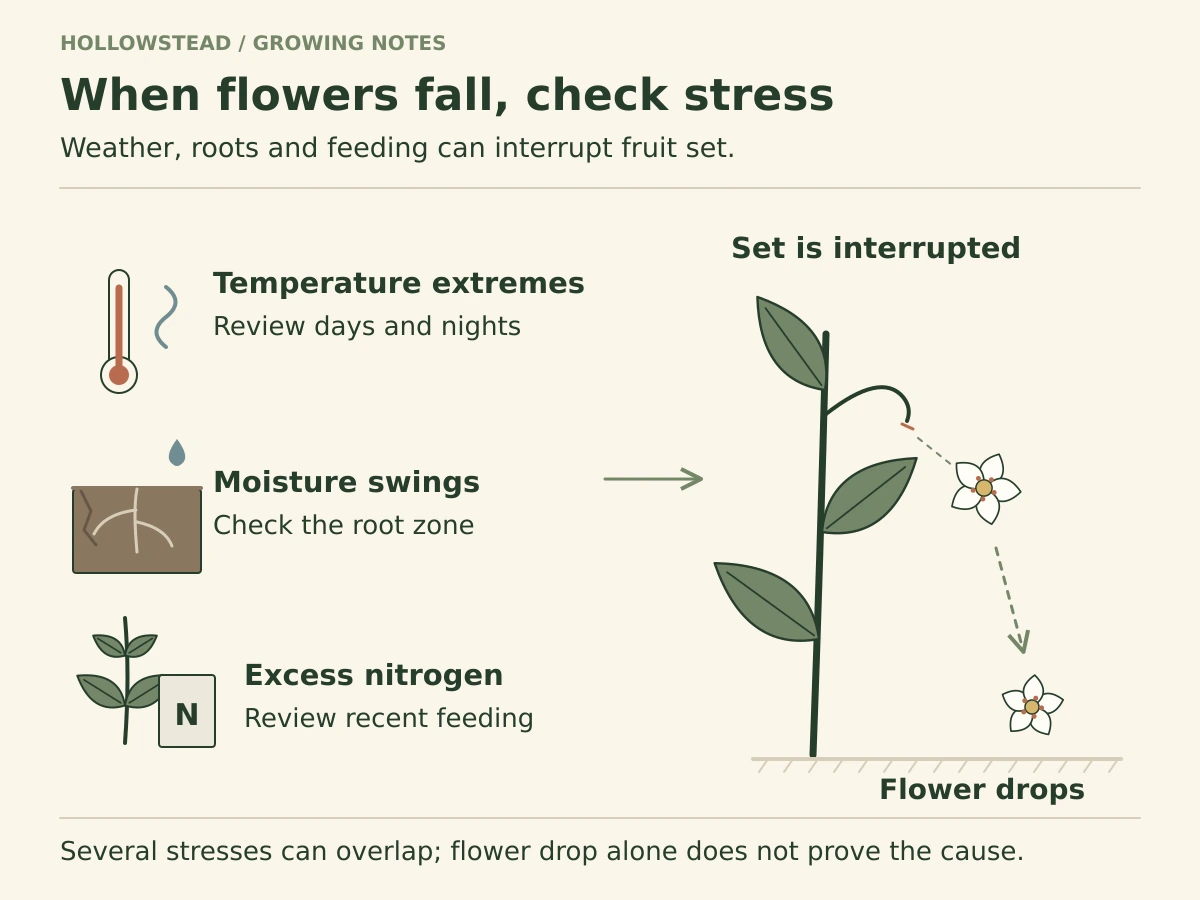
Pepper flowers are built for warm weather, but “warm” is not the same as “as hot as possible.” Maryland Extension identifies nights below about 60°F or above 75°F and days above about 95°F as conditions that can cause flowers and small fruit to drop.[1] Missouri Extension likewise warns that temperatures above about 94°F or below 50°F can reduce fruit set.[2]
The ranges are not identical because cultivars, humidity, root-zone conditions, and the duration of the stress all matter. Do not treat a single thermometer reading as a switch. Look for a pattern: a healthy plant that stops setting during a run of extreme nights, then resumes when temperatures moderate.
 View full-size diagram
Water stress weakens flowers and tiny fruit
Peppers have relatively shallow roots, so the top portion of the soil profile matters. Missouri Extension notes that moisture stress can cause flowers and small fruit to drop and reduce leaf area; that lost canopy also increases the chance of sunscald on exposed fruit.[2]
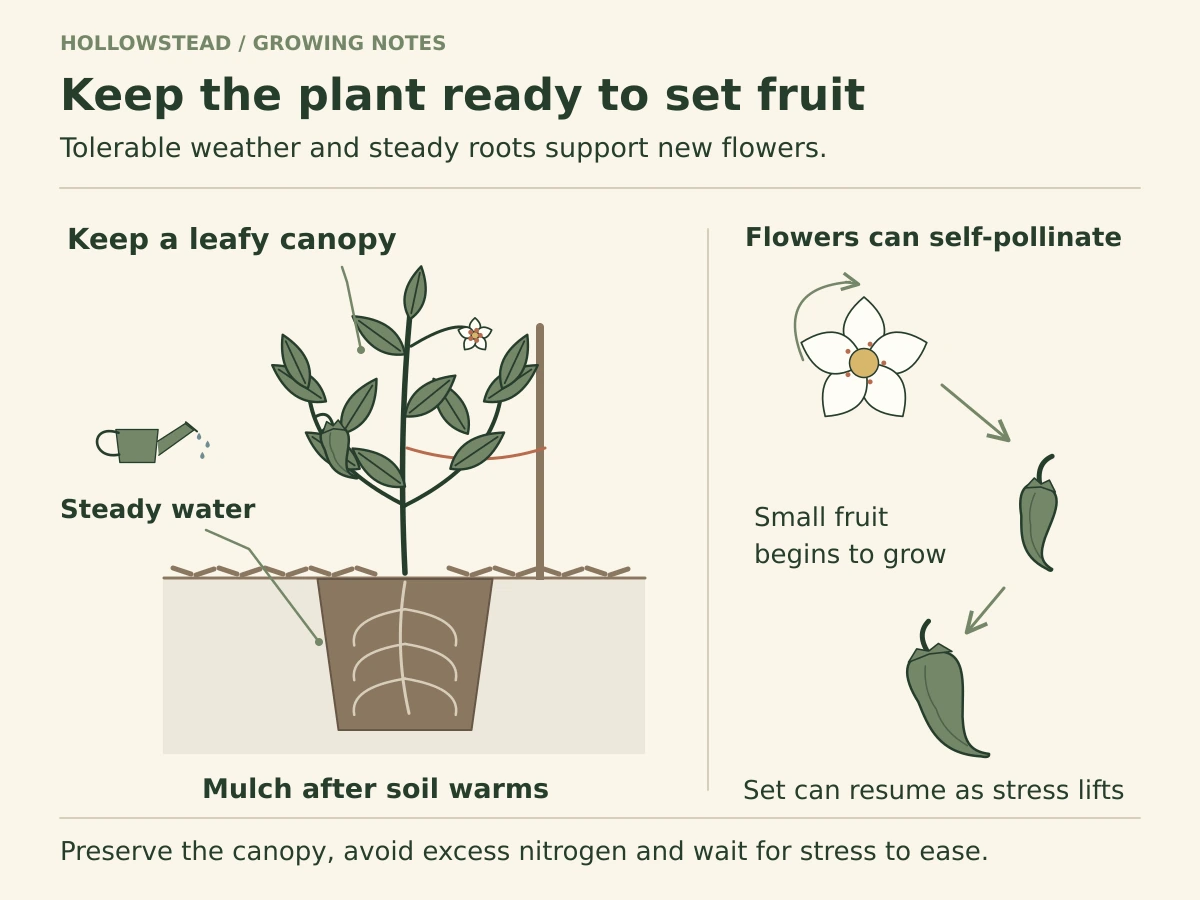
Water deeply enough to wet the root zone, then water again based on soil moisture—not a rigid schedule. Mulch after soil warms to reduce evaporation. In a container, check more often because the root reservoir is smaller.
More fertilizer is not always the answer
A plant with many leaves and few peppers often tempts the grower to add a “bloom” fertilizer. First ask what the plant has already received. Minnesota Extension specifically warns that excess nitrogen produces bushy, leafy pepper plants that are slow to bear.[3]
If the plant is already dark green and vigorous, adding more nitrogen can make the imbalance worse. Use soil-test guidance in the ground and conservative label rates in containers.
Do pepper flowers need pollinators?
Pepper flowers are perfect flowers, containing both pollen-producing and pollen-receiving parts, and can self-pollinate. Missouri Extension notes that bees can still improve fruit set.[2] Gentle wind and ordinary movement also help pollen move within the flower.
That means a lack of bees is possible but is usually not the first explanation when every flower drops during an extreme heat event. Diagnose weather, water, and plant health before assuming pollination failure.
Should you remove the first flowers?
On a strong, established outdoor plant, there is no rule that every first flower must be removed. The more useful question is whether the root system is ready to support fruit.
For young transplants still indoors, Missouri Extension recommends removing flowers and small fruit before field planting so the plant can direct energy into roots and leaves.[2] Once a pepper is established outdoors and growing well, let it flower.
Fast fruit-set diagnosis
How to improve fruit set
- Keep soil moisture reasonably even, especially while flowers and tiny fruit are developing.
- Mulch after the soil is warm to reduce abrupt drying.
- Avoid unnecessary high-nitrogen fertilizer.
- Keep plants upright and leafy enough to protect fruit from sun.
- During extreme heat, prioritize plant health rather than trying to force flowers to set.
- Harvest mature fruit regularly so the plant is not carrying an unnecessary load indefinitely.
 View full-size diagram
Maryland notes that healthy pepper plants often resume flowering and fruiting in late summer or early fall after midsummer heat suppresses production.[1]
Containers and reflected heat
Container peppers can experience a hotter root zone than nearby in-ground plants, especially in small dark pots on concrete or a south-facing wall. The pot may also dry faster, combining root heat with water stress.
Moveable containers give you options: shift the plant away from reflected afternoon heat, use a larger pot, shade the container itself while keeping leaves in good light, and mulch the surface. Do not turn a full-sun pepper into a permanent shade plant simply because one week is hot.
When blossom drop is more than weather
Weather-related blossom drop usually occurs on an otherwise healthy plant and tracks with a clear temperature or moisture event. Investigate farther when the plant also shows severe stunting, persistent wilting, spotted or distorted leaves, unusual stem lesions, or heavy pest activity.
If only one plant among several is affected under the same conditions, compare its roots, container, irrigation, and foliage closely. A localized root or disease problem becomes more likely.
GROW THESE PEPPERS
Put the guide to work.
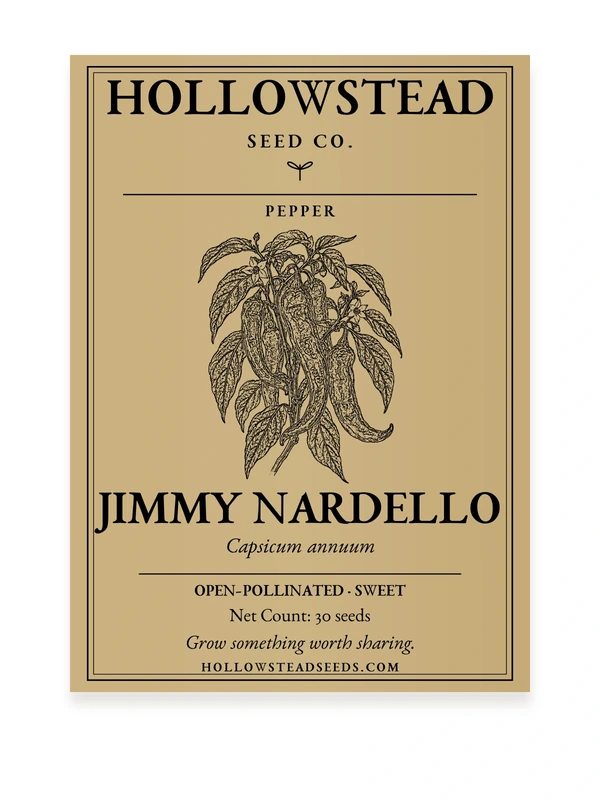
Jimmy Nardello and Fish Pepper both benefit from the same fruit-set fundamentals: warm but not extreme weather, steady roots, and restrained fertility.
HOLLOWSTEAD SEED
Jimmy Nardello Sweet Pepper Seeds
$4.49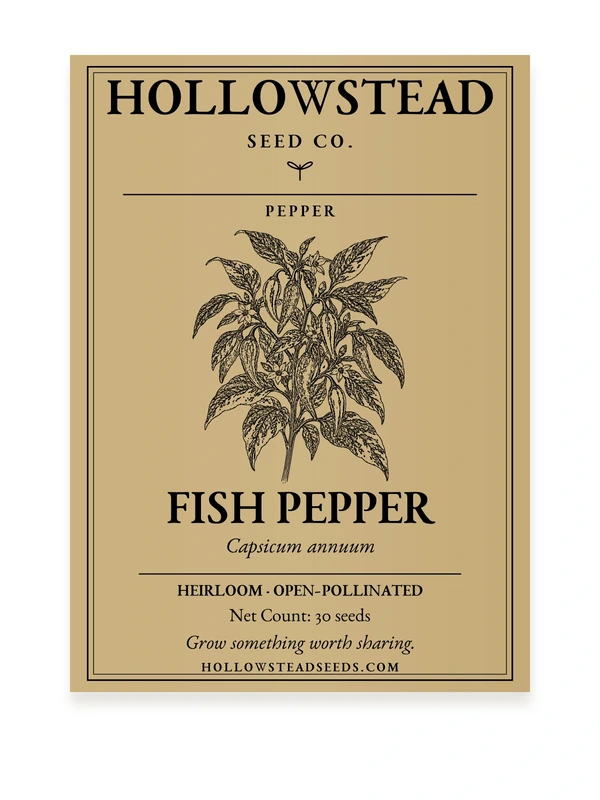
HOLLOWSTEAD SEED
Fish Pepper Seeds
$3.99KEEP LEARNING
Related Hollowstead guides
PEPPER SEED STARTING
Growing Peppers From Seed: The Complete Guide
Grow peppers from seed through harvest with warm germination, strong seedlings, soil preparation, transplant timing, steady moisture, sensible fertility, fruit-set troubleshooting, disease prevention, and harvest care.
Read the guide
TRANSPLANTING
How to Harden Off and Transplant Pepper Seedlings
Move pepper seedlings outdoors with a flexible hardening timeline, readiness checks, sun and wind progression, warm-weather transplant timing, correct depth and spacing, and first-week stress care.
Read the guide
HARVEST GUIDE
When and How to Harvest Peppers
Choose the right pepper harvest stage for green eating, full ripe flavor, continued production, storage, or seed saving, with specific cues for Jimmy Nardello and Fish Pepper.
Read the guideFrequently asked questions
Will pepper flowers come back after a heat wave?
Healthy plants often resume flowering and setting fruit when temperatures moderate.
Should I hand-pollinate pepper flowers?
You can gently shake flowers or hand-pollinate, but peppers are self-fertile. During temperature extremes, hand-pollination may not overcome heat- or cold-related reproductive stress.
Does blossom drop mean I need phosphorus?
No. Temperature, moisture, excess nitrogen, root stress, and other factors are common causes. Use a soil test or clear deficiency evidence rather than guessing.
Why do flowers drop only in midsummer?
Hot days and especially hot nights can interrupt fruit set. This seasonal pattern is common on otherwise healthy plants.
Sources & further reading
- University of Maryland Extension Poor Blossom and Fruit Set of Vegetables https://www.extension.umd.edu/resource/poor-blossom-and-fruit-set-vegetables
- University of Missouri Extension Growing Sweet Peppers in Missouri https://extension.missouri.edu/publications/g6372
- University of Minnesota Extension Growing peppers in home gardens https://extension.umn.edu/garden-and-home/yard-and-garden/gardening-in-minnesota/growing-peppers
- Illinois Extension Pepper production problems https://extension.illinois.edu/blogs/garden-scoop/2025-08-18-pepper-production-problems
Hollowstead Growing Notes
A little help for your next growing season
Practical sowing advice, help choosing seeds, and occasional Hollowstead shop news. Usually one or two emails a month, plus a short welcome note.
Choose your topics and frequency after you confirm. Our guides and planting calendar are always free.