
HARVEST GUIDE
When and How to Harvest Peppers
Choose the right pepper harvest stage for green eating, full ripe flavor, continued production, storage, or seed saving, with specific cues for Jimmy Nardello and Fish Pepper.
PeppersHarvest guideBeginner → advanced
Published by Hollowstead Seed Co. · How this guide is prepared
Quick answer
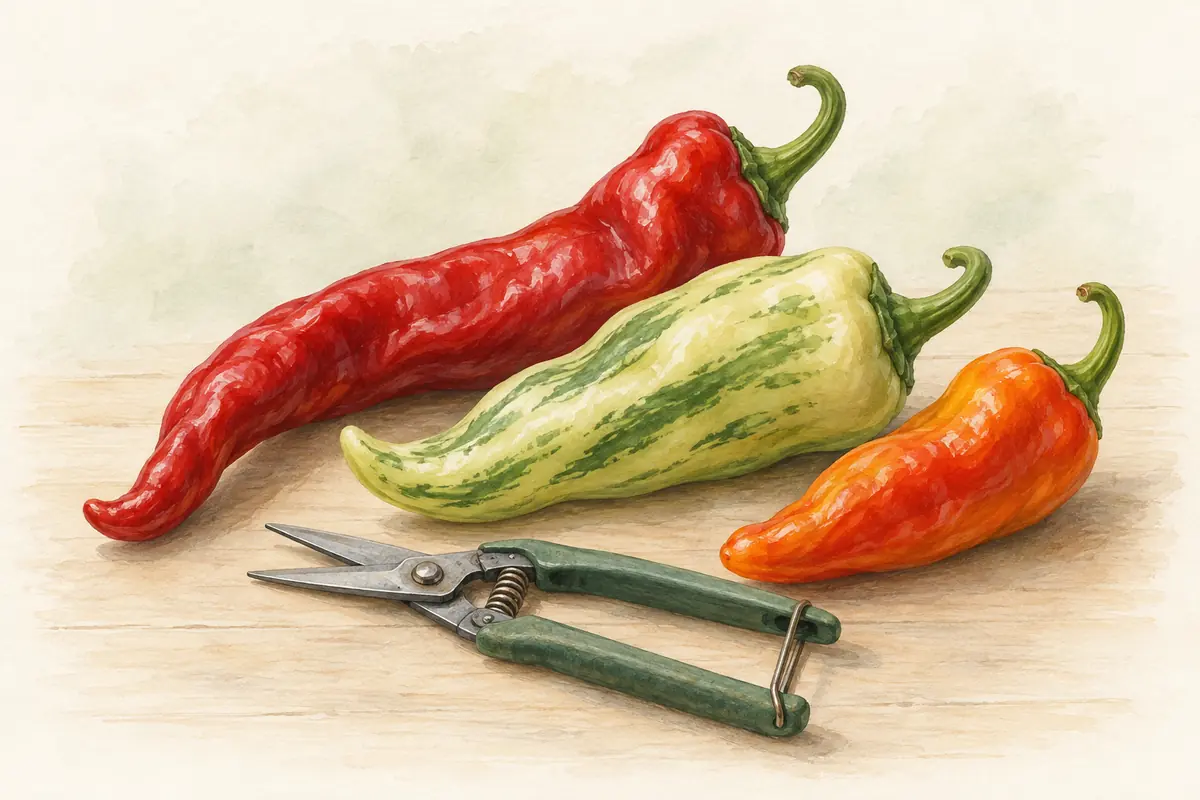
Most peppers can be harvested while green and full-sized or left on the plant to reach their mature color. Maryland Extension notes that ripe color varies by cultivar and that mature fruit generally becomes sweeter in sweet varieties and increases in vitamins A and C.[1]
Use scissors or pruners instead of pulling. Choose harvest stage by what you want to eat now, how much fruit the plant is carrying, and whether you are saving seed. Seed-saving fruit should reach full seed maturity, not merely market size.
Harvest at a glance
| Goal | Useful harvest cue |
|---|---|
| Crisp green pepper | Full size, firm, glossy, before final color |
| Maximum sweet flavor | Allow sweet cultivar to reach mature color |
| Ripe hot pepper | Final cultivar color; flavor/heat profile fully developed |
| Keep plant producing | Harvest usable fruit regularly |
| Save seed | Final color + full physiological maturity |
| Avoid branch damage | Cut stem instead of pulling |
Green peppers versus fully ripe peppers
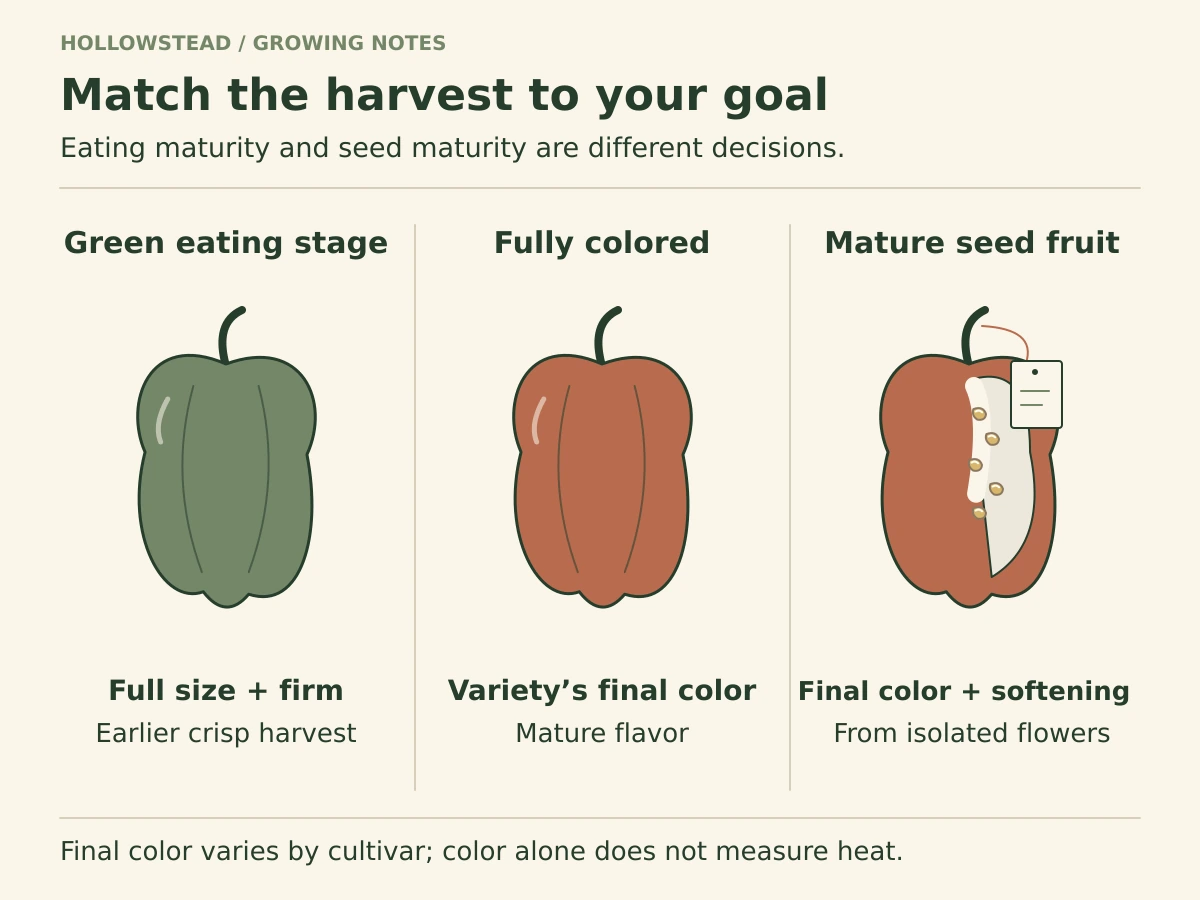
A green pepper is usually an immature version of a fruit that would eventually change color. It can still be fully usable in the kitchen. Waiting longer shifts the crop toward mature flavor and color but also leaves each fruit occupying plant resources for more time.
Maryland Extension notes that peppers can be harvested green or allowed to mature to red, yellow, purple, orange, brown, or another final color, and that sweet peppers become sweeter when fully mature.[1]
 View full-size diagram
Useful ripeness cues
- Size: know the cultivar’s expected mature size; a full-size green pepper may still be immature physiologically.
- Color: the strongest cue when you know the cultivar’s final color.
- Surface: mature fruit is typically firm and well filled; seed-saving fruit may be allowed to soften further.
- Days to maturity: use as a planning reference, not a stopwatch. Weather and transplant stress shift timing.
- Plant load: if the plant is carrying many usable peppers, harvesting some green can redirect resources to later flowers and fruit.
Pepper harvest decision chart
Will picked green peppers turn red?
Do not count on a fully green pepper turning sweet and fully red off the plant. A fruit already starting to color may continue changing appearance briefly, but peppers generally do not continue normal ripening after harvest. For the mature red flavor of Jimmy Nardello or ripe red Fish Pepper, leave sound fruit on the plant until its color develops; harvest full-size green fruit when green eating is your goal. University of Minnesota Extension’s postharvest guidance treats most peppers as non-ripening after harvest; Maryland Extension separates mature green and fully colored stages.
How to pick without damaging the plant
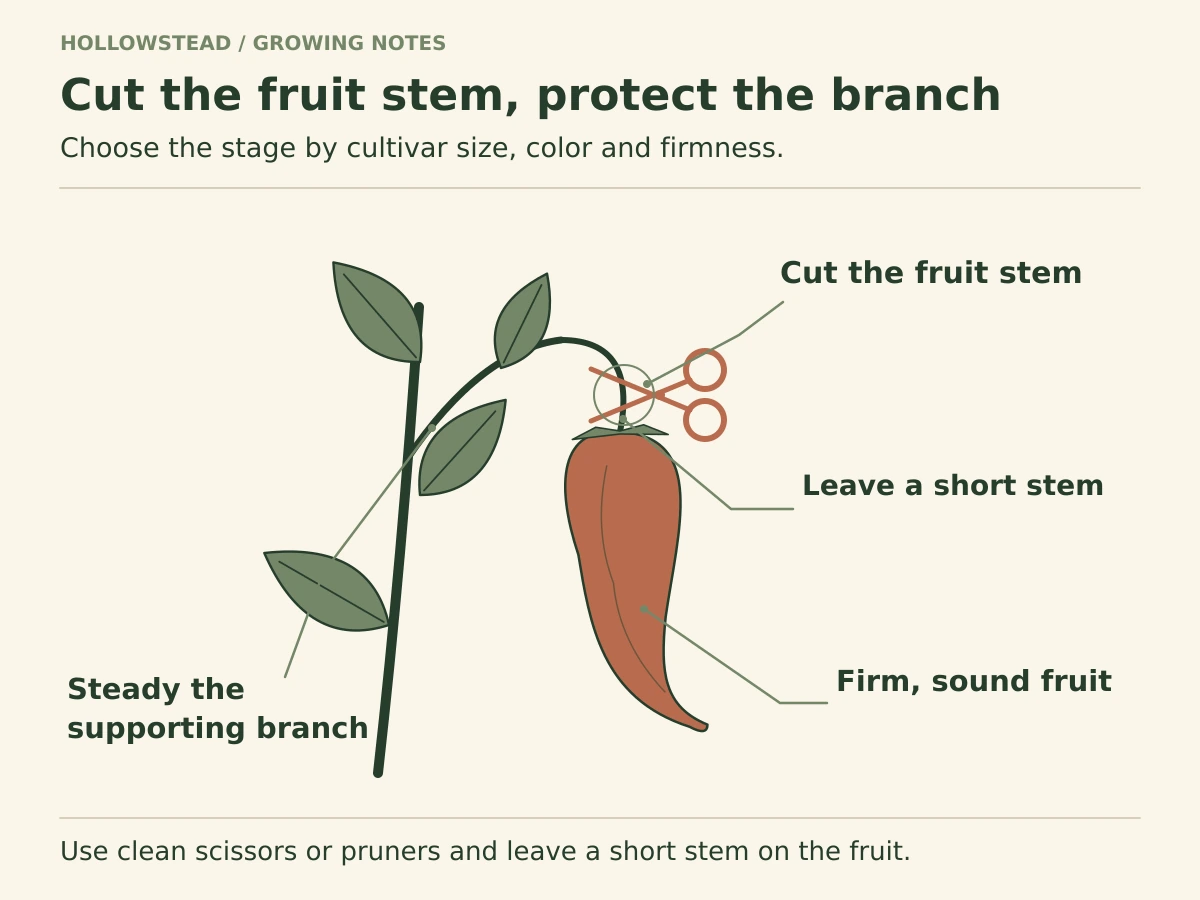
Pepper branches are brittle, especially where a fruit stem joins a fork. Maryland Extension recommends cutting pods rather than pulling them.[1] Use clean scissors or pruners and leave a short piece of stem on the fruit.
Wear gloves when picking or cutting hot peppers such as Fish Pepper. Avoid touching your eyes or face, and wash your hands after handling the fruit.[5]
 View full-size diagram
Support the branch with one hand when cutting a heavy or awkward fruit. This matters even more late in the season when branches are loaded and partially woody.
Why frequent harvest helps
A pepper plant has a finite leaf area supporting all of its growing tips, flowers, roots, and fruit. Harvesting mature usable peppers reduces the standing fruit load and makes room—physically and physiologically—for later production.
Maryland’s fruit-set guidance notes that failure to harvest regularly can signal some vegetable crops, including peppers, to slow flower and fruit production.[3] You do not need to strip the plant bare; simply avoid leaving mature fruit indefinitely unless you are intentionally ripening it for flavor or seed.
Jimmy Nardello and Fish Pepper
| Variety | Early eating stage | Classic ripe stage | Best seed-saving cue |
|---|---|---|---|
| Jimmy Nardello | Green, full-sized, firm | Deep red; sweet frying stage | Fully red mature fruit |
| Fish Pepper | Cream/green-striped or intermediate colors | Fully red | Fully red fruit allowed to mature completely |
Fish Pepper is unusual because the intermediate color stages are part of its culinary identity. Jimmy Nardello is more straightforward: if you are chasing the variety’s classic sweetness, wait for red.
Saving seed from this open-pollinated pepper
Market maturity and seed maturity are not always the same. Seed Savers Exchange says pepper fruit is mature for seed when it reaches its final color and begins to soften.[2] Mark seed fruit so it is not accidentally harvested early.
Purity is a separate issue. Peppers can self-pollinate, but insects can cross compatible varieties. Seed Savers recommends substantial isolation distances for true-to-type pepper seed and suggests blossom bags, cages, or other physical isolation when distance is impractical.[2] Cornell Cooperative Extension also describes bagging unopened pepper flowers as a practical home-garden method.[4]
If you only care about eating the fruit, grow Jimmy Nardello and Fish Pepper side-by-side. Crossing does not change the flavor or heat of the current fruit. It changes the genetics of seeds grown next year.
After harvest and storage
Handle peppers gently; bruises and cuts shorten storage life. Maryland Extension gives a cool, humid storage reference of roughly 45–50°F and about 95% relative humidity, with two to three weeks as a possible storage window under good conditions.[1] A home refrigerator is usually colder and drier than that ideal, so actual shelf life varies.
Wash just before use rather than putting wet fruit into long storage. Use sound, merely bruised fruit promptly; discard fruit with rot or mold. For drying, choose sound peppers and follow Oregon State Extension’s pepper-drying instructions; do not dry decayed fruit.
Frost and season-end decisions
As frost approaches, prioritize what is still worth saving. Harvest ripe fruit first, then full-sized green fruit you will use. Maryland notes that whole pepper plants can be pulled before a killing frost and hung in a protected warmer area, though fruit quality and ripening potential depend on how mature the peppers already are.[1]
If your seed-saving fruit is not yet mature, give it the best remaining warm window rather than sacrificing the entire edible crop to one fruit that may never finish.
GROW THESE PEPPERS
Put the guide to work.
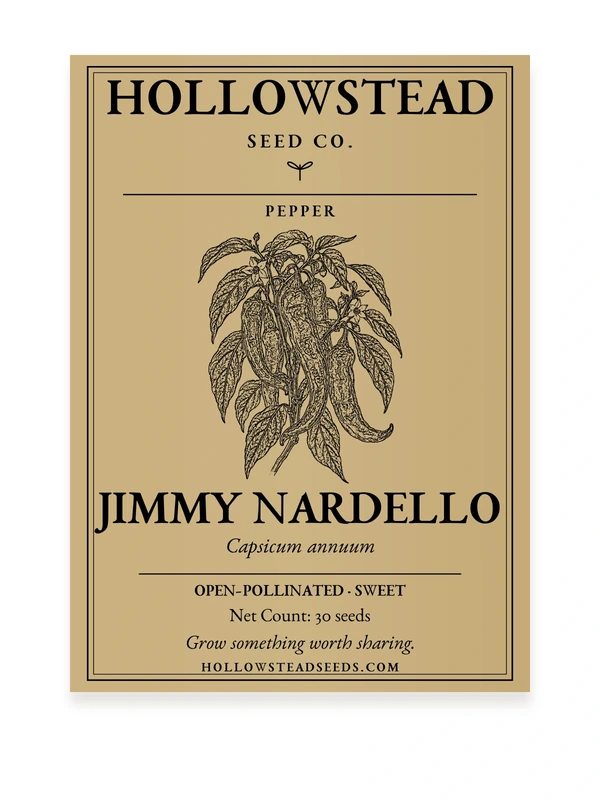
Jimmy Nardello rewards full red ripeness with sweetness; Fish Pepper gives you multiple useful color stages on the way to mature red.
HOLLOWSTEAD SEED
Jimmy Nardello Sweet Pepper Seeds
$4.49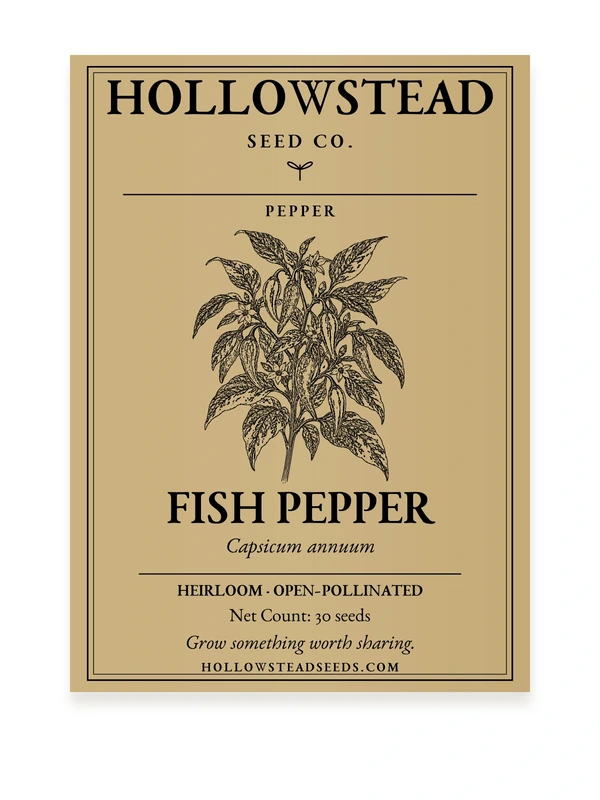
HOLLOWSTEAD SEED
Fish Pepper Seeds
$3.99KEEP LEARNING
Related Hollowstead guides
PEPPER VARIETY GUIDE
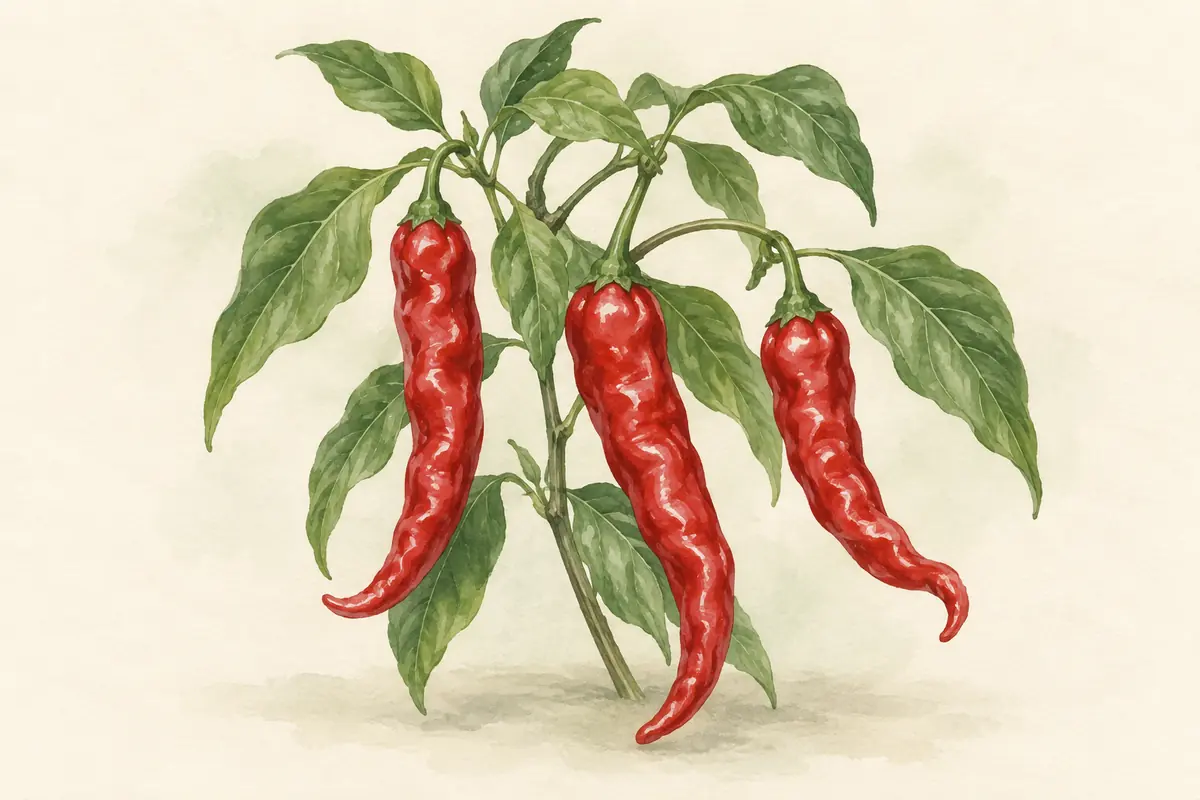
Jimmy Nardello Pepper Growing Guide
Grow Jimmy Nardello from warm seed start to fully red harvest, with variety-specific guidance on growth habit, support, watering, fruit load, containers, frying quality, and seed saving.
Read the guide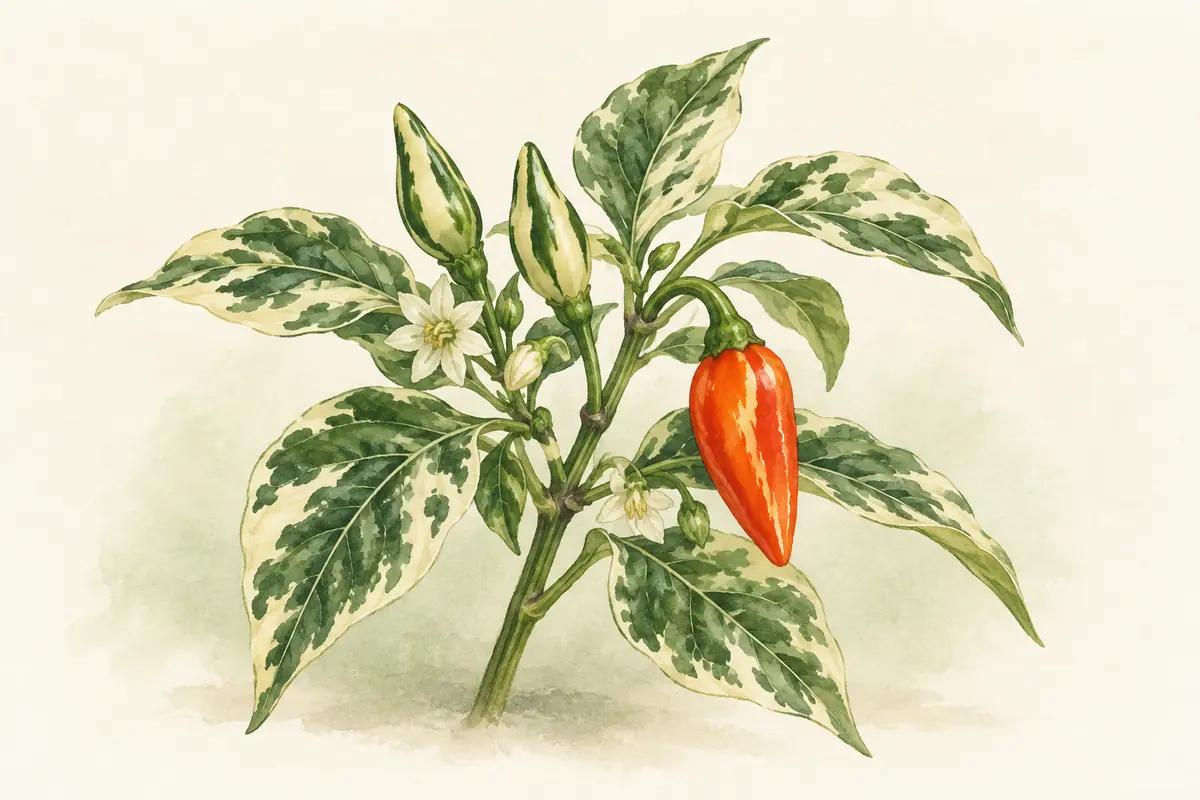
PEPPER VARIETY GUIDE
Fish Pepper Growing Guide
Grow Fish Pepper with guidance on its normal variegation, warm seed starting, compact habit, canopy care, multicolor harvest stages, containers, Chesapeake history, and seed saving.
Read the guide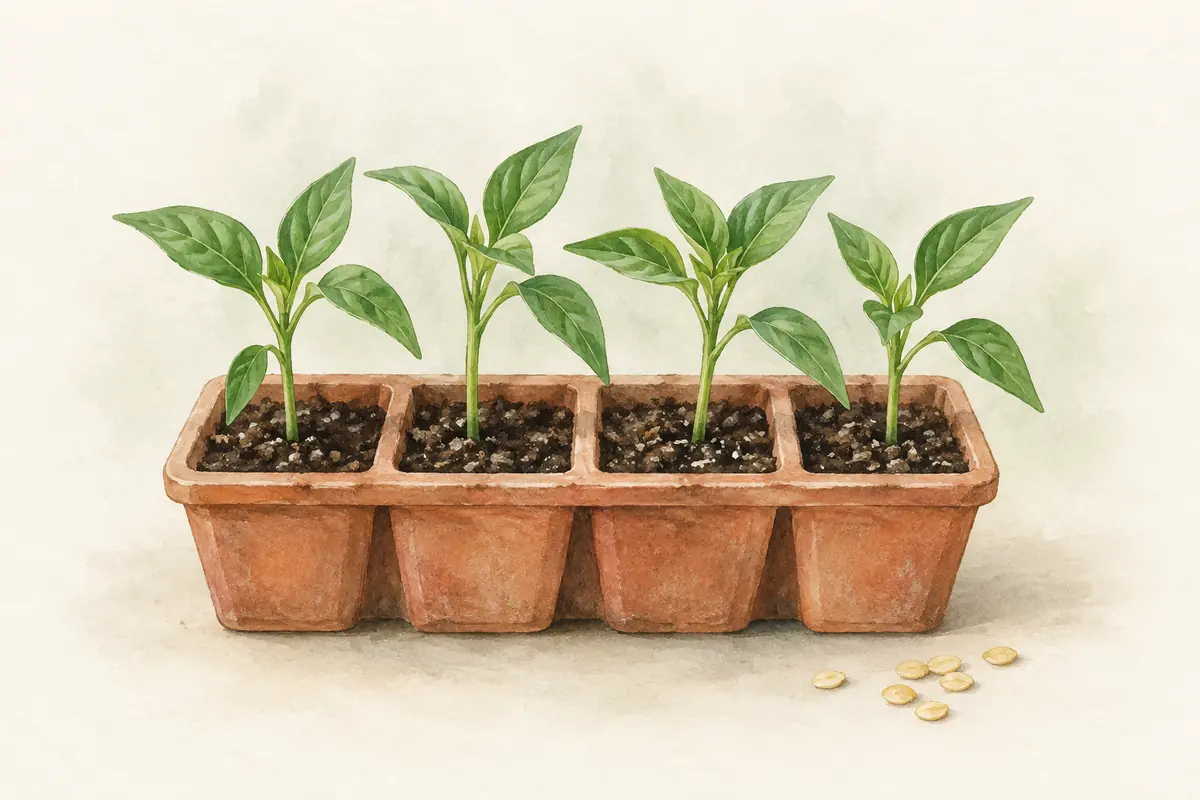
PEPPER SEED STARTING
Growing Peppers From Seed: The Complete Guide
Grow peppers from seed through harvest with warm germination, strong seedlings, soil preparation, transplant timing, steady moisture, sensible fertility, fruit-set troubleshooting, disease prevention, and harvest care.
Read the guideFrequently asked questions
Can I pick peppers while they are still green?
Yes. Most peppers are edible green once they reach useful size, though mature color generally brings a different flavor and, in sweet peppers, more sweetness.
Should I pull or cut peppers?
Cut them. Pepper branches can be brittle, and pulling can break a productive branch.
When should I pick peppers for seed?
Wait until selected fruit reaches its final ripe color and full seed maturity. If varietal purity matters, control pollination before the fruit forms.
Does picking peppers encourage more peppers?
Regular harvest reduces the mature fruit load and can help the plant continue flowering and filling later fruit.
Sources & further reading
- University of Maryland Extension Growing Peppers in a Home Garden https://extension.umd.edu/resource/growing-peppers-home-garden
- Seed Savers Exchange Growing Guide: Peppers https://seedsavers.org/grow-pepper/
- University of Maryland Extension Poor Blossom and Fruit Set of Vegetables https://www.extension.umd.edu/resource/poor-blossom-and-fruit-set-vegetables
- Cornell Cooperative Extension Saving the Future, One Seed at a Time https://cce.cornell.edu/orleans/saving-future-one-seed-time
- University of Minnesota Extension Growing peppers in home gardens https://extension.umn.edu/garden-and-home/yard-and-garden/gardening-in-minnesota/growing-peppers
Hollowstead Growing Notes
A little help for your next growing season
Practical sowing advice, help choosing seeds, and occasional Hollowstead shop news. Usually one or two emails a month, plus a short welcome note.
Choose your topics and frequency after you confirm. Our guides and planting calendar are always free.