
TROUBLESHOOTING
Why Pepper Seeds Take So Long to Germinate
Troubleshoot slow pepper germination by checking root-zone temperature, moisture and oxygen, sowing depth, seed age, heat-mat use, damping-off symptoms, and when to start a backup sowing.
PeppersTroubleshootingBeginner → advanced
Published by Hollowstead Seed Co. · How this guide is prepared
Quick answer
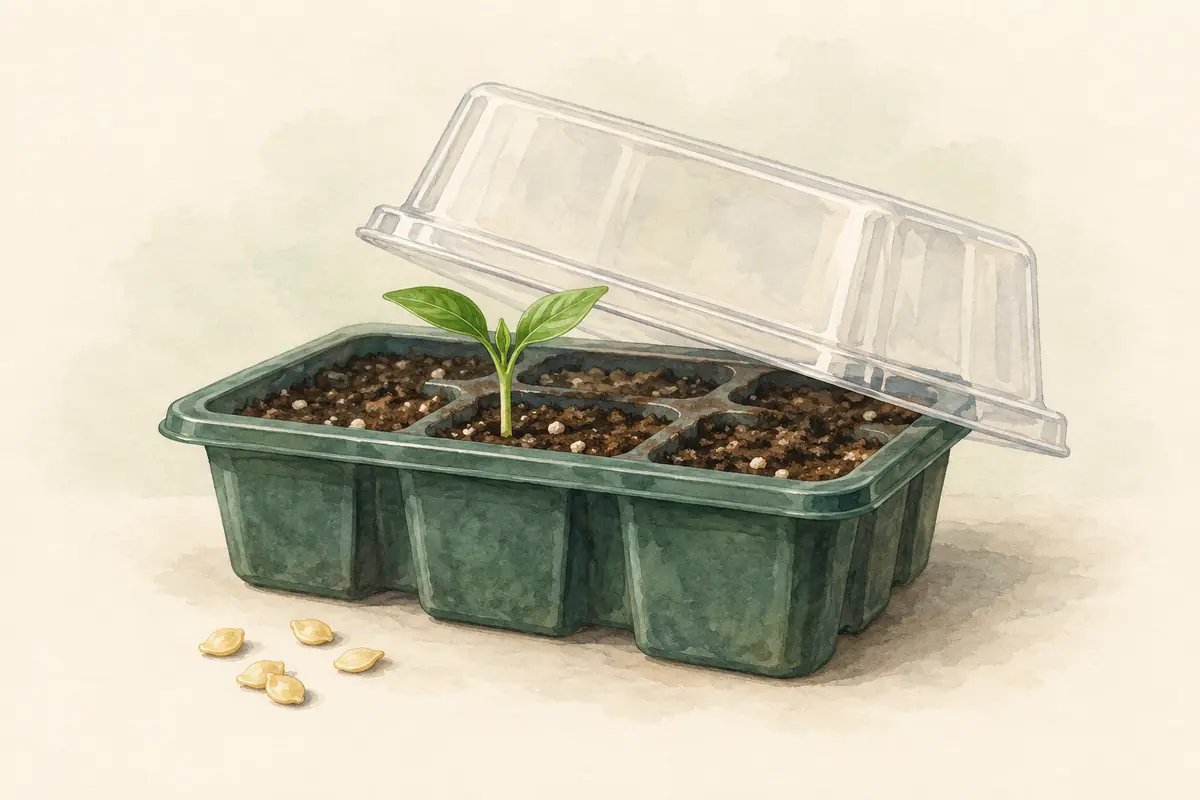
Pepper seeds are naturally slower than many common garden vegetables, and temperature is usually the first variable to check. Seed Savers Exchange gives about 14–18 days as a common germination window and recommends a root-zone temperature of at least about 75°F; Minnesota Extension uses 80–90°F at the flat until seedlings emerge.[1][2]
If the mix is warm, moist but airy, and the seed is viable, waiting is often appropriate. If the mix is cold, waterlogged, crusted, or the seed is old, “just give it another week” can waste time.
Germination at a glance
| Check | Useful reference |
|---|---|
| Sowing depth | About ¼ inch |
| Warmth | At least ~75°F; many growers target warmer |
| Typical wait | Often ~14–18 days, sometimes longer |
| Moisture | Evenly moist, never airless/soggy |
| Media | Clean, fine, well-drained seed-starting mix |
| After emergence | Strong light; remove unnecessary bottom heat |
How long do pepper seeds normally take?
For a warm, properly watered tray, about two weeks is a useful expectation—not a deadline. Seed Savers lists 14–18 days for pepper germination.[1] Some seedlings may emerge earlier, while cooler media, older seed, or cultivar differences can stretch the window.
Do not dig up every seed on day seven to see whether it is working. Disturbance can break a tiny radicle just as germination begins. Instead, diagnose the environment from the outside first: medium temperature, moisture, sowing depth, and seed lot.
Warm pepper sowing followed by uncovered seedlings under light
- Use measured germination warmth; vent and remove the cover at emergence. Then provide 14–16 light hours, a dark period and a root zone around 70°F.
Before committing a planting window to an older packet, use the seed-storage and home germination-test guide. It helps separate an uncertain seed lot from problems in the seedbed.
Temperature is usually the first thing to check
Room temperature and seed temperature are not the same thing. A 72°F room can contain a tray sitting at 62°F beside a winter window. Minnesota Extension recommends a heat mat capable of keeping the flat around 80–90°F until pepper seedlings emerge, while Seed Savers describes 75°F as a minimum soil temperature target for germination and growth.[2][1]
A cheap probe thermometer placed into an unused cell is more useful than guessing. Warmth speeds the biochemical processes of germination, but more heat is not always better; the objective is a warm root zone, not cooking the tray.
Moisture and oxygen have to balance
Water activates the seed, but roots and germinating embryos also need oxygen. Missouri Extension’s germination guidance explicitly identifies water and oxygen as separate requirements and notes that saturated or deeply buried seed can become oxygen-starved.[3]
Keep the seed-starting mix evenly moist. A covered tray may need very little additional water before emergence. If condensation is heavy and the mix still looks glossy-wet, do not water merely because another tray on the shelf needs it.
Planting depth and media
Sow peppers about ¼ inch deep in a sterile or clean soilless seed-starting medium.[1][2] A fine mix keeps moisture around a small seed while allowing gas exchange. Garden soil can compact, drain unevenly, carry pathogens, and form a crust that makes emergence harder.
Planting too deep forces the seedling to spend more stored energy reaching light. Planting directly on a dry surface creates the opposite problem: the seed can lose moisture before the radicle establishes.
Old seed can still germinate—but less predictably
Seed is a living storage system. Age, storage humidity, heat, and the quality of the original seed lot all affect viability. Older seed may germinate more slowly and less uniformly even when the tray is managed well.
If seed is scarce, sow a small test sample before using the entire packet. If you have plenty, sow two seeds per cell and thin rather than trying to rescue every marginal seedling later.
Using a heat mat well
Bottom heat is valuable because it targets the root zone, but it changes watering. Minnesota specifically warns that heating mats dry potting mix faster.[2] Check moisture daily until you learn the tray’s rhythm.
Once most seedlings emerge, remove or reduce the heat source unless the room is unusually cold. Seed Savers recommends removing heat mats after germination to avoid overly rapid, spindly growth.[1] Move the tray into bright light immediately.
Fast germination diagnosis
After emergence: light, warmth and airflow
Set a timer for 14–16 hours of overhead light and 8–10 hours of darkness. Adjust fixture distance to its output and the plant response; stretching suggests inadequate light, while bleaching or scorch suggests too much intensity or heat.[6]
Vent and remove the humidity cover as shoots emerge. Reduce germination heat and aim for a root-zone temperature around 70°F; measure the mix rather than assuming room temperature equals root temperature. Keep the tray away from cold windowsills and drafts; reduce heat only as far as needed to maintain that growing target. Use a thermostat if supplemental warmth is still necessary. This growing setup is cooler than an 80–90°F germination mat. Keep air moving gently and water when the surface begins to dry, without leaving pots standing in water.[2]
Slow germination is not the same as damping off
A seed that has not emerged yet may simply be slow. Damping off is disease. University of Missouri describes post-emergence damping off as dark, sunken tissue at the stem base followed by collapse; Minnesota likewise describes water-soaked, threadlike stems and seedling rot.[4][5]
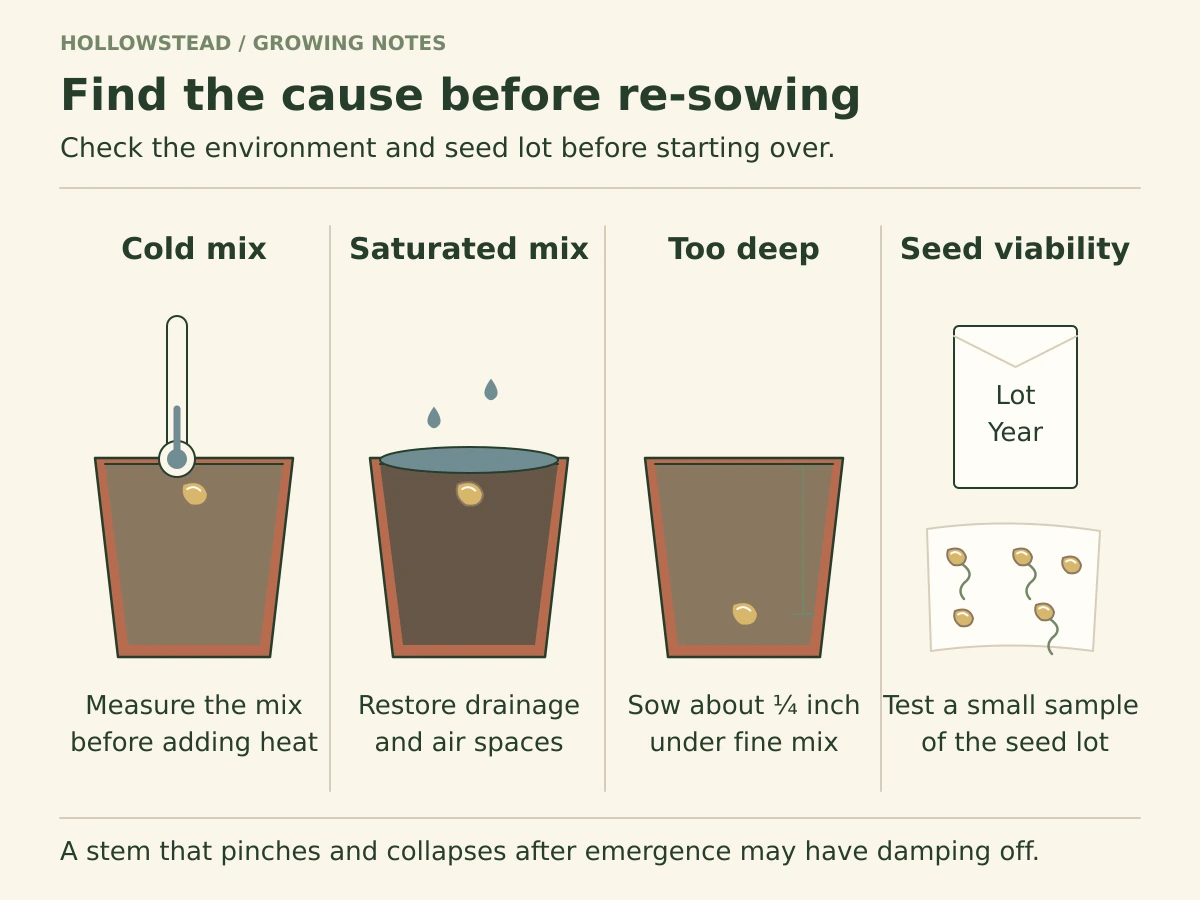 View full-size diagram
Prevention is much easier than rescue: clean trays, fresh soilless medium, drainage, airflow after emergence, and watering that supplies roots with both moisture and oxygen.[4][5]
When to resow
Resow when the calendar matters more than proving the first tray can eventually work. If a sowing is well beyond the normal window and you discover that it spent most of that time cold, saturated, or in questionable media, start a second tray under corrected conditions while you continue observing the first.
If only a few cells failed, replace those cells and move on. If nearly the entire tray failed under good measured conditions, consider the seed lot itself and perform a small germination test.
Backup sowings are cheap insurance. A second ten-cell tray started two weeks later can be more valuable than spending another three weeks trying to make a failed first sowing fit your transplant date.
GROW THESE PEPPERS
Put the guide to work.
Warm, measured germination makes both Jimmy Nardello and Fish Pepper much easier to start consistently.
HOLLOWSTEAD SEED
Jimmy Nardello Sweet Pepper Seeds
$4.49
HOLLOWSTEAD SEED
Fish Pepper Seeds
$3.99KEEP LEARNING
Related Hollowstead guides
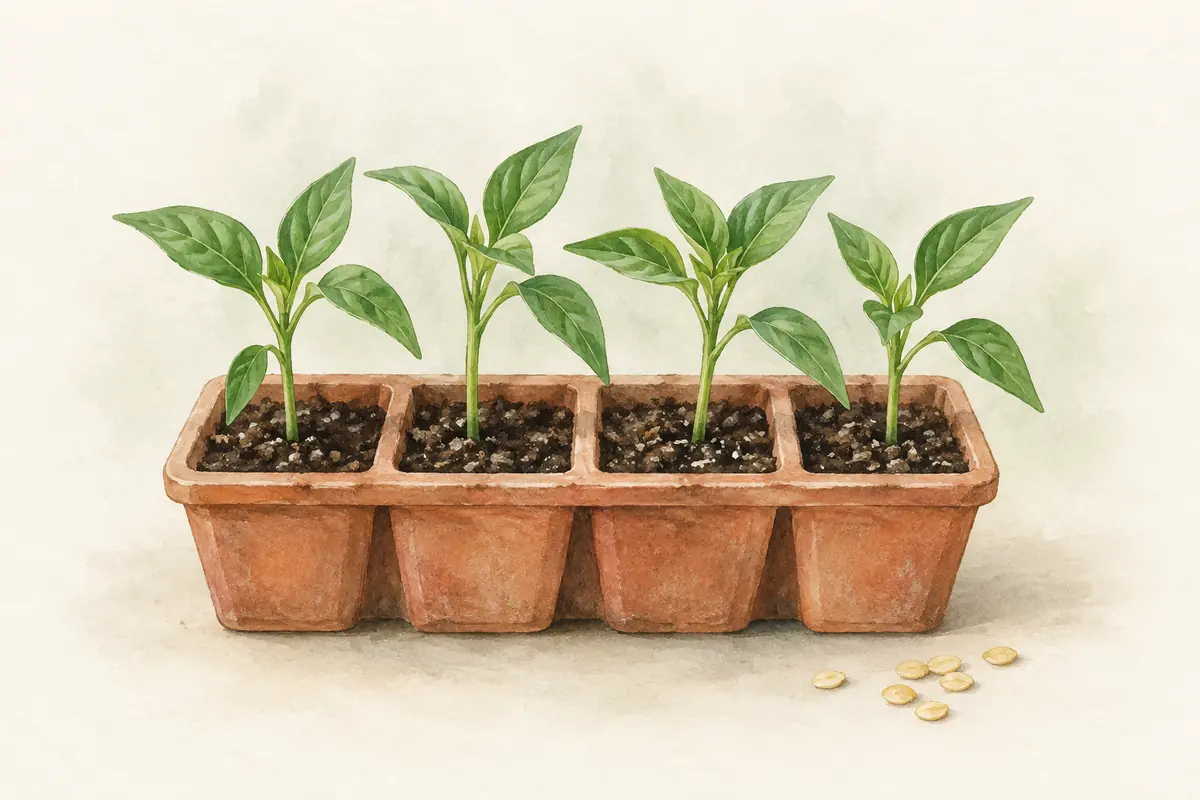
PEPPER SEED STARTING
Growing Peppers From Seed: The Complete Guide
Grow peppers from seed through harvest with warm germination, strong seedlings, soil preparation, transplant timing, steady moisture, sensible fertility, fruit-set troubleshooting, disease prevention, and harvest care.
Read the guide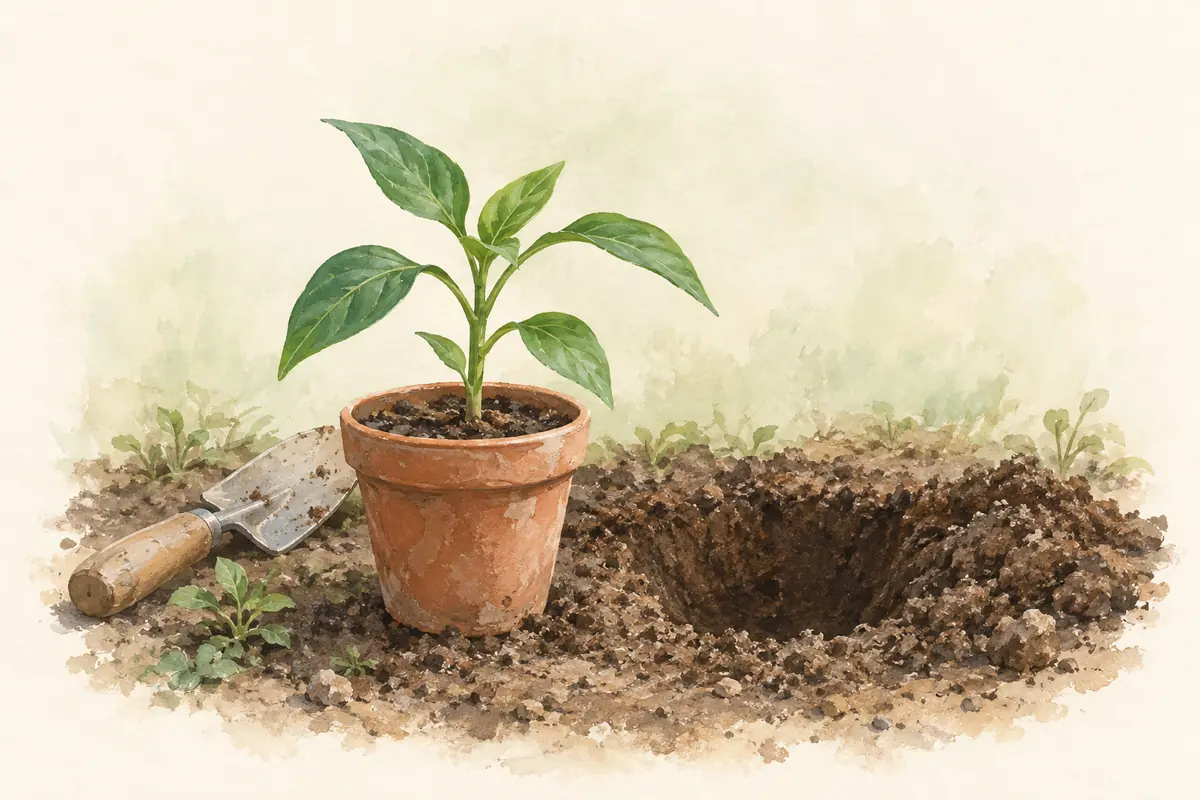
TRANSPLANTING
How to Harden Off and Transplant Pepper Seedlings
Move pepper seedlings outdoors with a flexible hardening timeline, readiness checks, sun and wind progression, warm-weather transplant timing, correct depth and spacing, and first-week stress care.
Read the guide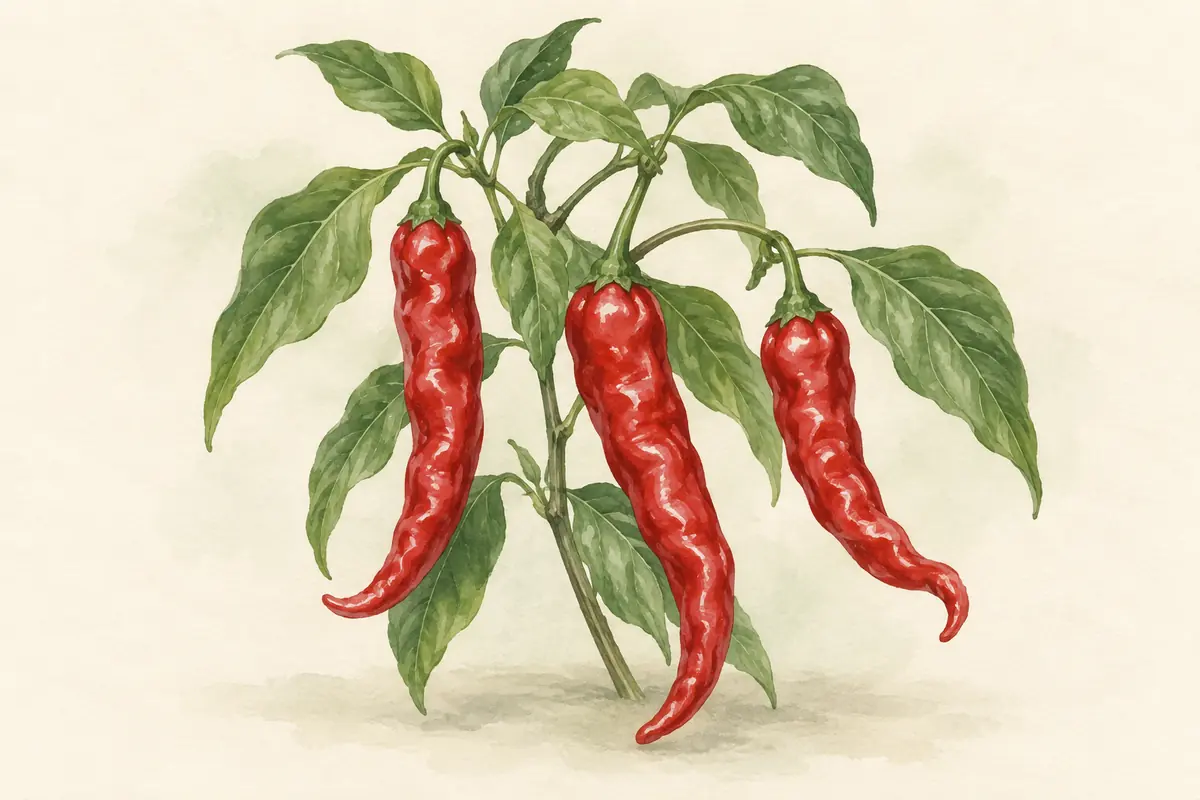
PEPPER VARIETY GUIDE
Jimmy Nardello Pepper Growing Guide
Grow Jimmy Nardello from warm seed start to fully red harvest, with variety-specific guidance on growth habit, support, watering, fruit load, containers, frying quality, and seed saving.
Read the guideFrequently asked questions
How long should I wait before giving up on pepper seeds?
About 14–18 days is common under warm conditions, but some lots take longer. After two to three weeks, verify temperature, moisture, depth, and seed age and consider a backup sowing.
Do pepper seeds need light to germinate?
Can a heat mat dry out pepper seeds?
Yes. Bottom heat can speed evaporation from small cells, so check moisture more often while using it.
Should I dig up a seed to check it?
Not routinely. Measure conditions first; digging can damage a seed that has already produced a tiny root.
Sources & further reading
- Seed Savers Exchange Growing Guide: Peppers https://seedsavers.org/grow-pepper/
- University of Minnesota Extension Growing peppers in home gardens https://extension.umn.edu/garden-and-home/yard-and-garden/gardening-in-minnesota/growing-peppers
- University of Missouri Extension Germination 101 https://extension.missouri.edu/news/germination-101
- University of Missouri Extension Starting Plants Indoors From Seeds https://extension.missouri.edu/publications/g6570
- University of Minnesota Extension How to prevent seedling damping off https://extension.umn.edu/garden-and-home/yard-and-garden/gardening-in-minnesota/yard-and-garden-problems/how-to-prevent-seedling-damping-off
- University of Maryland Extension — Starting Vegetable Seeds Indoors https://extension.umd.edu/resource/starting-vegetable-seeds-indoors
Hollowstead Growing Notes
A little help for your next growing season
Practical sowing advice, help choosing seeds, and occasional Hollowstead shop news. Usually one or two emails a month, plus a short welcome note.
Choose your topics and frequency after you confirm. Our guides and planting calendar are always free.