
PEPPER VARIETY GUIDE
Jimmy Nardello Pepper Growing Guide
Grow Jimmy Nardello from warm seed start to fully red harvest, with variety-specific guidance on growth habit, support, watering, fruit load, containers, frying quality, and seed saving.
PeppersVariety guideBeginner → advanced
Published by Hollowstead Seed Co. · How this guide is prepared
Quick answer
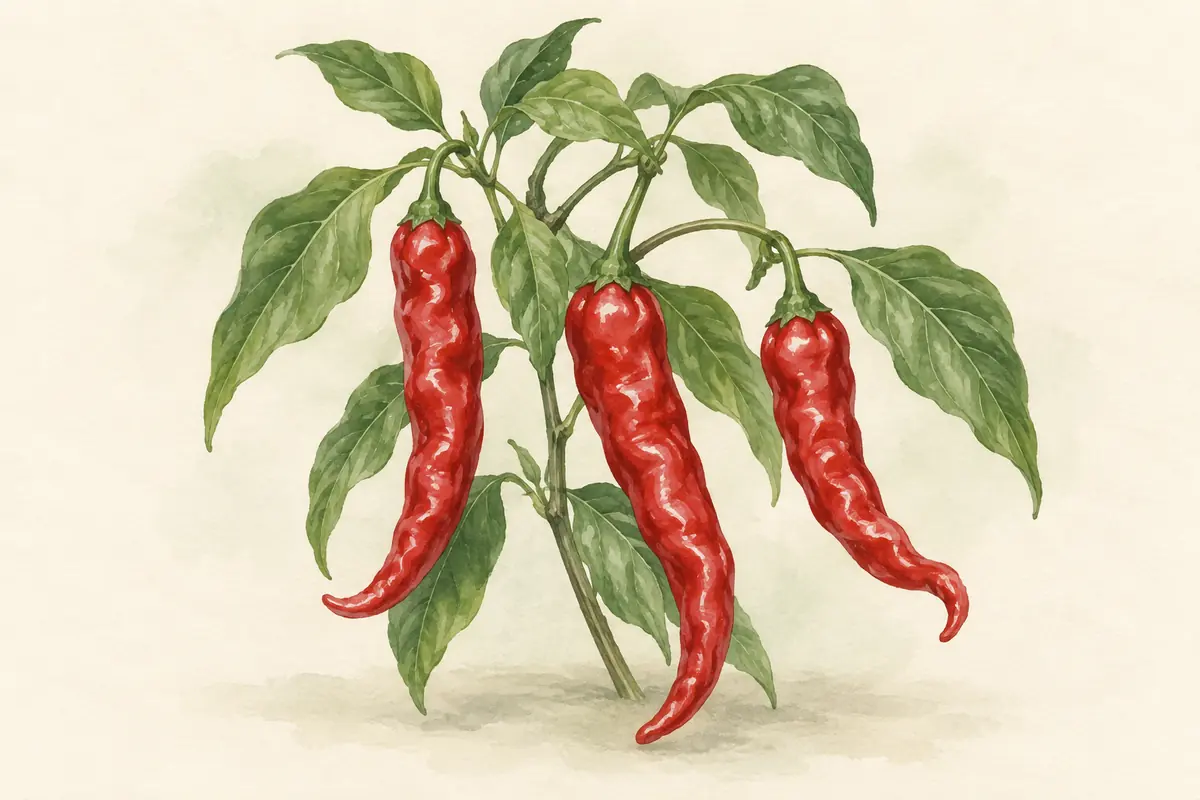
Jimmy Nardello is a long, thin-walled, sweet frying pepper that is at its best fully red. Cornell’s Vegetable Varieties for Gardeners describes 20–24 inch plants with curved, tapering fruit around 8 inches long and about 80–90 days to maturity. The current Hollowstead listing counts approximately 80–90 days from transplant; allow fruit to turn fully red for its classic sweet eating stage.[1]
Grow it with the same warm-start, warm-transplant fundamentals as other Capsicum annuum, but manage it for what makes the variety special: a productive plant carrying many slender fruits, support before branches spread, steady moisture through fruiting, and patience for the deep-red ripe stage.
Jimmy Nardello at a glance
| Trait | Useful reference |
|---|---|
| Type | Sweet Italian frying pepper |
| Species | Capsicum annuum |
| Plant habit | Compact-to-medium; Cornell lists about 20–24 inches |
| Fruit | Long, thin-walled, curved/tapered |
| Ripe color | Deep red |
| Days to maturity | Current Hollowstead listing: about 80–90 days from transplant |
| Best known for | Frying, roasting, grilling, fresh eating |
| Seed type | Open-pollinated heirloom |
| Sowing and spacing | ¼ inch deep; start about 6–8 weeks before transplant; about 18 inches between plants |
- Start
- Warm indoor germination
- Plant out
- After frost, into warm conditions
- Support
- Install before fruit load becomes heavy
- Water
- Steady moisture through flowering and fill
- Flavor target
- Full red for classic sweetness
SAVE FOR SOWING DAY
Five-step crop plan for Jimmy Nardello
Open the sow-to-harvest plan
- StartStart indoors about 6–8 weeks ahead of a warm transplant window; sow ¼ inch deep and keep the seed medium warm. Guide details
- PlantHarden seedlings and transplant only after frost danger and persistent cold ease; space and support branches before fruit load. Guide details
- MaintainCheck moisture through flowering and brace loaded forks; heat-related blossom drop is not a reason to force extra nitrogen. Guide details
- HarvestGreen fruit is usable, while fully deep-red fruit is the classic sweet frying stage; snip with pruners to protect brittle branches. Guide details
- Next sowing or seedLet marked fruit color fully for seed, protect flowers before crossing if identity matters, and dry labeled seed without fermentation. Guide details
- Space
- About 18 inches between plants per current guide; allow room for branch support.
- Timing
- Hollowstead lists about 80–90 days from transplant, an estimate rather than a red-ripe promise across climates.
Full growing guidehttps://hollowsteadseeds.com/jimmy-nardello-pepper-growing-guide/Seed packethttps://hollowsteadseeds.com/product/jimmy-nardello-sweet-pepper-seeds/Find planting dates by ZIP code
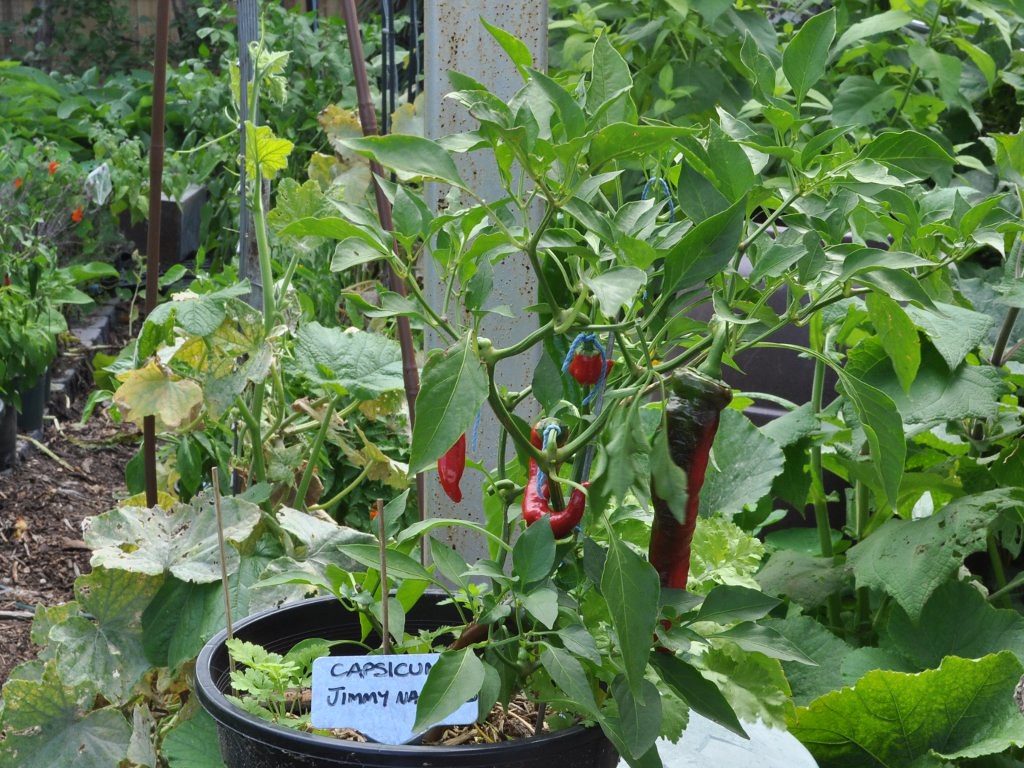
Variety reference photo
The Nardello family story
Jimmy Nardello is not just a generic red frying pepper with an Italian-sounding name. The Thomas Jefferson Foundation’s Monticello seed listing traces the variety to the Nardello family, whose pepper seed was brought from southern Italy to the United States in the late nineteenth century and later preserved through Seed Savers Exchange.[2]
The preserved family name connects this sweet frying pepper to the growers who carried and maintained it.
Jimmy Nardello growth habit
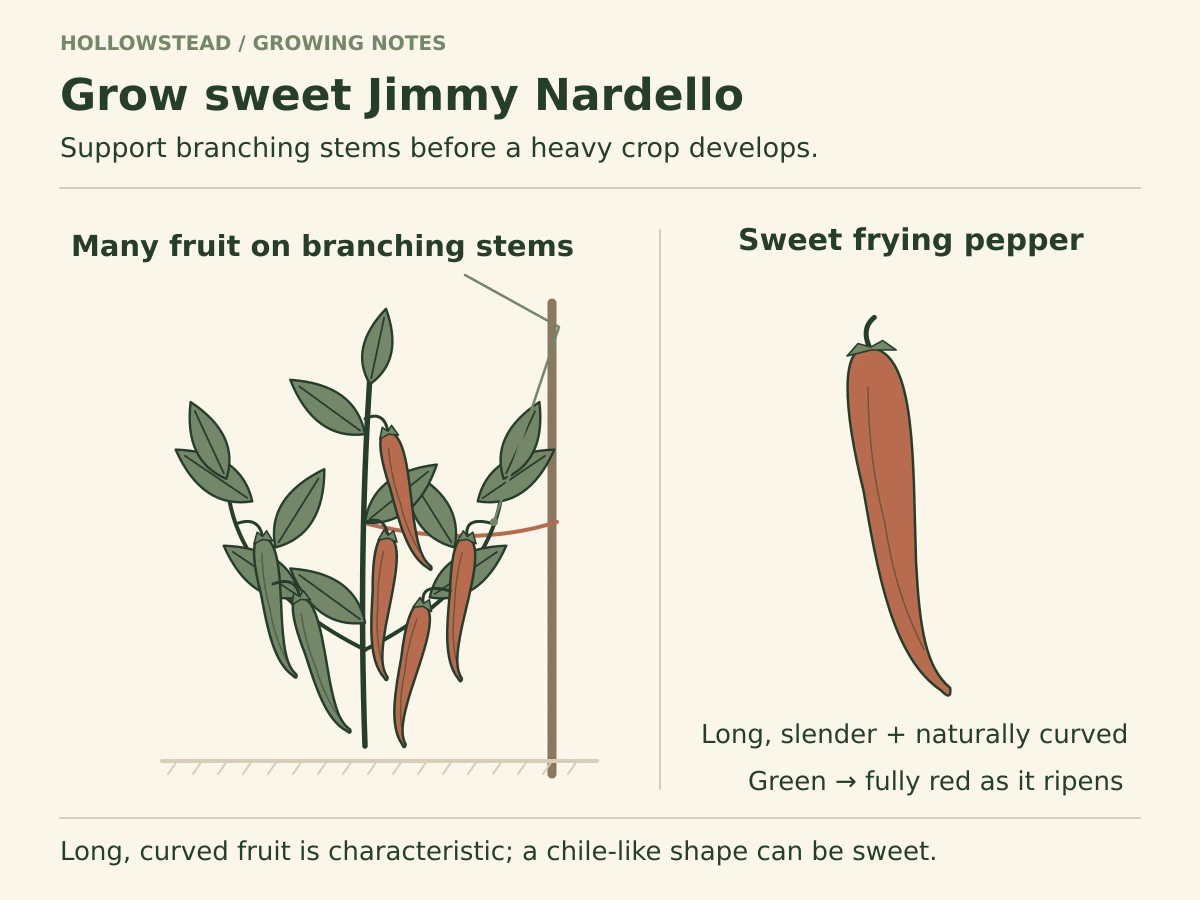
Cornell describes a 20–24 inch plant bearing long, thin-walled peppers.[1] In a fertile garden, individual plants may be larger, but the variety is generally much easier to support than a huge indeterminate tomato. The important structural issue is not height—it is fruit load on branching stems.
 View full-size diagram
Thin fruits do not weigh much individually, but a productive plant may carry many at once. A short cage, stake-and-tie system, or ring support installed early helps prevent a summer storm or accidental bump from splitting a branch at a fork.
After emergence: light, warmth and airflow
Set a timer for 14–16 hours of overhead light and 8–10 hours of darkness. Adjust fixture distance to its output and the plant response; stretching suggests inadequate light, while bleaching or scorch suggests too much intensity or heat.[7]
Vent and remove the humidity cover as shoots emerge. Reduce germination heat and aim for a root-zone temperature around 70°F; measure the mix rather than assuming room temperature equals root temperature. Keep the tray away from cold windowsills and drafts; reduce heat only as far as needed to maintain that growing target. Use a thermostat if supplemental warmth is still necessary. This growing setup is cooler than an 80–90°F germination mat. Keep air moving gently and water when the surface begins to dry, without leaving pots standing in water.[4]
Starting Jimmy Nardello from seed
Start indoors around 6–8 weeks before your realistic transplant window, sow about ¼ inch deep, and keep the seed-starting medium warm. Seed Savers recommends soil temperatures of at least about 75°F for pepper germination and gives 14–18 days as a common germination window.[3] Jimmy Nardello does not need a unique seed-starting ritual simply because it is an heirloom.
After emergence, remove unnecessary bottom heat, move the seedlings directly under strong light, and pot up before roots become badly congested. If seedlings flower indoors long before transplanting, pinch early flowers rather than asking a small root system to carry fruit; Minnesota Extension gives the same general advice for pepper transplants.[4]
For a tray that has not emerged, follow the slow pepper germination checks before changing the planting plan.
Garden care
The current Hollowstead listing uses about 18 inches between plants. Allow a little more room for broad cages or a humid site, with an access path between rows. Put the stake or small cage in at planting, before branching stems carry long fruit.
Plant a hardened, stocky seedling once frost danger is past and nights stay above 50°F. Harden over roughly 7–14 days, slowing down in wind, heat or cold. Keep the root ball intact and set it at its previous soil level. Water in thoroughly, then check the plug and surrounding soil separately for the first week; a dry plug can sit inside otherwise damp ground.
Plant into well-drained soil after cold weather has truly passed. Maintain reasonably even moisture, especially from flowering through fruit fill. Pepper roots are relatively shallow, and moisture stress can drop flowers or young fruit and increase sunscald/BER risk.[4] A two- to three-inch organic mulch layer can reduce evaporation once the soil has warmed.
Do not chase heavy fertility in hopes of making more peppers. Minnesota Extension warns that too much nitrogen creates lush leafy plants that are slow to bear.[4] If the plant is large and dark green but not setting fruit, review weather and fertilizer history before feeding it again.
Jimmy Nardello season-management snapshot
When to harvest Jimmy Nardello
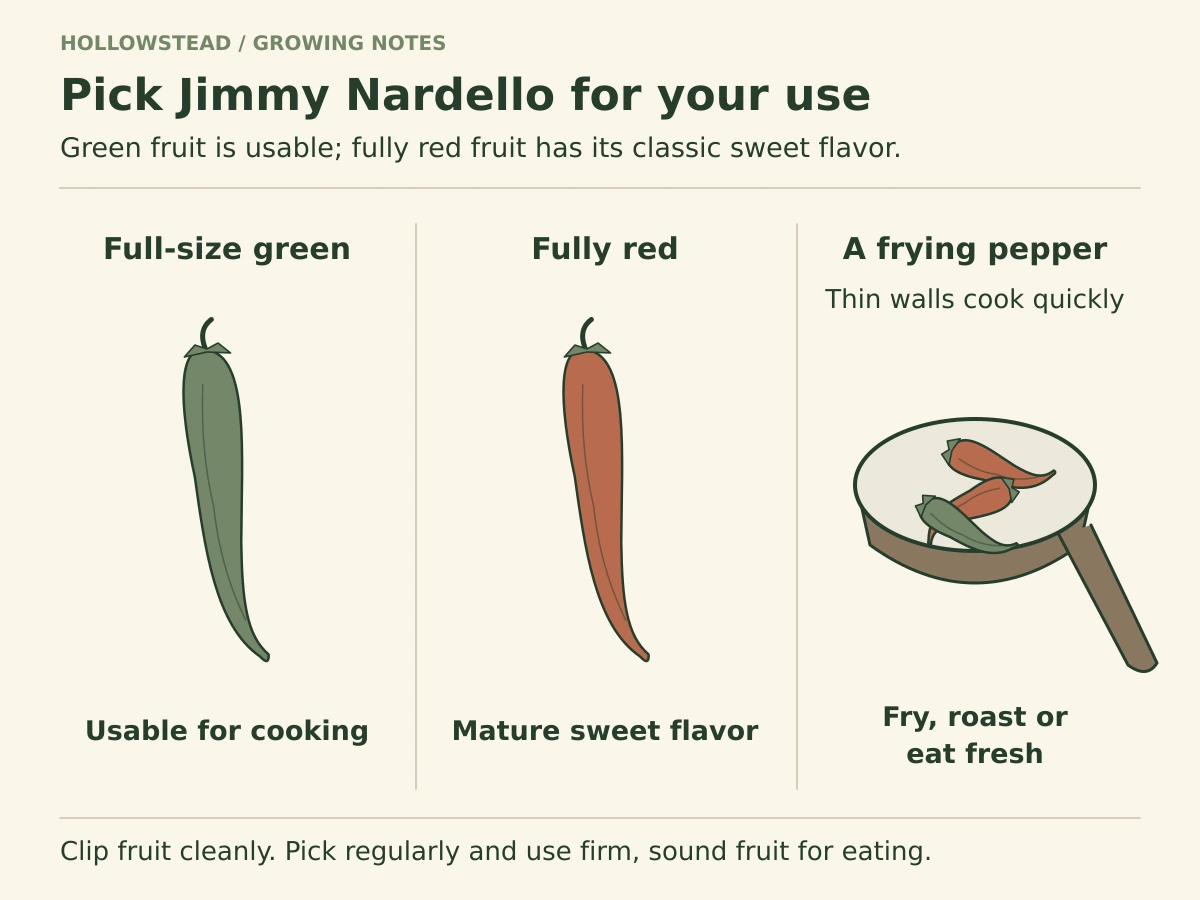
You can eat the fruit while green, but the cultivar’s reputation is built around the fully ripe red stage. As the fruit colors, the pepper becomes sweeter and more aromatic. Harvest whenever a green frying pepper is what you need; wait for full red when you want the classic mature flavor.
 View full-size diagram
Use scissors or pruners instead of pulling. Pepper branches are brittle enough that a forceful harvest can remove the fruit and the branch supporting the next flush. Maryland Extension recommends cutting pods for that reason.[5]
Choose a picking stage
| Fruit stage | Best decision |
|---|---|
| Full-size green and firm | Pick for green-pepper cooking, or leave selected fruit to color when warm weather remains. |
| Fully red and sound | Use for the mature sweet frying harvest. Cornell describes curved, tapering fruit with a naturally crinkled red surface; shape alone is not a defect.[1] |
| Marked fruit for seed | Leave until the final color develops and the fruit begins softening. Keep it separate from the firm eating harvest.[3] |
Why it is called a frying pepper
Jimmy Nardello’s walls are thinner than a blocky bell pepper, so the fruit cooks quickly and collapses into a silky texture rather than remaining thick and crunchy. That makes it especially well suited to quick frying, blistering, roasting, grilling, sandwiches, pasta, and preserving.
“Frying pepper” describes a culinary type, not a requirement. Ripe fruit is also sweet enough for fresh eating, and the thin walls make mature peppers practical for drying.
Containers and support
Keep one pepper plant per 5–10-gallon pot, at least about 12 inches deep, with drainage holes and a small cage or stake. Maryland Extension lists 5 gallons as a practical minimum for peppers.[5] Choose nearer 10 gallons where heat makes watering difficult; a broad, stable pot also helps carry the canopy. Move surplus seedlings to their own containers instead of crowding two plants into one small root space.
Install support when you plant. In a container, the combination of a top-heavy pepper plant, wet potting mix, and wind can move the entire root ball even when the stem itself does not break.
Saving seed from this open-pollinated pepper
A practical controlled seed lot
Bag unopened flower buds with breathable blossom bags before insects enter, gently tap flowers as they open, and mark the resulting fruit. Keep bagged seed fruit separate from unprotected harvest. For ongoing variety maintenance, Seed Savers recommends seed from 5–20 plants where space allows; a single plant can produce viable seed but maintains a narrower sample. Select healthy, typical parents; keep source/lot, parent number and year with each drying batch. Cut fully colored, softening seed fruit open, remove seed, and dry it in a thin layer out of direct heat. No fermentation is needed for peppers. Once completely dry, store cool and dry in a sealed labeled container, and test a sample before sowing.
Jimmy Nardello is open-pollinated, so seed can reproduce the variety—but only if the flower that produced the seed was not crossed with another compatible pepper. That crossing does not change the fruit you are eating this year; it changes the genetics inside the saved seed.
Peppers are capable of self-pollination, but insects also move pollen. Seed Savers recommends much more isolation for true-to-type pepper seed than most home gardens can provide and suggests physical barriers such as blossom bags when distance is impossible.[3] Cornell Cooperative Extension likewise describes bagging unopened pepper flowers as a practical way to prevent insect crossing in a home garden.[6]
For seed maturity, leave a marked fruit on the plant until it reaches its final ripe color and begins to soften; Seed Savers uses final color/softening as its maturity cue.[3] Dry cleaned seed thoroughly before labeling and storing it cool, dark, and dry.
Common problems and decisions
Record the symptom’s location and the recent weather before changing care. A curved or naturally crinkled pepper is different from damaged tissue.
| What you see | Check first | Next step |
|---|---|---|
| Bushy leaves, very few flowers or fruit | Nitrogen already applied, actual sun exposure, and weather | Avoid another automatic feeding. Correct shade or water stress and watch new flowers as conditions improve.[4] |
| Flowers drop during a hot spell | Whether several plants show the same timing | Keep roots evenly supplied with water. Heat can interrupt set; adding fertilizer does not repair a weather-damaged flower.[8] |
| White or tan patch on an exposed fruit | Missing leaves, a leaning branch, or sudden sun exposure | Protect the remaining canopy and support branches. Sunscald damages exposed tissue; it is not the normal red color change.[8] |
| Sunken discolored tissue toward the fruit tip or side | Recent drought, saturated soil, or root disturbance | Consider blossom-end rot and stabilize root moisture. Foliar calcium is not a dependable correction; affected tissue will not become sound again.[9] |
| Heavy outer branches lean or split | A loose stake, tight tie, or fruit beyond the support | Support still-intact stems before they tear; clip mature fruit to reduce leverage. Install support earlier on the next crop. |
| Full-size green fruit late in the season | Forecast frost and remaining warm growing time | Pick usable green peppers when frost is the greater risk. Do not let the wish for a red harvest cost the edible crop.[5] |
Keep the harvest in good condition
Clip fruit cleanly, cool it out of the sun, and refrigerate for short holding; aim to use it within about a week. Long cold storage can pit pepper skin. Keep fruit dry until washing for preparation and discard decay. Freeze excess using Extension instructions; dried, pickled and oil-packed peppers each require their own tested preservation method.[4]
Sourced grower observations
These are attributed experiences from other growers, checked against the linked horticultural references. They are not Hollowstead trials of the seed offered here.
UC Napa Master Gardeners compared Baker Creek Jimmy Nardello with Gypsy and Golden Giant across participating home gardens in 2018. Participants generally liked the peppers, with comments varying by garden. Set that local field comparison beside Cornell’s 2017 Nassau, New York report of few fully red fruits. For a red-ripe goal, record transplant and first red harvest dates; full-size green fruit remains usable.[10][1]
The home gardener writing at Happy Acres reports several seasons of sweet red Jimmy Nardello harvests in that garden. This supports a useful kitchen choice—leave some full-size green peppers to turn completely red for sweet frying—while Cornell’s cultivar description independently identifies the ripe red frying type. It does not establish yield or timing for another climate or this lot.
A 2017 report under CCE Nassau County NY in Cornell’s gardener database found that few fruit reached red. Read alongside the cultivar description, that observation supports planning separately for green and red harvests; it is a single-season report, not a ripening guarantee for another garden.[1]
For a dark, sunken patch at the blossom end of a fruit, use the blossom-end-rot diagnosis and prevention guide before adding a supplement.
GROW JIMMY NARDELLO
Put the guide to work.
This is the Hollowstead pepper for gardeners who want a productive sweet pepper built around ripe flavor and fast cooking rather than thick bell-pepper walls.
HOLLOWSTEAD SEED
Jimmy Nardello Sweet Pepper Seeds
$4.49
HOLLOWSTEAD SEED
Fish Pepper Seeds
$3.99KEEP LEARNING
Related Hollowstead guides
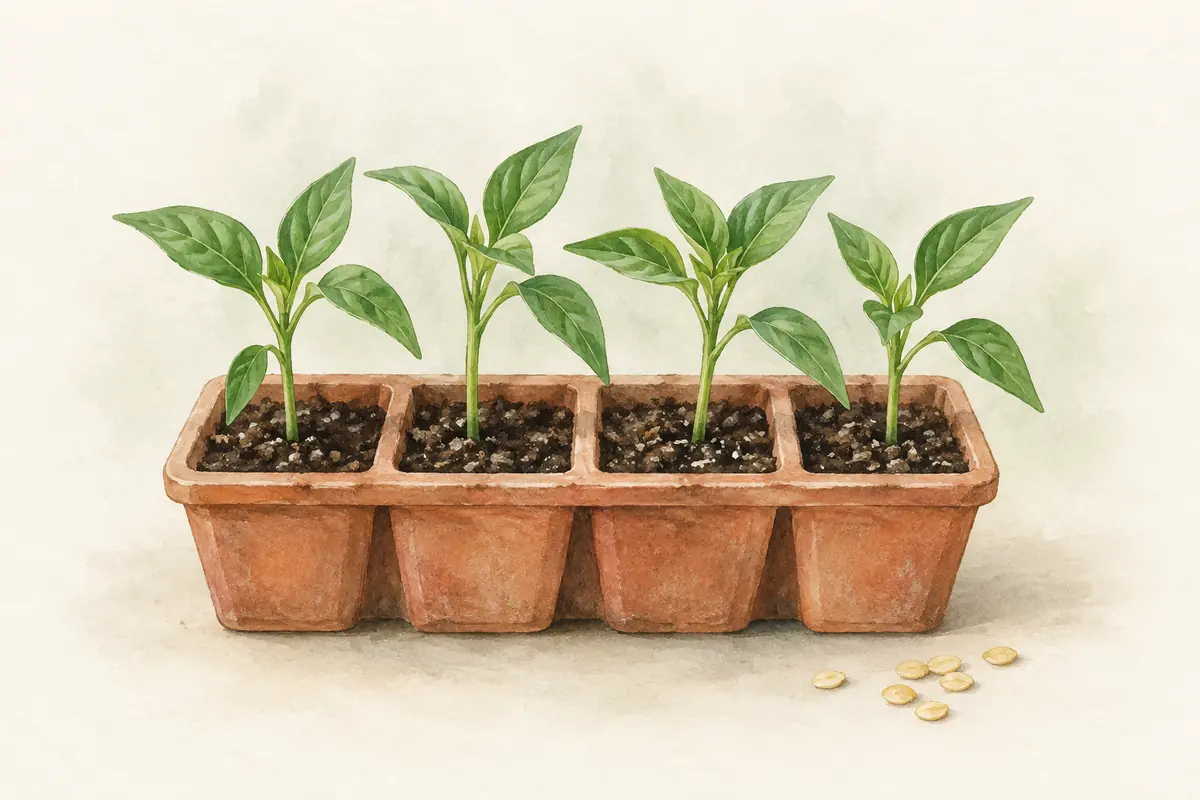
PEPPER SEED STARTING
Growing Peppers From Seed: The Complete Guide
Grow peppers from seed through harvest with warm germination, strong seedlings, soil preparation, transplant timing, steady moisture, sensible fertility, fruit-set troubleshooting, disease prevention, and harvest care.
Read the guide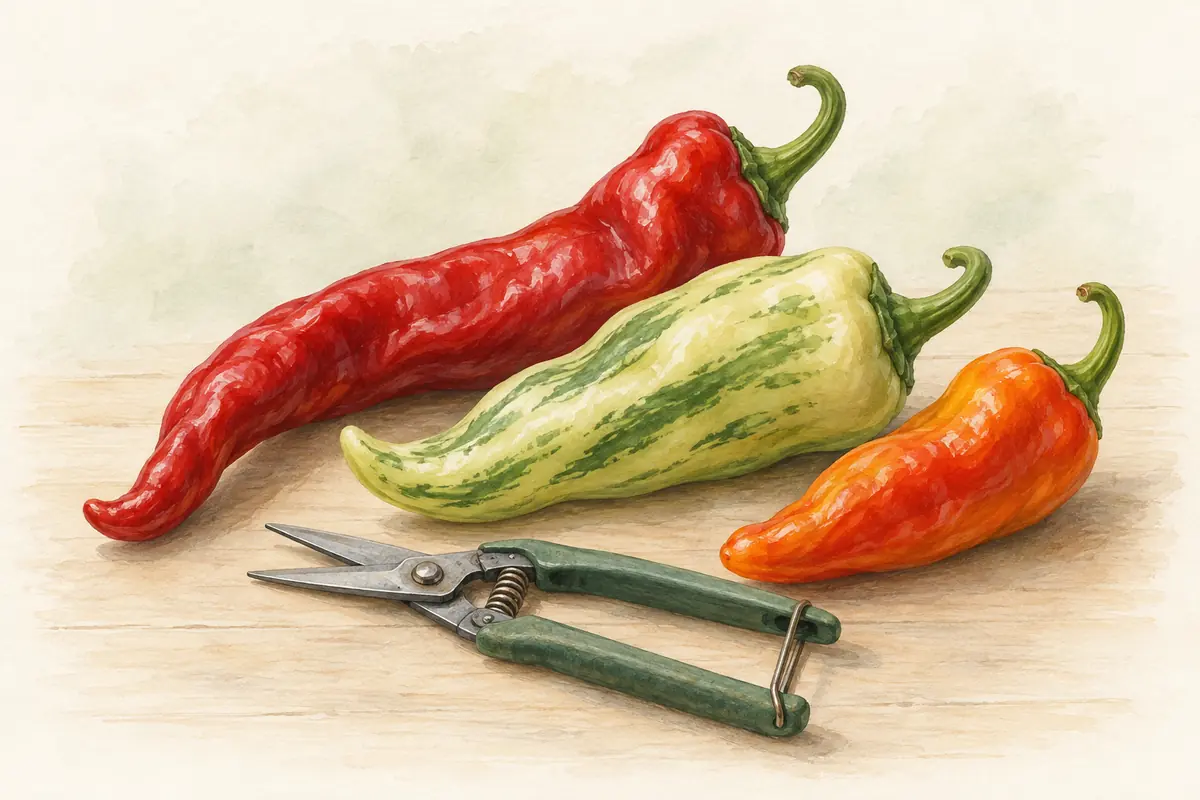
HARVEST GUIDE
When and How to Harvest Peppers
Choose the right pepper harvest stage for green eating, full ripe flavor, continued production, storage, or seed saving, with specific cues for Jimmy Nardello and Fish Pepper.
Read the guide
CONTAINER GUIDE
Growing Peppers in Containers
Grow productive peppers in containers with enough root volume, airy potting mix, drainage, sun, steady water, moderate fertilizer, branch support, root-zone heat management, and troubleshooting.
Read the guideFrequently asked questions
Is Jimmy Nardello hot?
No. It is grown as a sweet frying pepper.
Can I harvest Jimmy Nardello green?
Yes. Green fruit is edible, but fully red fruit develops the ripe sweetness for which the variety is best known.
Does Jimmy Nardello need a cage?
Not always, but support is useful on productive plants because pepper branches can split under fruit load or wind.
Can I save the seed?
Yes. It is open-pollinated, but peppers can cross. Isolate blossoms/plants if you need the saved seed to remain true-to-type.
Sources & further reading
- Cornell Cooperative Extension Vegetable Varieties for Gardeners: Jimmy Nardello’s https://vegvariety.cce.cornell.edu/main/detail.php?filterBy=0&variety_id=2152
- Thomas Jefferson Foundation / Monticello Jimmy Nardello’s Sweet Pepper Seeds https://monticelloshop.org/products/jimmy-nardellos-sweet-pepper-seeds-capsicum-annuum-var-annuum
- Seed Savers Exchange Growing Guide: Peppers https://seedsavers.org/grow-pepper/
- University of Minnesota Extension Growing peppers in home gardens https://extension.umn.edu/garden-and-home/yard-and-garden/gardening-in-minnesota/growing-peppers
- University of Maryland Extension Growing Peppers in a Home Garden https://extension.umd.edu/resource/growing-peppers-home-garden
- Cornell Cooperative Extension Saving the Future, One Seed at a Time https://cce.cornell.edu/orleans/saving-future-one-seed-time
- University of Maryland Extension — Starting Vegetable Seeds Indoors https://extension.umd.edu/resource/starting-vegetable-seeds-indoors
- Iowa State University Extension and Outreach. Flower drop, sunscald, and pepper care. https://yardandgarden.extension.iastate.edu/how-to/growing-peppers-home-garden
- University of Georgia Cooperative Extension. Pepper fruit disorders and the limitations of foliar calcium for blossom-end rot; general pepper guidance, not a Jimmy Nardello trial. https://fieldreport.caes.uga.edu/publications/C1306/common-defects-of-bell-peppers-explained/
- UC Napa Master Gardeners — 2018 sweet pepper comparison Participating home gardens compared Baker Creek Jimmy Nardello seed with Gypsy and Golden Giant. https://ucanr.edu/node/104189/printable/print
Hollowstead Growing Notes
A little help for your next growing season
Practical sowing advice, help choosing seeds, and occasional Hollowstead shop news. Usually one or two emails a month, plus a short welcome note.
Choose your topics and frequency after you confirm. Our guides and planting calendar are always free.