
Description
AN HERB BED WITH MORE CHARACTER
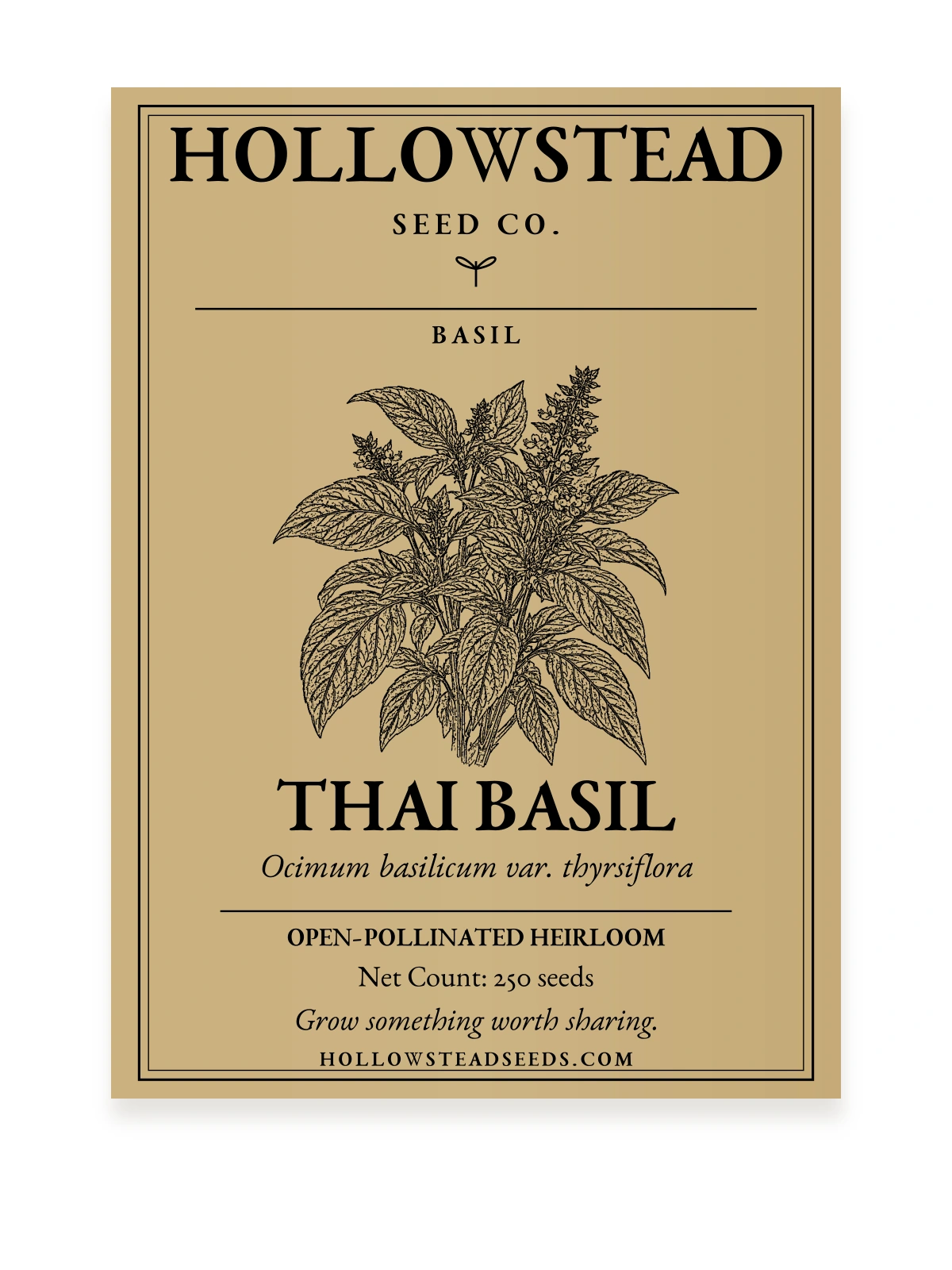
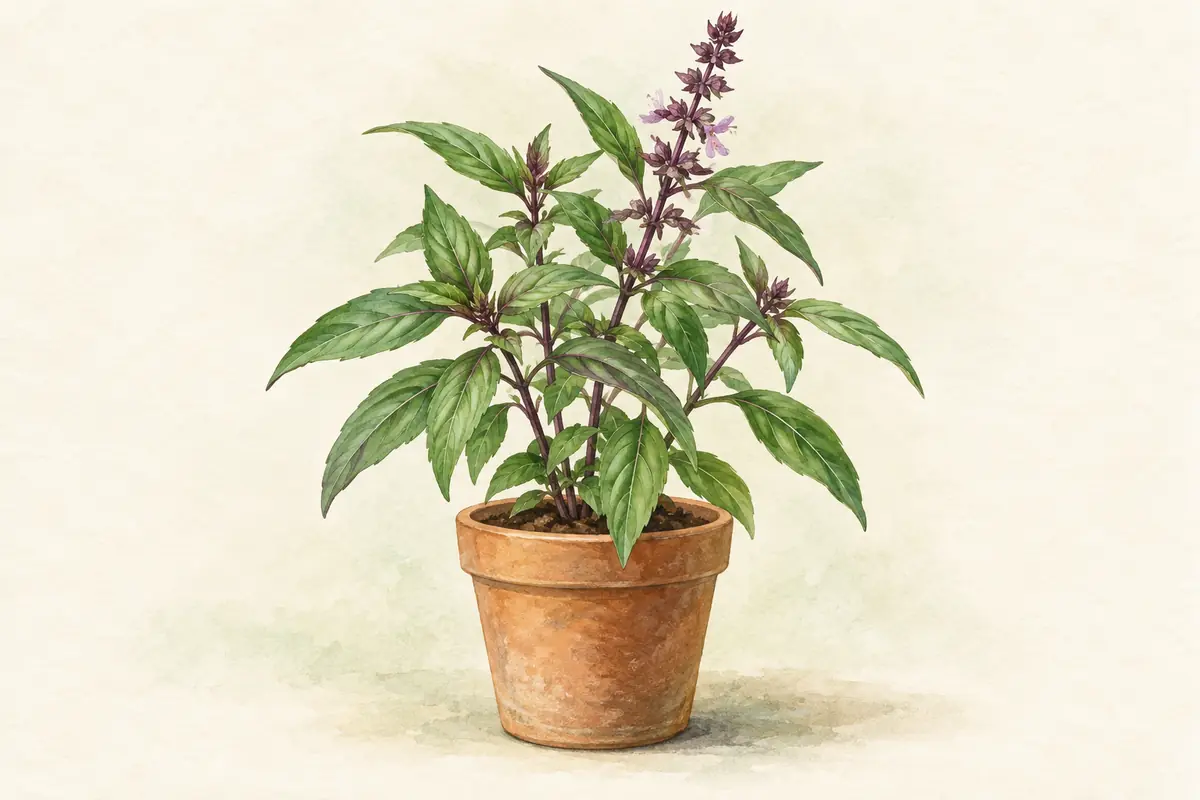
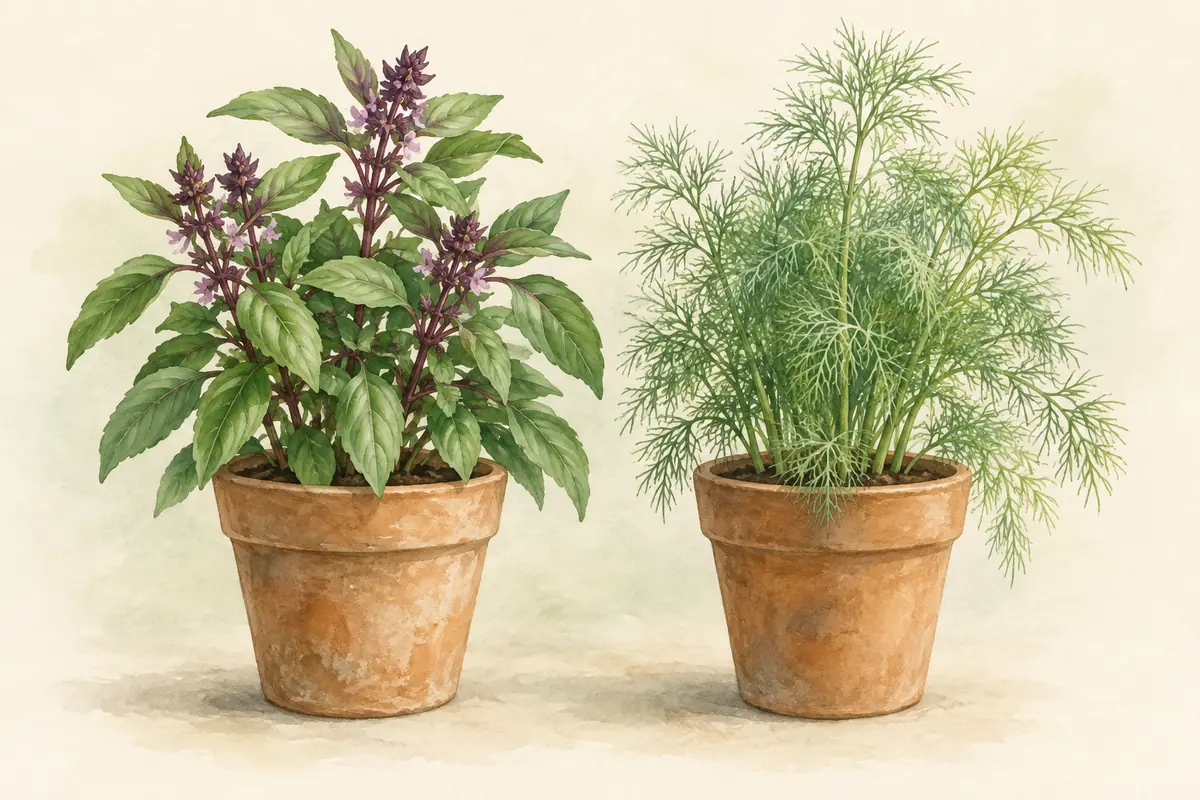
Basil, but unmistakably Thai basil.
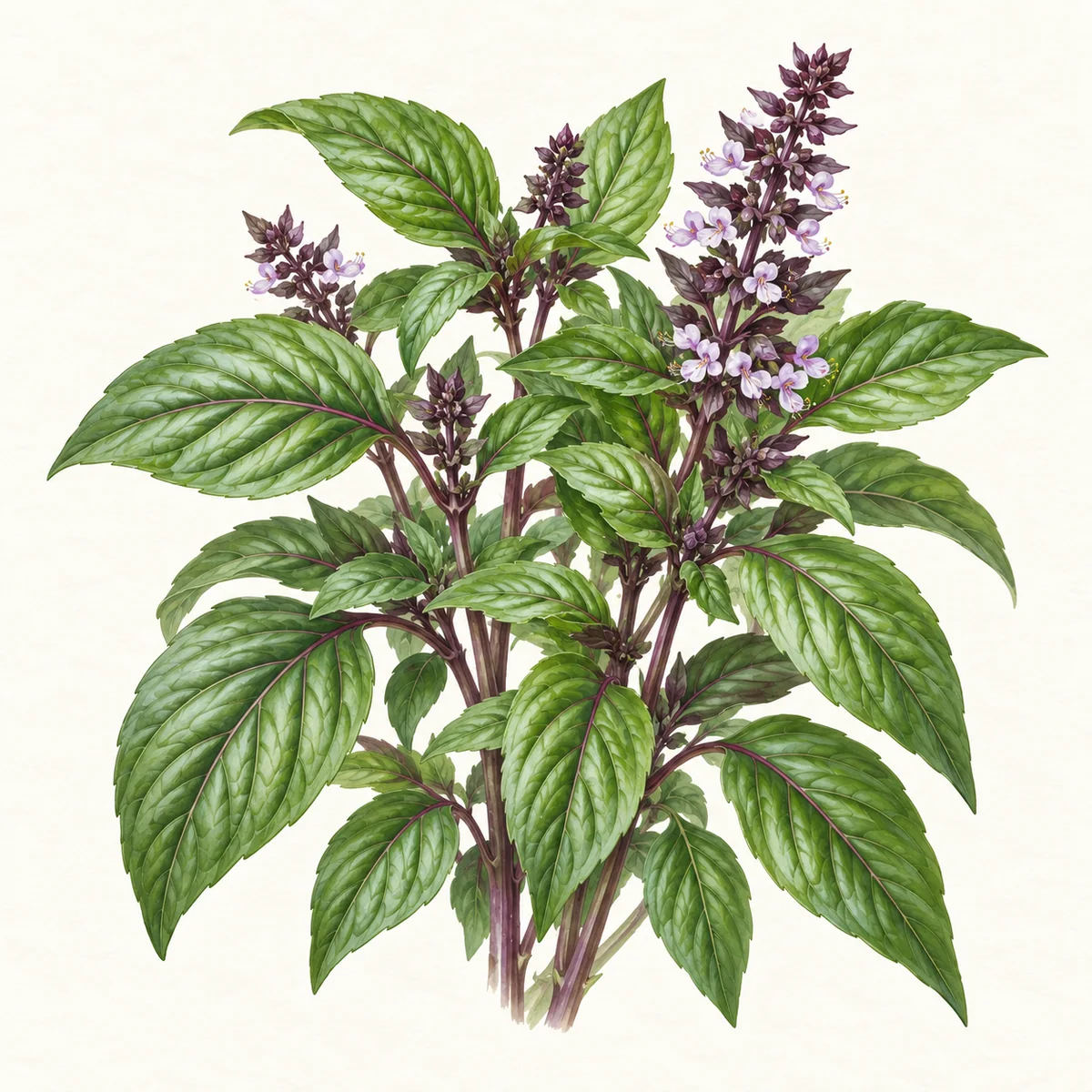
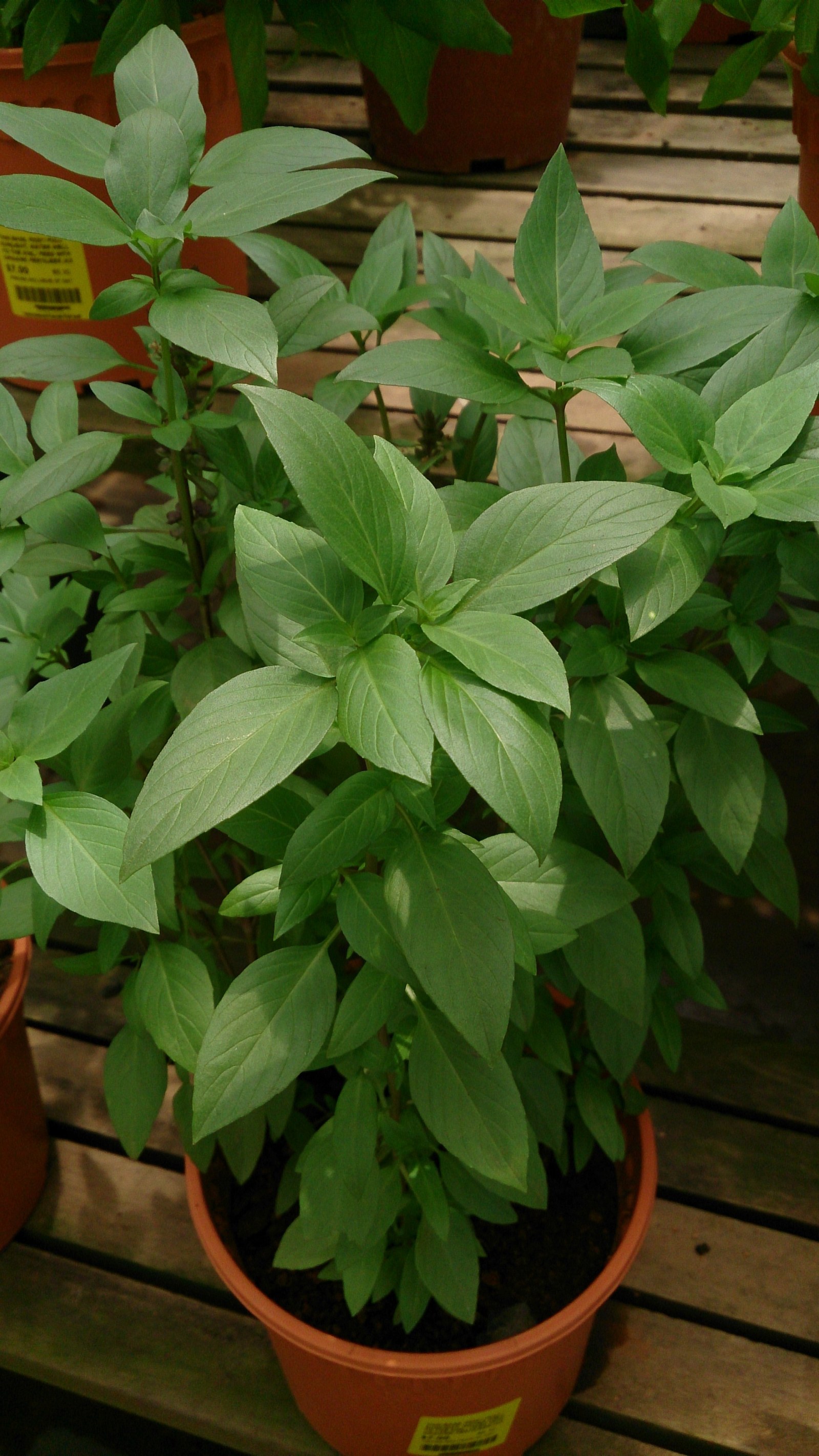
Glossy green leaves, purple stems, and a sweet, licorice-like aroma give Thai basil its own place in the kitchen. Cut tender tips above a healthy leaf pair for curry, noodles, or soup; leave a separate plant flowering if blooms or seed are the goal.
Choose it for: a warm, sunny herb bed or patio pot that you visit often, with fresh leaves for Southeast Asian-inspired cooking.
FIND ITS PLACE
A summer herb with its own flavor.
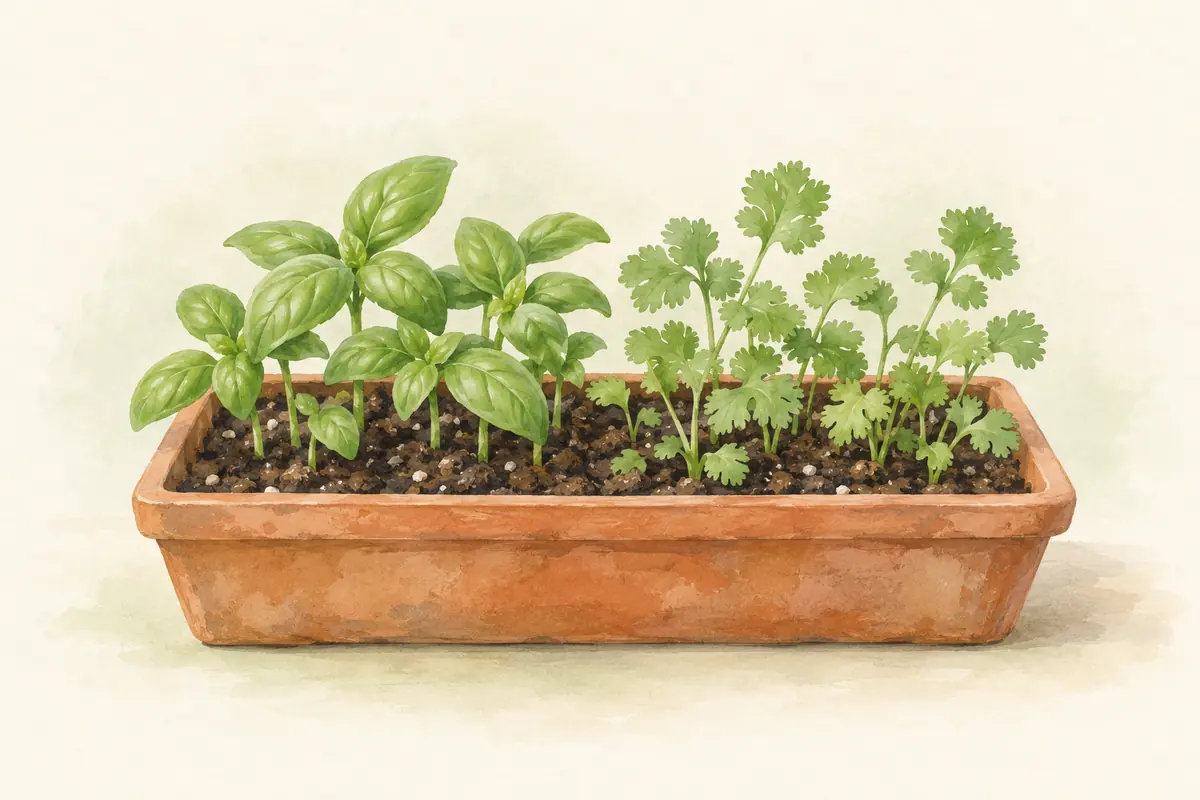
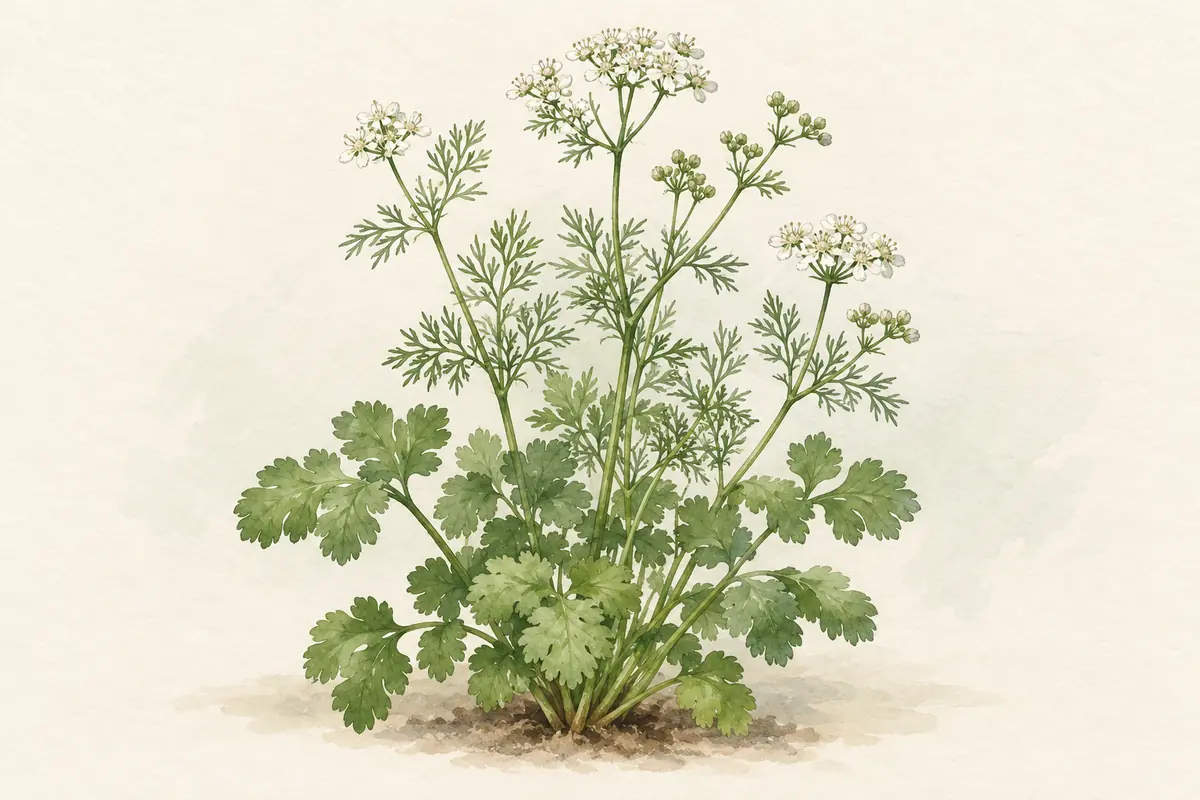
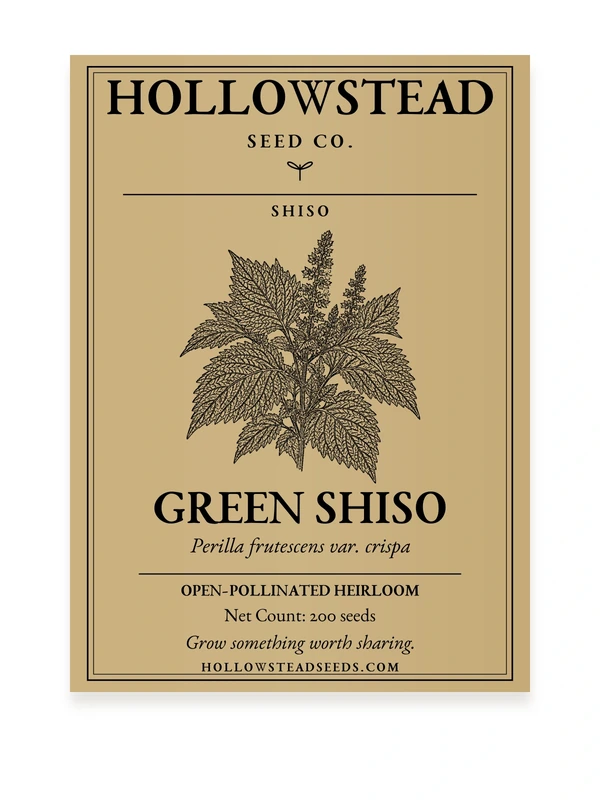
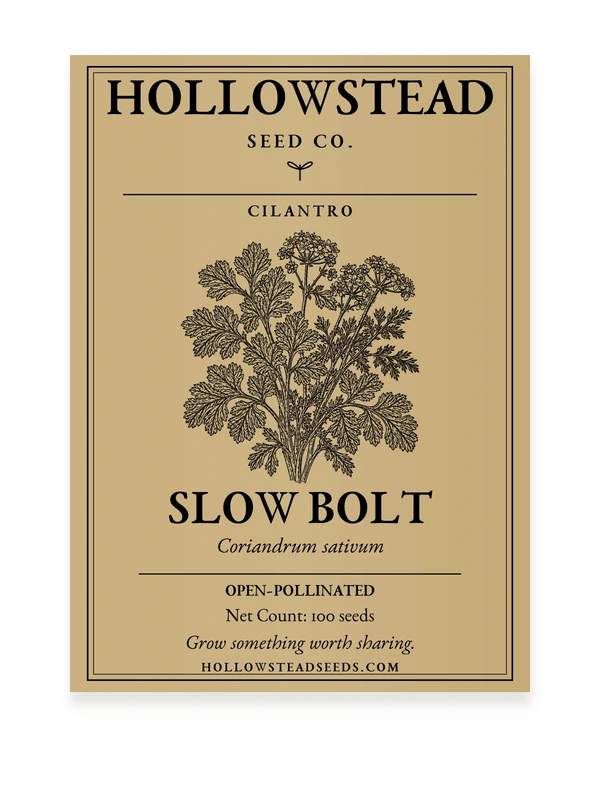
Green Shiso offers broader leaves for small wraps and a different citrus-mint character. Slow Bolt Cilantro suits fresh salsa and cool-season leaf harvests. Grow basil alongside either for more choices at cooking time; their flavors are distinct.
FROM PACKET TO GARDEN
Warm soil, bright light, regular picking.
Sow shallowly.
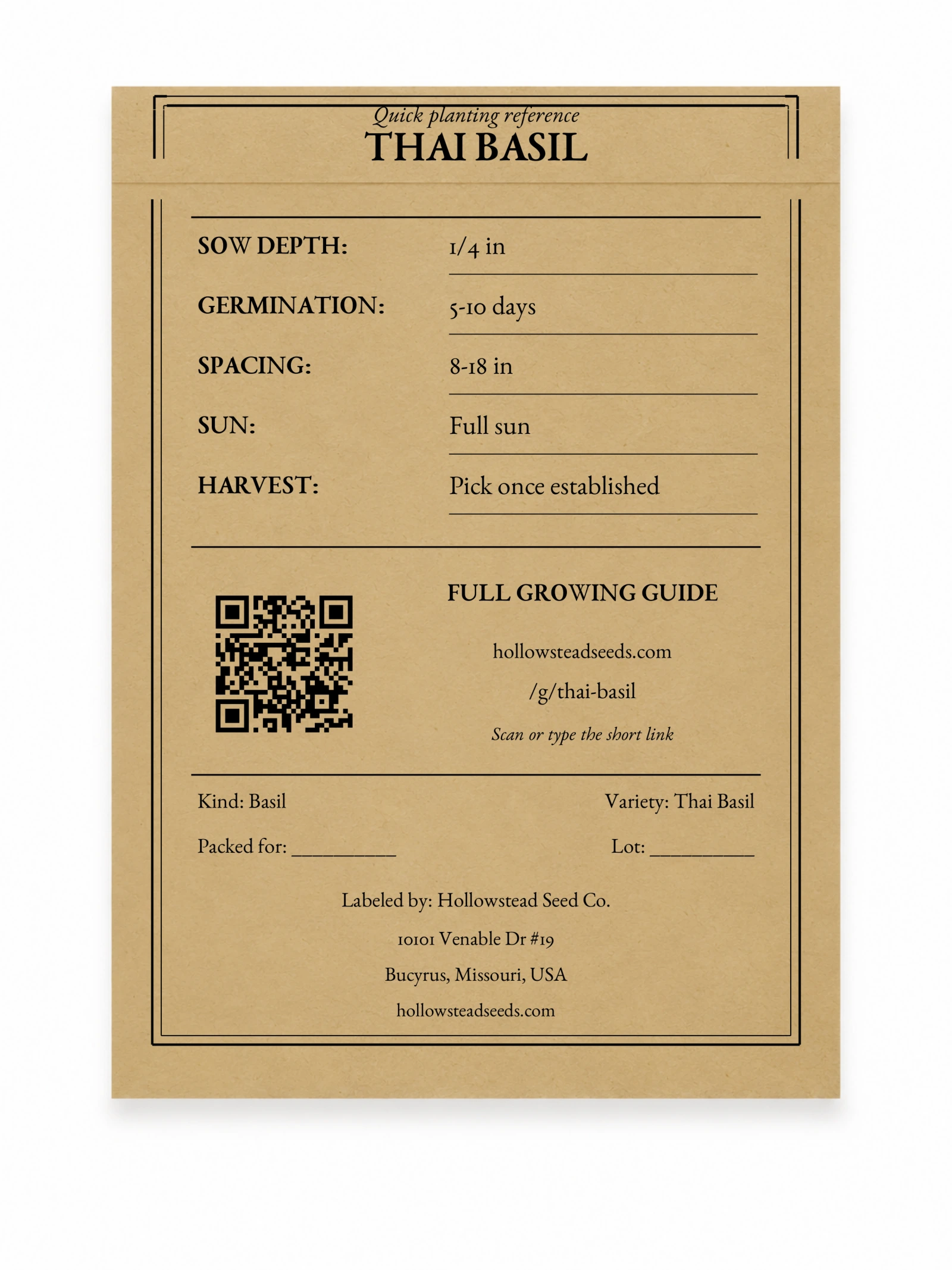
Sow about ¼ inch deep in seed-starting mix, or direct sow after frost when soil is warm. Keep the seed zone evenly moist.
Build a sturdy plant.
Give seedlings strong light. Acclimate indoor plants to outdoor sun and wind, then space roughly 8–18 inches apart according to the canopy you want.
Start with a small cut.
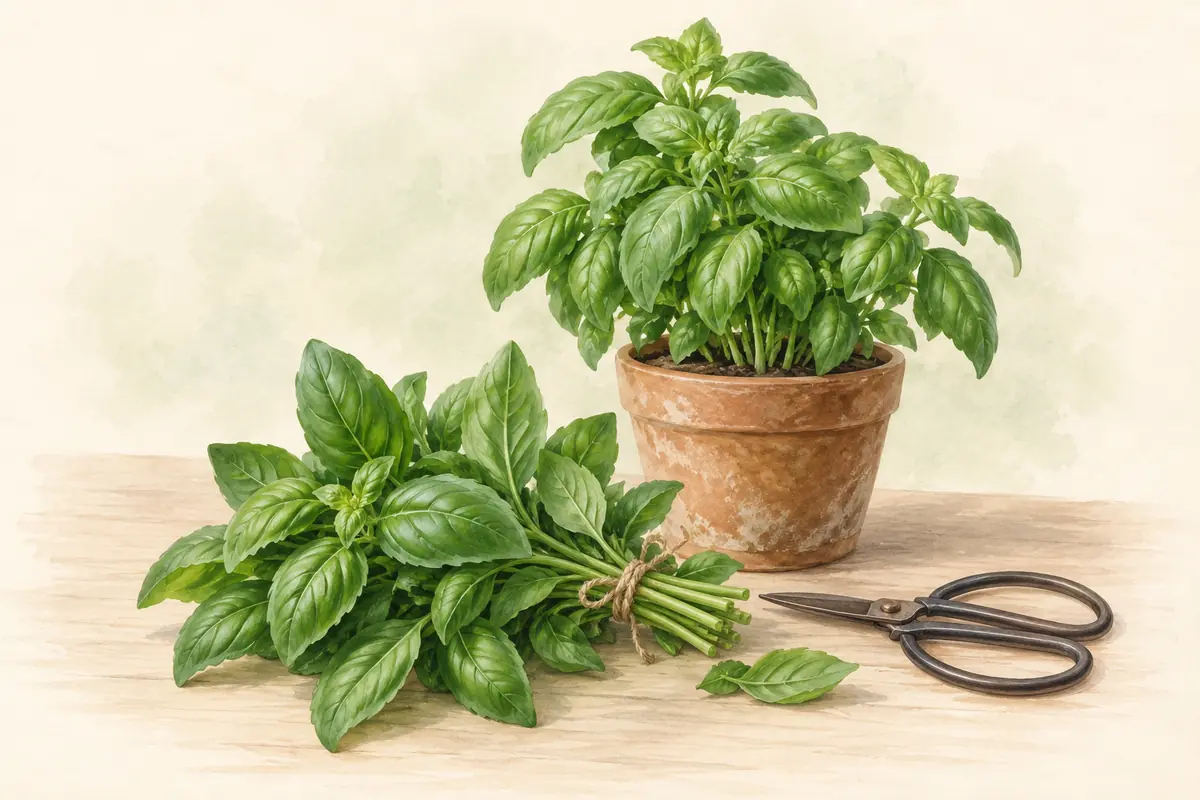
Once well rooted and growing, cut a tender tip just above a leaf pair. Leave healthy leaves below to supply the new side shoots. [2]
SMALL DECISIONS, BETTER HARVESTS
Practical growing tips
Wait for new growth.
A chilly transplant that stays the same size needs warmth and a root-zone check. Extra fertilizer cannot replace suitable temperatures.
Keep the branching points.
Harvest stem tips above nodes instead of stripping every leaf. Leave most of a small plant intact and increase picking as side shoots fill out.
Check the pot, not the clock.
Feel below the surface before watering. A small pot may need frequent checks in heat; wet mix and a wilted plant call for a drainage check.
Choose which plants may bloom.
Remove developing flower spikes from leaf plants. Let a separate plant bloom if flowers or seed are part of your plan. [2]
FROM GARDEN TO KITCHEN
Harvest in rounds.
First picking: take one or two tips from an established plant. At full growth: rotate around the canopy and wait for leafy regrowth between larger cuts. Before cold weather: gather usable leaves while they are still healthy.
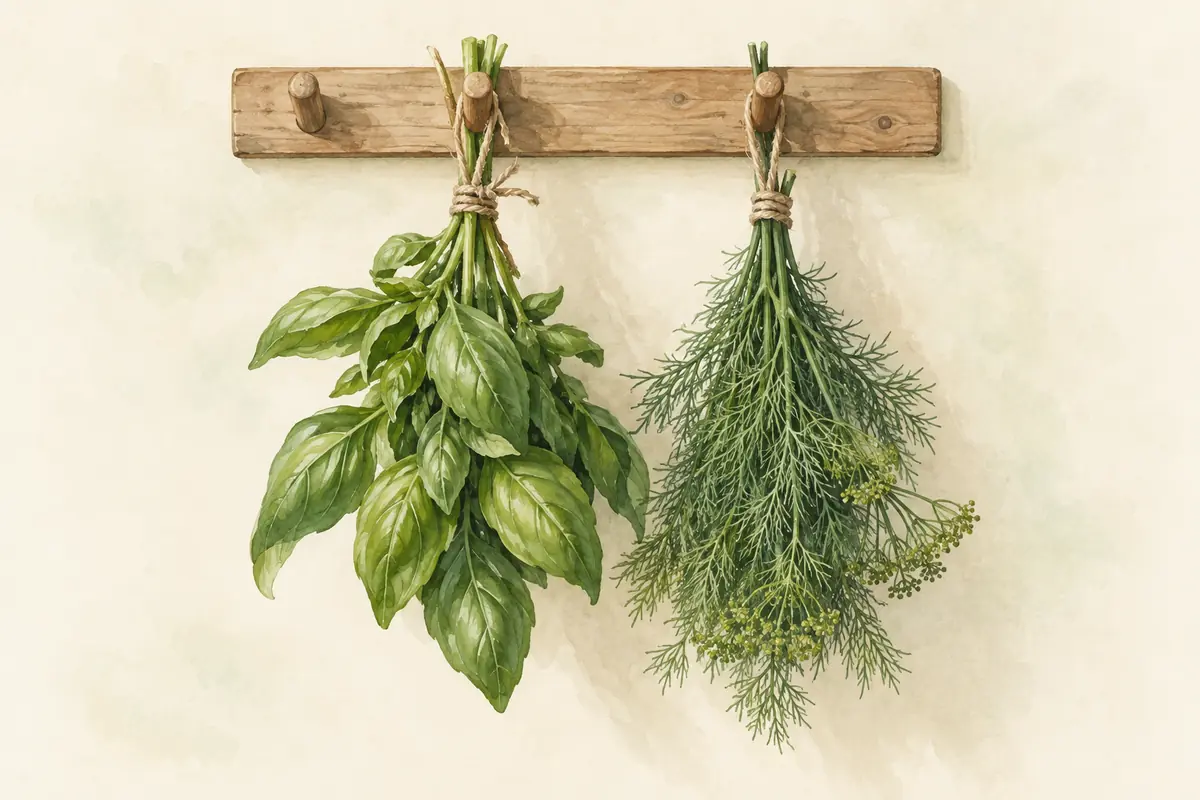
Use tender leaves fresh or add them near the end of cooking. Freeze surplus in small portions for cooked dishes; it will lose the texture of a fresh garnish.
A FEW THINGS WORTH KNOWING
Before you plant.
Can I keep it on a windowsill?
A bright window can work, but weak light produces stretched growth. A sunny outdoor pot in warm weather is usually a better setting for regular kitchen-sized harvests.
Will flowering ruin the plant?
Flowering is a normal stage. For more tender leafy growth, cut flower-bearing tips back above healthy leaf pairs; an old, woody plant may recover less strongly than a younger one.
How much space should one pot have?
A 3–5-gallon container for one plant is a generous practical starting plan. Use drainage holes and allow room for a branching canopy. The guide explains moisture and pruning tradeoffs.
MAKE ROOM FOR THE HARVEST
Plan for how often you cook.
Start with a few accessible plants and stagger heavier picking between them. Frequent small garnishes need less leaf area than repeated large batches of sauce. Reserve seed for a replacement sowing if the warm season is long.
Read the Thai Basil growing guide for a staged checklist, branch-by-branch harvest advice, and symptom checks.
Growing references
Extension and supplier guidance inform these recommendations; local weather and growing conditions set the pace.

Reviews
THIS PATCH IS JUST GETTING STARTED
Your garden could start the conversation.
No published reviews for this variety yet. Once you have tried these seeds, your experience can help another gardener decide what to plant.
A few honest details are worth more than a perfect growing season.