
SEED STARTING
Growing Four Annual Herbs From Seed: Basil, Shiso, Cilantro & Dill
Start basil, shiso, cilantro, and dill with a crop-specific plan. Learn when to start indoors or direct sow, how to manage light and moisture, when to thin and transplant, and how to plan the first harvest.
HerbsSeed startingBeginner → advanced
Published by Hollowstead Seed Co. · How this guide is prepared
Quick answer
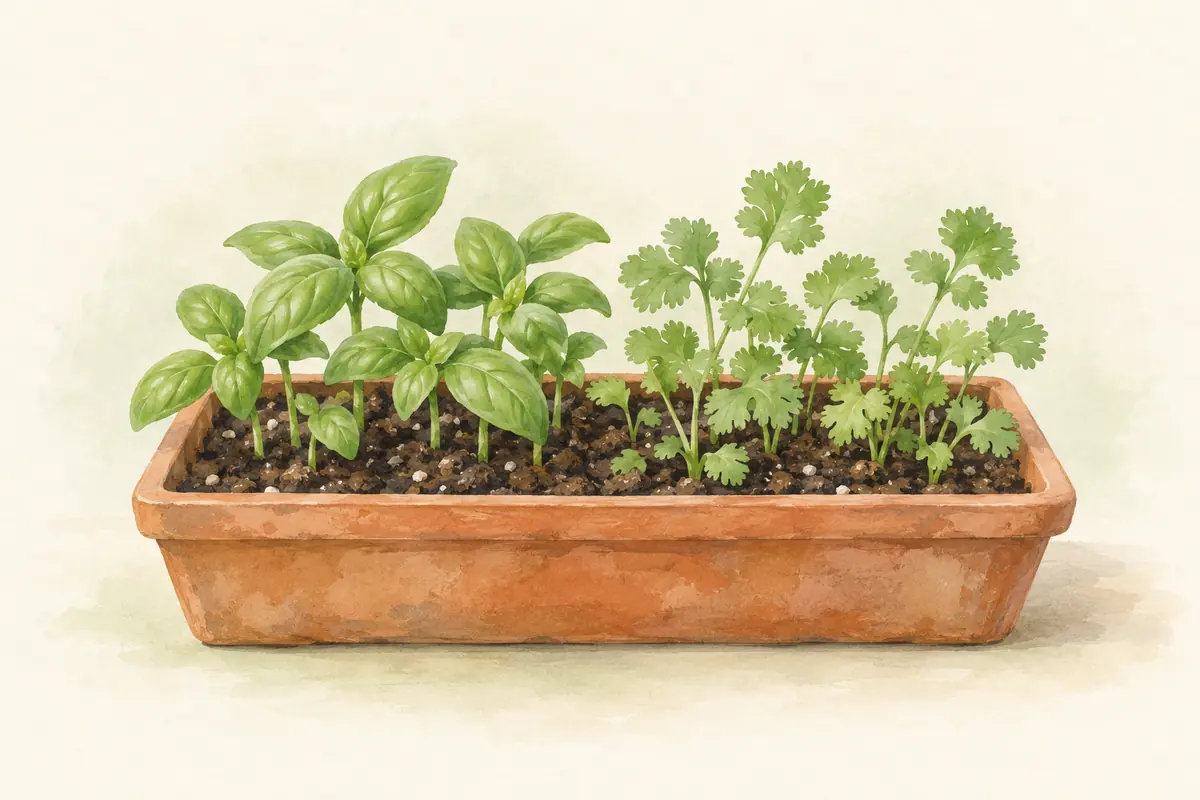
Herbs do not all want the same start. Basil and shiso are warm-season plants that can be started indoors, while cilantro and dill are often simplest when sown directly where they will grow. Use a clean seed-starting mix, sow at the depth recommended for the herb, keep the seed zone evenly moist rather than saturated, and give seedlings strong light as soon as they emerge.[1][2]
Plan the crop around the way you will harvest it. Basil and shiso reward repeated leaf picking; cilantro is a cool-season crop that eventually shifts toward flowering and coriander seed; dill can be harvested for foliage, flowers, or mature seed. The best herb garden is usually several small plans rather than one universal routine.
The short version: match sowing method to the herb, use bright light, keep moisture steady, thin early, and begin harvesting once plants are established enough to recover.
Herbs at a glance
| Question | Useful starting point |
|---|---|
| Indoor starting | Useful for basil and shiso; optional for some other herbs |
| Direct sowing | Especially useful for cilantro and dill |
| Seed depth | Usually shallow; follow the packet for each crop |
| Light after emergence | Strong light for compact growth |
| Water | Even moisture, never a permanently soggy mix |
| Thinning | Give individual plants room before they become tangled |
| Feeding | Lightly; herbs rarely benefit from heavy nitrogen |
| Harvest | Begin once plants are established and keep the crop’s growth habit in mind |
- Choose the crop roleDecide whether each planting is mainly for leaves, flowers, seed, or a succession slot.
- Match the sowing methodStart warm-season basil and shiso indoors when useful; direct sow cilantro and dill when root disturbance or timing makes that simpler.
- Build compact seedlingsAfter emergence, prioritize strong light, room, airflow, and measured moisture.
- Establish in the right seasonWarm-season herbs wait for settled warmth; cool-season cilantro performs best before summer heat dominates.
- Shape the cropPinch leafy herbs, thin direct sowings, and decide which plants will be allowed to flower.
- Harvest by plant stageTake tender leaves while growth is active, then reserve selected plants for flowers or mature seed where desired.
- Reset intentionallyUse succession sowing, containers, and seed collection to replace plants whose useful stage has passed.
Start by matching the method to the herb
This guide compares four annual herbs—Thai basil, green shiso, Slow Bolt cilantro, and Mammoth Long Island dill. Use each variety guide for its precise depth and harvest checkpoints.
If you are starting salad greens beside the herbs, use growing lettuce from seed for its shallow sowing and cool-season timing. Keep lettuce trays labeled separately from warm-season basil and shiso so their different germination needs remain clear.
| Crop | First seasonal decision |
|---|---|
| Thai basil | Warm, frost-free start; pinch for leaves |
| Green shiso | Warm season; check the offered lot’s germination directions |
| Slow Bolt cilantro | Cool-season leaf sowings |
| Mammoth Long Island dill | Direct sow for fronds or later heads |
Basil and shiso are warm-season annuals and respond well to an indoor head start when your spring is cool. Cilantro prefers cooler weather and is often succession-sown directly into the garden. Dill has a taproot and generally performs well when direct sown, reducing root disturbance.[1][2]
This is why a mixed herb tray needs labels. A seedling tray may be convenient, but convenience is not a reason to force every herb into the same schedule.
Soil testing, site preparation, and fertility
Most culinary herbs are easier to manage in soil that drains well than in a bed that stays wet after rain. University of Minnesota Extension places many herbs in a roughly pH 6.0–7.5 range and cautions that overly rich soil can push soft, lush growth at the expense of aroma and flavor. Penn State likewise recommends a soil test before planting rather than amending by guesswork.[1][2]
- Drainage
- Well drained; avoid chronically soggy root zones
- Soil test
- Use measured pH and nutrients before adding fertilizer
- Sun
- Most culinary herbs favor strong light; species differ
- Fertility
- Moderate rather than lush, high-nitrogen growth
- Bed plan
- Group crops by season and water needs, not just appearance
Missouri Extension notes that many herbs perform in ordinary garden soil provided drainage and light are suitable.[3] Improve compacted soil with organic matter when appropriate, but do not treat compost or fertilizer as a fix for a low spot that ponds. For containers, use a potting mix built for drainage and aeration rather than digging garden soil into a pot.
Do not feed a symptom before diagnosing it. Pale plants can come from cold roots, saturated soil, root crowding, or insufficient light as well as nutrient shortage. A soil test and a look at the root zone are more useful than automatically reaching for nitrogen.
Sowing herb seeds
Use clean containers and a seed-starting mix for indoor sowing. Most culinary herb seeds are sown shallowly; tiny seed needs only a light covering, while larger seed can be covered to the packet depth. Keep the surface evenly moist until emergence, but provide drainage so the mix still contains air.[1][2]
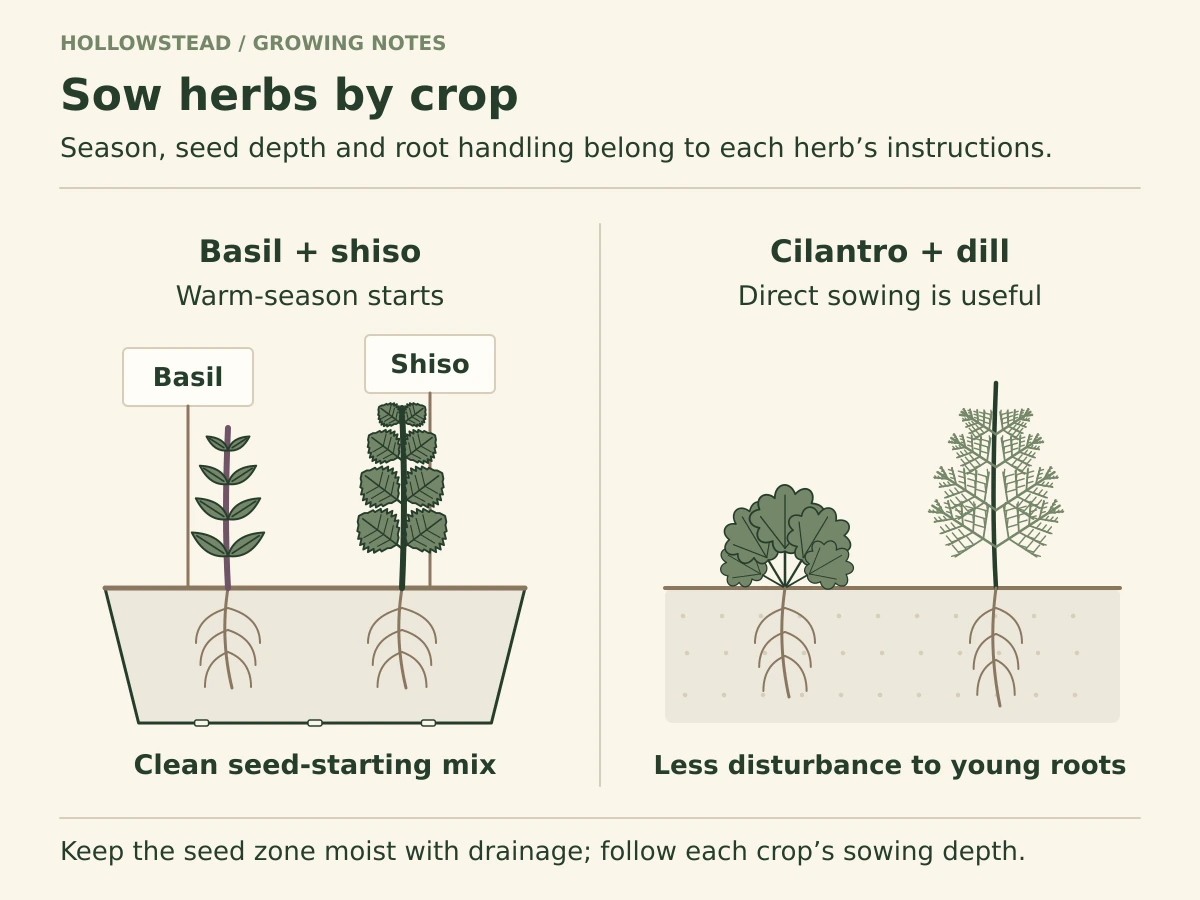 View full-size diagram
Before committing a planting window to an older packet, use the seed-storage and home germination-test guide. It helps separate an uncertain seed lot from problems in the seedbed.
Germination and early growth
Germination speed varies substantially by species and temperature. Do not use one herb’s emergence time as a deadline for another. Keep the mix moist, warm enough for the crop, and undisturbed while roots establish. Once seedlings appear, strong light becomes more important than extra warmth.
Herb seedlings develop at different speeds
- Thai Basil: general emergence about 5–10 days near 70°F (21°C).
- Green Shiso: general 7–21-day benchmark; lot instructions and conditions may differ.
- Cilantro may need about 21 days; general dill guidance is 7–21 days at 65–70°F (18–21°C).
- True leaves follow emergence. Provide light and thin by actual development, not a universal day-14 deadline.
Strong light and early thinning
UMN recommends strong supplemental light for indoor herb starts, with lights kept close enough to maintain compact growth.[1] Crowded seedlings compete for both light and root room. Thin or pot up before plants become a matted canopy that is difficult to separate.
Air movement is helpful after emergence, but a fan is not a substitute for correct light or watering.
Move tender herbs outdoors gradually
Seedlings grown indoors need to acclimate to outdoor sun, wind, and faster drying. Harden them off gradually and transplant frost-tender basil and shiso only after cold risk has passed. Penn State recommends gradually acclimating seedlings and keeping newly planted herbs moist while roots establish.[2]
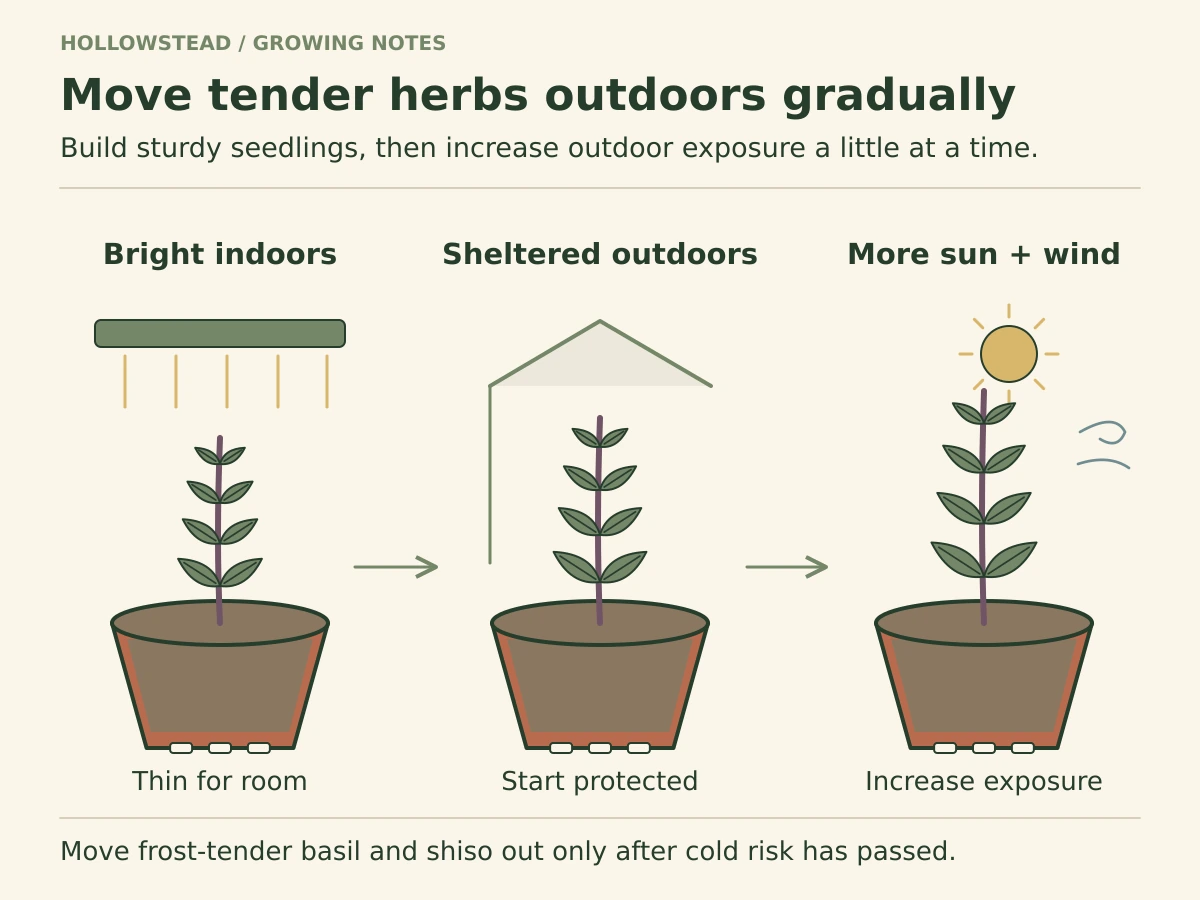 View full-size diagram
Water and fertilize with restraint
Seedlings and new transplants need reliable moisture, but waterlogged soil is a poor root environment. Established herbs differ in drought tolerance, so group plants with similar needs instead of watering every pot on the same schedule.[1] Fertilize lightly; excessive fertility can produce lush growth without improving the quality of a culinary harvest.
Pinching, flowering, and harvest architecture
Leaf herbs are not miniature shrubs that should be left untouched until one large harvest. Basil and shiso respond to strategic tip harvests that leave active nodes below the cut. That creates more branch tips and spreads production across the plant. Cilantro and dill follow a different architecture: once their central flowering stems rise, the crop is moving toward flowers and seed rather than simply making a bushier leaf plant.
This is where advanced gardeners can deliberately divide a planting into jobs. Keep some plants in a repeated-leaf-harvest cycle, allow others to flower for beneficial insects or culinary flowers, and reserve selected healthy plants for mature seed. The right cut depends on which of those outcomes you want next.
Plan the harvest before the plants are mature
Pinching basil above a leaf pair encourages branching. Cilantro leaves are best harvested before heat and maturity push the crop into flowering. Dill foliage, flower heads, and mature seed are separate harvest stages. Shiso can be harvested leaf by leaf or by stem once plants are established.
The supporting guides below go deeper on each variety, succession sowing, bolting, containers, harvest timing, and preservation.
Plan leaf, flower, and seed crops separately
A single plant cannot stay forever at peak leaf quality and also finish a full seed crop at the same moment. Cilantro makes this tradeoff obvious: the tender-leaf phase is cilantro, while the mature dry seed is coriander. Dill similarly moves from fronds to umbels to mature seed. Basil can be kept vegetative longer by pinching flowers, but seed saving requires you to stop doing that on selected plants.
For a kitchen garden, divide the planting before the season gets busy. Mark a few plants or one short row as leaf crop, another as flower/pollinator crop, and a final group as seed crop. This prevents the common mistake of harvesting every flower head and then realizing there is nothing left to mature for seed.
In-season herb troubleshooting
Start with the plant’s stage and environment before treating anything. The same symptom can have different causes in a newly emerged seedling, a root-bound patio pot, and a mature cilantro plant entering its reproductive phase.
When damage extends into a nearby salad planting, inspect that crop separately with lettuce pests and growing problems. Holes, insects and soft decay are observations to compare; the same-looking symptom on two crops need not have the same cause.
Choose your variety’s next step
Use Thai Basil, Green Shiso, Slow Bolt Cilantro, Mammoth Long Island Dill for exact catalog baselines, seedling checks, containers and home seed saving.
Plan container root room, choose a harvest stage, and use safe drying and freezing methods.
Read the seedling, not a universal calendar
| Crop | General emergence benchmark | Next decision |
|---|---|---|
| Thai Basil | Often 5–10 days near 70°F (21°C) | Give strong light after emergence; transplant only in settled warmth. |
| Green Shiso | Often 7–21 days; may be uneven | Keep the tray while checking lot instructions, warmth, sowing depth and moisture. |
| Slow Bolt Cilantro | May take about 21 days | Keep a cool, moist seed zone; do not discard after a week. |
| Mammoth Dill | General dill: 7–21 days at 65–70°F (18–21°C) | Direct sow; thin after establishment to allow the full-size plant room. |
These general published benchmarks are explained and sourced in the crop guides above. They are not germination tests of the current seed lots. True leaves follow emergence at different rates; use visible leaf development and root growth rather than a promise that every herb has true leaves by day 14.
GROW THESE HERBS
Put the guide to work.
Explore Hollowstead’s herb varieties and put these techniques into practice.
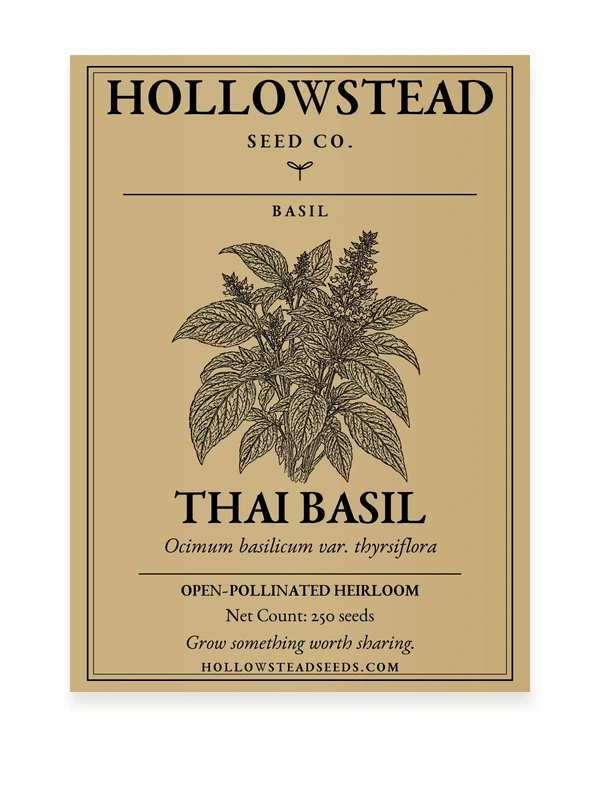
HOLLOWSTEAD SEED
Thai Basil Seeds
$3.49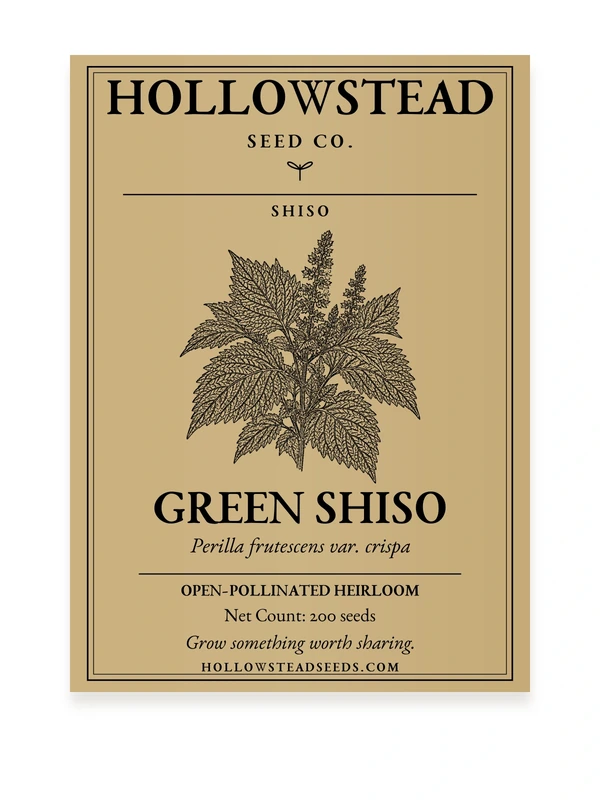
HOLLOWSTEAD SEED
Green Shiso Seeds
$3.49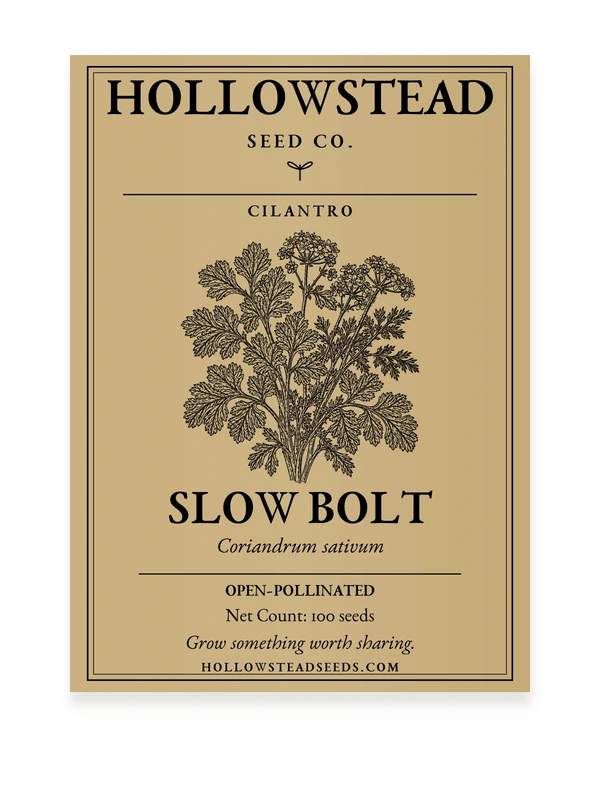
HOLLOWSTEAD SEED
Slow Bolt Cilantro Seeds
$3.49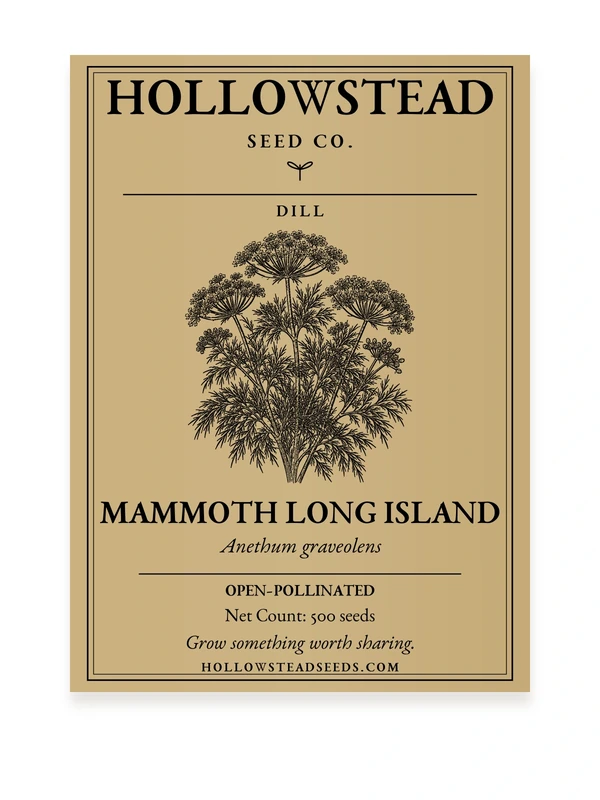
HOLLOWSTEAD SEED
Mammoth Long Island Dill Seeds
$3.49KEEP LEARNING
Related Hollowstead guides
THAI BASIL GUIDE
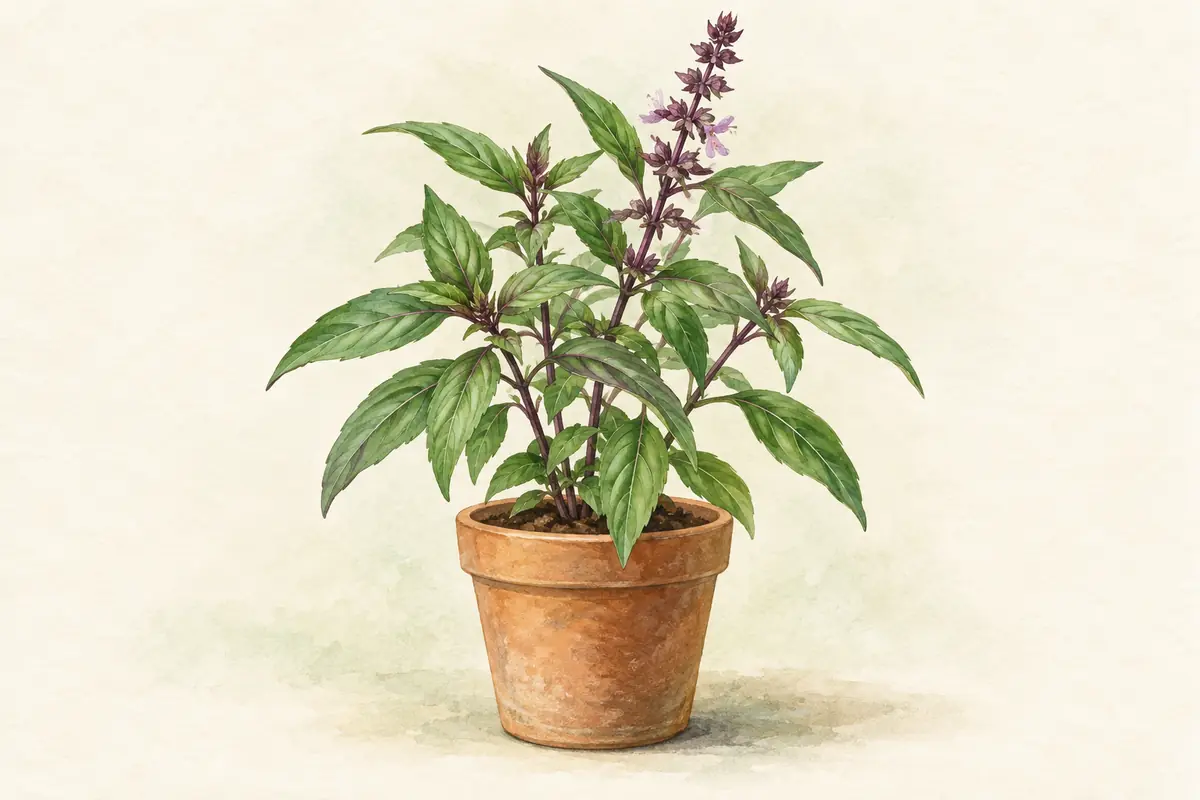
Thai Basil Growing Guide
Grow Thai basil for fragrant summer leaves and distinctive purple stems. Learn how to start seed, manage warmth and moisture, pinch for branching, handle flower spikes, and harvest for the kitchen.
Read the guide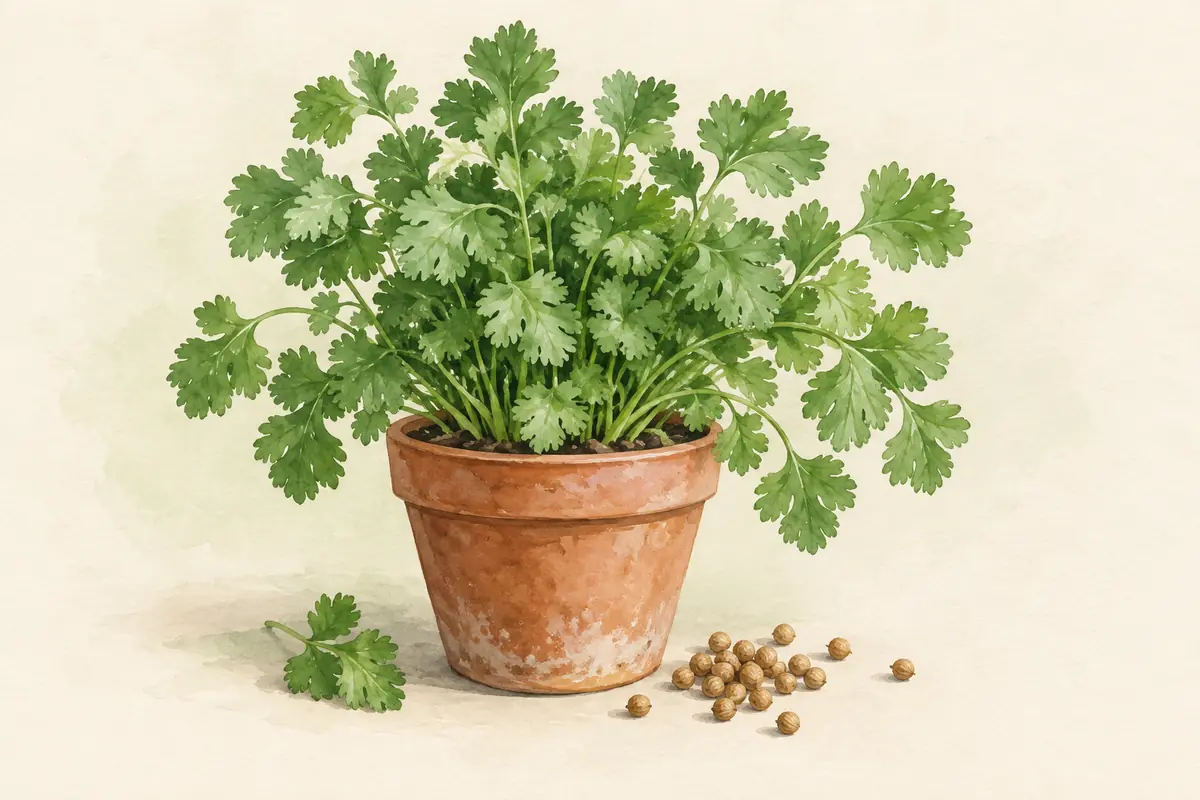
CILANTRO GUIDE
Slow Bolt Cilantro Growing Guide
Grow Slow Bolt cilantro as a cool-season leaf crop, then let selected plants finish for coriander seed. Learn succession sowing, harvest timing, heat management, bolting, and container care.
Read the guide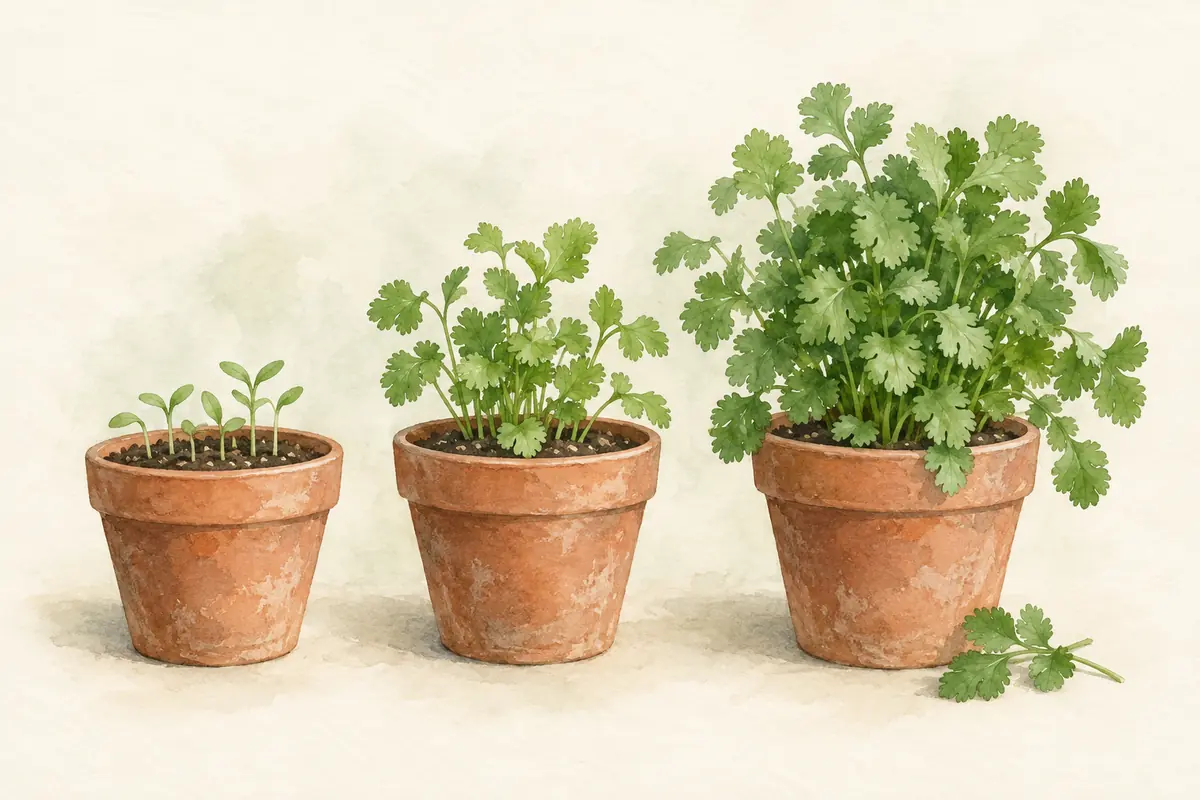
GARDEN PLANNING
Succession Planting Herbs for a Longer Harvest
Avoid one huge herb planting followed by an empty gap. Learn how to stagger cilantro, dill, basil, and shiso sowings, overlap generations, use containers, and track the intervals that work in your garden.
Read the guideFrequently asked questions
Should every herb be started indoors?
No. Basil and shiso are good indoor-start candidates, while cilantro and dill are often simpler to direct sow.
Why are my herb seedlings leggy?
The most common reason is insufficient light. Move seedlings into stronger light promptly after emergence and avoid overcrowding.
Can I plant several herbs in one container?
Yes, if they have compatible light, moisture, and root-space needs. A mixed pot is easiest when the plants want similar care.
When can I start harvesting?
Start once the plant is established enough that a light harvest will not strip most of its foliage. The exact stage differs by herb.
Sources & further reading
- University of Minnesota Extension Growing herbs in home gardens https://extension.umn.edu/garden-and-home/yard-and-garden/gardening-in-minnesota/growing-herbs
- Penn State Extension Growing Herbs in the Garden https://extension.psu.edu/growing-herbs-in-the-garden
- University of Missouri Extension Growing Herbs at Home https://extension.missouri.edu/publications/g6470
Hollowstead Growing Notes
A little help for your next growing season
Practical sowing advice, help choosing seeds, and occasional Hollowstead shop news. Usually one or two emails a month, plus a short welcome note.
Choose your topics and frequency after you confirm. Our guides and planting calendar are always free.