
CUCUMBER SEED STARTING
Growing Cucumbers From Seed: The Complete Guide
Grow cucumbers from seed with warm-soil timing, direct sowing or careful transplanting, steady moisture, trellising, pollination, and frequent harvest.
CucumbersSeed startingBeginner → advanced
Published by Hollowstead Seed Co. · How this guide is prepared
Quick answer
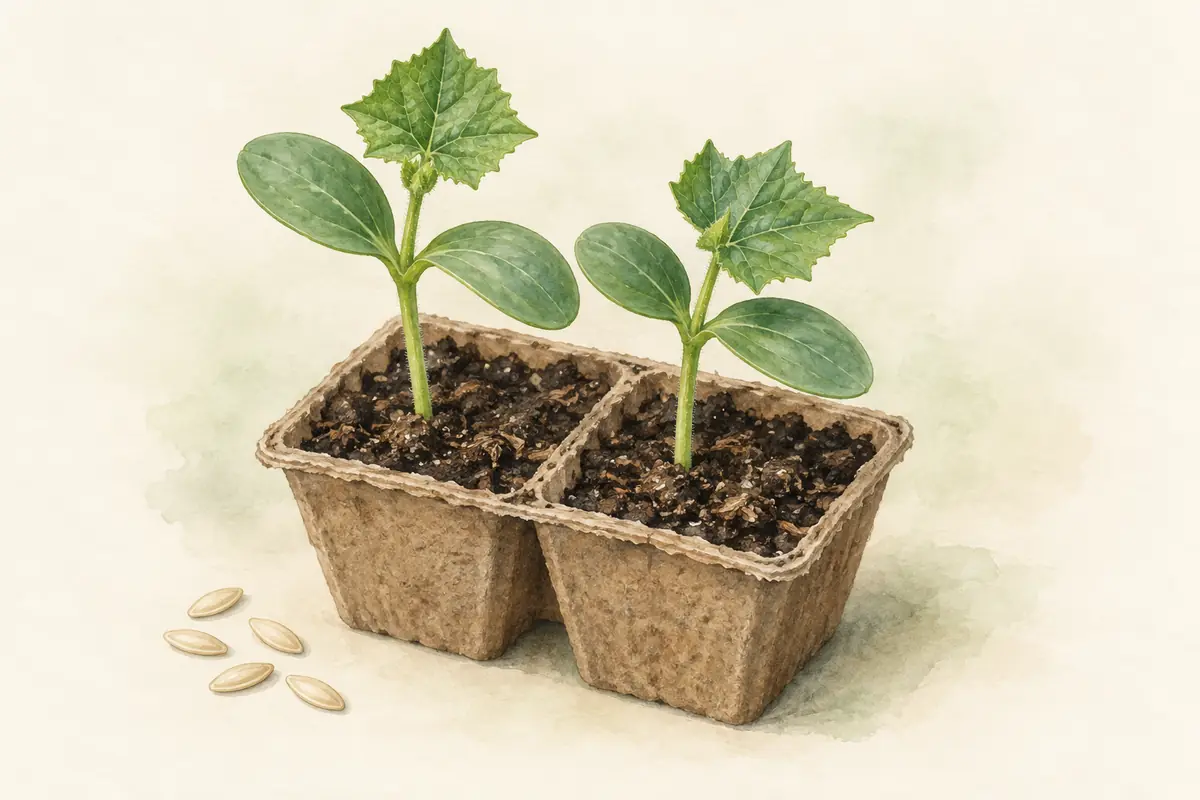
Cucumbers are a warm-season crop. Direct sow after frost danger has passed and the soil has warmed; if you start indoors for an earlier crop, keep the indoor period short because cucumbers dislike root disturbance. University of Minnesota recommends starting transplants no earlier than about four weeks before the last frost date.[1]
Sow seed about ½–1 inch deep, keep the seed zone evenly moist, and give vines room to run or a trellis to climb. Once flowering begins, pollination becomes part of crop care because most garden cucumbers produce separate male and female flowers and rely on insects to move pollen.[2][3]
The short version: warm soil, shallow sowing, careful roots, steady moisture, room to climb, and frequent harvest once fruit starts.
Cucumbers at a glance
| Question | Useful starting point |
|---|---|
| Best planting time | After frost danger, when the seed zone is about 65–70°F or warmer (Minnesota and Seed Savers guidance) |
| Warm-soil emergence | Usually about 4–10 days in suitable warm, moist conditions; cool or saturated soil delays emergence |
| Sowing depth | About ½–1 inch |
| Indoor start | Optional; usually no more than about 3–4 weeks |
| Sun | Full sun |
| Water | Even moisture; especially important during fruit set |
| Support | Optional but useful for vining types |
| Flowers | Male flowers often appear before female flowers |
| Harvest | Pick green types before yellowing; Lemon Cucumber is eaten firm and pale/light yellow. Avoid enlarged seeds and declining texture. |
- Warm the soilWait until frost risk has passed and the seed zone is genuinely warm; direct sowing is usually the simplest start.
- Establish quicklyKeep the seed zone evenly moist, thin without disturbing neighboring roots, and protect young plants from cucumber beetles.
- Build the root zoneUse soil-test-based fertility, steady water, shallow weed control, and mulch only after the soil has warmed.
- Train the vinesInstall support early if you are trellising so tendrils can climb before the planting becomes tangled.
- Protect floweringRemove insect-excluding row cover when pollination is needed and avoid spraying open flowers while bees are active.
- Harvest oftenPick green cucumber types before yellowing or overmaturity. Lemon Cucumber is an exception: firm pale/light-yellow fruit is ready to eat; frequent harvest keeps quality high and the plant producing.
- Save seed separatelySeed-saving fruit stays on the plant far beyond eating maturity and requires isolation plus wet processing.
When to plant cucumbers
Cucumbers grow slowly in cold soil and cannot tolerate freezing. Wait until the garden is past frost risk and warming consistently. A seed planted into truly warm soil often catches up with—and can surpass—an earlier seed that sits stalled in cold conditions.[1][2]
If you use transplants, start them only a few weeks ahead. Large, root-bound cucumber seedlings are much less forgiving than compact transplants with an intact root ball.
Sowing cucumber seeds
Direct sowing versus transplanting: choose the risk you want
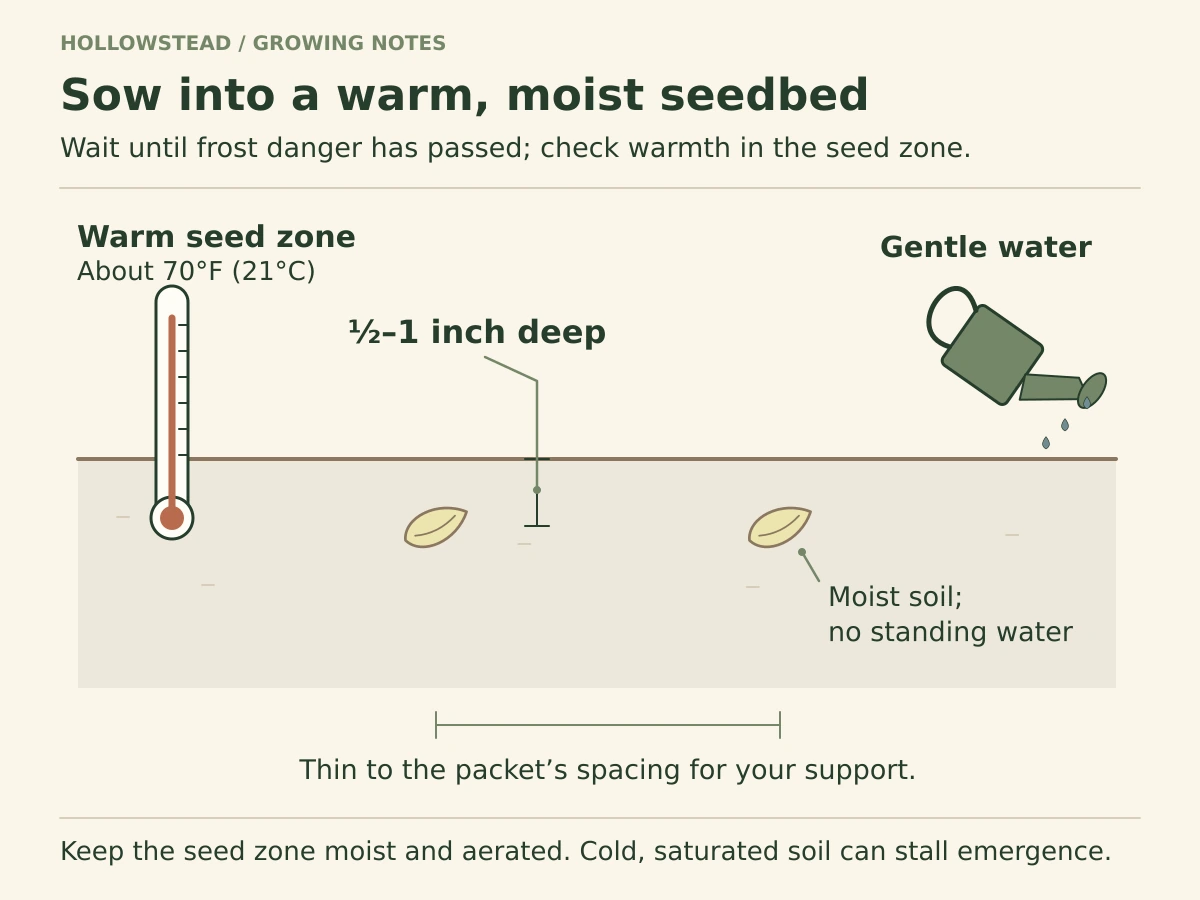
Direct sowing is usually the lowest-stress route because the taproot and feeder roots establish where the plant will finish. Minnesota Extension explicitly calls direct seeding the best way to start cucumbers and recommends waiting until the soil at about one inch deep is at least around 70°F.[1] The tradeoff is exposure: a newly emerged seedling is immediately vulnerable to cold snaps, cucumber beetles, crusted soil, and animal disturbance.
A short indoor start trades those field risks for transplant risk. It is most useful when you want a modest head start or when spring pest pressure is severe. Start in individual cells or pots, give strong light immediately after emergence, and transplant while the root ball is still compact. A large cucumber transplant is not “more advanced”; it is usually harder to establish without root injury.
| Method | Main advantage | Main risk | Best fit |
|---|---|---|---|
| Direct sow | No transplant shock; simplest root development | Seed/seedling is exposed to weather and pests | Warm soil, adequate season length, easy row-cover access |
| Short indoor start | Earlier protected emergence | Root disturbance and oversized transplants | Short spring window, heavy early pest pressure, controlled transplant timing |
Plant seed roughly ½–1 inch deep. In rows, Illinois Extension recommends thinning to about one plant every 12 inches; hill systems commonly leave several plants with wider spacing between hills.[2] Trellised gardens can use space differently than sprawling rows, so treat packet spacing and your support design as a matched system.
 View full-size diagram
Before committing a planting window to an older packet, use the seed-storage and home germination-test guide. It helps separate an uncertain seed lot from problems in the seedbed.
Germination and early growth
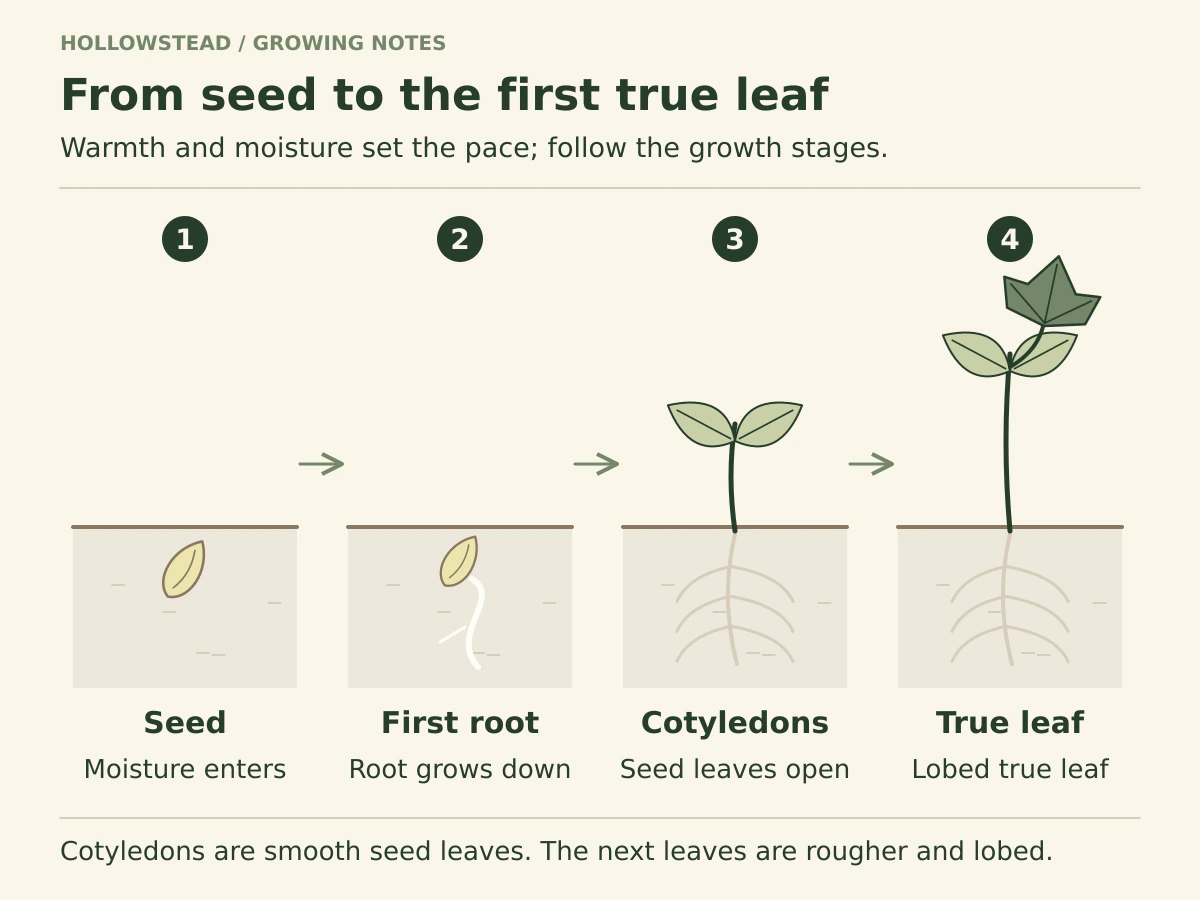
Keep the seed zone evenly moist during germination. Once the cotyledons open, the plant begins building true leaves quickly in warm weather. If you started indoors, move emerging seedlings into strong light immediately so stems stay compact.
Cold, soggy mix is a common reason cucumber starts stall. Warmth speeds the process; drainage keeps oxygen around the seed and young roots.[1]
 View full-size diagram
Transplanting without setting plants back
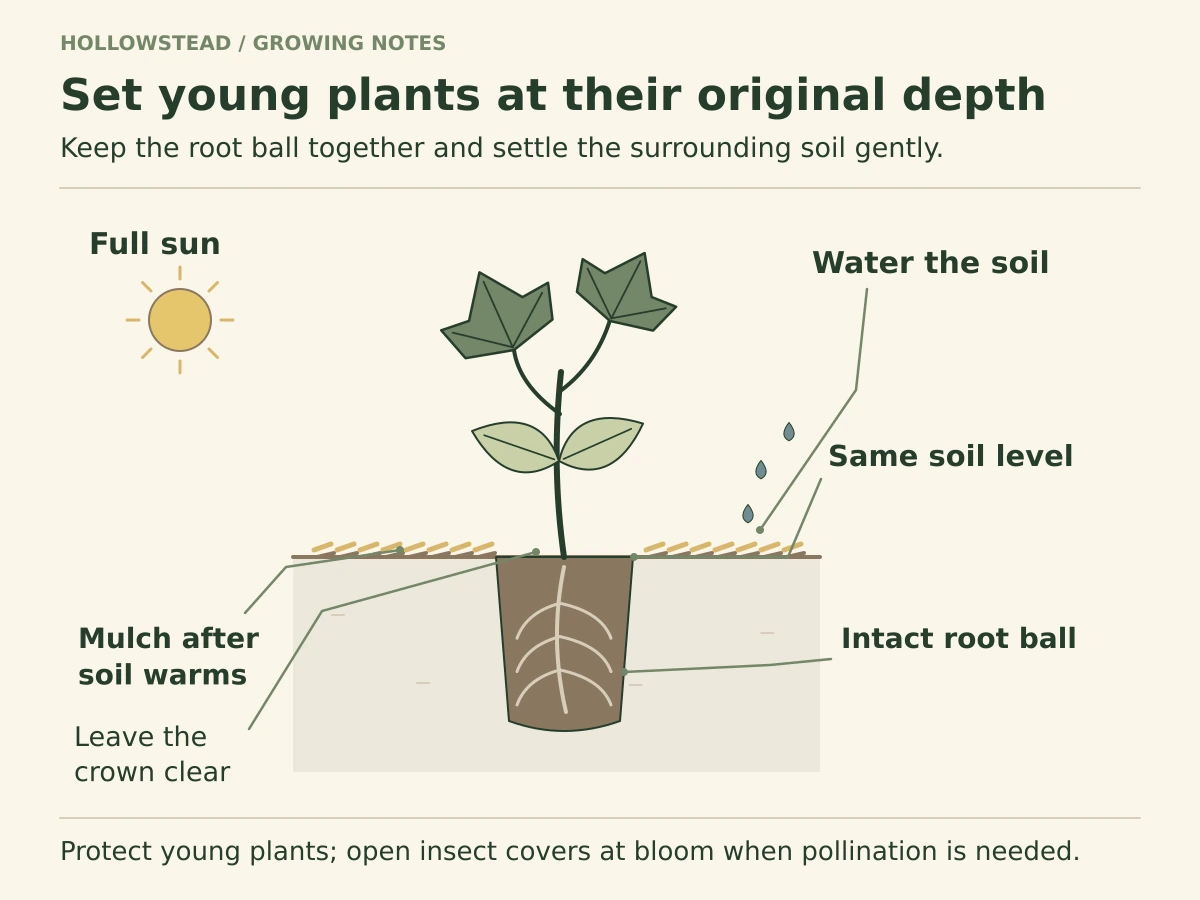
Cucumbers are sensitive to root disturbance. Transplant small plants with the root ball intact and set them at approximately the same depth they occupied in the pot. Peat or other plantable pots can reduce root handling, though they still need adequate moisture after planting.[1]
Protect young plants from cold nights and cucumber beetles. If you use row cover, remember that it must come off when flowering begins on varieties that require insect pollination.[1]
 View full-size diagram
Soil testing, fertility, and the cucumber root zone
Cucumbers are fast-growing vines, but “fast-growing” does not mean “feed heavily without a plan.” Minnesota Extension recommends a soil test and places cucumber yield and quality in a slightly acidic soil range around pH 6.0–6.5. The same guidance emphasizes soil that holds moisture while still draining well.[1]
- Soil test
- Base lime and fertilizer on measured need
- pH
- About 6.0–6.5 is a useful target
- Drainage
- Moisture-retentive, never chronically waterlogged
- Root zone
- Protect shallow feeder roots from deep cultivation
- Mulch timing
- Wait until the soil is thoroughly warm
Cucumber roots include a deeper taproot plus a network of roots near the soil surface. That makes aggressive hoeing a poor trade: remove weeds while they are small and work only the surface. Once vines spread, hand-pull large weeds rather than chopping through the root zone.[1]
Compost can improve soil structure, but fertilizer decisions should still begin with the test. Excess vegetative growth can make a planting dense and difficult to inspect; the goal is enough fertility to sustain flowering and fruit fill, not the largest possible leaf canopy.
Practical rule: diagnose pale or slow plants before feeding them. Cold soil, saturated roots, drought, root injury, disease, and nutrient shortage can all produce weak growth, but only one of those is solved by more fertilizer.
Trellising cucumbers
Vining cucumbers can sprawl, but a trellis keeps growth vertical, improves access, and can help fruit hang straighter. University of Minnesota notes that vines can be trained to a three- to four-foot trellis, while taller structures give vigorous vines more room.[1]
Install support before vines become tangled. For construction ideas, see How to Trellis Cucumbers.
Watering and feeding
Cucumbers have shallow roots and need dependable moisture throughout growth, with water becoming especially important as fruit sets and enlarges.[2] Water the soil rather than repeatedly soaking foliage when practical. Compost and a soil-test-based fertility plan are better foundations than heavy, repeated fertilizer applications.
Once soil is warm, an organic mulch can reduce moisture swings and suppress weeds. Keep mulch slightly away from the stem crown.
Succession and season planning
Cucumbers are fast enough that a second sowing can be useful in many climates, but do not copy a calendar date from another state. Work backward from your expected first frost using the variety’s days-to-maturity estimate, then add time for slower late-season growth. The second planting also needs enough warm weather for pollination and fruit fill, not merely enough days to germinate.
Succession planting can also reduce risk. A first planting may be hit hard by beetles or bacterial wilt while a younger planting is still protected or located elsewhere. Conversely, a very late sowing can run into shortening days, cool nights, and disease pressure. Think of succession as risk spreading, not a guarantee of two full crops.
Flowers, bees, and fruit set
Male flowers commonly appear before female flowers. A female cucumber flower has a tiny immature fruit directly behind the blossom. Bees move pollen between flowers; poor bee activity during cold, rainy, or otherwise unfavorable weather can reduce fruit set or create misshapen fruit.[1][3]
If flowers are abundant but fruit is not developing, use our cucumber pollination guide before assuming the plant needs more fertilizer.
Cucumber beetles, bacterial wilt, and mildew prevention
Young cucumber plants deserve scouting from the day they emerge. Striped and spotted cucumber beetles chew seedlings, flowers, stems, and fruit; beetles can also transmit bacterial wilt. Missouri Extension identifies cucumber beetles as major cucurbit pests and notes their disease-vector role.[4]
Row cover is one of the most useful early-season tools because it excludes beetles while plants are small. The tradeoff is pollination: on varieties that need insects, remove the cover as female flowers begin opening so bees can reach them.[1]
Spacing, sanitation, crop rotation and soil-level watering help manage several cucumber diseases. Powdery mildew is different: it does not require wet leaves, and spores spread readily in warm, dry conditions. Scout regularly, favor resistant varieties, and use local Extension guidance for an active outbreak. Sudden whole-vine wilting calls for a separate diagnosis.[6]
Watch the pattern, not one leaf. A thirsty vine may recover after irrigation. A vine that suddenly wilts while neighboring plants remain hydrated—especially where cucumber beetles have been active—deserves a disease diagnosis before you keep adding water.
Harvest basics
Harvest standard green slicing and pickling cucumbers while firm, before yellowing or enlarged seeds. For Lemon Cucumber, pale to light yellow is normal eating color; deep gold with enlarged seeds and deteriorating texture means it is past prime. Check often because fruit grows quickly.[2]
Set a harvest target for the variety you plant: Lemon for firm pale-yellow round fruit, Marketmore 76 for long green slices, or National Pickling for smaller recipe-size fruit. The three-variety comparison connects those choices with garden space and picking frequency.
Saving cucumber seed
For variety maintenance, save from 5–10 healthy, representative plants when possible; one plant can give viable seed, but it preserves a narrower sample. Retain the original supplier/lot and parent labels. Seed fruit must pass the eating stage, change to its mature yellow/orange color and lose firmness; Seed Savers advises waiting several weeks after that mature color change before extraction. For Lemon, the first pale-yellow eating color is too early. When plant health and weather allow, leave marked fruit on the vine as it matures; otherwise finish holding physiologically mature fruit under cover until it softens.[5]
Cucumber seed saving is a different harvest from eating cucumbers. Seed Savers Exchange notes that cucumber varieties are insect-pollinated and can readily cross with other cucumbers of the same species. For true-to-type seed, use adequate isolation or controlled pollination rather than assuming a garden-grown fruit stayed genetically pure.[5]
Choose seed parents while the plants are healthy and productive. Then leave selected fruits on the vine well beyond edible maturity until they are fully mature for seed. That means a seed fruit may become large, yellow, dull, or otherwise unappealing long after you would have harvested it for the kitchen.
After opening the mature fruit, scoop seed and pulp into a container and ferment the mixture for roughly one to three days. Rinse the seed thoroughly, then dry it quickly in a cool, airy place before storage. Seed Savers recommends separating cucumber varieties by substantial distance when relying on open pollination and describes fermentation as part of cleaning cucumber seed.[5]
Isolation and controlled pollination for advanced seed saving
Seed Savers Exchange recommends about 800 feet to ½ mile between cucumber varieties when distance is the isolation method.[5] Most home gardens cannot provide that much separation, which is why hand pollination and flower isolation are valuable tools for maintaining a named open-pollinated variety.
For controlled pollination, identify unopened male and female flowers the evening before they are likely to open and exclude insects from them. The next morning, transfer pollen from a protected male flower to the protected female flower, then re-cover and label that blossom so the mature fruit can be traced to a known pollination. This is more work than casual seed saving, but it separates saving viable cucumber seed from maintaining a variety true to type.
Do not use eating color as a seed-saving cue. A perfect salad cucumber is generally immature as a seed crop. Decide which fruits are for dinner and which are for seed before the plant reaches peak harvest.
In-season cucumber troubleshooting
GROW THIS CUCUMBER
Put the guide to work.
Choose Lemon for round salad fruit, Marketmore 76 for long green slices, or National Pickling for smaller pickling fruit; compare the three cucumber varieties to match your garden and harvest routine.
HOLLOWSTEAD SEED
Marketmore 76 Cucumber Seeds
$3.99
HOLLOWSTEAD SEED
National Pickling Cucumber Seeds
$3.99KEEP LEARNING
Related Hollowstead guides
CUCUMBER VARIETY GUIDE
Lemon Cucumber Growing Guide
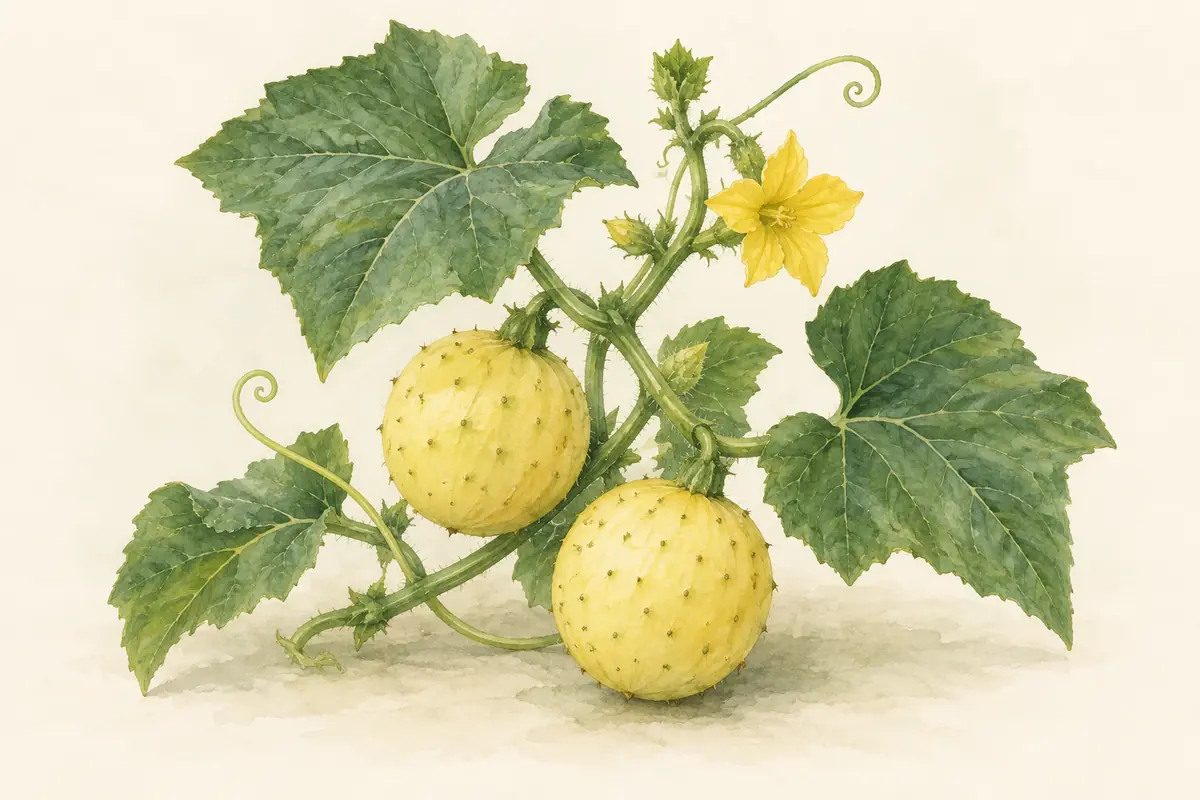
Lemon Cucumber produces round fruit that ripens from pale green toward lemon yellow. Learn sowing, spacing, vine support, pollination, watering, and the best harvest stage.
Read the guide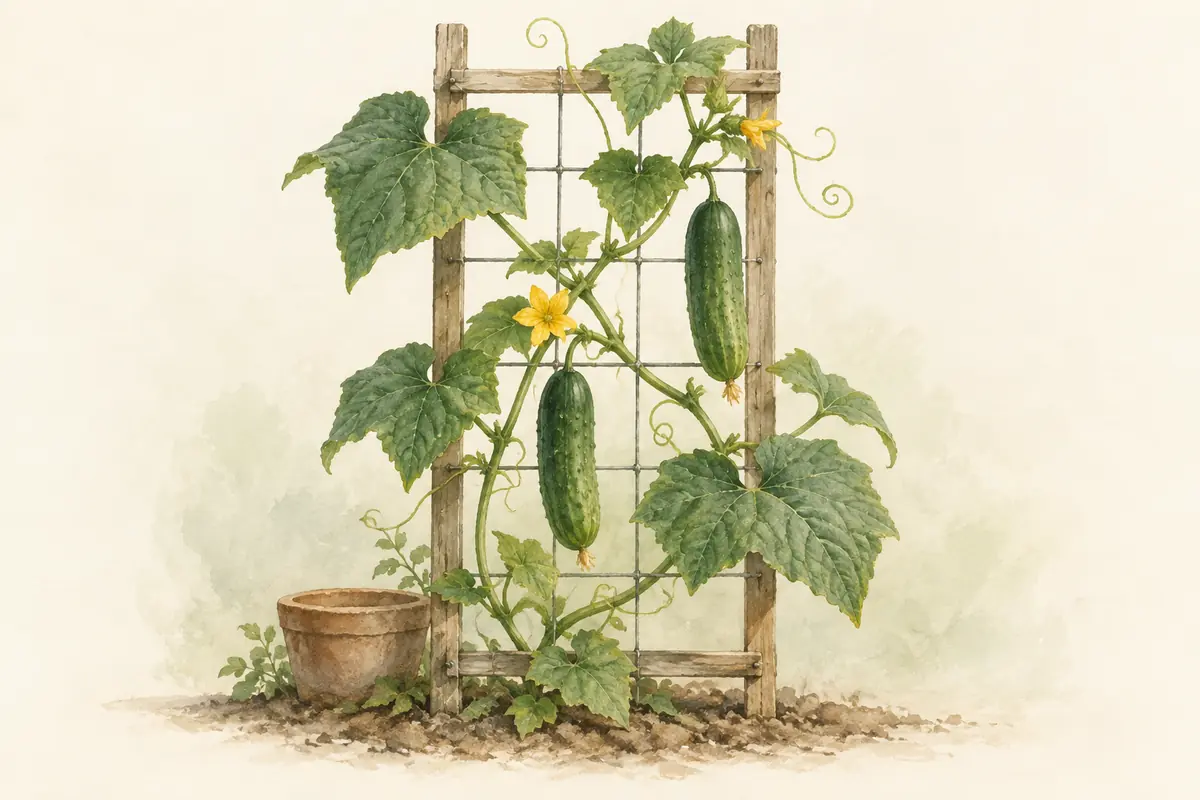
TRELLISING
How to Trellis Cucumbers
Train cucumber vines vertically with a row trellis, teepee, panel, or fence. Learn support height, anchoring, planting layout, vine training, and harvest access.
Read the guide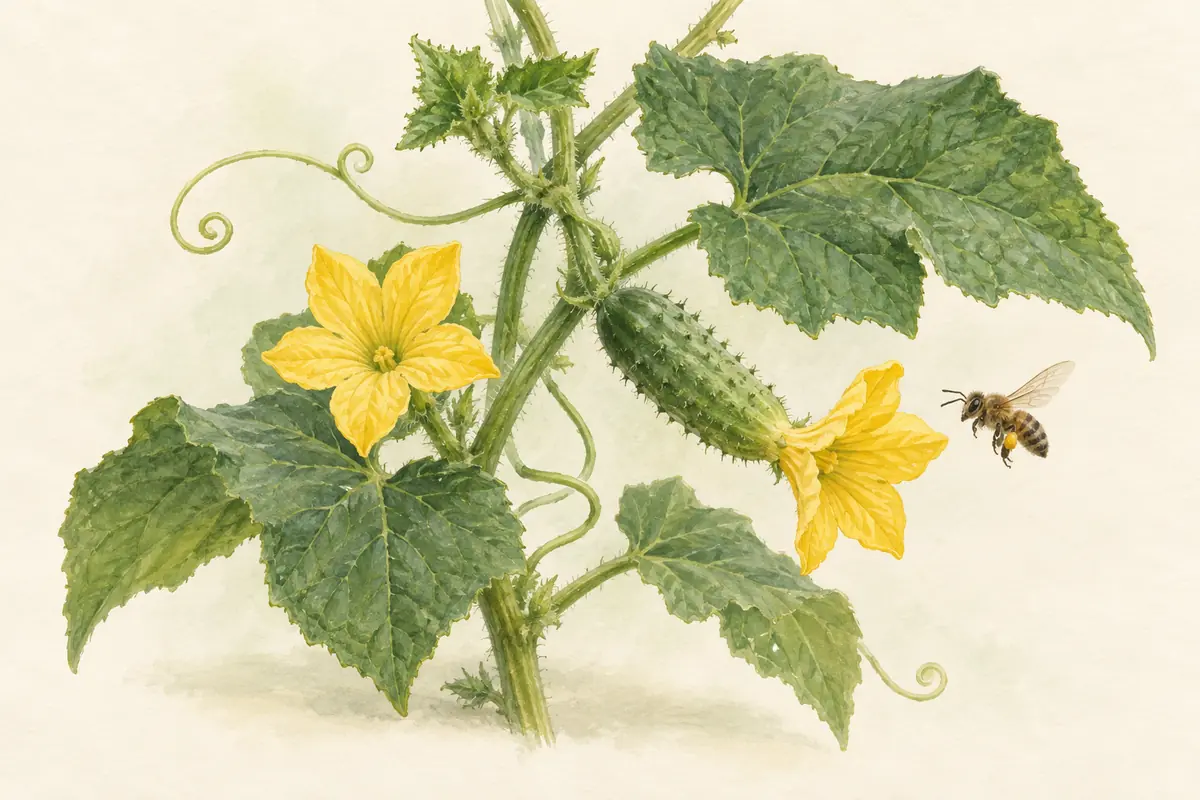
POLLINATION GUIDE
Cucumber Pollination: Why Flowers Don’t Make Fruit
Learn the difference between male and female cucumber flowers, how bees create fruit set, why fruit sometimes aborts or grows misshapen, and when hand pollination helps.
Read the guideFrequently asked questions
Should I direct sow cucumbers or start them indoors?
Both work. Direct sowing avoids root disturbance; a short indoor start can gain time in a short season. If starting indoors, keep the plants young and transplant the root ball carefully.
Why are my first cucumber flowers falling off?
The first flowers are often male. Male flowers do not have a tiny cucumber behind them and naturally drop after blooming.
Do cucumbers need a trellis?
No, but most vining cucumbers can be trained vertically. Trellising saves ground space, improves access, and keeps many fruits off the soil.
How often should I harvest cucumbers?
During peak production, check plants frequently—often every day or two. Cucumbers can move from ideal to oversized surprisingly quickly in hot weather.
Sources & further reading
- University of Minnesota Extension Growing cucumbers in home gardens https://extension.umn.edu/garden-and-home/yard-and-garden/gardening-in-minnesota/growing-cucumbers
- Illinois Extension Cucumber | Home Vegetable Gardening https://extension.illinois.edu/gardening/cucumber
- University of Maryland Extension Growing Cucumbers in a Home Garden https://extension.umd.edu/resource/growing-cucumbers-home-garden
- University of Missouri Extension Combating common pests of cucumbers, melons and squash https://extension.missouri.edu/news/combating-common-pests-of-cucumbers-melons-and-squash
- Seed Savers Exchange Growing Guide: Cucumber https://seedsavers.org/grow-cucumber/
- University of Minnesota Extension — Powdery mildew of cucurbits https://extension.umn.edu/agriculture/specialty-crops/vegetable-farming/disease-management/powdery-mildew-of-cucurbits
Hollowstead Growing Notes
A little help for your next growing season
Practical sowing advice, help choosing seeds, and occasional Hollowstead shop news. Usually one or two emails a month, plus a short welcome note.
Choose your topics and frequency after you confirm. Our guides and planting calendar are always free.