
POLLINATION GUIDE
Cucumber Pollination: Why Flowers Don’t Make Fruit
Learn the difference between male and female cucumber flowers, how bees create fruit set, why fruit sometimes aborts or grows misshapen, and when hand pollination helps.
CucumbersPollination guideBeginner → advanced
Published by Hollowstead Seed Co. · How this guide is prepared
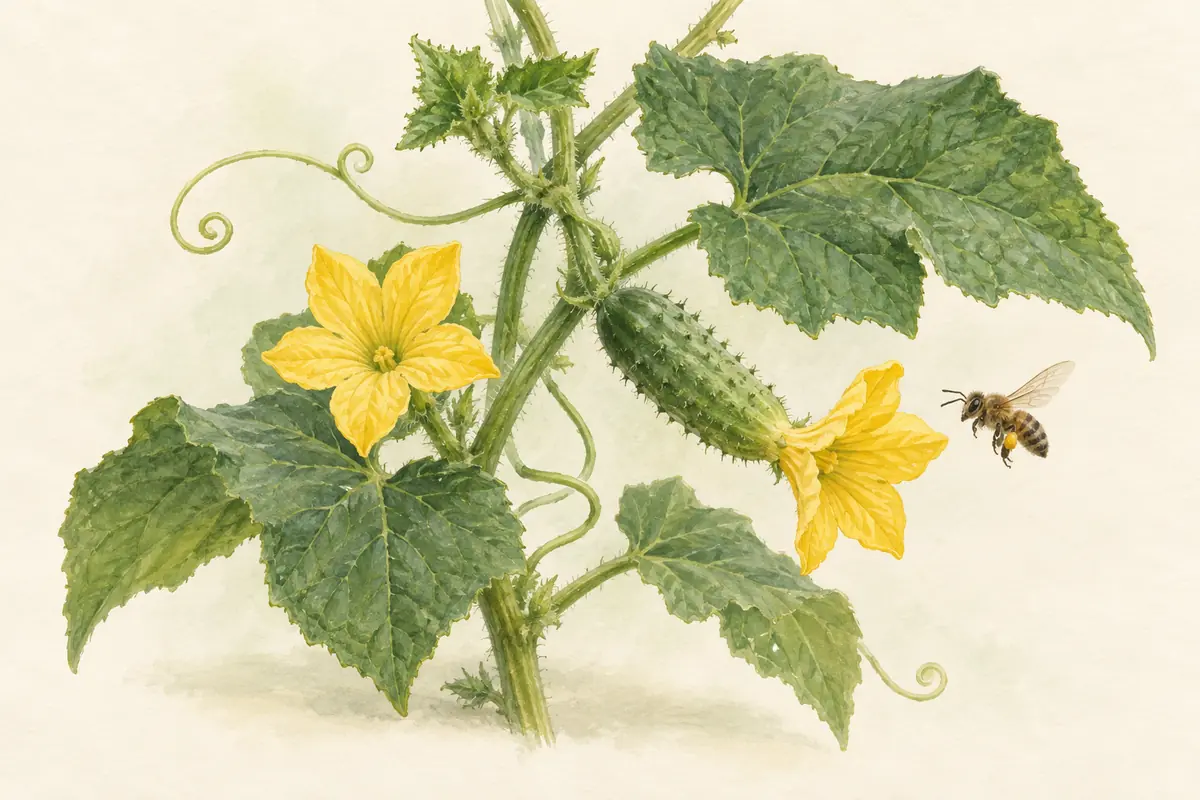
Quick answer
Most garden cucumbers produce separate male and female flowers. Male flowers provide pollen; female flowers have a tiny cucumber-like ovary behind the blossom. Bees and other insects move pollen between them, allowing the fruit to develop.[1][2]
The first flowers are often male, so early blossom drop can be completely normal. If female flowers appear but fruit stays tiny, aborts, or grows misshapen, poor pollination is one of the first things to investigate.[1][3]
The short version: identify male versus female flowers, keep blossoms accessible to bees, and hand-pollinate only when natural pollination is clearly inadequate.
Pollination at a glance
| Question | Useful starting point |
|---|---|
| Male flower | Flower on a slender stem; no tiny cucumber behind it |
| Female flower | Tiny immature cucumber directly behind the flower |
| Main pollinators | Bees and other flower-visiting insects |
| First flowers | Often male |
| Poor pollination | Can cause aborted or misshapen fruit |
| Row covers | Remove at flowering on varieties that need pollination |
| Backup | Hand pollination can move pollen manually |
- Male flowers
- Pollen source; often appear first
- Female flowers
- Have a small ovary behind the blossom
- Bee visits
- Repeated visits improve complete fertilization and fruit shape
- Row covers
- Remove at bloom when a cultivar needs insect pollination
- Exception
- Parthenocarpic cultivars can set fruit without pollination
Male and female cucumber flowers
| What to check | Male flower | Female flower |
|---|---|---|
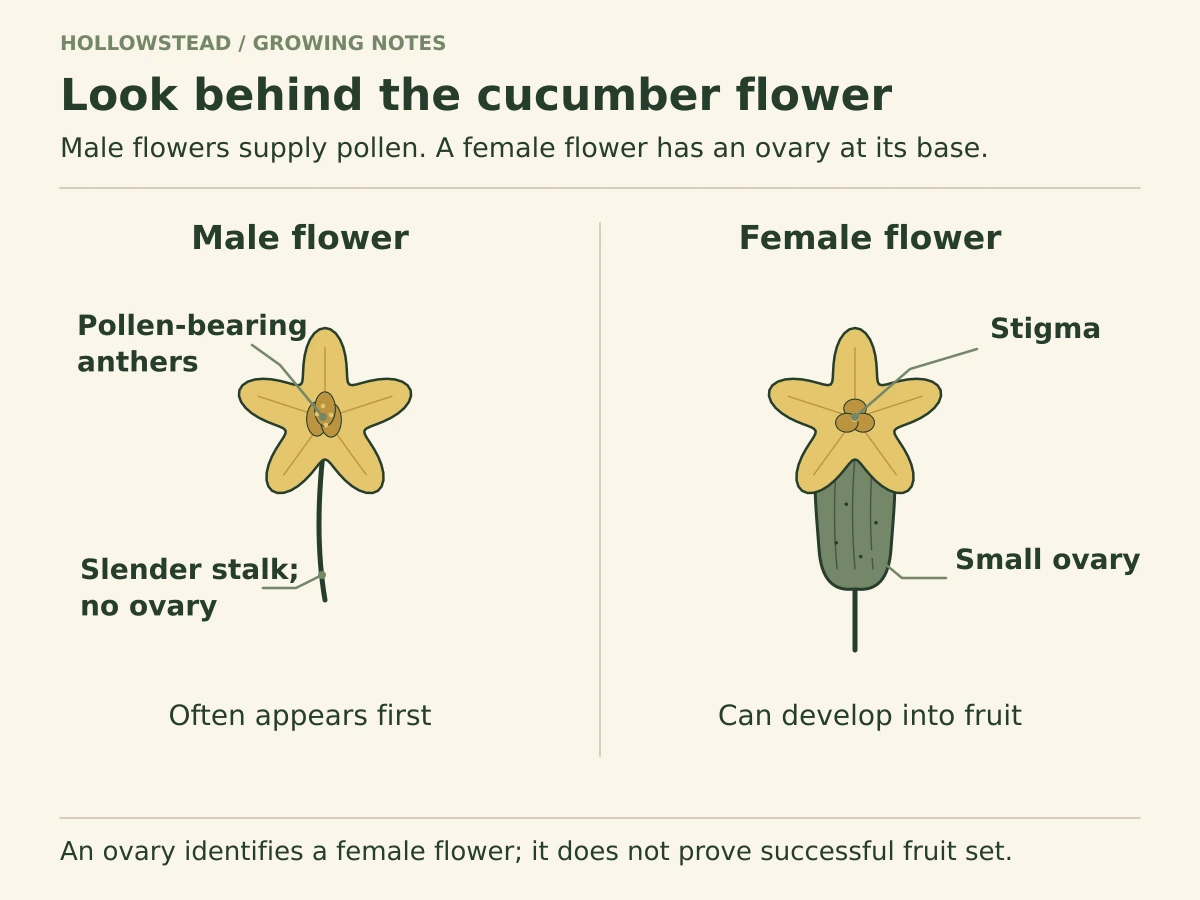
| Base of the blossom | Slender flower stalk, without a miniature cucumber | A small cucumber-shaped ovary between the flower and vine |
| Role | Supplies pollen | Can develop into the fruit |
| What a falling flower means | The blossom can fall after its useful life; it was never going to become a cucumber | If the tiny fruit also yellows or stops growing, investigate pollination and growing conditions |
The little cucumber behind a female blossom is present before successful pollination. Seeing it identifies the flower; it does not yet prove that fruit has set. The flower types and pollination explanations below apply to ordinary pollinated cucumbers, including Lemon Cucumber.[1]
Male and female flowers grow on the same plant in many common cucumber varieties. The easiest field mark is the tiny immature cucumber behind a female flower. Male flowers lack that swelling and are carried on a thinner stem.[1][2]
 View full-size diagram
Monoecious, gynoecious, and parthenocarpic cucumbers
“Cucumbers need bees” is a useful beginner rule, but it is not universal. University of Maryland and Penn State distinguish several flowering systems that change what the gardener should expect.[2][4]
| Type | Flower pattern | Pollination implication |
|---|---|---|
| Monoecious | Separate male and female flowers on the same plant | Usually depends on insects or hand transfer of pollen for fruit set |
| Gynoecious | Mostly or entirely female flowers | Some cultivars still need a pollen source; seed packets may include a pollinizer |
| Parthenocarpic | Often female-flowering types bred to set fruit without fertilization | Can form seedless fruit without pollination; pollination may be unnecessary or undesirable depending on the cultivar |
The seed packet or variety description therefore matters. Diagnose the flowering system before assuming that the absence of male flowers is a problem or that adding a pollinator plant will help.
Why bee activity matters
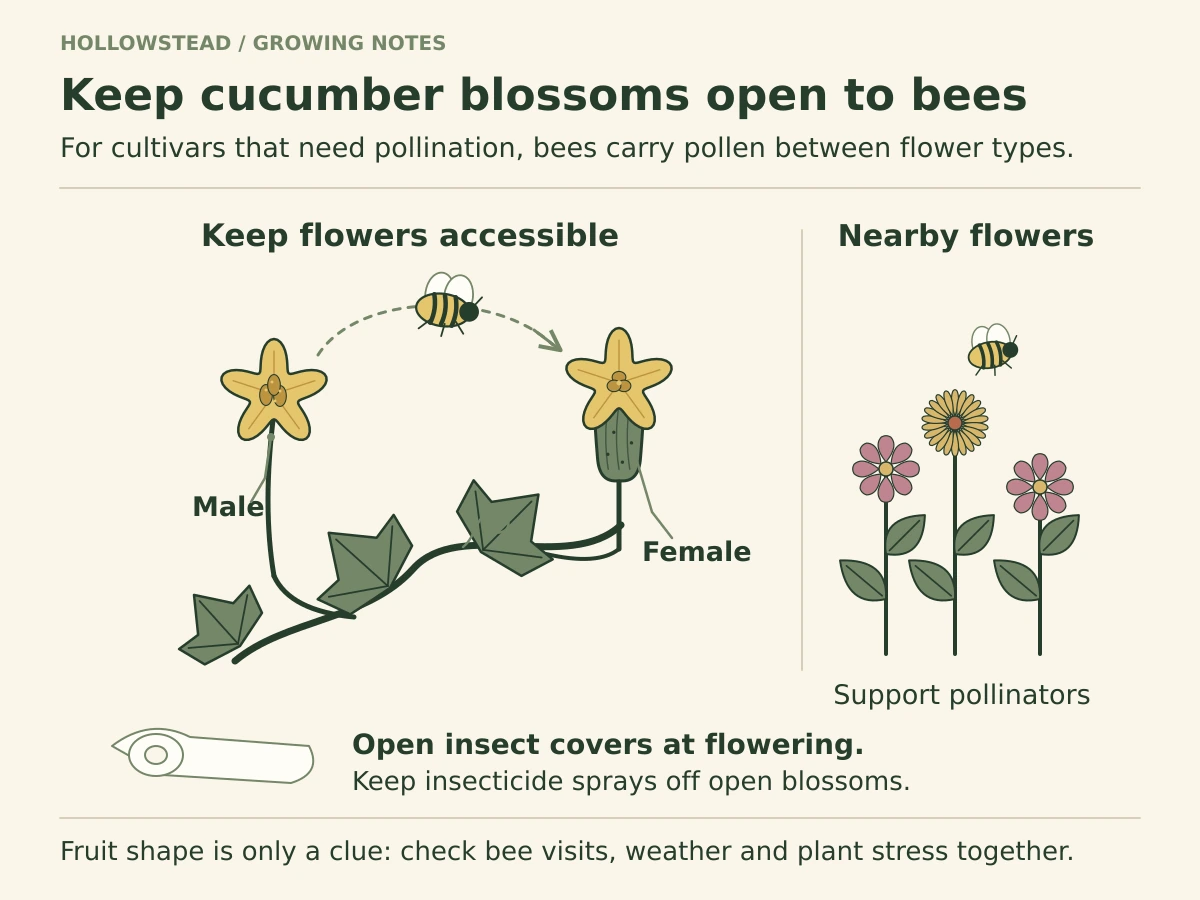
Bees transfer pollen while moving among open flowers. Maryland Extension notes that cucumbers may require repeated bee visits for complete pollination and good fruit shape.[2] Cold, rainy, or cloudy weather can reduce insect activity during the short window when flowers are open.
 View full-size diagram
Pollination diagnostic chart
Pollination is a timing problem as well as a pollen problem
A female flower is receptive for a limited period, so weather during that specific bloom window matters. Extended rain can keep bees inactive; cool or cloudy conditions may reduce visitation; extreme heat can injure flowers or pollen. A healthy vine can therefore have a poor set for several days and then resume normal fruiting when weather improves.
Maryland Extension notes that repeated bee visits are associated with more complete fertilization and straighter, fully developed fruit.[2] This is why “I saw one bee” does not necessarily prove every female flower received enough pollen.
What poor pollination looks like
Small female fruit may yellow and abort when fertilization is incomplete. Fruit that continues growing may be crooked, narrow at one end, or otherwise underdeveloped. University of Maryland identifies poor pollination as a common cause of deformed or undersized cucumbers.[3]
Do not blame every odd fruit on pollination; severe water stress and other plant problems can distort growth too. Use the whole plant and recent weather as clues.
Follow the fruit-quality diagnostic guide when the problem involves bitterness, yellowing, or shape. For easier access to the flowers and developing fruit, compare cucumber support options.
How to hand-pollinate cucumbers
A controlled hand-pollination check
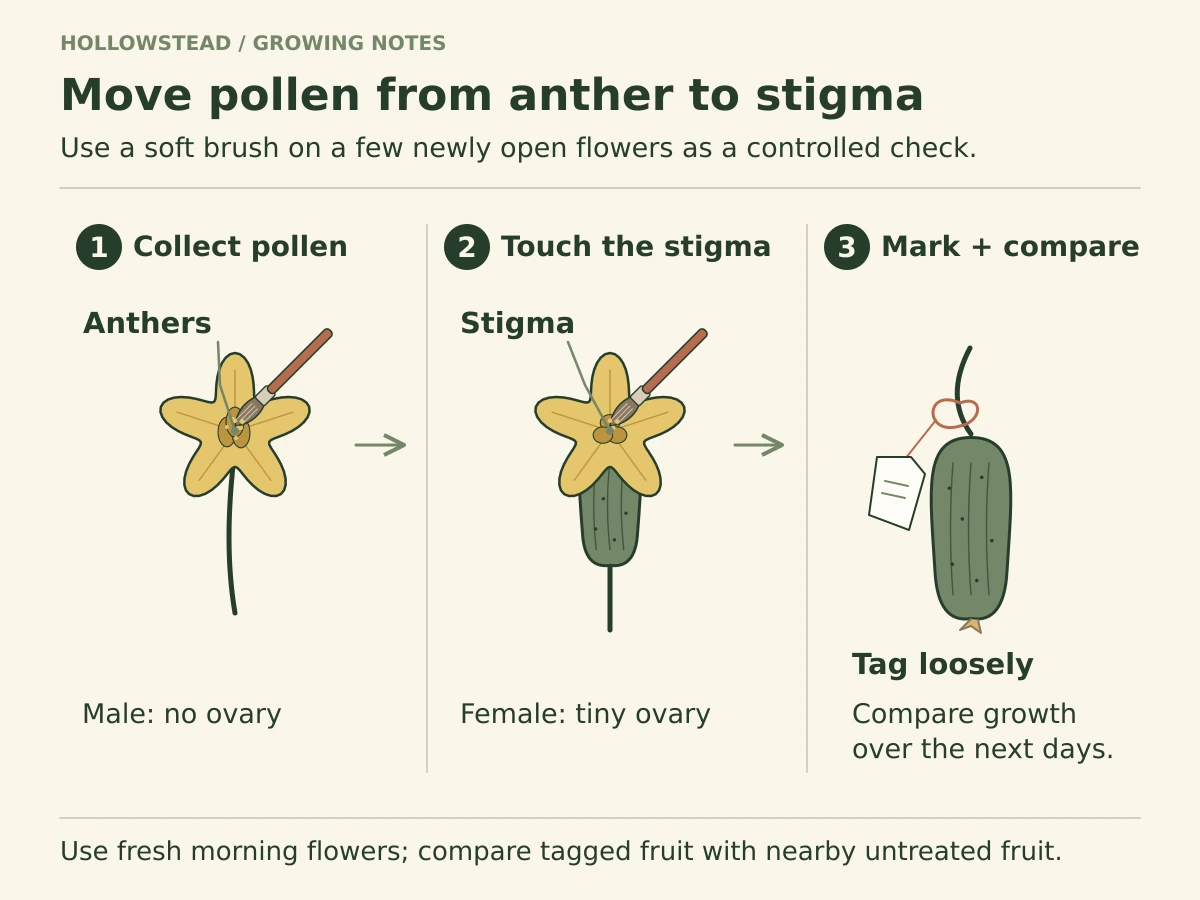
Use the steps below on a few flowers as a diagnostic comparison when female flowers repeatedly fail to set fruit.
- In the morning, find a newly open male blossom on a slender stem and a newly open female blossom with a small cucumber behind it.
- Use a small, soft brush or the male flower itself to carry fresh pollen from the male center to the female stigma.
- Mark the treated female loosely and compare its development with nearby naturally visited flowers over the next few days.
If marked fruit develops normally while unassisted fruit repeatedly aborts, inadequate pollen transfer becomes a stronger hypothesis. If both fail, investigate heat, water stress, root problems, or the cultivar’s flowering system rather than endlessly repeating hand pollination.
Hand pollination is a test, not a substitute for habitat. For a garden-scale crop, healthy bee activity is much more efficient than manually pollinating every female blossom.
 View full-size diagram
Row covers and pesticide timing
Row covers are useful for protecting young cucumber plants, but they also block bees. Remove them when flowering begins on varieties that require pollination.[1] Avoid insecticide applications to open flowers when bees are active; protecting pollinators protects fruit set.
Read the seed packet before diagnosing pollination
Some cucumber varieties are gynoecious, with mostly female flowers, and some are parthenocarpic, meaning they can set fruit without pollination. Read the packet description before diagnosing a flowering pattern. Hollowstead’s Lemon, Marketmore 76, and National Pickling are standard garden cucumbers that need pollen transfer. Growing them together is fine for eating; consult the comparison’s seed-saving notes when you want to preserve each named variety.
GROW THIS CUCUMBER
Put the guide to work.
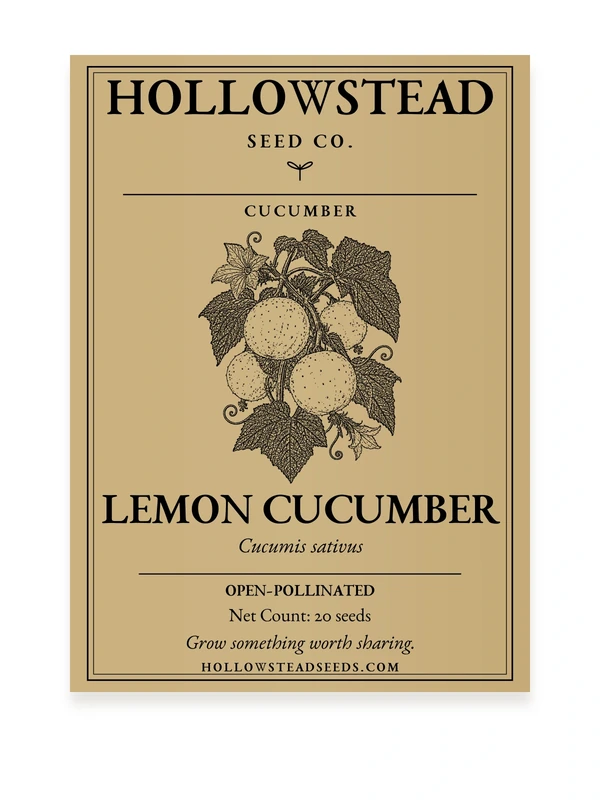
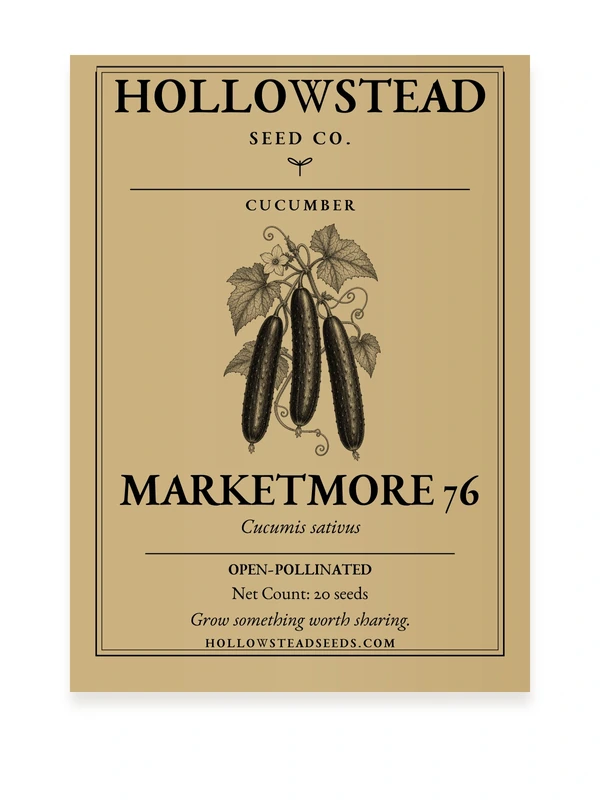
Choose Lemon for round salad fruit, Marketmore 76 for long green slices, or National Pickling for smaller pickling fruit; compare the three cucumber varieties to match your garden and harvest routine.
HOLLOWSTEAD SEED
Marketmore 76 Cucumber Seeds
$3.99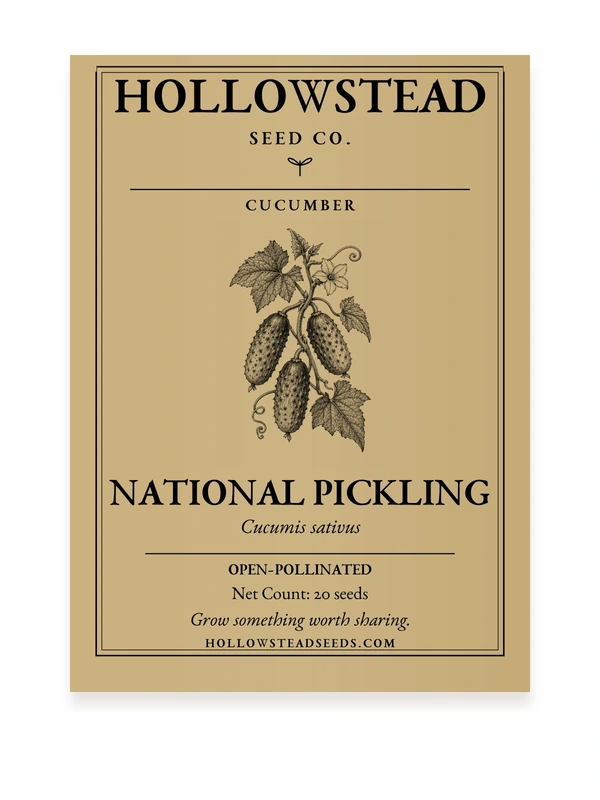
HOLLOWSTEAD SEED
National Pickling Cucumber Seeds
$3.99KEEP LEARNING
Related Hollowstead guides
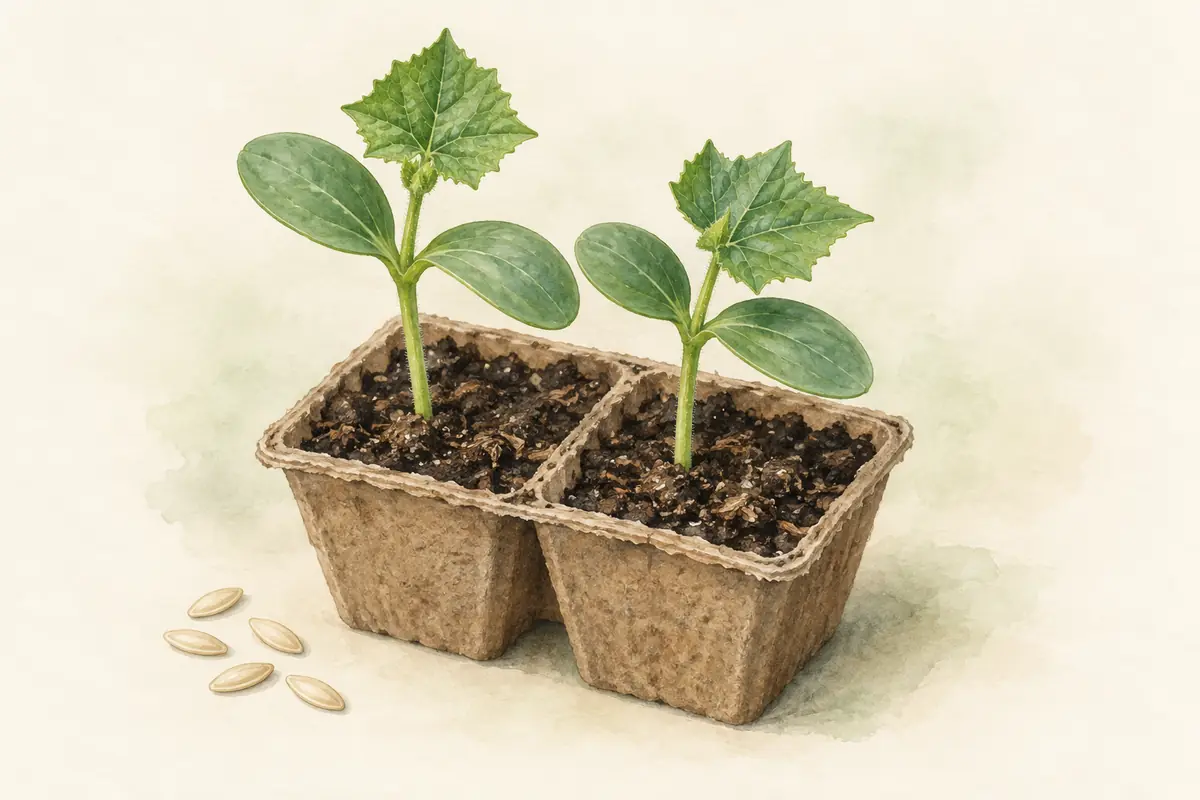
CUCUMBER SEED STARTING
Growing Cucumbers From Seed: The Complete Guide
Grow cucumbers from seed with warm-soil timing, direct sowing or careful transplanting, steady moisture, trellising, pollination, and frequent harvest.
Read the guide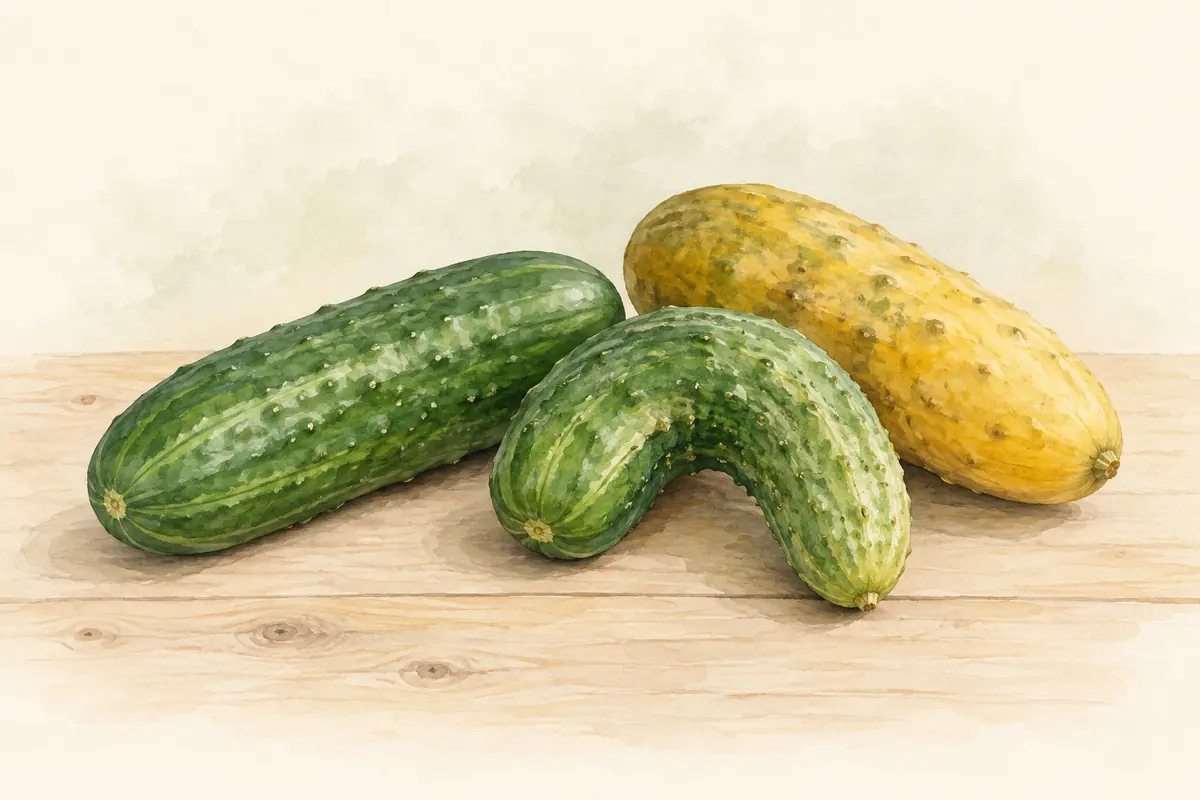
TROUBLESHOOTING
Why Cucumbers Turn Bitter, Yellow, or Misshapen
Bitter flavor, yellow fruit, and crooked cucumbers are useful clues. Learn how stress, overripeness, water, and incomplete pollination affect fruit quality and what to change.
Read the guide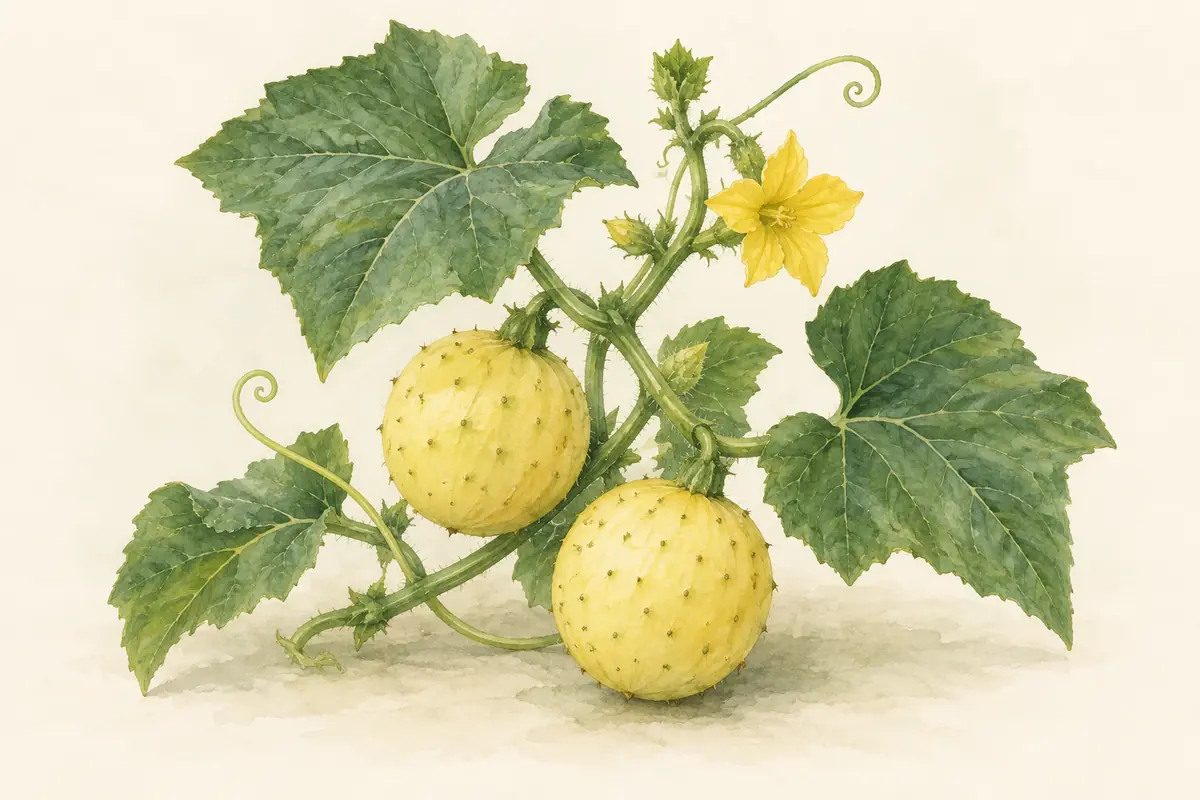
CUCUMBER VARIETY GUIDE
Lemon Cucumber Growing Guide
Lemon Cucumber produces round fruit that ripens from pale green toward lemon yellow. Learn sowing, spacing, vine support, pollination, watering, and the best harvest stage.
Read the guideFrequently asked questions
Why do my cucumber plants have lots of flowers but no cucumbers?
Early flowers are often male. Later, if female flowers are present but fruit does not develop, low pollinator activity or stressful weather may be limiting pollination.
How can I tell a female cucumber flower?
Look directly behind the blossom. A female flower has a tiny cucumber-shaped ovary at its base.
Can I pollinate cucumbers by hand?
Yes. Move pollen from a fresh male flower to a newly opened female flower using the flower itself or a soft brush.
Should I leave row cover on after flowers appear?
Not on cucumber varieties that depend on insect pollination. Remove or open the cover so bees can reach the blossoms.
Sources & further reading
- University of Minnesota Extension Growing cucumbers in home gardens https://extension.umn.edu/garden-and-home/yard-and-garden/gardening-in-minnesota/growing-cucumbers
- University of Maryland Extension Growing Cucumbers in a Home Garden https://extension.umd.edu/resource/growing-cucumbers-home-garden
- University of Maryland Extension Key to Common Problems of Cucumbers https://extension.umd.edu/resource/key-common-problems-cucumbers
- Penn State Extension Cucumber Pollination https://extension.psu.edu/cucumber-pollination
Hollowstead Growing Notes
A little help for your next growing season
Practical sowing advice, help choosing seeds, and occasional Hollowstead shop news. Usually one or two emails a month, plus a short welcome note.
Choose your topics and frequency after you confirm. Our guides and planting calendar are always free.