
CILANTRO GUIDE
Slow Bolt Cilantro Growing Guide
Grow Slow Bolt cilantro as a cool-season leaf crop, then let selected plants finish for coriander seed. Learn succession sowing, harvest timing, heat management, bolting, and container care.
HerbsVariety guideBeginner → advanced
Published by Hollowstead Seed Co. · How this guide is prepared
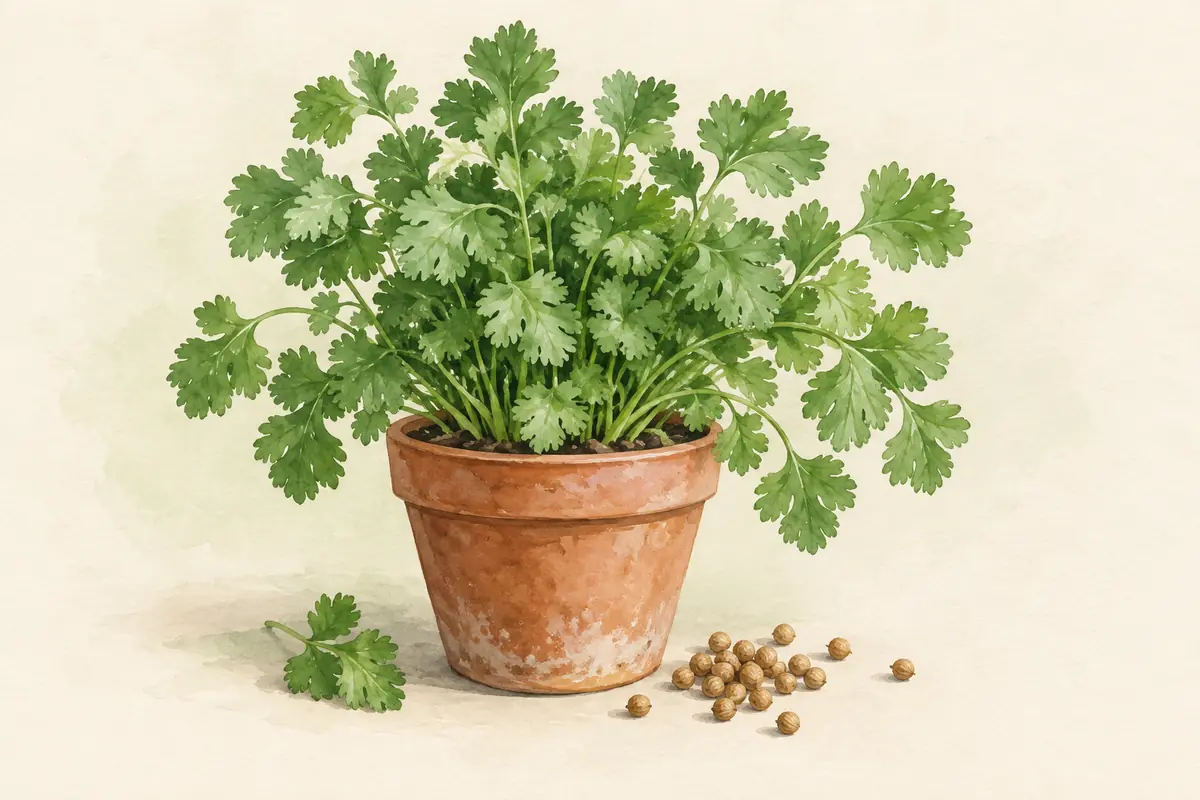
Quick answer
Slow Bolt Cilantro is selected to delay flowering compared with faster-bolting types, but it is still cilantro: warm weather and increasing day length eventually push the plant from leaf production into bloom. Grow it as a cool-season crop, sow small batches repeatedly, and harvest leaves while plants are leafy and tender.[1]
If you allow some plants to finish, the mature dry seed is coriander. Leaf harvest and coriander seed harvest are two stages of the same plant, not two different crops.
The short version: sow in cool weather, repeat sowings every few weeks, harvest outer leaves while tender, and let selected plants finish if you want coriander seed.
Slow Bolt cilantro at a glance
| Question | Useful starting point |
|---|---|
| Season | Cool-season annual |
| Sowing depth | About ¼–½ inch |
| Spacing | About 4–6 inches for leaf harvest |
| Light | Sun; afternoon shade can help in heat |
| First leaf harvest | Usable outer leaves on an established plant |
| Bolting | Slower than some types, not bolt-proof |
| Repeat sowing | Useful for a longer leaf season |
| Seed harvest | Mature dry seed is coriander |
A staged cilantro checklist
- Before sowingChoose repeated leaf picking, a whole bunch harvest, or seed. Reserve space for the next small batch.
- During emergenceLabel the date, keep the seedbed evenly moist, and record when seedlings actually appear.
- As plants establishThin repeat-picking plants toward 4–6 inches; keep weeds from crowding the young row.
- At the first usable leavesPick outer stems lightly, or harvest a designated bunch crop. Check that a replacement sowing is growing.
- When the center stalk risesMove leaf harvest to younger plants; keep selected older plants for flowers or coriander.
- As the season changesPause unproductive hot-weather sowings. Resume when cooler conditions give a new leaf crop enough time to grow.
SAVE FOR SOWING DAY
Five-step crop plan for Slow Bolt Cilantro
Open the sow-to-harvest plan
- StartChoose a cool growing window; direct sow about ¼–½ inch deep and label each small batch. Guide details
- PlantThin a repeat-picking leaf stand toward 4–6 inches; reserve another row or pot for a whole-bunch or seed crop. Guide details
- MaintainKeep the seedbed moist at emergence, protect the root zone from excess heat, and watch for a rising center stalk. Guide details
- HarvestPick outer leafy stems lightly or harvest a designated bunch; leave marked rooted plants in place for flowers, green coriander and later dry seed. Guide details
- Next sowing or seedSow a small replacement batch during suitable weather as older plants bolt; collect firm tan-brown coriander before heavy shedding and dry with airflow. Guide details
- Space
- About 4–6 inches for leaf harvest; separate batches make picking and seed decisions clearer.
- Timing
- Begin light picking when an established plant has usable outer leaves; warm weather and lengthening days can shorten the leaf window, even for Slow Bolt.
Full growing guidehttps://hollowsteadseeds.com/slow-bolt-cilantro-growing-guide/Seed packethttps://hollowsteadseeds.com/product/slow-bolt-cilantro-seeds/Find planting dates by ZIP code
Plant reference photo
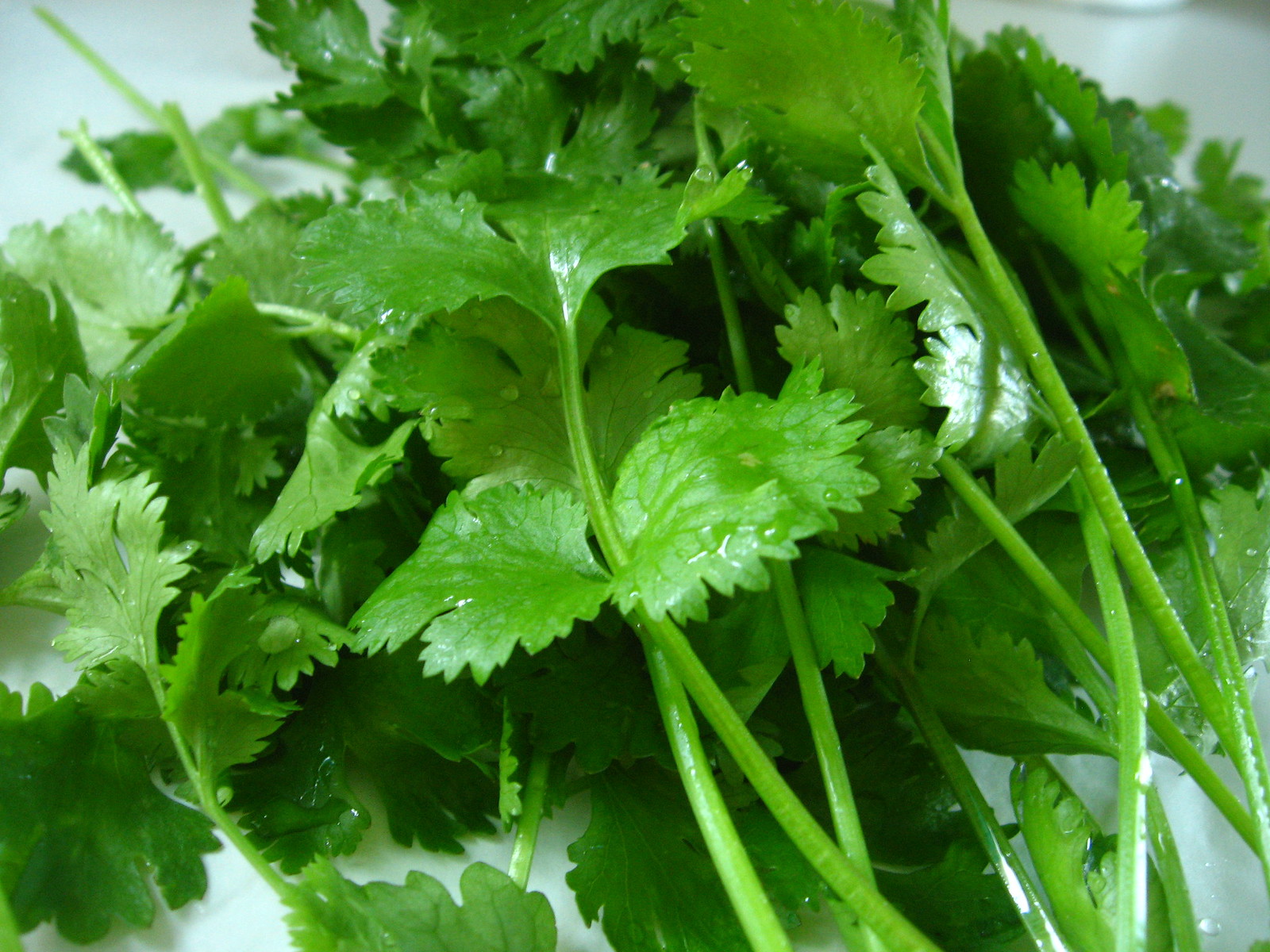
View green coriander fruit stage
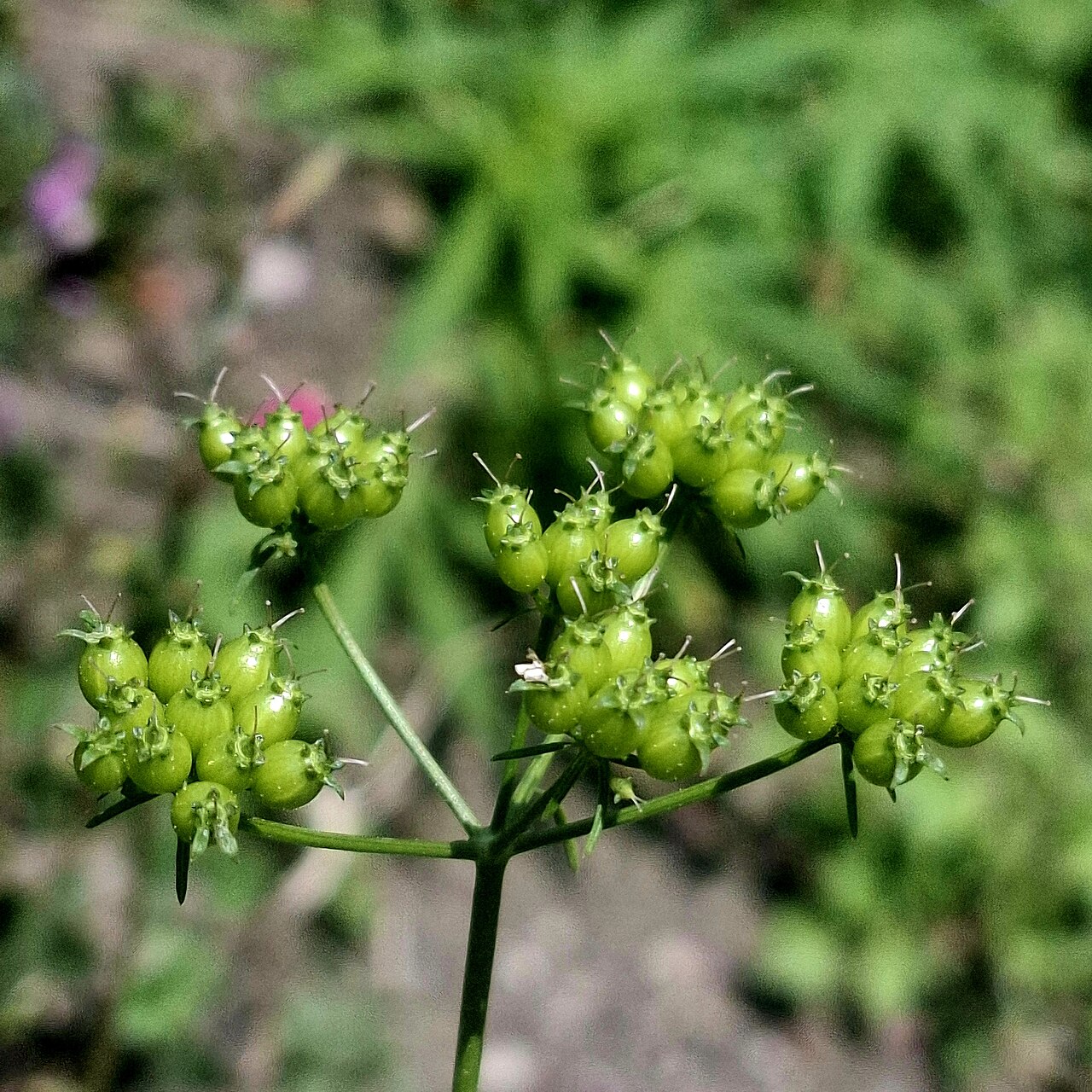
Choose a season with time for leafy growth
Cilantro performs as a cool-season annual. In a climate with hot summers, early spring and the approach to fall usually offer more useful leaf growth than the hottest weeks. In mild-winter climates, the productive window may extend through winter instead. Match sowing to local conditions, not just the month on someone else’s calendar. [1]
For a fall crop, consider both cooling soil and declining growth as days shorten. Waiting for perfect cool weather can leave too little time for a large crop before winter. A small early test sowing, followed by another as conditions improve, spreads that timing risk without using all the seed.
Give the next batch a head start
Start with small sowings about every 3–4 weeks during suitable weather. That is Illinois Extension’s useful baseline. Johnny’s suggests 2–3 weeks for continual leaf harvest. These are options to adjust to your kitchen and climate, not conflicting guarantees. [2][4]
If you pull a whole row for one meal, use the shorter end and have a replacement already growing. If you take occasional outer leaves, the longer interval may be enough. Label each batch and track emergence as well as sowing; a cool, slow-germinating batch may be much younger than its calendar age suggests.
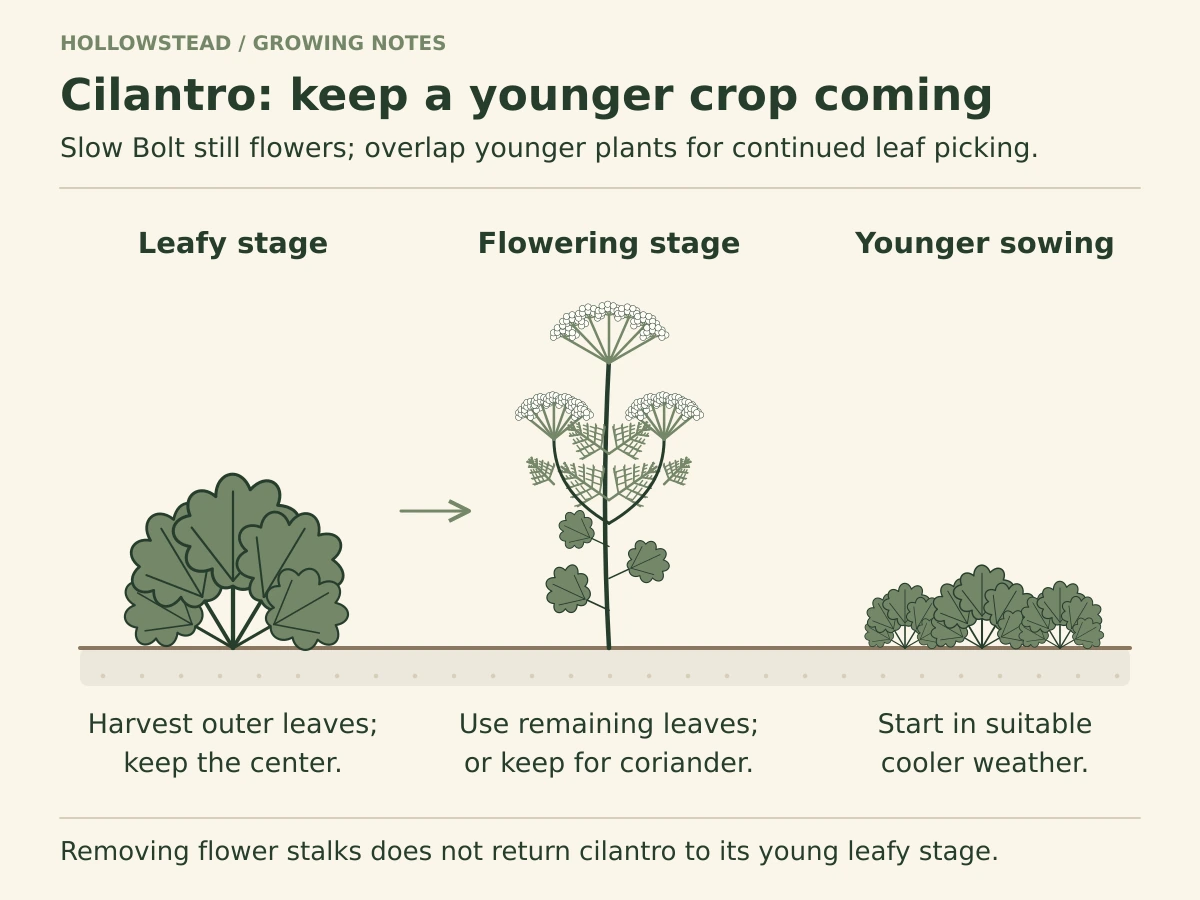 View full-size diagram
Cilantro leaf crop vs. coriander seed crop
Cilantro and coriander are two harvest stages of the same plant. Illinois Extension describes cilantro as the foliage and coriander as the mature seed.[2] That distinction should shape the bed plan. A plant kept for tender leaves is harvested while compact; a plant kept for coriander must be allowed to bolt, flower, and finish dry seed.
Keep the root zone cooler without losing the light
Mulch around established plants to reduce bare-soil heating and rapid drying. A site with morning sun and some afternoon shade can reduce heat load, especially for containers. Keep enough light for sturdy growth; deep shade is not a way to create a better cilantro season. [1]
During a hot spell, check the seedbed separately from the older plants. The top layer holding newly sown seed can dry long before established roots need another full watering. If repeated sowings flower while still too small to use, save the remaining seed for a cooler window. Shade and water can reduce stress, but they cannot undo the seasonal move toward flowering.
Pick according to the kind of crop you want
For repeated small pickings: cut the outer stems near their bases, keeping the center and most leaves intact. Begin when the plant is established and the foliage is useful; a few leaves about 4–6 inches tall can supply an early garnish. Let new leaves replace a picking before taking much more. [1]
For a kitchen bunch: harvest a designated group while it is still leafy. Pulling whole plants ends that group’s production. A substantial cut may regrow in suitable conditions, but the next sowing is a more dependable plan than assuming repeated full bunches from the same plants.
Refrigerate cut leaves with excess surface water removed, in a loosely closed bag or container, and use promptly. Fresh leaves and tender stems can both finish a dish; freeze extra for cooked uses if texture is less important. See herb harvest and storage.
Recognize the transition before the flowers open
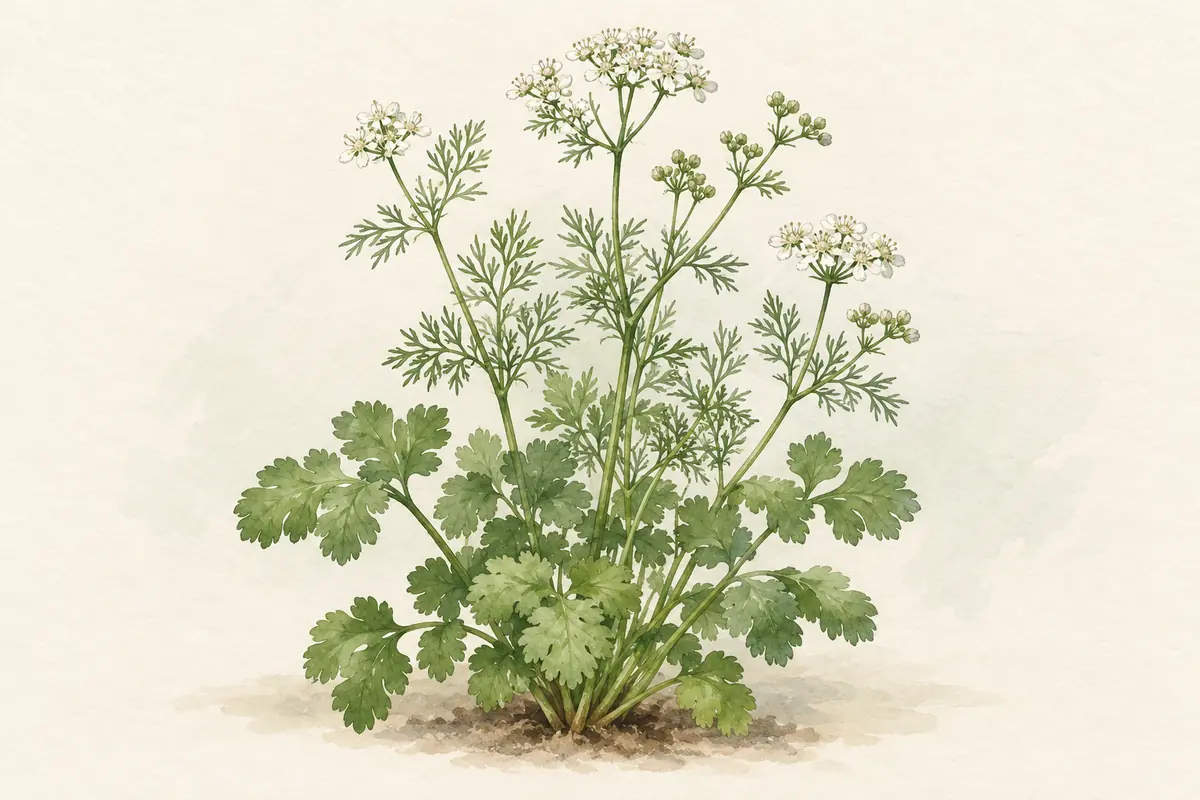
Bolting begins before an obvious flower display. Look for a lengthening central stalk and fine, divided upper leaves replacing the broader lower ones. This is the decision point: take the remaining useful leaf harvest, clear the plant for another crop, or mark it to finish coriander.
Cutting off that stalk may remove flowers, but it does not reliably restore the earlier compact plant. “Slow Bolt” is relative to other selections and conditions. It does not establish a fixed number of extra harvest days or protection from summer heat.
Three harvests after the leafy stage
| Stage | Kitchen or garden use | What to do |
|---|---|---|
| Flowering umbels | Flowers and visiting insects; the start of the seed crop. | Keep the chosen seed plants growing rather than repeatedly cutting them back. |
| Green, developing coriander | A fresh, aromatic ingredient with a different character from dry spice. | Pick only the amount you will use fresh; leave other heads to ripen. |
| Firm, tan-brown coriander | Dry spice or next season’s planting seed. | Collect mature heads before heavy shedding; dry with airflow and clean before sealing. |
Johnny’s describes fresh immature coriander as a separate harvest. Green fruits picked for the kitchen should not be treated as mature planting seed or assumed ready for dry storage. [4]
Cilantro to coriander: follow the actual seed stage
- For leaves, pick outer stems while the center is leafy. A lengthening flower stalk and fine upper leaves signal the turn toward bloom.
- Leave selected plants in place for their small flowers and then green, round developing coriander fruits; green fruits are a distinct fresh harvest.
- For dry coriander or planting seed, wait until the round fruits are tan-brown and firm. Collect before they scatter and finish drying with airflow.
Use containers to manage batches and heat
A pot makes it easier to move the crop out of reflected afternoon heat, but it also heats and dries faster than a bed. Put it where there is adequate light and airflow, with drainage holes kept clear. Avoid leaving a germination tray or a mature pot against a sun-baked wall.
For a small household crop, use two containers as successive batches. When the first is ready to pick, the second should already be growing. Once the first bolts, remove the spent leafy batch. To finish coriander, leave marked plants rooted in place or move their whole container to the seed-plant area; restart a cleared pot only while weather suits cilantro.
Let a simple harvest record set the next interval
For each sowing, note sown → emerged → first picked → first stalk. You are looking for the usable interval between the last two events, as well as the wait before first picking.
- The kitchen runs out early: sow a little sooner or slightly more next time. Change one of those at a time so you can judge the effect.
- Several rows become ready together: reduce the next sowing or lengthen the interval. A larger old patch will not stay young while you catch up.
- Every batch bolts small: treat this as a season problem. Save seed for cooler conditions and use a different herb in the meantime.
Thai Basil and Green Shiso have different flavors, but both offer warm-season leaf crops that can fit the kitchen during a cilantro gap.
Sowing and first-harvest checkpoints
| Stage | Check | Next decision |
|---|---|---|
| Sow | Cover about ¼–½ inch deep in a moist, well-drained seedbed. | Direct sow where possible to avoid disturbing the taproot. |
| Wait for emergence | Johnny’s gives 7–10 days at 65–70°F (18–21°C); Utah State allows about 21 days. | Do not assume an empty row at one week has failed. Check moisture and temperature. |
| Thin | Keep roughly 4–6 inches for this catalog’s repeat-leaf plan. | Denser bunch culture is a different harvest strategy; leave wider room for seed plants. |
| Pick lightly | An established plant has usable outer leaves and an intact center. | Pick lightly, keeping the center and enough healthy foliage to continue growing. |
| Replace or reserve | The center stalk rises and upper leaves become more finely divided. | Move leaf harvest to a younger sowing or finish the plant for coriander. |
The two emergence ranges come from general crop guidance under different conditions. They are useful checks, not a measured germination result for this packet. [1][4]
A container plan for leaves or coriander
Use a wide 3–5-US-gallon pot with at least about 10–12 inches of usable depth as a practical starting plan for 3–4 plants at 4–6-inch spacing. Pot width must actually accommodate that spacing; volume alone does not determine the plant count. Sow directly into the final mix.
Choose the harvest: For small garnish cuts, keep a few plants growing and start the next pot before the first bolts. For whole bunches, sow a dedicated denser batch and plan to replace it after a full cut.
For a coriander crop, use fewer plants with more room. Utah State’s home-garden guidance spaces seed plants about 8–10 inches apart, while commercial recommendations may use closer stands. Choose a layout you can water and harvest easily. [1]
Water when the root zone needs it, not simply because the surface looks pale, and allow excess to drain. Account for fertilizer already present in the mix. See container herb plans for the wider comparison.
A small home seed-saving workflow
For a first learning batch, mark 5–10 healthy representative plants if space permits and save modest amounts from each. This is a practical sampling exercise, not a conservation population standard; one or two plants may give usable seed but capture little diversity. Choose plants for the desired crop traits rather than saving only whichever plant produces seed first.
Watch for round coriander fruits turning tan-brown and firm. Cut umbels into a paper bag before heavy shattering; dry with ventilation, then rub and separate the round fruits from stems. Spread cleaned seed thinly in a sheltered, dry, ventilated place until fully dry before sealing. Label crop, variety, harvest year, parent plants and possible crossing. Keep cool, dry and dark. Before committing next season’s bed, germinate a small counted sample; that checks usefulness, not varietal purity.
Keep compatible volunteers and nearby varieties in mind when saving a named strain: crossing may occur before a seed bag is applied. Label uncertain garden seed honestly and consult seed-saving principles for isolation and parent-diversity planning.
Troubleshooting: check before changing the routine
Watch growth stage and growing conditions together. A flower stalk is a different problem from a failed seedbed.
| What you see | Check first | Next action |
|---|---|---|
| An empty row after roughly three weeks | Temperature, drying or crusted surface, depth, and a small sample of the seed zone. | Leave part of the row intact and resow a small comparison batch with the suspected problem corrected. |
| Seedlings collapse at soil level | Saturated or reused mix, poor air movement, and symptoms of damping off. | Use clean starting materials for the replacement sowing; improve drainage and avoid crowding. |
| A small plant suddenly grows tall with fine upper leaves | Whether a central flower stalk is forming. | Harvest useful foliage now; replace the leaf crop or let selected plants make coriander. |
| Leaves wilt although the pot is wet | Blocked drainage or a persistently saturated root ball. | Restore drainage and reassess roots; do not add water automatically. |
| One sowing gives too little for a bunch | Plant count, harvest mode, and how much foliage each plant can spare. | Grow a designated bunch batch next time and keep its replacement sowing ahead of harvest. |
Use the sowing record to distinguish a spacing or quantity problem from an unsuitable season. Utah State includes damping off among cilantro’s seedling problems. [1]
Sourced grower observation
A gardener on r/vegetablegardening harvested cilantro from seed they described only as “slow bolt,” then saw the remaining plants bolt despite roughly six hours of direct light. The post does not identify a supplier or establish that the seed matches Hollowstead’s Slow Bolt selection. Their season and temperatures were not reported. Plan separate cool-weather sowings rather than treating a slow-bolting label as protection from summer heat. Read the original grower account; compare the crop guidance. This is one grower’s account, not a Hollowstead trial of the offered seed lot.
GROW THIS HERB
Put the guide to work.
The product page carries the packet details and current availability.
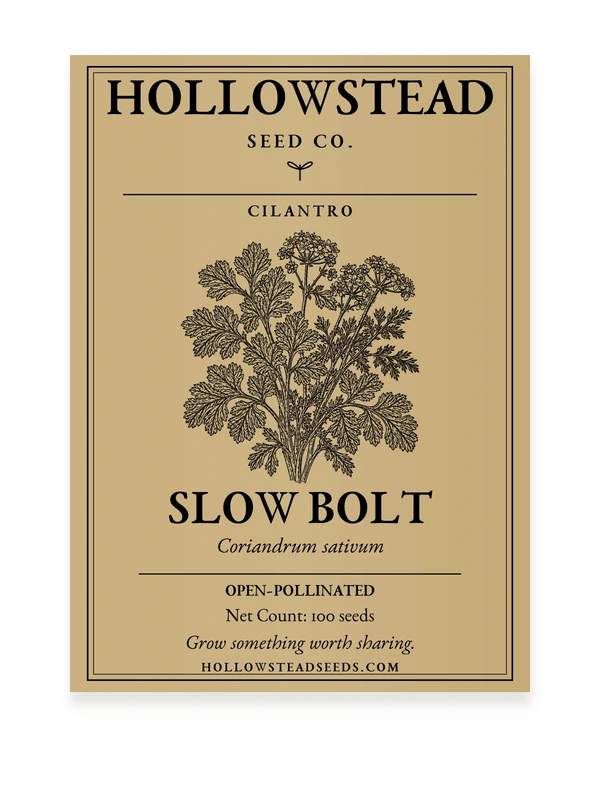
HOLLOWSTEAD SEED
Slow Bolt Cilantro Seeds
$3.49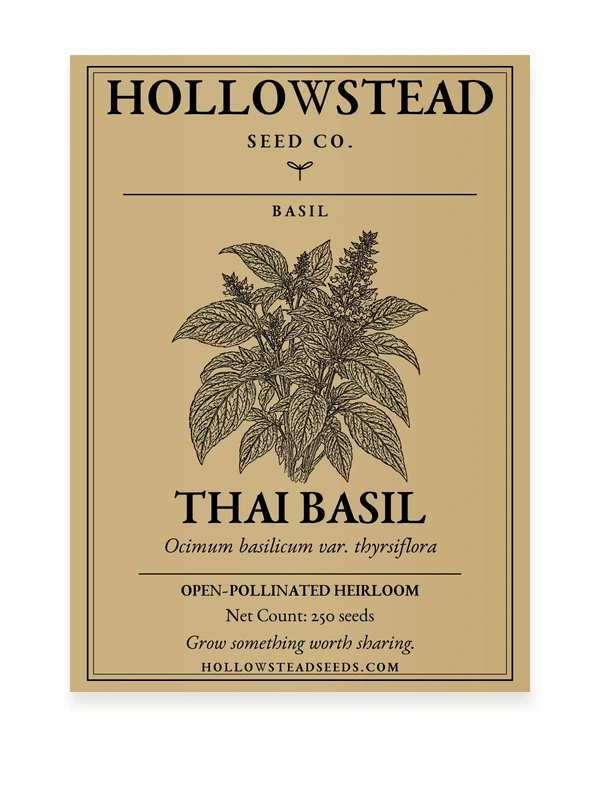
HOLLOWSTEAD SEED
Thai Basil Seeds
$3.49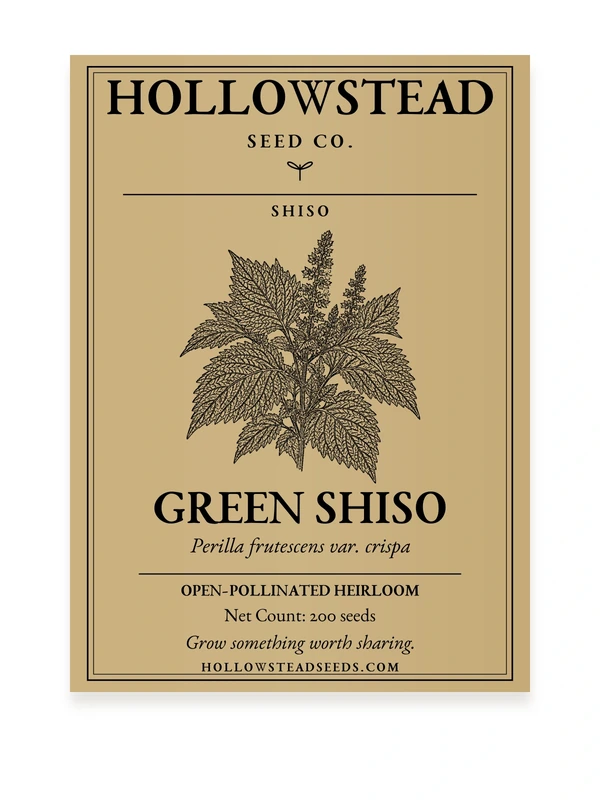
HOLLOWSTEAD SEED
Green Shiso Seeds
$3.49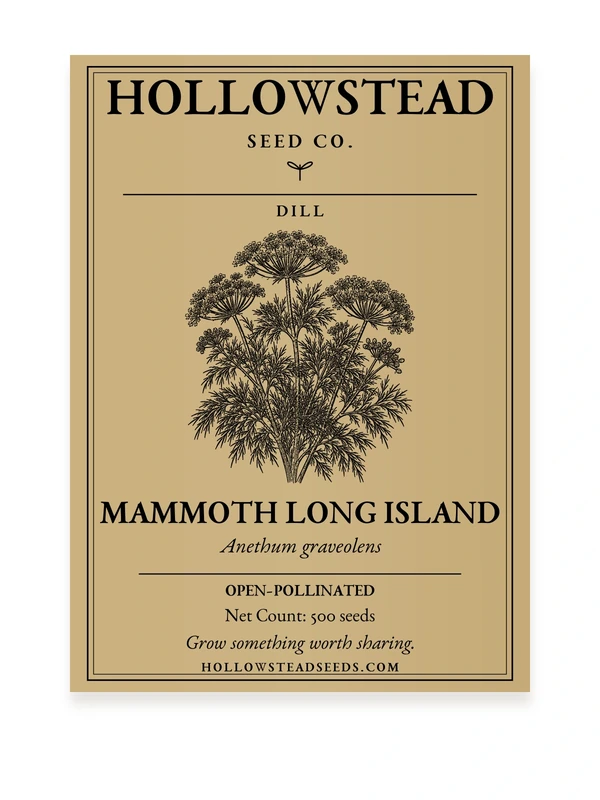
HOLLOWSTEAD SEED
Mammoth Long Island Dill Seeds
$3.49KEEP LEARNING
Related Hollowstead guides
TROUBLESHOOTING
Why Herbs Bolt — and What to Do About It
Bolting is the shift from leafy growth to flowers and seed. Learn why heat, long days, maturity, water stress, and root stress push herbs to flower and what actually helps extend the leaf harvest.
Read the guide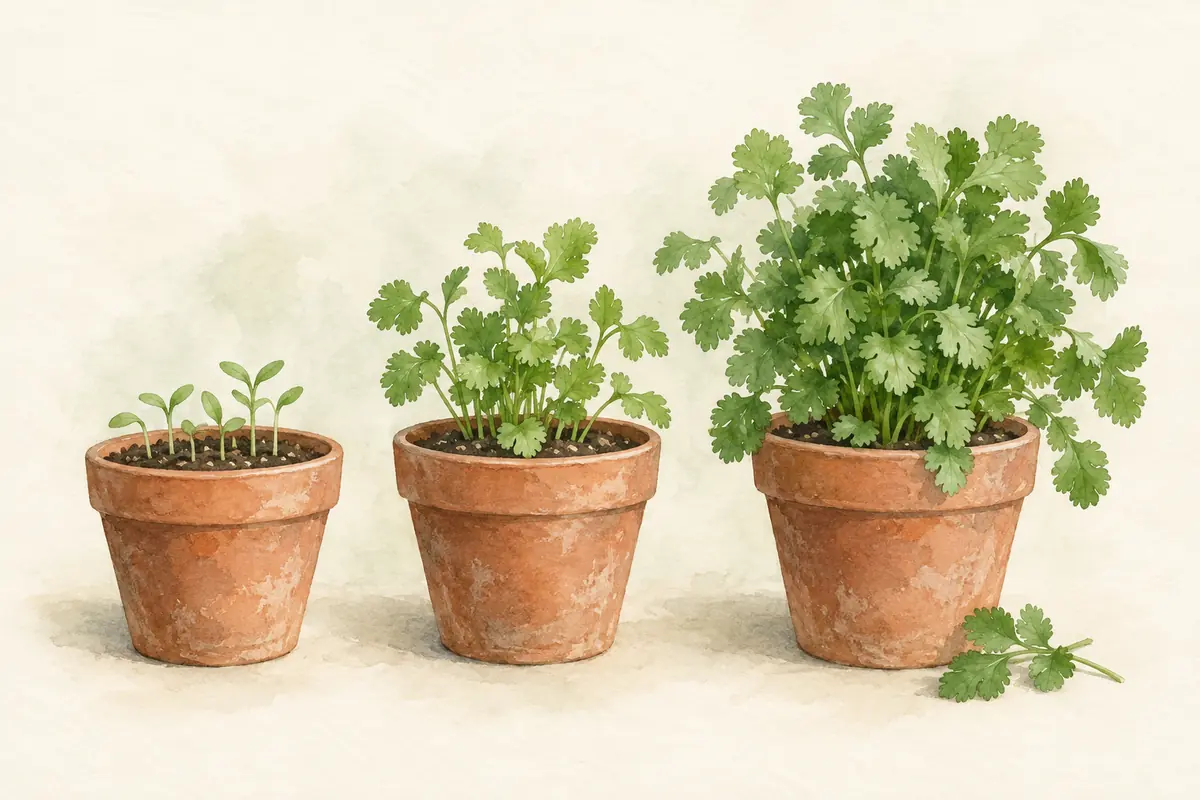
GARDEN PLANNING
Succession Planting Herbs for a Longer Harvest
Avoid one huge herb planting followed by an empty gap. Learn how to stagger cilantro, dill, basil, and shiso sowings, overlap generations, use containers, and track the intervals that work in your garden.
Read the guide

HARVEST GUIDE
When and How to Harvest Herbs
Harvest basil, cilantro, dill, and shiso without cutting away the plant’s future. Learn when to pinch, snip, gather leaves, harvest flowers, and leave stems for mature seed.
Read the guideFrequently asked questions
Does Slow Bolt cilantro never bolt?
No. It is selected to bolt more slowly than many common types, but heat, long days, and maturity still push cilantro toward flowering.
How often should I sow cilantro?
Small sowings roughly every three to four weeks during suitable weather are a practical starting point.
Is coriander a different plant?
No. Coriander is the mature dry seed of the same plant grown for cilantro leaves.
Can I harvest after it flowers?
You can still use parts of the plant, but leaf texture and flavor change. Most gardeners start a fresh sowing for another tender leaf crop.
Sources & further reading
- Utah State University Extension Cilantro / coriander in the garden https://extension.usu.edu/yardandgarden/research/cilantro-coriander-in-the-garden
- Illinois Extension Cilantro https://extension.illinois.edu/herbs/cilantro
- Seed Savers Exchange — Isolation Methods
- Johnny’s Selected Seeds — Cilantro / Coriander: Key Growing Information
Hollowstead Growing Notes
A little help for your next growing season
Practical sowing advice, help choosing seeds, and occasional Hollowstead shop news. Usually one or two emails a month, plus a short welcome note.
Choose your topics and frequency after you confirm. Our guides and planting calendar are always free.