
SHISO GUIDE
Green Shiso Growing Guide
Green shiso rewards a patient start with a vigorous warm-season leaf crop. Learn how to sow fresh seed, manage slower germination, pinch for branching, and harvest tender leaves.
HerbsVariety guideBeginner → advanced
Published by Hollowstead Seed Co. · How this guide is prepared
Quick answer
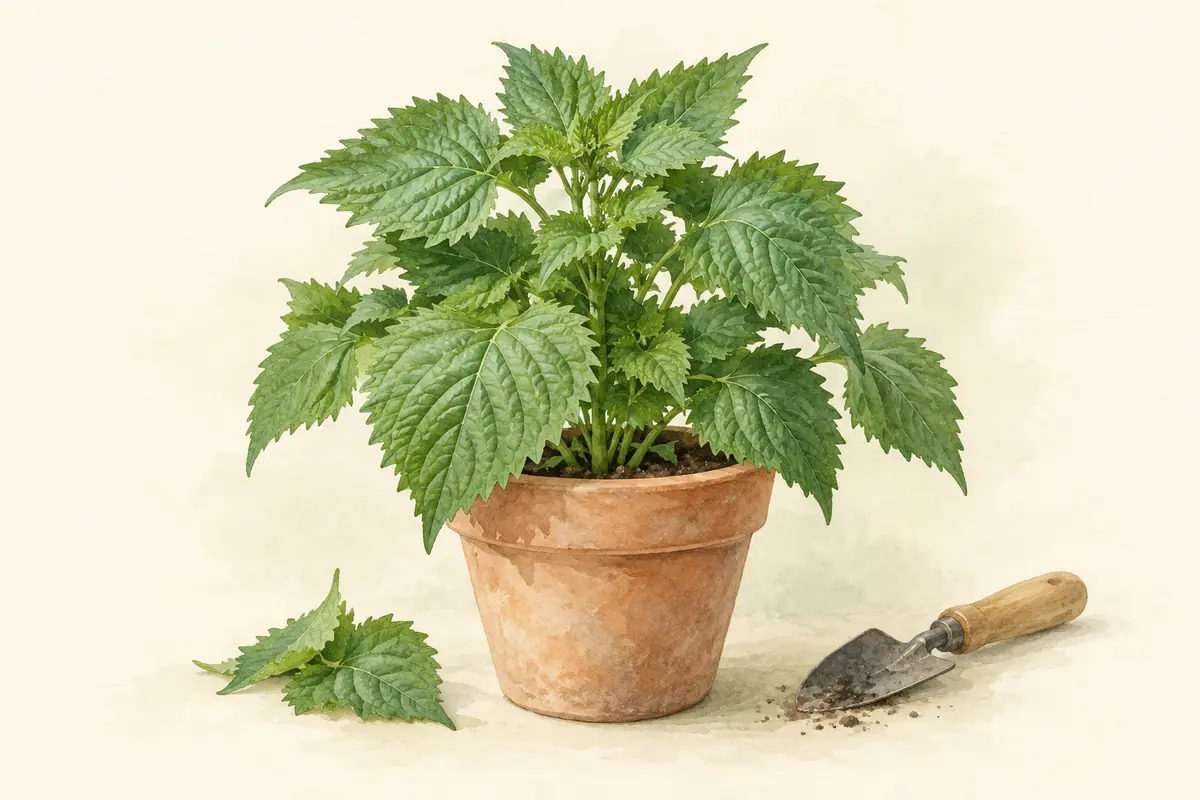
Green shiso is a warm-season annual with broad, serrated leaves and a bold flavor that can suggest mint, citrus, clove, and anise. Plan for 10–12 inches between plants and full sun to partial shade. Begin with a small, shallow sowing that lets light reach the seed. Keep the seed zone evenly moist and reserve some seed while you check the result.
Use fresh seed, steady seed-zone moisture and a dated tray; the sowing plan and a small comparison are below. Once established, pinch tips to branch and harvest tender leaves regularly.
The short version: begin with a small shallow, light-exposed start, give the plant summer warmth, and harvest young leaves from a bushy plant.
Green shiso at a glance
| Question | Useful starting point |
|---|---|
| Season | Warm-season annual |
| Sowing depth | Shallow sowing with light exposure; begin with a small sample |
| Spacing | About 10–12 inches |
| Light | Full sun to partial shade |
| Habit | Upright and bushy |
| Germination | Can be slower or less even than basil |
| Harvest | Young leaves and stem tips |
| Support | Usually none |
- Season
- Warm-season annual
- Light
- Full sun to partial shade
- Growth
- Fast, upright, and bushy once established
- Harvest
- Tender leaves and stem tips
- Seed behavior
- Can self-seed readily where seed matures
A staged Green Shiso checklist
- Before sowingSet aside a small counted sample and reserve the remaining seed. Choose a spot where shallow moisture is easy to monitor.
- During germinationLabel depth, treatment, date, and temperature. Check moisture gently without digging up the whole tray.
- As seedlings establishGive strong light and adequate room; transplant a cohesive root ball after frost risk eases.
- At several leaf pairsTake a small tip above a node or a few outer leaves. Keep enough foliage for side shoots to grow.
- During regular pickingChoose leaf sizes for the meal, rotate harvest among branches, and check the root zone in heat.
- When spikes appearChoose seed plants and remove unwanted spikes before mature seed can scatter. Check for volunteers later.
SAVE FOR SOWING DAY
Five-step crop plan for Green Shiso
Open the sow-to-harvest plan
- StartBegin with a small shallow, light-exposed sowing, keep the seed zone gently moist and reserve seed while you check emergence. Guide details
- PlantWhen seedlings hold a cohesive root ball, acclimate and set out after frost risk eases; use about 10–12 inches between plants. Guide details
- MaintainPinch above a node after several leaf pairs, rotate picking among branches, and check root moisture in summer heat. Guide details
- HarvestPick a few tender leaves or a tip, leaving the center and enough foliage for recovery; choose larger flexible leaves for wrapping. Guide details
- Next sowing or seedIf the start is uneven, make a small labeled comparison that changes one condition at a time; collect only deliberately matured brown seed spikes and remove unwanted volunteers. Guide details
- Space
- About 10–12 inches between upright plants; a 3–5 US gallon pot is a generous one-plant option, with drainage.
- Timing
- Johnny’s general emergence window is about 7–21 days. Begin with a small, shallow, light-exposed sowing; this is general guidance, not a lot-specific germination guarantee.
Full growing guidehttps://hollowsteadseeds.com/green-shiso-growing-guide/Seed packethttps://hollowsteadseeds.com/product/green-shiso-seeds/Find planting dates by ZIP code
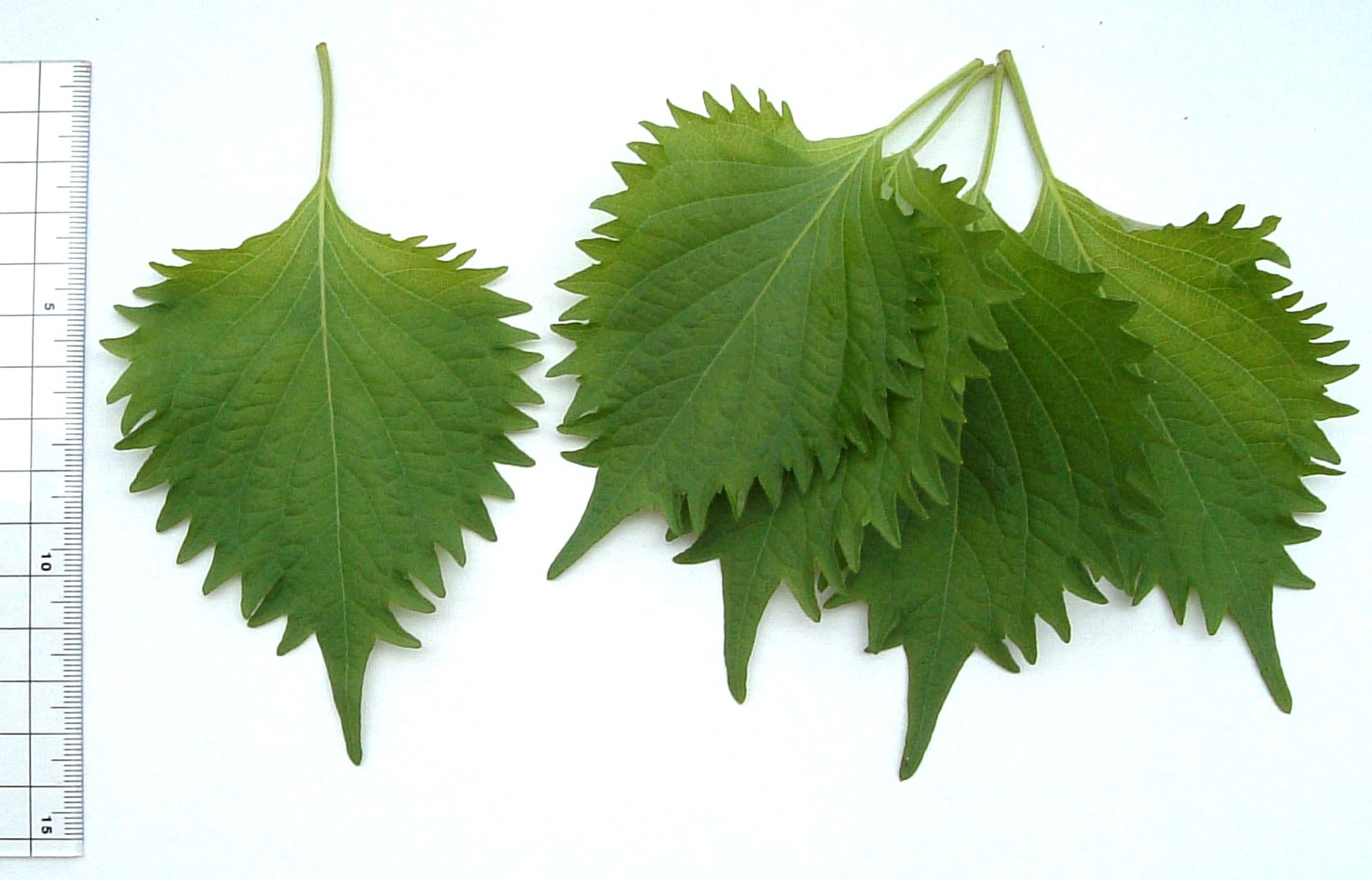
Plant reference photo
Use a small, labeled germination start
Sow shallowly and allow light to reach the seed. Use a light covering and keep the seed zone moist without waterlogging.[4] Begin with a counted sample and reserve the rest. This is general shiso guidance; germination can vary with seed age and conditions.
Record the sowing date, depth, moisture and any treatment. If emergence is uneven, change one condition at a time in a small comparison instead of treating all the remaining seed.
Plan for approximately 7–21 days as a general supplier emergence window, with some unevenness possible. Keep the original sowing while making a small comparison; do not dig through it daily or discard a moist, sound tray at the first empty-week mark. [4]
Before committing a planting window to an older packet, use the seed-storage and home germination-test guide. It helps separate an uncertain seed lot from problems in the seedbed.
Green shiso growth habit
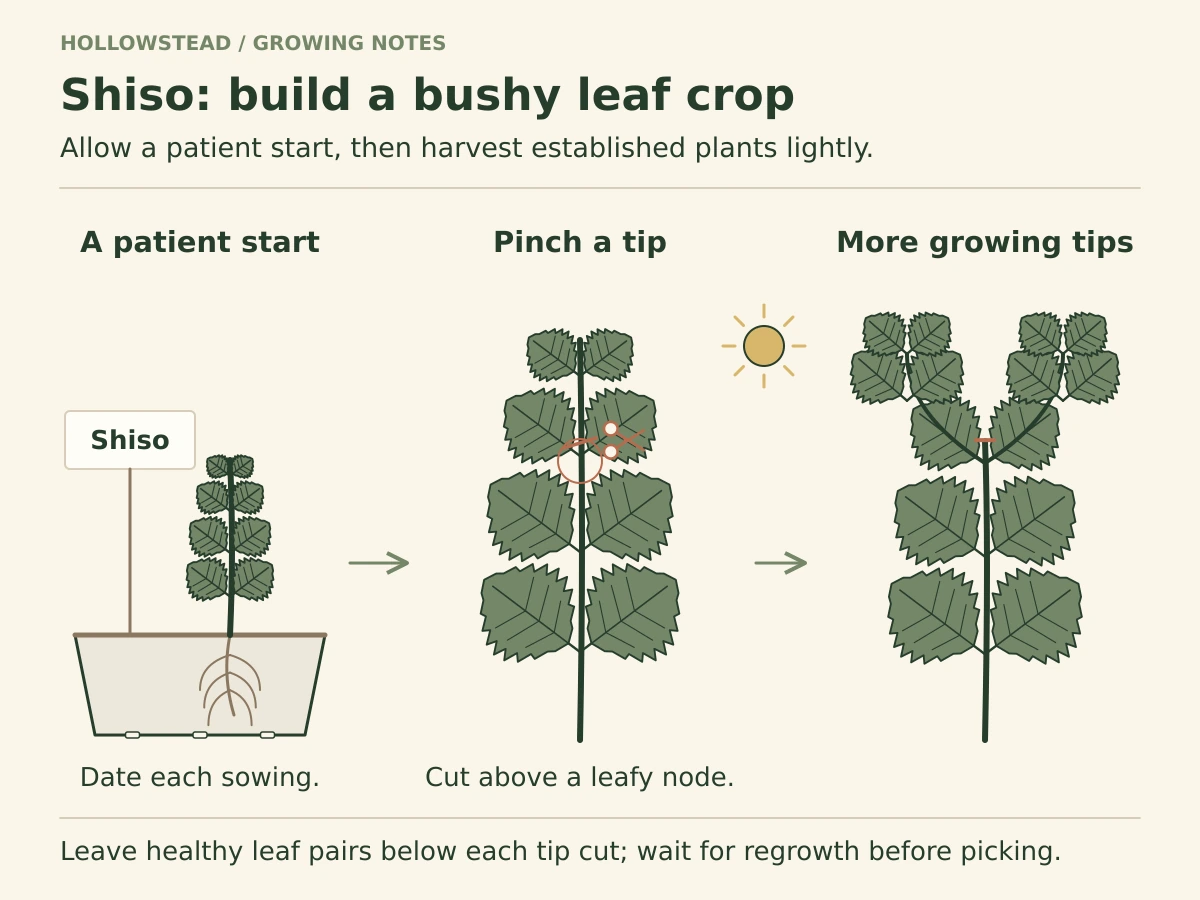
Once established, green shiso forms an upright, leafy plant with strongly serrated leaves. Pinching the growing tip encourages side branches and creates more harvest points. It is a practical leafy crop as well as an ornamental-looking plant in the herb bed.
 View full-size diagram
Adjust light and moisture as the canopy grows
Full sun to partial shade can work. In strong summer heat, afternoon protection may help a leaf crop while morning light keeps the plant growing. Avoid moving a heat-stressed plant straight into deep shade for the rest of the season.
Check below the surface before watering. A large canopy in a small pot can dry its root ball quickly; a plant that droops in wet mix needs drainage checked. Let excess water escape and avoid keeping the container in a full saucer. Respond to the root zone rather than using a fixed daily volume.
Build more leaf-bearing branches
Once an established plant has several leaf pairs, pinch a strong tip just above a node and leave healthy leaves below it. Side shoots then provide more places to pick. Begin with a few leaves or one tip; increase only as new growth replaces what you remove.
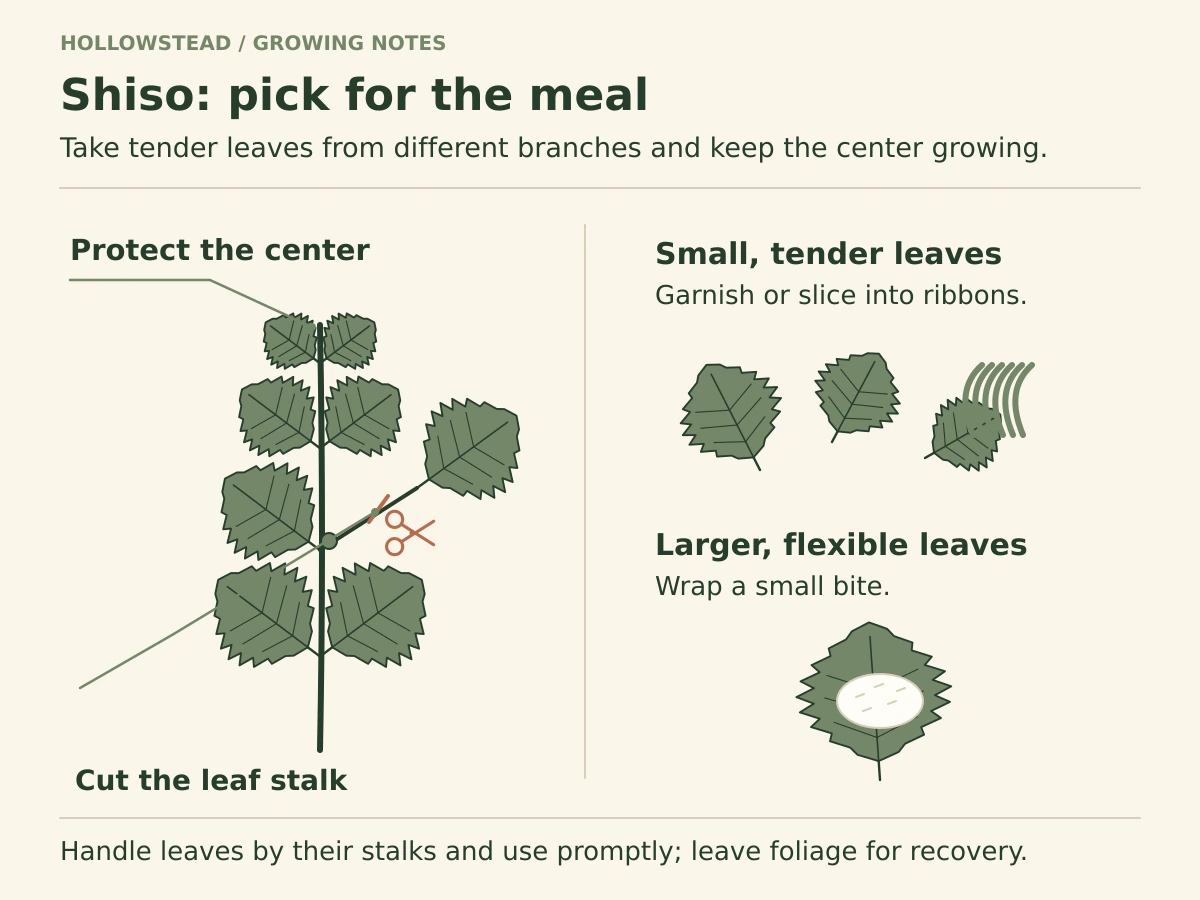
For intact leaves, cut the leaf stalk without damaging the bud where it joins the main stem. Alternate among branches instead of stripping one stem bare. If the plant slows after a large picking, let it rebuild its canopy and check moisture before cutting again.
Plan around flowering and self-sowing
Shiso responds to day length, so a younger late sowing can begin flowering as days shorten. Pinching removes spikes and delays seed development; it cannot promise continued leafy growth into autumn. Research on Perilla frutescens var. crispa also found flowering under very low light in long days. That experimental response is another reason not to use deep shade as a dependable way to prevent bloom. It does not set a threshold for this offered selection. [6]
Once spikes appear, choose which plants may finish seed. Keep harvesting useful leaves from the others, remove unwanted spikes before seed matures, and judge any new sowing by the remaining growing season rather than its young age alone.
Manage seed before it scatters. Perilla can self-sow freely. Collect chosen seed heads into a bag or tray, remove unwanted heads, and pull volunteer seedlings where they are not wanted. Follow local guidance where perilla is considered invasive. [2][3]
Where cattle have access: keep shiso and its volunteers out of pasture or other cattle-accessible areas. NC State notes that Perilla frutescens can be toxic to cattle. [3]
Choose leaves for the meal and the plant’s recovery
| Harvest point | A useful picking | Leave behind |
|---|---|---|
| First established growth | A few outer leaves or one small tip when several leaf pairs will remain. | The center and enough foliage for continued growth. |
| Bushy plant | A mix of tender leaf sizes, taken from different branches. | Young shoots on each branch to replace the harvest. |
| Leaves for wrapping | Intact, larger leaves that still bend easily and taste good to you. | Leaves you do not need immediately; pick to order where possible. |
| Flowering plant | Usable healthy leaves plus the deliberate flower or seed harvest. | Only the seed spikes you intend to mature; remove the rest before they scatter. |
Handle leaves by the stalk and avoid crushing them into a tight handful. Refrigerate unbruised leaves in a loosely closed container with a barely damp towel, check daily, and use while fresh. Match the picking to the meal rather than storing a large harvest you will not use.
 View full-size diagram
For a harvest you will not use fresh, compare drying and freezing shiso leaves. Choose the method for the dish: preserved leaves will not have the texture of a fresh wrapper.
Make leaf size and flavor part of the choice
Try small tender leaves as garnish, thin ribbons over rice or noodles, and larger flexible leaves around small bites. Taste a small and a larger leaf from the same planting. Texture and aroma vary with growth and conditions, so the largest leaf is not automatically the best one.
Shiso, Thai Basil, and cilantro can all finish a meal with fresh leaves, but each changes the flavor. Shiso’s broad blade also gives it a wrapping role. Green Ohba and Asia Ip are separately named selections in supplier catalogs; the generic “Green Shiso” name alone does not establish this packet’s exact selection or eventual leaf size.[7] Begin with a modest amount when adapting a familiar dish, then adjust to taste.
Reserve seed plants before taking the final leaves
Choose healthy plants that show the leaf color, aroma, and growth you want to keep. Let their spikes mature until the seed-bearing structures brown and the seeds release readily. A green spike cut for kitchen use will not necessarily contain seed ready to sow.
Keep nearby compatible perilla and volunteer plants in mind. Remove obvious off-types before bloom if maintaining the named selection matters, and use the seed-saving principles for isolation planning. A bag applied after flowering can catch seed, but it cannot undo earlier pollen exchange.
Turn a slow start into a useful observation
A small trial helps you learn without using the whole packet. Sow a counted sample—perhaps 10 seeds—in a marked part of the tray, keeping the remainder dry in a sealed container in a cool place. Record the following:
| Record | Why it helps |
|---|---|
| Sowing date, depth, and any treatment | Lets you repeat a successful start or change one part of a poor one. |
| Actual seed-zone temperature | Separates a consistently warm tray from one that cools sharply overnight. |
| Moisture and surface condition | Reveals repeated drying, waterlogging, or crusting that a calendar count misses. |
| First emergence and later emergence | Shows whether the batch is uniformly quick or continues to emerge over time. |
| Number of seedlings | Gives a rough result for that small trial, not a reliable test of the whole packet. |
If emergence remains poor after around three weeks, keep the original tray and make a labeled comparison with the suspected problem corrected. Avoid changing depth, temperature, and pretreatment together. Once seedlings have several true leaves and roots hold the mix, acclimate them gradually to outdoor conditions and plant after frost risk has passed.
A container plan that keeps leaves accessible
For one plant, 3–5 US gallons with about 10–12 inches of usable mix depth is a generous practical design. Use a drainage hole and potting mix. Place the pot where you can reach the leaves and inspect flower spikes without reaching through other plants.
- For the leaf crop: pinch to keep branches within reach and harvest among them. A large, unpicked canopy may need more water than its pot can hold through a hot day.
- For hot afternoons: move the pot to a position with some protection while retaining strong light. Check moisture before assuming every droop is drought.
- For seed: reserve a plant and collect its heads deliberately. A pot contains roots, but it does not contain falling seed.
Account for feed already in the potting mix and follow the fertilizer label. See container herb plans for ways to group separate pots by care needs.
A small home seed-saving workflow
For a first learning batch, mark 5–10 healthy representative plants if space permits and save modest amounts from each. This is a practical sampling exercise, not a conservation population standard; one or two plants may give usable seed but capture little diversity. Choose plants for the desired crop traits rather than saving only whichever plant produces seed first.
Watch for browning seed-bearing spikes with firm seeds that release when rubbed. Cut over a tray or paper bag before the tiny seeds scatter; rub dry spikes and use a fine sieve to remove stems. Spread cleaned seed thinly in a sheltered, dry, ventilated place until fully dry before sealing. Label crop, variety, harvest year, parent plants and possible crossing. Keep cool, dry and dark. Before committing next season’s bed, germinate a small counted sample; that checks usefulness, not varietal purity.
Keep compatible volunteers and nearby varieties in mind when saving a named strain: crossing may occur before a seed bag is applied. Label uncertain garden seed honestly and consult seed-saving principles for isolation and parent-diversity planning.
Troubleshooting: check before changing the routine
Check the stage of growth and the immediate conditions before changing the whole planting routine.
| What you see | Check first | Next action |
|---|---|---|
| No or patchy emergence | Depth, treatment, temperature, and whether the seed zone dried or crusted. | Keep a record and try a small comparison sowing; use the germination plan above. |
| Seedlings stretch and lean | Direction and strength of light; crowding. | Improve light and spacing, then watch new growth rather than expecting stretched stems to shrink. |
| Afternoon droop | Moisture below the surface and heat from nearby paving. | Water a drying root ball; if already moist, check drainage and try afternoon protection. |
| Tiny holes in new leaves | Leaf surfaces, undersides, and any insects present; holes alone do not identify the culprit. | Inspect fresh damage and identify any pest before choosing a response. |
| Flower spikes on a small late planting | Shortening days, overall light, and the remaining season. | Pick useful leaves; remove unwanted spikes and avoid assuming another late sowing will stay leafy. |
| Leaves run small after repeated harvest | How much foliage remains and whether shoots are replacing the cuts. | Reduce picking while the canopy recovers; check roots, light, and moisture before adding feed. |
A symptom is a starting point for inspection, not a pest identification. Check fresh damage before choosing a treatment.
Sourced grower observation
A UK grower on r/gardening reported that younger green-shiso leaves in their garden had a stronger shiso aroma than the largest older leaves. Taste a few leaf sizes in your own planting and favor tender leaves for fresh use; this account does not establish a universal flavor threshold. Read the original grower account; compare the crop guidance. This is one grower’s account, not a Hollowstead trial of the offered seed lot.
GROW THIS HERB
Put the guide to work.
The product page carries the packet details and current availability.
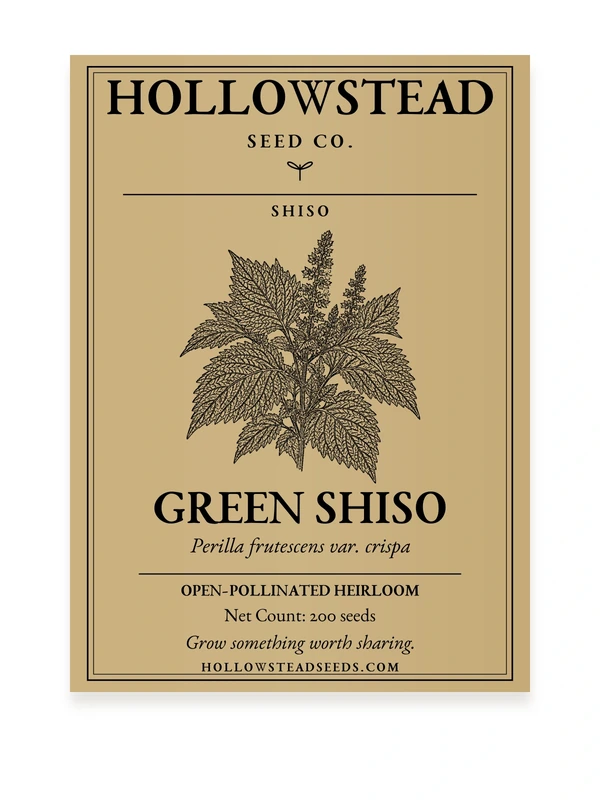
HOLLOWSTEAD SEED
Green Shiso Seeds
$3.49
HOLLOWSTEAD SEED
Thai Basil Seeds
$3.49
HOLLOWSTEAD SEED
Slow Bolt Cilantro Seeds
$3.49
HOLLOWSTEAD SEED
Mammoth Long Island Dill Seeds
$3.49KEEP LEARNING
Related Hollowstead guides
SEED STARTING
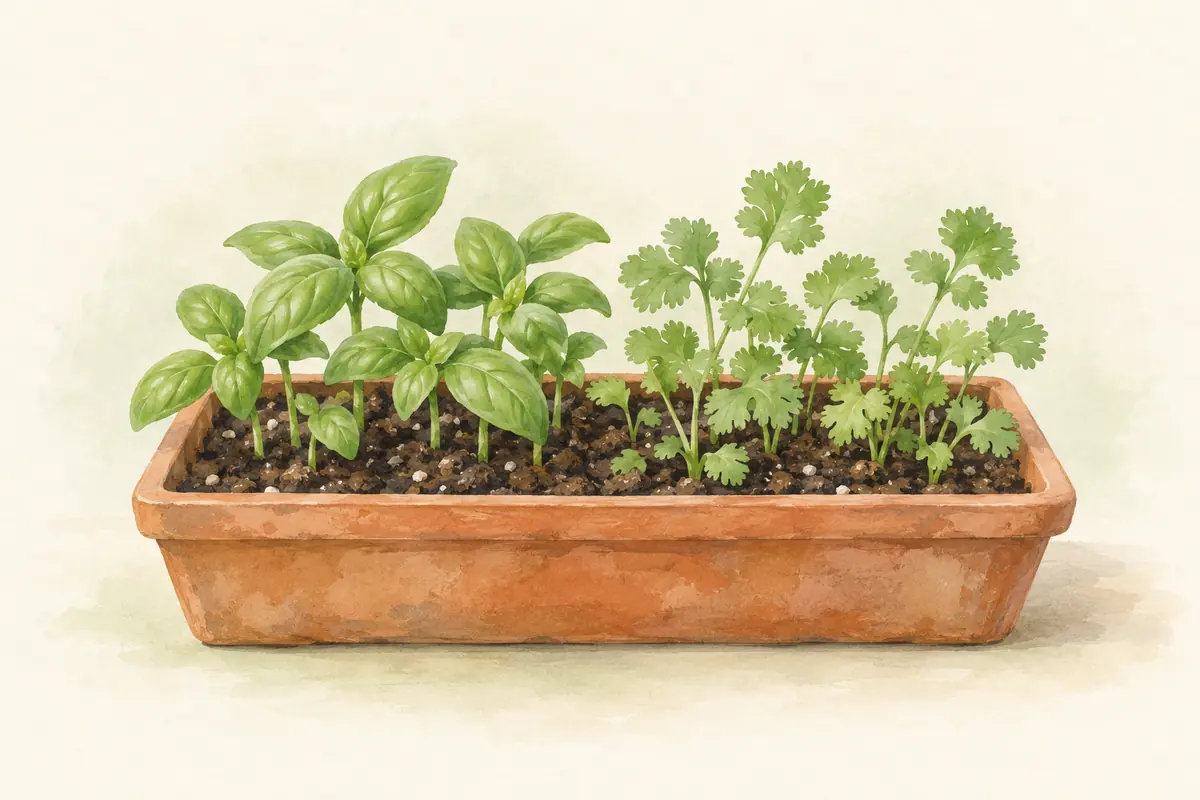
Growing Four Annual Herbs From Seed: Basil, Shiso, Cilantro & Dill
Start basil, shiso, cilantro, and dill with a crop-specific plan. Learn when to start indoors or direct sow, how to manage light and moisture, when to thin and transplant, and how to plan the first harvest.
Read the guide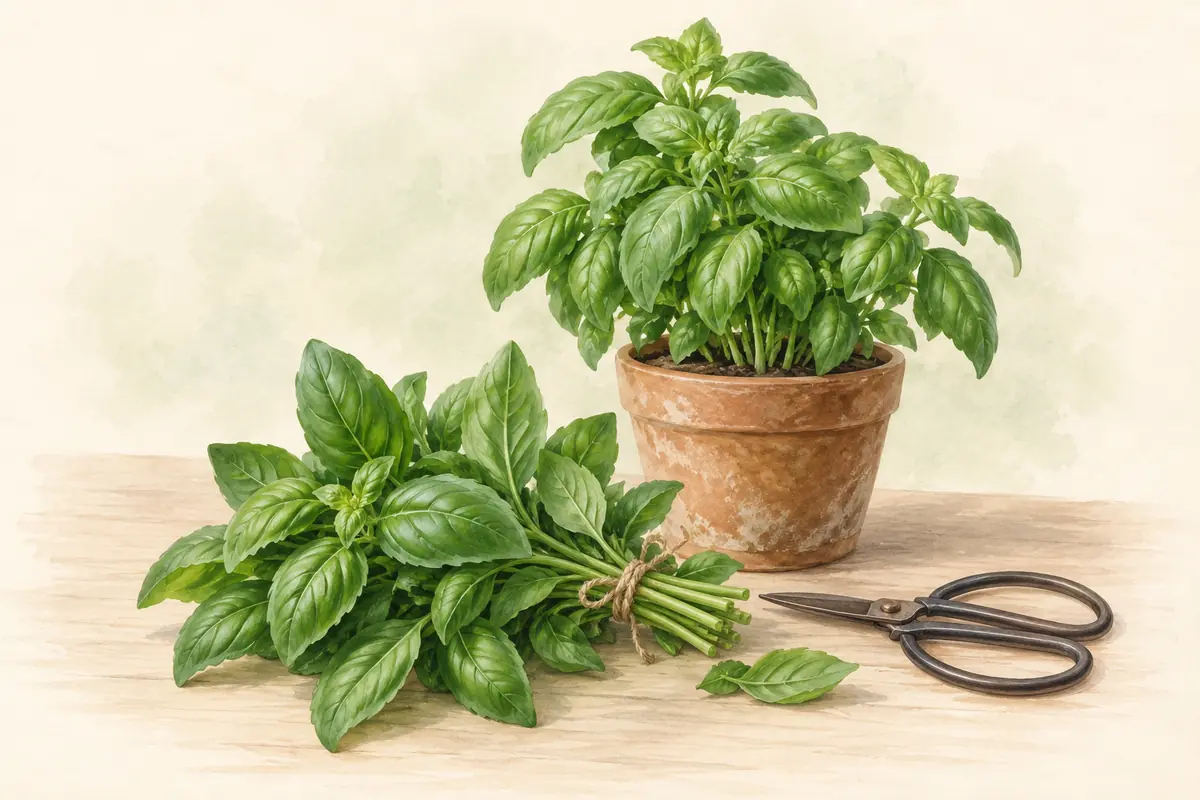
HARVEST GUIDE
When and How to Harvest Herbs
Harvest basil, cilantro, dill, and shiso without cutting away the plant’s future. Learn when to pinch, snip, gather leaves, harvest flowers, and leave stems for mature seed.
Read the guide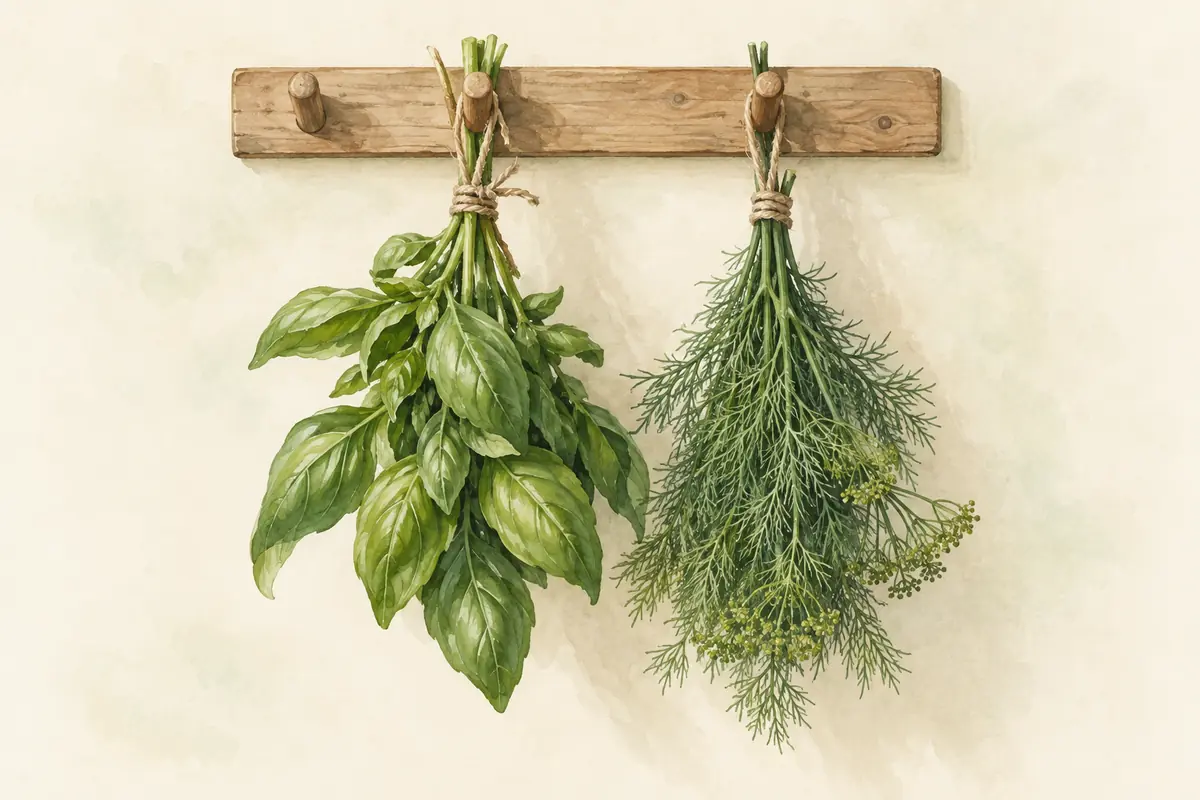

PRESERVING HERBS
How to Dry and Preserve Garden Herbs
Preserve garden herbs safely with air drying, dehydrator drying, freezing, and dry storage. Learn when to harvest, how to avoid mold, and how to store dried leaves and seed.
Read the guideFrequently asked questions
Why is my shiso slow to germinate?
Shiso can be slower and less uniform than basil. Check seed age, moisture and the chosen depth. Keep a record and reserve seed for a small comparison that changes one condition at a time.
Does shiso need full sun?
Full sun to partial shade can work. Strong light is useful, but some afternoon shade may be reasonable in very hot conditions.
Can I pinch shiso?
Yes. Pinching the growing tip above a node encourages branching and a bushier leaf crop.
Can shiso grow in a container?
Yes. Use good drainage, enough root room, and steady moisture.
Sources & further reading
- Penn State Extension Growing Herbs in the Garden https://extension.psu.edu/growing-herbs-in-the-garden
- University of Georgia Cooperative Extension Herbs in Southern Gardens https://extension.uga.edu/publications/detail.html?number=B1170
- NC State Extension Perilla frutescens (Perilla, Shiso) https://plants.ces.ncsu.edu/plants/perilla-frutescens/
- Johnny’s Selected Seeds — Shiso: Key Growing Information
- Seed Savers Exchange — Isolation Methods
- Wada, Kondo & Takeno — Shiso flowering response to day length and low light (2010)
- Johnny’s Selected Seeds — Asia Ip shiso listing A separately named selection, not identification of this packet. https://www.johnnyseeds.com/herbs/shiso/asia-ip-shiso-seed-3623.32.html
Hollowstead Growing Notes
A little help for your next growing season
Practical sowing advice, help choosing seeds, and occasional Hollowstead shop news. Usually one or two emails a month, plus a short welcome note.
Choose your topics and frequency after you confirm. Our guides and planting calendar are always free.