
CONTAINER GUIDE
Growing Herbs in Containers
Grow herbs on a patio, porch, or small space with the right pot, drainage, potting mix, sun, watering, feeding, airflow, and harvest routine.
HerbsContainer guideBeginner → advanced
Published by Hollowstead Seed Co. · How this guide is prepared
Quick answer
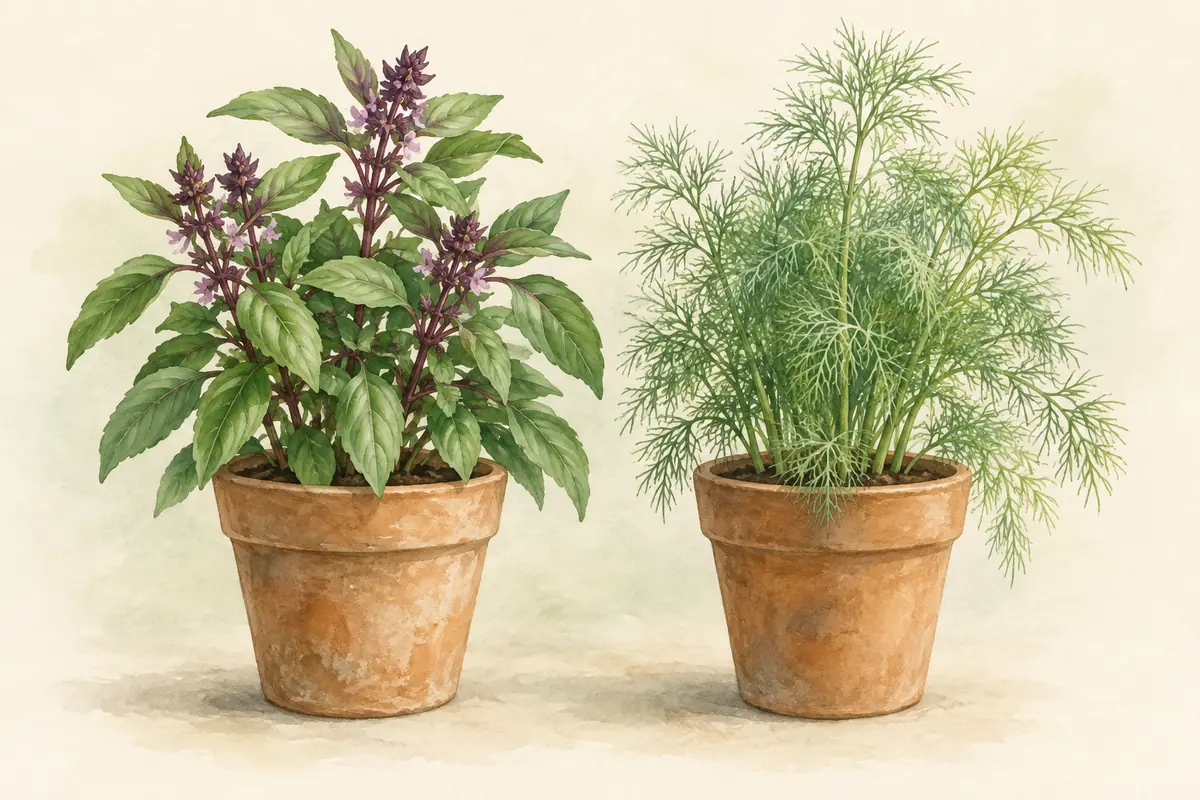
Herbs grow well in containers when the pot has drainage, the mix is designed for containers, and the plant receives the light and moisture its species needs. Containers dry faster than garden beds, so check them more frequently and avoid assuming that every herb in a mixed pot wants the same watering schedule.[1][2]
Give larger herbs larger pots, and remember that dill’s deeper root system benefits from depth. Basil, cilantro, and shiso can all be container-grown if root room, light, and drainage are adequate.
The short version: drainage first, quality potting mix, enough root volume, strong light, regular moisture checks, light feeding, and frequent harvest.
Container herbs at a glance
| Question | Useful starting point |
|---|---|
| Drainage | Required |
| Growing medium | Quality potting mix, not heavy garden soil |
| Light | Match the herb; many culinary herbs want strong sun |
| Water | Check more often than garden beds |
| Feeding | Light, regular feeding for container plants |
| Pot depth | Use deeper containers for deep-rooted herbs such as dill |
| Airflow | Do not crowd a cluster of pots tightly |
| Harvest | Frequent cutting keeps leafy herbs manageable |
- Drainage
- Open holes and a free-draining potting mix
- Root volume
- Match the mature plant, not the seedling
- Light
- Measure the actual sun on the site
- Water
- Check more often than an in-ground bed
- Feeding
- Light, regular, and responsive to plant growth
- Compatibility
- Combine herbs only when their water/light needs match
Choose a container with real drainage
Every herb container needs a way for excess water to leave. Penn State and UMN both emphasize drainage holes for container herbs.[1][2] Pot size should match the mature plant: a small cilantro batch can grow in a modest container, while a large basil or tall dill needs more root volume.
Match the pot to the herb
- Conservative home-garden designs: one Thai Basil or Green Shiso in 3–5 US gal, about 10–12 in usable depth.
- A sufficiently wide 3–5 US gal pot about 10–12 in deep can hold 3–4 cilantro plants at 4–6-inch spacing for leaves.
- One mature Mammoth Dill: 5+ US gal and roughly 12–16 in depth, with support if exposed.
- Volume, width, depth and stability all matter; these are starting designs rather than cultivar trial minimums.
Match pot size and depth to the herb
Pot size is a water-management decision as much as a root-space decision. A small pot has less buffer against heat and wind, while an oversized pot filled with dense wet mix can stay saturated around a small root system. Penn State recommends choosing containers and media that support the plant’s mature needs and drainage rather than treating every herb as interchangeable.[3]
Dill benefits from depth because of its taproot and tall top growth. Basil and shiso need enough volume to support repeated branching. Cilantro can grow in containers, but a shallow, hot pot accelerates stress and may shorten an already brief leafy phase.
Use potting mix, not compact garden soil
Container mixes are designed to balance water retention and drainage. Heavy garden soil can compact in a pot and reduce the air available to roots. Refresh or replace exhausted mix between crops when structure has broken down.
Match sun exposure to the crop
Many culinary herbs prefer strong light. Basil and dill are good full-sun examples; cilantro can appreciate some afternoon protection when weather turns hot. Observe the actual hours of light on your patio rather than assuming every bright-looking spot is full sun.
Containers need more frequent moisture checks
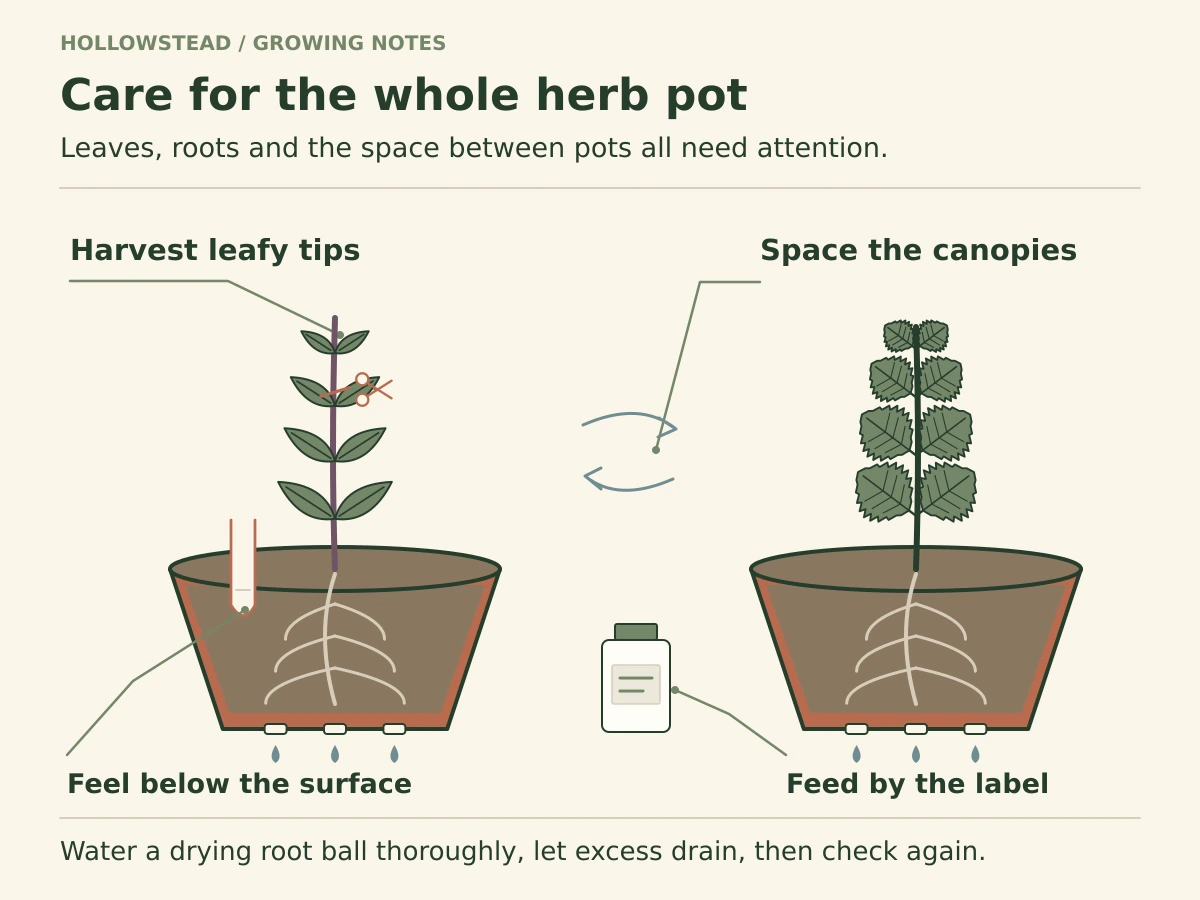
Pots lose water faster than garden beds, especially in wind and summer heat. Water when the root zone is beginning to dry according to the crop’s needs, then water thoroughly enough that the root ball is moistened. Avoid keeping saucers permanently full of water.
Feed lightly
Container nutrients are gradually depleted and washed out. UMN recommends light feeding for container herbs rather than heavy fertilizer.[2] Overfeeding is not a substitute for adequate light or root room.
Harvest and airflow are part of container care
Frequent moderate harvest keeps basil and shiso compact and improves access through crowded foliage. Leave space between containers so air can move around wet leaves and so you can inspect the plants.
 View full-size diagram
Container herb troubleshooting
Container problems can change in hours because the root zone is small. Diagnose the pot before blaming the herb.
Illinois Extension specifically recommends combining container herbs only when their growing needs are compatible and emphasizes drainage, aeration, and good airflow.[4]
Plan for the end of the season
Thai basil, shiso, cilantro, and dill in this Hollowstead cluster are grown as annual crops. Containers make it easy to replace spent plants, move a crop out of extreme heat, or restart with a fresh sowing.
Container plans for these varieties
Keep cool-season cilantro in its own movable pot, with Thai basil and shiso in separate warm-season containers and tall dill in a deeper, sheltered container. These are placement choices, not a claim that four herbs need the same watering or planting date.
For a patio salad alongside those herbs, give lettuce its own planting plan. Container lettuce distinguishes a dense baby-leaf planter from spaced Red Sails rosettes or Parris Island Cos heads. Plan the harvest stage before deciding how many seedlings belong in the pot.
These are conservative home-garden starting designs, not experimentally established minimum volumes or guarantees of mature size. US gallons describe mix capacity, not nursery trade-pot labels. Check both actual usable depth and width; a tall narrow vessel can have enough volume yet tip easily. Increase volume in hot, windy sites and keep drainage open.
| Variety | Starting container | Plant count | How to use it |
|---|---|---|---|
| Thai Basil | 3–5 US gallons; about 10–12 inches of usable mix depth | 1 plant | A practical patio crop; tip-harvest to keep it branching. |
| Green Shiso | 3–5 US gallons; about 10–12 inches deep | 1 plant | Keep leaves within reach; remove unwanted flower spikes. |
| Slow Bolt Cilantro | 3–5 US gallons; at least about 10–12 inches deep | 3–4 plants at 4–6-inch spacing in a sufficiently wide pot | For repeat leaves; use fewer, wider-spaced plants for coriander. |
| Mammoth Long Island Dill | 5 US gallons or more; about 12–16 inches deep | 1 mature plant | Tall seed crop needs a stable pot and support; allow 3–5 feet overhead. |
For example, if a new potting mix already contains a starter fertilizer, do not immediately add a second full feeding. Note the period stated on the mix bag; when that supply is used up, choose a fertilizer labeled for the crop and containers and follow its dilution and interval. If the mix has no fertilizer, follow the container-product label from establishment. Water the root ball first if dry, and avoid adding extra phosphorus simply because flowers are slow.
GROW THESE HERBS
Put the guide to work.
Explore Hollowstead’s herb varieties and put these techniques into practice.
HOLLOWSTEAD SEED
Thai Basil Seeds
$3.49
HOLLOWSTEAD SEED
Green Shiso Seeds
$3.49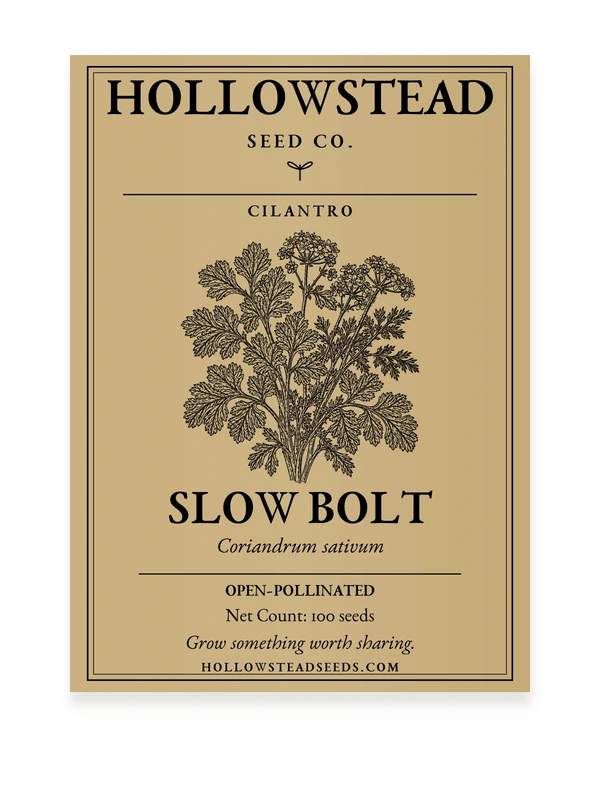
HOLLOWSTEAD SEED
Slow Bolt Cilantro Seeds
$3.49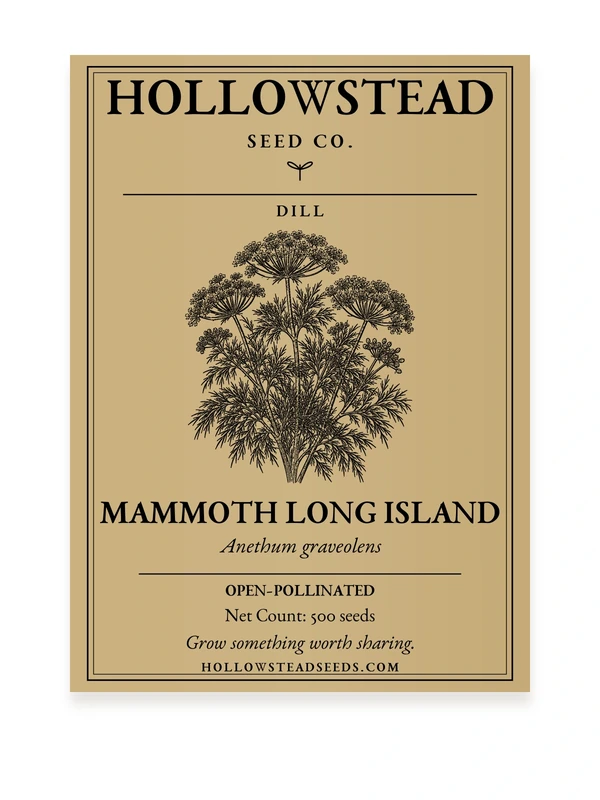
HOLLOWSTEAD SEED
Mammoth Long Island Dill Seeds
$3.49KEEP LEARNING
Related Hollowstead guides
SEED STARTING
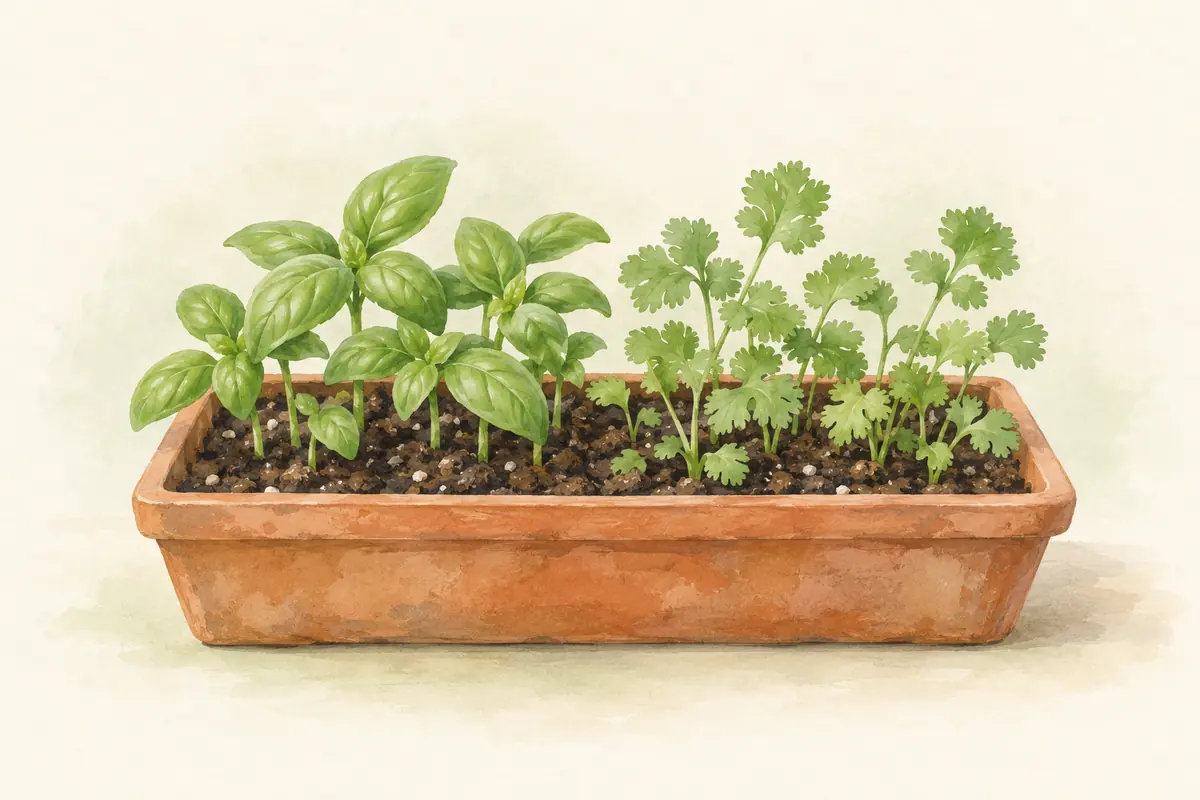
Growing Four Annual Herbs From Seed: Basil, Shiso, Cilantro & Dill
Start basil, shiso, cilantro, and dill with a crop-specific plan. Learn when to start indoors or direct sow, how to manage light and moisture, when to thin and transplant, and how to plan the first harvest.
Read the guide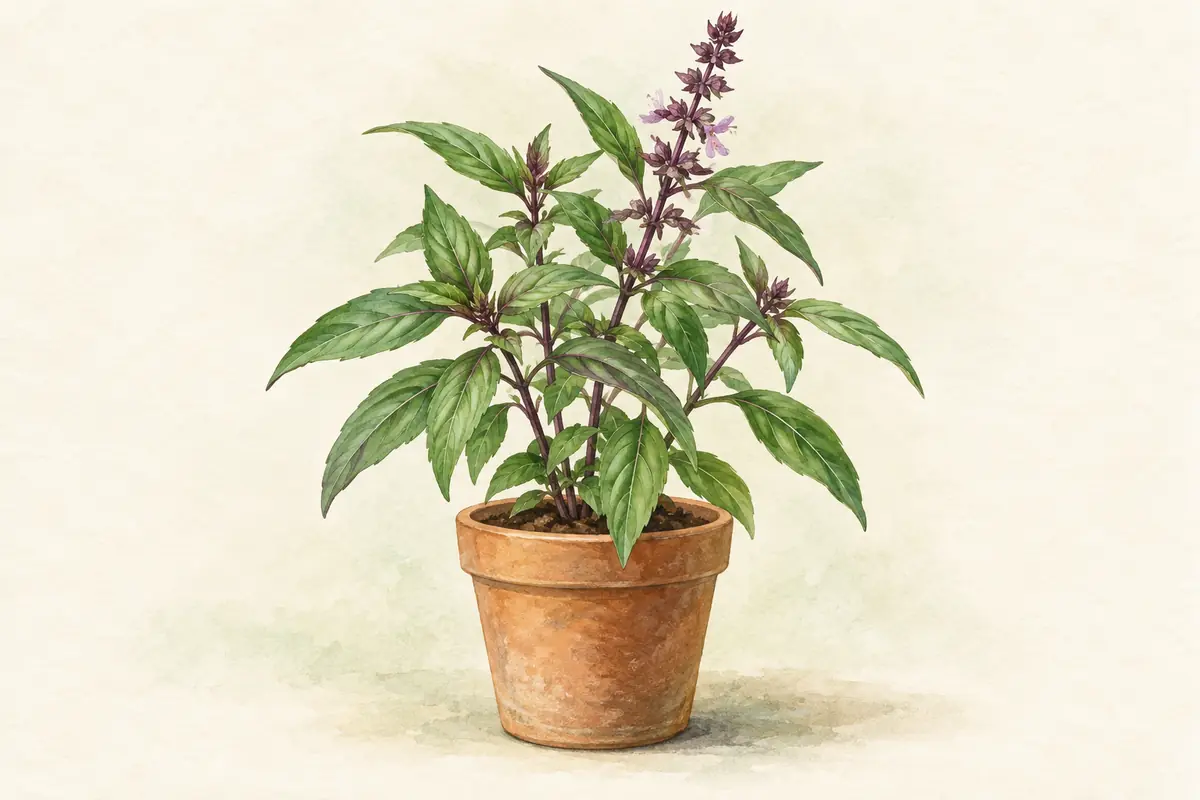
THAI BASIL GUIDE
Thai Basil Growing Guide
Grow Thai basil for fragrant summer leaves and distinctive purple stems. Learn how to start seed, manage warmth and moisture, pinch for branching, handle flower spikes, and harvest for the kitchen.
Read the guide
SHISO GUIDE
Green Shiso Growing Guide
Green shiso rewards a patient start with a vigorous warm-season leaf crop. Learn how to sow fresh seed, manage slower germination, pinch for branching, and harvest tender leaves.
Read the guideFrequently asked questions
Can I grow several herbs in one pot?
Yes, but combine plants with similar light, moisture, and root-space needs. Mixed pots become difficult when one crop wants cool moist conditions and another prefers a drier root zone.
Can I use garden soil in a container?
A quality potting mix is the better choice because it is designed to balance drainage, aeration, and moisture in a confined root zone.
How often should I water potted herbs?
There is no universal schedule. Check the pot because weather, pot size, plant size, and material all change drying speed.
Do container herbs need fertilizer?
Usually some light feeding helps over a long season, but heavy feeding is unnecessary and can create soft growth.
Sources & further reading
- Penn State Extension Growing Herbs Indoors https://extension.psu.edu/growing-herbs-indoors
- University of Minnesota Extension Growing herbs in home gardens https://extension.umn.edu/garden-and-home/yard-and-garden/gardening-in-minnesota/growing-herbs
- Penn State Extension Growing Herbs in the Garden https://extension.psu.edu/growing-herbs-in-the-garden
- Illinois Extension Pollinator Plants for the Herb Garden — Growing Herbs tips https://extension.illinois.edu/media/3906/download?inline=
Hollowstead Growing Notes
A little help for your next growing season
Practical sowing advice, help choosing seeds, and occasional Hollowstead shop news. Usually one or two emails a month, plus a short welcome note.
Choose your topics and frequency after you confirm. Our guides and planting calendar are always free.