
LETTUCE GUIDE
Red Sails Lettuce Growing Guide
Grow Red Sails for red-bronze, ruffled leaf lettuce. Learn shallow sowing, full-plant spacing, repeat leaf harvests, cool-season timing, containers and seed saving.
LettuceVariety guideBeginner → advanced
Published by Hollowstead Seed Co. · How this guide is prepared
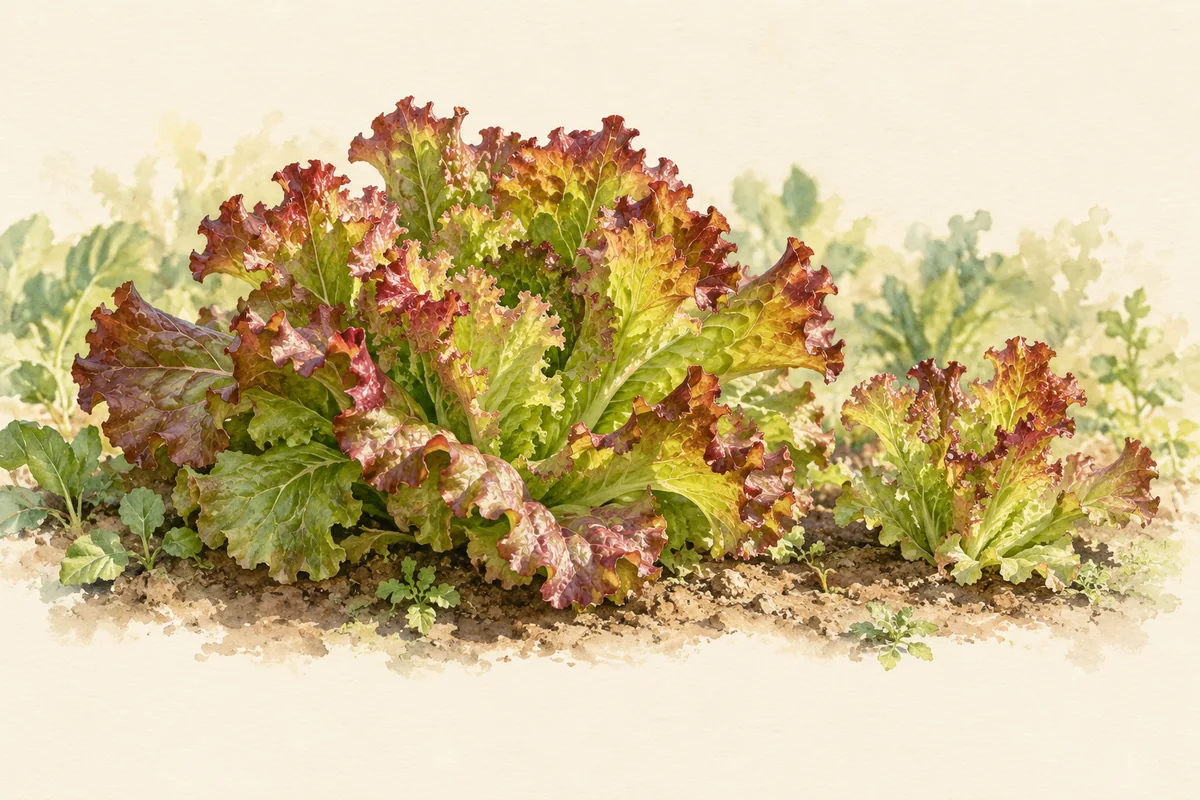
Quick answer
Red Sails is a loose-leaf lettuce for tender leaves, broad rosettes and red-bronze color. You can take selected outer leaves as the plant grows or harvest the whole loose head. It does not need to form a tight ball before it is useful. All-America Selections records Red Sails as a 1985 winner with bronze-red, crinkled leaves.[1]
Hollowstead’s packet lists ⅛-inch sowing depth, 12 inches between full-size plants and about 45 days from sowing. Give it a cool growing window and steady moisture. Repeated small sowings are a more dependable route to a long salad season than expecting one planting to last indefinitely.
At a glance
| Planning point | Useful starting point |
|---|---|
| Botanical name | Lactuca sativa |
| Type | Open-pollinated loose-leaf lettuce |
| Packet | 250 seeds |
| Sow / germination | ⅛ inch deep; usually 7–14 days |
| Final spacing | 12 inches for full-size rosettes |
| Light | Full sun in cool weather; partial shade can help as it warms |
| Harvest estimate | About 45 days from sowing; young leaves can be used earlier |
| Harvest choice | Selected outer leaves or one whole loose head |
SAVE FOR SOWING DAY
Five-step crop plan for Red Sails
Open the sow-to-harvest plan
- StartSow ⅛ inch deep in cool spring or fall conditions; keep the shallow seed zone evenly moist and avoid excessive germination heat. Guide details
- PlantThin to 12 inches for full rosettes; a closely sown baby-leaf patch is a separate harvest plan and must be picked young. Guide details
- MaintainKeep moisture steady, cultivate shallowly and use light afternoon shade when useful; watch the center for a rising flower stalk. Guide details
- HarvestTake a few tender outer leaves while preserving the young center, or cut a whole loose head before bolting reduces quality. Guide details
- Next sowing or seedResow small batches while cool growing time remains, or reserve healthy typical plants; separate flowering varieties and gather dry fluffy seedheads in several passes. Guide details
- Space
- Allow about 12 inches between full-size plant centers; leave room to reach outer leaves and inspect the crown.
- Timing
- Hollowstead lists about 45 days from sowing to useful full leaf growth; young leaves can be picked earlier. Other catalogs may count from emergence.
Full growing guidehttps://hollowsteadseeds.com/red-sails-lettuce-growing-guide/Seed packethttps://hollowsteadseeds.com/product/red-sails-lettuce-seeds/Find planting dates by ZIP code
What Red Sails looks like
Expect a spreading rosette with ruffled leaves rather than the tall, enclosing form of romaine. Green and bronze-red can appear together on a plant, so a green center is not by itself a sign that the wrong seed was planted. Compare overall shape and growth as well as color.
Red Sails is an open-pollinated lettuce that forms large, frilled rosettes. Its leaf midribs are easily broken during handling. That matters at harvest: take a shallow basket, avoid crushing the leaves under other vegetables, and support a whole rosette from beneath.
A bed edge is a useful home for Red Sails when you intend to pick leaves often. You can reach the plant without leaning over it and inspect lower leaves at the same time. If you prefer a single harvest of several full plants, arrange them in a small block and keep a replacement sowing underway.
Choose a cool season and stagger sowings
Plan backward from your local heat, not only forward from a spring frost date. Red Sails is a lettuce, so sustained summer heat can shorten its useful leaf-harvest period. In many gardens, spring and fall are the easiest windows; in mild-winter areas, the useful season may extend through winter.
Maryland Extension explains that increasing day length and summer heat encourage bolting and bitter flavor, while succession plantings spread the harvest.[2] Red Sails is relatively slow to bolt, but tender leaves are still less reliable through a hot spell.
Sow a modest amount, then consider another small sowing roughly two weeks later while conditions remain suitable. Mark each date. If the first planting matures more slowly than expected, you can alter the next interval instead of ending up with several identical beds at once.
For fall, count backward from when growth normally slows, leaving time for establishment. Direct sowing into a hot late-summer bed can fail before the cooler growing weather arrives. Starting a small tray in a cooler location is one way to separate germination from outdoor conditions. See succession planting lettuce for a flexible schedule.
Shallow sowing and a reliable start
Prepare a fine, level seedbed so tiny seeds make contact with moist soil instead of falling between large clods. Sow about ⅛ inch deep, press lightly and water gently. University of Georgia guidance supports shallow ⅛–¼-inch planting for lettuce and stresses keeping the establishing seedbed moist without saturating it.[3]
The shallow seed zone can dry long before the bed below does. Check it during germination, particularly in wind or a sunny raised bed. Use a gentle stream or fine watering rose; a hard jet can move the seed into clumps and leave the rest of the row empty.
Cool does not mean that every temperature gives the same result. Utah State identifies roughly 55–65°F as a favorable germination range and warns that temperatures above about 80°F reduce germination.[4] Avoid putting a lettuce tray on a heat mat set for peppers or tomatoes.
Once seedlings emerge, give them adequate light and airflow. Thin crowded seedlings while they are still small, choosing healthy plants rather than retaining every sprout. For a stalled tray or patchy row, use why lettuce seeds do not germinate to work through temperature, moisture and seed placement.
Spacing, water and feeding
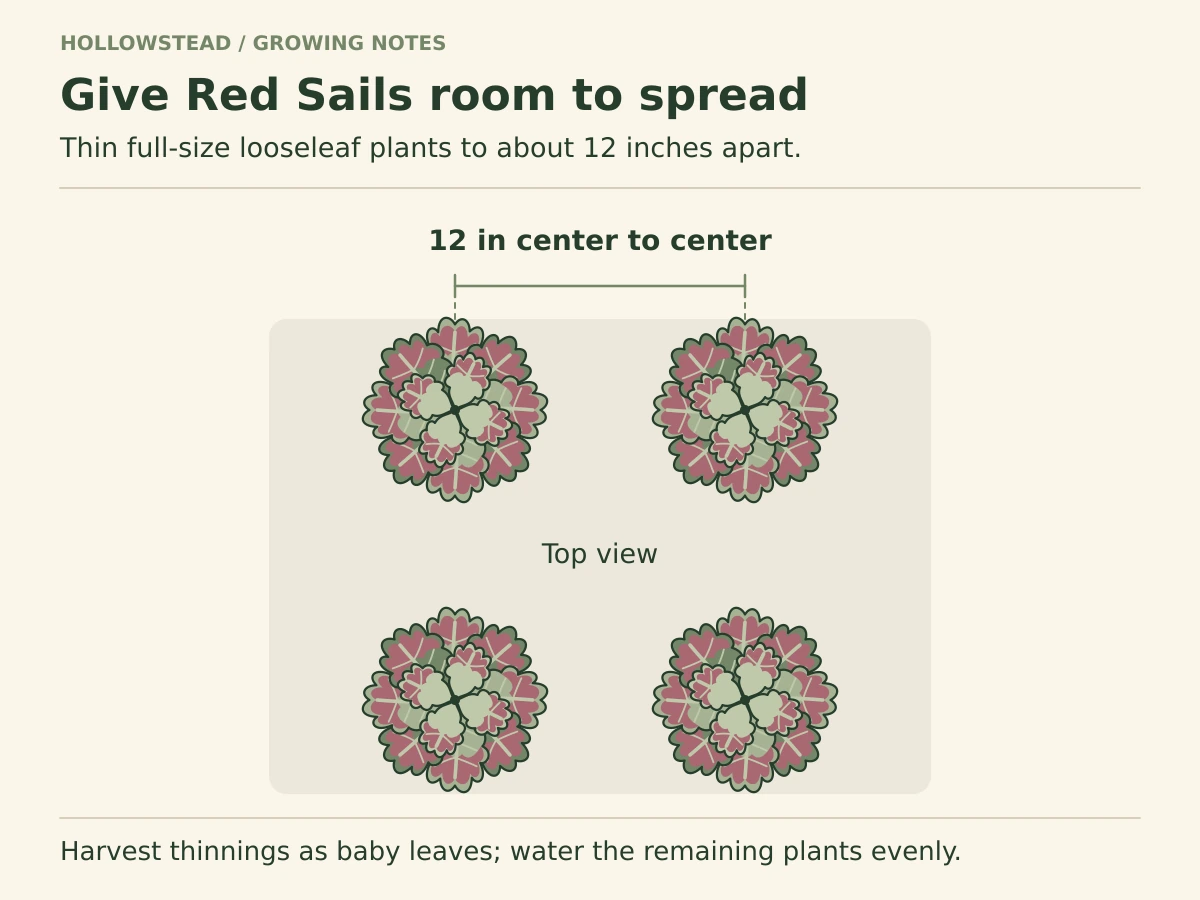 View full-size diagram
Use 12 inches between plants when growing full rosettes. The space looks generous while seedlings are small, but it gives you room to reach outer leaves and inspect the base later. If you choose a dense baby-leaf patch, make that decision deliberately and harvest it at a younger stage; do not expect the same crowded plants to develop into full rosettes without thinning.
Keep the root zone moist enough for steady growth. Minnesota Extension notes that much of lettuce’s water uptake happens through fine roots near the surface.[5] A dry crust and wilting leaves deserve attention even when deeper soil remains moist. Cultivate shallowly around plants so you do not slice through those roots.
Use soil-test guidance for fertility, or the label on a container fertilizer. Water and drainage come first when diagnosing slow growth. A pale plant in saturated soil and a pale plant in exhausted potting mix need different responses. Check the pot’s drain holes and the feel of the mix before adding fertilizer.
When watering overhead, aim for morning so foliage can dry. Remove badly damaged leaves that have collapsed onto the soil, keeping the center accessible for inspection.
Harvesting Red Sails leaves
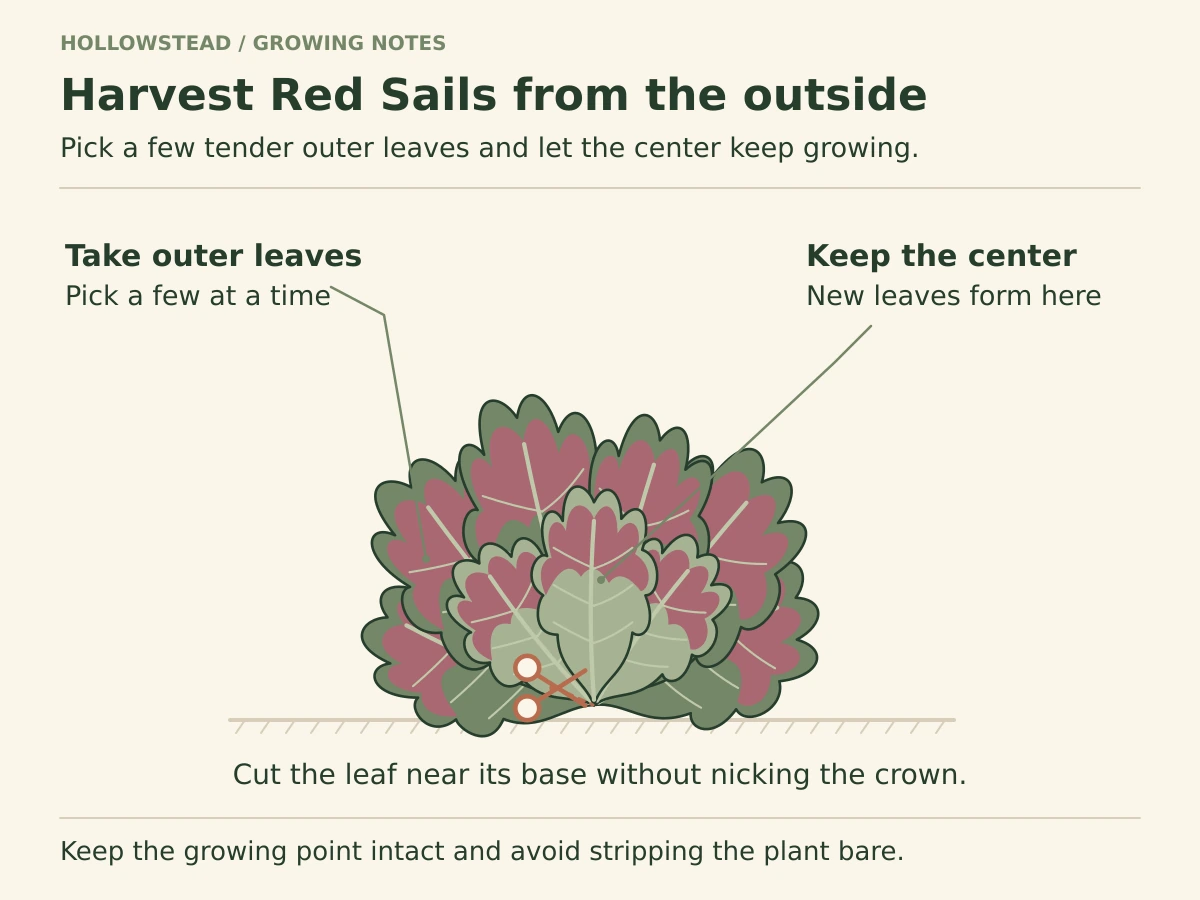 View full-size diagram
For individual-leaf harvest, choose healthy outer leaves of a useful size. Support the plant and cut or detach a few without damaging the center. Leave the young inner leaves and enough remaining leaf area for the plant to keep growing. Spread picking among several plants rather than repeatedly stripping one.
For a whole-plant harvest, cut the loose head at its base while the leaves still have the quality you want. You do not need to wait for a tight head that this variety will not form. Dense baby-leaf plantings can be cut above the growing point, but the timing and quality of another cut depend on the remaining crown, weather and plant condition.[8]
Use a quick quality check each visit. Look for a center that is beginning to stretch upward, unusually tough leaves or a flavor you no longer enjoy. Stop treating a bolting plant as the same salad crop it was two weeks earlier; move harvesting to the next sowing.
Bring leaves into shade promptly, wash with clean water and dry gently before refrigerating. Keep harvest tools and containers clean. The lettuce harvest guide compares outer-leaf picking, baby-leaf cutting and whole-head harvest.
Heat, bolting and flavor
Bolting is the transition toward a flowering stalk. Watch the center rather than only the outer leaves: an elongating center with increasing space between leaves is a more useful warning than a calendar date.
Partial afternoon shade can reduce heat load, and reliable watering helps avoid added drought stress. Neither reverses a plant that has already switched into reproductive growth. Once quality declines, harvest any useful leaves, remove the plant unless it is reserved for seed, and give the space to the next crop.
Keep notes on how long each sowing stays useful. A variety described as slow to bolt may give you extra flexibility, but its value is the actual eating window in your garden. Compare sowings made in different weeks rather than concluding from one hot planting that either the variety or your whole garden has failed. For diagnosis, see why lettuce bolts or turns bitter.
Containers and common problems
Red Sails fits containers well when leaves have space, the mix drains and water is convenient. Choose a wide enough surface for the number of full plants you intend to keep. A planter used for densely cut baby leaves has different spacing needs. Maryland’s container guidance explains why lettuce can use shallow salad planters while still needing attentive moisture management.[9]
| Observation | Likely checks | Practical response |
|---|---|---|
| Irregular holes and slime trails | Slugs in the evening; damp hiding places | Remove nearby debris and confirm the pest before treatment. |
| Clusters of small insects | Leaf undersides and the growing center | Inspect for aphids and beneficial insects; address an active infestation. |
| Long, weak seedlings | Light and crowding | Improve light and thin; do not bury a weak crown. |
| Rotting lower leaves | Wet soil, poor drainage and prolonged leaf wetness | Improve conditions and remove decaying material. |
| A tall, stretching center | Flower-stalk development | Shift eating harvest to younger plants. |
Maryland’s slug guidance and Minnesota’s aphid guide help distinguish those pests and their management options.[6][7] Red coloring is part of the variety; holes, colonies, soft decay and a new growth pattern are more informative signs of a problem than color alone.
Saving Red Sails seed
Choose healthy plants that show the variety’s usual leaf form and useful growing behavior. Reserve them before you harvest their centers. Let them flower and produce fluffy, dry seed heads; collect in several passes before wind carries the seed away.
Lettuce mostly self-pollinates, but named varieties still benefit from separation. Seed Savers Exchange recommends 10–20 feet between flowering varieties and saving from several plants for ongoing variety maintenance. Dry, clean and label the seed before storage.[8]
A seed plant occupies the bed much longer than a salad plant. Put that space on your plan, and label it clearly so a helpful gardener does not remove it as “finished lettuce.” See how to save lettuce seeds for collection and cleaning.
GROW FROM SEED
Grow this variety
Red Sails Lettuce Seeds come in a 250-seed packet. Start with the complete lettuce growing guide and sow a small portion at a time.
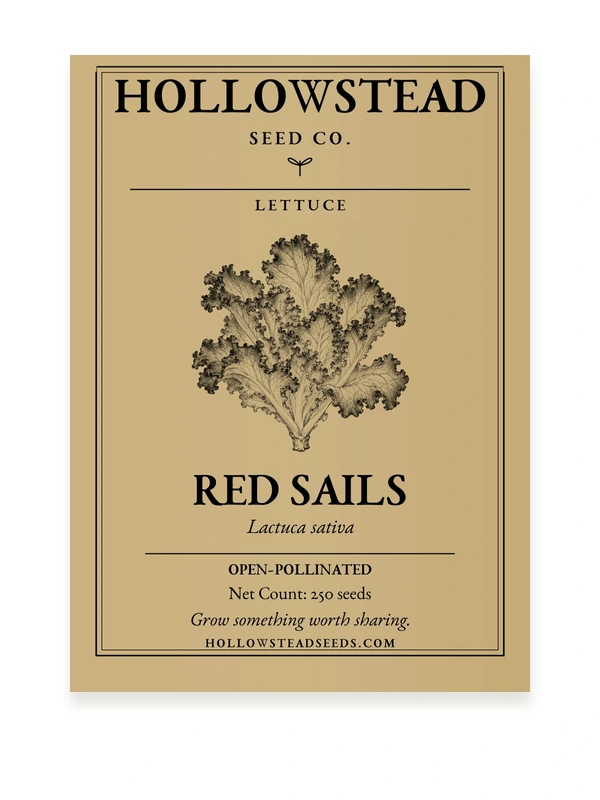
HOLLOWSTEAD SEED
Red Sails Lettuce Seeds
$3.49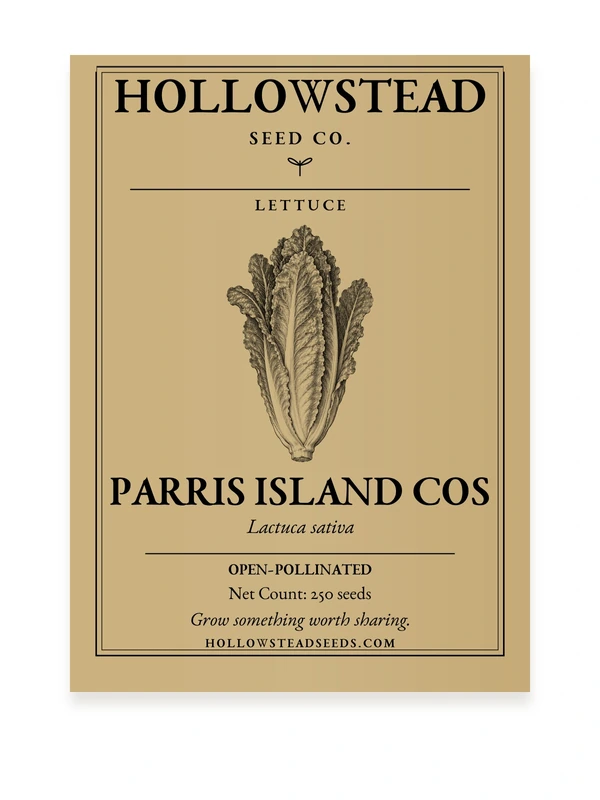
HOLLOWSTEAD SEED
Parris Island Cos Lettuce Seeds
$3.49Frequently asked questions
Does Red Sails form a head?
It forms a loose rosette, not a tight iceberg-style head. You can harvest selected leaves or cut the whole rosette.
When can I start picking?
Hollowstead uses about 45 days from sowing as a planning estimate. Tender leaves can be used earlier when large enough for your purpose; do not wait for a date if quality is already good.
Why do some leaves look green?
Red Sails naturally combines green with bronze-red coloration. Judge the variety by its overall leaf form and growth, and do not treat a green center alone as a deficiency.
Can Red Sails grow all summer?
That depends on your climate and planting conditions. Relative bolting tolerance does not remove lettuce’s cool-season preference; shade and water help but do not guarantee a summer crop.
Will it keep regrowing after harvest?
A plant with an intact growing center can produce more leaves under suitable conditions. The number and quality of later harvests are not unlimited or guaranteed.
How does it differ from Parris Island Cos?
Red Sails has spreading ruffled leaves for loose-leaf harvest. Parris Island Cos grows an upright romaine head and takes longer to reach its main head-harvest stage.
Sources & further reading
- All-America Selections. Lettuce Red Sails: 1985 award and breeder record. https://all-americaselections.org/product/lettuce-red-sails/
- University of Maryland Extension. Growing Lettuce in a Home Garden. https://extension.umd.edu/resource/growing-lettuce-home-garden
- University of Georgia Cooperative Extension. Home Garden Lettuce. https://fieldreport.caes.uga.edu/publications/C1018/home-garden-lettuce/
- Utah State University Extension. How to Grow Lettuce in Your Garden. https://extension.usu.edu/yardandgarden/research/lettuce-in-the-garden
- University of Minnesota Extension. Growing lettuce, endive and radicchio in home gardens. https://extension.umn.edu/garden-and-home/yard-and-garden/gardening-in-minnesota/growing-lettuce-endive-and-radicchio
- University of Maryland Extension. Slugs and Snails: Vegetables. https://extension.umd.edu/resource/slugs-and-snails-vegetables
- University of Minnesota Extension. Aphids in home yards and gardens. https://extension.umn.edu/garden-and-home/yard-and-garden/yard-and-garden-insects/aphids
- Seed Savers Exchange. Growing and saving lettuce seeds. https://seedsavers.org/grow-lettuce/
- University of Maryland Extension. Growing Vegetables in Containers and Salad Tables. https://extension.umd.edu/resource/growing-vegetables-containers-and-salad-tables
Hollowstead Growing Notes
A little help for your next growing season
Practical sowing advice, help choosing seeds, and occasional Hollowstead shop news. Usually one or two emails a month, plus a short welcome note.
Choose your topics and frequency after you confirm. Our guides and planting calendar are always free.