
LETTUCE GROWING
Growing Lettuce From Seed: The Complete Guide
Grow leaf lettuce and romaine from shallow sowing through harvest. Plan for cool weather, choose your harvest style, keep moisture steady, and make room for a second crop.
LettuceSeed startingBeginner → advanced
Published by Hollowstead Seed Co. · How this guide is prepared
Quick answer
Grow lettuce during the cool part of your season, sow shallowly, and keep the seed zone moist until seedlings emerge. Spring and fall usually offer better conditions than a hot summer. Lettuce can handle a light frost, but young plants still need protection from severe cold and abrupt exposure.[1][2]
For Hollowstead’s Red Sails and Parris Island Cos, follow the packet: sow about ⅛ inch deep, allow roughly 7–14 days for emergence in suitable conditions, and give full-size plants about 12 inches of space. Decide whether you want baby leaves, repeated outer-leaf picking, or finished romaine heads before filling the bed.
At a glance
| Decision | Useful starting point |
|---|---|
| Season | Cool spring or fall; use local frost dates and forecasts |
| Germination | A cool seed zone around 60–70°F is a useful starting target |
| Sowing depth | ⅛ inch for the two Hollowstead varieties; follow your packet |
| Mature spacing | About 12 inches for Red Sails or Parris Island Cos |
| Harvest style | Baby leaves, outer leaves, or a whole head |
| Main risk | Heat, drying seedbeds, crowding, and delayed harvest |
Fit lettuce to your local cool season
Start with the season you actually have. In a northern garden, spring lettuce may fit between workable soil and the arrival of sustained heat. In a mild-winter region, the useful window may stretch through fall and winter. At a cool coastal or high-elevation site, summer can remain suitable. A month name alone cannot cover those gardens.
Direct sow in spring when the bed can be worked without making muddy clods. Lettuce can be sown before the average last frost, but check the forecast and have suitable protection ready. Soil that smears onto tools is too wet to prepare well. Waiting for a crumbly surface is more useful than meeting a calendar deadline.[2]
For fall, plan while summer crops are still growing. Count back from a realistic harvest window using the variety’s maturity estimate, then allow extra time for slower growth as days shorten. Starting a tray in a cooler place can bridge a hot outdoor seedbed. The lettuce succession guide walks through this backward planning.
Sow shallowly and keep the seed zone moist
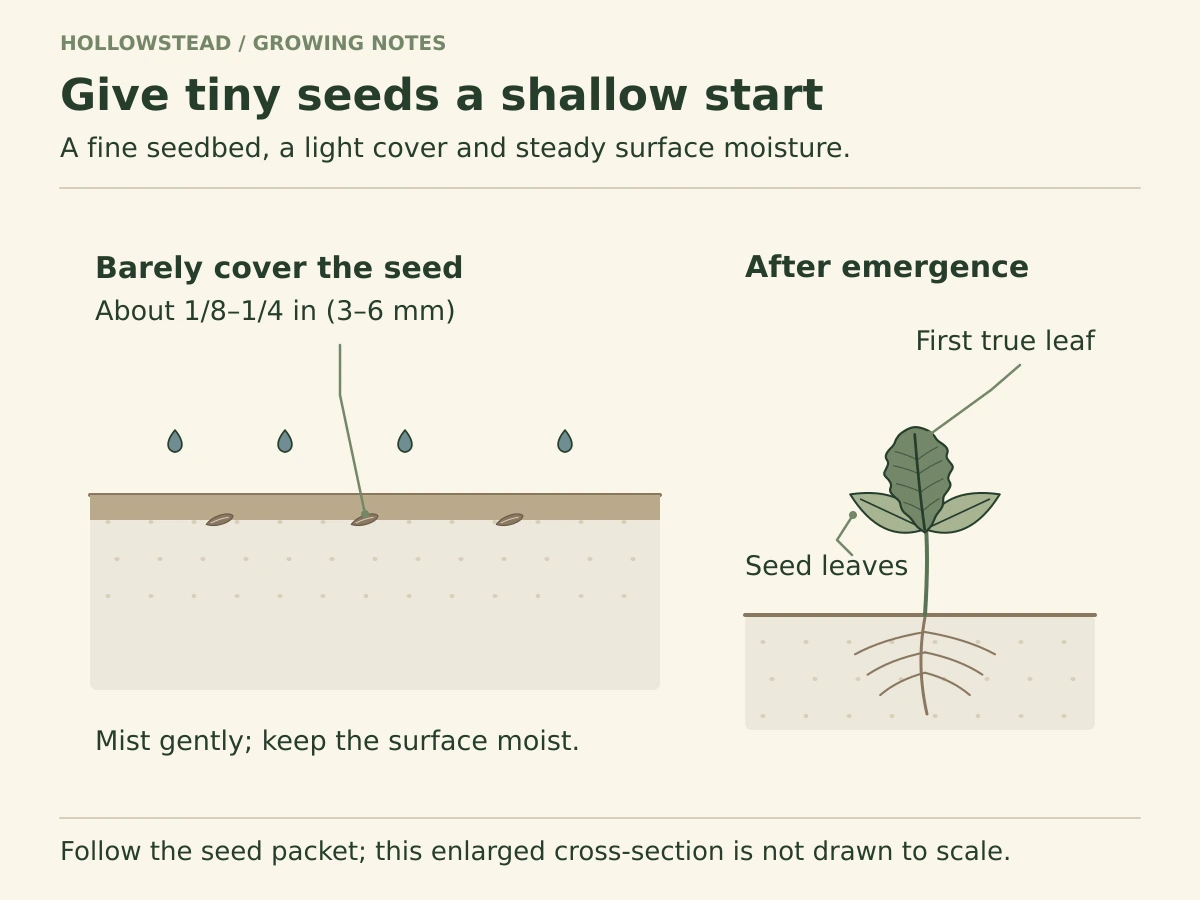
Rake a small area smooth, removing large clods and weeds. Pre-water a dry bed, let excess water drain, then sow thinly. A small pinch of seed is easier to distribute along a short marked row than across an entire bed. Label the row with variety and sowing date before the labels and packets get separated.
Use the packet’s depth. Seed Savers Exchange gives ⅛ inch for lettuce, while other guidance varies with growing conditions; burying these small seeds deeply is a poor way to prevent drying. Light can matter for germination, so avoid a thick cap of soil or opaque material.[3][4]
Firm the surface gently so seed contacts moist particles. Water with a fine rose or gentle spray that does not wash seed into piles. Check the surface often during emergence: a damp bed several inches down can still have a dry seed zone. Keep that thin upper layer moist without leaving a puddle.
 View full-size diagram
If a row stays empty, investigate before sowing more seed into the same conditions. The lettuce germination troubleshooting guide separates temperature, moisture, depth, seed quality, and seedling loss.
Use a short indoor start when it solves a problem
Starting indoors is useful when spring soil is still unworkable or a fall seedbed is too hot. Sow in clean cells of fresh seed-starting mix, keep the mix moist, and provide strong light as seedlings emerge. A lettuce tray generally does not need the same warm setup as a pepper tray. Utah State reports good lettuce germination at 55–65°F and declining germination above 80°F.[5]
Grow compact young transplants and move them outdoors while their roots can still establish readily. Gradually introduce outdoor light, wind, and temperature; check water frequently during that transition. A seedling grown beside a window has not already experienced an exposed garden just because the room was cool.
Water the root ball before transplanting. Make a hole that accepts it without folding the roots, set it at approximately its original growing depth with the leafy crown above the surface, and settle moist soil around it. Keep soil out of the center. Check the plants again that afternoon and the following morning, especially if wind has increased.
Choose a harvest style before you choose spacing
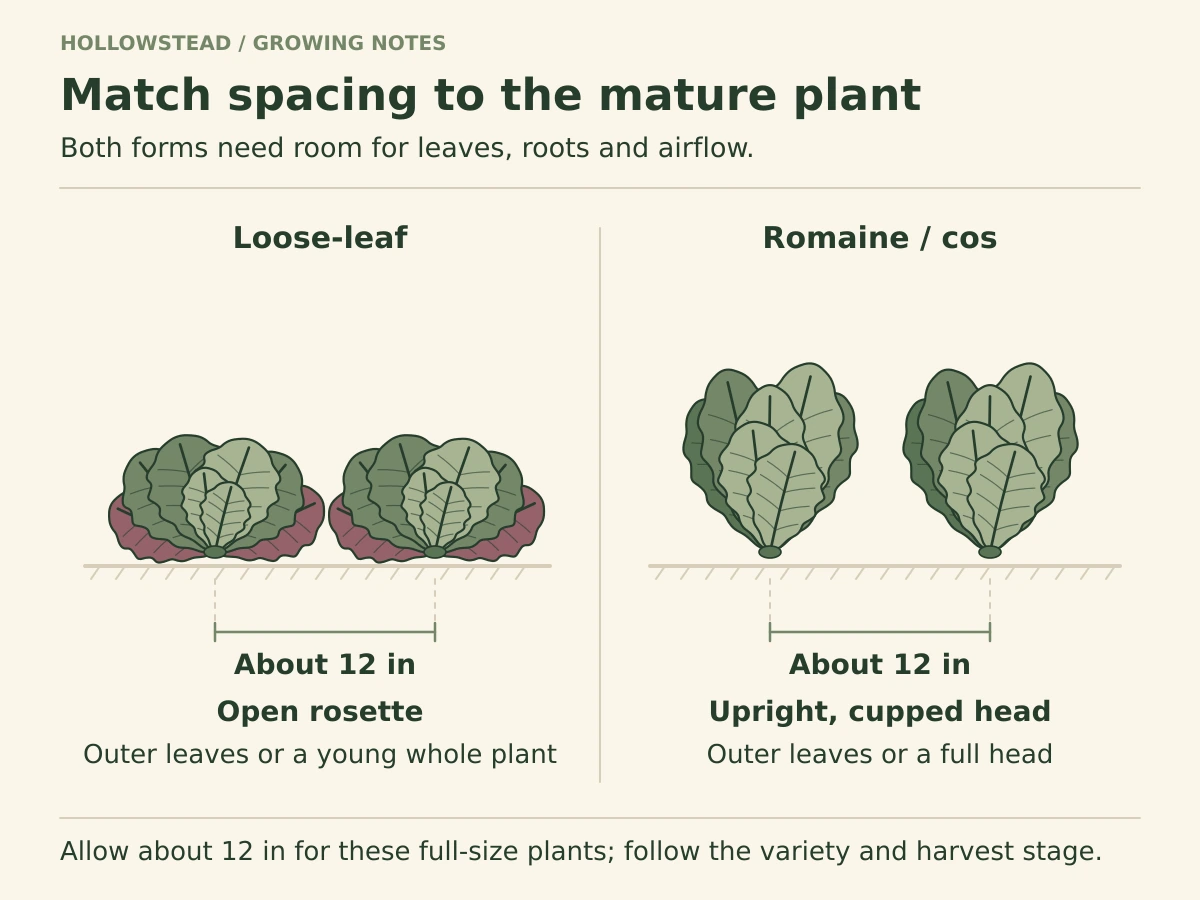
Red Sails makes an open, ruffled rosette; Parris Island Cos develops an upright romaine head. You can pick young leaves from either, but their finished forms call for room. Full-size plants use much more space than a temporary baby-leaf planting.
| Your goal | Planting approach | What happens next |
|---|---|---|
| Baby leaves | Sow a small patch more closely and thin obvious clumps | Harvest young; do not expect every plant to become a full head |
| Repeated outer leaves | Give individual plants their mature spacing | Pick selected outside leaves while the center keeps growing |
| Finished romaine heads | Allow about 12 inches per Parris Island Cos plant | Harvest each head when its leaves have formed a useful upright cluster |
 View full-size diagram
Thin while plants are small. Snipping unwanted seedlings at the soil surface avoids tugging on their neighbors. Leave access for your hands and watering equipment; a bed is not fully planned until you can reach the center without stepping among the roots.
Support steady growth with soil and water
Lettuce needs a well-drained root zone that retains moisture. Use a soil test to guide amendments, and work finished compost into a bed when appropriate. Do not assume a pale or stalled plant needs a large dose of fertilizer: waterlogging, root damage, crowding, and unsuitable weather also restrict growth.[6]
Once seedlings establish, check moisture below the surface and water enough to wet the occupied root zone. The goal is a steady supply, not a permanently soaked bed. Check sandy soil and exposed edges more often. Avoid cultivating deeply beside plants; many feeding roots are close to the surface.[7]
Keep a short record during the first week of hot or windy weather. If one end of the row dries first, adjust watering there rather than flooding the whole bed. A light organic mulch around established plants can help conserve moisture; keep it clear of crowns and watch for slugs beneath it. Containers need their own checks, explained in the container guide.
Harvest while quality is good and prepare the next batch
Start when leaves are large enough for your purpose. For repeat picking, take a few outside leaves and preserve the small central leaves and crown. For a finished head, cut the plant near the soil line. Read the harvest guide before trying a whole-plant cut intended for regrowth; that cut must leave the growing point intact.
Use Hollowstead’s approximate 45-day Red Sails and 65–70-day Parris Island Cos figures as planning estimates from sowing, not appointments. Young leaves come earlier, while cold, shade, or transplant stress can move the finish later. Our days-to-maturity guide explains why the starting point matters.
Plant another small batch before the first one is finished if the weather window allows it. That creates options when one planting matures unevenly. Once a plant develops an elongated flower stalk, replacing it is usually a better salad strategy than trying to keep the old plant young. See bolting and bitterness for the signs.
Use symptoms to choose the next step
| What you see | Check first | Useful next action |
|---|---|---|
| No seedlings | Seed-zone temperature, surface moisture, and sowing depth | Test a small seed sample and correct the seedbed before repeating |
| Thin stretched seedlings | Light, crowding, and overly warm indoor conditions | Improve light and spacing; select sturdy starts |
| Holes or sticky leaves | Undersides, crowns, and signs of actual pests | Identify the culprit using the problem guide |
| Wilting in wet soil | Drainage and root or crown condition | Do not automatically add more water |
| Tall center and bitter leaves | Flower-stalk development and recent heat | Harvest acceptable leaves promptly or replace the crop |
Keep food harvest and seed harvest separate in your plans. If you want to save seed, reserve healthy typical plants and give them a much longer season. Saving lettuce seed explains flowering, isolation, and collection. Store unused packets dry and cool, and test an uncertain lot before committing a short planting window.
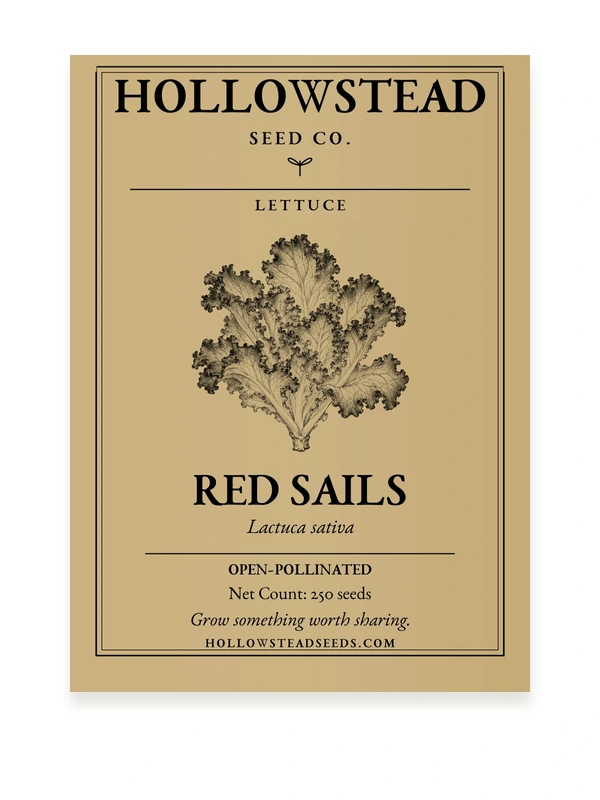
Choose Red Sails lettuce seed for a red loose-leaf planting or Parris Island Cos seed for upright green romaine. Mixing harvest styles is often more useful than sowing every packet at once.
GROW FROM SEED
Put this guide to work.
Choose a variety that fits the way you want to grow and harvest, then use the guide above as your reference through the season.
HOLLOWSTEAD SEED
Red Sails Lettuce Seeds
$3.49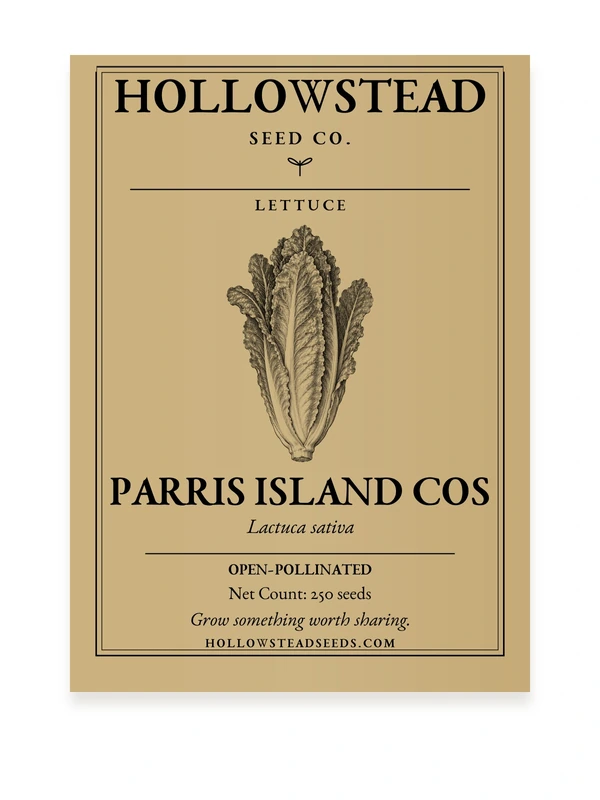
HOLLOWSTEAD SEED
Parris Island Cos Lettuce Seeds
$3.49KEEP LEARNING
Related growing guides
GERMINATION HELP
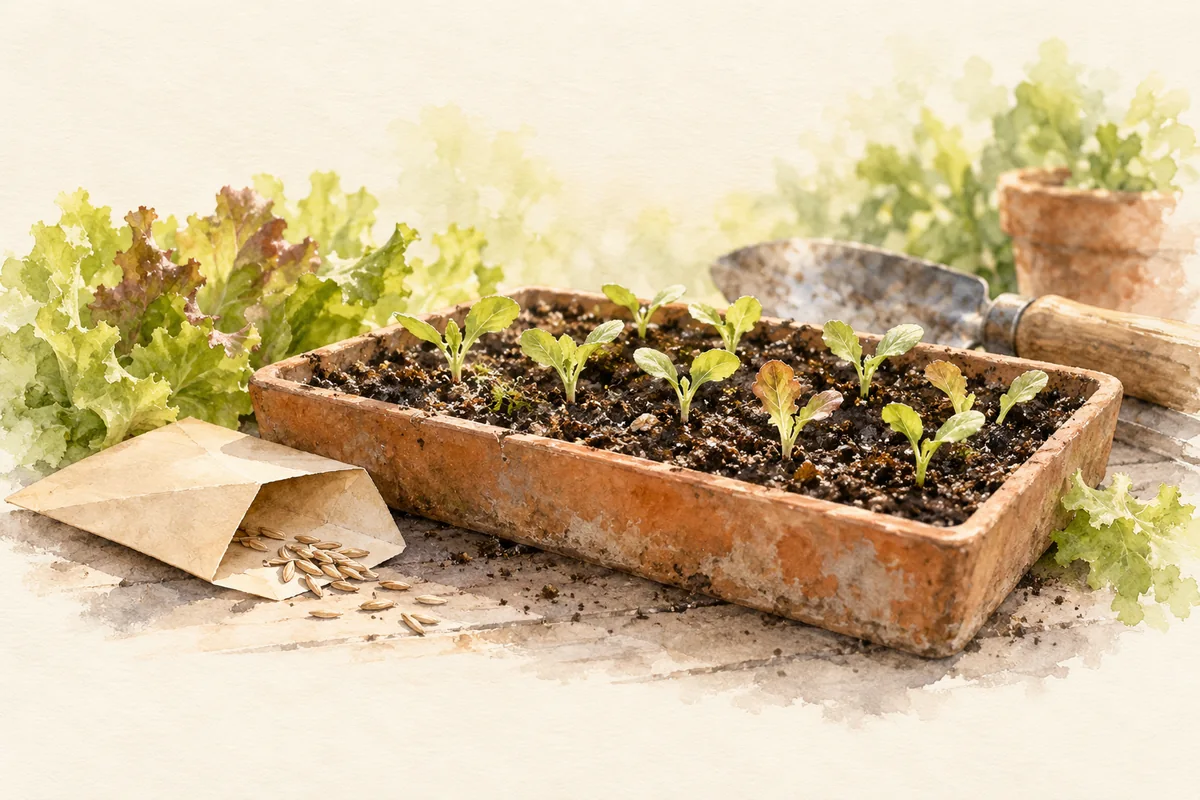
Why Lettuce Seeds Don’t Germinate
Work through lettuce seed failures by checking the seed zone, sowing depth, moisture, and seed lot. Use a small controlled test to decide whether to wait, change conditions, or restart.
Read the guide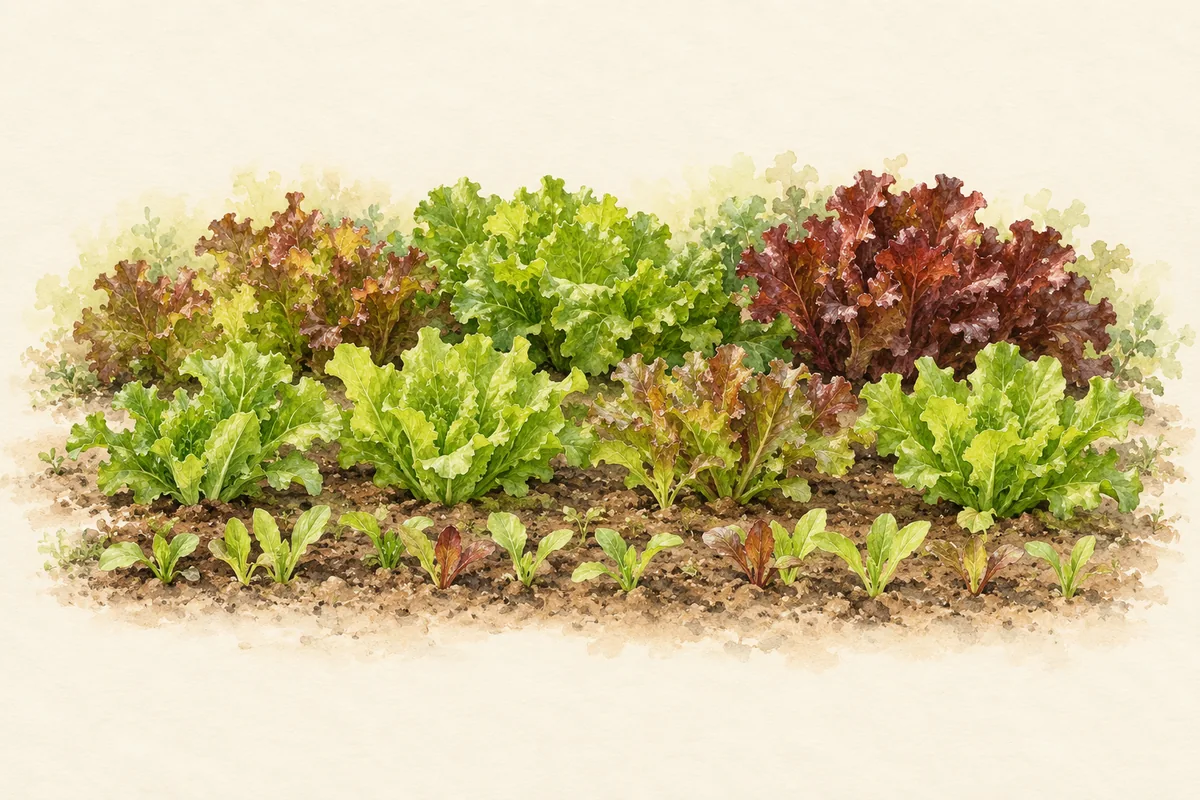
SEASONAL PLANNING
Succession Planting Lettuce for Spring and Fall
Turn lettuce into manageable batches instead of one oversized harvest. Build a flexible sowing cycle, work backward for fall, and adjust the plan to weather, growth, and how much you eat.
Read the guide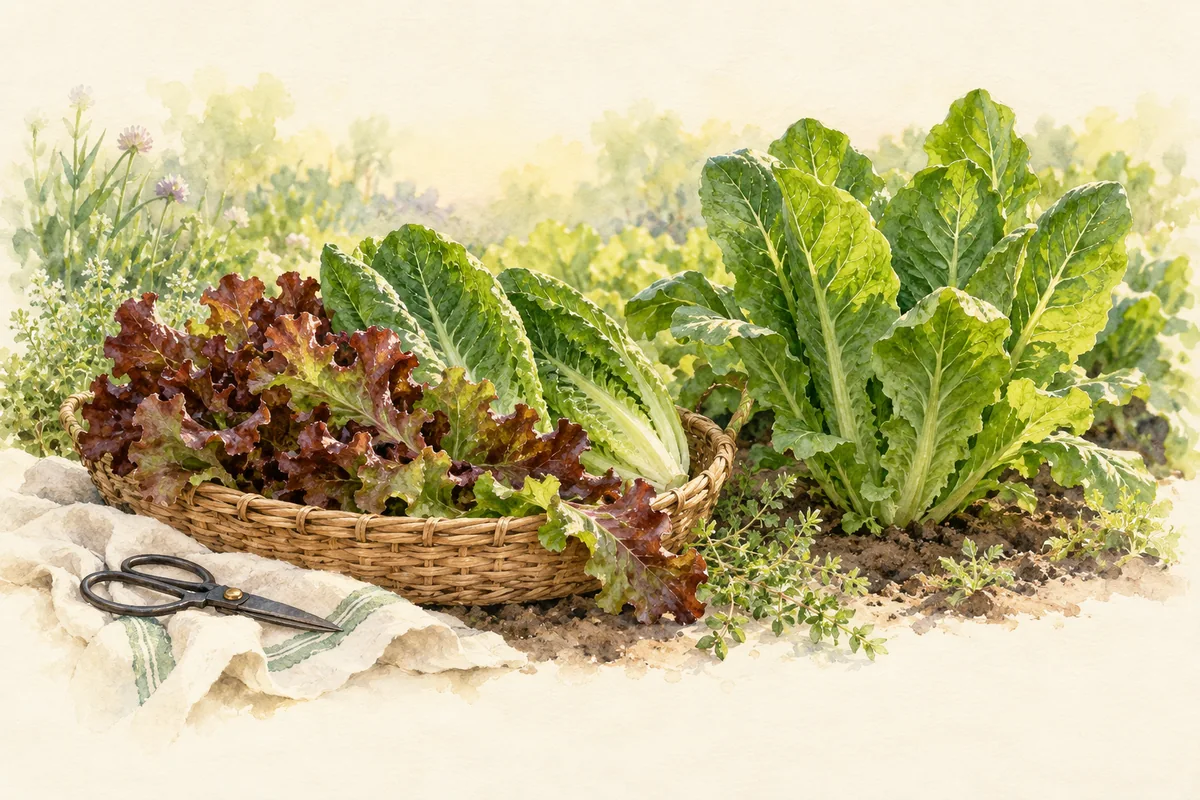
HARVEST GUIDE
How to Harvest Leaf Lettuce and Romaine
Choose between outer leaves, baby-leaf cuts, and finished romaine heads. Learn where to cut, what to leave for regrowth, when quality is slipping, and how to handle fresh lettuce safely.
Read the guideFrequently asked questions
Does lettuce need a heat mat?
Usually not in an ordinary cool room. Measure the growing medium before adding heat; lettuce germination can suffer in a setup kept warm for tomatoes or peppers.
Can lettuce survive frost?
Often a light frost, especially after acclimation. Cold tolerance varies with variety, plant condition, duration, and protection. Use local forecasts and do not treat a light-frost claim as a hard-freeze guarantee.
Can I grow only baby leaves?
Yes. Plan a small planting that you will harvest young, and sow another batch when the season allows. Dense seedlings still need moisture, light, and airflow.
Must I wait for a full head?
No. Leaves can be used earlier. A full romaine head is one harvest choice, while Red Sails remains an open loose-leaf plant.
Sources & further reading
- University of Maryland Extension — Growing Lettuce in a Home Garden
- Iowa State University Extension and Outreach — Growing Leafy Greens in Iowa
- Seed Savers Exchange — Growing Guide: Lettuce
- Iowa State University Extension and Outreach — Germination Requirements for Annuals and Vegetables
- Utah State University Extension — How to Grow Lettuce in Your Garden
- University of Minnesota Extension — Growing lettuce, endive and radicchio in home gardens
- University of Illinois Extension — Lettuce: Home Vegetable Gardening
Hollowstead Growing Notes
A little help for your next growing season
Practical sowing advice, help choosing seeds, and occasional Hollowstead shop news. Usually one or two emails a month, plus a short welcome note.
Choose your topics and frequency after you confirm. Our guides and planting calendar are always free.