
CONTAINER GUIDE
Growing Peppers in Containers
Grow productive peppers in containers with enough root volume, airy potting mix, drainage, sun, steady water, moderate fertilizer, branch support, root-zone heat management, and troubleshooting.
PeppersContainer guideBeginner → advanced
Published by Hollowstead Seed Co. · How this guide is prepared
Quick answer
Use a container with drainage and enough root volume to buffer summer heat and missed waterings. University of Maryland Extension lists 5 gallons as the minimum container volume for peppers. Bigger is often easier, especially for a productive plant in full summer sun.[1]
Fill with potting mix rather than dense garden soil, install support early, water based on the root zone, and expect fertilizer to leach as repeated irrigation moves through the pot.
Container peppers at a glance
| Question | Useful starting point |
|---|---|
| Minimum volume | One plant per pot; about 5 gallons for a full-size pepper, with 10 gallons offering a larger water buffer |
| Best media | Container potting mix; airy and well drained |
| Drainage holes | Required |
| Sun | 6–8 hours direct sun is a strong warm-season target |
| Watering | Check frequently; hot containers may need daily or more |
| Fertilizer | Regular, moderate feeding; follow label |
| Support | Install before fruit load makes the plant top-heavy |
- Volume
- 5 gal minimum; larger buffers stress
- Drainage
- Free-draining holes + airy mix
- Summer check
- Root moisture may change within hours
- Nutrition
- Repeated watering leaches nutrients
- Stability
- Wide pot + early support resist wind
Choose a container with enough volume
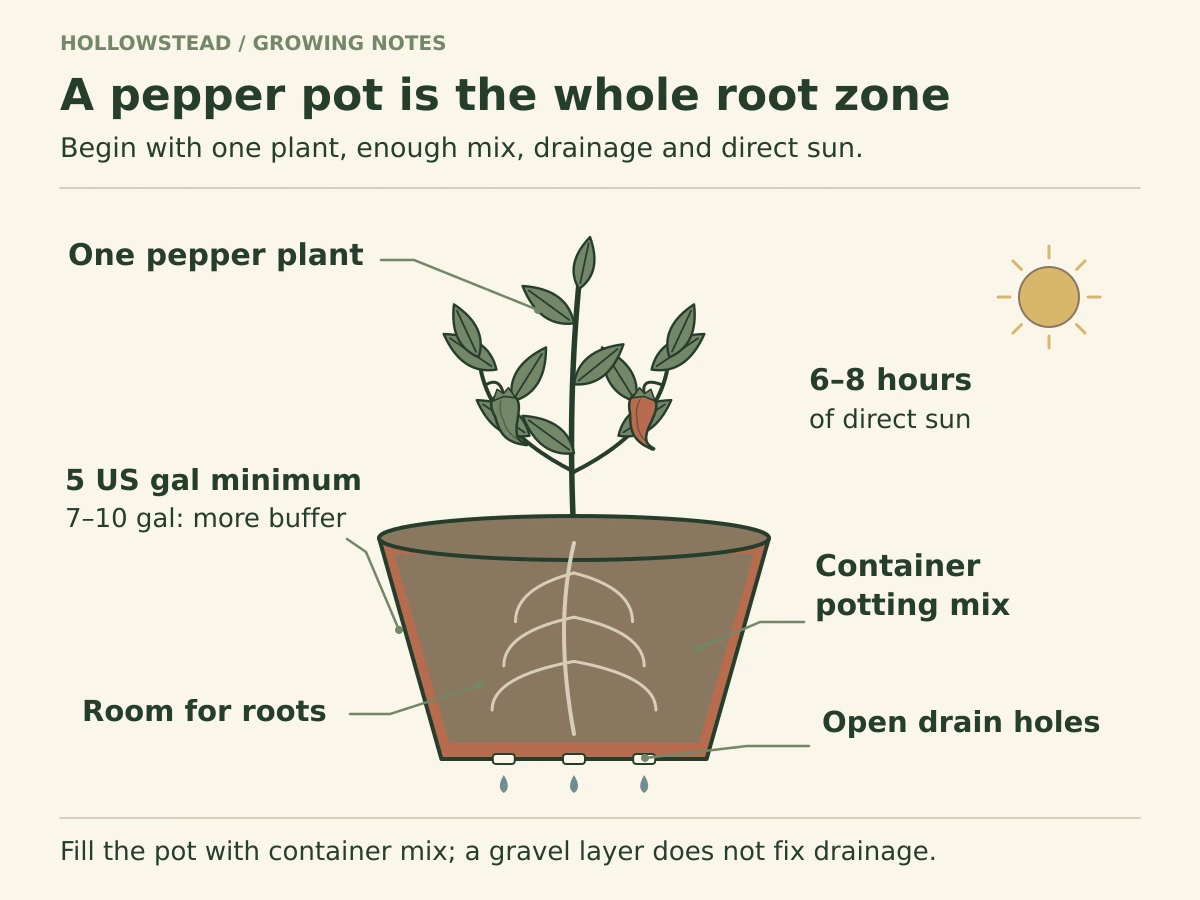
Maryland Extension lists 5 gallons as the minimum for peppers.[1] Think of that as a workable floor, not an ideal maximum. A 7–10 gallon container gives a productive pepper more water reserve, more nutrient-holding capacity, and more physical stability.
Container volume matters more than a marketing label such as “patio pot.” Measure the actual capacity. A narrow decorative planter may look large while holding surprisingly little mix.
 View full-size diagram
Shape, color, and material matter
A wide container is less top-heavy than a narrow container of the same volume; Maryland specifically notes that width can improve stability in wind.[1] Dark plastic exposed to intense afternoon sun can heat the root zone more than a light-colored or shaded pot. Unglazed terra cotta loses moisture more quickly than plastic because water moves through the container wall.
None of those materials is universally best. The “best” container is the one whose water and heat behavior you can manage consistently.
Use potting mix, not dense garden soil
Container roots need both water and oxygen. Potting mix is designed to hold water while draining excess and maintaining pore space. Garden soil in a pot can compact, drain poorly, and become extremely heavy.
Do not improve drainage by filling the bottom with rocks. Maryland Extension advises against gravel, rocks, or pot shards in the bottom because they occupy root volume and can worsen drainage behavior.[1] Cover only very large holes with a porous screen or similar material if mix loss is a concern.
Container peppers need closer watering attention
The pot itself defines the entire root reservoir. During hot, dry weather, Maryland notes that some containers need daily watering, and Minnesota Extension notes that container plants can sometimes require water more than once per day depending on pot size and temperature.[1][2]
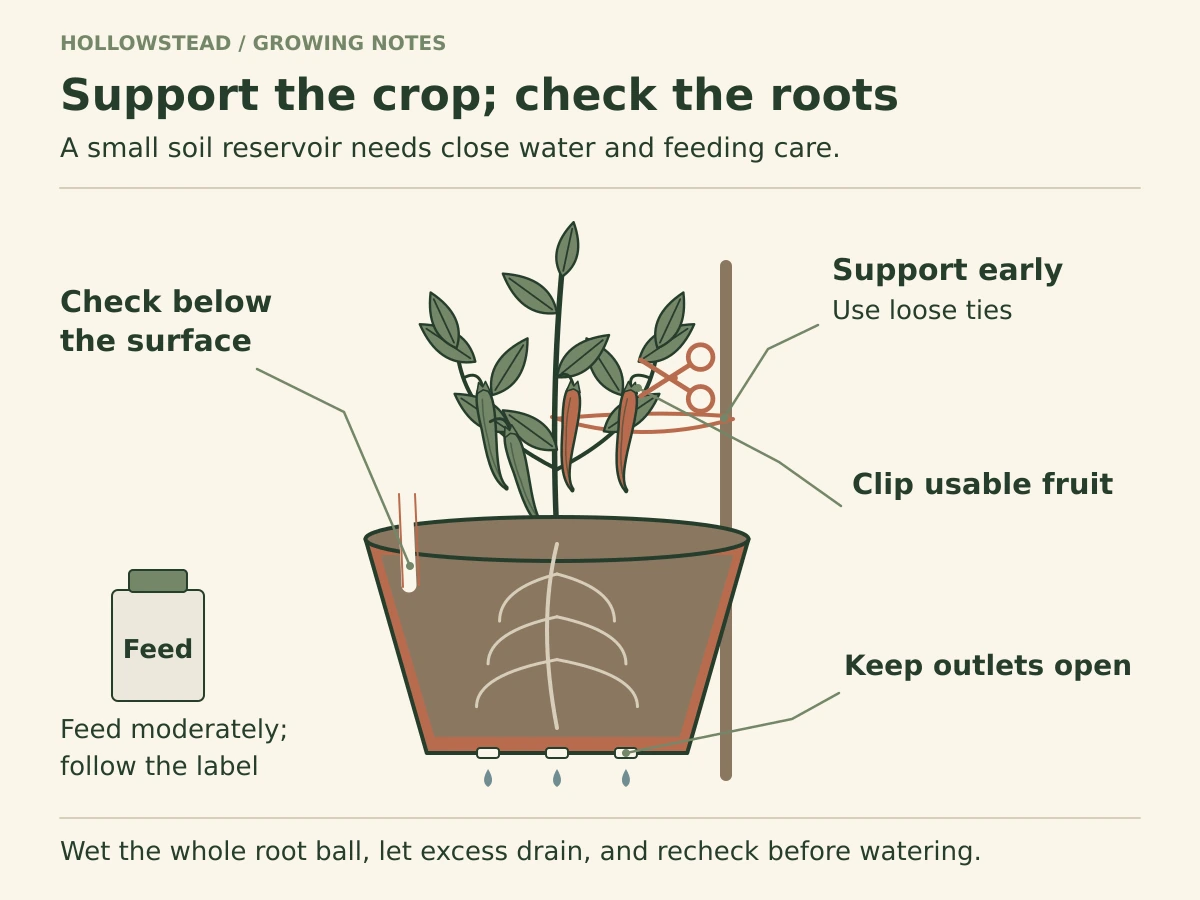
Water until the entire root ball is moistened and excess drains, then check again based on plant demand. Small surface sips encourage a shallow wet zone while lower roots remain dry. Constant saturation causes the opposite problem: oxygen disappears from pore spaces.
Mulch can reduce evaporation from the surface. Drip emitters are useful for consistent watering, but still inspect the root ball—an emitter can clog or water only one narrow channel.
For a dark, sunken patch at the blossom end of a fruit, use the blossom-end-rot diagnosis and prevention guide before adding a supplement.
Fertilize regularly, but moderately
Repeated irrigation washes soluble nutrients out of containers. Minnesota Extension recommends regular fertilizer applications for container plants after establishment, with timing depending on the potting mix, watering frequency, and plant growth.[2]
Follow the label instead of stacking multiple fertilizers. Excess nitrogen can create lush pepper foliage at the expense of timely fruiting.[3] If a plant is green and vigorous but not setting during hot nights, fertilizer is unlikely to solve the weather.
Support heavy plants before they lean
Pepper stems can become semi-woody and brittle. A short cage, stake, or ring support installed at planting is easier than threading branches through support after fruit load develops. Maryland recommends support because stems can be brittle; Missouri notes that staking also helps maintain canopy coverage and reduce sunscald.[3][4]
 View full-size diagram
Watch container heat as well as drought
A pot on asphalt, concrete, or against a heat-reflecting wall can experience conditions much harsher than a pepper planted several feet away in soil. During extreme heat, move a portable pot away from reflected afternoon heat or shade the container while keeping the foliage in adequate sun.
Maryland’s current container guidance uses 6–8 hours of direct sun as a warm-season crop target and notes that pots can be moved to moderate summer heat stress.[1] The objective is not to grow peppers in deep shade—it is to prevent an artificial heat trap around the roots and fruit.
Matching variety to container
Both Hollowstead peppers can be grown in containers, but they use the space differently. Fish Pepper is compact and decorative, making it especially attractive on a patio. Jimmy Nardello stays manageable but can carry a heavy crop of long fruit, so early branch support is useful.
| Variety | Container strength | Watch for |
|---|---|---|
| Jimmy Nardello | Manageable plant; productive; easy harvest | Branch load, steady water during fruit fill |
| Fish Pepper | Compact + ornamental foliage | Do not mistake normal variegation for deficiency; protect canopy |
Container pepper troubleshooting
End-of-season choices
Peppers are perennial in frost-free climates but are usually treated as annuals in cold-winter gardens. At season end you can harvest remaining fruit and discard/compost healthy plant material, or experiment with overwintering a favorite plant indoors.
Overwintering is not free preservation: inspect carefully for aphids, mites, whiteflies, and disease before bringing a garden plant into the house. A plant that spent the season fighting root or foliar disease is usually a poor candidate.
If reusing the container next year, remove old roots, wash the pot, and refresh or replace exhausted media rather than assuming last year’s root ball is an ideal new seedling bed.
GROW THESE PEPPERS
Put the guide to work.
Fish Pepper is the ornamental standout; Jimmy Nardello gives a patio grower a surprisingly productive crop of long sweet frying peppers.
HOLLOWSTEAD SEED
Jimmy Nardello Sweet Pepper Seeds
$4.49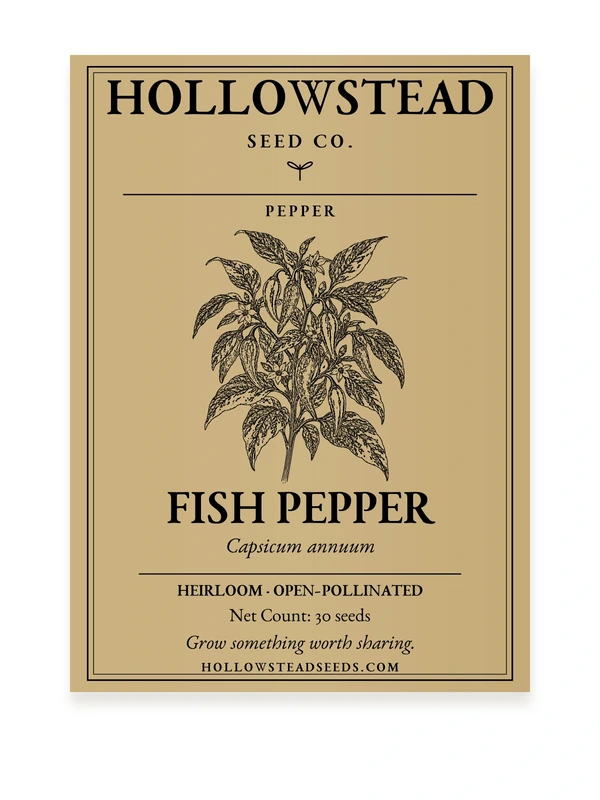
HOLLOWSTEAD SEED
Fish Pepper Seeds
$3.99KEEP LEARNING
Related Hollowstead guides
PEPPER SEED STARTING
Growing Peppers From Seed: The Complete Guide
Grow peppers from seed through harvest with warm germination, strong seedlings, soil preparation, transplant timing, steady moisture, sensible fertility, fruit-set troubleshooting, disease prevention, and harvest care.
Read the guide
PEPPER VARIETY GUIDE
Jimmy Nardello Pepper Growing Guide
Grow Jimmy Nardello from warm seed start to fully red harvest, with variety-specific guidance on growth habit, support, watering, fruit load, containers, frying quality, and seed saving.
Read the guide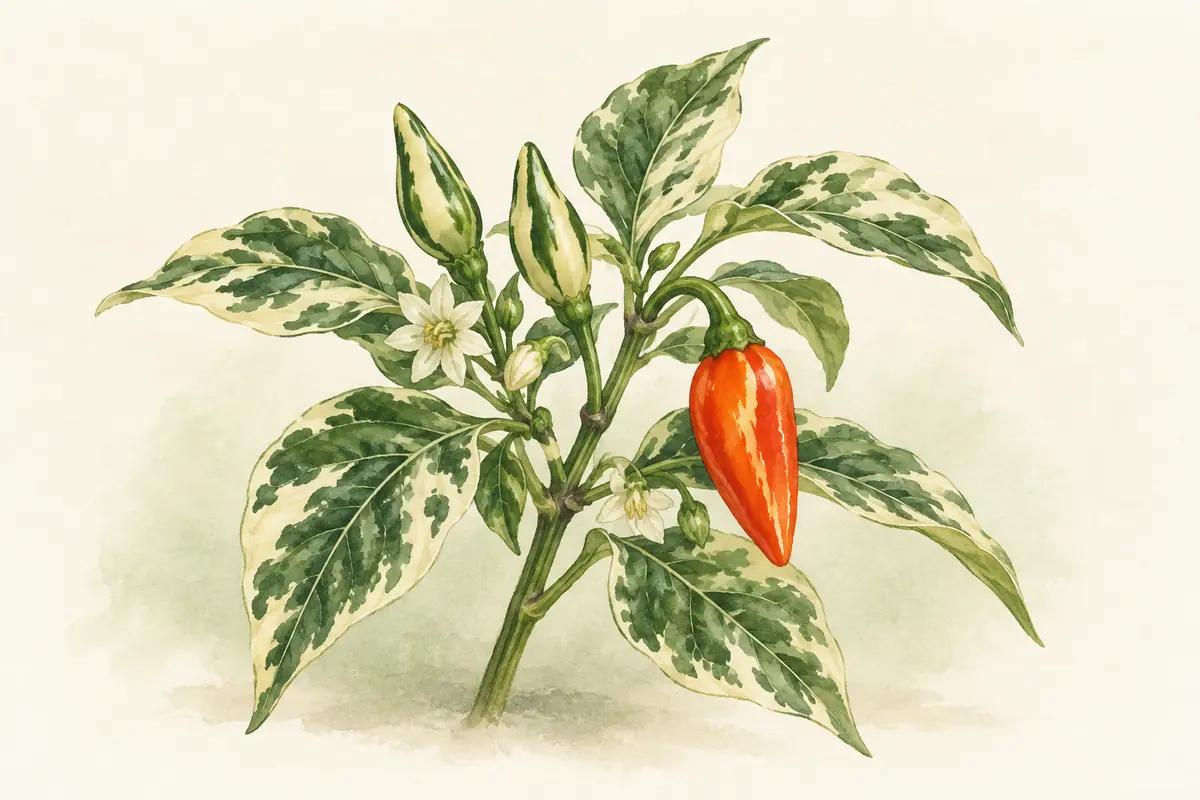
PEPPER VARIETY GUIDE
Fish Pepper Growing Guide
Grow Fish Pepper with guidance on its normal variegation, warm seed starting, compact habit, canopy care, multicolor harvest stages, containers, Chesapeake history, and seed saving.
Read the guideFrequently asked questions
Is a 5-gallon bucket big enough for a pepper?
Yes, five gallons is a practical Extension minimum for peppers. A larger container is often easier to keep evenly watered and stable.
Can I use garden soil in a pepper pot?
Use container potting mix instead. Garden soil can compact and drain poorly in a confined pot.
How often should I water a potted pepper?
There is no fixed schedule. Check the root zone; during hot dry weather some containers need water daily or even more often.
Do container peppers need fertilizer?
Usually yes over a long season because repeated watering leaches nutrients. Feed at measured label rates and avoid pushing excessive nitrogen.
Sources & further reading
- University of Maryland Extension Growing Vegetables in Containers and Salad Tables https://extension.umd.edu/resource/growing-vegetables-containers-and-salad-tables
- University of Minnesota Extension Fertilizing and watering container plants https://extension.umn.edu/garden-and-home/yard-and-garden/gardening-in-minnesota/fertilizing-and-watering-container-plants
- University of Maryland Extension Growing Peppers in a Home Garden https://extension.umd.edu/resource/growing-peppers-home-garden
- University of Missouri Extension Growing Sweet Peppers in Missouri https://extension.missouri.edu/publications/g6372
Hollowstead Growing Notes
A little help for your next growing season
Practical sowing advice, help choosing seeds, and occasional Hollowstead shop news. Usually one or two emails a month, plus a short welcome note.
Choose your topics and frequency after you confirm. Our guides and planting calendar are always free.