
BEAN VARIETY GUIDE
Royal Burgundy Bush Bean Growing Guide
Royal Burgundy is a compact purple-podded snap bean that needs no climbing trellis. Learn when to sow it, how the bush habit changes garden planning, when to harvest, and why the pods turn green when cooked.
BeansVariety guideBeginner → advanced
Published by Hollowstead Seed Co. · How this guide is prepared
Quick answer
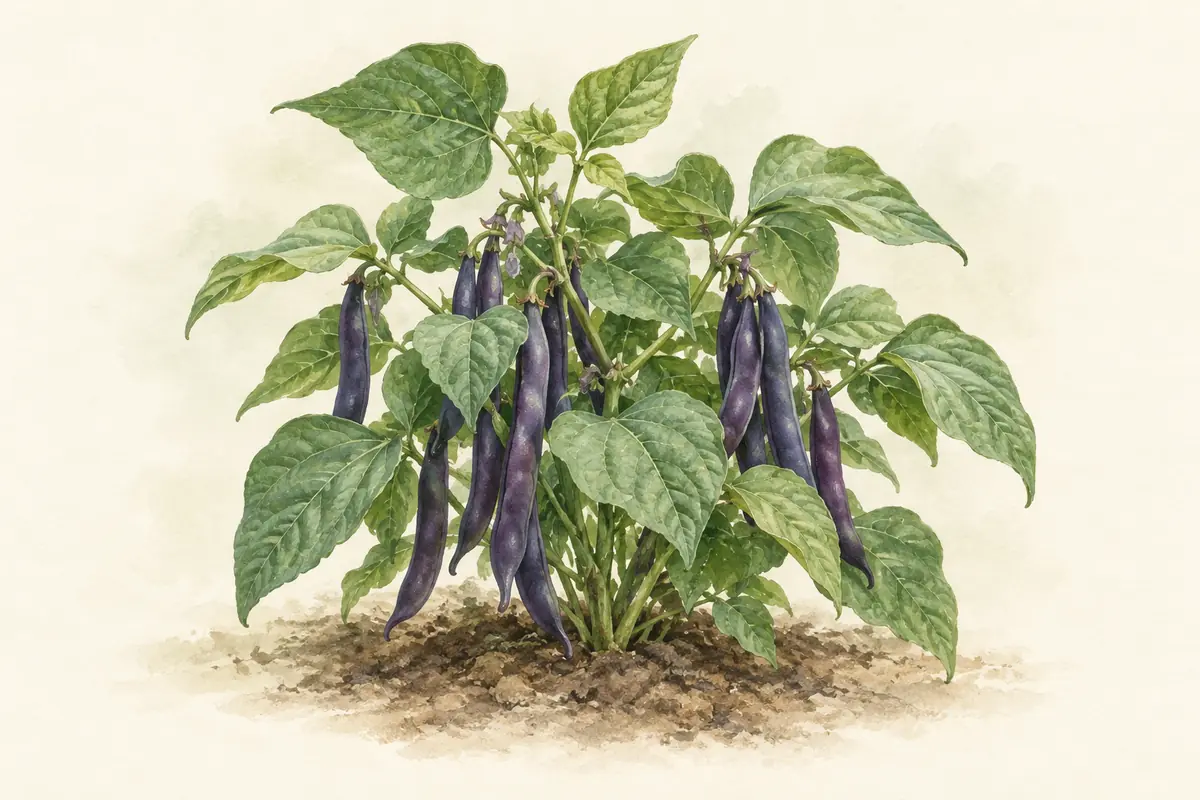
Royal Burgundy is a compact purple-podded bush snap bean. It does not need a climbing trellis, produces a relatively concentrated harvest, and is best picked while pods are crisp and seeds are still small. Purple pods turn green during cooking—a normal trait of purple snap beans, not a sign that the variety was mislabeled.[1][2]
Best use: a compact, easy-to-see bush bean for beds and containers. Sow into warm soil, keep flowering plants evenly moist, harvest young pods frequently, and succession-sow if you want a longer season.
Royal Burgundy at a glance
| Species | Phaseolus vulgaris |
|---|---|
| Habit | Bush |
| Pod color | Purple raw; green after cooking |
| Typical pod length | About 5–6 inches in university variety references |
| Support | No climbing trellis required |
| Harvest rhythm | Concentrated compared with pole beans |
| Seed saving | Let selected pods mature fully and dry |
| Current listing maturity | About 50–65 days from sowing to snap harvest |
| Sowing | 1 inch deep; 4–6 inches between plants |
- Habit
- Compact bush
- Soil
- Warm + well drained
- Harvest
- Before seeds bulge
- Succession
- Useful for a longer supply
- Seed crop
- Reserve pods past eating maturity
- SowDirect sow after frost danger when soil has warmed.
- Build the bushKeep weeds down shallowly and avoid overfeeding with nitrogen.
- Flower and setMaintain even moisture through bloom and pod sizing.
- Pick repeatedlyHarvest purple pods while crisp and before seeds swell.
- Save seedLeave selected healthy pods until dry and brittle.
SAVE FOR SOWING DAY
Five-step crop plan for Royal Burgundy
Open the sow-to-harvest plan
- StartPrepare a warm seedbed after frost; direct sow 1 inch deep when common-bean soil is roughly 60–65°F or warmer. Guide details
- PlantPlace seeds 4–6 inches apart in reachable short rows; thin to the intended spacing after emergence. Guide details
- MaintainKeep flowering rows evenly moist and weed shallowly; a low string may brace leaning bush stems. Guide details
- HarvestPick crisp, filled purple pods before pronounced seed bulges; purple turning green in cooking is normal. Guide details
- Next sowing or seedFor later beans, sow another short row while suitable warmth remains; reserve marked pods separately until dry for seed. Guide details
- Space
- No climbing trellis; 4–6-inch in-row spacing and access alongside each bush row.
- Timing
- Current listing: about 50–65 days from sowing to snap harvest; one bush sowing makes a concentrated flush, while another sowing depends on remaining frost-free warmth.
Full growing guidehttps://hollowsteadseeds.com/royal-burgundy-bush-bean-guide/Seed packethttps://hollowsteadseeds.com/product/royal-burgundy-bush-bean-seeds/Find planting dates by ZIP code
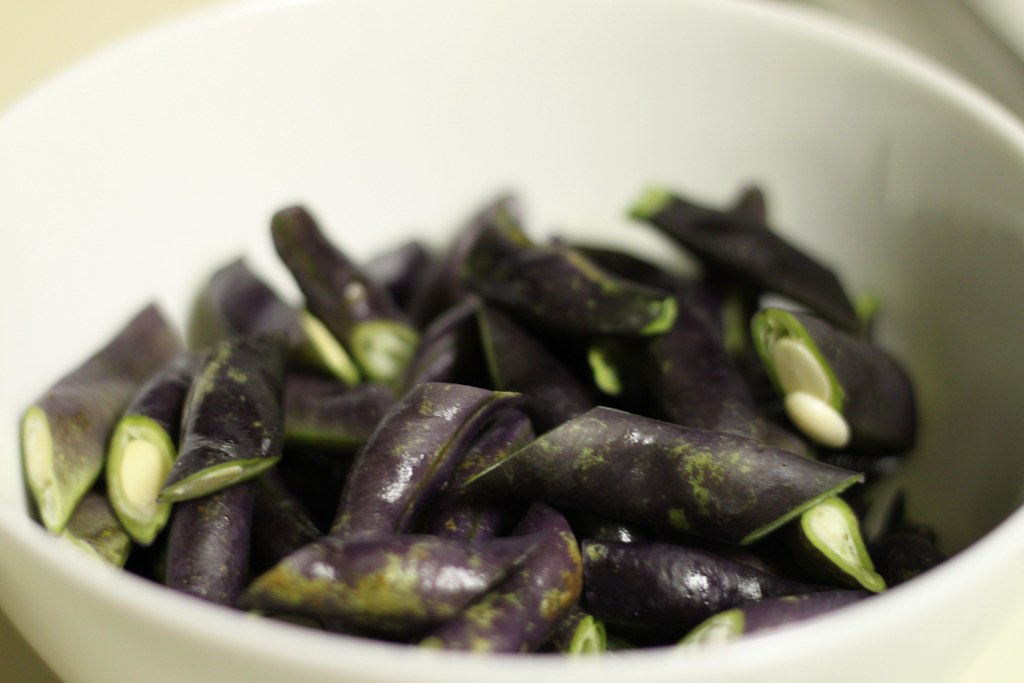
Variety reference photo
What makes Royal Burgundy different?
Royal Burgundy is a purple-podded bush common bean. Utah State includes Royal Burgundy among recommended bush bean varieties, while Cornell’s vegetable variety database describes purple 5–6-inch pods that become bright green when cooked.[1][3]
The purple color is practical in the garden: pods contrast strongly against green foliage, making harvest easier to spot. It does not change the basic snap-bean rule—quality is best before the seeds become strongly developed inside the pod.
How to plant Royal Burgundy
Direct sow after frost danger when soil is warm. Minnesota and Utah State both recommend planting common beans only after the soil has warmed; roughly 60–65°F is a useful minimum range for reliable emergence, with faster emergence as the seedbed warms further.[2][8]
Plant 1 inch deep and 4–6 inches apart, following the current Hollowstead listing. Maryland’s 2–4-inch spacing describes denser generic bush-bean rows; the wider shop recommendation gives this planting more airflow and easier picking.[4]
For common beans, Utah State gives 7–10 days to emergence in 65–85°F soil. Cooler conditions can take longer. If stations stay empty, inspect a seed before watering more: firm unsprouted seed and soft rotted seed call for different responses.[8]
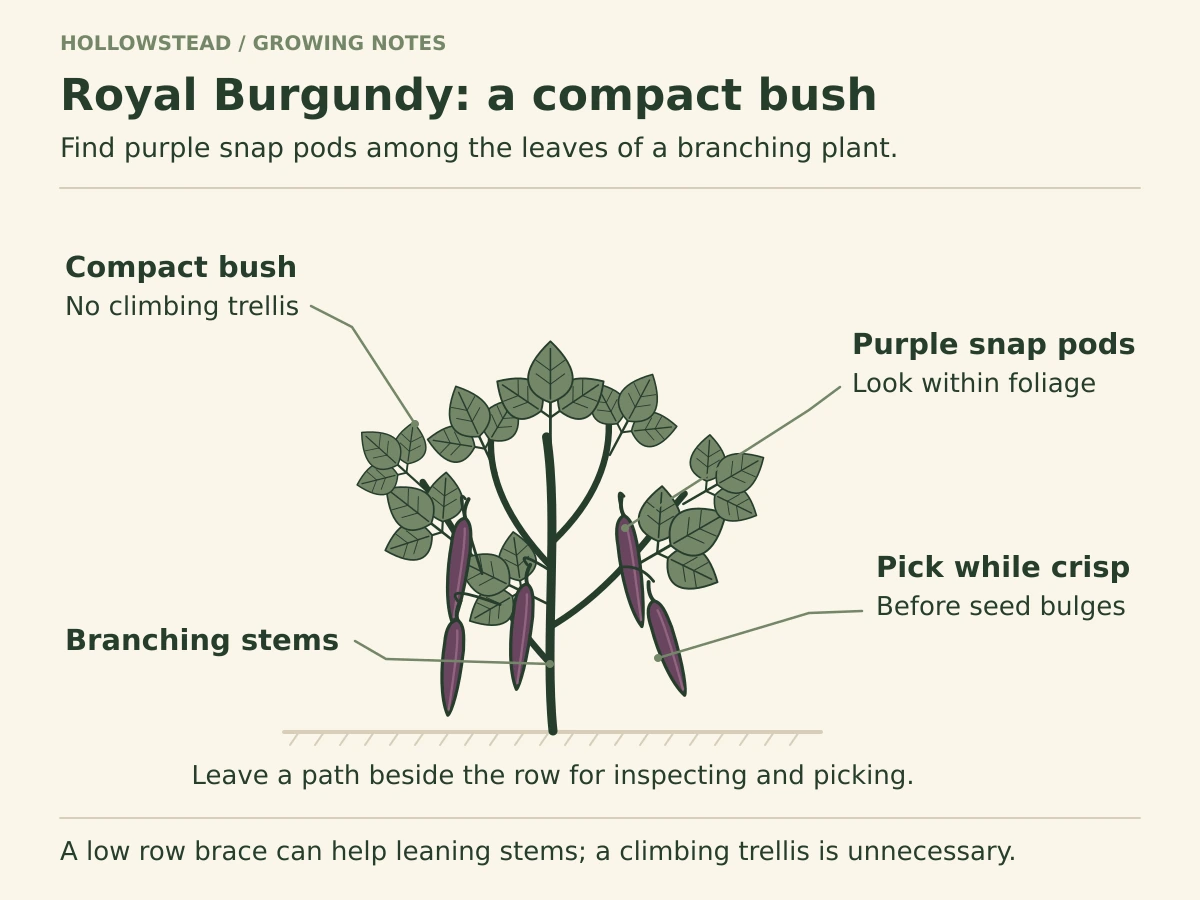 View full-size diagram
Plant architecture, spacing, and support
Royal Burgundy carries its crop on a compact bush. Keep the 4–6-inch spacing and an accessible path beside the row; plants crowded into a solid thicket are harder to pick clean. In an exposed bed, a low string along the row can support stems that lean after wind or rain. It is a simple brace, not a climbing trellis.
For a reachable bed, sow at the stated in-row spacing in two short rows and leave a path wide enough to inspect and pick both sides. A bush plant carries a concentrated flush; a later short row is the way to extend supply while the season remains warm.
Change the job as the row develops
| Stage | What to check | Useful action |
|---|---|---|
| Seedlings emerge | Crowding, missing stations, and a crusted soil surface. | Thin to the intended spacing and weed shallowly. Inspect a failed station before re-sowing; extra water will not repair rotten seed. |
| First flowers | Soil moisture below the surface, especially through a dry spell. | Make watering reliable before pods start sizing. Avoid an extra nitrogen feed simply because you want a bigger crop. |
| First full-size pods | Tenderness and seed bulges on several plants, not just the earliest bush. | Set a picking rhythm and check the whole row. A bush crop can move through its best stage quickly. |
| Main picking slows | Whether new flowers remain and whether pods were missed. | Remove overlooked eating pods and assess the next sowing; a declining bush row has a different rhythm from a pole-bean vine. |
These decisions follow Extension guidance on root disturbance, bloom-stage moisture, nitrogen, and the shorter production period of bush beans. [4] [8]
Harvest quality and the purple-to-green color change
Start checking when pods approach the variety’s usual 5–6 inches, then use texture and seed development to decide. The best snap pod is firm and fleshy, with the seeds still small; a strongly bulging pod is already moving away from the juicy eating stage. [3] [2]
| What the pod is doing | How to use the cue |
|---|---|
| Slender, with little flesh yet | You can pick small pods, but waiting for more pod development gives a fuller snap-bean harvest. Check again soon rather than using color as the deciding test. |
| Crisp and filled out, without obvious seed bumps | Pick for snap beans. Compare a few pods during the first harvest so you learn the useful stage in your own weather. |
| Distinct seed bulges, fibrous walls, or drying skin | Past the best snap stage. Keep only deliberately selected pods for a seed crop; remove forgotten eating pods from the row. |
Purple fades to green in cooking as the heat-sensitive purple pigments lose their prominence. That normal change does not by itself tell you the texture you prefer: sample a pod during cooking instead of using color as the whole test. [2]
Royal Burgundy: pick the pod, plan the next row
- Pick crisp purple pods while fleshy and before the seeds visibly bulge; smaller pods can be eaten, too.
- Check the whole bush every day or two during its main flush. Frequent picking catches tender pods, but a bush planting does not produce all season.
- Sow a separate small batch in suitable warm soil if you want a later supply. The purple pods normally turn green when cooked.
Succession sowing for a longer harvest
Plan a second row while the first is young. Maryland describes roughly three weeks of production for a typical bush-bean planting, while Utah State recommends sowings about 14–21 days apart. The interval is a useful starting point, not a promise that two rows will never overlap. [4] [8]
- Choose the job. A single larger sowing is convenient for a batch of beans; two smaller sowings spread the picking work.
- Reserve a separate strip of soil. Do not wait for the first row to finish before finding room for the next one.
- Check the end of the season. Count back from likely frost using the upper end of the 50–65-day listing, then allow extra time for cooler growth and more than one picking.
- Adjust to summer heat. If your first planting drops blossoms during hot, dry weather, record that period and use local planting guidance when timing the next crop.
Iowa State describes staggered snap-bean sowings for a longer season, but its calendar dates are regional. A Missouri fall planting and a northern summer planting need different cutoff dates. Keep your own sowing and first-picking notes. [5]
Crop rhythm, kitchen planning, and resistance
Choose Royal Burgundy for compact rows and a substantial picking wave. If you have sustained heat, a strong trellis, and want to keep visiting a climbing crop, compare Red Noodle yardlong bean. It is a Vigna cowpea relative with different heat requirements and pod texture; Royal Burgundy is a Phaseolus snap bean. [2]
Cornell’s variety record groups Royal Burgundy under Royal Purple Burgundy/Royalty Purple Pod names and lists resistance to common bean mosaic virus. [3] Treat the entry as cultivar background, rather than a laboratory result for an offered seed lot. Blights, root problems, mites, and weather stress still call for ordinary scouting and care.
Can Royal Burgundy grow in containers?
A useful planter example is 24 inches long × 12 inches wide with 12 inches of usable mix depth—about 15 gallons of actual root volume. Keep eight plants in two staggered rows of four, about 6 inches apart along each row and 6 inches between rows. Thin extras at soil level. Use container mix, clear drainage holes and a low perimeter string if wind pushes plants over. Maryland lists two gallons as a minimum bush-bean category; this shared planter deliberately provides more room for a small crop.[7]
From picking to the kitchen
Hold the stem while removing a pod so you do not uproot the shallow-rooted bush; pick when foliage is dry. Cool the harvest promptly, refrigerate in a perforated bag, and use within about a week for best snap quality. Wash just before preparation. Use tested blanching/freezing or pickling instructions for a larger batch; a fresh snap bean and a fully dried storage bean need different preservation methods. See bean harvest and storage.
When the row disappoints
| Symptom | Check first | Next action |
|---|---|---|
| Empty stations after the expected emergence window | Excavate one seed. Is it firm, rotten, or trapped below a crust? | Correct moisture or the crust before re-sowing into warm soil. Do not keep saturating an empty row. |
| Plenty of leaves, few flowers | Recent nitrogen feeding and whether the row gets full sun. | Pause extra nitrogen and assess the site; foliage growth alone is not proof that more feeding is needed. |
| Flowers drop before pods form | Recent heat and whether the root zone dries between waterings. | Restore even moisture and watch new flowers after the weather improves. Existing fallen flowers cannot be recovered. |
| Pods feel stringy or tough | Seed bulges, the interval since your last picking, and recent drought. | Pick the next flush younger and keep moisture steady. More water will not make an old pod young again. |
| Spots, distorted growth, or plants that wilt in moist soil | Check leaves, stems, roots, and nearby insects rather than relying on pod color. | Use the Extension diagnosis resources before feeding or spraying. Avoid handling the row while the foliage is wet. |
Common-bean care and diagnosis references: [2] [6] [8]
Saving Royal Burgundy seed
Mark healthy, typical plants while the row is still performing well, before the final overlooked pods become your only choices. For ongoing variety maintenance, save from 5–10 plants when space allows; one plant can make viable seed but preserves a narrower sample. Record the original source/lot, year, and selected parents before shelling. [6]
Keep the line apart from other flowering Phaseolus vulgaris beans. Common beans usually self-pollinate, but insects can move pollen; Seed Savers recommends 10–20 feet between varieties for ordinary home saving, with more conservative separation when preservation matters. Red Noodle is a different species and is not the main crossing concern. [6]
Select seed parents before the row declines
Reserve some pods on the marked plants and let them mature beyond eating quality until dry and brittle. Shell only fully developed seed, finish drying with airflow, and store it only when hard and thoroughly dry. If autumn turns cold and wet, mature plants can finish drying under cover; an immature snap pod is not ready merely because it later shrivels. [2] [6]
Give seed pods their own job. Keep labels on the selected plants while you continue picking the rest for the kitchen. Eating maturity and seed maturity are separate endpoints.
GROW ROYAL BURGUNDY
Put the guide to work.
Royal Burgundy gives you a compact bush habit and purple snap pods without dedicating garden space to a climbing trellis.
Read Our Story for our seed-sourcing approach, or ask about the offered lot.
HOLLOWSTEAD SEED
Royal Burgundy Bush Bean Seeds
$4.49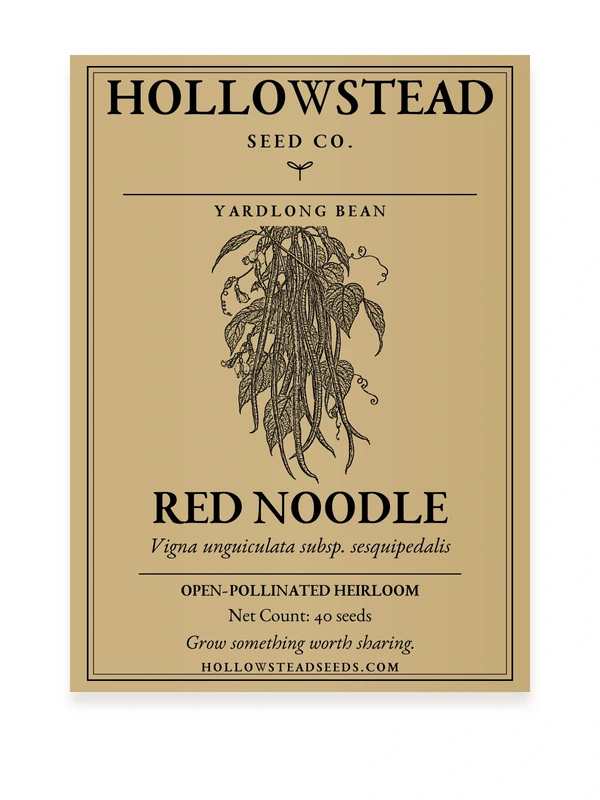
HOLLOWSTEAD SEED
Red Noodle Yard Long Bean Seeds
$4.49KEEP LEARNING
Sourced grower observations
The North Dakota Home Garden Variety Trials compared Royal Burgundy with Royalty Purple Pod at 24 sites in 2010 and eight in 2011. The report found the entries broadly similar, with a modest earliness advantage for Royal Burgundy in the combined results; individual growers also disagreed about texture, and some reported tough strings. [9] The practical lesson is to check several young pods at your first picking and adjust the interval to your own crop.
In a 2015 Victory Seed review, Tessa Garry described a late-May raised-bed sowing in Alaska, slow early progress, and a good later crop. Her experience shows why local seasonal pace matters, while the trial’s mixed texture reports show why a variety name cannot replace a harvest check. These are attributed experiences from those gardens, not Hollowstead trial results.
Related Hollowstead guides
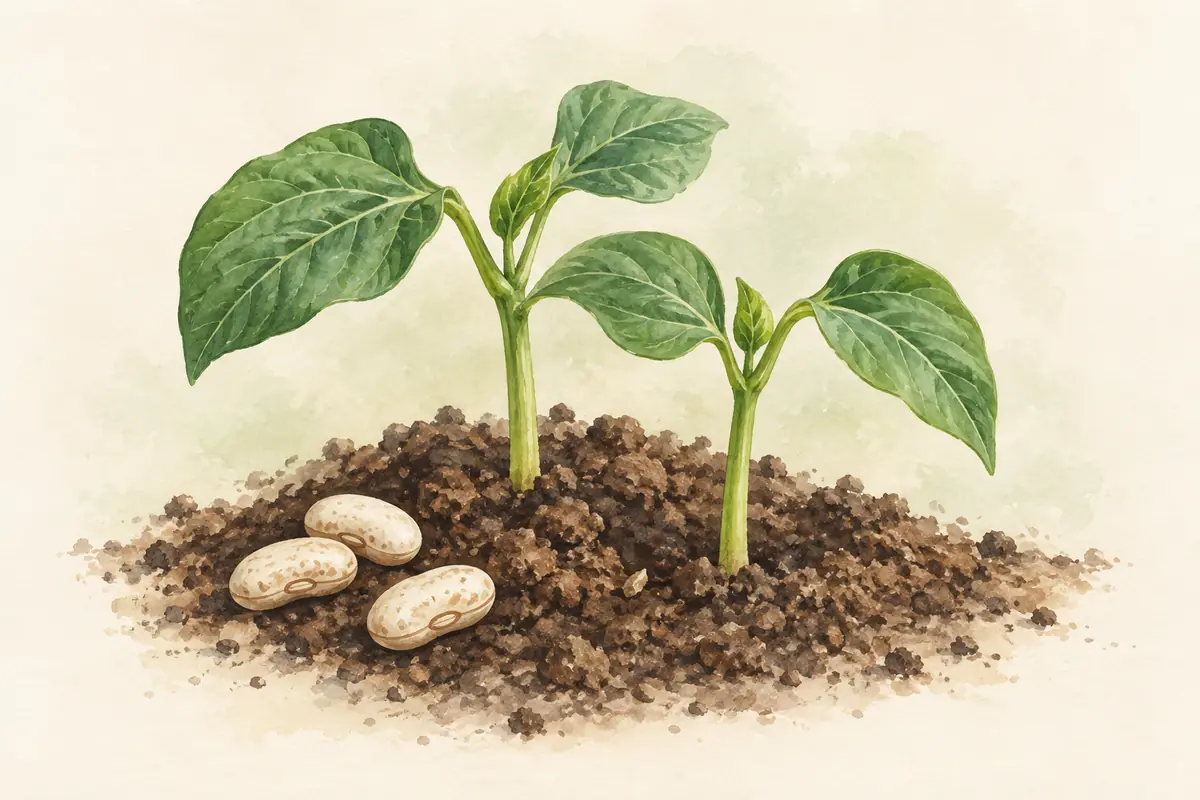
BEAN GROWING
Growing Beans From Seed: The Complete Guide
Grow beans with confidence from direct sowing through harvest. Learn when soil is warm enough, how deeply to sow, when climbing beans need support, how succession planting works, and how to diagnose common early problems.
Read the guide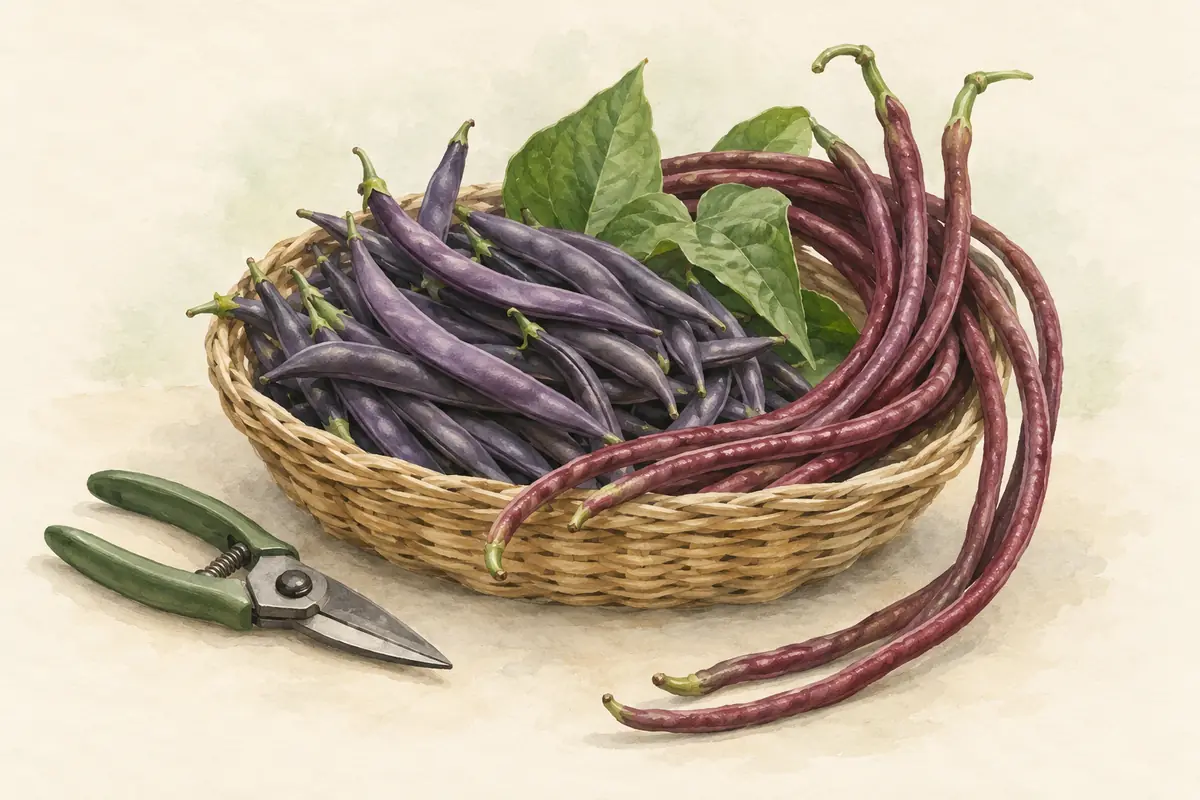
HARVEST GUIDE
When and How to Harvest Beans
Bean harvest quality depends more on pod stage than the date on a packet. Learn the cues for tender snap beans and yardlong beans, how often to pick, how to avoid breaking stems, and when a pod has moved toward shell or dry-bean maturity.
Read the guide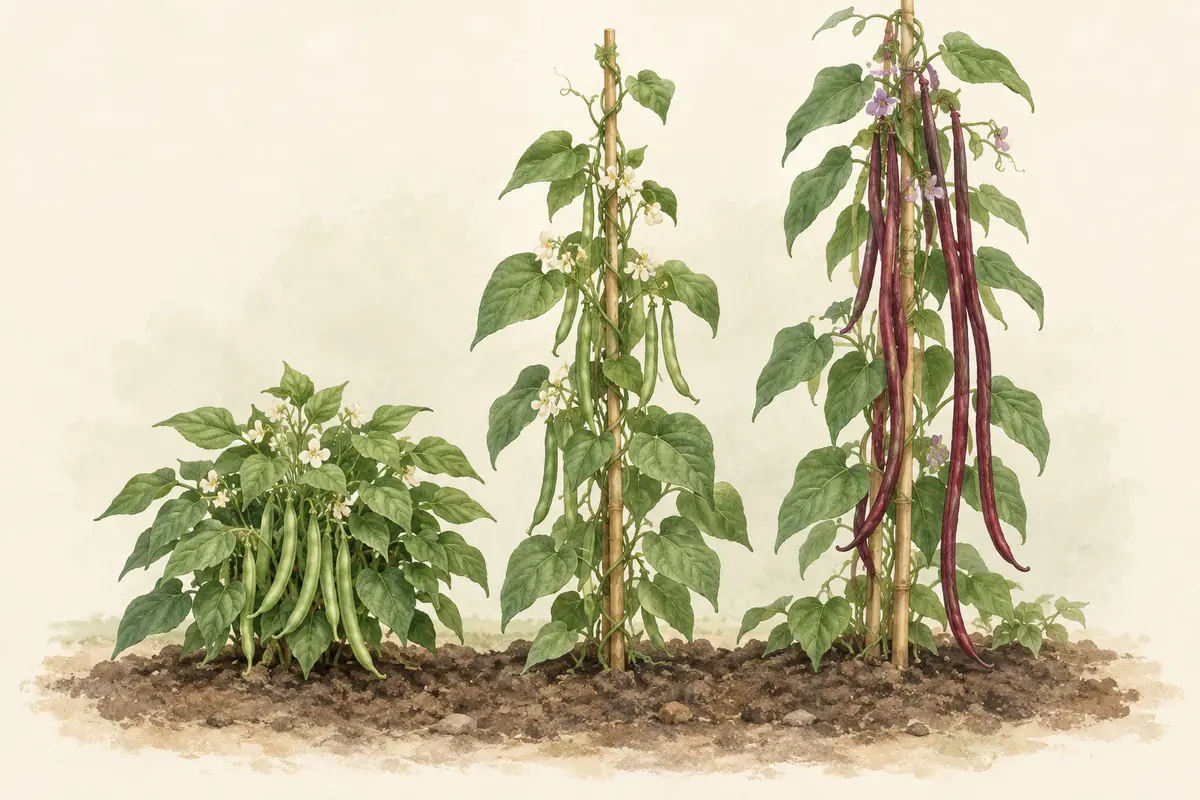
BEAN COMPARISON
Bush Beans vs. Pole Beans vs. Yardlong Beans
Bush, pole, and yardlong beans can all produce tender pods, but they use the garden very differently. Compare support, space, harvest pattern, summer heat preference, and the situations where each growth habit makes sense.
Read the guideFrequently asked questions
Is Royal Burgundy a pole bean?
No. It is a bush bean. If you want a vigorous climbing bean in the Hollowstead collection, Red Noodle is the climbing option—but it is a yardlong bean in a different species.
Do Royal Burgundy beans stay purple after cooking?
No. Expect the purple color to fade toward green with heat. That is normal for purple-podded common beans.[2]
How often should I pick?
Once the plants are producing, check frequently—often every day or two in fast conditions. The goal is to catch pods while crisp and tender, before the seeds visibly swell.
Can I sow Royal Burgundy more than once?
Yes. Succession sowing is especially useful with bush beans because their main crop is relatively concentrated.[2]
Sources & further reading
- Utah State University Extension Legume varieties https://extension.usu.edu/vegetableguide/legumes/varieties
- University of Minnesota Extension Growing beans in home gardens https://extension.umn.edu/garden-and-home/yard-and-garden/gardening-in-minnesota/growing-beans
- Cornell Cooperative Extension Vegetable Varieties for Gardeners: Royal Purple Burgundy https://vegvariety.cce.cornell.edu/main/detail.php?filterBy=0&variety_id=1882
- University of Maryland Extension Growing Beans in a Home Garden https://www.extension.umd.edu/resource/growing-beans-home-garden
- Iowa State University Extension and Outreach All About Beans https://yardandgarden.extension.iastate.edu/how-to/all-about-beans
- Seed Savers Exchange Growing Guide: Beans https://seedsavers.org/grow-bean/
- University of Maryland Extension — Container vegetable volumes https://extension.umd.edu/resource/growing-vegetables-containers-and-salad-tables
- Utah State University Extension — Beans in the Garden (emergence) https://extension.usu.edu/yardandgarden/research/beans-in-the-garden
- North Dakota State University Extension 2011 Home Garden Variety Trial Results, Trial 4 (2010–11 data) 2011 trial report
Hollowstead Growing Notes
A little help for your next growing season
Practical sowing advice, help choosing seeds, and occasional Hollowstead shop news. Usually one or two emails a month, plus a short welcome note.
Choose your topics and frequency after you confirm. Our guides and planting calendar are always free.