
BEAN VARIETY GUIDE
Red Noodle Yard Long Bean Growing Guide
Red Noodle is a heat-loving yardlong bean with vigorous vines and burgundy-red pods. Learn how warm it wants to be, how much trellis to build, when to sow, and how to judge the best harvest stage.
BeansVariety guideBeginner → advanced
Published by Hollowstead Seed Co. · How this guide is prepared
Quick answer
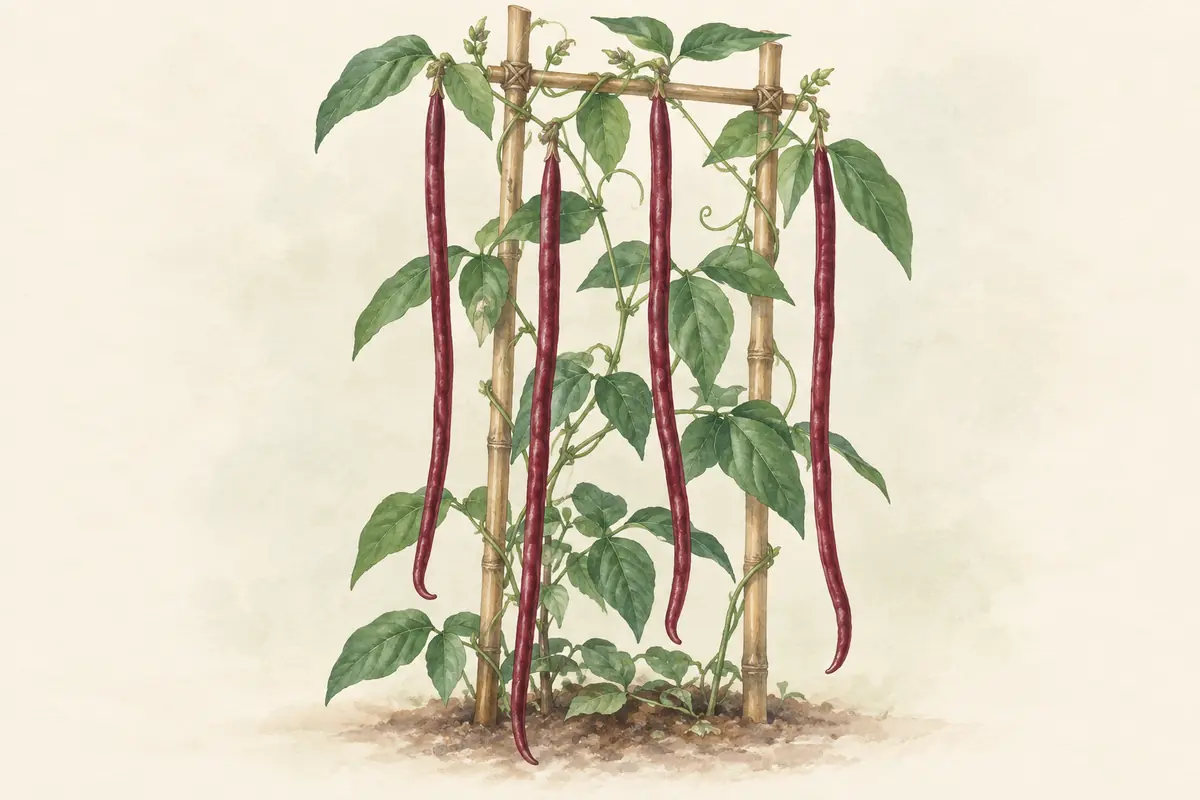
Red Noodle is a heat-loving yardlong bean, not a common snap bean. It belongs to Vigna unguiculata, the cowpea group, and performs best once summer is reliably warm. Give it a tall, sturdy trellis and harvest pods while long, flexible, and tender—before the seeds swell strongly.[1][2]
Think summer vine: do not rush it into chilly soil, do not underestimate the trellis, and do not wait for the pods to become thick before harvesting.
Red Noodle at a glance
| Species group | Vigna unguiculata yardlong/cowpea |
|---|---|
| Habit | Vigorous climbing vine |
| Heat | Higher heat preference than common beans |
| Trellis | Sturdy vertical support; vines may run 9–12 feet |
| Pod | Long burgundy-red edible pod |
| Harvest | Immature, before seeds become pronounced |
| Seed crop | Allow selected pods to turn yellow/tan and dry |
| Current listing maturity | About 50–75 days from sowing to young eating pods |
| Sowing | 1 inch deep; 4–6 inches between plants along support |
- Season
- Hot summer
- Support
- Tall + firmly anchored
- Water
- Even through flowering
- Harvest
- Young, flexible pods
- Seed saving
- Manage as cowpea/yardlong, not common bean
- Wait for warmthPlant after frost when both soil and weather are genuinely warm.
- Build the trellis firstAnchor support before vines start climbing.
- Train earlyGuide young runners onto the intended structure.
- Protect bloomKeep the root zone evenly moist during hot flowering weather.
- Harvest oftenPick long pods while tender and before seed swelling.
- Mature seed separatelyLeave selected pods until yellow/tan and dry for seed.
SAVE FOR SOWING DAY
Five-step crop plan for Red Noodle
Open the sow-to-harvest plan
- StartWait for sustained summer warmth, then direct sow in a seed zone around 70°F or warmer. Guide details
- PlantSow 1 inch deep, 4–6 inches apart along an already anchored, reachable vertical support. Guide details
- MaintainGuide climbing runners, keep access open and water the root zone through dry spells without saturation. Guide details
- HarvestCheck elongating pods often; pick while flexible and tender before strong seed bulges develop. Guide details
- Next sowing or seedMark typical plants and leave selected pods to yellow/tan and dry; label any crossing uncertainty with other cowpeas. Guide details
- Space
- Allow room for an 8–10-foot vine, guiding growth sideways or downward on a strong structure reachable for picking.
- Timing
- Hollowstead lists 50–75 days from sowing to young pods, while another supplier lists longer; cool short summers can delay or limit this heat-loving crop.
Full growing guidehttps://hollowsteadseeds.com/red-noodle-yard-long-bean-guide/Seed packethttps://hollowsteadseeds.com/product/red-noodle-yard-long-bean-seeds/Find planting dates by ZIP code
Variety reference photo
Yardlong beans are not common beans
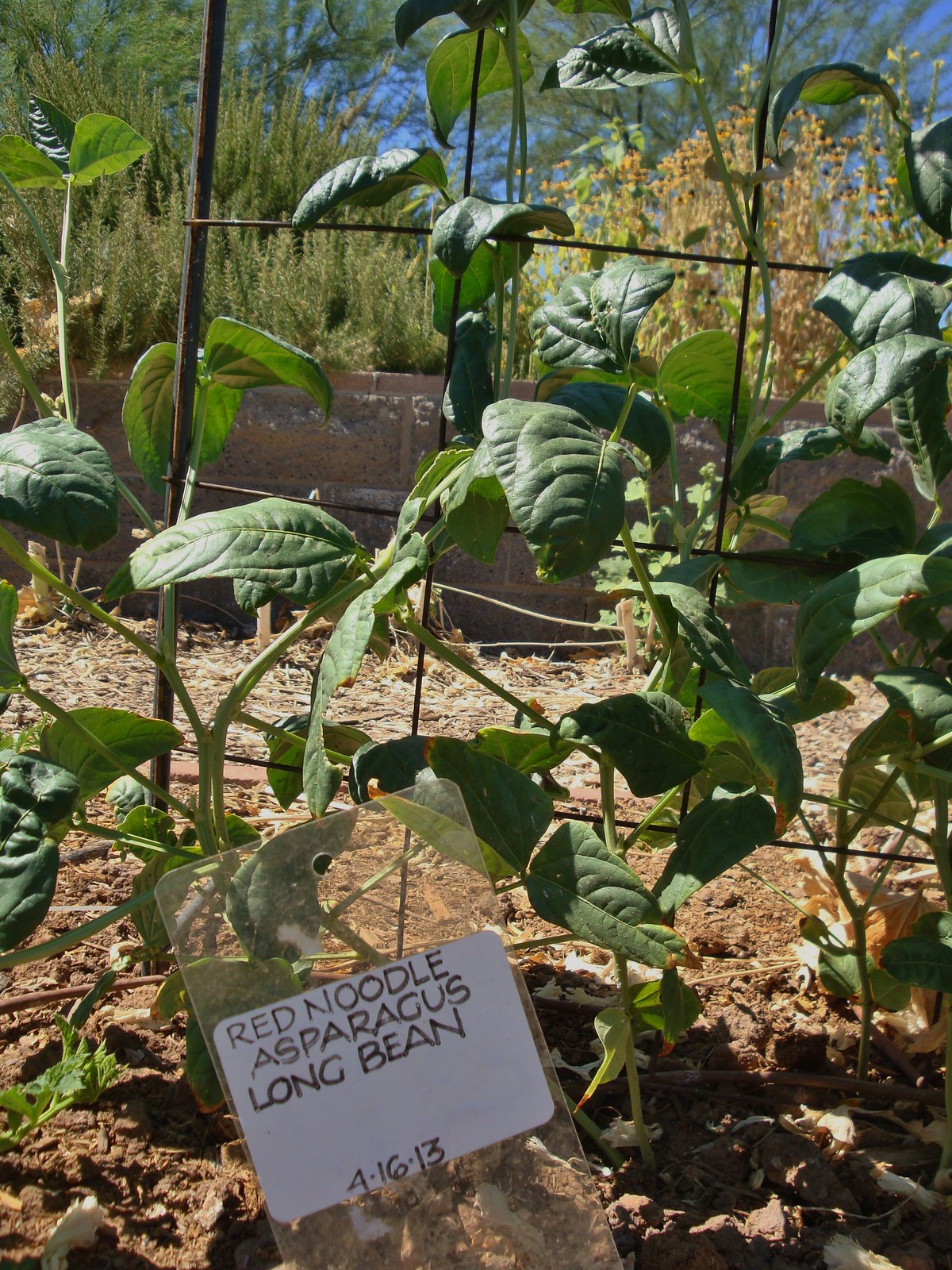
Red Noodle is a yardlong bean in the cowpea species Vigna unguiculata, not Phaseolus vulgaris. Maryland describes yardlong or asparagus beans as relatives of black-eyed peas that need warm temperatures and a long growing season.[3] That botanical difference helps explain why Red Noodle often looks unimpressed by cool spring weather that ordinary snap beans tolerate.
University of California ANR lists Red Noodle as an open-pollinated, heat-tolerant long bean with pods around 18 inches, while Mississippi State specifically lists Red Noodle among asparagus bean varieties.[2][4]
How warm does Red Noodle need to be?
Wait for sustained warmth as well as the end of frost risk. Minnesota Extension warns that yardlong beans need very warm weather to set a useful crop, that yields can be low in its climate, and that pods can suffer chilling injury in the 40s. [7] In a cool or short summer, give a small trial planting your warmest full-sun site and keep part of the bed for a common snap bean such as Royal Burgundy.
Count warm growing time, not just frost-free days
Hollowstead lists 50–75 days from sowing for Red Noodle. Johnny’s lists 85 days for its Red Noodle offering. [9] Treat that spread as a reason to leave room in the calendar, especially for a first season: the numbers describe first harvest under different growing conditions and do not include a guarantee of a long picking window.
One healthy planting can continue through the warm season if kept picked. A second sowing is an option in a long season; in a short one, late planting may spend its remaining warmth building vines. USDA’s yardlong guide makes the same distinction between successive sowings in long seasons and a single main planting farther north. [10]
Give each bean its season. A compact snap-bean row can fill the earlier warm part of the garden calendar; Red Noodle is the climber to evaluate for the sustained heat of summer.
 View full-size diagram
Heat, trellis, and root-zone management
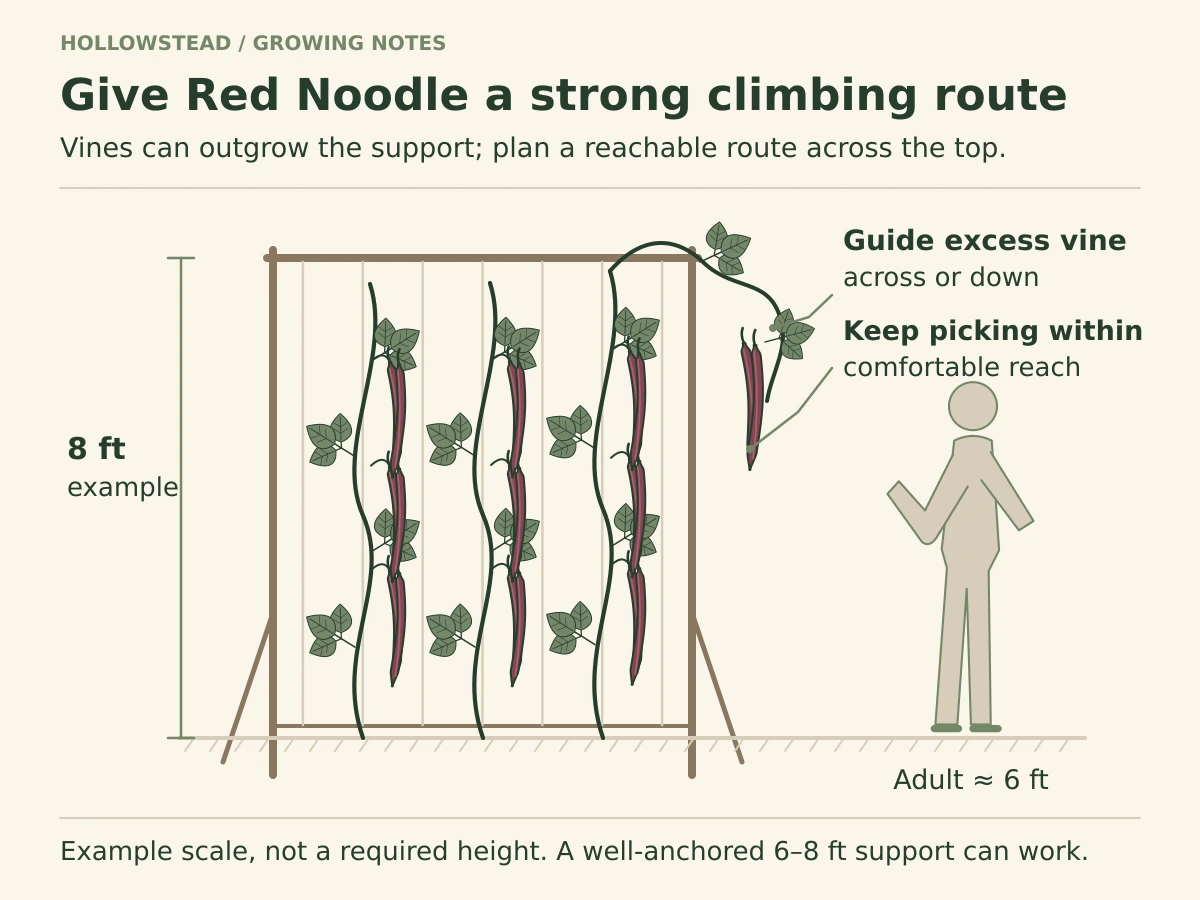
Plan the plant’s route before planting. The current listing describes 8–10-foot vines; general long-bean references allow roughly 9–12 feet. UF/IFAS describes a 6-foot trellis as workable, while USDA stresses both strength and reachable harvesting. [1] [10] A tall vine does not require a picking height equal to its full length.
- Anchor the structure. Posts or a firmly fixed frame must carry wet foliage and wind, with strings, poles, or mesh that young runners can find.
- Leave access. Keep a clear side for inspecting flowers and picking pods. A wall of vines against an inaccessible fence is difficult to harvest thoroughly.
- Plan the top. Guide growth sideways or allow it to drape where you can reach it, instead of extending the trellis beyond a comfortable height.
Keep the root zone weed-free with shallow cultivation, and water through dry spells without keeping the bed saturated. Low soil moisture can produce shorter, more fibrous yardlong pods even when the vine survives the heat. [10]
How to sow Red Noodle
Direct-sow 1 inch deep, 4–6 inches apart along the finished support, following the current Hollowstead listing. A seed zone around 70°F or warmer is a useful target for a warm start; a useful germination range is 70–90°F. Keep it evenly moist without waterlogging.
First-harvest planning: The 50–75-day catalog range is a broad estimate; Johnny’s publishes a longer window for its Red Noodle listing. In a cool short season, wait for warm soil and allow slack before the first harvest rather than treating the shorter endpoint as a deadline.[9]
| Stage | Your next decision |
|---|---|
| Emergence and first true leaves | Keep the intended spacing. Inspect empty stations before re-sowing, and guide runners onto separate parts of the support while they are easy to handle. |
| Vines begin to climb quickly | Check that ties and anchors hold, and direct growth away from neighboring plants. Establish the sideways or draping route before the top becomes tangled. |
| First flowers and tiny pods | Begin short, frequent inspection visits. Check the soil below the surface and keep your picking route open. |
| Regular harvest | Sample tenderness, pick the whole accessible trellis, and mark any seed pods clearly so they are not confused with missed eating pods. |
Flowering, pollination, and peak-summer production
UF/IFAS seed-saving guidance describes cowpeas as capable of self-pollination, while insects can also move pollen between compatible plants. [6] Pollen from another cowpea does not turn this season’s pod into a different variety; it matters to the seed’s next generation. Keep pollinators welcome and manage variety separation if you intend to save seed.
If a lush vine produces few pods, check sustained warmth, root-zone moisture, sunlight, and recent feeding before adding more fertilizer. Excess nitrogen can favor leaves, and drought can reduce pod quality. [10] Once pod growth begins, check the back of the support as well as the side facing the path.
When to harvest Red Noodle pods
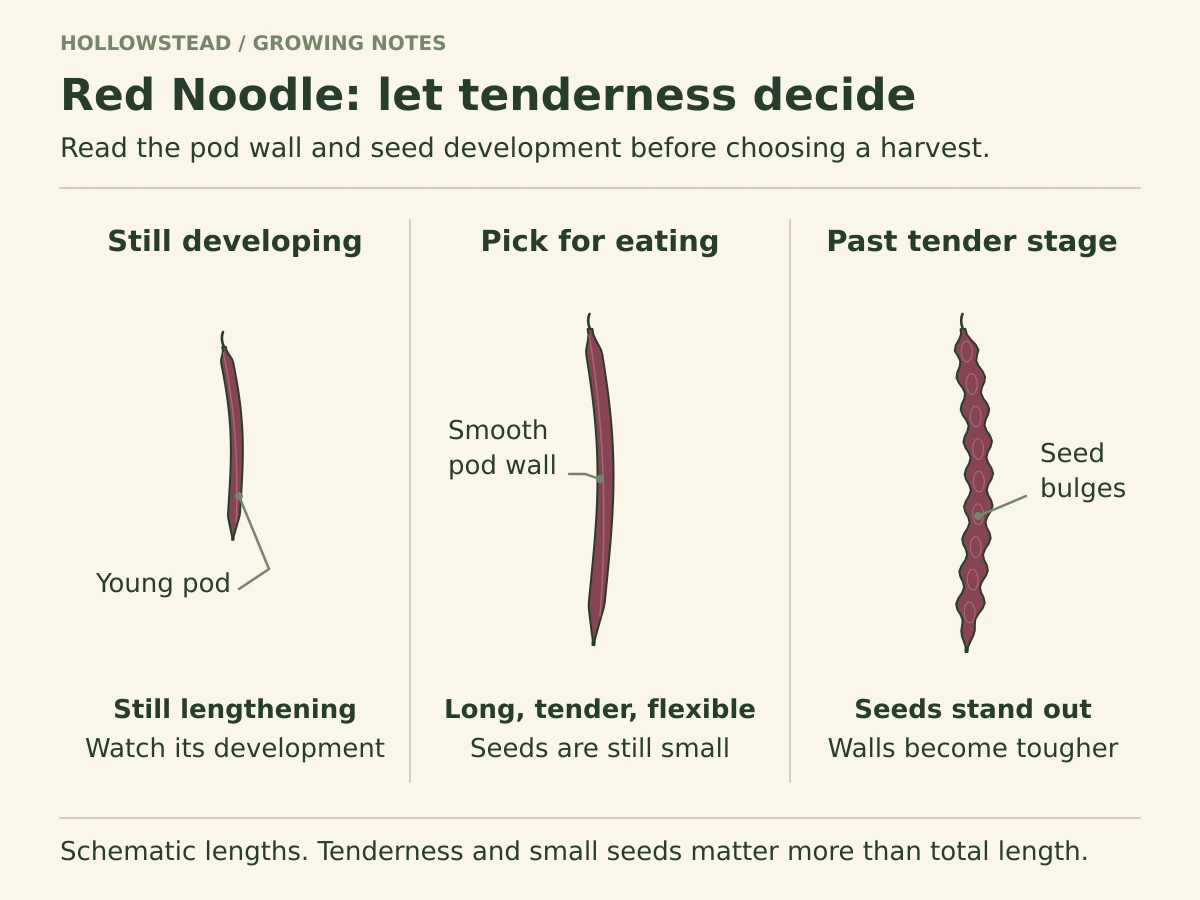
Use length to tell you when to inspect, then let texture decide. Mississippi State suggests roughly 10–18 inches for yardlong snap use; Red Noodle supplier descriptions allow longer pods. [4] A pod at your preferred length should still be tender, fairly smooth, and without pronounced seed bulges.
Once pods are elongating, check daily or every other day, especially in hot weather. Pick flexible, tender pods before seed bulges become strong; tag the few pods reserved to ripen for seed so they do not enter the eating harvest.
| Pod condition | Decision | Next step |
|---|---|---|
| Long and tender; seeds still small | Eating pods | Pick now and cook a small sample. Note its size so you can recognize the same texture on the next visit. |
| Seeds strongly outlined; pod wall increasingly tough | Past the best whole-pod stage | Remove from the eating crop. Fully developed but still moist seeds can be shelled and cooked as cowpeas; they are not dry storage beans. |
| Selected pod yellowing toward tan; seeds developed | Seed crop | Keep its identity and finish drying under cover if necessary. Monitor brittle pods so they do not split and scatter the seed. |
UF/IFAS describes daily immature-pod picking in long-bean production; Seed Savers distinguishes the later yellow-to-tan seed stage. [1] [5]
 View full-size diagram
Learn the interval from a small picking
At the first harvest, compare a few tender pods of different lengths in the way you actually cook. Cut them into similar pieces so you are comparing texture, then shorten the picking interval if later pods become coarse. Hold the vine while snipping each pod rather than pulling at the nearby flower cluster.
For the kitchen, try the young pods in a skillet, stir-fry, or a gently steamed dish. Yardlong beans have their own texture, so your favorite timing for common snap beans may need adjustment. [10] Burgundy color can vary after cooking; the useful constant is picking while the pods are tender.
When the vine grows but the crop struggles
| What you see | Check before acting | Useful response |
|---|---|---|
| Slow growth after planting | Soil warmth, cool nights, and whether the seed zone stays wet. | Wait for warm conditions before judging the crop. If seed has rotted, improve drainage and warmth before re-sowing. |
| A tangle above the trellis | Whether you still have a reachable route for new growth and hanging pods. | Guide supple runners sideways or let them drape. Avoid repeatedly cutting tips just to fit a decorative support. |
| Leaves and flowers, few tender pods | Sun, recent temperature, moisture below the surface, and heavy nitrogen feeding. | Correct the limiting condition and watch new growth; a blanket extra feeding does not diagnose the problem. |
| Short or fibrous pods | Picking interval and whether roots dried during pod development. | Harvest the next flush younger and water through dry spells. |
| Sticky tips, curled leaves, or clusters of small insects | Inspect new growth and leaf undersides for aphids; note nearby beneficial insects. | Confirm the insect before treating. Check the trellis regularly so a small problem is noticed while it is still localized. |
These checks draw on yardlong-bean heat, drainage, and pest guidance. [1] [10]
Can Red Noodle grow in a container?
For a practical trial, use one Red Noodle plant in a 10-gallon pot at least about 16 inches deep. Sow two seeds and thin to one; this generous single-vine recommendation is for easier water management, not a measured universal minimum. Use free-draining container mix and anchor a 6–8-foot trellis independently of the pot to a secure structure or properly installed posts. A slender decorative pot should not be the only counterweight to a mature vine. Check moisture daily during hot, windy weather.
Harvest handling and short storage
Use snips or hold the vine while picking so the next flower cluster is not torn away. Cool tender pods promptly, refrigerate in a perforated bag, and use as soon as possible—plan a small harvest for the next few meals rather than holding an oversized picking. Wash before cooking. For freezing or pickling, follow a tested method suited to the crop; tender eating pods are not shelf-stable dry beans. The bean harvest guide distinguishes those stages.
Saving Red Noodle seed
Manage Red Noodle as a cowpea/yardlong bean. The compatible neighbors to consider are other flowering Vigna unguiculata varieties, including cowpeas; ordinary Phaseolus snap beans are a different species. Seed Savers recommends saving from 10–25 plants for ongoing variety maintenance. A single plant can make viable seed but preserves a narrower sample. [5]
Mark typical, healthy plants before peak picking, record the original source and lot if supplied, and label the pods you are reserving. Note heat response, first harvest, and tenderness. Keep unusual offspring separate if you want to explore them as an experimental line.
Seed Savers lists 10–20 feet between cowpea varieties for ordinary home saving. Insects can still cause crossing, so use greater separation or insect-excluding bags on unopened flowers if stricter identity matters; label and keep only the protected seed pods. [5] [6]
End-of-season seed finishing
Allow reserved pods to progress toward yellow and then tan. Harvest before brittle pods shatter; if cool or wet weather arrives, developed pods that have begun yellowing can finish drying in a sheltered place with airflow. Pods should become brittle and the seed too hard to dent with a fingernail before storage. Green succulent pods cut prematurely may contain immature seed even if the pod later dries. [5]
Give seed pods a deliberate place. Reserve them on labeled plants and keep the rest of the trellis picked for eating. A tough forgotten pod is not automatically finished seed.
GROW RED NOODLE
Put the guide to work.
If your summer is hot and your trellis is tall, Red Noodle gives you an unusually visual bean crop with a long picking season.
Read Our Story for our seed-sourcing approach, or ask about the offered lot.
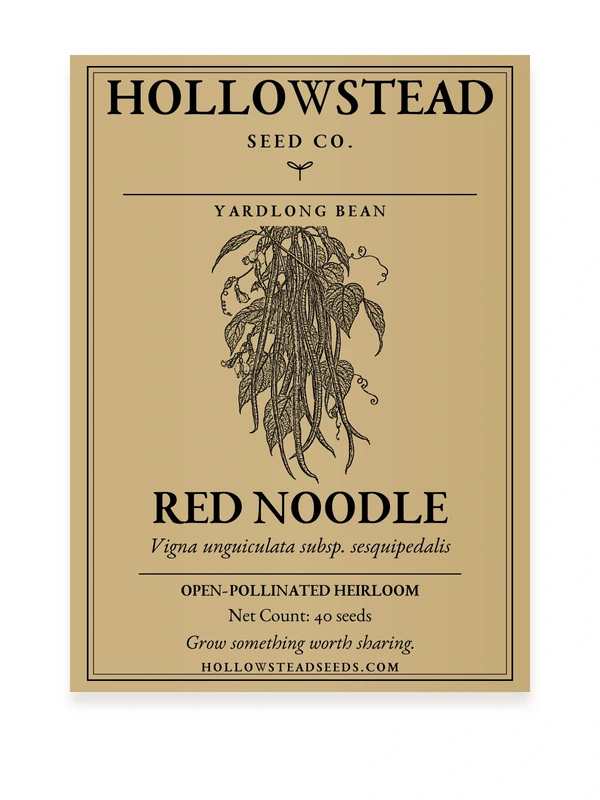
HOLLOWSTEAD SEED
Red Noodle Yard Long Bean Seeds
$4.49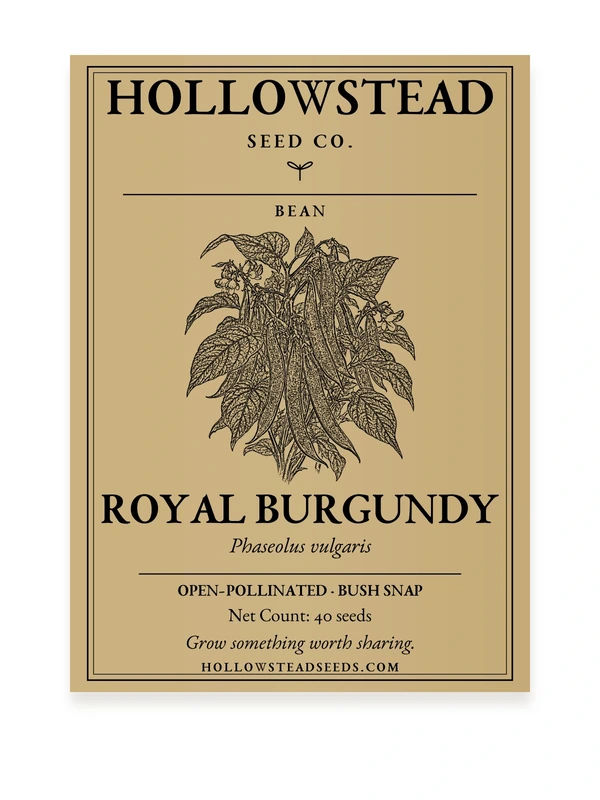
HOLLOWSTEAD SEED
Royal Burgundy Bush Bean Seeds
$4.49KEEP LEARNING
Sourced grower observations
The following accounts are attributed garden experiences, not Hollowstead crop records. Linda Ly of Garden Betty described slow early growth, then pods after the vines had climbed well past a six-foot trellis; in another season, Jessica Walliser in Pittsburgh found her trellis covered by midsummer. Both experiences favor installing support before sowing, while their different timing argues against using any one garden as a maturity clock.
Cornell’s Tompkins County grower review records a June 8 sowing with only a few pods by mid-September in a short New York season; warmth and season length matter. For kitchen color, Ly reported retained color in her preparation, but cooking method and harvest stage can change the result—try a small batch if presentation matters.
Related Hollowstead guides
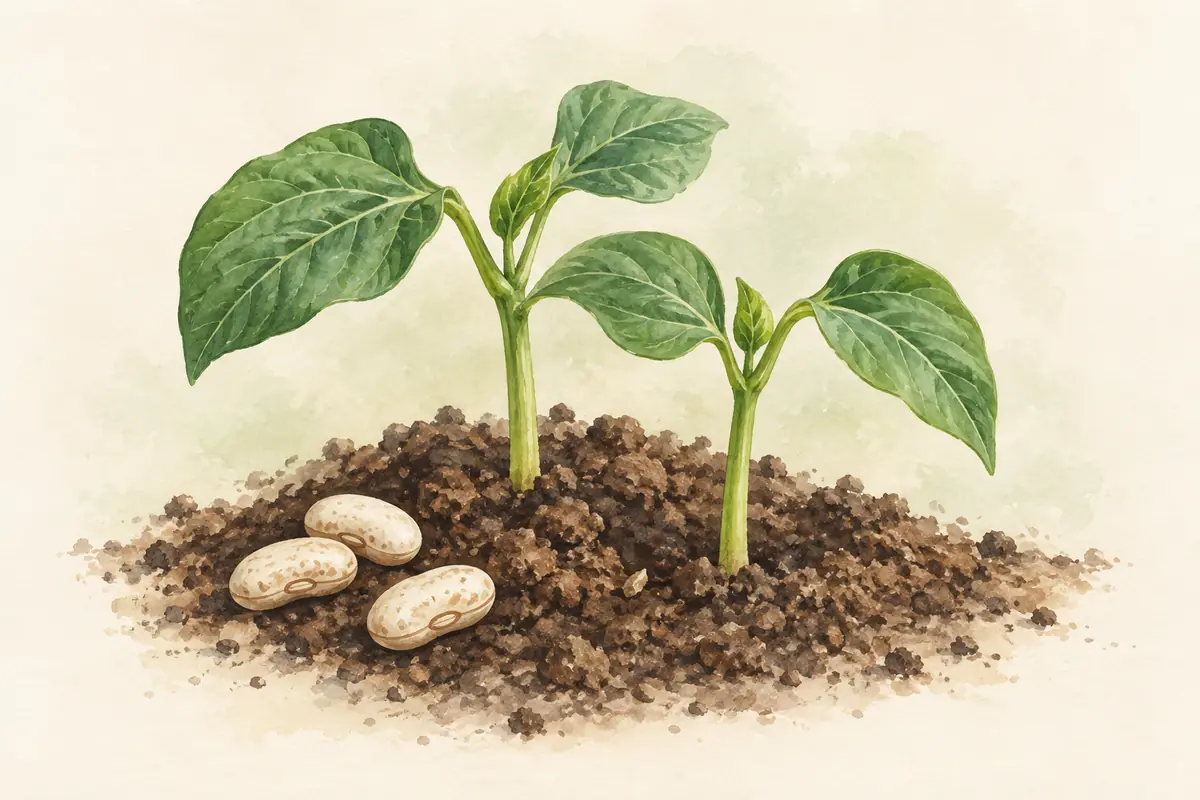
BEAN GROWING
Growing Beans From Seed: The Complete Guide
Grow beans with confidence from direct sowing through harvest. Learn when soil is warm enough, how deeply to sow, when climbing beans need support, how succession planting works, and how to diagnose common early problems.
Read the guide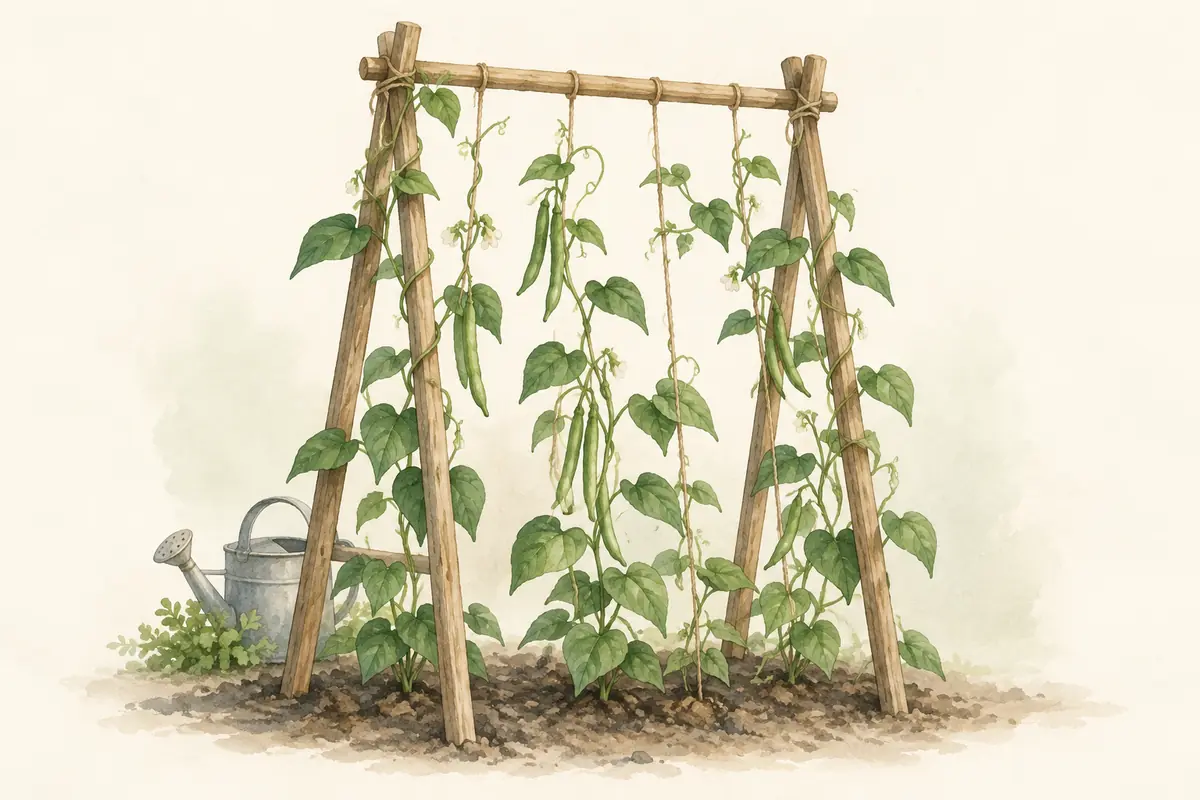
TRELLISING
How to Trellis Pole and Yardlong Beans
Build bean support before the vines need it. Compare teepees, row trellises, panels, and arches; learn how tall to build for pole versus yardlong beans; and plan anchoring, training, spacing, and harvest access.
Read the guide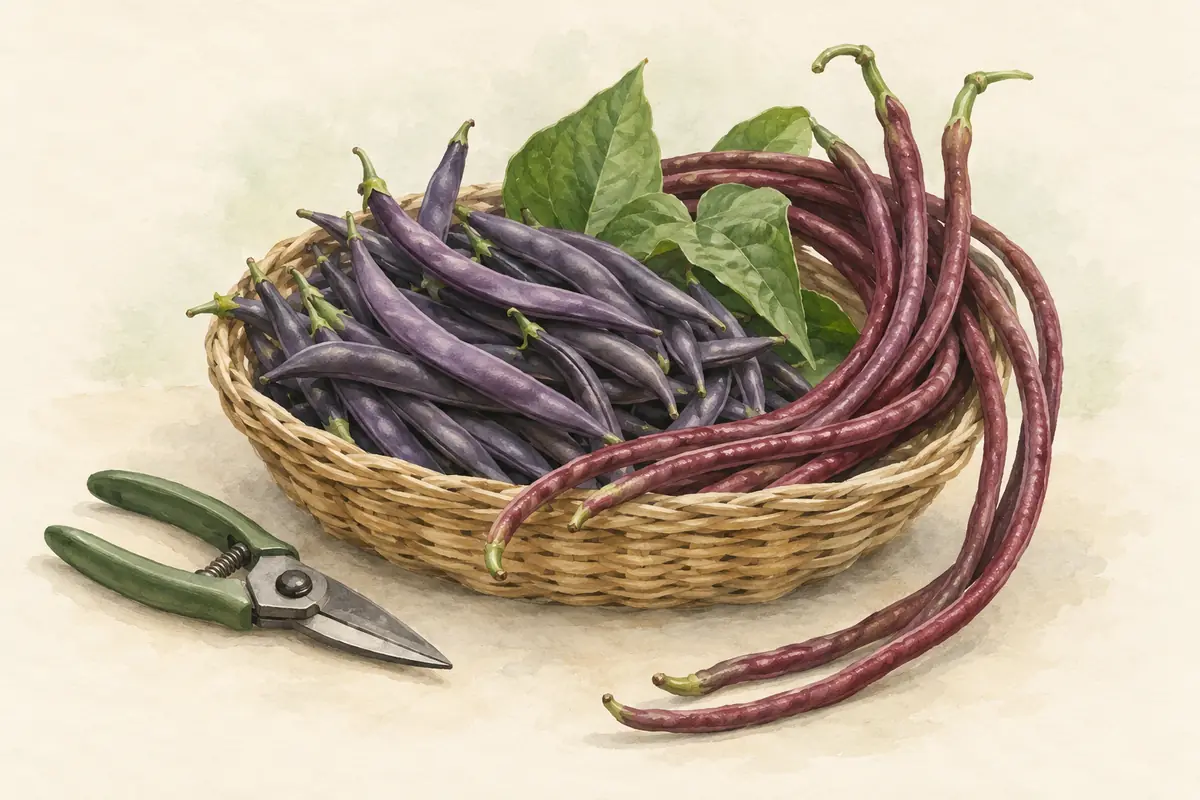
HARVEST GUIDE
When and How to Harvest Beans
Bean harvest quality depends more on pod stage than the date on a packet. Learn the cues for tender snap beans and yardlong beans, how often to pick, how to avoid breaking stems, and when a pod has moved toward shell or dry-bean maturity.
Read the guideFrequently asked questions
Is Red Noodle the same species as a green bean?
No. Common snap beans are Phaseolus vulgaris. Red Noodle is a yardlong bean in Vigna unguiculata.[2]
Do I need an eight-foot trellis?
Plan for long-bean vines that may reach roughly 9–12 feet. A sturdy 6–8-foot structure can work with a horizontal route or room for vines to drape; keep harvesting within safe reach.[1]
Should I wait until pods are 22 inches long?
No. That is a potential size, not a harvest requirement. Tenderness and seed development matter more than a ruler.
Will the pods stay burgundy when cooked?
Do not choose Red Noodle on a promise of retained or lost cooking color. Supplier descriptions and grower accounts differ on how much color remains. Cook a small batch by your usual method if presentation matters; harvest timing and tenderness remain the useful quality cues.
Sources & further reading
- University of Florida IFAS Extension Long Bean—an Asian Vegetable Emerging in Florida https://edis.ifas.ufl.edu/publication/HS1268
- University of California Agriculture and Natural Resources Tried and True Vegetables for Yolo County https://class.ucanr.edu/sites/default/files/2024-02/394612.pdf
- University of Maryland Extension Growing Beans in a Home Garden https://www.extension.umd.edu/resource/growing-beans-home-garden
- Mississippi State University Extension Beans https://extension.msstate.edu/lawn-and-garden/vegetable-gardens/beans
- Seed Savers Exchange Growing Guide: Cowpeas https://seedsavers.org/grow-cowpea/
- University of Florida IFAS Extension A Beginner’s Guide to Producing and Saving Open-Pollinated Seeds for North Florida Farmers and Gardeners https://ask.ifas.ufl.edu/publication/EP647
- University of Minnesota Extension Growing beans in home gardens: yardlong beans https://extension.umn.edu/garden-and-home/yard-and-garden/gardening-in-minnesota/growing-beans
- Johnny’s Selected Seeds Red Noodle cultivar description and maturity estimate https://www.johnnyseeds.com/vegetables/beans/pole-beans/red-noodle-bean-seed-2626.html
- USDA NRCS Yardlong Bean plant guide https://plants.usda.gov/DocumentLibrary/plantguide/pdf/pg_viuns2.pdf
Hollowstead Growing Notes
A little help for your next growing season
Practical sowing advice, help choosing seeds, and occasional Hollowstead shop news. Usually one or two emails a month, plus a short welcome note.
Choose your topics and frequency after you confirm. Our guides and planting calendar are always free.