
GERMINATION HELP
Why Lettuce Seeds Don’t Germinate
Work through lettuce seed failures by checking the seed zone, sowing depth, moisture, and seed lot. Use a small controlled test to decide whether to wait, change conditions, or restart.
LettuceTroubleshootingBeginner → advanced
Published by Hollowstead Seed Co. · How this guide is prepared
Quick answer
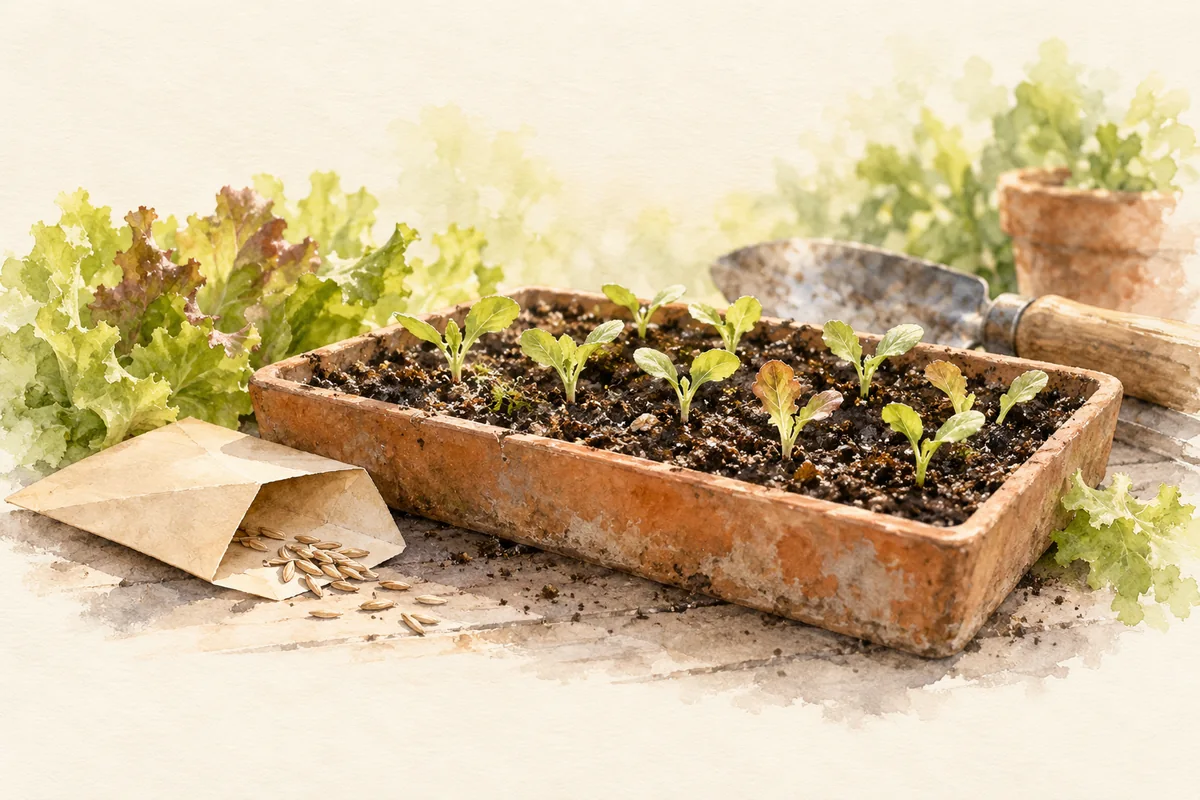
An empty lettuce row does not automatically mean the seed is dead. Check the temperature and moisture where the seed sits, then check how deeply it was covered. Lettuce can fail in hot soil even while nearby warm-season crops germinate well.[1]
Move a small sample into a controlled, cool test before replacing the packet. For many lots, about 60–70°F, light, and steady moisture are useful test conditions; allow the packet’s germination window, commonly 7–14 days, before judging it.[2] If seedlings emerged and then disappeared, investigate seedling loss as a separate problem.
At a glance
| Decision | Useful starting point |
|---|---|
| First question | Did nothing emerge, or did seedlings emerge and die? |
| Temperature | Measure at seed depth; a sunny tray can be hotter than the room |
| Moisture | Evenly damp, with air spaces and drainage |
| Depth | Shallow; follow the lot’s instructions |
| Best comparison | The same lot in a controlled small test |
| Avoid | Repeated sowing into an unchanged failing setup |
Start with the sequence of events
Write down the sowing date, variety, location, and what you have actually seen. “Nothing by day four” is different from “nothing after two weeks.” A patch that was green yesterday and empty today needs a different response from seed that never produced a visible root.
Look closely at a few marked spots rather than digging up the entire row. Has the surface crusted? Is seed exposed in low spots after watering? Are there chewed stems, slug trails, or uprooted seedlings? If you can find an ungerminated seed, its appearance may provide a clue, but looking at one seed cannot measure the whole packet.
Keep the untested portion dry. Do not soak every remaining seed while you are still diagnosing the first attempt. A reserve lets you compare a corrected sowing with the original conditions and avoids using up the packet in a string of identical failures.
Check the seed zone, not just the weather
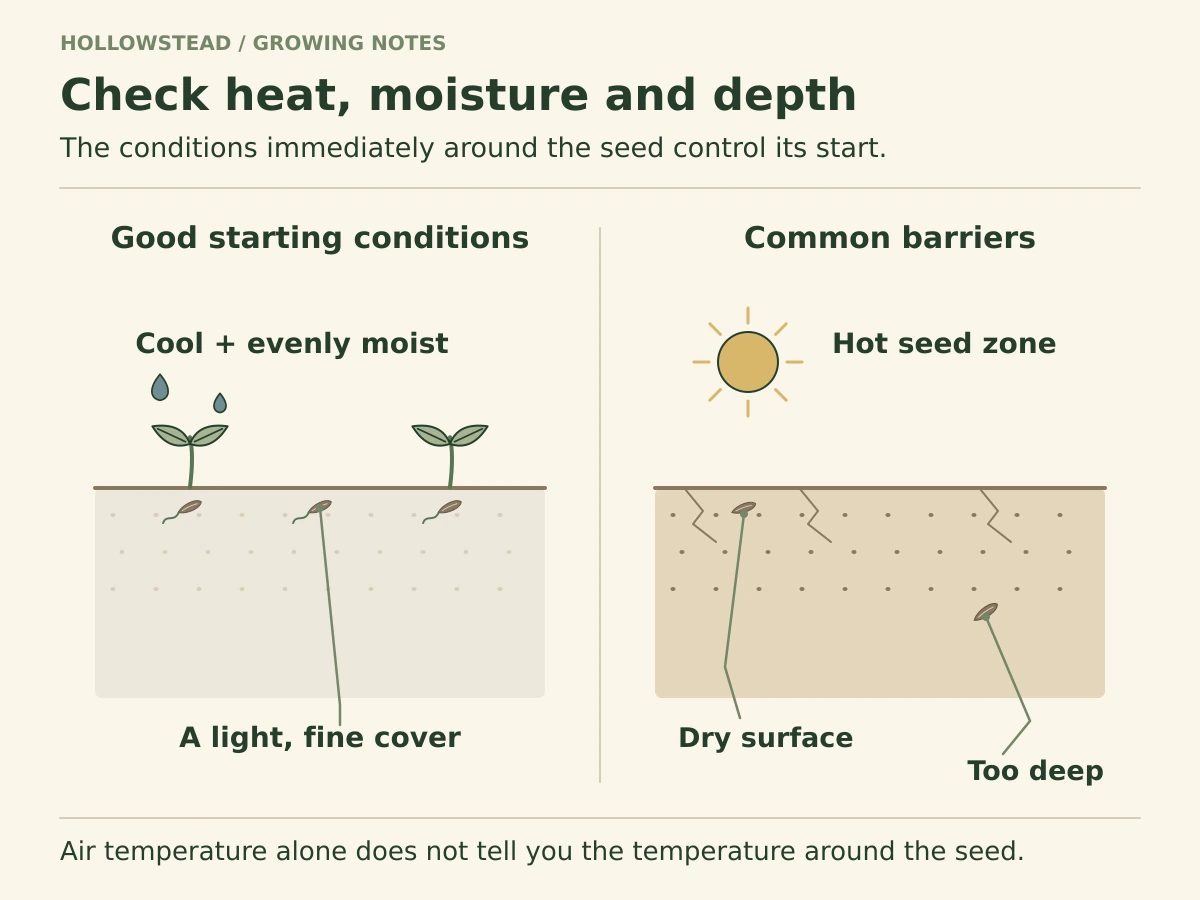
The air forecast describes outdoor air, not a black pot, clear humidity dome, or the surface of a sunny raised bed. Measure the medium near seed depth at more than one time of day. The warmest afternoon reading may explain a failure that a cool morning reading misses.
Germination speed changes with temperature. Cold seed can take longer to emerge; excessively warm seed can stop. Oregon State’s lettuce temperature table illustrates both extremes, so a promised number of days should never be read independently of conditions.[3]
Next, check the thin layer holding the seed. Lift a little medium with a spoon from the edge of the sowing area. Is it damp, powdery, or saturated? A pot can feel heavy because its lower half is wet while the top dries each afternoon. The inverse also happens: a fine surface spray looks reassuring while most of the medium remains dry.
 View full-size diagram
Understand heat inhibition without assuming the seed is dead
Lettuce seed often becomes unreliable when the growing medium rises into the 80s°F. The exact response depends on the variety and seed lot; research confirms genetic differences in high-temperature germination.[4] A variety described as slow to bolt as a plant is not automatically proven to germinate in a hot tray.
The immediate suppression of germination by excessive heat is called thermoinhibition. Heat can also induce a more persistent dormant state, called thermodormancy. These terms are related but not identical.[5] In practice, move the test to cooler conditions and observe the response; do not promise that every stalled seed will sprout as soon as the temperature falls.
Remove unnecessary bottom heat, keep a covered test out of direct sun, and use a cooler indoor location if the outdoor seedbed remains hot. Sowing in the evening may give seed a cooler start, but it does not solve several days of high soil temperature. For a fall crop, indoor starts can be a more controllable bridge to cooler weather.
Correct depth and light before adding treatments
Lettuce has small seed and should be sown shallowly. For Red Sails and Parris Island Cos, use the packet’s ⅛-inch depth. Some lettuce lots are particularly light-responsive; a thick soil covering or keeping a test wrapped in darkness can obscure the very condition you want to check.[6]
For a repeat sowing, smooth and pre-moisten the surface, place seed carefully, and apply only the specified light covering. Do not push seed into deep holes made for beans or cucumbers. If you use a humidity lid, inspect frequently and remove it as seedlings emerge so they have appropriate light and airflow.
Ordinary lettuce seed does not call for sanding, boiling, or a chemical treatment as a first response. Each extra treatment introduces another variable. Begin with a labeled untreated comparison under suitable conditions; it provides information you can use.
Separate moisture failure from seedling collapse
A seedbed that dries after seed begins taking up water can lose seedlings before you notice them. Use gentle watering and a manageable sowing area that you can check. Conversely, a constantly saturated tray leaves little room for air and can favor disease. Aim for an evenly moist medium that drains.
Damping off can prevent emergence or leave emerged seedlings with soft, narrowed stems that collapse at the surface. Clean containers, fresh mix, drainage, and avoiding excessive wetness are core preventive measures.[7] A tray of collapsed seedlings is not rescued by increasing fertilizer or adding more seed between the dead stems.
If the evidence suggests chewing rather than collapse, examine the bed at dusk and look under nearby shelter. Our lettuce problem guide helps distinguish feeding damage from growing stress. Preserve a close photograph before removing a damaged seedling; it may be more useful than a description made a week later.
Run a small controlled germination test
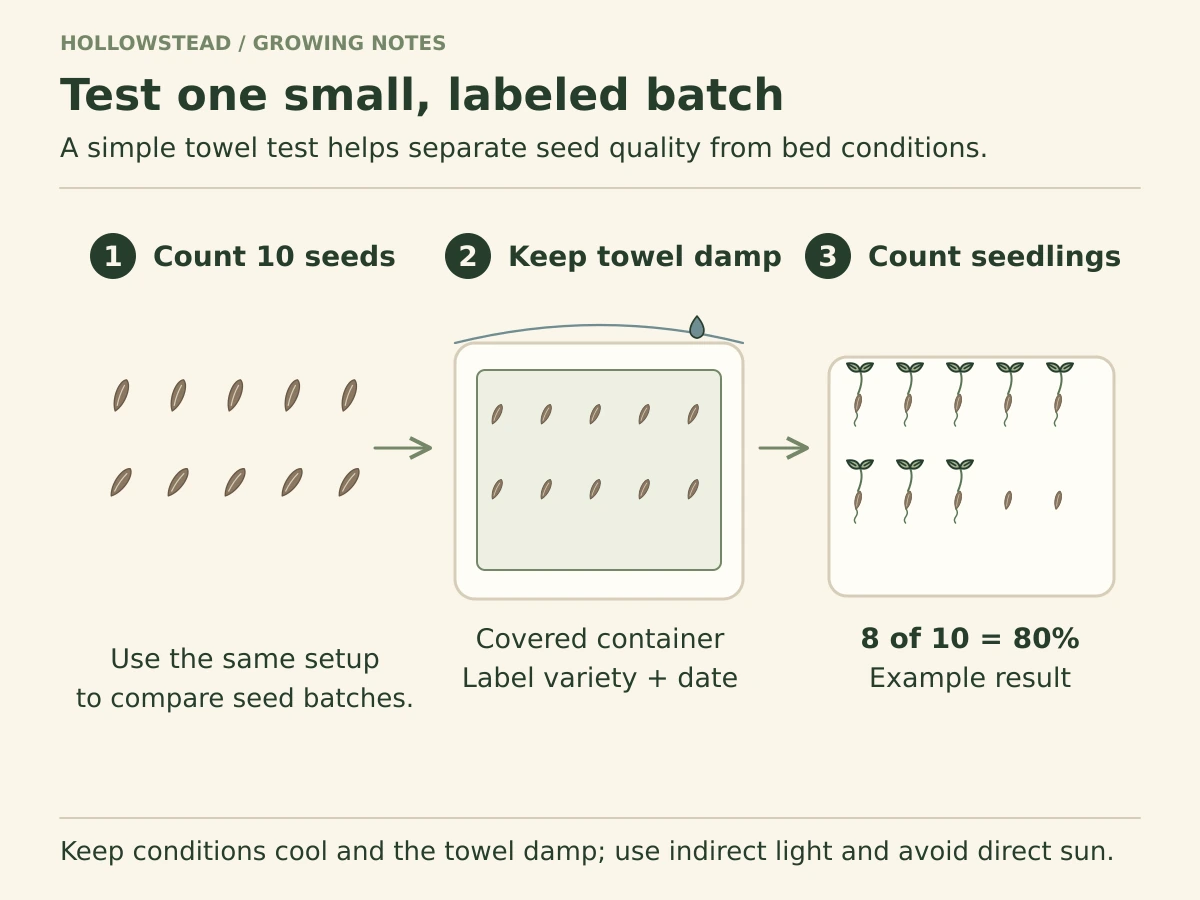
A counted sample gives you a better decision than repeatedly looking at an empty bed. Illinois Extension describes the damp-paper method.[8] Adapt the setup to lettuce’s cooler, light-responsive germination rather than placing it beside a hot appliance.
- Label a clean container with variety, lot, date, and the number of seeds. Ten is convenient; 20 makes the estimate less coarse if you can spare them.
- Place seed on a damp paper towel. Leave space to see individual seeds and keep them from sitting in free water.
- Cover the container to slow drying while keeping it where it receives light without direct-sun overheating. Leave the seed visible rather than burying it beneath thick towel layers.
- Check the actual temperature and moisture daily. Note the first root emergence and any later abnormal or weak development.
- Continue through the expected window. Record germinated and ungerminated seeds separately; a home test is an estimate, not a certified lot result.
 View full-size diagram
Test a known newer lot alongside the suspect one if you have it, using separate labels. If both fail, reassess the setup. If one succeeds, that makes the failing lot more suspect, though varieties may respond differently. The seed-storage and testing guide explains how to read small sample percentages.
Use the result to make one clear next move
| Test result | What it suggests | Next move |
|---|---|---|
| Good test, poor outdoor row | The seed can germinate under the test conditions | Correct the outdoor environment or transplant young starts |
| Slow, uneven test | Conditions or seed vigor may be limiting | Check temperature and moisture; repeat if timing allows |
| Poor result in a suitable repeated test | The lot is unreliable for your current plan | Use a more dependable lot and preserve the record |
| Newly saved seed fails immediately | Fresh-seed dormancy is possible | Keep it dry and labeled; retest after storage |
Organic Seed Alliance notes that freshly harvested lettuce seed can have temporary dormancy.[9] Do not confuse that situation with a purchased packet kept for years in a hot shed. Keep dates and storage history with the result instead of treating every failure as the same problem.
When restarting, change the factor you identified. Use a cooler location for heat, a finer seedbed for clods, or better moisture control for drying. Sow a small successful batch before repeating the full planting. Record its first emergence date so next season’s decision starts with evidence from your conditions.
For a short remaining season, compare the intended harvest with the time available. Baby leaves may fit when full heads no longer do; days to maturity explains the distinction. Red Sails and Parris Island Cos can both supply young leaves, but allow more time for a finished romaine head.
GROW FROM SEED
Put this guide to work.
Choose a variety that fits the way you want to grow and harvest, then use the guide above as your reference through the season.
HOLLOWSTEAD SEED
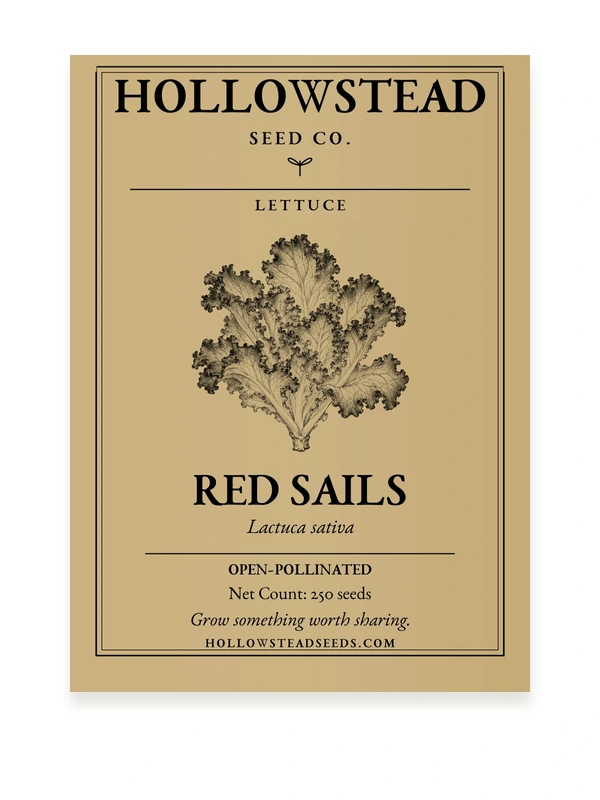
Red Sails Lettuce Seeds
$3.49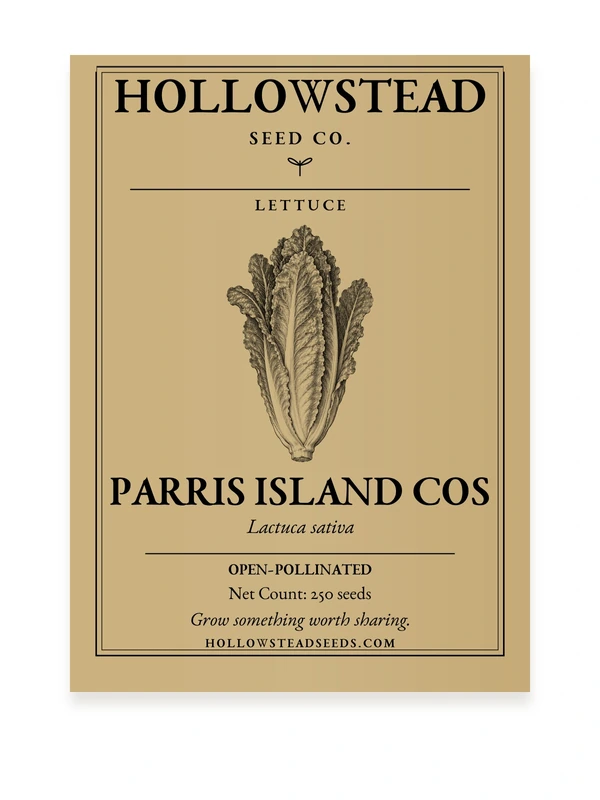
HOLLOWSTEAD SEED
Parris Island Cos Lettuce Seeds
$3.49KEEP LEARNING
Related growing guides
LETTUCE GROWING
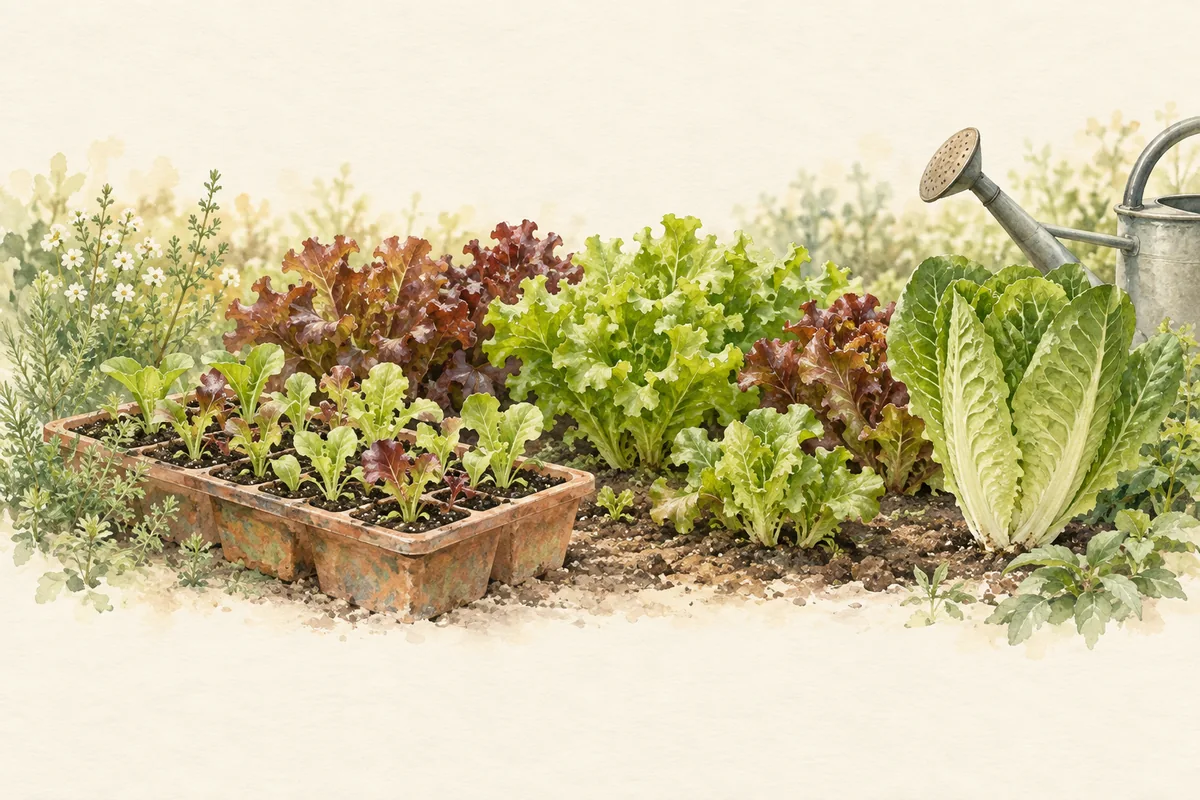
Growing Lettuce From Seed: The Complete Guide
Grow leaf lettuce and romaine from shallow sowing through harvest. Plan for cool weather, choose your harvest style, keep moisture steady, and make room for a second crop.
Read the guide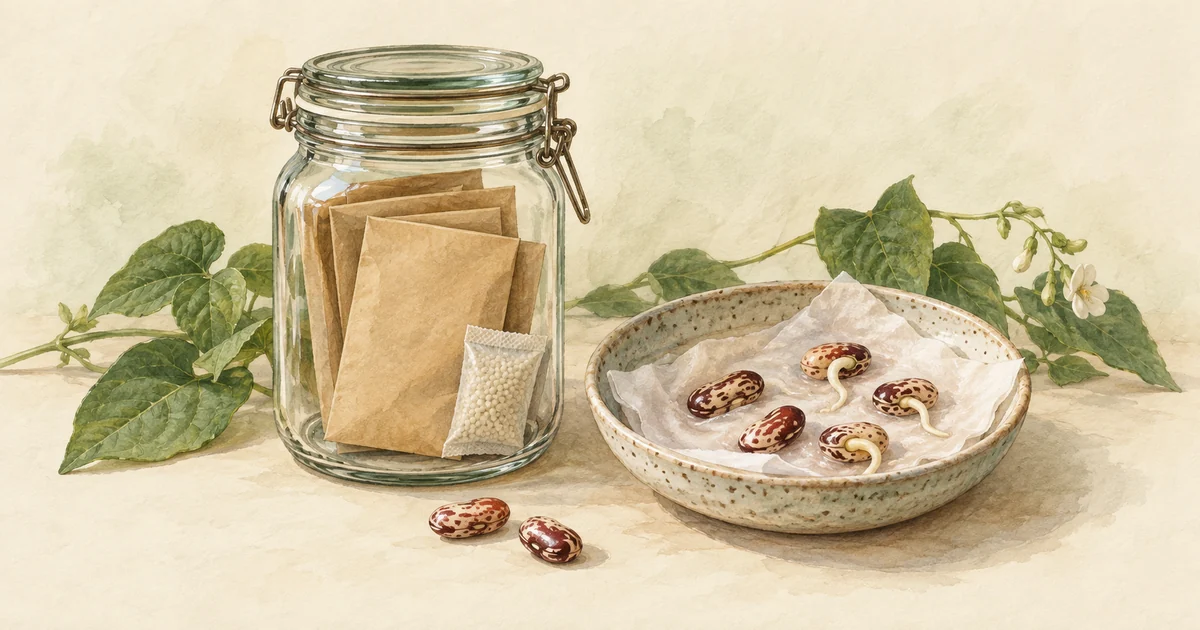
SEED STORAGE & STARTING
How to Store Garden Seeds and Test Old Seed
Keep leftover seed dry, cool, and labeled, then use a small germination test to decide what deserves space in the next planting. Includes a counting example, storage checklist, and crop-specific next steps.
Read the guide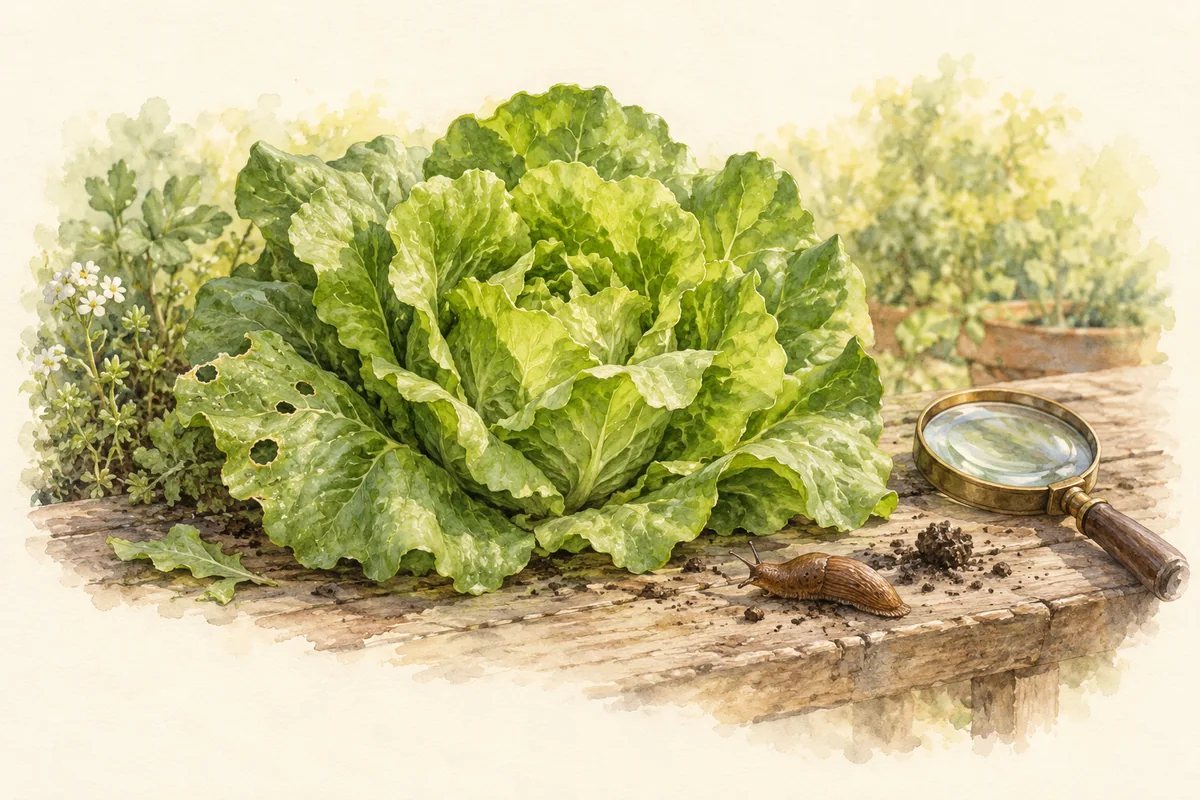
PLANT PROBLEM GUIDE
Lettuce Pests and Common Growing Problems
Read lettuce damage before treating it. Compare aphids, slug and caterpillar feeding, seedling collapse, tipburn, mildew, and crown rot, with practical steps for a raw salad crop.
Read the guideFrequently asked questions
Should I refrigerate the entire planted tray?
A refrigerator is not a general-purpose growing space: it is dark and much colder than a useful lettuce test. Start with a measured cool room and follow any specific pretreatment directions supplied for the seed lot.
Can I add more seed to the empty row?
First correct the likely cause. Mark the new sowing separately, because delayed seedlings from the first attempt can still emerge and create crowding.
Does seven out of ten mean exactly 70% of my garden row will grow?
No. It is the observed result for that small sample in that setup. Field emergence also includes weather, soil, pests, and establishment losses.
Will fertilizer make ungerminated lettuce sprout?
It does not correct excessive heat, darkness, drying, or deep sowing. Begin with appropriate seed-starting conditions and avoid adding strong fertilizer to a struggling test.
Sources & further reading
- Utah State University Extension — Leafy Greens: Planting and Spacing
- Iowa State University Extension and Outreach — Germination Requirements for Annuals and Vegetables
- Oregon State University Extension — Soil temperature conditions for vegetable seed germination
- Huo and colleagues, Plant Physiology — Genetic Variation for Thermotolerance in Lettuce Seed Germination Is Associated with Temperature-Sensitive Regulation of ETHYLENE RESPONSE FACTOR1
- Gonai and colleagues, Journal of Experimental Botany — Abscisic acid in the thermoinhibition of lettuce seed germination and enhancement of its catabolism by gibberellin
- University of Illinois Extension — What’s wrong with my seedlings? Troubleshooting seed starting problems
- University of Minnesota Extension — How to prevent seedling damping off
- University of Illinois Extension — Are my seeds still good? Testing seed germination
- Organic Seed Alliance — A Seed Saving Guide for Gardeners and Farmers
Hollowstead Growing Notes
A little help for your next growing season
Practical sowing advice, help choosing seeds, and occasional Hollowstead shop news. Usually one or two emails a month, plus a short welcome note.
Choose your topics and frequency after you confirm. Our guides and planting calendar are always free.