
GARDEN BASICS
What “Days to Maturity” Actually Means for Tomatoes and Other Garden Crops
Days to maturity is a planning estimate, not a harvest appointment. Learn when the count starts, how transplanted and direct-sown crops differ, and how weather, containers, and transplant stress change the real timeline.
TomatoesGarden planningBeginner → advanced
Published by Hollowstead Seed Co. · How this guide is prepared
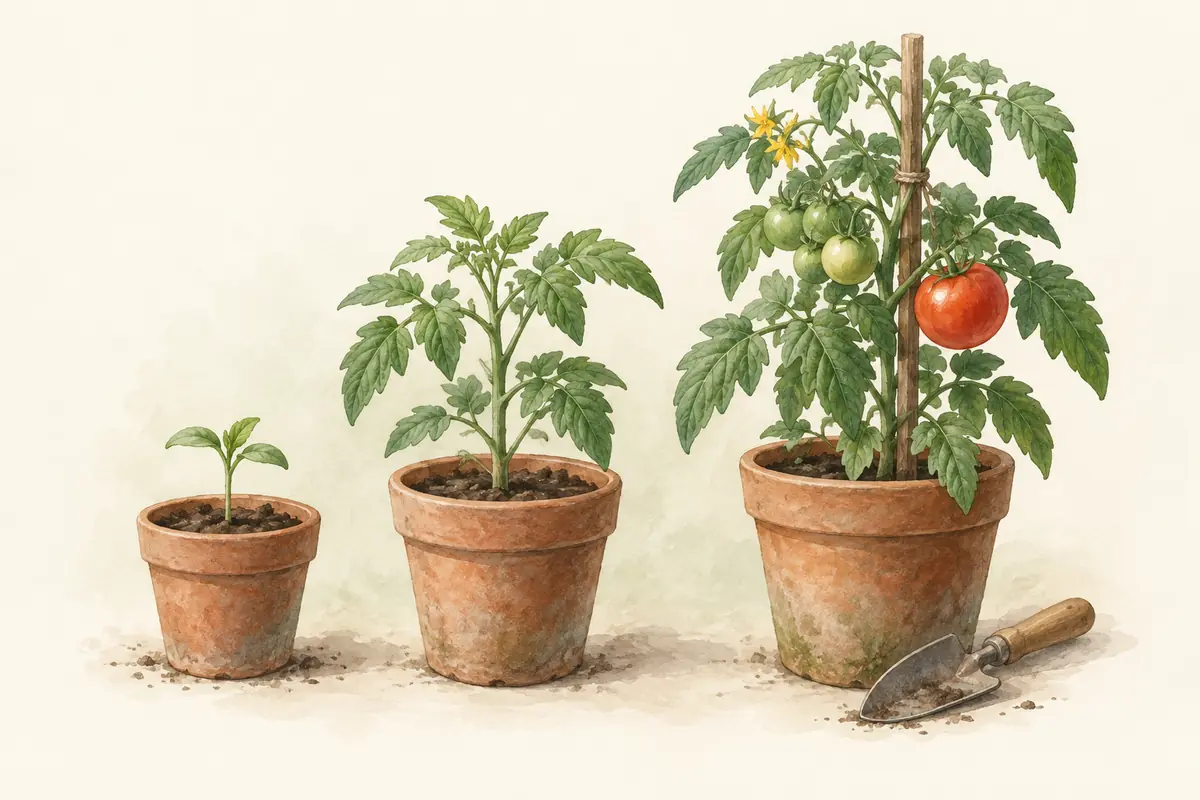
Quick answer
“Days to maturity” is best treated as a comparison and planning estimate, not a promise that your crop will be ready on a specific date.
For many direct-sown crops, the count begins when seed is planted in the garden. For many transplanted crops, including tomatoes, catalog maturity numbers usually count from the date the transplant goes into the garden rather than the day you sowed the seed indoors.[1][2]
That means a tomato listed as “75 days” may spend another five to eight weeks growing indoors before those 75 outdoor days even begin.
And even then, weather can move the harvest. Light, temperature, transplant stress, root restriction, fertility, water, and plant health all affect development.[1]
At a glance
| Question | Short answer |
|---|---|
| What is DTM? | A planning estimate, not a guaranteed harvest date |
| Direct-sown crops | The count often begins when seed is sown in the garden |
| Transplanted crops | The count often begins when the transplant goes into the garden |
| Tomatoes | Usually counted from transplant to first ripe fruit |
| Why timing shifts | Weather, light, stress, root restriction, fertility, watering, and plant health all matter |
| Best use | Compare varieties and judge whether a crop fits your season |
- Sow indoorsSeed-starting time usually sits before a transplant-based DTM clock.
- TransplantFor many tomato listings, this is the practical starting point for the stated maturity estimate.
- EstablishRoots resume active growth; cold soil or transplant stress can stretch the schedule.
- Flower and set fruitTemperature and plant stress can speed, pause, or reduce successful fruit set.
- First ripe fruitThis is the endpoint many tomato DTM numbers are trying to approximate.
- Peak harvestOften later—and on indeterminate plants, harvest can continue far beyond the first fruit.
Current Hollowstead examples across crops
These are the current catalog estimates, not tested guarantees for an individual lot. Record sowing, transplanting and first usable harvest separately; a pepper harvested immature and one left to full red do not have the same endpoint.
| Crop and variety | Current listing estimate | Clock starts | Harvest endpoint |
|---|---|---|---|
| Royal Burgundy | 50–65 days | Sowing | Young snap pods, before enlarged seeds |
| Red Noodle | 50–75 days | Sowing | Tender immature eating pods |
| Lemon Cucumber | About 65 days | Sowing | Firm pale/light-yellow eating fruit |
| Black Cherry | About 75 days | Transplant | First ripe cherry fruit |
| Black Krim | About 75 days | Transplant | First ripe slicer; published references may say ~80 |
| Principe Borghese | 70–75 days | Transplant | First ripe red fruit, before the main batch |
| Jimmy Nardello | 80–90 days | Transplant | Use full red for classic sweet eating quality; green fruit can be picked earlier |
| Fish Pepper | 80–90 days | Transplant | Full red is the ripe target; immature striped fruit is edible and still hot |
| Yellow Pear | About 78 days | Transplant | First ripe yellow pear-shaped fruit |
| Pineapple | 85–90 days | Transplant | First ripe bicolor slicer |
| Marketmore 76 | About 67 days | Sowing | Firm green slicing fruit |
| National Pickling | About 50–70 days | Sowing | Firm green fruit at the intended recipe size |
| Red Sails | About 45 days | Sowing | Useful loose-leaf harvest; younger leaves can be picked earlier |
| Parris Island Cos | About 65–70 days | Sowing | Filled romaine heads; individual leaves can be used earlier |
Pepper listings give a maturity estimate without a separate validated green-harvest clock. The color targets above explain how to judge the harvest; do not interpret the listing as a guarantee that every fruit will be fully colored on that date.
Why days to maturity is confusing
Seed packets have very little space. A single number looks precise:
75 days
That number compresses several assumptions:
- when the clock starts;
- what “mature” means;
- the conditions under which the variety was observed;
- whether the crop is direct-sown or transplanted;
- whether the first harvest or full harvest is being measured.
Different companies may even list different numbers for the same open-pollinated cultivar.
When does the maturity clock start?
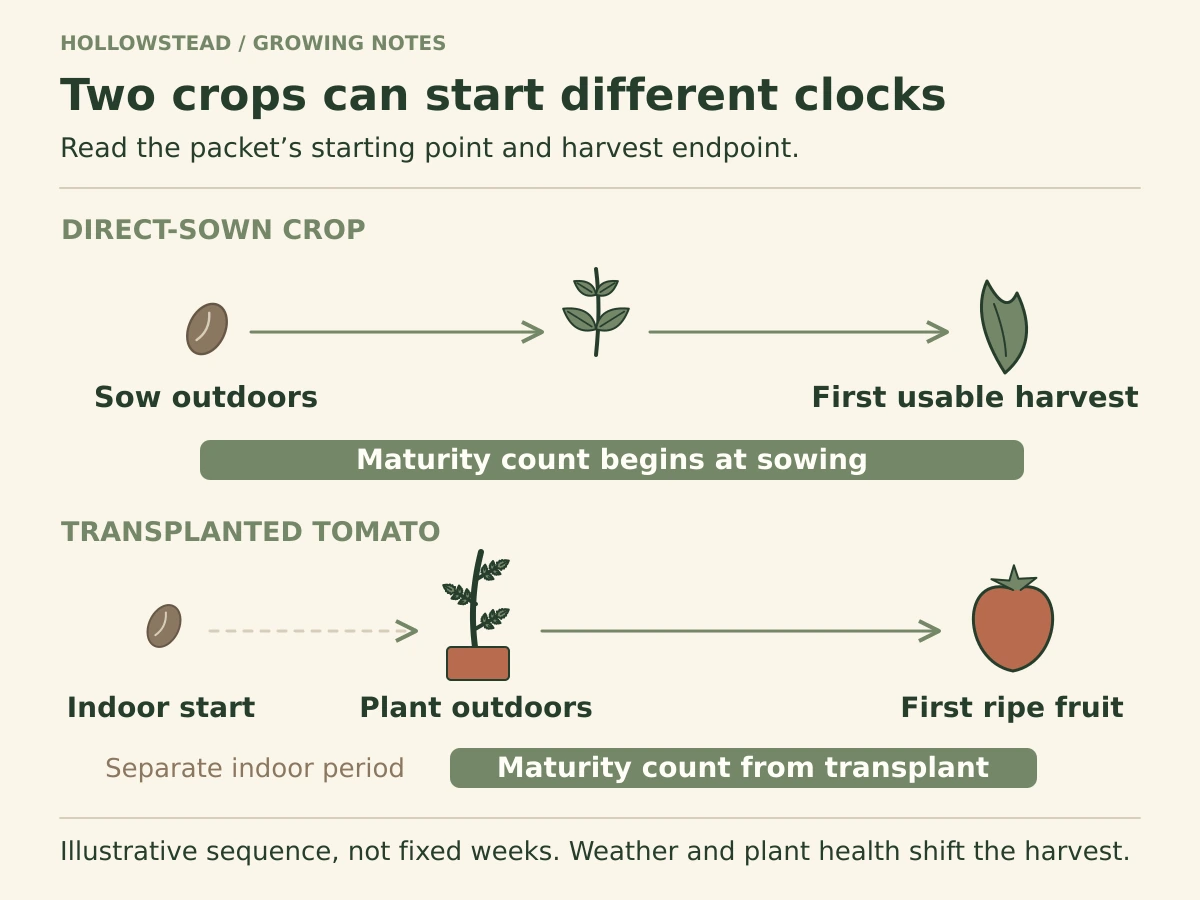
Direct-sown crops
University of Maryland explains that for direct-seeded crops such as lettuce, spinach, beets, radishes, and many greens, days to maturity commonly runs from seeding in the garden to harvestable maturity.[1]
Transplanted crops
For transplant-grown crops, maturity commonly begins at transplanting. Penn State explicitly notes that DTM on seed packets for transplants begins when the plant is put outdoors, not when seed is started inside.[2]
University of Minnesota crop-planning tables similarly separate days from seeding to transplant from days from transplant to first harvest for tomatoes.[3]
Tomatoes
For tomatoes, assume the number is from transplant unless the seller says otherwise.
If you start Black Krim indoors for six weeks, transplant it outside, and the current Hollowstead listing says about 75 days from transplant, the simple seed-to-first-ripe-fruit estimate is 42 + 75 = 117 days before normal weather variation is added.
Separate sowing and transplant maturity clocks
- Direct-sown crop timing starts at sowing; tomato transplant timing starts when planted out. Indoor growing weeks are a separate preceding interval.
Why seed companies do it this way
Transplants create a logical reset point.
Indoor seed-starting conditions vary enormously:
- one gardener grows under powerful LEDs at 72°F;
- another uses a windowsill at 62°F;
- one pots up twice;
- another keeps plants in small cells;
- one starts eight weeks before planting;
- another starts five.
Comparing varieties from the day of transplant gives seed companies and gardeners a more useful common reference.
What does “maturity” mean?
It depends on the crop.
Lettuce makes the endpoint especially clear: the date for a filled romaine head is different from the first usable outer leaves. Use the lettuce harvest guide to choose a stage, then use successive sowings to spread that harvest across the season.
For a tomato, maturity generally means first usable ripe fruit, not that the entire plant is finished producing.
For a determinate processing tomato, a large portion of harvest may follow relatively close together.
For an indeterminate tomato, the first ripe fruit can arrive while the vine still has flowers and green fruit that will continue for weeks or months.
For lettuce, maturity might mean a full-size head. For baby carrots, a gardener may harvest long before the catalog’s full-size maturity.
So DTM is always tied to a harvest definition.
Why your “75-day” tomato took 90 days
The number assumes reasonably favorable growth. Several factors can slow the plant.
Cold after transplanting
Tomatoes are warm-season plants. Illinois Extension notes that plants set out too early into cold conditions can stall and take time to resume normal growth.[4]
Those stalled days still happen on your calendar even if the catalog trial had warmer weather.
Low light
Photosynthesis powers growth. Extended cloudy weather or shade slows the plant’s ability to build roots, leaves, flowers, and fruit.
Transplant stress
A root-bound, poorly hardened, or damaged transplant may spend time recovering before vigorous growth resumes.
Container restriction
A small container can dry quickly, restrict roots, and create larger swings in water/nutrients than an in-ground plant. The plant may still fruit, but the development rate can change.
Heat stress
Very high temperatures can reduce tomato fruit set. The plant may continue growing while flowers fail to set fruit, effectively delaying the first meaningful harvest.
Water stress
Repeated drought or saturated roots can slow growth and cause flower/fruit problems.
Disease or insect pressure
A plant diverting resources to damaged roots/leaves does not behave like the healthy plant used to establish a catalog estimate.
Two illustrative harvest times measured from the same transplant day zero
- An illustrative 75-day harvest and a delayed 90-day harvest both start at transplant day zero. They are alternative outcomes, not points 15 days apart on the plant’s whole life cycle.
Why the same variety has different DTM numbers from different sellers
You may see:
- Black Krim 75 days from one seller;
- 80 days from another;
- 80–90 somewhere else.
That does not necessarily mean one seller is lying.
Possible reasons include:
- different trials and climates;
- different seed lines within an old open-pollinated variety;
- different definitions of “first ripe”;
- rounding;
- copying historical catalog data;
- ordinary catalog error.
Hollowstead’s approach is to use approximate wording and preserve uncertainty when reputable sources disagree.
Use DTM to compare varieties
Days to maturity is most powerful when comparing crops under your own conditions.
Example:
- Variety A: 60 days
- Variety B: 85 days
It is reasonable to expect Variety A to be earlier, even if your actual harvests happen on day 67 and day 96.
The relative difference is often more useful than the absolute number.
How to calculate an estimated harvest window for tomatoes
Use three pieces:
- Indoor growing period — often roughly 5–7 weeks for tomatoes.
- Transplant date/window — when local conditions are favorable.
- Cultivar DTM — usually from transplant to first harvest.
Example
Suppose:
- you sow indoors March 25;
- transplant May 10;
- cultivar is listed at 75 days.
A rough first-harvest estimate is late July.
Three ways to turn DTM into a planning window
The most useful maturity plan is a window with a contingency, not a single harvest date. Start with the transplant date for a transplant-based tomato listing, add the stated DTM, then ask what part of your season the plant will be flowering and filling fruit in.
First harvest vs. peak harvest
These are different.
Indeterminate tomatoes
The maturity number generally points toward first ripe fruit. Harvest may continue until frost or severe heat/disease ends production.
Black Krim and Black Cherry are indeterminate, so their DTM does not tell you when harvest is “finished.”
Determinate tomatoes
Determinate varieties tend to concentrate flowering and fruiting more than indeterminates, so peak harvest may cluster into a shorter period.
But even determinate tomatoes do not necessarily ripen every fruit on the same morning.
Days to maturity in spring vs. fall
University of Maryland specifically warns that fall crops often take longer than catalog DTM because declining day length and cooler temperatures slow growth.[1]
The reverse can also happen: a crop growing through ideal warm weather may develop faster than the same crop planted into cold spring soil.
Does container growing change maturity?
It can.
A large, well-managed container can grow tomatoes rapidly. A small pot that repeatedly dries out can slow the plant.
Container variables include:
- root volume;
- water stability;
- root-zone temperature;
- nutrient availability;
- support/pruning;
- total leaf area.
Do not expect a container to add an automatic fixed number of days. It simply changes the growing environment.
Does transplant size change maturity?
Yes, but bigger is not always earlier.
A healthy, stocky transplant with active roots may establish rapidly. An oversized root-bound transplant can spend time recovering after planting.
Starting tomatoes too early can therefore fail to buy the early harvest you expected.
How DTM applies to the five Hollowstead tomatoes
Black Cherry
Seed Savers Exchange and Cornell commonly list Black Cherry around 65–75 days from transplant.[5][6]
The current Hollowstead figures overlap: Black Cherry and Black Krim about 75 days, Principe Borghese about 70–75 days, Yellow Pear about 78 days, and Pineapple 85–90 days. The outside 65–75-day Black Cherry range is a separate cultivar reference, not a guarantee it will fruit first in this collection.
Black Krim
The current Hollowstead listing gives Black Krim about 75 days from transplant; Cornell lists about 80 days.[7]
Large slicers often require more time to size and ripen their first fruit than small cherries.
Principe Borghese
Cornell and Arkansas references commonly fall around 70–78 days.[8][9]
The current Hollowstead Principe listing is compact determinate, which favors a concentrated crop. Other strains may differ. First-ripe timing still does not tell you the date of the heaviest harvest.
Yellow Pear
The current Hollowstead estimate is about 78 days from transplanting. Its small fruit grows on an indeterminate vine; the date estimates the first ripe yellow fruit rather than the end of the harvest. See the Yellow Pear guide for ripeness and support.
Pineapple
The current Hollowstead estimate is 85–90 days from transplanting. This later bicolor slicer needs a warm growing window after indoor seed starting. The date estimates first ripe fruit, not a simultaneous crop; use the Pineapple guide to combine color and firmness at harvest.
What if you garden in a short season?
DTM becomes especially useful as a risk-management number.
If your warm frost-free window is short, a tomato listed at 65 days generally gives you more margin than a 95-day variety.
But remember to add:
- seed-starting time;
- hardening time;
- realistic transplant weather;
- buffer for cool spells.
A “70-day tomato” does not mean you can plant a seed outdoors 70 days before frost and expect a full harvest.
What if you garden in a very hot climate?
The shortest DTM is not always the whole story.
You may need a cultivar to set fruit before extreme heat, or a fall planting that matures as temperatures moderate. High-temperature stress can interfere with tomato pollination and fruit set, so local Extension planting windows are more useful than nationally generic calendar advice.[10]
The DTM still helps compare varieties within that local window.
A better way to record maturity in your own garden
Create a simple field log:
- sowing date;
- germination date;
- transplant date;
- first flower;
- first fruit set;
- breaker-stage fruit;
- first ripe fruit;
- peak harvest;
- final harvest.
After two or three seasons, you may discover that a catalog “75-day” tomato averages 82 days in your garden. That local number becomes extremely useful.
What does “early,” “mid-season,” and “late” mean?
These are relative categories, not fixed national definitions.
“Early” generally means the cultivar tends to produce before typical cultivars of the same crop. “Late” means it needs more growing time.
Treat them the same way you treat DTM: as comparison tools.
Common mistakes with days to maturity
Counting from indoor sowing for a transplanted tomato
This makes the catalog look “wrong” by six weeks before the plant even reaches the garden.
Assuming the number includes germination
For direct-sown crops it often effectively does; for transplants it usually does not.
Ignoring weather
Cold, cloudy, or extremely hot conditions can move development substantially.
Treating one retailer’s number as exact cultivar truth
Open-pollinated varieties may have several published maturity numbers.
Expecting every plant to ripen simultaneously
Plants within the same variety can differ due to microclimate, roots, pruning, and fruit load.
Advanced grower note: developmental time is temperature-dependent
Plant development is strongly influenced by temperature. Commercial agriculture often uses growing degree days or other heat-unit models to predict developmental stages more accurately than calendar days alone.
A simple seed packet cannot reasonably give every gardener a heat-unit model, so DTM is the accessible shorthand.
GROW THESE TOMATOES
Put the guide to work.
Choose a variety that fits the way you want to grow and harvest, then use the guide above as your reference through the season.
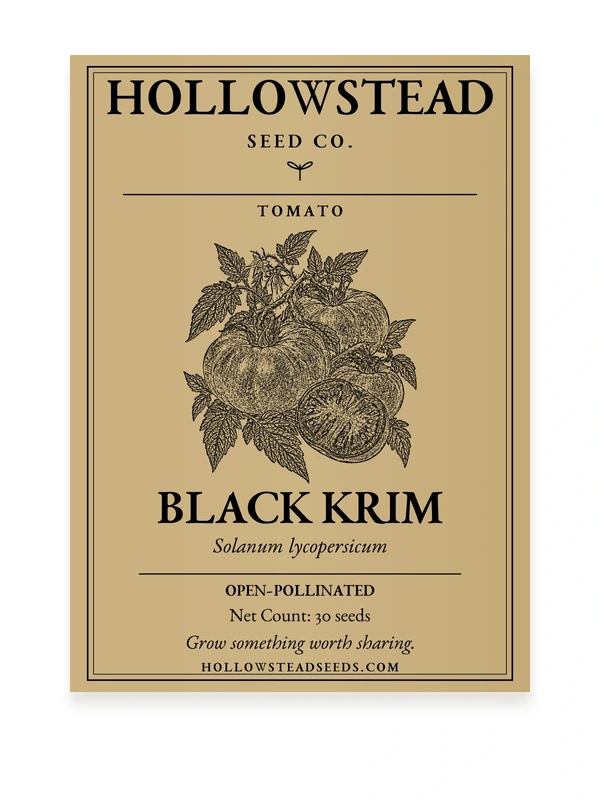
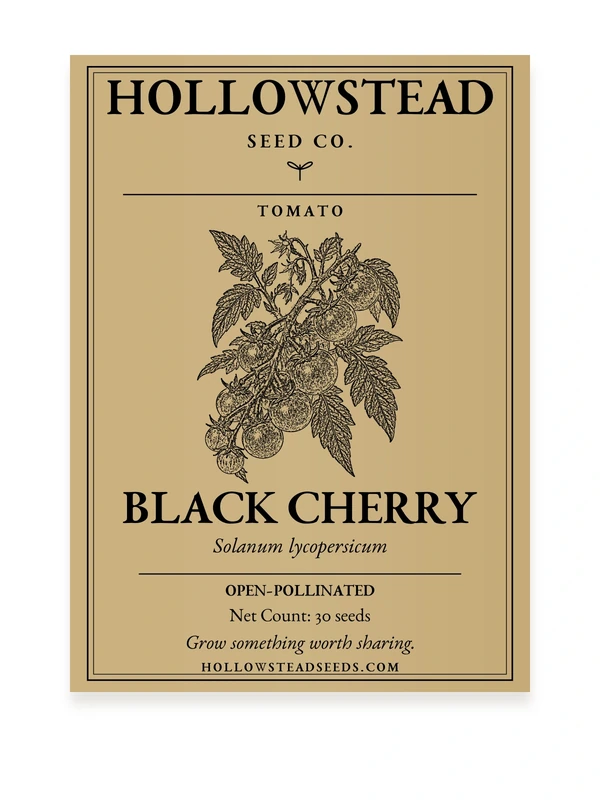
HOLLOWSTEAD SEED
Black Cherry Tomato Seeds
$4.49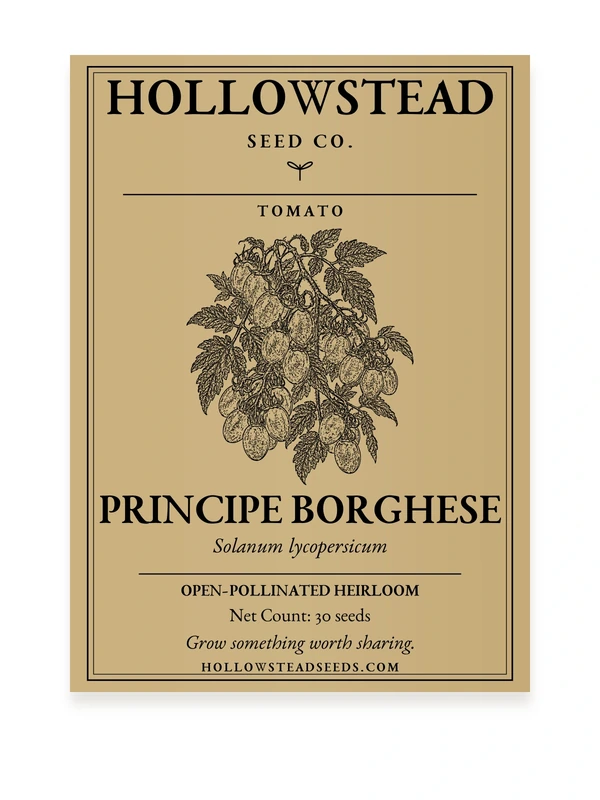
HOLLOWSTEAD SEED
Principe Borghese Tomato Seeds
$4.49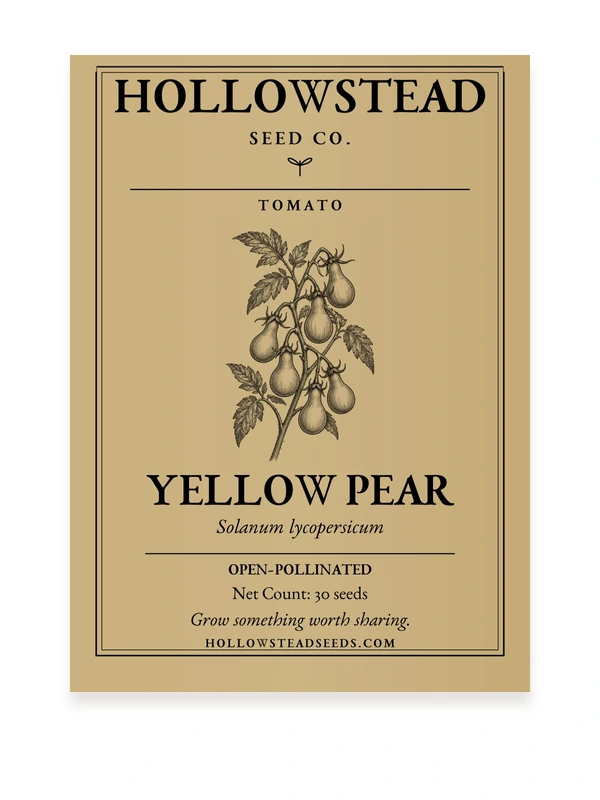
HOLLOWSTEAD SEED
Yellow Pear Tomato Seeds
$4.49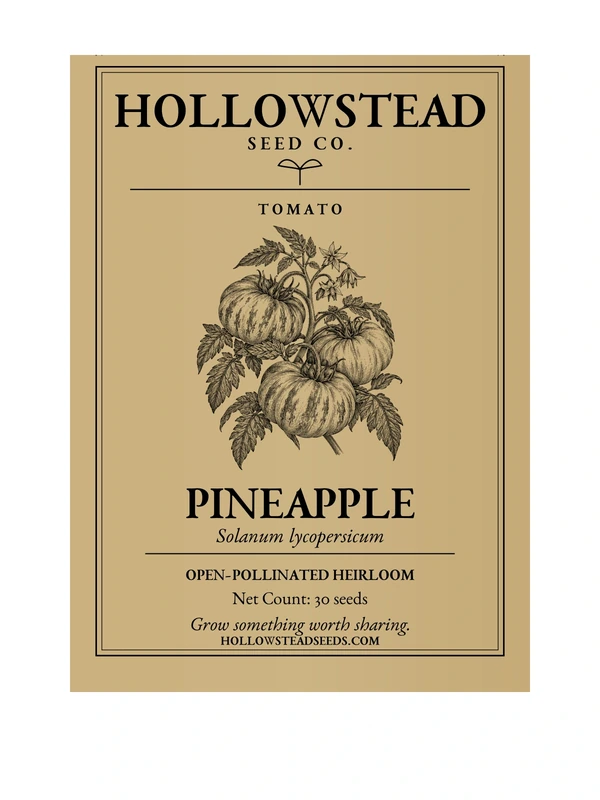
HOLLOWSTEAD SEED
Pineapple Tomato Seeds
$4.49KEEP LEARNING
Related Hollowstead guides

SEED STARTING
The Complete Guide to Growing Tomatoes From Seed
Start tomato seeds with confidence. This guide covers the quick version first, then goes deep on temperature, light, watering, potting up, hardening off, transplant timing, containers, and common seedling problems.
Read the guide
TOMATO GUIDE
Black Krim Tomato Growing Guide
Black Krim is a dark, indeterminate heirloom slicer with dramatic color and a reputation for rich flavor. Here is how to recognize ripe fruit, reduce cracking, support the vine, and decide if it belongs in your garden.
Read the guide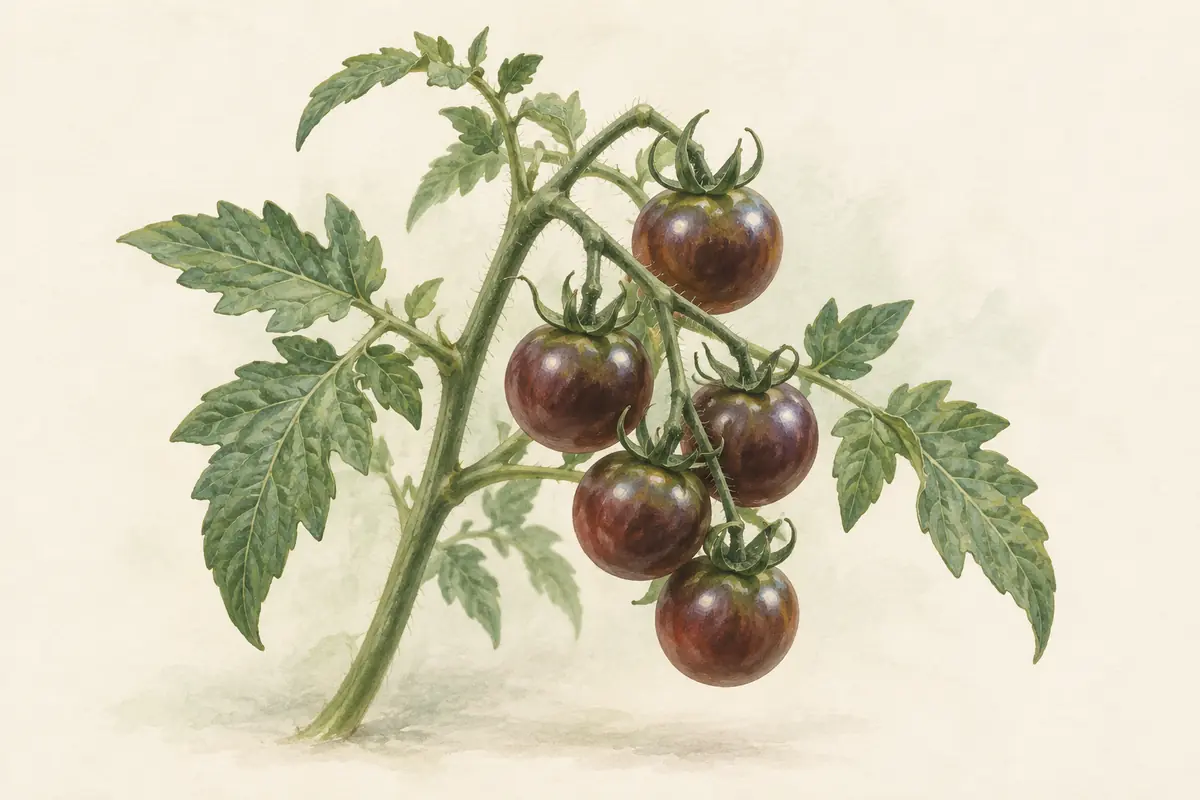
TOMATO GUIDE
Black Cherry Tomato Growing Guide
Black Cherry produces small dusky tomatoes on a full-size indeterminate vine. Learn how the plant grows, how to judge ripeness, what causes splitting, and whether it fits your garden.
Read the guideFrequently asked questions
Are tomato days to maturity counted from seed or transplant?
Does germination time count in days to maturity?
For a transplanted tomato, generally no. The indoor seedling period is separate from the catalog transplant-to-harvest number.
Why did my tomato mature earlier than the packet says?
Warm favorable weather, a vigorous transplant, cultivar strain, and how the seller defines maturity can all shift the date.
Why did it mature later?
Cold after transplanting, shade, heat-related fruit-set problems, root stress, disease, containers, or simply a different local climate can all delay first harvest.
Does “75 days” mean all fruit ripens at day 75?
No. For an indeterminate tomato, it generally refers to first harvest. Production can continue for a long time afterward.
Which Hollowstead tomato is earliest?
For the current Hollowstead listings, use Black Cherry about 75 days, Principe Borghese about 70–75, and Black Krim about 75, all from transplant. Published references may differ by several days; those estimates do not guarantee a fixed harvest order in your garden.
Sources & further reading
- University of Maryland Extension. Fall Vegetable Gardening. https://extension.umd.edu/resource/fall-vegetable-gardening
- Penn State Extension. Season Extenders and Growing Fall Vegetables. https://extension.psu.edu/season-extenders-and-growing-fall-vegetables
- University of Minnesota Extension. Crop and field planning tools for vegetable farmers. https://extension.umn.edu/vegetable-growing-guides-farmers/crop-and-field-planning-tools-vegetable-farmers
- Illinois Extension. Tomato — Home Vegetable Gardening. https://extension.illinois.edu/gardening/tomato
- Seed Savers Exchange. Black Cherry catalog description. https://shop.seedsavers.org/black-cherry-organic-tomato
- Cornell Vegetable Varieties for Gardeners. Black Cherry Tomatoes. https://vegvariety.cce.cornell.edu/main/detail.php?filterBy=0&variety_id=3136
- Cornell Vegetable Varieties for Gardeners. Black Krim Tomatoes. https://vegvariety.cce.cornell.edu/main/detail.php?filterBy=0&variety_id=1670
- Cornell Vegetable Varieties for Gardeners. Principe / Principe Borghese Tomatoes. https://vegvariety.cce.cornell.edu/main/detail.php?filterBy=0&variety_id=1636
- University of Arkansas. Tomato Descriptions — Principe Borghese. https://enpl.uark.edu/_resources/documents/pdf/TomatoDescriptions2022v3.pdf
- Penn State Extension. Heat Stress and Tomatoes. https://extension.psu.edu/heat-stress-and-tomatoes
Hollowstead Growing Notes
A little help for your next growing season
Practical sowing advice, help choosing seeds, and occasional Hollowstead shop news. Usually one or two emails a month, plus a short welcome note.
Choose your topics and frequency after you confirm. Our guides and planting calendar are always free.