
LETTUCE GUIDE
Parris Island Cos Lettuce Growing Guide
Grow Parris Island Cos for upright romaine heads or earlier leaf harvests. Learn shallow sowing, full-head spacing, cool-season timing, harvesting, problems and seed saving.
LettuceVariety guideBeginner → advanced
Published by Hollowstead Seed Co. · How this guide is prepared
Quick answer
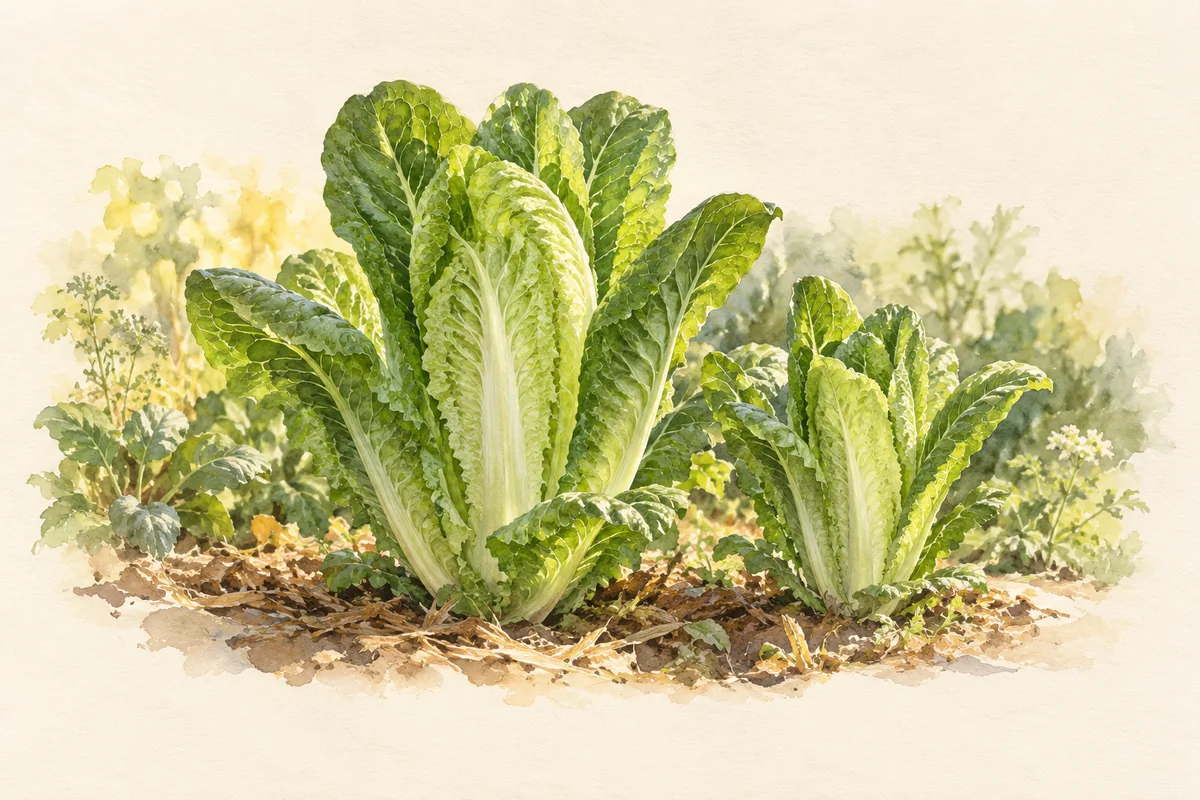
Parris Island Cos is an open-pollinated romaine lettuce with an upright head and substantial leaf ribs. Grow it for a filled romaine head, or take useful leaves earlier when a whole-head harvest is not your priority. Expect heads roughly 8–9 inches tall, with leaves that fold inward around a pale center.
Hollowstead’s packet uses about 65–70 days from sowing, ⅛-inch seed depth and 12 inches between mature plants. Harvest a filled, firm head before the center rises into a flower stalk; usable outer leaves can be picked earlier. Treat the day count as a planning estimate and judge the plants in front of you.
At a glance
| Planning point | Useful starting point |
|---|---|
| Botanical name | Lactuca sativa |
| Type | Open-pollinated romaine, also called cos |
| Packet | 250 seeds |
| Sow / germination | ⅛ inch deep; usually 7–14 days |
| Final spacing | 12 inches for mature heads |
| Light | Full sun in cool weather; partial shade as useful locally |
| Head harvest estimate | About 65–70 days from sowing |
| Other harvest option | Usable outer leaves before full head maturity |
SAVE FOR SOWING DAY
Five-step crop plan for Parris Island Cos
Open the sow-to-harvest plan
- StartSow ⅛ inch deep in cool weather and keep the surface evenly moist; allow about 7–14 days for emergence in suitable conditions. Guide details
- PlantThin or transplant to 12 inches for mature heads; acclimate indoor starts and keep the leafy crown above the soil. Guide details
- MaintainMaintain steady root-zone moisture and inspect inner growth; afternoon shade may reduce heat stress but cannot reverse bolting. Guide details
- HarvestPick selected outer leaves or cut a filled upright head at its base before bolting; treat the whole head as the main crop. Guide details
- Next sowing or seedStart small new groups while a cool growing window remains, or reserve healthy typical plants; separate flowering varieties and collect dry fluffy seedheads in several passes. Guide details
- Space
- Allow about 12 inches between mature plant centers, with a path wide enough to remove a head without crushing its neighbors.
- Timing
- Hollowstead lists about 65–70 days from sowing to a filled romaine head; usable outer leaves come earlier, and cooler or shorter days can delay heads.
Full growing guidehttps://hollowsteadseeds.com/parris-island-cos-lettuce-growing-guide/Seed packethttps://hollowsteadseeds.com/product/parris-island-cos-lettuce-seeds/Find planting dates by ZIP code
What “cos” means in the garden
Cos is another name for romaine. Its leaves grow into an elongated head rather than the spreading rosette of Red Sails. The outside leaves are broader and more open; younger inner leaves fold toward the center as the head fills.
That architecture explains several practical differences. A full head needs time and space. The interior is harder to inspect than a loose-leaf center. Outer-leaf picking is possible, but repeatedly removing substantial foliage changes the plant you are asking to produce a large intact head.
Parris Island Cos is a long-established open-pollinated romaine. The cultivar registry hosted by NC State credits its breeding to Clemson College’s Truck Experiment Station in Charleston, South Carolina.[1] The name describes a stable variety, not a guarantee that every head will reach identical dimensions. Choose the eating stage you want and judge the plants in front of you.
Plan enough cool growing time
For whole heads, a little planning at sowing is valuable. Mark the expected 65–70-day window on a calendar, then compare it with the period when your garden commonly turns hot. The estimate is useful for locating the crop in the season; it is not a reason to keep a ready head outside during a heat wave.
Spring and fall are often the easiest windows. Maryland describes lettuce as a cool-season crop that tolerates light frost, with heading types suitable for spring and fall transplanting.[2] Severe cold, prolonged wet soil and summer heat can all complicate those simple season labels, so use local extension dates as a starting point.
If you want a few heads each week, start several small groups rather than one large bed. A two-week sowing interval is a reasonable first experiment, then adjust it from your own growth rate. Two sowings do not necessarily mature exactly two weeks apart; weather can slow one and accelerate another.
Leave room in the plan for a head that reaches good eating quality early. If several plants are ready together, harvest them rather than letting the oldest wait for the younger group. The succession planting guide explains how to change the schedule as conditions change.
Sowing and transplanting
 View full-size diagram
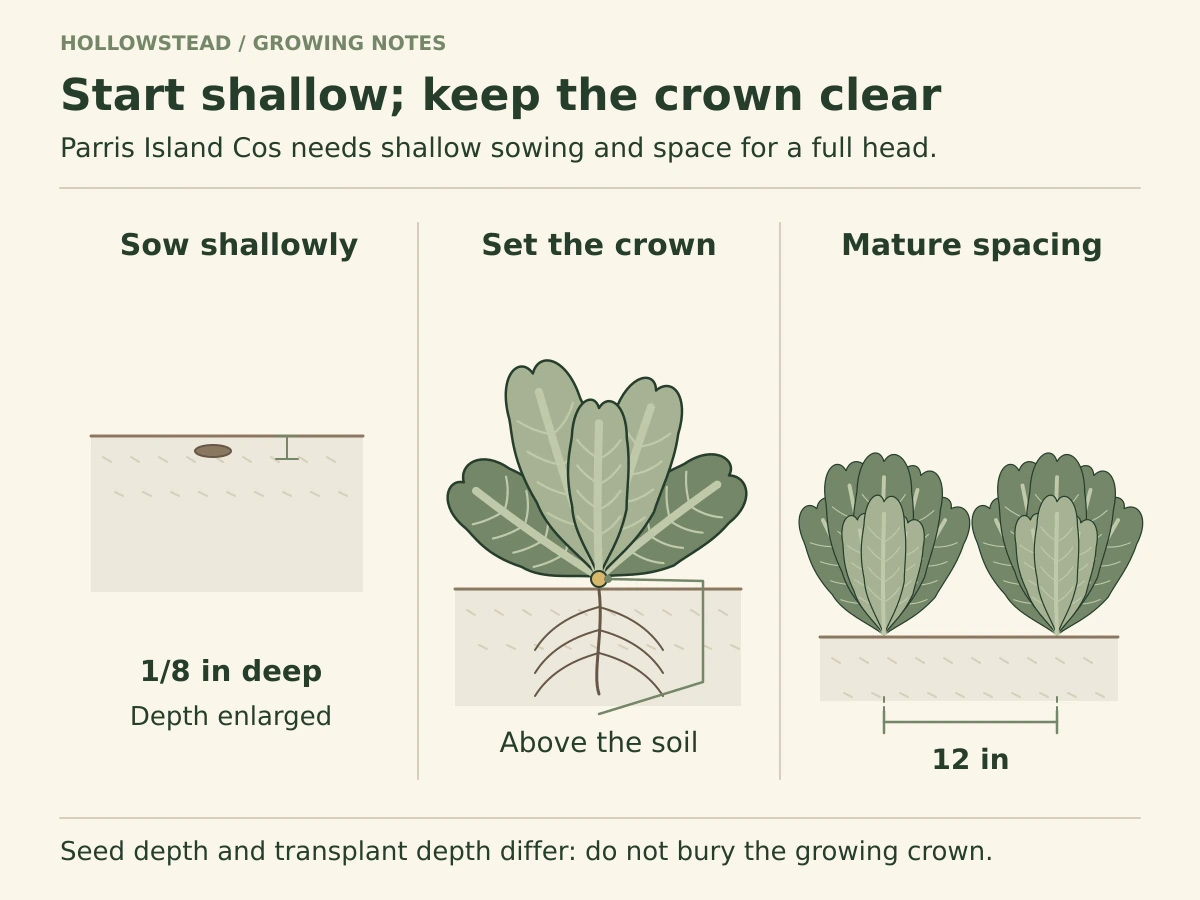
Use a fine seedbed or evenly moistened seed-starting mix. Sow ⅛ inch deep and firm lightly, then keep the shallow seed zone from drying. Tiny seed can be moved by a forceful stream, so water gently and label the row before seedlings appear.
Hollowstead’s 7–14-day germination window assumes suitable conditions. Seed Savers Exchange gives this range for lettuce.[3] If a warm-weather sowing fails, temperature is a useful first check rather than automatically increasing sowing depth. Utah State identifies about 55–65°F as a favorable range and notes reduced germination above 80°F.[4]
Start seedlings in cells if you want an orderly transplant block. Give them good light and avoid keeping them crowded while waiting for the bed. Acclimate them to outdoor light and wind before planting. Handle the root ball gently and water it in.
Keep the leaves and growing center above soil when planting. University of California guidance describes transplanting up to the first leaf and spacing head lettuce 12 inches apart.[5] Do not apply the deep-burial method used for a leggy tomato to the center of a lettuce plant. If a seedling is weak, correct its growing conditions rather than burying the problem.
Head spacing and steady growth
Thin or transplant to 12 inches between plants for mature Parris Island heads. A sowing instruction to put seeds about an inch apart describes a starting row, not the finished head spacing. Marking the final positions with a stick before planting makes it easier to resist squeezing in the spare seedlings.
Leave a path that lets you check the base and remove a head without crushing its neighbors. The center-to-center measurement controls the plants’ growing room; the aisle controls yours. Those are separate parts of a useful bed layout.
Keep the root zone moist but well drained. Fine roots near the surface supply much of lettuce’s water, so drought stress can arrive quickly in a shallow bed or pot.[6] Check with your hand before watering again. The goal is steady growth, not a sequence of wilted leaves followed by a flooded planter.
Base fertility on a soil test or the instructions for your container mix. A head that is small because it is shaded, root-bound or repeatedly dry will not necessarily improve with extra feed. Check those conditions first. Remove weeds while small and cultivate carefully around the shallow root system.
When and how to harvest Parris Island Cos lettuce
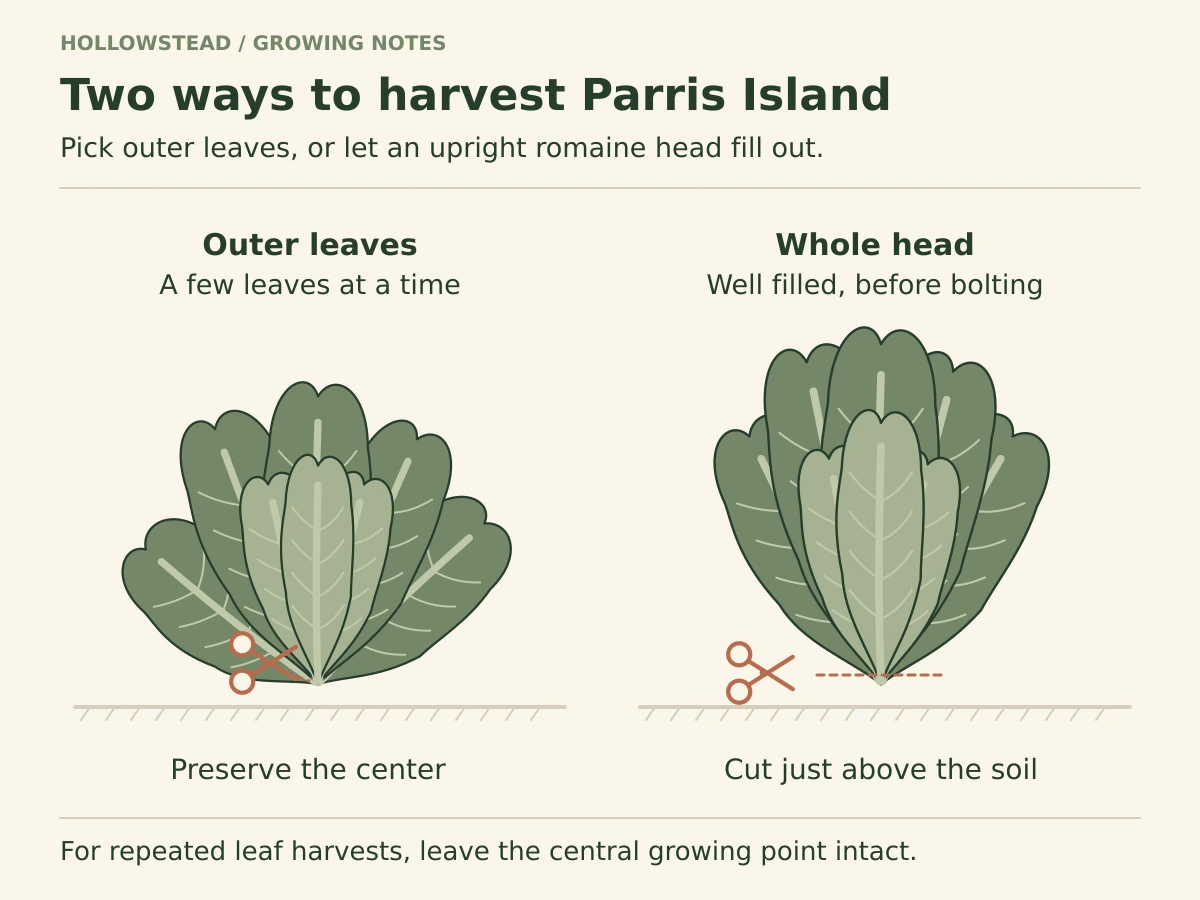
Plan on about 65–70 days from sowing for a whole head, then judge the plant: harvest when the head is filled and firm, before the center rises into a flower stalk. Useful outer leaves can be picked earlier while leaving the young center intact. Weather and growing conditions can shift the timing.
 View full-size diagram
For earlier leaves, take a few healthy outer leaves of useful size while preserving the young center. Spread picking among several plants. This gives a smaller harvest sooner, but a plant regularly used this way should not also be expected to deliver the same untouched head on the same schedule.
For whole heads, let the upright leaves fill in, then check firmness and quality. The head should feel substantial without a rising flower stalk. Romaine is elongated; it does not have to become a hard round ball like iceberg lettuce. Use a clean knife to cut at the base without including soil or pulling nearby plants.
Inspect the inner leaves when you bring a head inside. It is a useful chance to notice hidden damage, tipburn or the beginning of a flower stalk, and to decide whether the next heads should be harvested sooner. Do not judge the entire bed from the outside color alone.
A cut stump may regrow some leaves when conditions allow, but treat the mature head as the main harvest. Do not build the next month’s salad plan around a guaranteed second full-size head. Move the emptied space toward its next use. See how to harvest leaf lettuce and romaine for technique choices.
Bolting, tipburn and heat
As the center elongates into a stalk, the crop is moving toward flowering. Warm conditions and longer days can bring that transition forward. A plant can still have attractive outer leaves while its interior is already changing.
Parris Island Cos has a reputation for relative resistance to bolting and tipburn. Use that as context for variety choice, not a guarantee. University of California notes that heat can contribute to bolting, loose heads and tipburn in lettuce.[5] Keep planning around cool weather even when growing a relatively tolerant variety.
If leaf edges inside the head are brown, compare the pattern with a reliable diagnostic resource. Damage confined to tender inner edges is different from chewing holes or soft spreading decay. Do not assume every brown margin proves a fertilizer shortage. Check water supply, heat, growth rate and the condition of the affected tissue.
For an approaching hot spell, consider harvesting a usable smaller head now. That trades potential size for the quality already present. Afternoon shade may help reduce stress while younger plants develop, but it cannot reverse a plant that has already bolted. Read why lettuce bolts and turns bitter for a fuller explanation.
Containers and pests
A pot or planter can grow Parris Island Cos if you leave room for the head and can maintain moisture. Use a draining potting mix and place the container where you can reach it without moving developing heads. Avoid treating a tray planted for baby leaves as if it had the space for mature romaine.
Turn or inspect a container thoughtfully: tight rows against a wall can hide the backs of plants, while repeated handling can bruise leaves. Choose its location before the crop fills out. For volume, drainage and placement, see growing lettuce in containers.
| What you notice | Inspect | Useful next step |
|---|---|---|
| Holes in outer leaves | Night-feeding slugs, caterpillars or other visible pests | Identify the cause; remove hiding debris or the confirmed pest as appropriate. |
| Small insects in the center | Aphid colonies and signs of beneficial insects | Separate leaves gently to assess how extensive the infestation is. |
| Soft lower leaves | Drainage and prolonged damp contact with soil | Correct excess wetness and remove decaying tissue. |
| Stretched seedlings | Light, crowding and time held in cells | Improve the start rather than waiting for a weak plant to make a head. |
| A loose head with a rising center | Heat and flower-stalk development | Harvest usable leaves and move to the next planting. |
Maryland’s slug resource and Minnesota’s aphid guidance describe those common pests.[7][8] Use the lettuce problem guide to narrow the symptom before applying any treatment.
Saving Parris Island Cos seed
Reserve healthy, typical plants before taking their centers or whole heads. Let them bolt, flower and form dry fluffy seed heads. Those heads mature over time, so gather ready seed in several passes instead of waiting for the entire plant to finish at once.
Separate flowering lettuce varieties to reduce crossing. Seed Savers Exchange recommends 10–20 feet of isolation and several plants when maintaining a variety over generations. Clean and dry the seed thoroughly, then label it with the variety and year.[3]
Use your choice of seed plants to preserve the traits you value. If a plant performed poorly or bolted unusually early, it need not become your seed parent simply because it is the first one with flowers. Keep seed plants identified through cleanup; their season extends well past the ordinary head harvest.
GROW FROM SEED
Grow this variety
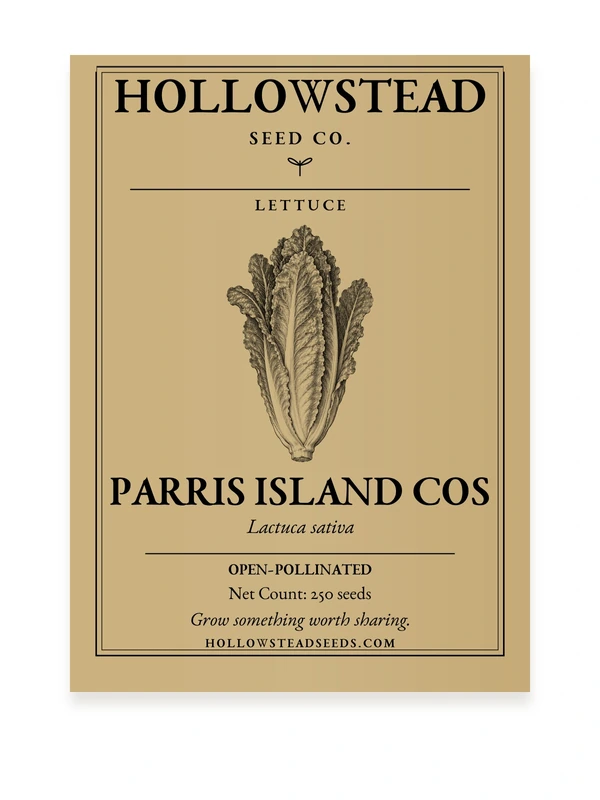
Parris Island Cos Lettuce Seeds come in a 250-seed packet. Pair a small head-lettuce planting with Red Sails if you also want loose-leaf harvests.
HOLLOWSTEAD SEED
Parris Island Cos Lettuce Seeds
$3.49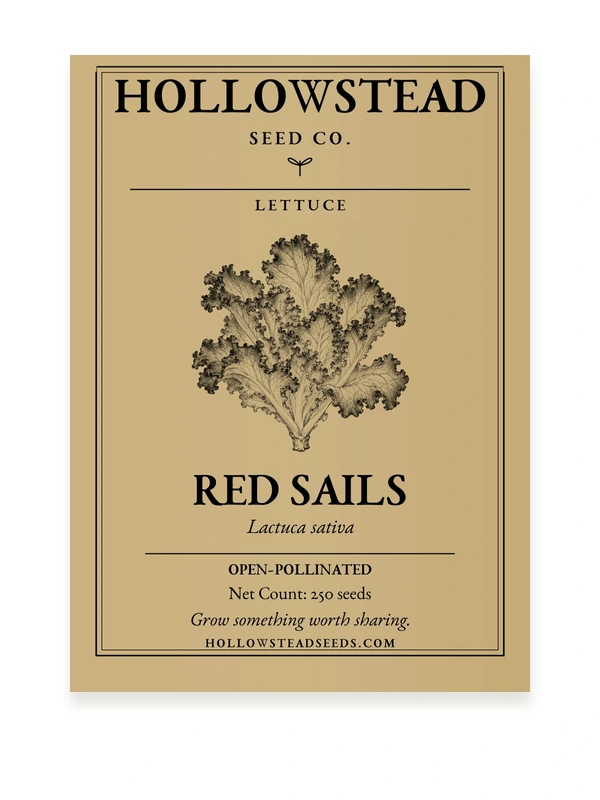
HOLLOWSTEAD SEED
Red Sails Lettuce Seeds
$3.49Frequently asked questions
Is cos the same as romaine?
Yes. Parris Island Cos is a romaine lettuce with an upright, elongated head.
Should the mature plants be one inch apart?
No. Close spacing may be used when sowing seeds, but thin or transplant to about 12 inches for the mature heads described in this guide.
Can I harvest it before it makes a full head?
Yes. You can use selected outer leaves or a smaller whole head. Heavy repeated leaf picking changes the later full-head harvest.
Do the heads need tying shut?
Tying is not required for normal Parris Island Cos head development. Give plants sufficient room and let their leaves fold inward naturally.
Can I count 65–70 days after transplanting?
The Hollowstead packet estimate is from sowing. An indoor start is already part of that time, though conditions can delay or accelerate the actual crop.
Will a harvested romaine head grow back?
The stump may make some new leaves, but a second full-size head is not assured. Plan the main head as one harvest and use succession plantings for continuity.
Sources & further reading
- NC State University. Vegetable Cultivar Descriptions for North America — Lettuce (M–Z): Parris Island COS. https://cucurbitbreeding.wordpress.ncsu.edu/2016/06/02/lettuce-m-z/
- University of Maryland Extension. Growing Lettuce in a Home Garden. https://extension.umd.edu/resource/growing-lettuce-home-garden
- Seed Savers Exchange. Growing and saving lettuce seeds. https://seedsavers.org/grow-lettuce/
- Utah State University Extension. How to Grow Lettuce in Your Garden. https://extension.usu.edu/yardandgarden/research/lettuce-in-the-garden
- University of California Statewide IPM Program. Cultural Tips for Growing Lettuce. https://ipm.ucanr.edu/home-and-landscape/cultural-tips-for-growing-lettuce/
- University of Minnesota Extension. Growing lettuce, endive and radicchio in home gardens. https://extension.umn.edu/garden-and-home/yard-and-garden/gardening-in-minnesota/growing-lettuce-endive-and-radicchio
- University of Maryland Extension. Slugs and Snails: Vegetables. https://extension.umd.edu/resource/slugs-and-snails-vegetables
- University of Minnesota Extension. Aphids in home yards and gardens. https://extension.umn.edu/garden-and-home/yard-and-garden/yard-and-garden-insects/aphids
Hollowstead Growing Notes
A little help for your next growing season
Practical sowing advice, help choosing seeds, and occasional Hollowstead shop news. Usually one or two emails a month, plus a short welcome note.
Choose your topics and frequency after you confirm. Our guides and planting calendar are always free.