
SEASONAL PLANNING
Succession Planting Lettuce for Spring and Fall
Turn lettuce into manageable batches instead of one oversized harvest. Build a flexible sowing cycle, work backward for fall, and adjust the plan to weather, growth, and how much you eat.
LettuceGarden planningBeginner → advanced
Published by Hollowstead Seed Co. · How this guide is prepared
Quick answer
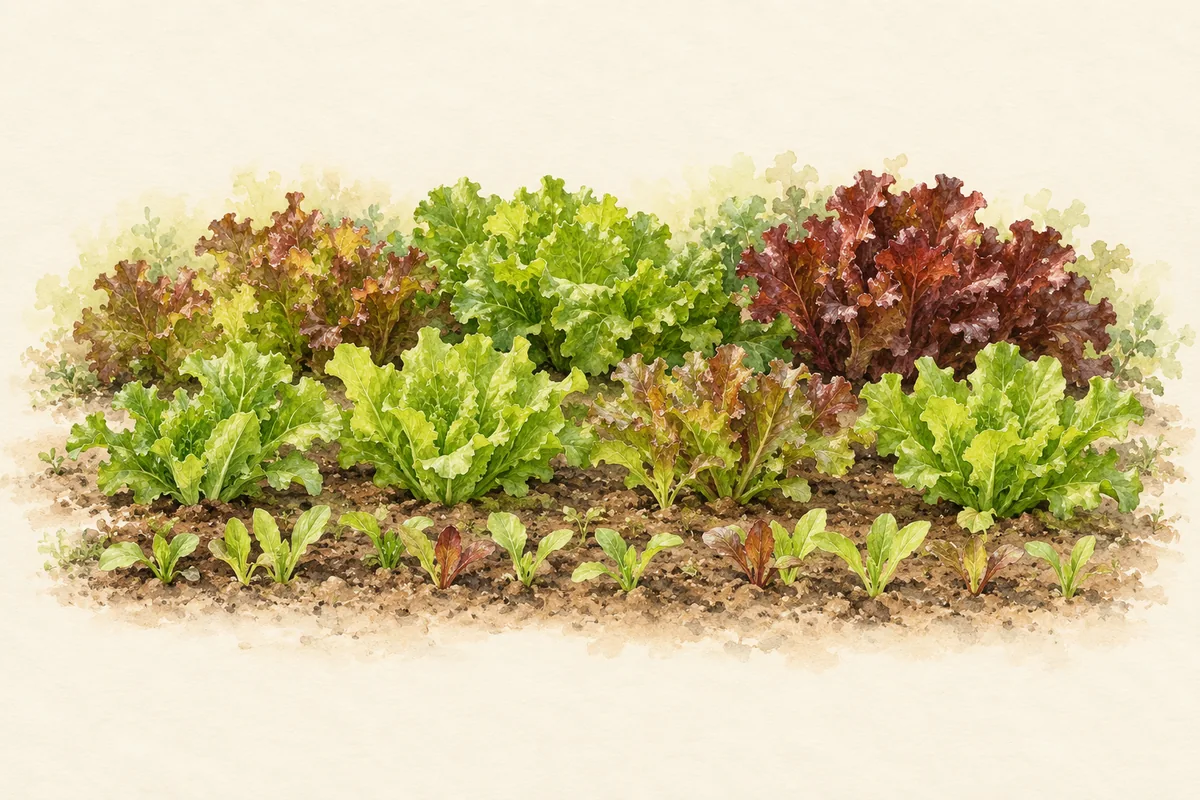
Sow a small batch, then sow another while the first is still growing. For a first home-garden plan, try an interval around 10–14 days during suitable cool weather, then adjust it to growth and how quickly you use the crop. Illinois Extension uses that interval as a way to spread lettuce harvest.[1]
Spring and fall need different expectations. Spring warmth can make later batches catch up; fall cooling can make later batches take much longer. A repeating calendar reminder is useful, but a sowing only helps if the remaining season can bring it to the harvest stage you want.
At a glance
| Decision | Useful starting point |
|---|---|
| Start with | A small number of plants or a short baby-leaf row |
| Trial interval | About 10–14 days; adjust to your crop and use |
| Spring question | Can this batch finish before persistent heat? |
| Fall question | Can it establish before light and temperature slow growth? |
| Hot seedbed | Start a cooler indoor batch or wait for suitable conditions |
| Record | Sowing date, emergence, first harvest, finish, and leftovers |
Define the harvest before you count days
“A steady supply” can mean a handful of leaves for sandwiches, several small salads a week, or a whole romaine head every few days. Those goals require different batch sizes. Begin with your actual use, then leave space to change the plan after one crop.
For a worked example, suppose you want two whole heads a week. A two-week sowing interval suggests roughly four future heads per batch, with a modest reserve for failures. That is planning arithmetic, not a yield promise. If you regularly leave finished heads in the bed, reduce the next batch rather than letting the same surplus repeat.
Outer-leaf picking spreads one plant’s contribution over time. Whole-head harvest concentrates it. A baby-leaf patch may be cut once or tried for another harvest, but its regrowth should not be the only crop scheduled to bridge a gap. Keep the new sowing visible in your plan.
Red Sails is an open loose-leaf option with an approximate 45-day maturity figure from sowing. Parris Island Cos takes about 65–70 days to a finished romaine harvest under suitable conditions. Both can supply leaves earlier. Read what maturity numbers mean before building an exact calendar from them.
Build a small repeatable sowing cycle
Give each batch its own label and a defined piece of space. A dated cell tray, a short row, or a separate container makes the batches easier to compare. Avoid repeatedly scattering fresh seed through an older planting: it becomes difficult to tell what is new, what failed, and which plants should be thinned.
| Batch | First job | Next decision |
|---|---|---|
| A | Sow a modest trial and record emergence | Does its growth suggest your interval is realistic? |
| B | Sow after your chosen interval | Keep the same size or reduce it if A is already ahead |
| C | Prepare while A nears harvest | Continue only if the coming weather suits another crop |
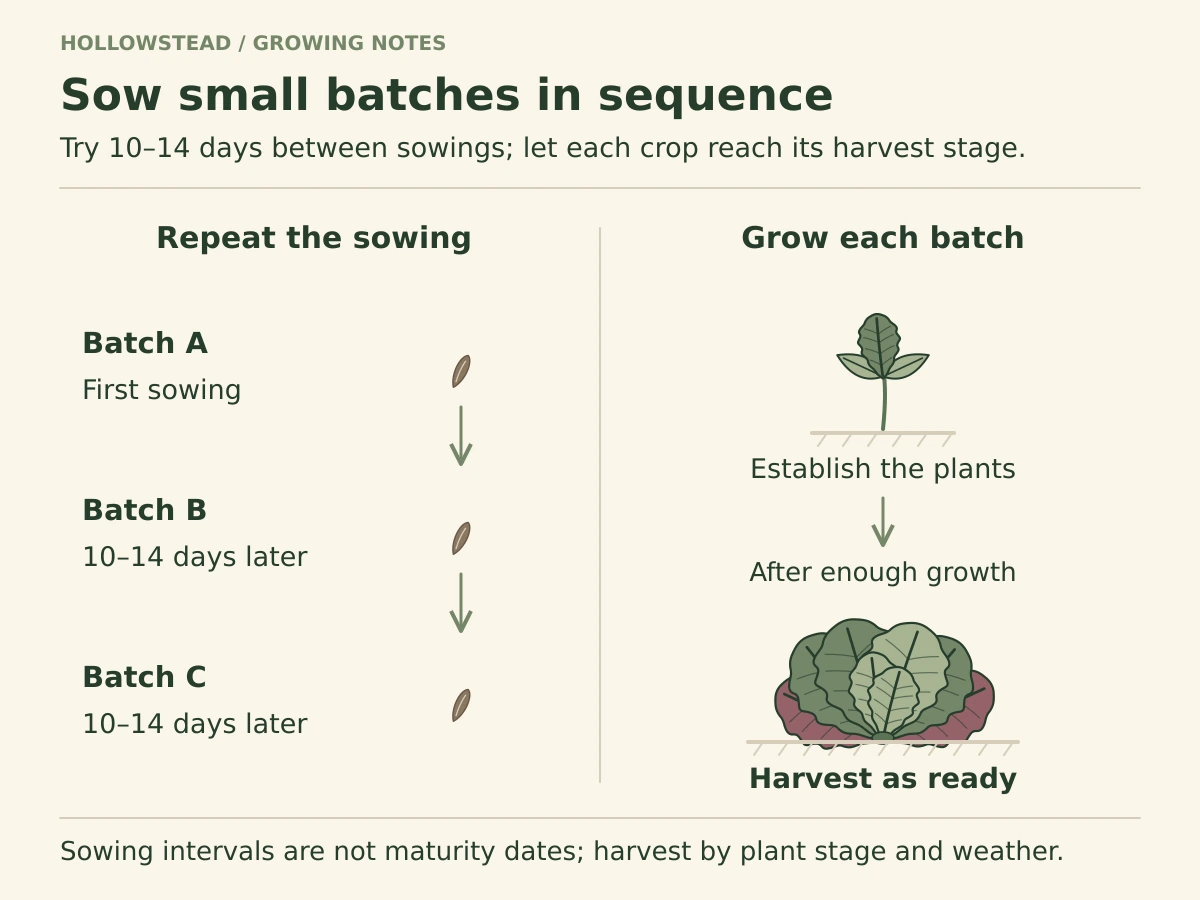 View full-size diagram
A 10–14-day interval is a starting experiment, not a requirement. Smaller weekly batches can suit a household that wants little and often. A longer interval may suit occasional use. Compare the size of the next batch with what is already ready, instead of planting automatically because the calendar says so.
Reserve enough space for the overlap. If you fill every inch with batch A, you will have nowhere to put B until A is removed. Containers or a small transplant tray can serve as temporary space, but only if you can care for them properly. The container guide gives a compact three-pot version.
Use spring warmth without racing into summer
Start the spring sequence when your soil and local conditions permit a cool-season crop. Workable soil and a manageable forecast matter more than copying another gardener’s date. An acclimated lettuce plant can tolerate light frost, yet cold slows growth and a severe freeze may still damage it.[2]
The first batch may grow slowly. As the days warm, the second and third can develop more quickly and reach useful size close together. If that happens, harvest some later plants young or lengthen the next sowing interval. A plan that adapts to the crop is more useful than one that preserves perfect spacing on paper.
Use the expected arrival of persistent heat as the spring stop signal. A quick young-leaf crop may still fit after a full-head crop becomes doubtful. If the remaining window looks too short, give that space to another seasonal crop and plan lettuce’s return in fall.
Do not rely on cutting a bolting stem to keep spring lettuce productive all summer. Bolting changes the plant’s growth toward flowering. A fresh batch may help only while the environment still supports good lettuce.
Count backward for the fall crop
Identify your local first-frost period and when sustained hard freezes usually arrive. Average dates are planning markers, not forecasts. For a conservative first attempt, aim to have usable plants before the early part of that cold period, then treat later protected harvest as an opportunity.
Fall growth slows as temperature and daylight decline. University of Maryland emphasizes establishing plants before that slowdown.[3] A cover can protect leaves, but it cannot recreate a long bright day. Sow early enough to grow the crop, not merely early enough to keep tiny seedlings alive.
Use this planning equation: target harvest date minus the variety’s stated growing time minus a fall allowance = provisional sowing date. A practical trial allowance of roughly two additional weeks can start your calculations; local experience may call for more. Confirm whether the listed maturity counts from seed or transplant so you do not accidentally omit or double-count the indoor period.
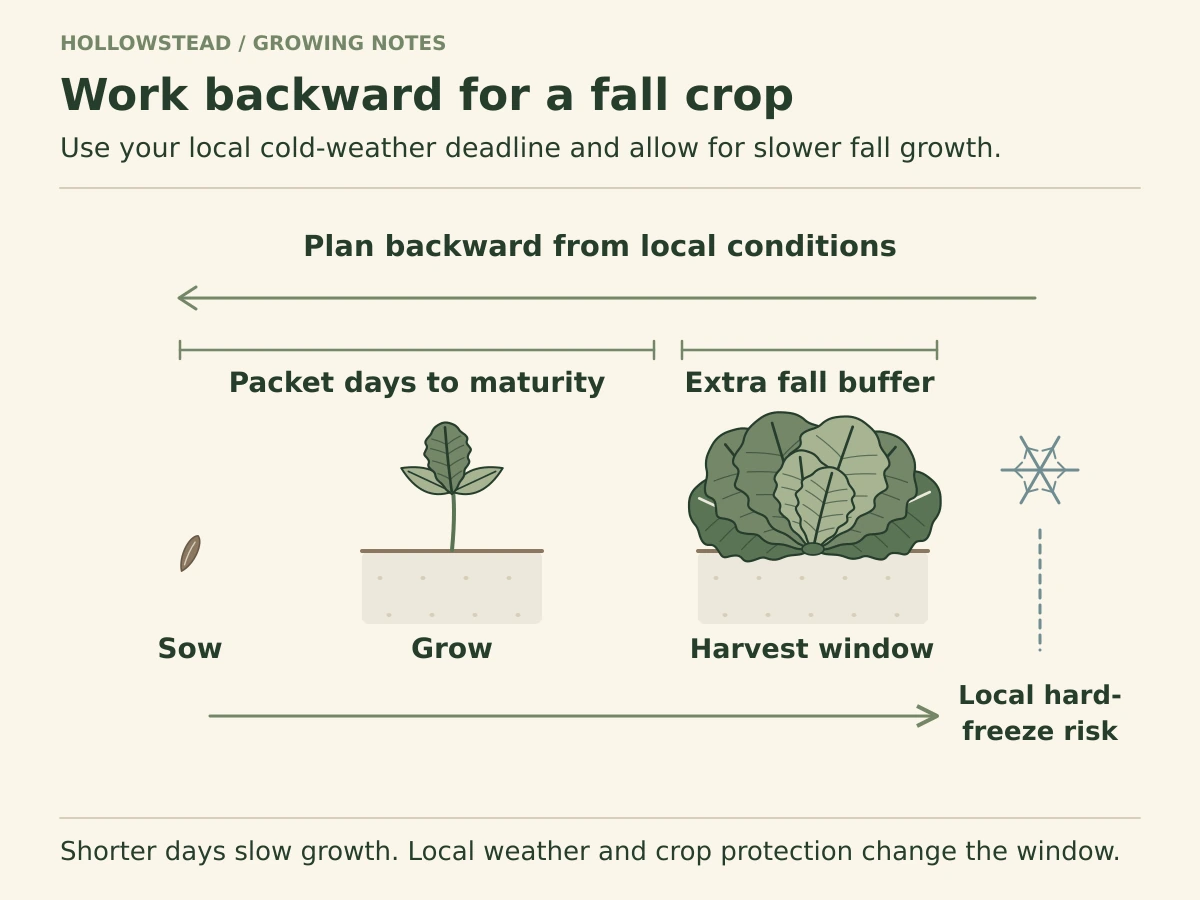 View full-size diagram
For example, if you choose a target 80 days away, a lettuce listed at 65–70 days leaves little room for delays. That is a signal to sow promptly under controlled conditions, choose a younger harvest stage, or select a quicker crop—not proof that the head will be ready on day 70. Use the arithmetic to expose tight margins.
Make the earliest fall batch your dependable one and later batches smaller experiments. This limits how much seed and space you commit to a period when each lost week is harder to recover. The complete lettuce guide covers the basic sowing and transplanting steps.
Bridge a hot seedbed with young transplants
Fall planning often asks you to sow while it still feels like summer. The final growing weather may be improving while the seedbed remains too hot for reliable germination. Utah State notes that soil above about 80°F can inhibit lettuce seed.[4]
Start a small tray in a cooler place with adequate light, or use a reliably cooler protected sowing area. Check the actual medium temperature. Move compact seedlings to the final bed after gradual outdoor acclimation. Do not let the tray become an oversized, root-bound holding pen while you wait indefinitely for another crop to finish.
If your test sowing fails, use the germination troubleshooting guide before repeating it. A hot, dry surface is not corrected by using more seed. Keep the unplanted reserve dry and cool following the seed-storage guide.
Schedule the bed as well as the seed
Succession also means using space released by an earlier crop. Maryland describes moving from cool-season crops to warm-season crops and back again as a way to organize the garden.[5] The practical limitation is often when the bed really becomes available.
Mark that date in your notes. If the intended fall bed still holds productive tomatoes, decide which crop has priority before starting too many lettuce plants. A small separate lettuce bed may be preferable to dismantling a crop you still want. If space clears late, change the lettuce harvest goal rather than pretending no time was lost.
Remove spent plants, address weeds, and assess soil moisture and fertility before the next planting. Do not automatically add a heavy fertilizer dose after every batch. Repeated lettuce sowings also make sanitation useful: remove diseased remains and avoid placing a new crop directly into an unresolved disease problem.
Let harvest notes improve the next sowing
Record four dates: sowing, first emergence, first useful harvest, and final harvest. Add one sentence about why the batch ended—fully used, too bitter, freeze damage, pests, or more lettuce than you needed. That last note often matters more than the exact weight.
If you run out before the next batch is ready, shorten the interval, increase the batch modestly, or combine whole-head and outer-leaf harvest. If batches overlap too heavily, harvest some plants young and reduce the next sowing. Read the harvest guide for methods that protect the center when you want continued growth.
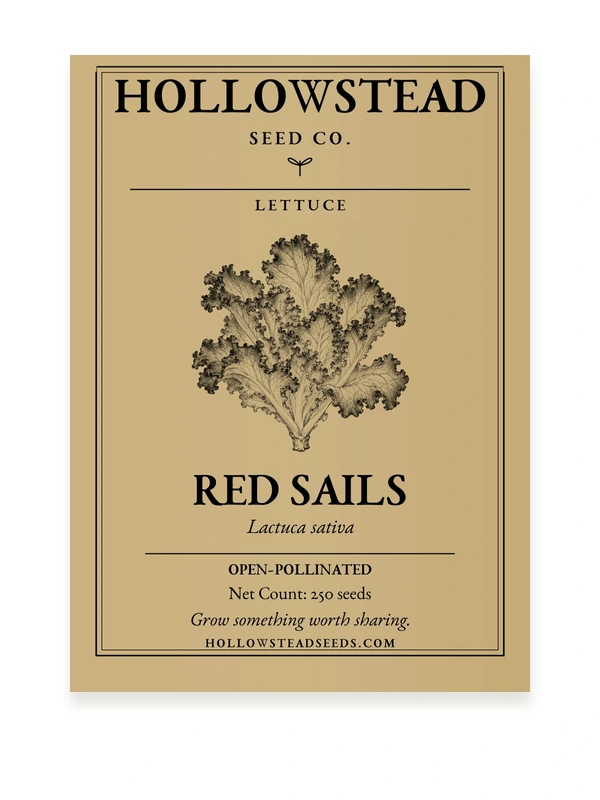
Choose Red Sails seed for red loose leaves and Parris Island Cos seed for green romaine. A mixture of useful harvest forms can make a small succession plan more flexible than a large planting of identical finished heads.
GROW FROM SEED
Put this guide to work.
Choose a variety that fits the way you want to grow and harvest, then use the guide above as your reference through the season.
HOLLOWSTEAD SEED
Red Sails Lettuce Seeds
$3.49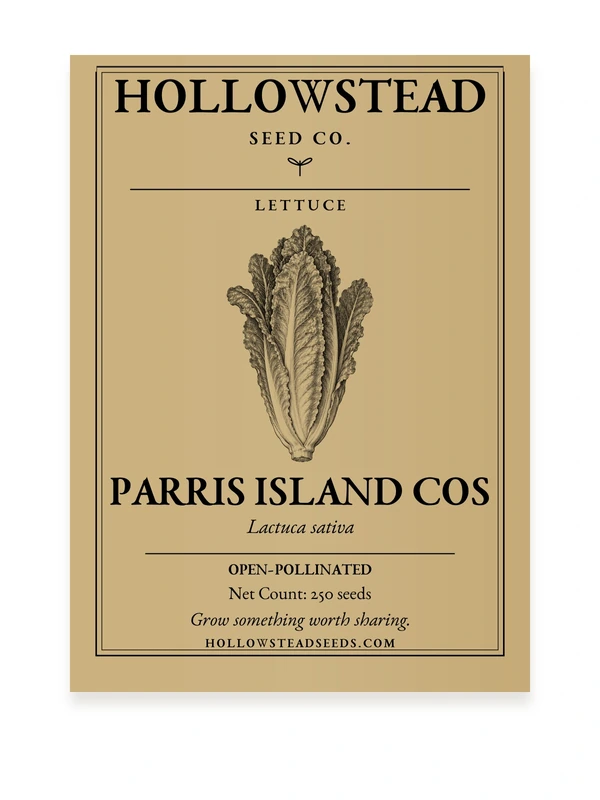
HOLLOWSTEAD SEED
Parris Island Cos Lettuce Seeds
$3.49KEEP LEARNING
Related growing guides
HARVEST GUIDE
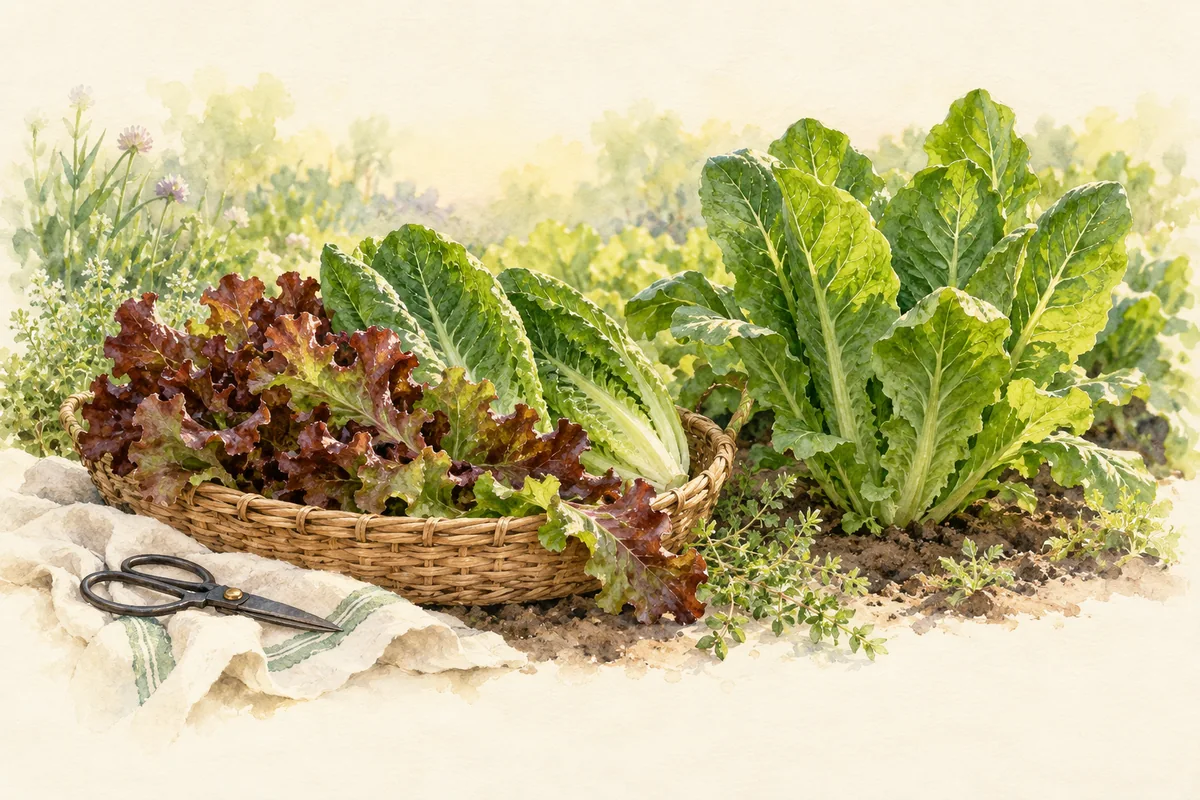
How to Harvest Leaf Lettuce and Romaine
Choose between outer leaves, baby-leaf cuts, and finished romaine heads. Learn where to cut, what to leave for regrowth, when quality is slipping, and how to handle fresh lettuce safely.
Read the guide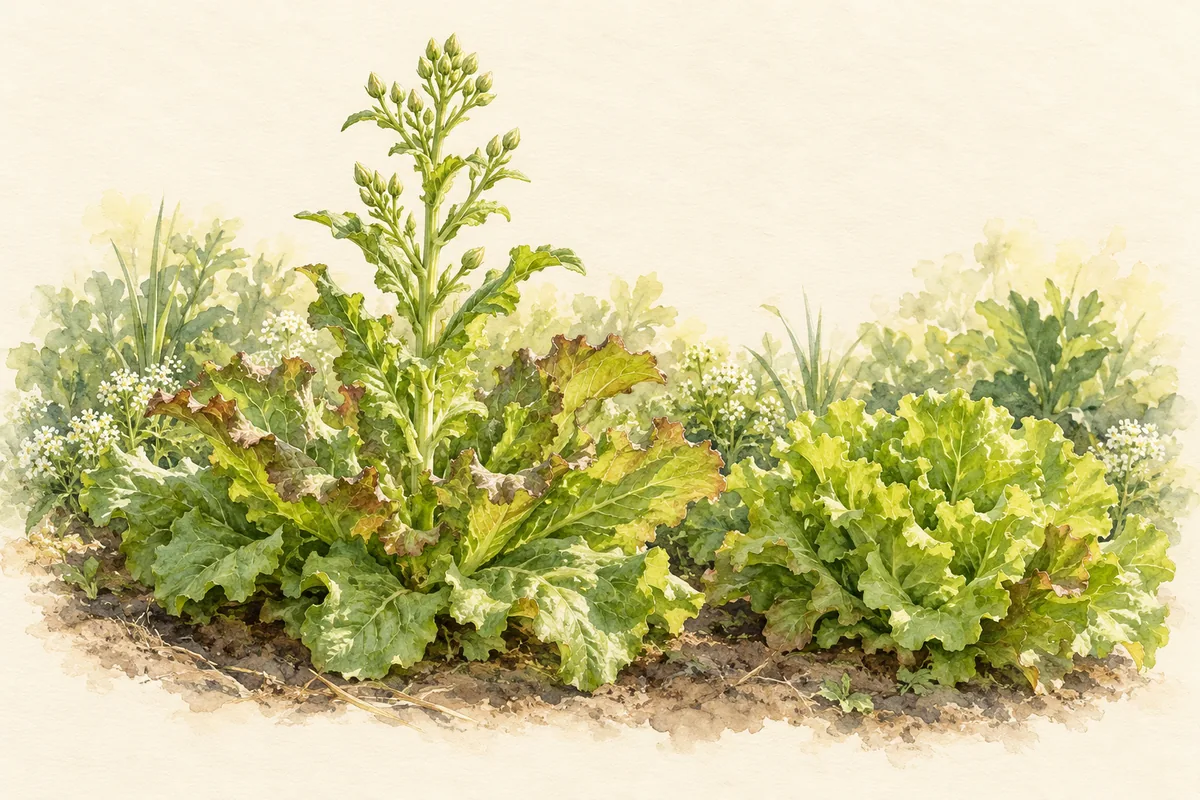
HEAT & BOLTING
Why Lettuce Bolts or Turns Bitter
Learn the difference between a forming romaine head and a rising flower stalk, why heat and season matter, and when to harvest, replace, or deliberately keep lettuce for seed.
Read the guide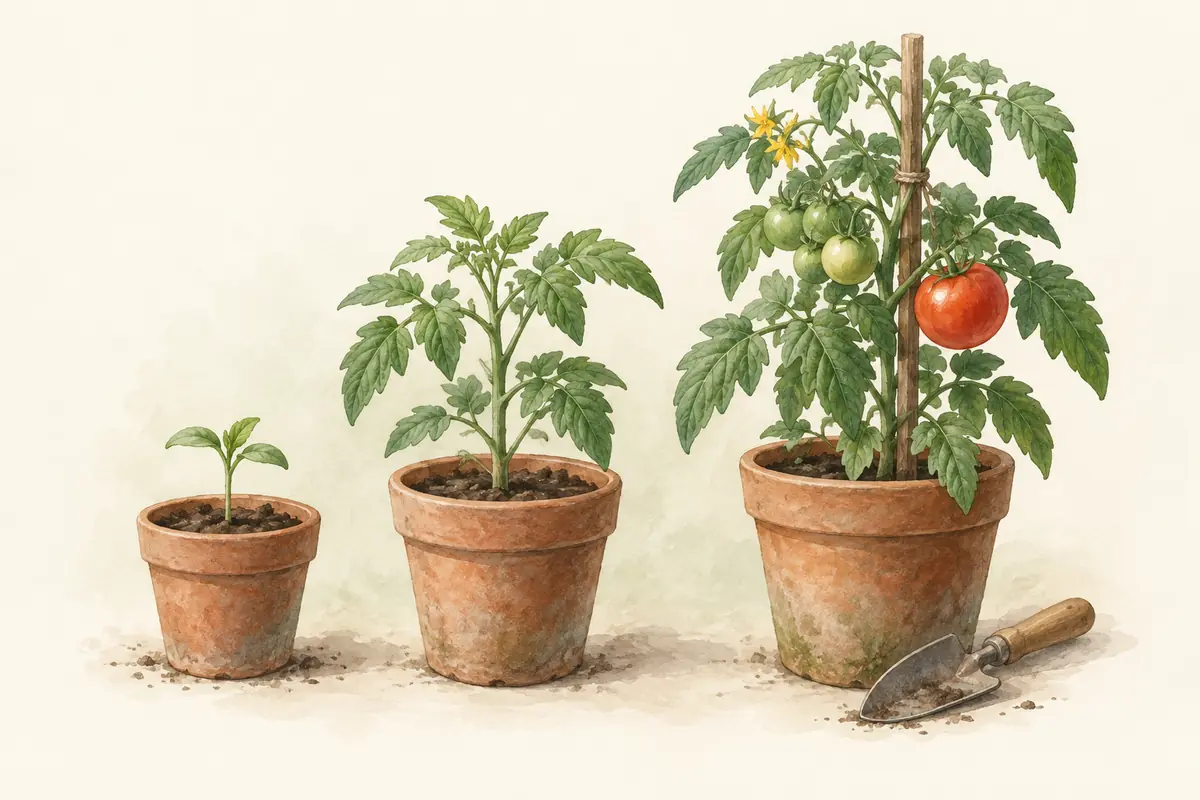
GARDEN BASICS
What “Days to Maturity” Actually Means for Tomatoes and Other Garden Crops
Days to maturity is a planning estimate, not a harvest appointment. Learn when the count starts, how transplanted and direct-sown crops differ, and how weather, containers, and transplant stress change the real timeline.
Read the guideFrequently asked questions
Should I sow lettuce every week all year?
Only while your conditions support it. Weekly small batches can work in a suitable season, but heat, short winter days, and freezes may create a necessary pause.
Can I use the same interval in spring and fall?
Use it as a trial, then adjust. Warming spring weather can compress harvests; cooling fall weather can stretch them apart.
Does row cover mean I can plant later?
It may extend protection and harvest, but it does not remove the need for enough light and growing time. Plan to establish the crop before winter slows it.
Can romaine be part of a baby-leaf succession?
Yes. Harvesting young changes the timing and spacing goal. Keep that plan distinct from a batch intended to make full heads.
Sources & further reading
- University of Illinois Extension — Lettuce: Home Vegetable Gardening
- University of Minnesota Extension — Planting vegetables in midsummer for fall harvest
- University of Maryland Extension — Fall Vegetable Gardening
- Utah State University Extension — Leafy Greens: Planting and Spacing
- University of Maryland Extension — Vegetable Succession and Companion Planting
Hollowstead Growing Notes
A little help for your next growing season
Practical sowing advice, help choosing seeds, and occasional Hollowstead shop news. Usually one or two emails a month, plus a short welcome note.
Choose your topics and frequency after you confirm. Our guides and planting calendar are always free.