
HEAT & BOLTING
Why Lettuce Bolts or Turns Bitter
Learn the difference between a forming romaine head and a rising flower stalk, why heat and season matter, and when to harvest, replace, or deliberately keep lettuce for seed.
LettuceTroubleshootingBeginner → advanced
Published by Hollowstead Seed Co. · How this guide is prepared
Quick answer
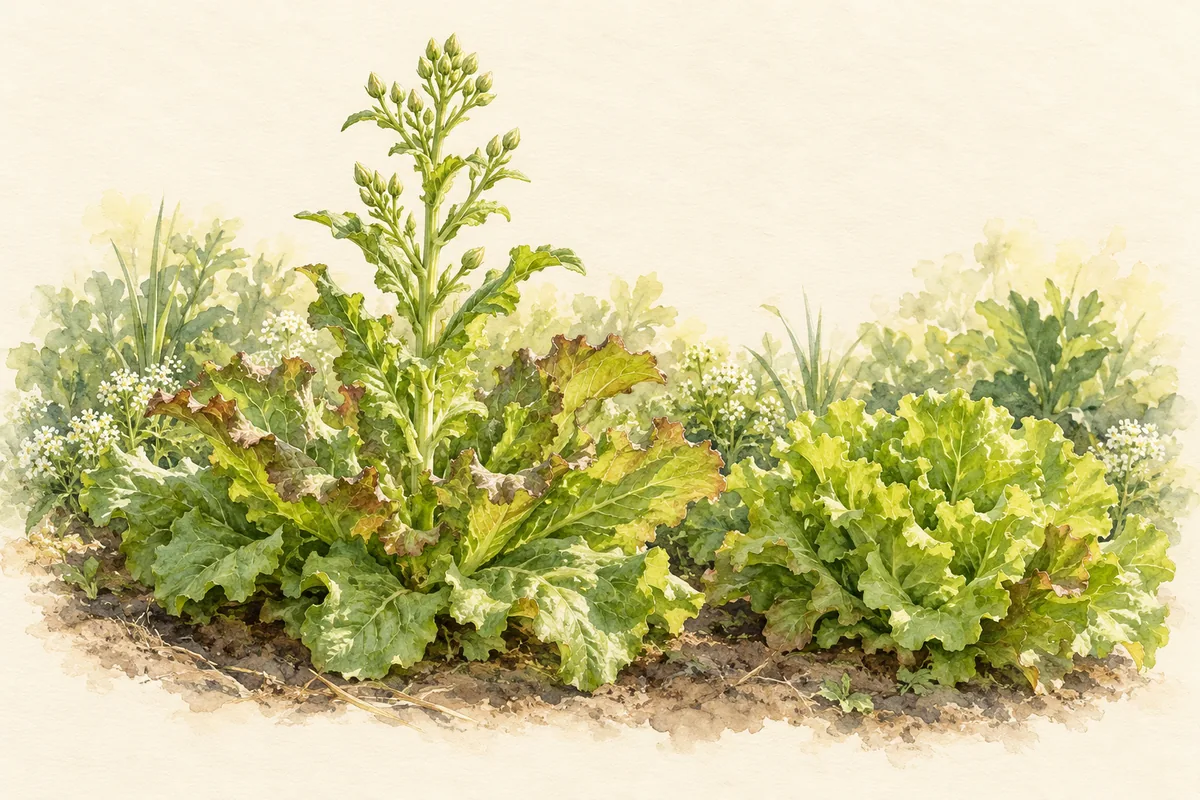
Lettuce bolts when it shifts from producing a harvest of leaves to producing a flower stalk and seed. Heat and the season’s long days often hasten that change, and plant age and variety also matter. Leaves commonly become less tender and more bitter as the crop moves through that stage.[1][2]
Steady moisture, appropriate planting dates, and some protection from afternoon heat may delay problems. They do not turn an established flowering plant back into a young lettuce. Once a stalk is clearly elongating, harvest any acceptable leaves promptly, replace the plant, or intentionally keep selected plants for seed.
At a glance
| Decision | Useful starting point |
|---|---|
| Bolting clue | A distinct central stem rises and spaces leaves farther apart |
| Normal romaine growth | Upright overlapping leaves without a tall flower stalk |
| Common triggers | Warmth, long days, plant age, and stress |
| Prevention focus | A suitable season and steady growth |
| After bolting | Use acceptable leaves promptly, replace, or save seed |
| Separate problem | Hot soil can inhibit seed germination before a plant exists |
Recognize the switch from leaves to flowers
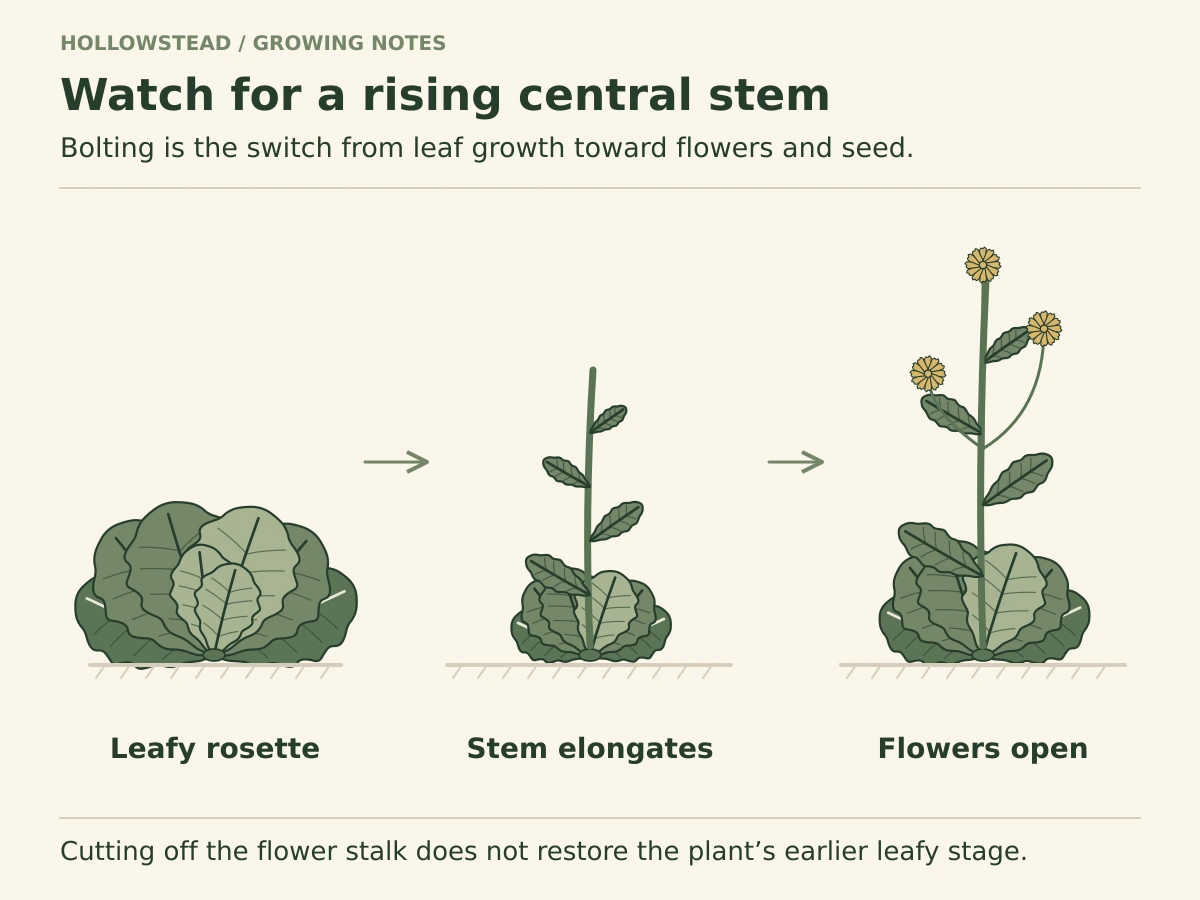
In a leafy lettuce rosette, leaves remain clustered around a short center. During bolting, the central stem lengthens and leaves become separated along it. Eventually the plant branches and forms flower buds. The change is often easier to see from the side than from directly above.
Do not diagnose romaine as bolting just because it is taller than a loose-leaf lettuce. Parris Island Cos normally makes an upright head. Compare the spacing of leaves along the center: tightly overlapping leaves forming a head differ from an elongated exposed stalk. If you are unsure, photograph it from the side and check again as it develops.
 View full-size diagram
A plant can lose eating quality before its flowers open. Waiting for yellow flowers as the first harvest warning misses the earlier stem growth and possible flavor change. Conversely, bitter flavor alone does not identify a specific disease or prove that visible bolting has begun.
Understand the season, the plant, and the stress
Lettuce is a cool-season crop. Sustained heat can shorten its useful leaf-harvest period, and varieties differ in how quickly they respond. A heat wave can end a spring crop even when the gardener has watered it carefully.[3] That does not mean the watering was pointless; water stress and temperature are separate pressures.
Day length also contributes to flowering. Lettuce is among plants whose flowering is promoted by longer days.[2] Afternoon shade can reduce exposure and heat load, but an ordinary shade cloth does not make the season’s day length disappear.
Age matters because a lettuce plant is an annual with a reproductive stage. Even in a favorable garden, repeated leaf picking cannot keep it young forever. A succession of new plants is therefore a better long-term supply plan than expecting one old row to continue indefinitely.
Water and nutrient stress can further reduce leaf quality. A root zone that alternates between very dry and saturated conditions does not support the same steady growth as an evenly moist, well-drained one. Crowding and damaged roots may compound the problem. Evaluate the whole setting rather than searching for one amendment that will cancel summer.
“Slow to bolt” is a comparative trait, not a promise of uninterrupted hot-weather production. Red Sails is commonly described as slower bolting, but the planting date, local heat, and harvest stage still determine whether it fits your garden.
Separate bitterness from spoilage and other problems
Hot-weather lettuce can taste bitter before a clear flower stalk is visible. A slightly bitter sound leaf and a leaf with soft rot are different observations. Inspect texture, smell, visible decay, and plant condition before thinking about how to use the harvest.
| Observation | Likely direction to investigate | Useful decision |
|---|---|---|
| Sound leaves taste stronger during heat | Age, heat stress, and approaching bolting | Harvest promptly if acceptable; improve the next planting window |
| Tall stem with widely spaced leaves | Bolting | Replace for salads or keep selected plants for seed |
| Brown dry margins on inner leaves | Tipburn or other growing injury | Check water, heat, and fertility; inspect for secondary decay |
| Soft, slimy or rotten tissue | Deterioration or disease | Discard spoiled produce; investigate the plant separately |
| No seedlings in a hot bed | Heat inhibition of germination | Use a cooler sowing setup; this is not bolting |
Do not use taste as a food-safety test. FDA recommends discarding rotten produce, and washing cannot eliminate all contamination.[4] A bitterness discussion applies to otherwise sound lettuce, not to making damaged or contaminated leaves acceptable.
For leaf spots, collapsed crowns, or insects, use the problem guide. For a row that never emerged, use the germination guide. Both problems can appear in hot weather without sharing the same cause.
Reduce stress before the plant starts to bolt
Begin with planting time. Sow early enough for spring lettuce to reach your chosen harvest stage before persistent heat, and start the fall crop early enough to establish before winter slows it. A shorter baby-leaf harvest may fit a narrow window when a full-head crop does not.
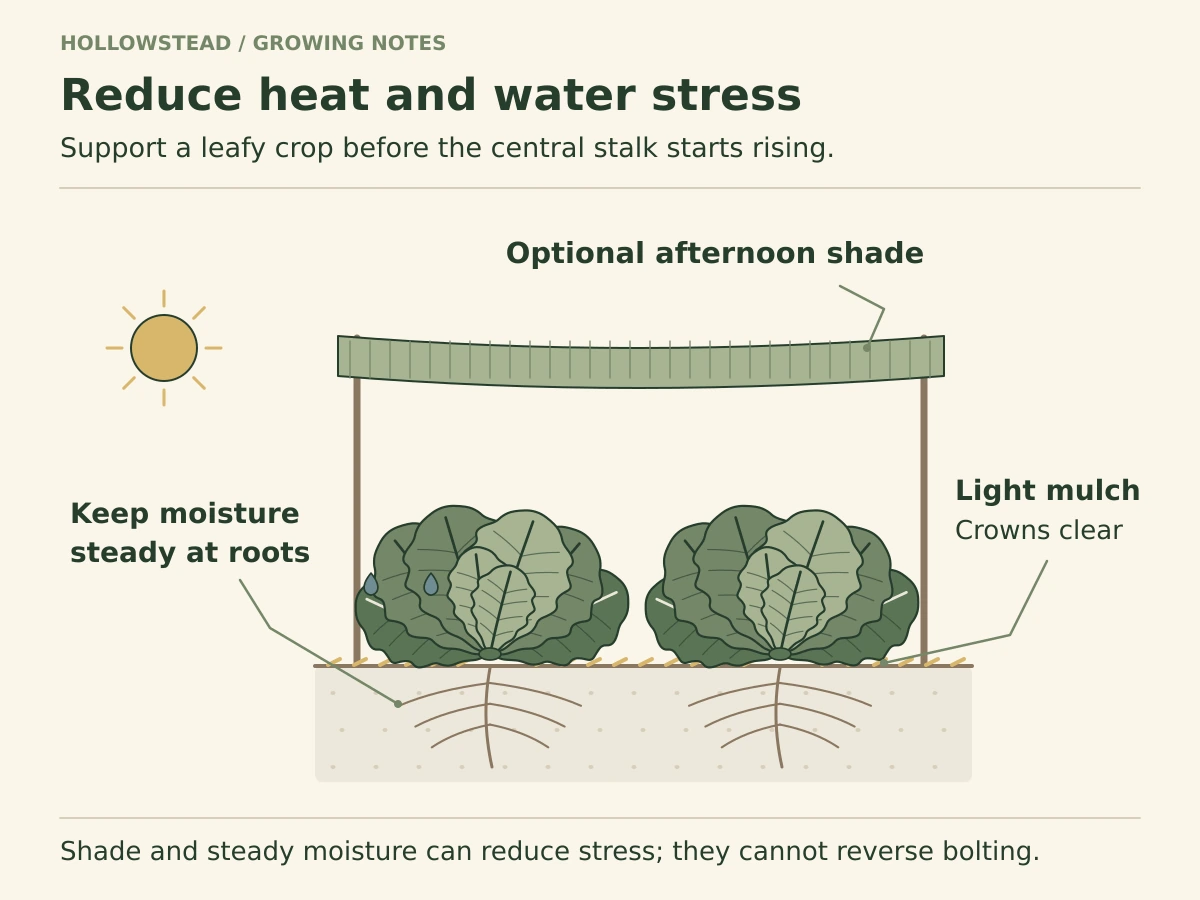
Check moisture at root depth, not just the appearance of the surface. Apply water where roots can use it and maintain drainage. Use a light organic mulch around established plants when appropriate, keeping the crown clear. Shallow roots also benefit from gentle weed removal that does not slice through the plant’s feeding area.
Provide afternoon shade when a sunny site becomes too hot. Maryland describes shade cloth and shade from taller crops as ways to extend the lettuce season.[5] Keep the planting bright enough to grow, and watch for a new problem if a dense canopy traps damp air or makes watering difficult.
 View full-size diagram
In a container, consider reflected heat from pavement and walls as well as sun on the leaves. Move a small pot to a cooler, bright location if practical. Do not park it in deep shade and then keep the same watering routine without checking the mix; the rate of drying can change considerably.
Use a soil test or the container mix’s feeding instructions to guide fertilizer. Feeding a bolting plant heavily does not restore its earlier stage. Make changes that address a clear limitation, and keep the next sowing separate so you can judge whether those changes improved it.
Choose a useful next step for the current plant
If the plant is still leafy and the flavor is acceptable, harvest some now. Whole-plant harvest may be sensible when a heat spell is arriving or the center has just begun to rise. Our harvest guide distinguishes a finished head cut from a crown-preserving leaf harvest.
If leaves are already too bitter for your preference and your goal is salads, clear the space. There is no obligation to keep an unproductive plant simply because it is alive. Use the opening for a crop suited to the remaining season, or prepare it for a later lettuce batch.
Cutting off the flower stalk may cause other growth, but it does not reliably return the plant to its earlier tender stage. The same limitation applies to moving a bolted pot into shade. Those interventions do not erase its developmental history, so assess any new leaves as an experiment rather than a guaranteed rescue.
If you want seed, make that a deliberate choice. Keep healthy plants that showed the traits you wanted before flowering, not merely the first plant that bolted. Read the seed-saving guide for isolation and collection. Several bolting lettuces of different varieties flowering together create a different seed-saving situation from one isolated variety.
Build the next crop around a realistic harvest window
Write down when the previous batch became useful and when its quality declined. Include the variety, sowing date, and whether it grew in a pot or bed. Those notes identify your local window more accurately than a general claim that lettuce lasts a certain number of weeks.
Try a small earlier spring batch or a fall batch rather than changing every part of the system at once. Keep a comparison that you can learn from. Iowa Extension recommends restarting after bolting when temperatures are cooler and days shorter.[6]
For repeated harvest, combine modest sowings with different harvest goals. Some Red Sails plants can supply loose leaves while Parris Island Cos develops into heads. The succession guide helps determine how many batches fit before heat or cold closes the window.
Keep unused seed dry and cool, and test older packets before an important sowing. When reading maturity estimates, remember that an early young-leaf harvest and a full romaine head require different amounts of suitable weather.
GROW FROM SEED
Put this guide to work.
Choose a variety that fits the way you want to grow and harvest, then use the guide above as your reference through the season.
HOLLOWSTEAD SEED
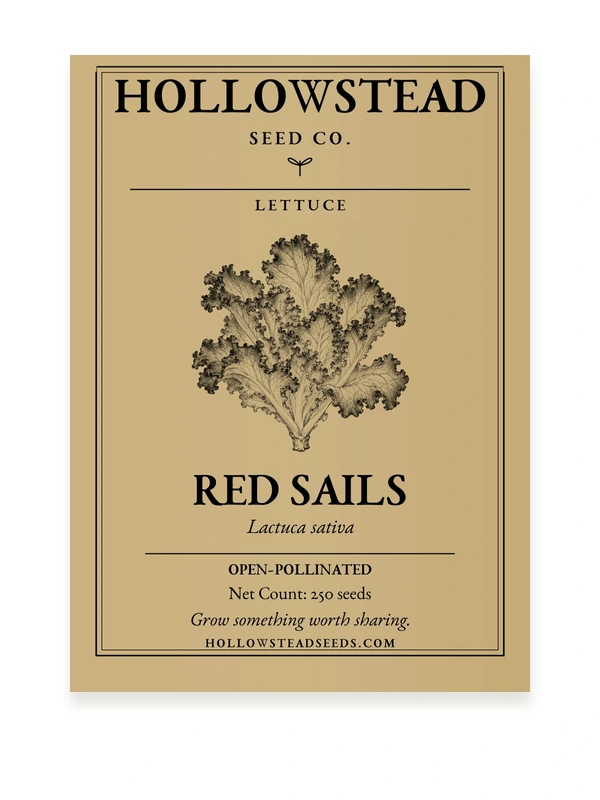
Red Sails Lettuce Seeds
$3.49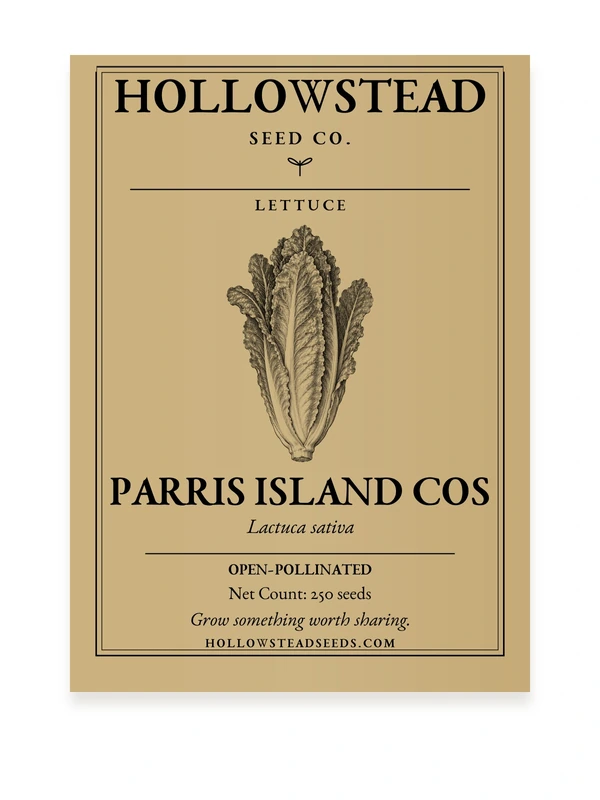
HOLLOWSTEAD SEED
Parris Island Cos Lettuce Seeds
$3.49KEEP LEARNING
Related growing guides
SEASONAL PLANNING
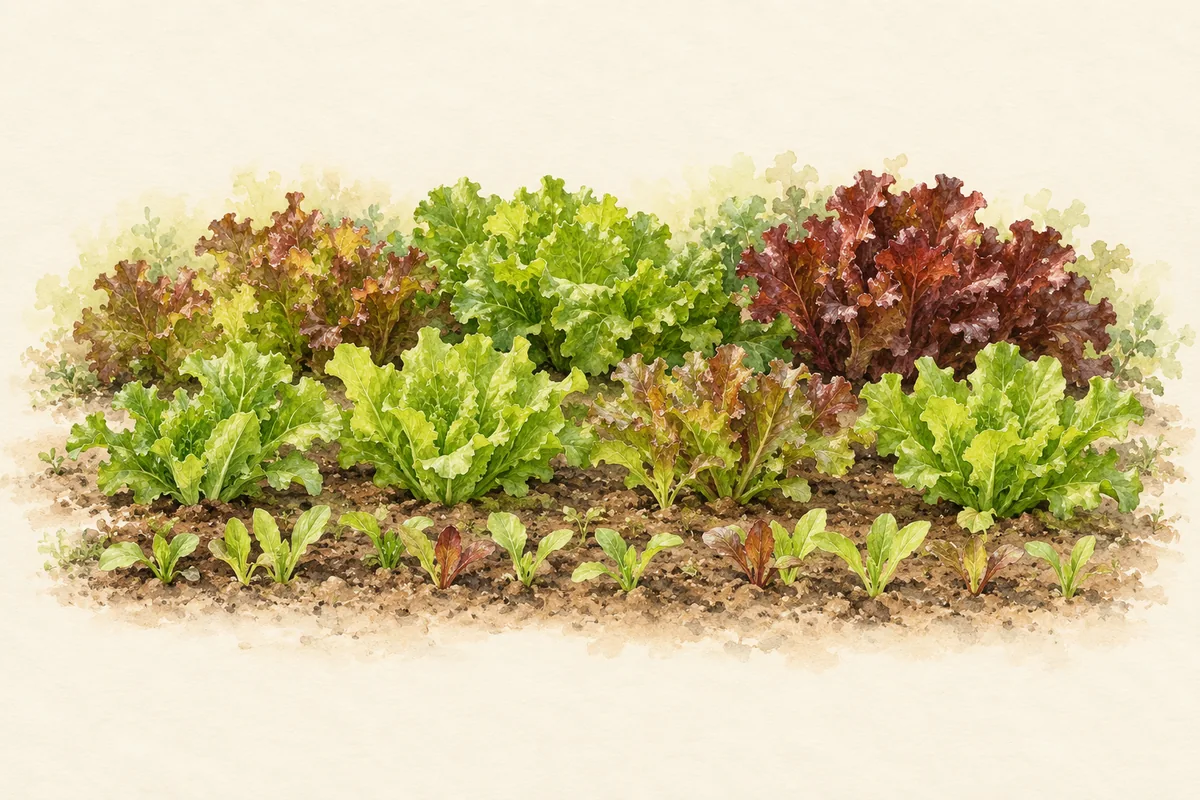
Succession Planting Lettuce for Spring and Fall
Turn lettuce into manageable batches instead of one oversized harvest. Build a flexible sowing cycle, work backward for fall, and adjust the plan to weather, growth, and how much you eat.
Read the guide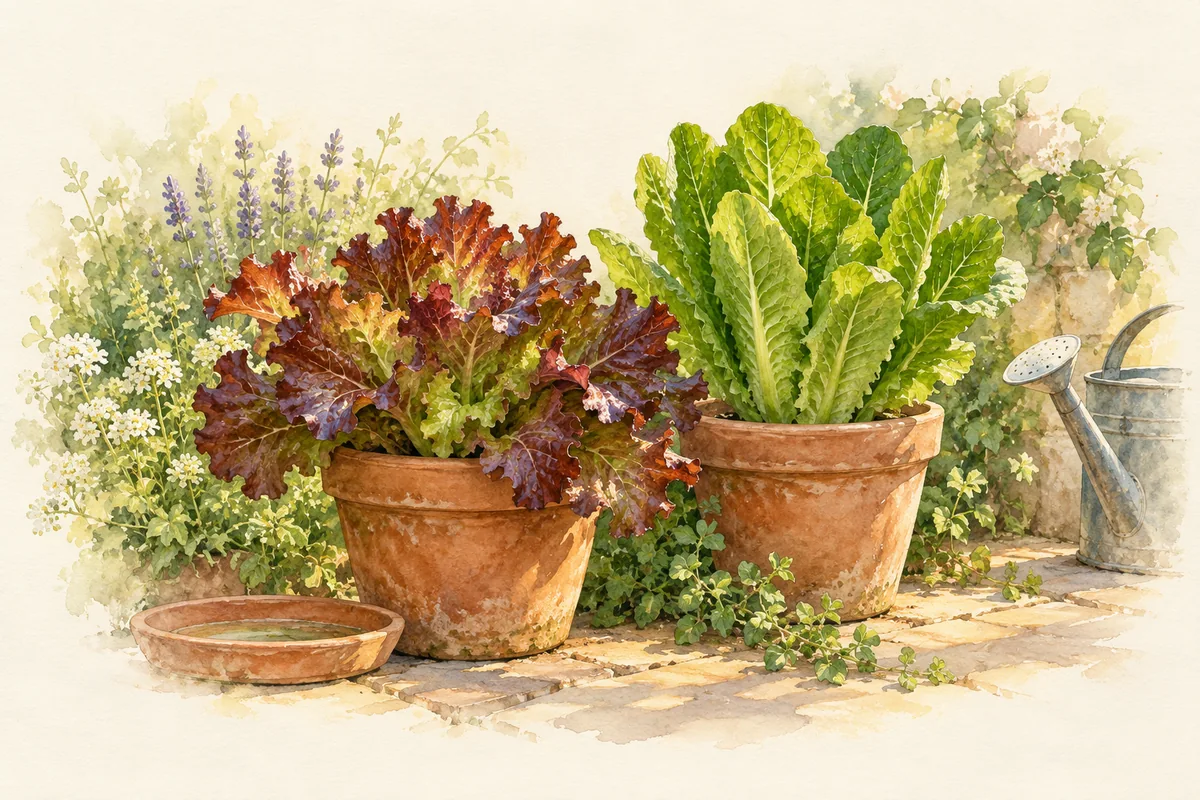
CONTAINER GROWING
Growing Lettuce in Containers
Build a manageable lettuce container with the right mix, drainage, spacing, and light. Learn how to water a shallow-rooted crop and plan pots for baby leaves or finished heads.
Read the guide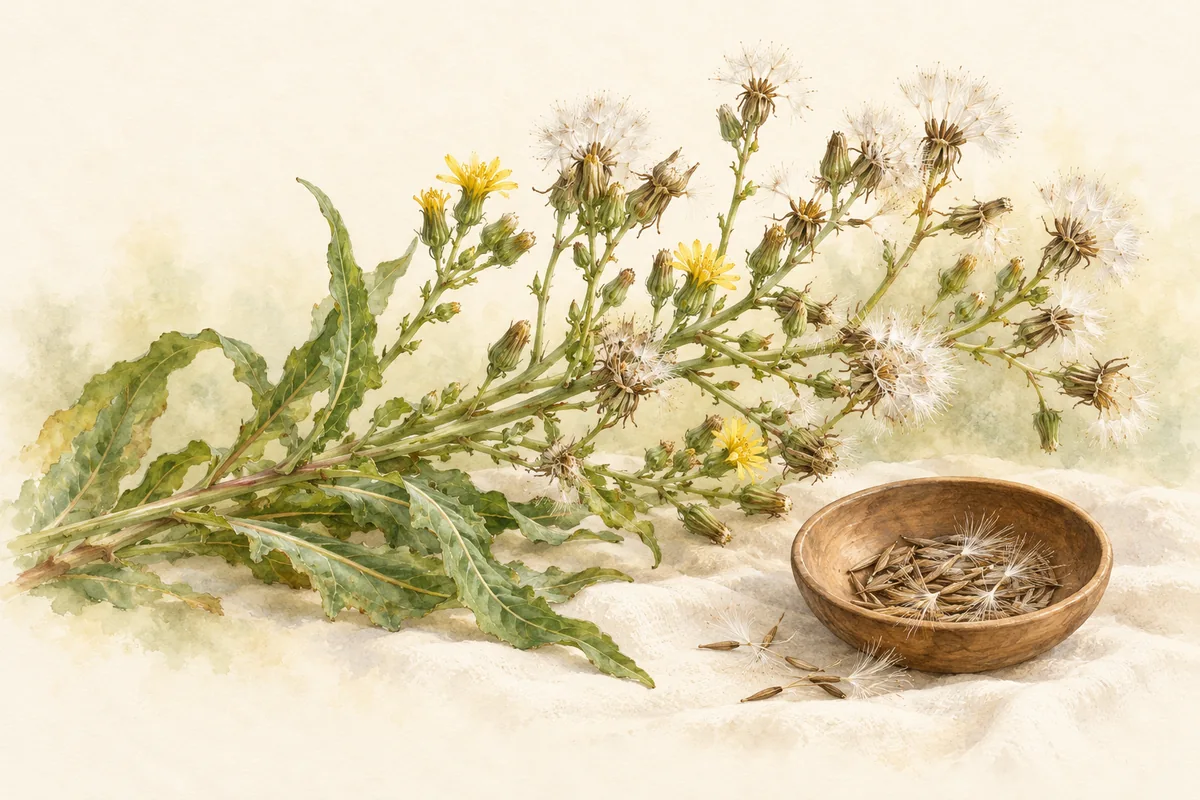
SEED SAVING
How to Save Lettuce Seeds
Reserve healthy lettuce plants, let them flower, and collect dry seedheads as they mature. Learn how selection, isolation, careful cleaning, labels, and a later test preserve a useful seed lot.
Read the guideFrequently asked questions
Can I make bolted lettuce sweet again?
You cannot reliably reverse the plant’s move toward flowering. Cold storage or a recipe may change how a sound leaf tastes to you, but neither makes the growing plant young again.
Will more water stop bolting?
Adequate water prevents additional drought stress. It does not override the effects of heat, long days, age, or the variety’s development.
Is a tall romaine head always bolting?
No. Romaine naturally grows upright. Look for an elongated central stem and leaves spaced along it rather than an overlapping upright head.
Should I save seed from the first plant that bolts?
Avoid choosing it merely because it is first. For maintaining a salad variety, select healthy typical plants with desirable performance before flowering; repeated selection of unusually early bolters can work against your goal.
Does heat-tolerant mean seeds germinate in hot soil?
Not necessarily. Plant performance and seed germination are distinct traits. Follow sowing guidance and measure the seedbed rather than assuming one description covers both stages.
Sources & further reading
- University of Illinois Extension — Lettuce: Home Vegetable Gardening
- Oregon State University Extension — Day length plays key role in plant flowering
- Oregon State University Extension — Heat wave in the garden: How to identify and prevent heat stress in plants
- U.S. Food and Drug Administration — Selecting and Serving Produce Safely
- University of Maryland Extension — Growing Lettuce in a Home Garden
- Iowa State University Extension and Outreach — Growing Leafy Greens in Iowa
Hollowstead Growing Notes
A little help for your next growing season
Practical sowing advice, help choosing seeds, and occasional Hollowstead shop news. Usually one or two emails a month, plus a short welcome note.
Choose your topics and frequency after you confirm. Our guides and planting calendar are always free.