
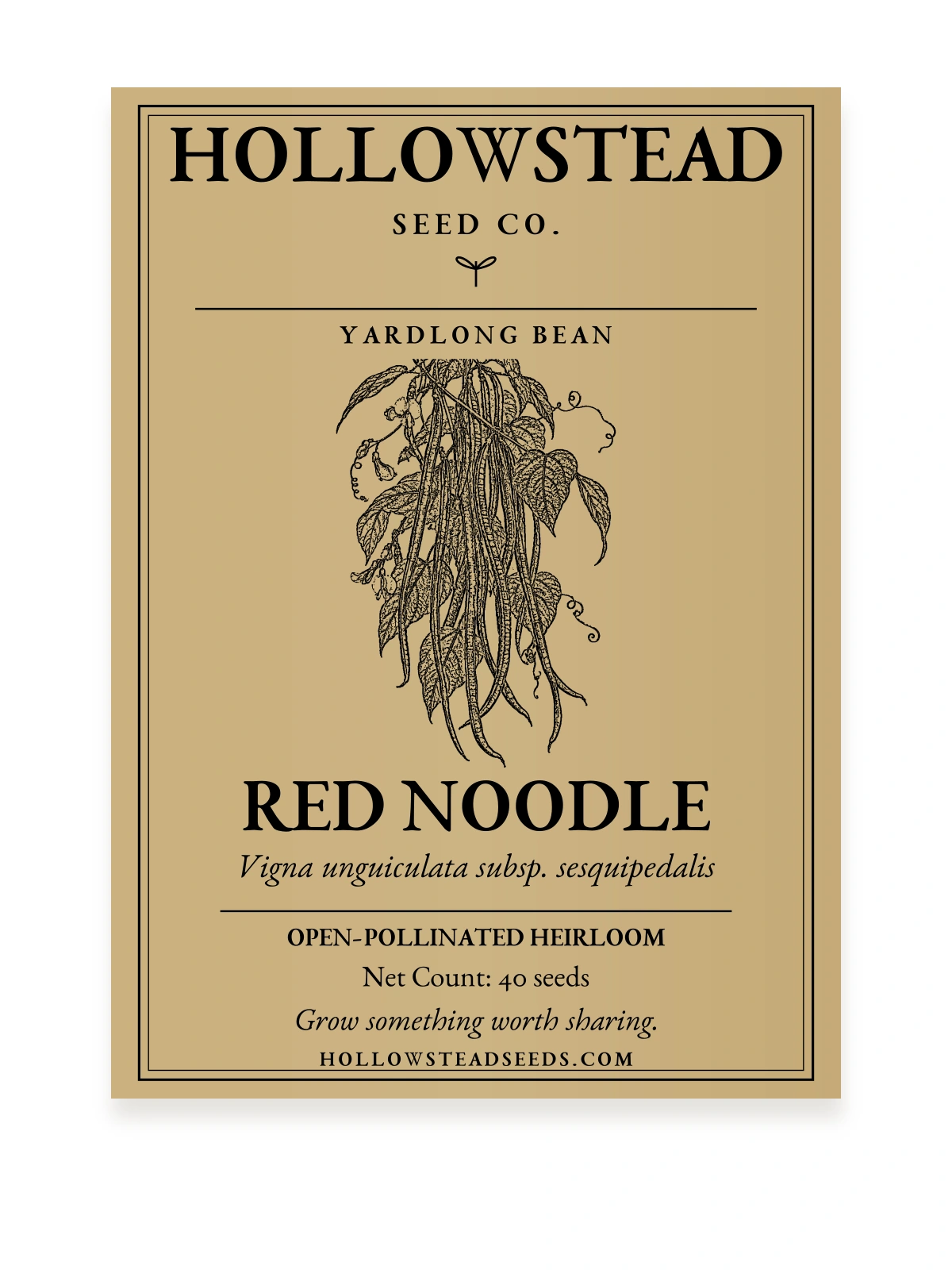
Description
FOR THE HOT-WEATHER TRELLIS
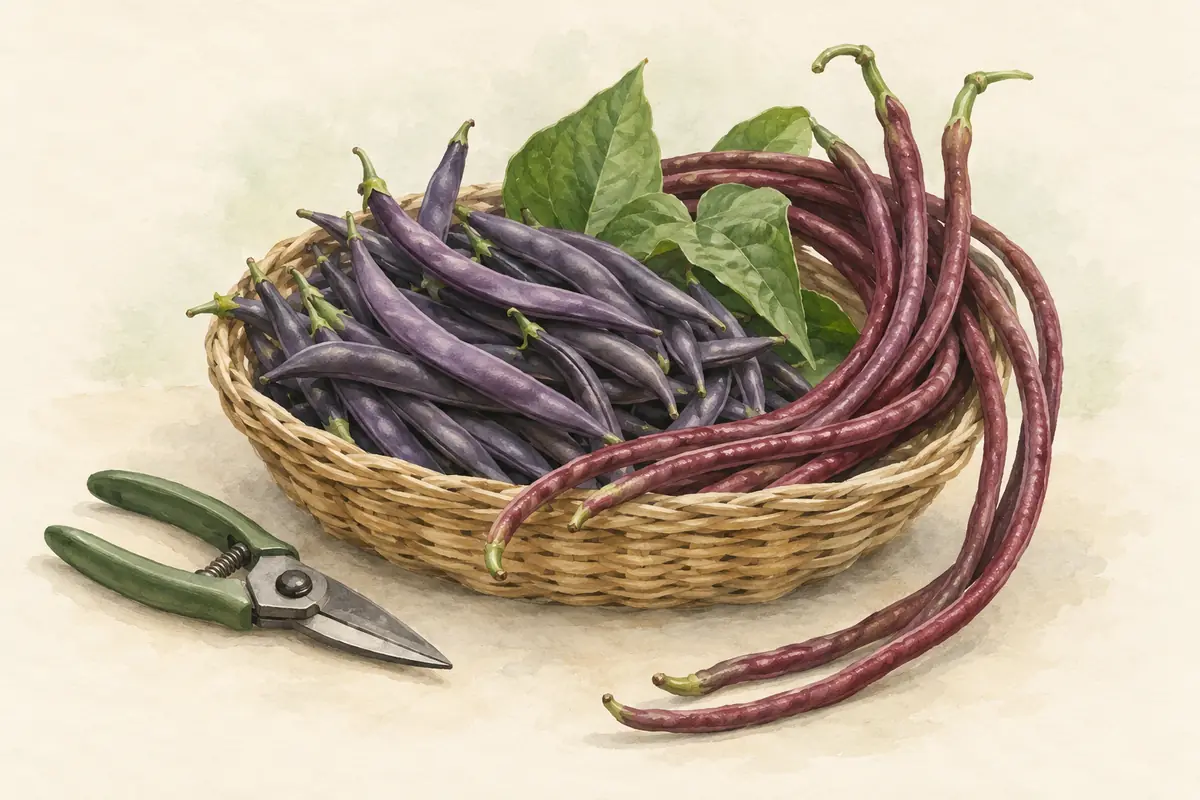
Long burgundy pods for summer cooking.
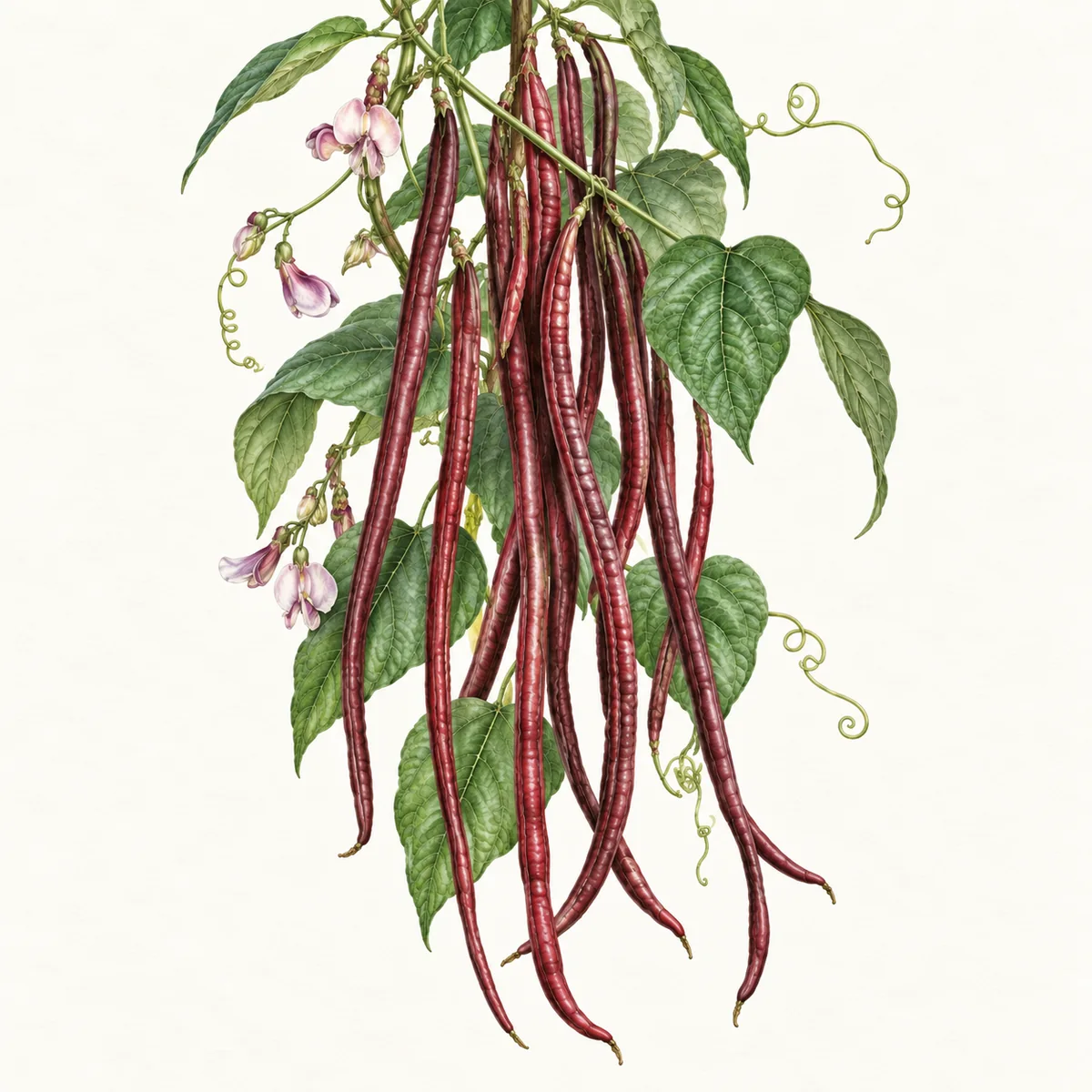
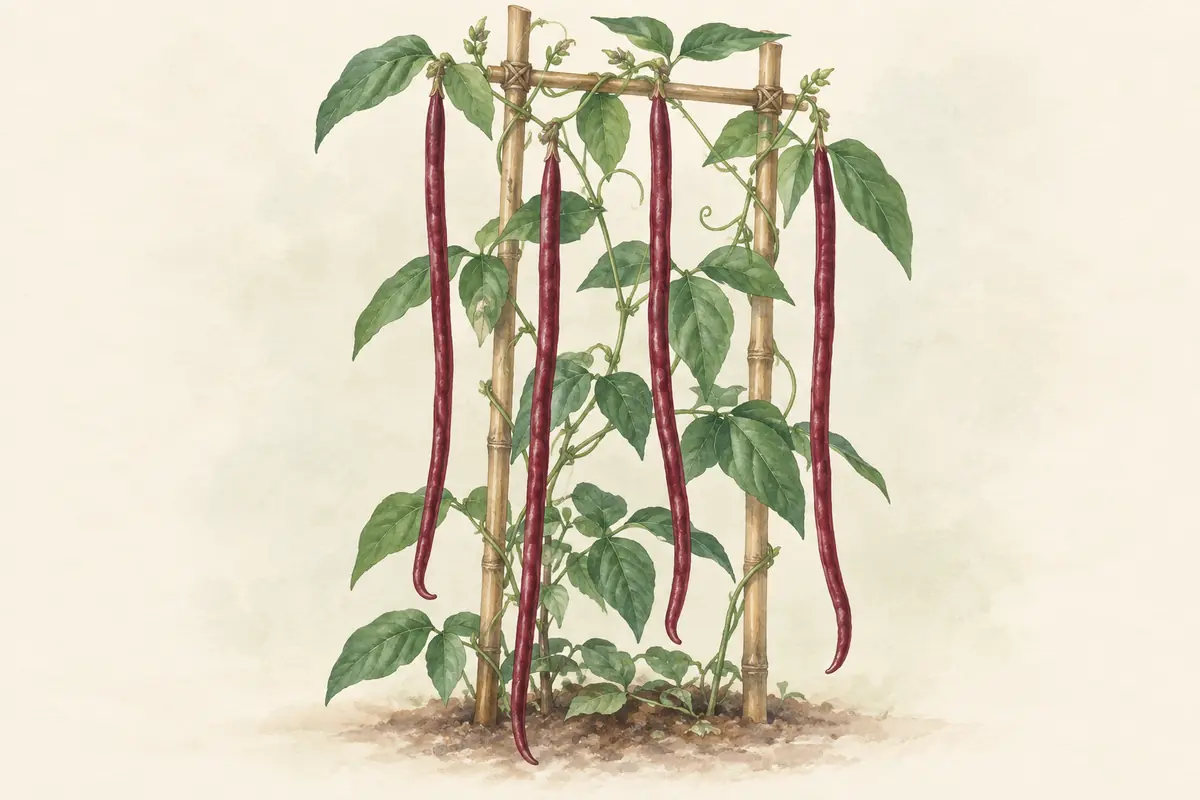
Red Noodle is for the gardener with a warm season, a sturdy climbing structure, and room in the kitchen for tender yardlong beans. Its burgundy-red pods hang from vigorous vines and are useful before maximum length. The 50–75-day listing is a planning range; another supplier lists a longer window, so prioritize a warm start and reachable trellis. [6] It belongs to Vigna unguiculata, the cowpea group, with a stronger need for heat than common snap beans. [1]
Choose it for: a productive role for vertical garden space, regular summer picking, and pods to cut into a skillet or stir-fry.
FROM PACKET TO GARDEN
Give it a warm start beside its support.
Wait beyond the frost date.
Direct-sow once both soil and weather are warm. Temperatures in the 40s can chill yardlong pods; a frost-free forecast alone does not make this an early-spring crop. [1]
Sow in full sun.
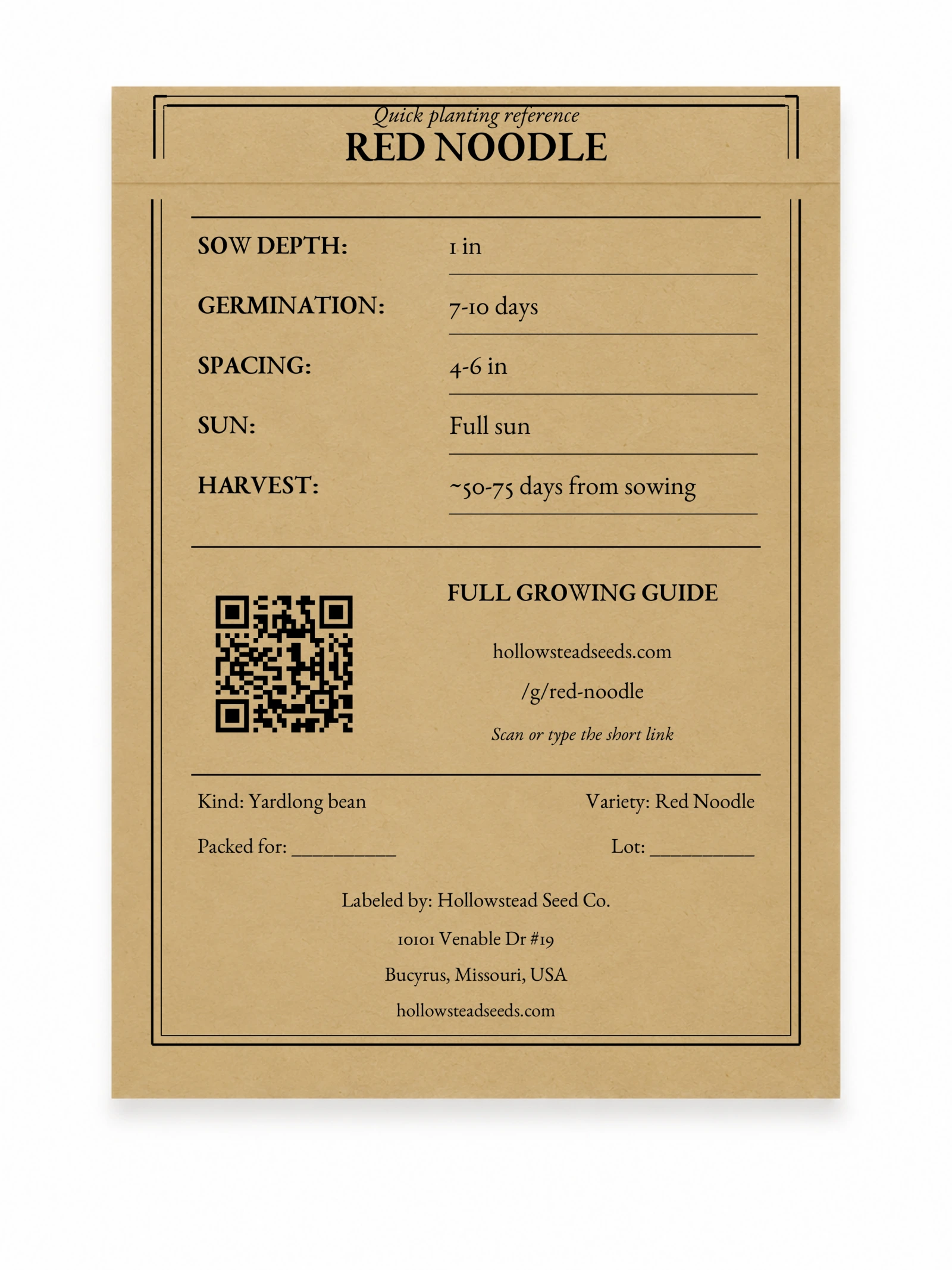
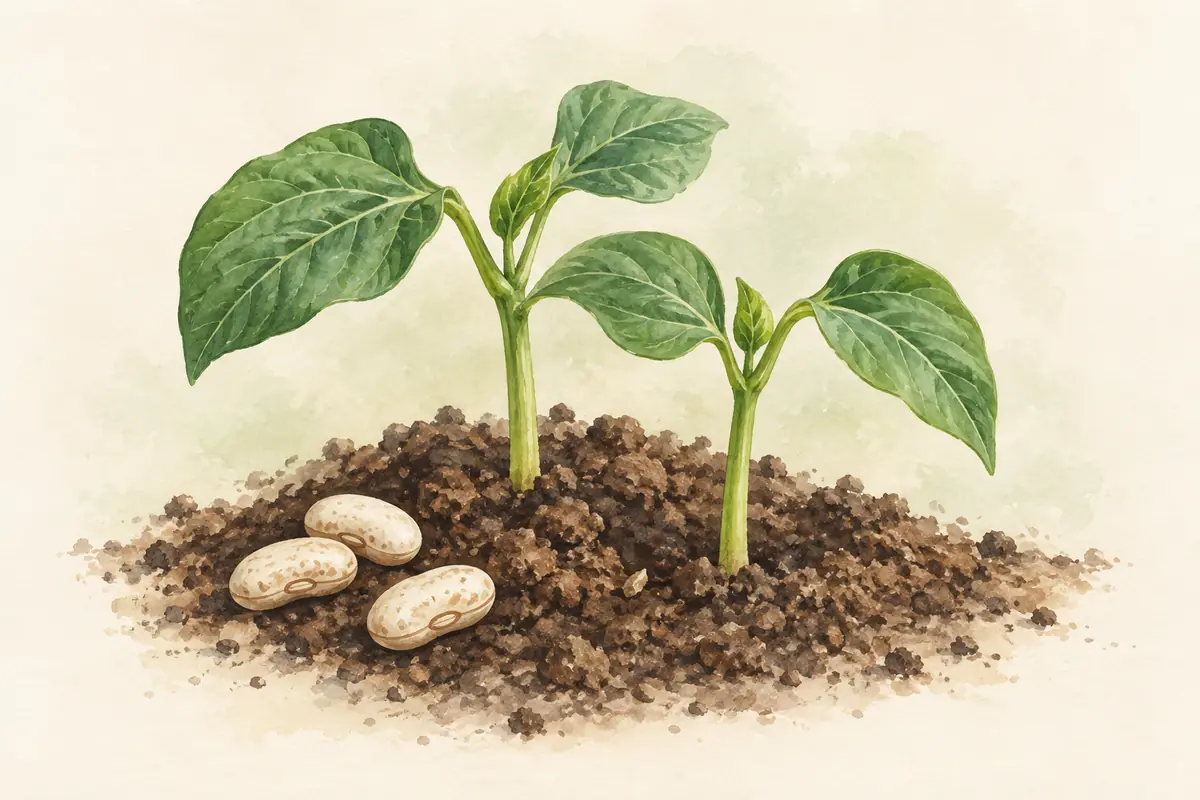
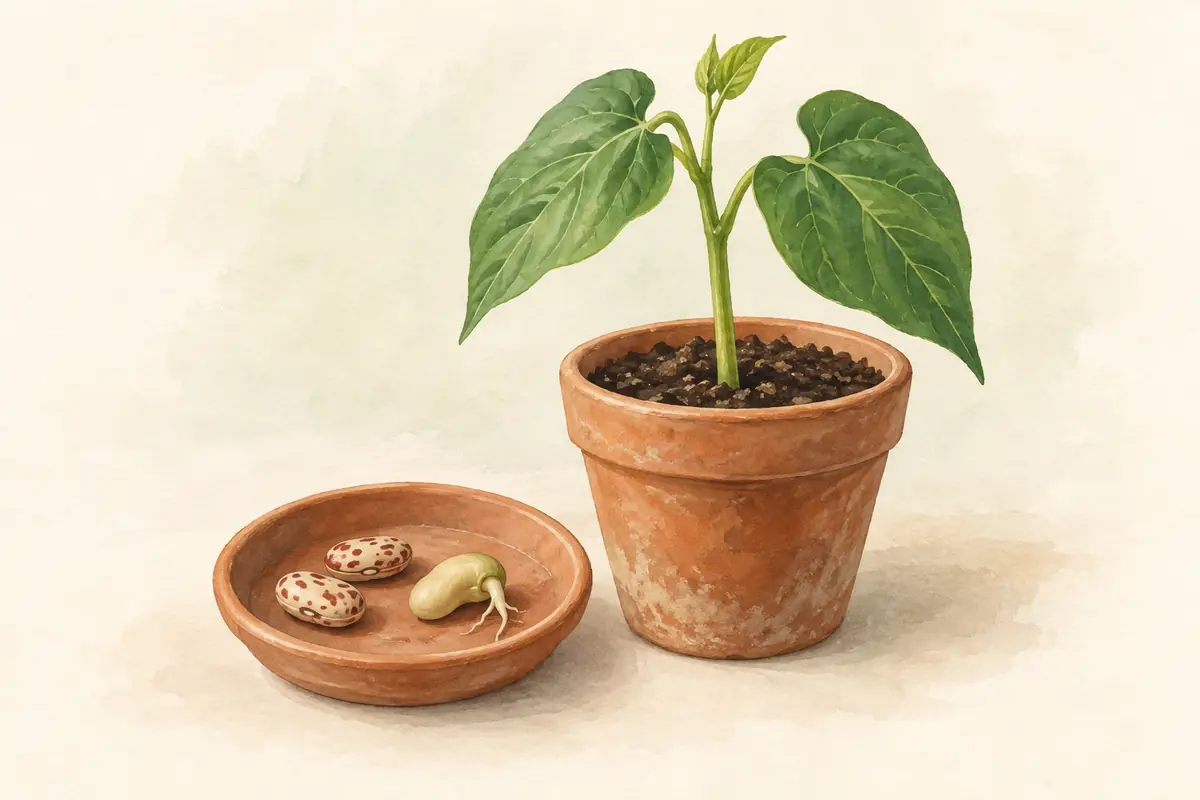
Plant about 1 inch deep, then thin to 4–6 inches along the support. Leave access beside the vines for watering and picking.
Guide the first runners.
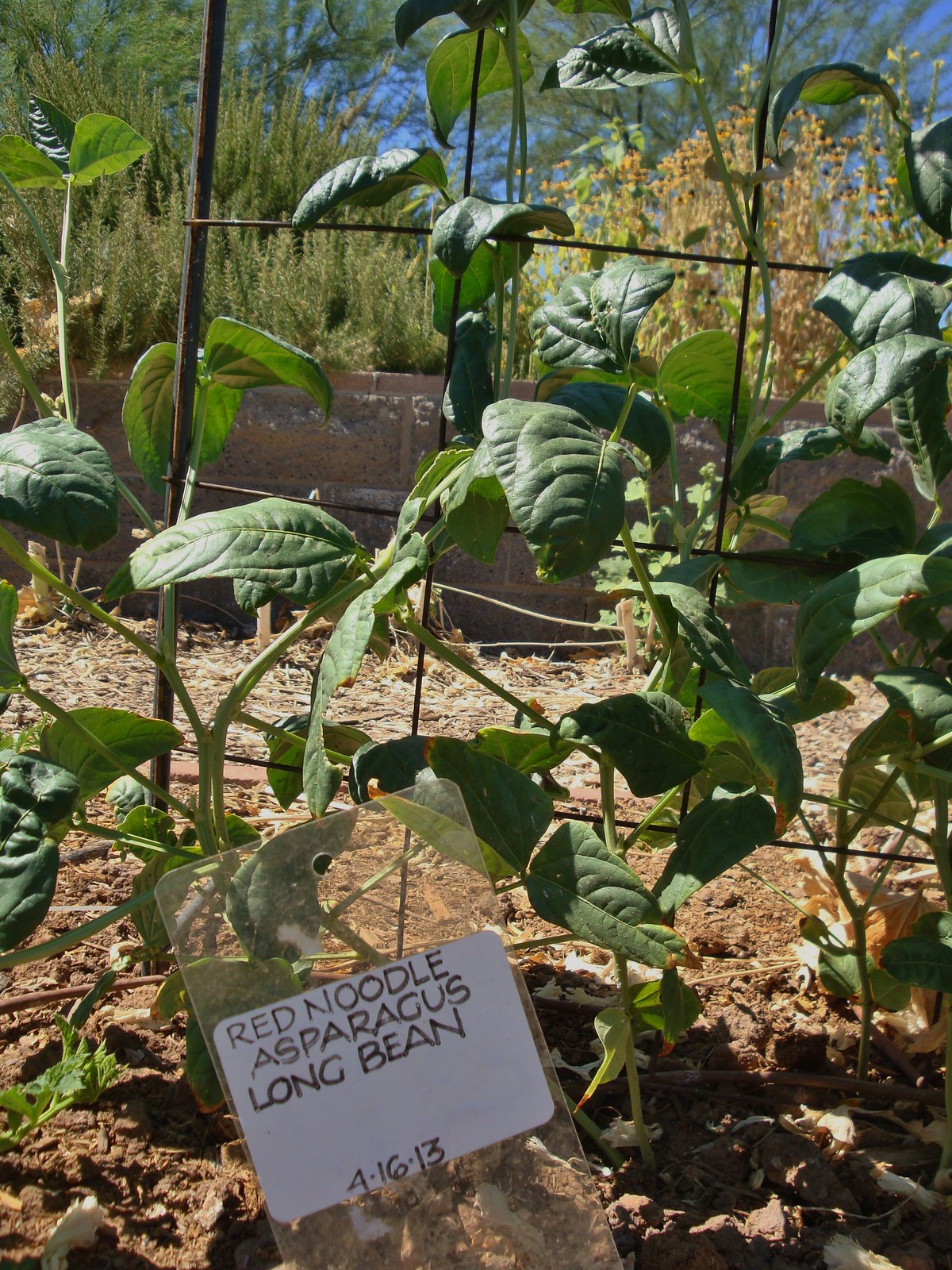
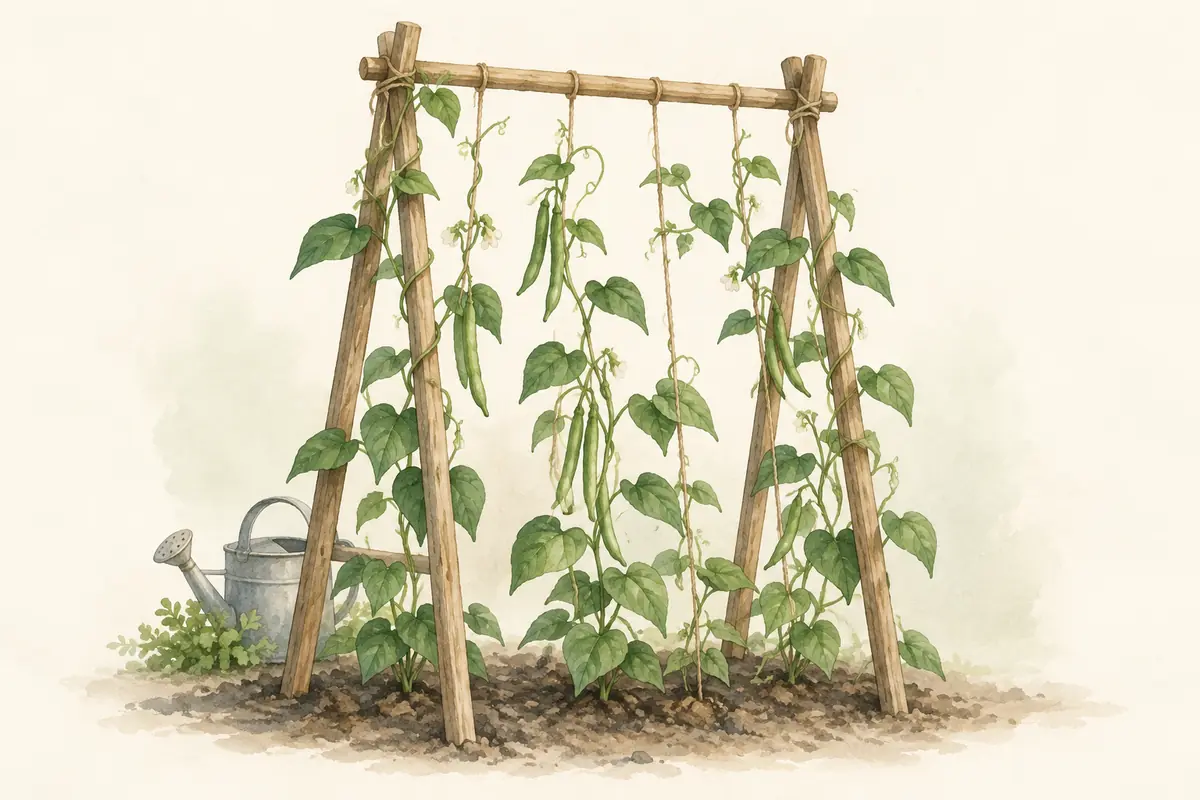
Bring young growth to poles, string, or mesh before vines tangle with neighboring crops. Set the structure before sowing to avoid disturbing established roots. [4]
The current listing allows about 50–75 days from sowing to young eating pods. Cool weather and the preferred harvest stage can lengthen that schedule.
SMALL DECISIONS, BETTER HARVESTS
Practical growing tips.
Pick for texture, not a record.
Check pods frequently, often daily in warm weather. Harvest while tender and smooth, before seed outlines become prominent; the potential 22-inch length is not a target. [5]
Water for tender pods.
Heat tolerance does not remove the need for water. If the root zone dries repeatedly, pods can become short and fibrous. Water through dry spells and let the soil drain freely. [4]
Keep the crop within reach.
Allow a route across the trellis top and an open picking side. Support the vine while snipping a pod so you do not tear the nearby flowers and young pods.
Make a small trial in cool summers.
Give Red Noodle your warmest sunny spot, but keep part of the bean bed for a common snap bean if summers are short or cool. Minnesota Extension reports that yardlong yields can be low there. [1]
CHOOSE YOUR BEAN HABIT
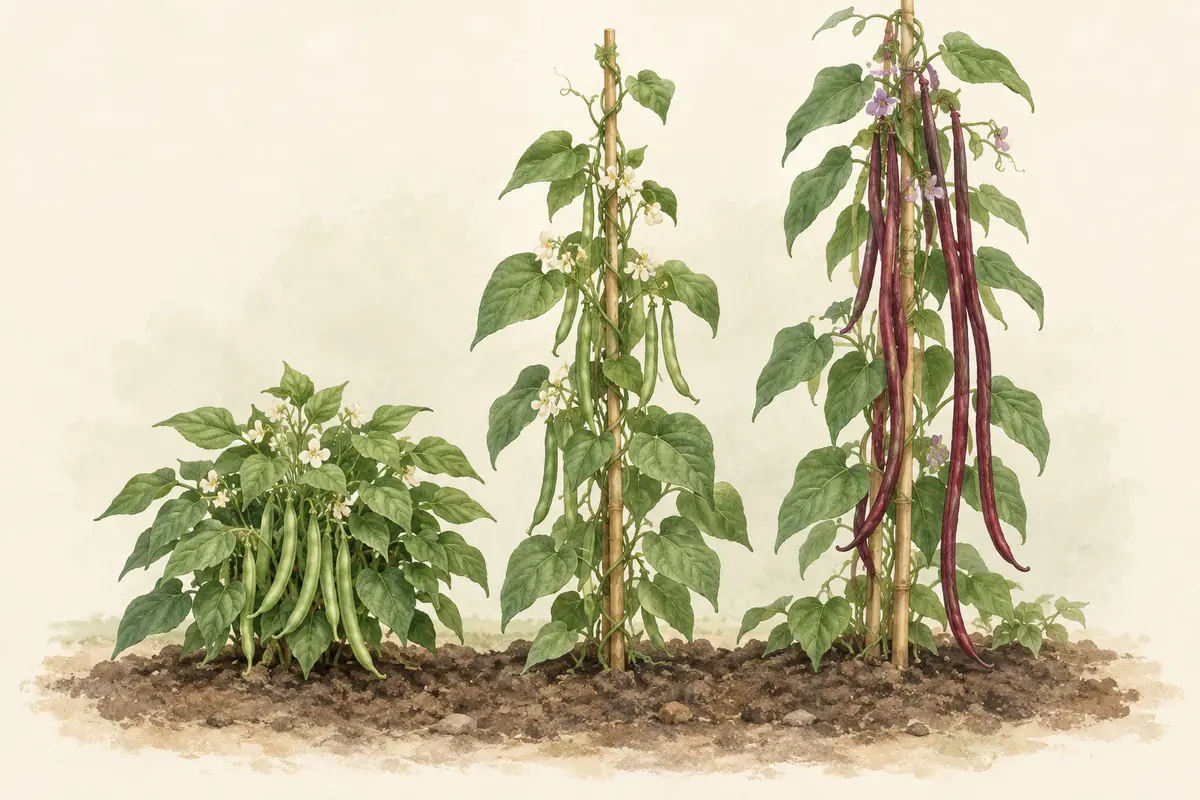
Match the bean to the space.
Red Noodle earns its place on a strong support during sustained summer warmth. Plan to revisit the same vines often and pick pods at their tender stage.
A FEW THINGS WORTH KNOWING
Before you plant.
Is this a common pole bean?
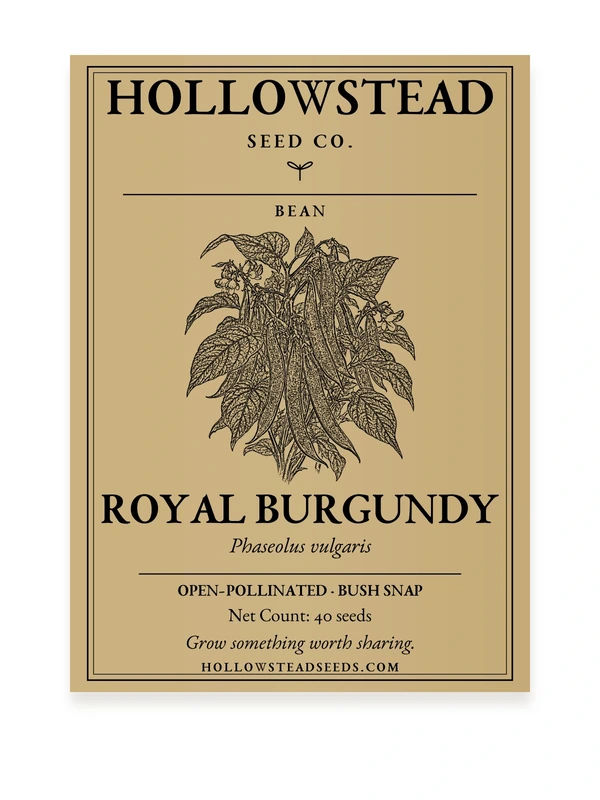
No. Red Noodle is a yardlong bean in Vigna unguiculata; ordinary snap and pole beans are Phaseolus vulgaris. Use yardlong-bean guidance for heat and seed saving. [1]
Will the cooked pods stay red?
Cook a small batch by your preferred method if color matters to the meal. Harvest stage and preparation affect the result; tenderness is the more useful reason to choose when to pick.
Should I keep sowing like a bush bean?
A healthy yardlong planting can keep bearing through a warm season with regular picking. Reserve extra sowings for a genuinely long season, a replacement planting, or gaps; do not plan a late sowing from the frost date alone. [4]
MAKE ROOM FOR THE HARVEST
Plan your planting.
Count the planting positions your finished trellis can carry before sowing. In a first season, record the sowing date, first flower, and first tender picking; those notes are more useful for next year than maximum pod length.
Read the Red Noodle growing guide for support planning, harvest-stage checks, troubleshooting, and attributed grower observations.
Packet quantity is a seed count, not a guaranteed plant count. Dates and spacing are planning guides; weather, site, and care shape the crop.
Growing references
Growing guidance draws on the references below. Adjust planting to local frost risk, soil, and growing conditions. Reviewed September 24, 2026.
Reviews
THIS PATCH IS JUST GETTING STARTED
Your garden could start the conversation.
No published reviews for this variety yet. Once you have tried these seeds, your experience can help another gardener decide what to plant.
A few honest details are worth more than a perfect growing season.