
TOMATO SUPPORT & PRUNING
How to Support and Prune Indeterminate Tomatoes
Choose a cage, stake, or string system for Black Krim, Black Cherry, Yellow Pear, or Pineapple. Identify suckers, keep useful foliage, and distinguish indeterminate training from determinate care.
TomatoesSupport guideBeginner → advanced
Published by Hollowstead Seed Co. · How this guide is prepared
Quick answer
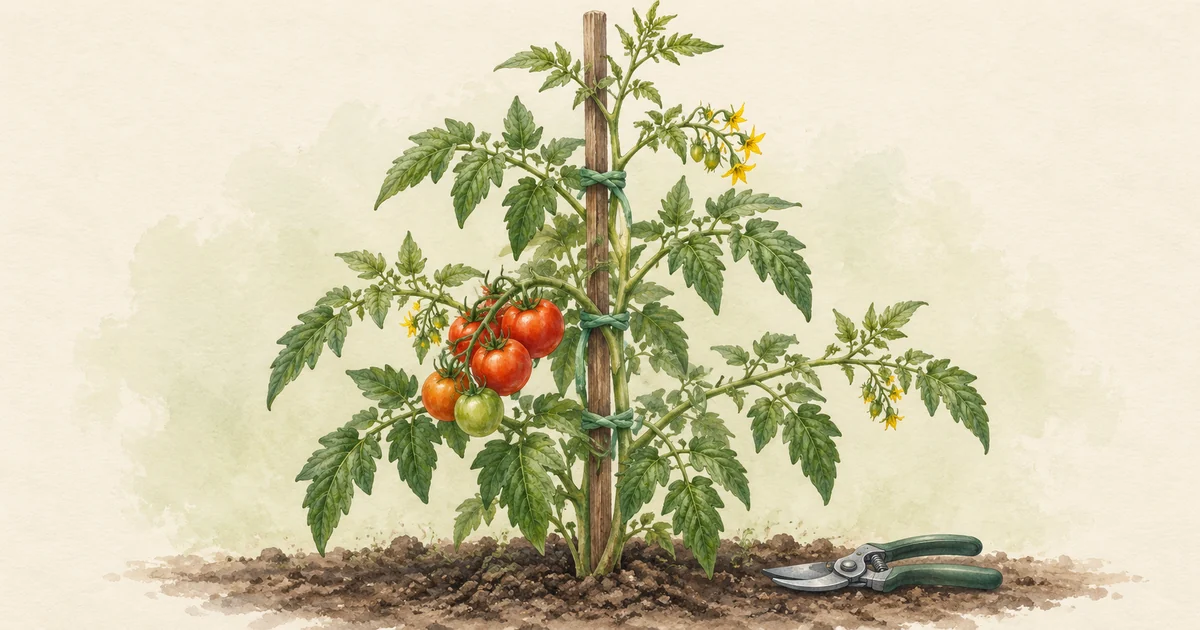
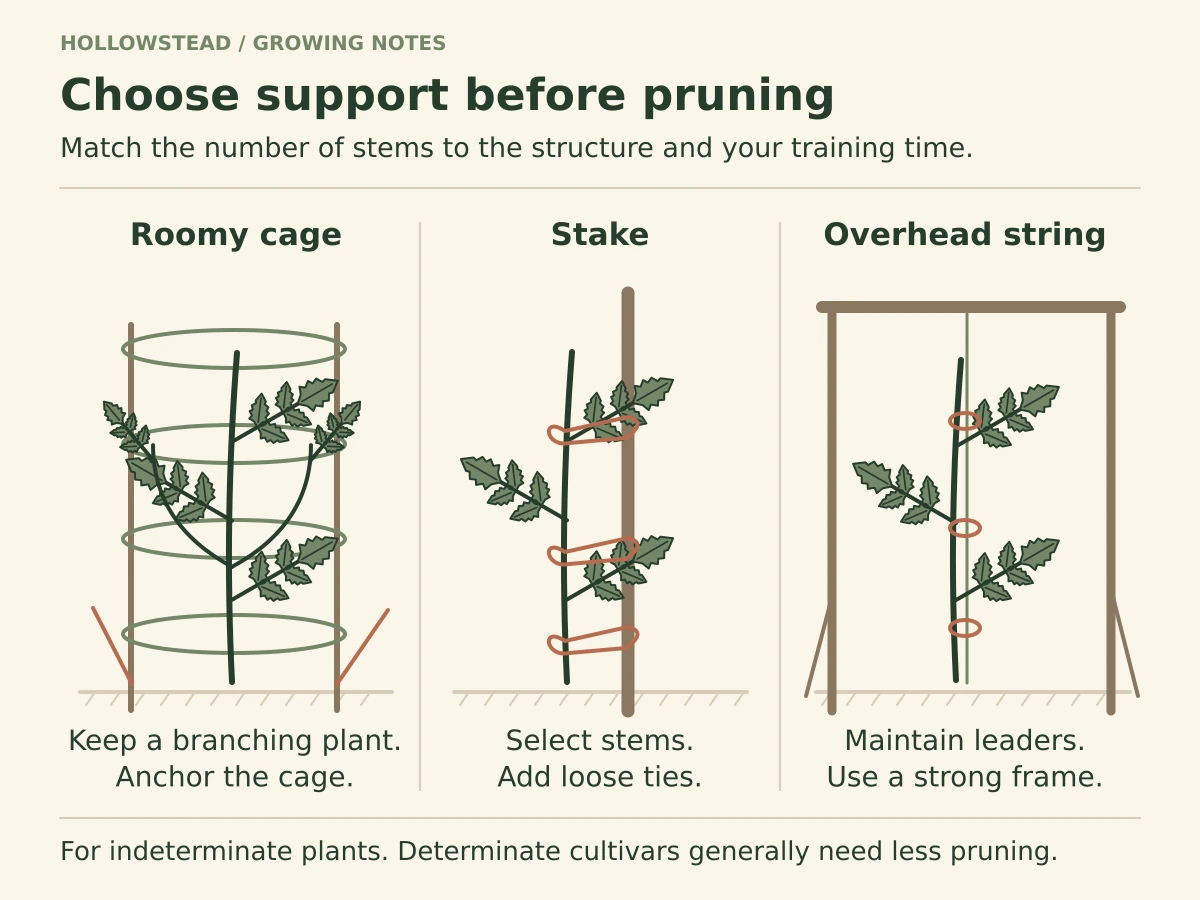
Choose the support before choosing a pruning style. A roomy, well-anchored cage can carry a branching plant with modest pruning; a narrow stake or string system needs regular tying and more deliberate stem selection.[1][2] You do not need to remove every sucker from every tomato.
This guide applies to indeterminate Black Krim, Black Cherry, Yellow Pear, and Pineapple.[5][6] The current Hollowstead Principe Borghese listing is determinate and should not receive the same routine sucker removal.
At a glance
| Decision | Useful starting point |
|---|---|
| First decision | Determine the plant’s growth habit |
| Less frequent training | A substantial, anchored cage |
| Narrow growing space | A stake or string system with regular attention |
| Sucker location | The junction between a leaf and the main stem |
| Do not strip | Keep healthy leaf cover around developing fruit |
Start with determinate vs. indeterminate
Indeterminate plants continue extending their stems and setting successive flower clusters as conditions allow. Determinate plants have a more limited growth pattern. Missouri Extension advises that determinate and semi-determinate tomatoes generally do not need pruning; indeterminate plants can be managed by selectively removing side shoots.[1]
That difference changes the job. On Black Krim, Black Cherry, Yellow Pear, or Pineapple, you can choose a training system and maintain it through the season. On the currently described Principe Borghese, concentrate on carrying the crop and keeping it accessible. Do not apply a single-stem greenhouse routine simply because both plants are tomatoes.
Compare cages, stakes, and strings
| System | Best practical fit | Work you are accepting |
|---|---|---|
| A sturdy cage | A branching plant and room around the bed | Anchor it; guide shoots back through openings before they stiffen. |
| An individual stake | A deliberately narrower plant | Select stems, add loose ties as growth extends, and inspect the stake. |
| Overhead strings or a vertical trellis | A planned row with strong end supports | Maintain leaders and clips/ties regularly; the frame carries the combined crop load. |
Minnesota Extension describes stakes as a pruning-and-tying system and notes that indeterminate plants can outgrow common cages.[2] A small cone intended for a compact plant may not suit a season-long vine. UGA emphasizes anchoring cages so a top-heavy plant cannot tip the whole structure.[3]
Before planting, walk the future harvest route. Can you reach the back of the cage, inspect the base, and pick without leaning on another plant? Those small access decisions can matter more than adding another foot of height.
Install and check the support early
Set the structure while the plant is small. Drive or anchor it for the soil and exposure you have, then check again after soaking rain and strong wind. Tall foliage catches wind; a frame that feels stable when empty can behave differently under a mature crop.
For container tomatoes, consider the planter and support together. A tall stake held only by a light, shallow pot may shift with the whole container. Arrange any independent anchor so it does not become a trip hazard along the watering route.
Identify the shoot before you remove it
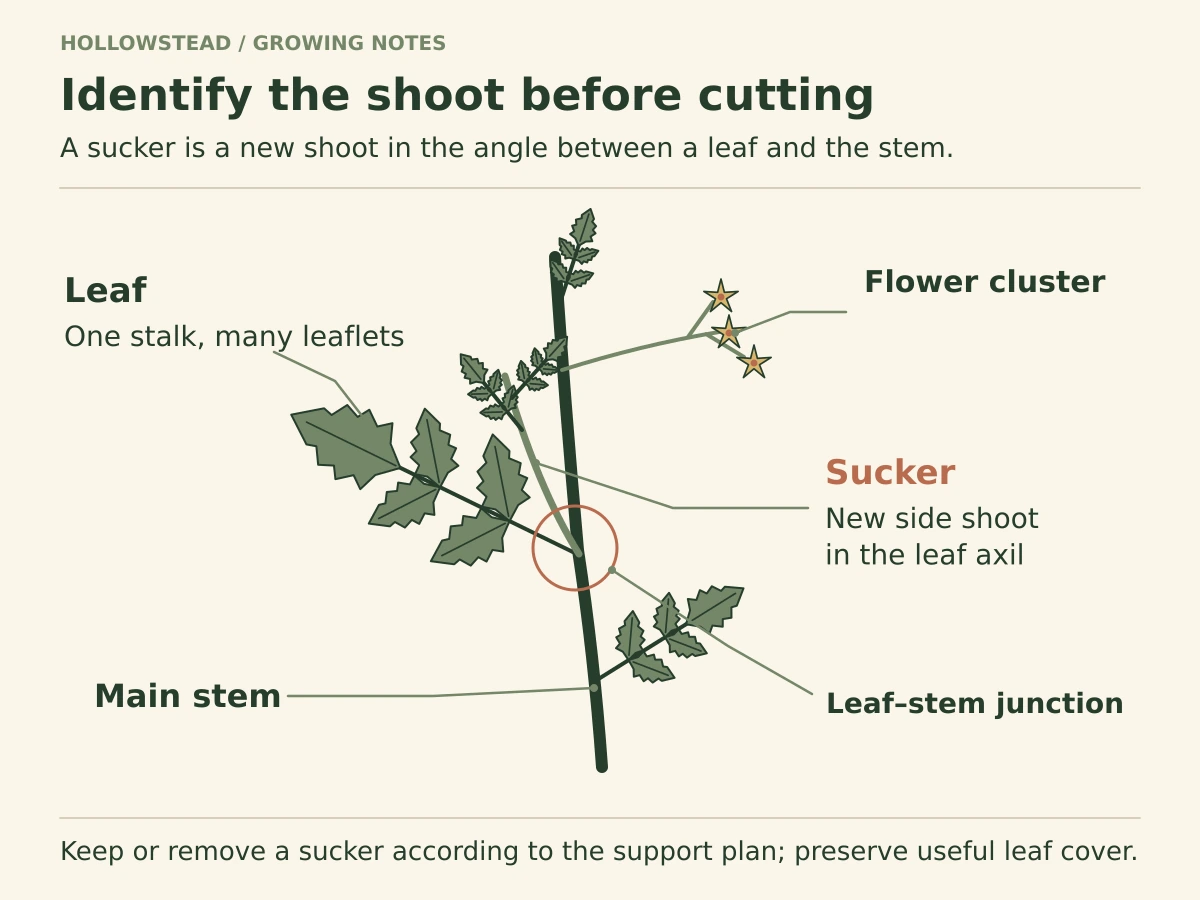
A sucker is a new side shoot arising in the angle between a leaf and the main stem. It is not the leaf itself and not the flower cluster. A sucker can become another stem; its removal is a training choice.[1][3]
| Plant part | Recognition cue | What to do |
|---|---|---|
| Main growing tip | The continuing end of a selected stem | Keep it while extending that leader. |
| Leaf | A leaf stalk carrying leaflets | Retain useful healthy foliage; remove damaged or ground-contact leaves selectively. |
| Sucker | A new shoot in a leaf/stem junction | Keep or remove according to the support plan. |
| Flower cluster | A cluster of buds, flowers, or developing tomatoes | Avoid confusing it with leafy side growth. |
Pause if you cannot identify the part confidently. A missed small sucker can be revisited; a cut flower cluster cannot be put back.
Prune for the system you chose
In a cage: preserve a workable branching plant and remove only enough growth to maintain access and air movement. Missouri’s guidance specifically calls for less pruning in cages.[1]
On a stake or string: select the leaders you intend to carry and remove competing side shoots while manageable. Review the plant regularly so the system does not become a series of large, late cuts. Use clean tools for shoots that require cutting.[3]
Pruning changes the balance between foliage, fruit exposure, and the number of growing stems. More cutting is not automatically better. Retain leaf cover around fruit; suddenly exposing a shaded crop to strong sun can cause sunscald.[4] If the canopy has become tangled, make a measured correction instead of stripping it bare in one session.
Tie gently and inspect as the stem thickens
Use soft ties or suitable plant clips that support the stem without pinching it. Leave space for thickening and check old ties as you add new ones.[3] A support routine should follow growth rather than the calendar alone.
- Check the frame and anchors.
- Trace each selected stem from its base to its tip.
- Release tight ties and add support where the stem is starting to lean.
- Look for side shoots that conflict with the chosen system.
- Inspect lower leaves and developing fruit before finishing.
Combining this with harvest checks makes the job easier to remember. For Black Cherry, repeated picking is a good opportunity to notice a branch escaping its support.
Avoid the corrections that create another problem
| Temptation | Better decision |
|---|---|
| Remove every side shoot on every variety | Check the growth habit and the support plan first. |
| Use tight wire directly around a stem | Use a tie that spreads the load and allows expansion. |
| Cut away most leaves to expose green tomatoes | Preserve useful shade and diagnose slow ripening separately. |
| Blame pruning for a dark fruit tip | Check blossom-end rot and the watering history. |
| Keep extending an unsafe structure | Choose a reachable, stable training plan for the space. |
Keep a note of the structure and how often it needed attention. If a system repeatedly outgrows the time you can give it, choose a different system next season rather than treating constant rescue work as inevitable.
GROW WITH A PLAN
Choose the variety that fits your garden
Use each variety’s guide alongside these shared growing techniques.
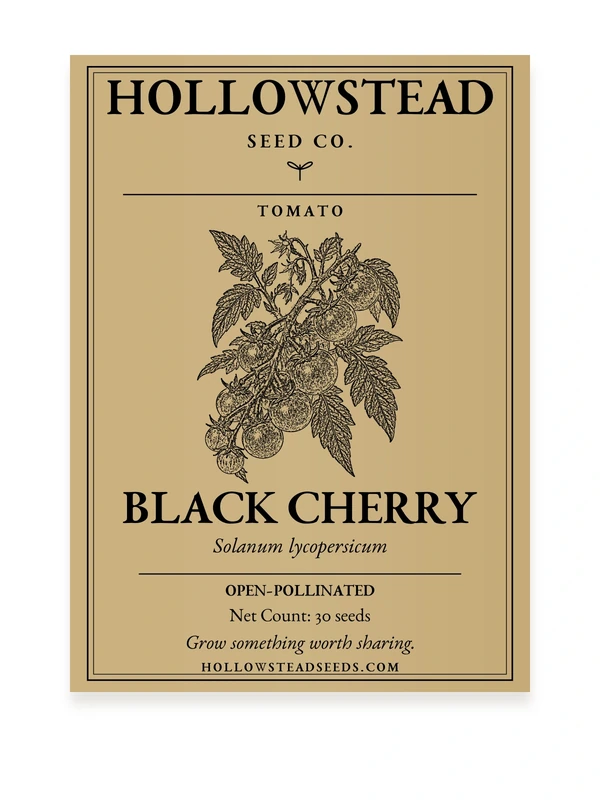
HOLLOWSTEAD SEED
Black Cherry Tomato Seeds
$4.49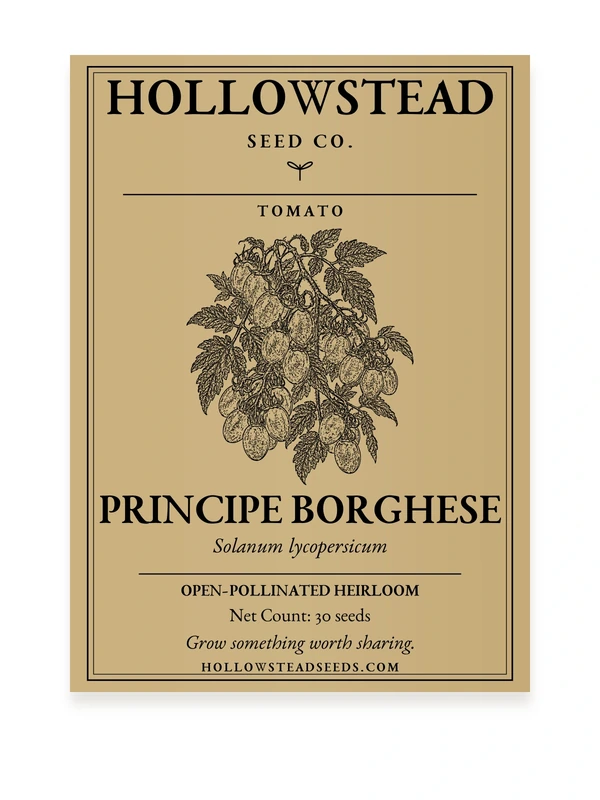
HOLLOWSTEAD SEED
Principe Borghese Tomato Seeds
$4.49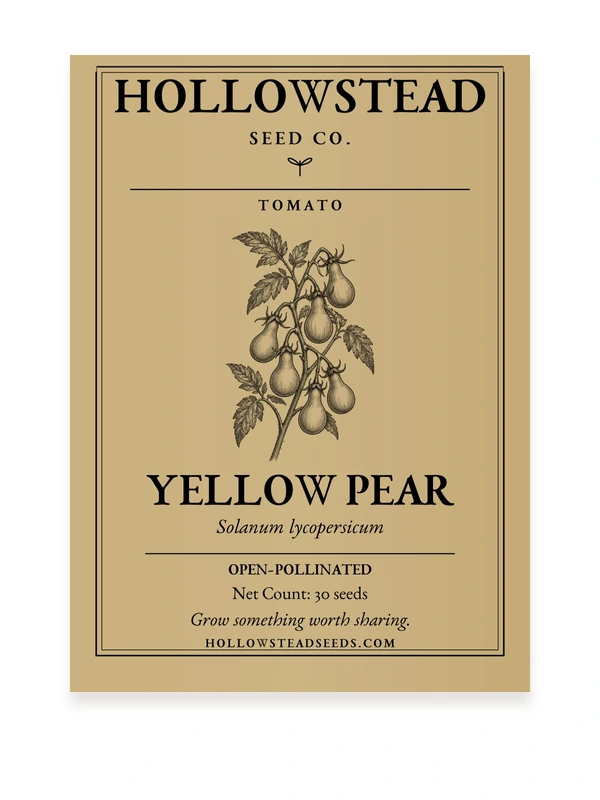
HOLLOWSTEAD SEED
Yellow Pear Tomato Seeds
$4.49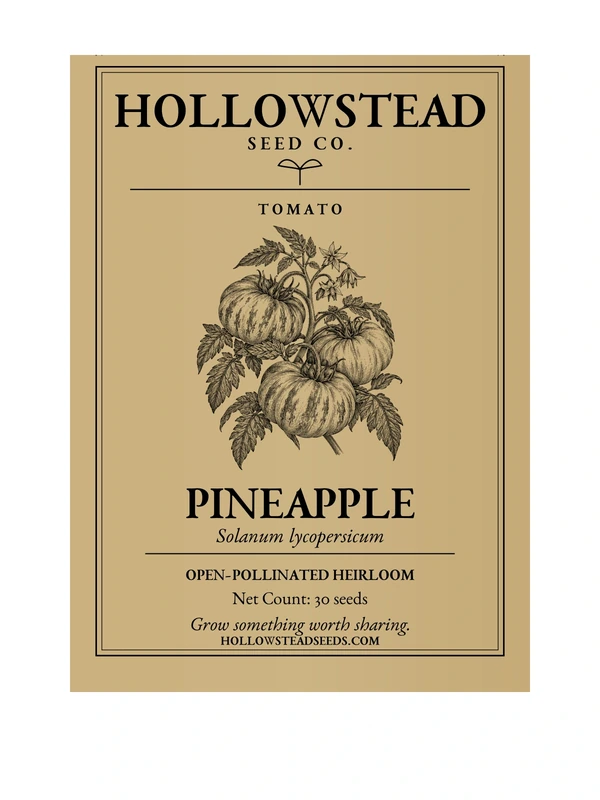
HOLLOWSTEAD SEED
Pineapple Tomato Seeds
$4.49KEEP LEARNING
Related growing guides
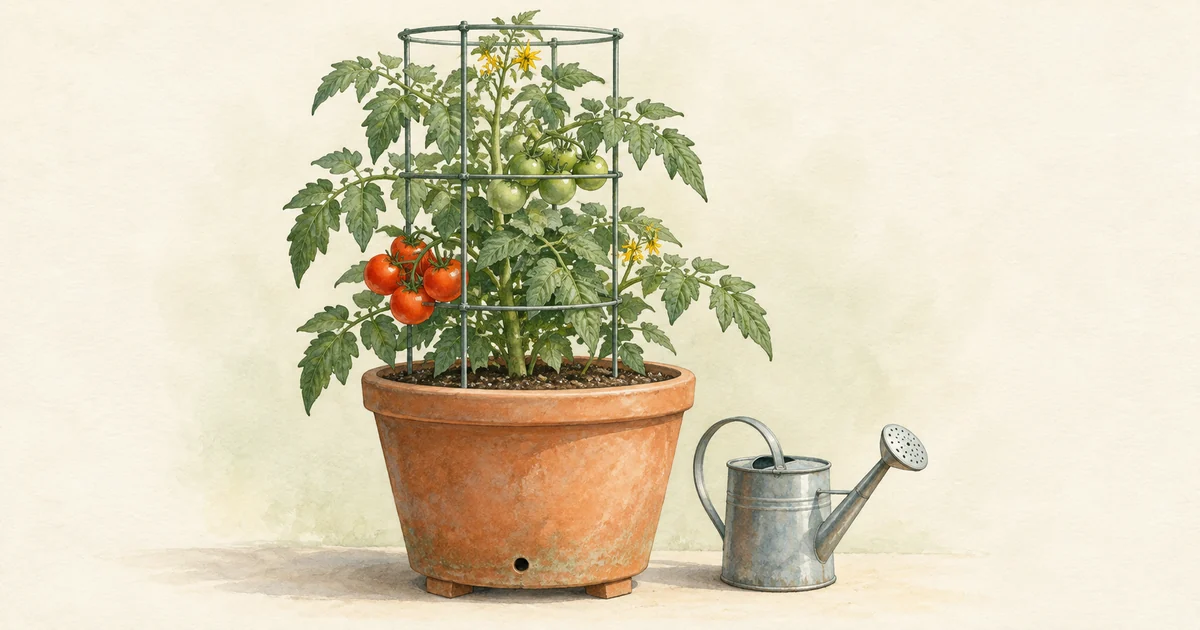
CONTAINER TOMATOES
Growing Tomatoes in Containers: Pots, Support, and Watering
Plan pots, support, and watering for all five Hollowstead tomatoes, including Yellow Pear and Pineapple. Compare growth habits, choose a generous root volume, and check moisture daily.
Read the guide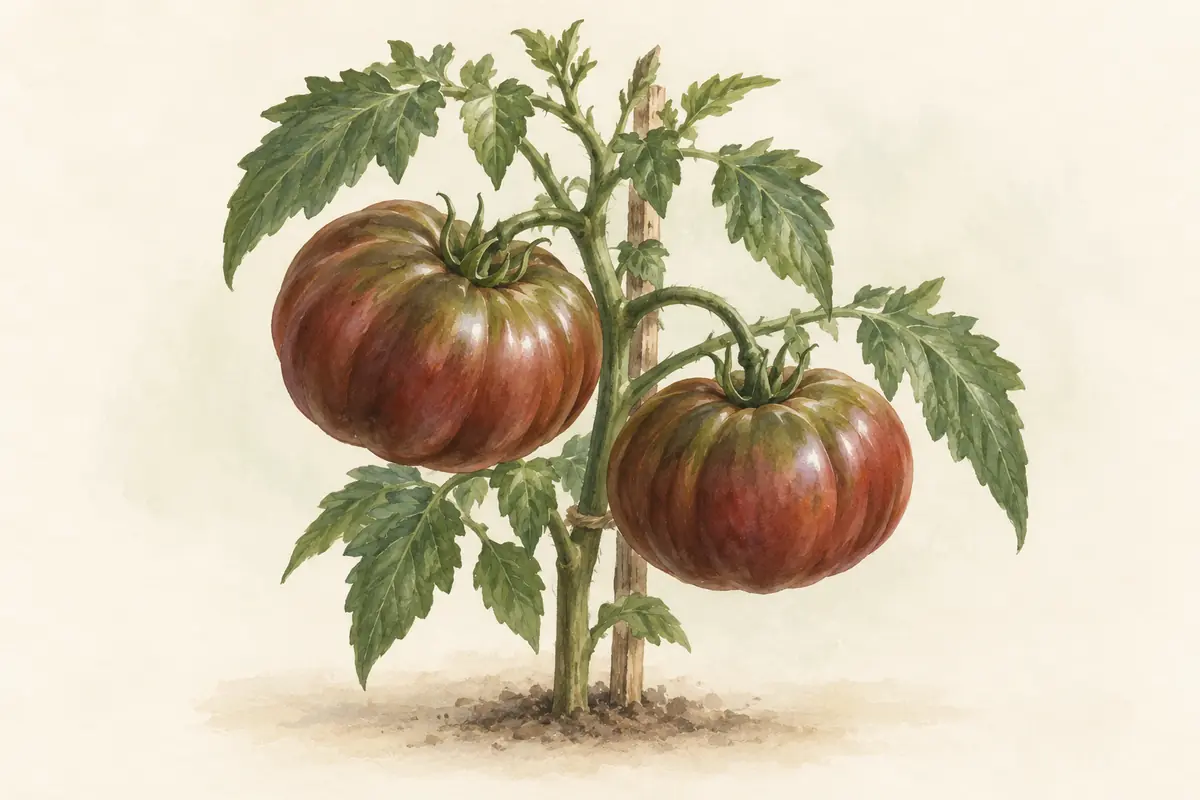
TOMATO GUIDE
Black Krim Tomato Growing Guide
Black Krim is a dark, indeterminate heirloom slicer with dramatic color and a reputation for rich flavor. Here is how to recognize ripe fruit, reduce cracking, support the vine, and decide if it belongs in your garden.
Read the guide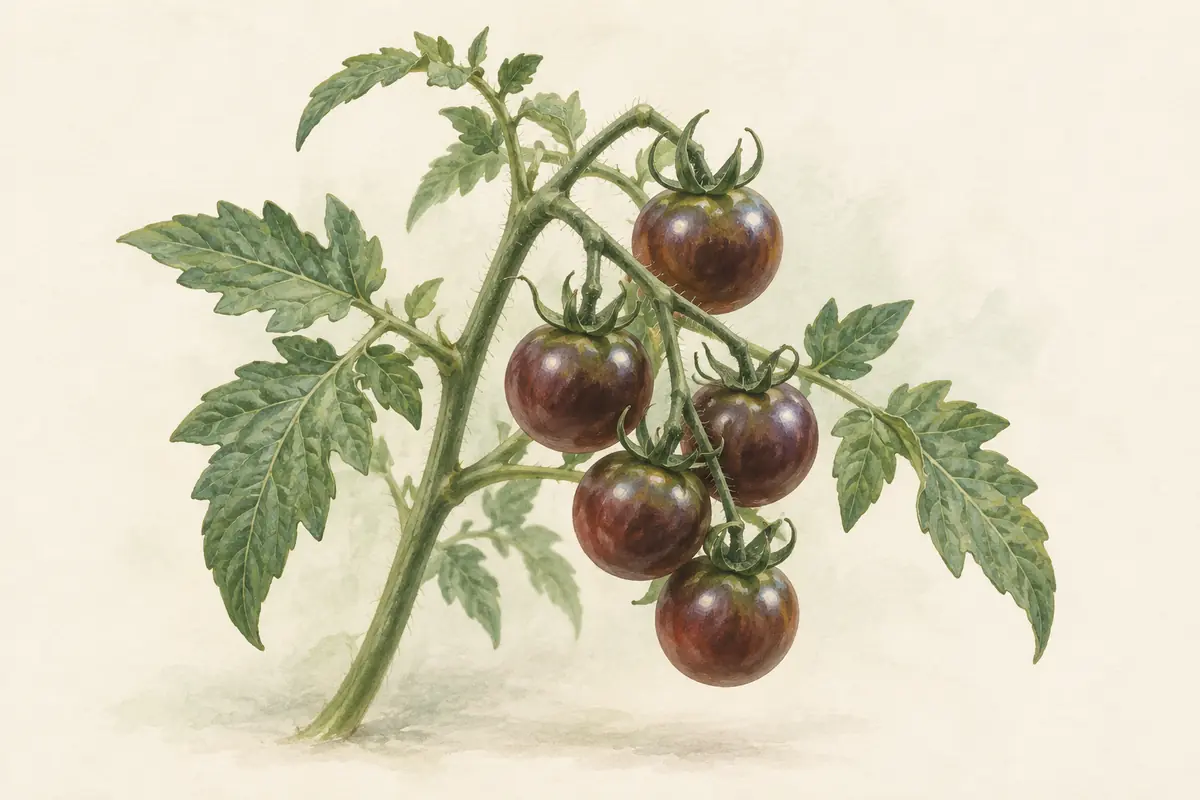
TOMATO GUIDE
Black Cherry Tomato Growing Guide
Black Cherry produces small dusky tomatoes on a full-size indeterminate vine. Learn how the plant grows, how to judge ripeness, what causes splitting, and whether it fits your garden.
Read the guideFrequently asked questions
Do I have to prune Black Cherry?
It needs substantial support, but the pruning intensity depends on the system. A roomy cage can carry more branching growth than a narrowly trained stake or string.
Are tomato suckers useless?
No. They can become productive stems. Removing them is a way to manage the plant’s shape, access, and support demands.
Should I prune determinate Principe Borghese like Black Krim?
No. The current Hollowstead Principe Borghese is described as determinate. Support it and retain its productive side growth.
Can pruning replace a sturdy cage?
No. Reducing the canopy does not repair a loose anchor, a weak frame, or a container that tips.
Sources & further reading
- University of Missouri Extension — Growing Home Garden Tomatoes
- University of Minnesota Extension — Trellises and cages to support garden vegetables
- University of Georgia Extension — Staking and Pruning Tomatoes in the Home Garden
- University of Maryland Extension — Key to Common Problems of Tomatoes
- Cornell Cooperative Extension — Vegetable Varieties for Gardeners: Yellow Pear tomato
- Cornell Cooperative Extension — Vegetable Varieties for Gardeners: Pineapple tomato
Hollowstead Growing Notes
A little help for your next growing season
Practical sowing advice, help choosing seeds, and occasional Hollowstead shop news. Usually one or two emails a month, plus a short welcome note.
Choose your topics and frequency after you confirm. Our guides and planting calendar are always free.