
Description
GOLDEN FRUIT FOR EVERYDAY PICKING
A yellow cherry tomato with room to climb.
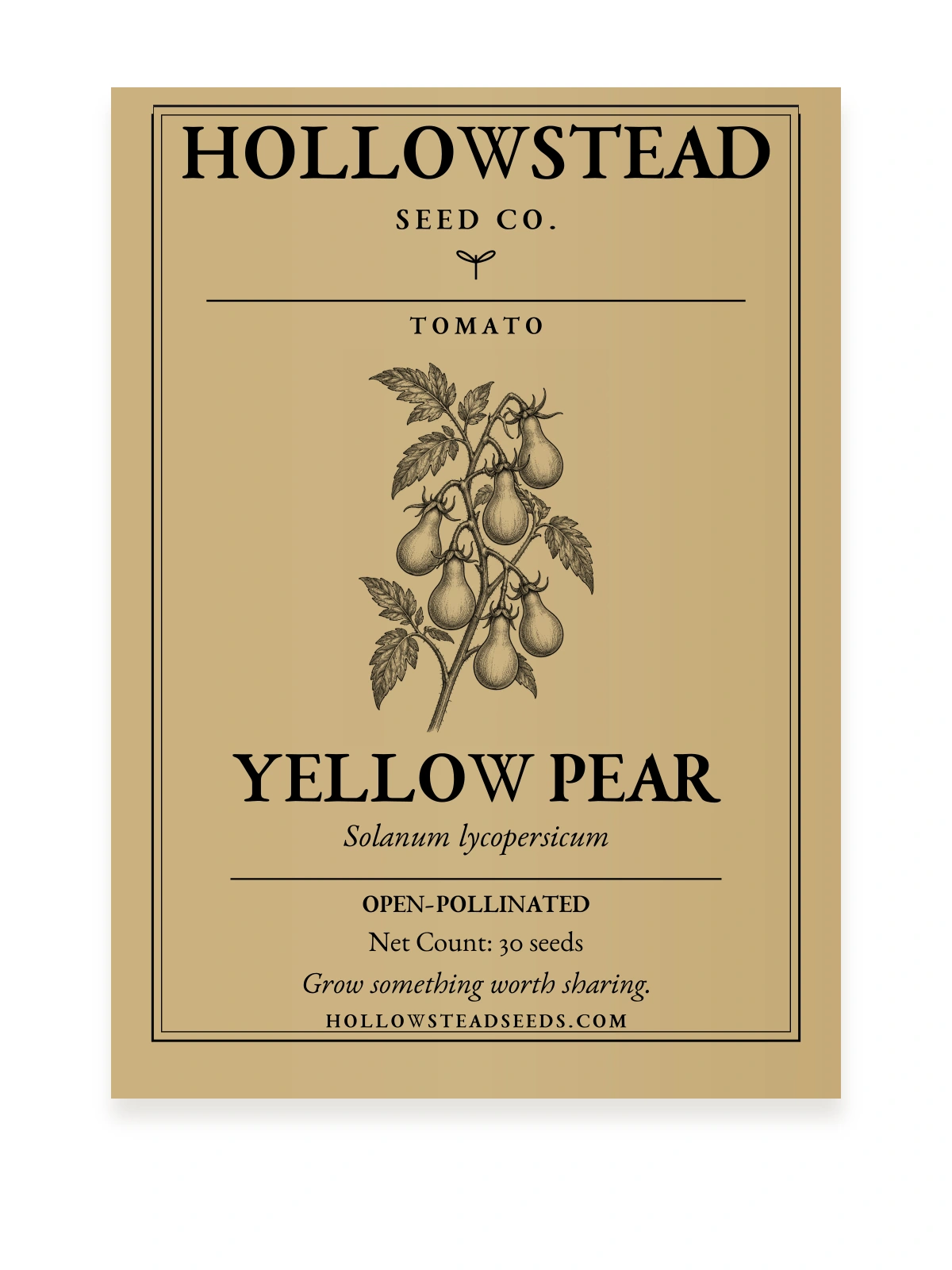
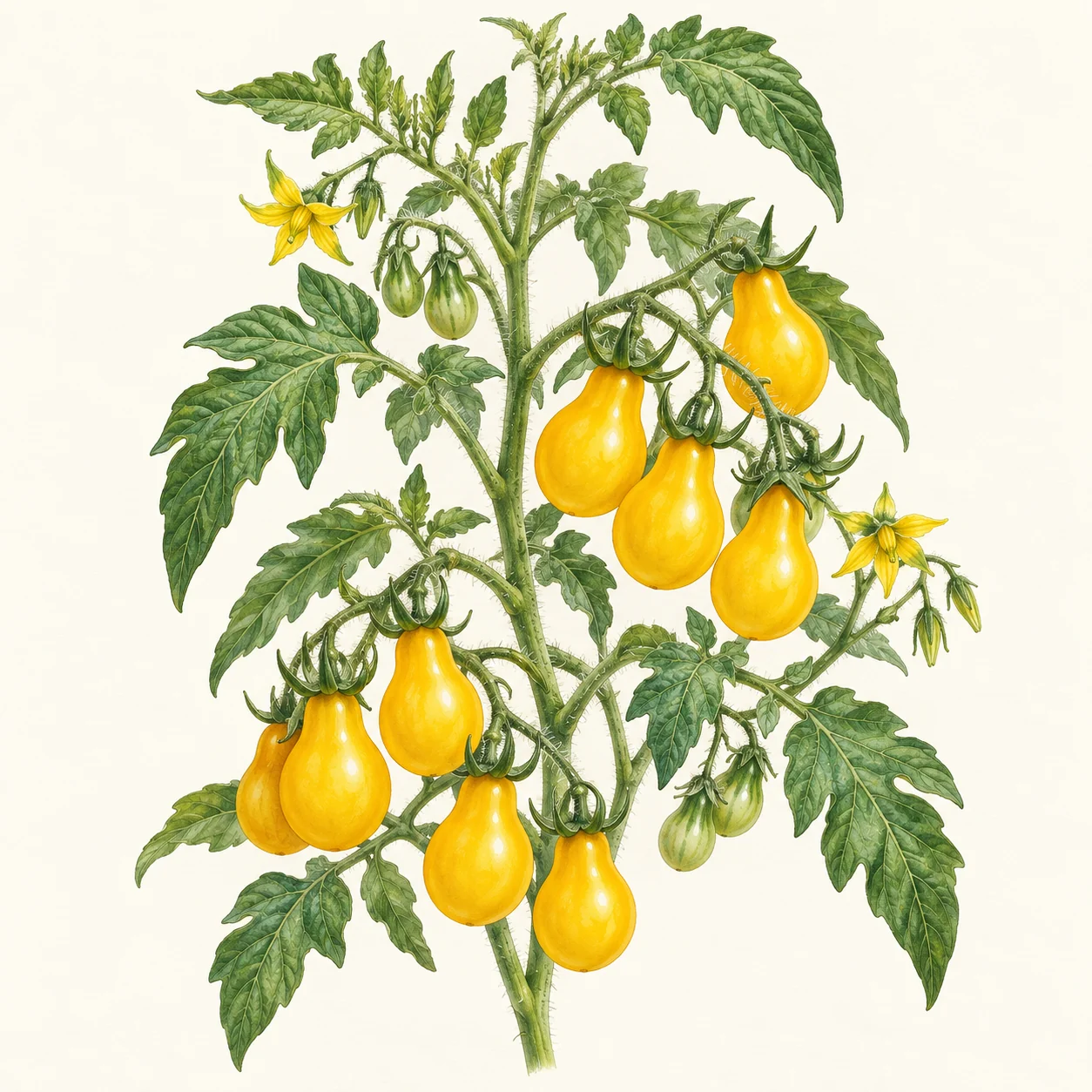
Yellow Pear produces small, yellow, pear-shaped fruit, commonly about 1–2 inches long. Choose it for fresh eating and mixed tomato bowls. The fruit is small, but the indeterminate plant keeps extending its stems as the season progresses.
Choose it for: Fresh salads, a second color beside dark cherry tomatoes, and gardeners who enjoy checking a vine often.
FROM PACKET TO GARDEN
Start indoors, then move into warm soil.
Sow a small batch.
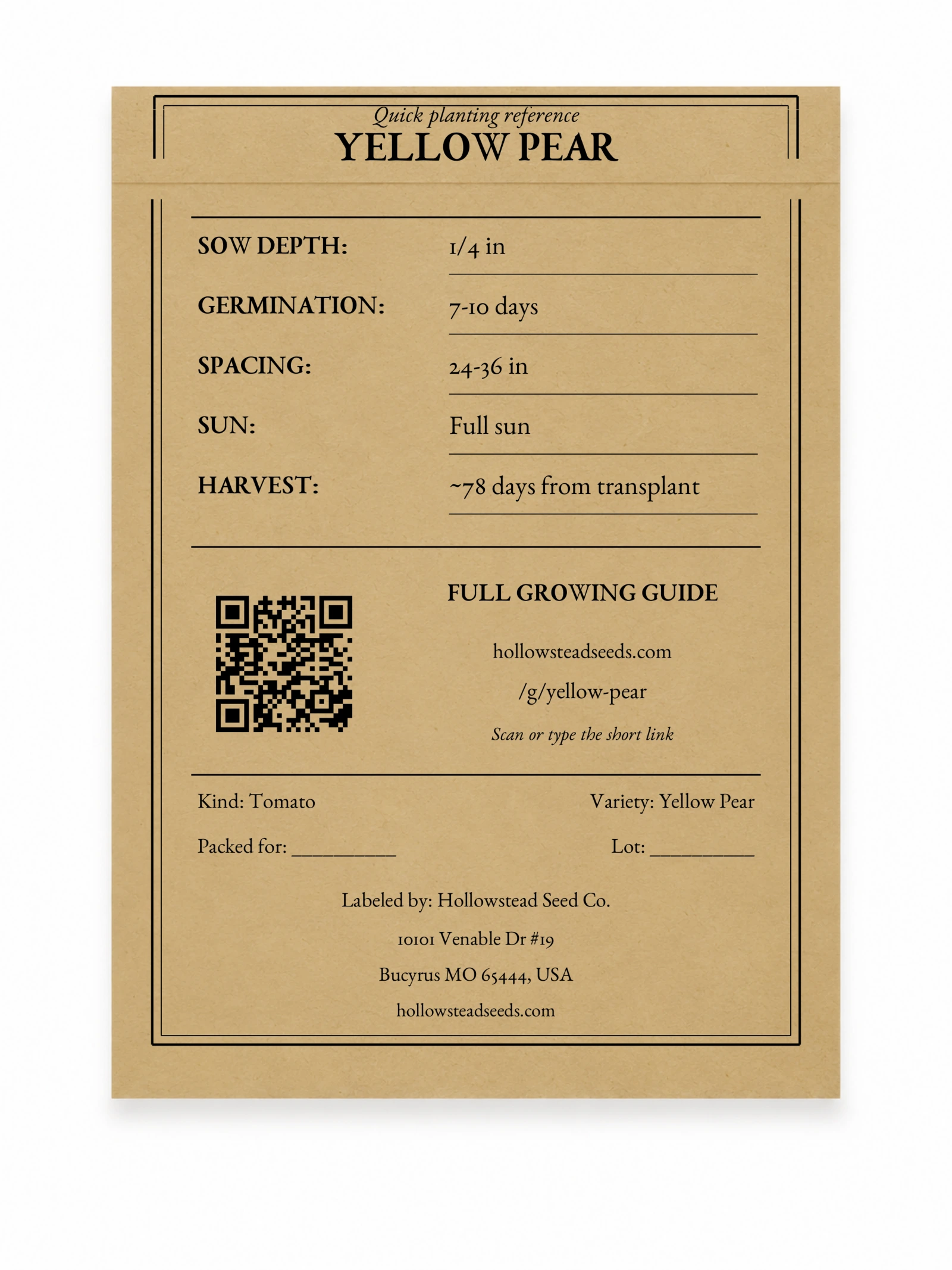
Start indoors about 6 weeks before the expected outdoor planting date. Cover seed ¼ inch deep, keep the mix evenly moist, and give emerged seedlings bright overhead light. [1]
Watch the seedling, not just the calendar.
Use 7–10 days as a germination planning range in warm conditions. Harden young plants gradually and wait until frost danger has passed and the soil has warmed. [1]
Set the final spacing.
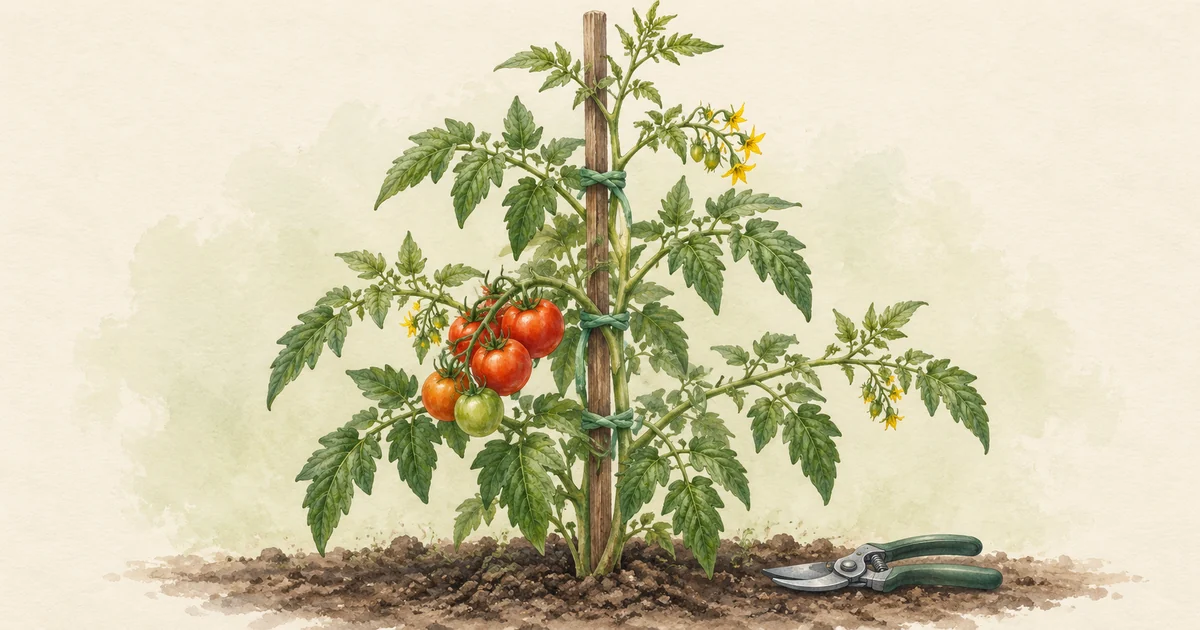
Allow about 24–36 inches between supported plants. Use the wider end where a broad cage holds several stems. Install the support while the plants are small.
The approximately 78-day estimate starts at transplanting and refers to first ripe fruit. It is a planning estimate, not a harvest deadline.
SMALL DECISIONS, BETTER HARVESTS
Practical growing tips
Train in short visits.
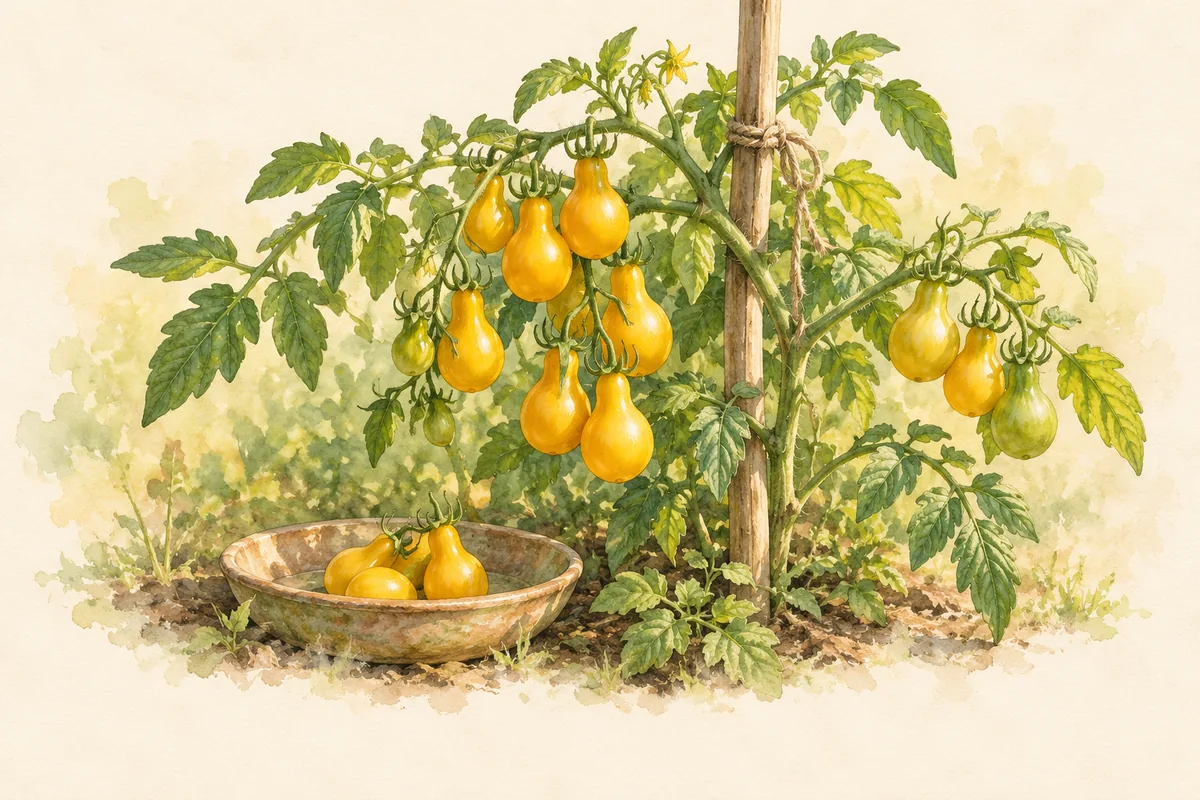
Guide new stems into the support while they are flexible. A few minutes during a harvest visit is easier than lifting a heavy, tangled branch later.
Keep water consistent.
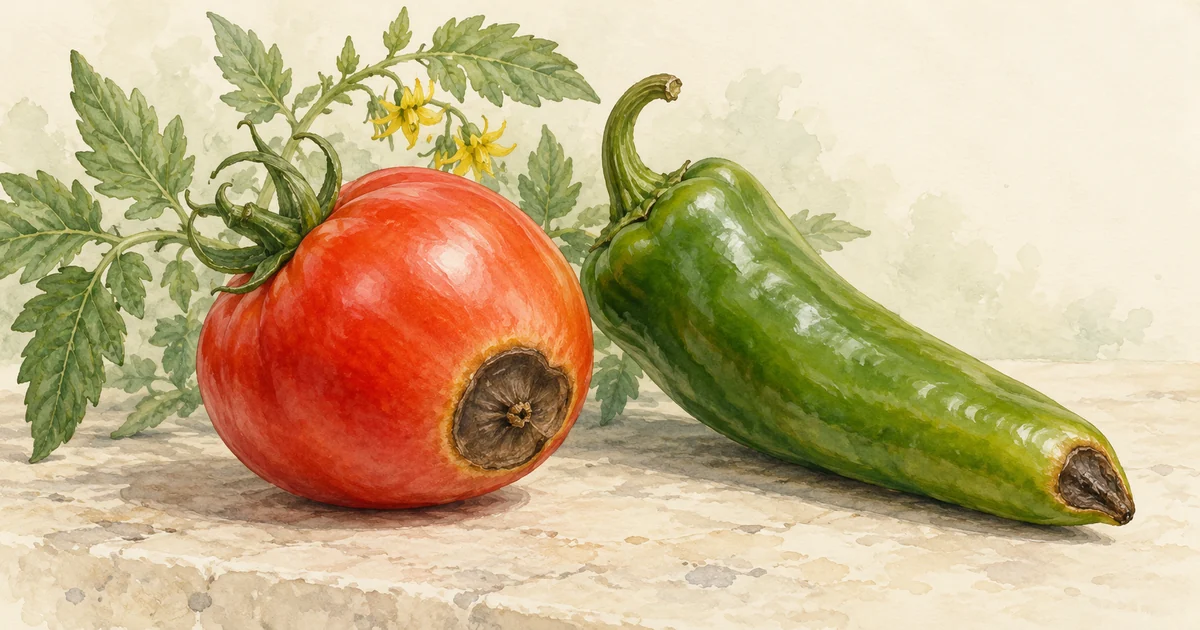
Check moisture below the surface and water the root zone when needed. A small daily sprinkle can leave deeper roots dry. [2]
Read yellow color and firmness together.
Pick when the fruit is fully yellow and gives slightly to gentle pressure. Check clusters individually instead of waiting for every fruit in a cluster to match.
Match pruning to the support.
A narrow stake system and a broad cage need different amounts of training. Keep healthy foliage that shades fruit. See the support and pruning guide. [2]
FIT THE CROP TO YOUR GARDEN
Give each tomato a kitchen job.
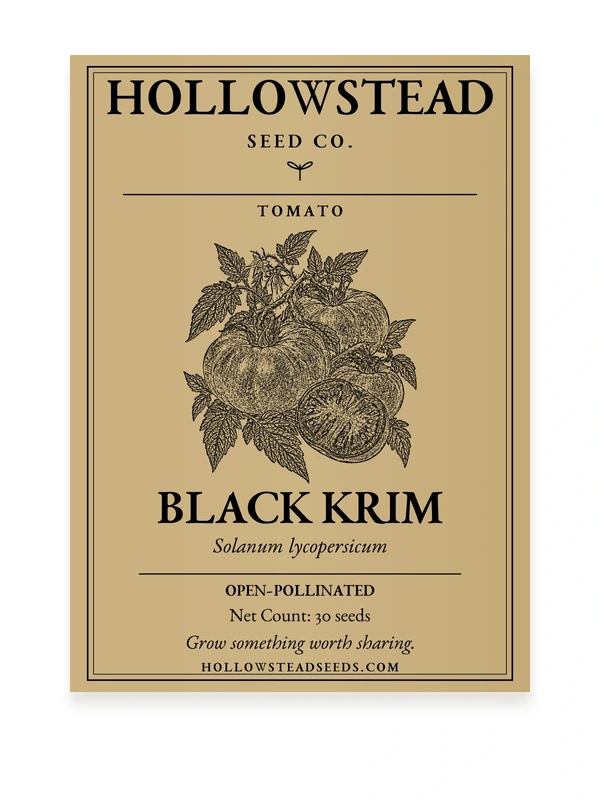
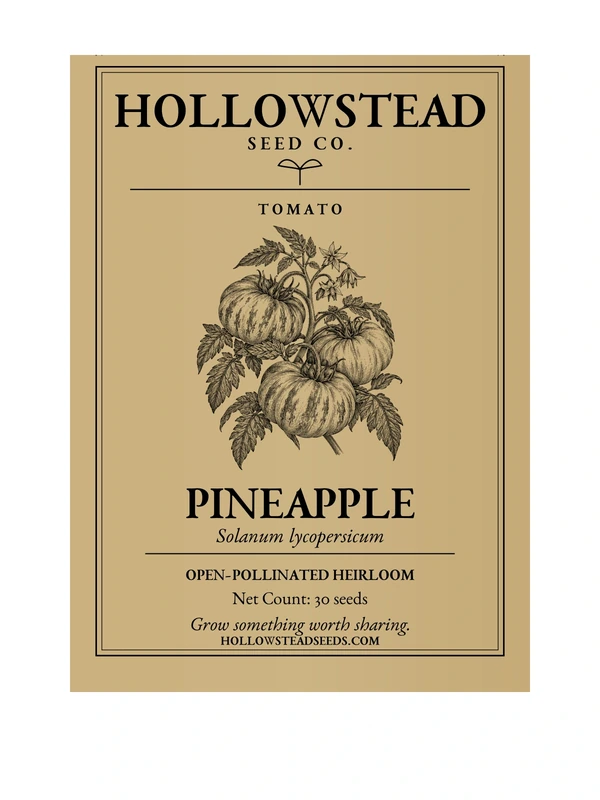
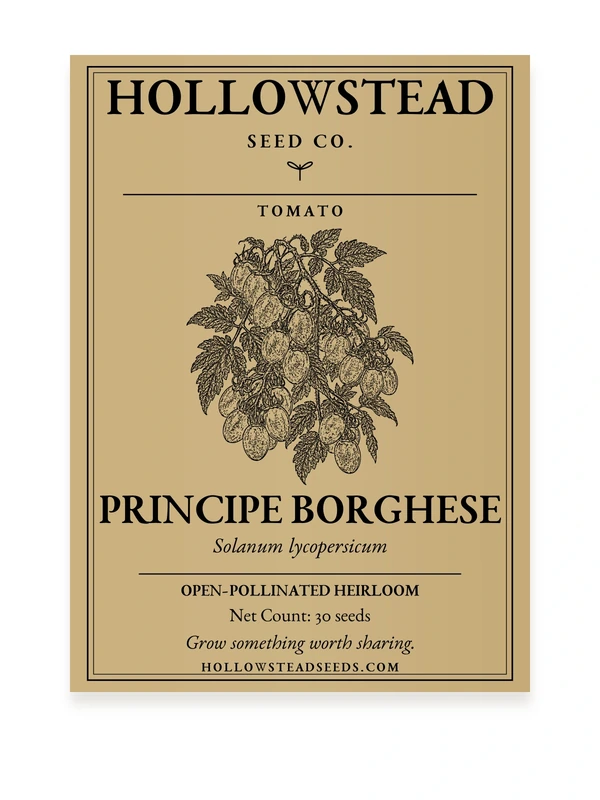
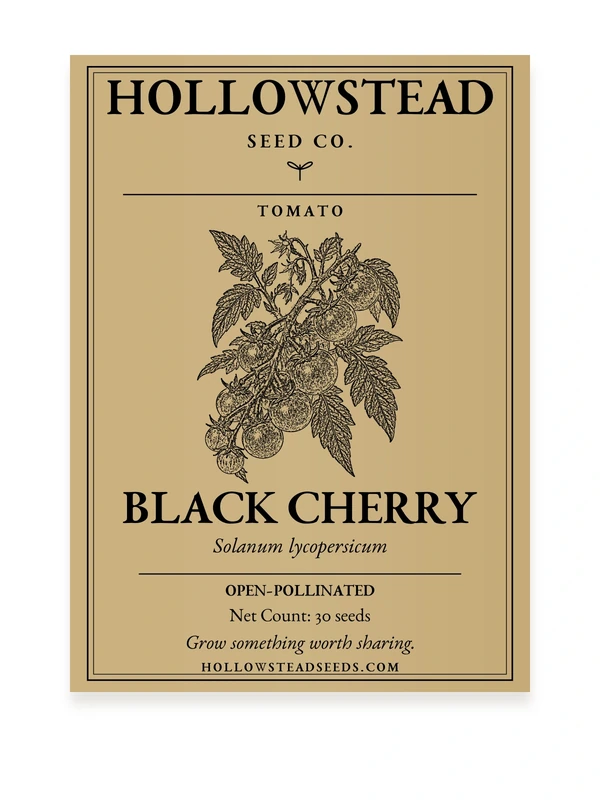
Black Cherry adds dusky round fruit beside Yellow Pear. Choose Black Krim for large dark slices, Pineapple for golden-and-red bicolor slices, or Principe Borghese for small meaty tomatoes suited to cooking and drying. Match the number of plants to the supported spaces you can maintain; the five-variety comparison puts their roles side by side.
A FEW THINGS WORTH KNOWING
Before you plant.
Does a pear-shaped tomato grow on a compact plant?
No. Fruit shape does not describe plant size. Yellow Pear has an indeterminate habit and needs room for a supported vine.
Can I grow it in a pot?
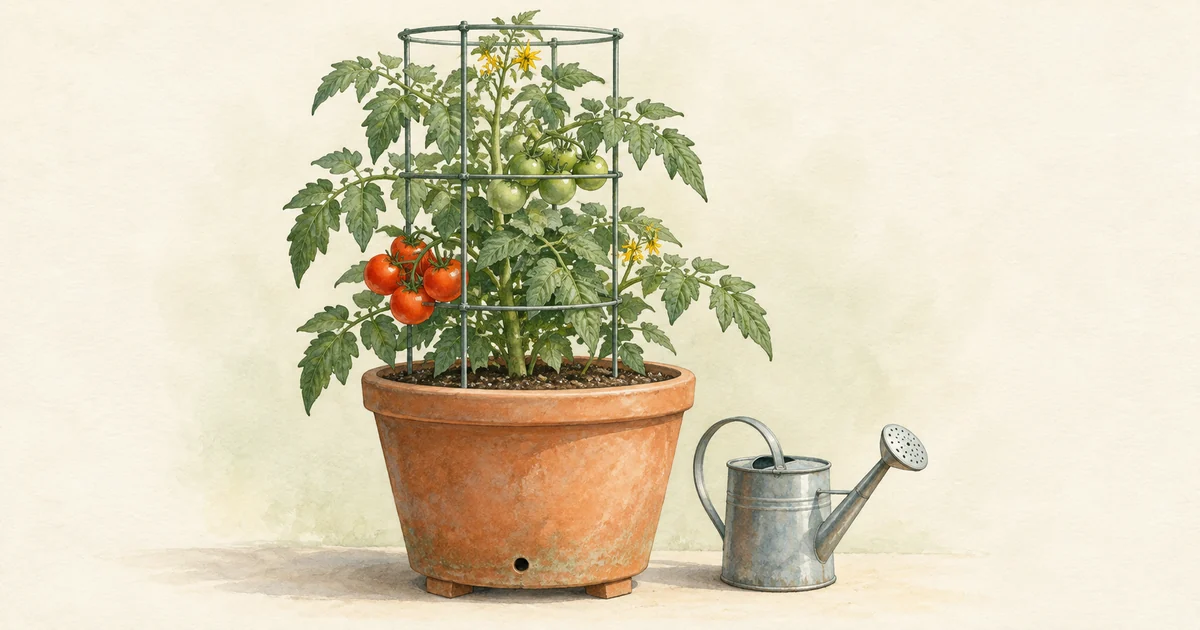
Container growing is possible, but plan for a large stable container, drainage, support, and close attention to moisture. Use the tomato container guide to plan the setup before sowing.
Does 78 days include indoor seed starting?
No. The cultivar estimate begins when a transplant goes into its growing position. Indoor growth and hardening off come first. See how days to maturity works.
PLAN YOUR PLANTING
Reserve space for the vine you want.
Start a few more seedlings than your final planting spaces, then select sturdy plants. Keep the remaining seed cool and dry for a later season. Read the Yellow Pear growing guide for seasonal care and harvest checks, or begin with growing tomatoes from seed.
Packet quantity is a seed count, not a guaranteed plant count. Planting figures are planning guides; weather, site, and care shape the crop.
Growing references
These references support the general growing guidance. Cultivar figures are planning estimates and are not a trial of a Hollowstead seed lot. Reviewed September 28, 2026.
- University of Minnesota Extension — Growing tomatoes. Seed starting, transplanting, and indeterminate plants.
- University of Maryland Extension — Growing tomatoes in a home garden. Support, watering, and harvest.

Reviews
THIS PATCH IS JUST GETTING STARTED
Your garden could start the conversation.
No published reviews for this variety yet. Once you have tried these seeds, your experience can help another gardener decide what to plant.
A few honest details are worth more than a perfect growing season.