
Description
A LITTLE DIFFERENT. EASY TO LOVE.
A cherry tomato for frequent picking.
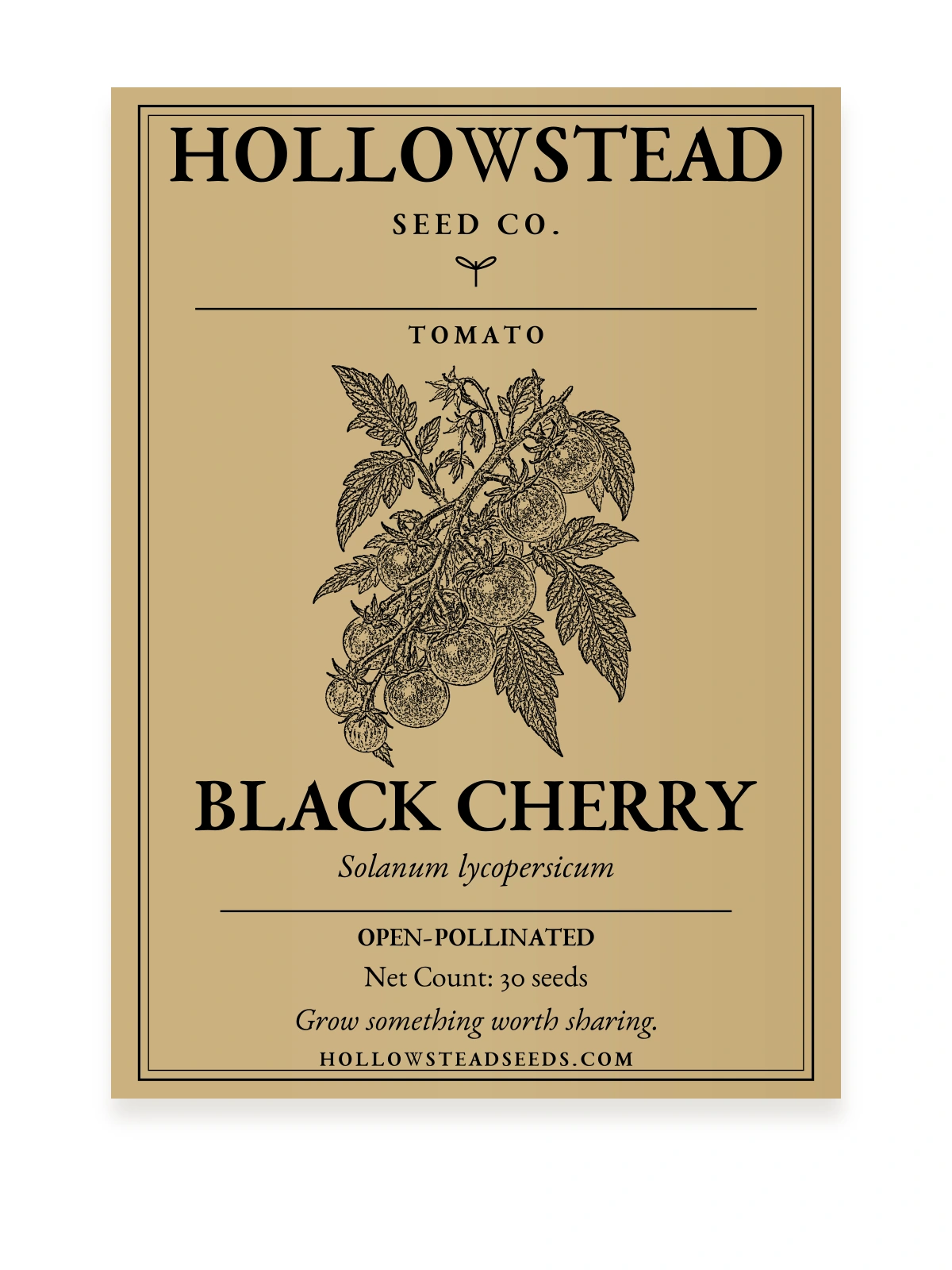
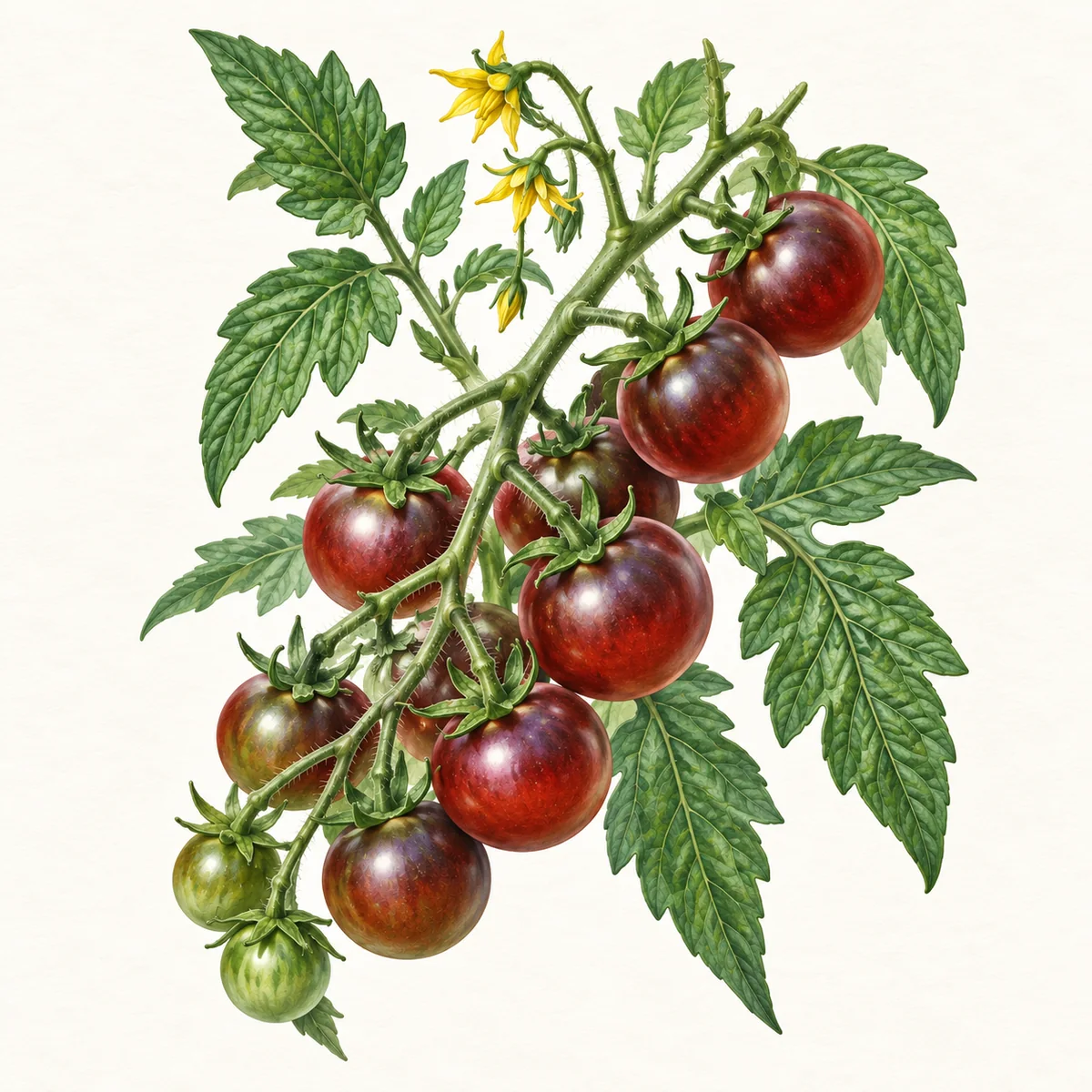
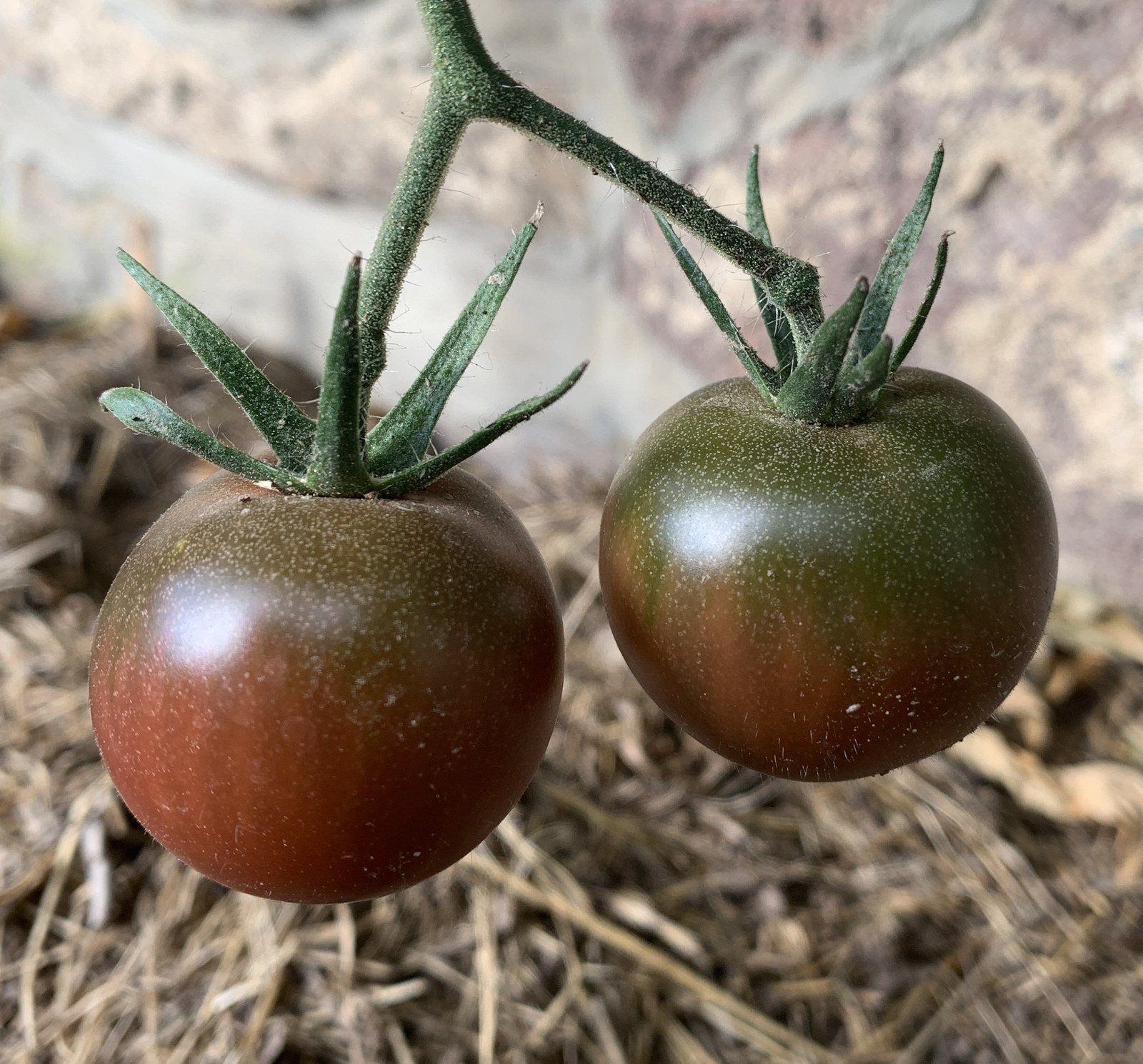
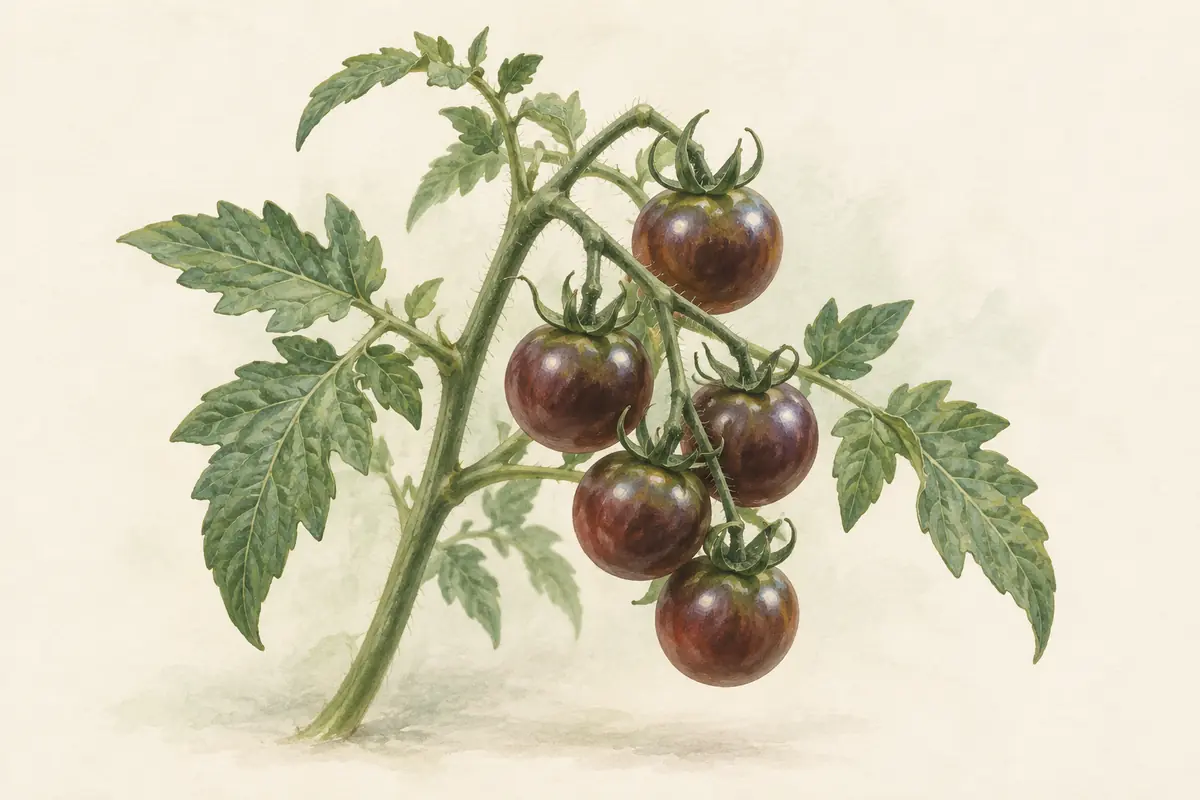
Choose Black Cherry when you want small bowls of fresh tomatoes through summer and have room for a full-size vine. Its roughly 1-inch dusky purple-brown fruit suits snacking and salads; the indeterminate plant needs a strong cage or trellis. Published descriptions emphasize a sweet, full flavor. [4] [9]
Choose it for: Fresh eating, mixed tomato salads, and a harvest you can pick a little at a time.
THE DECISIONS THAT MATTER
Practical growing tips
Choose the support first.
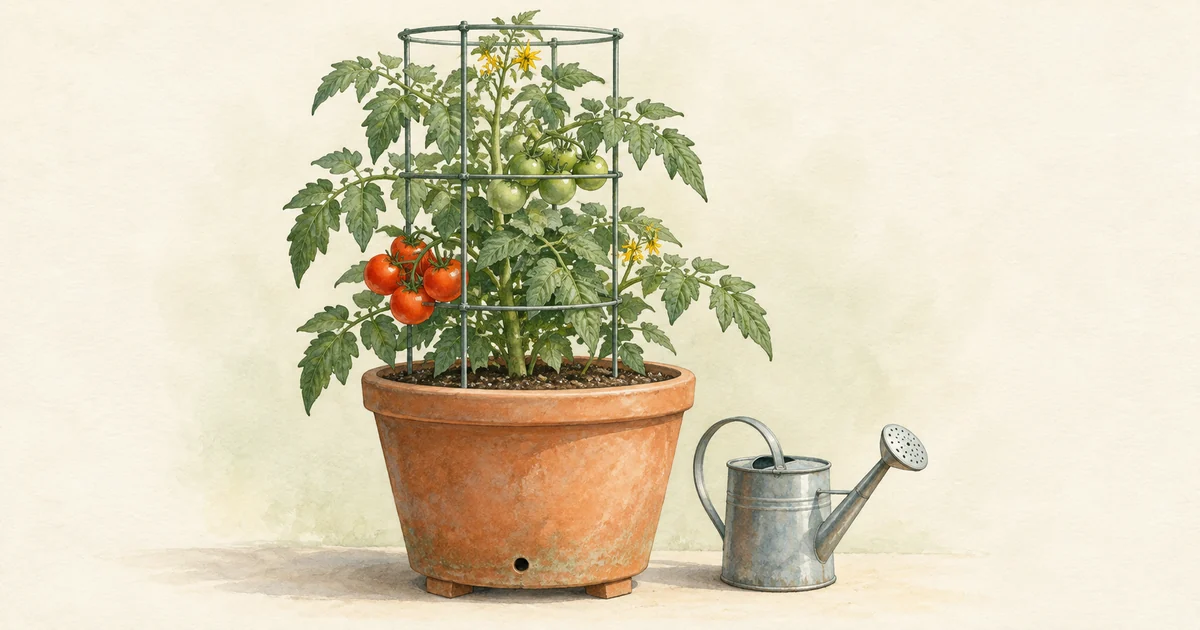
A broad cage can carry several stems; a narrow trellis needs selective training. Fit support at planting and leave a path to reach hidden clusters. [8]
Pick ahead of a soaking rain.
Check coloring clusters often. Harvest sound ripe fruit before a wet spell, especially after dry weather; sudden moisture changes can split ripe tomatoes. [5]
Read color and firmness together.
Look for developed dusky color and slight give. Waiting for jet-black fruit is likely to leave ripe cherries on the vine too long.
Give pots more attention.
In hot or windy weather, check the mix daily and water the full root ball when needed. A large pot buys time; it does not remove the watering job. [6]
FROM PACKET TO GARDEN
Give your seedlings a good start.
Start indoors.
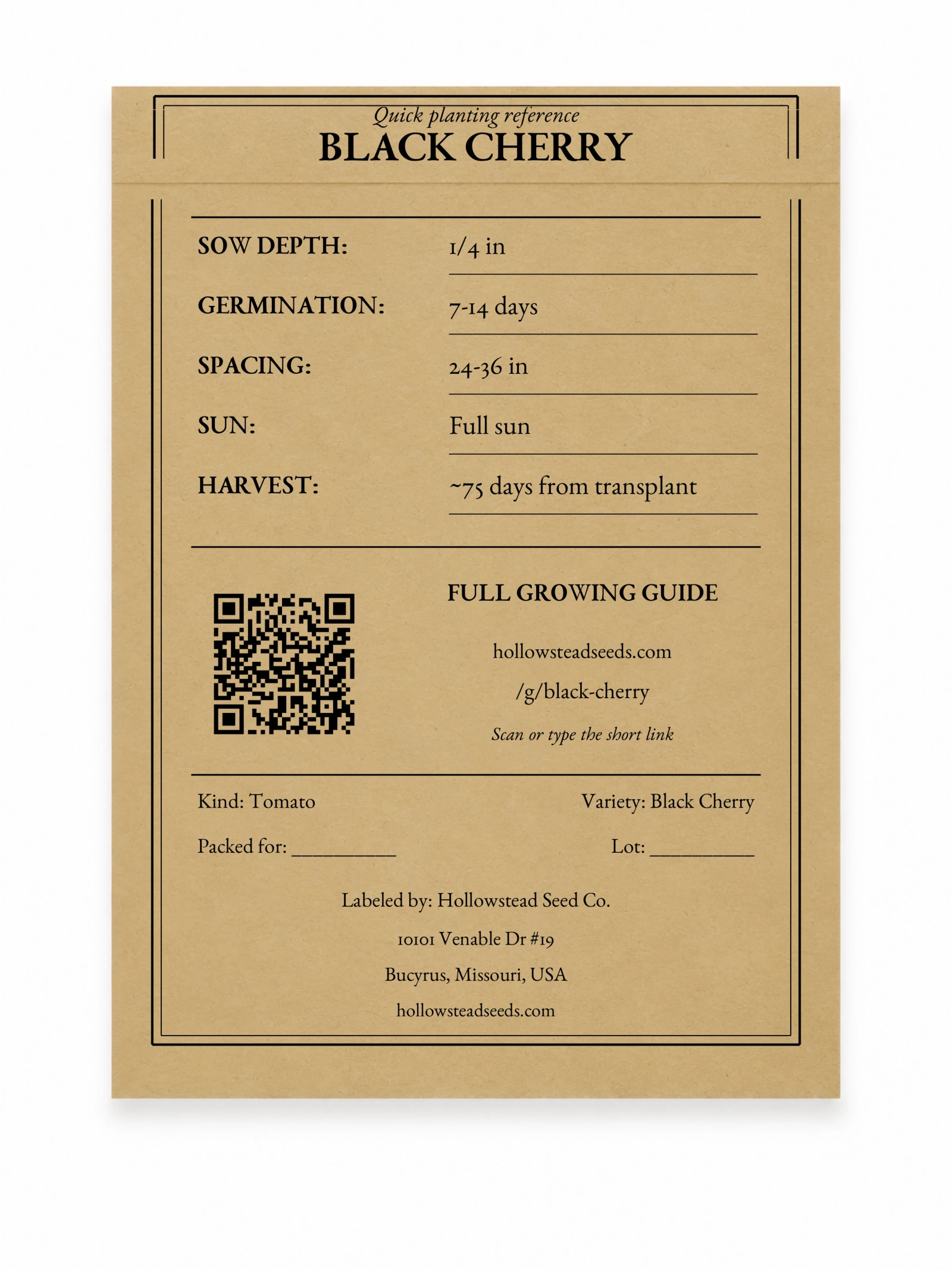
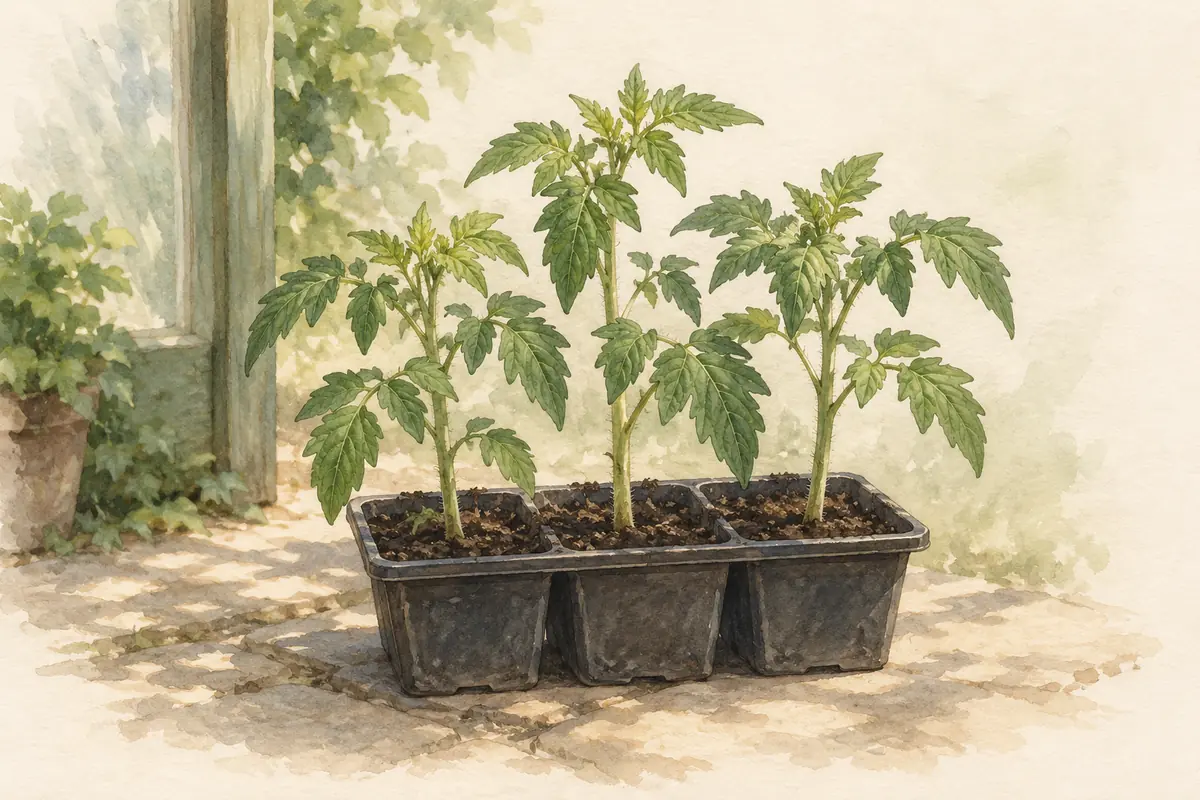
Start about 6 weeks before outdoor planting. Sow ¼ inch deep in seed-starting mix; keep it warm and moist, then provide bright light after emergence. Germination commonly takes 7–14 days. [1] [2]
Ease them outside.
Harden seedlings gradually. Transplant after frost danger has passed and the soil has warmed; protect tender plants from abrupt wind and sun. [2]
Make room to grow.
Use full sun and about 24–36 inches between supported plants. Favor the wider end for broad cages and humid conditions; install the support while planting.
The approximately 75-day listing estimate starts at transplanting and describes the first ripe fruit. Conditions can move that date.
FROM FLOWER TO HARVEST
Keep roots steady and fruit within reach.
Water the soil thoroughly rather than giving frequent surface sprinkles. Mulch once the soil warms, and inspect beneath it before watering again. Keep lower foliage clear of soil splash and retain healthy leaves that shade the fruit. [2]
Pick individual ripe cherries instead of waiting for an entire cluster to color together. Cradle the fruit and snip a stubborn stem. Remove damaged fruit during each pass; discard any with mold or decay.
A FEW THINGS WORTH KNOWING
Before you plant.
Will a 30-seed packet give me 30 plants?
Packet quantity is a seed count. Germination, seedling care, and growing conditions determine how many plants reach the garden.
Do all the tomatoes ripen at once?
No. This indeterminate vine can carry flowers, green fruit, and ripe cherries together. Plan for repeat picking as conditions allow. [4]
Can I save seed for next year?
Yes. Save from healthy, typical plants and control crossing when keeping the named variety matters; the guide explains isolation and cleaning. [3]
PLAN YOUR PLANTING
Choose by the harvest you want.
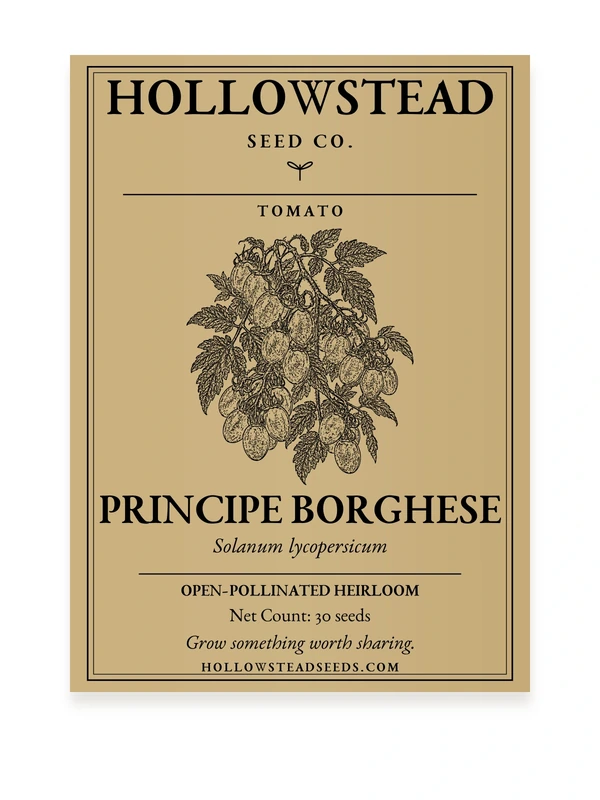
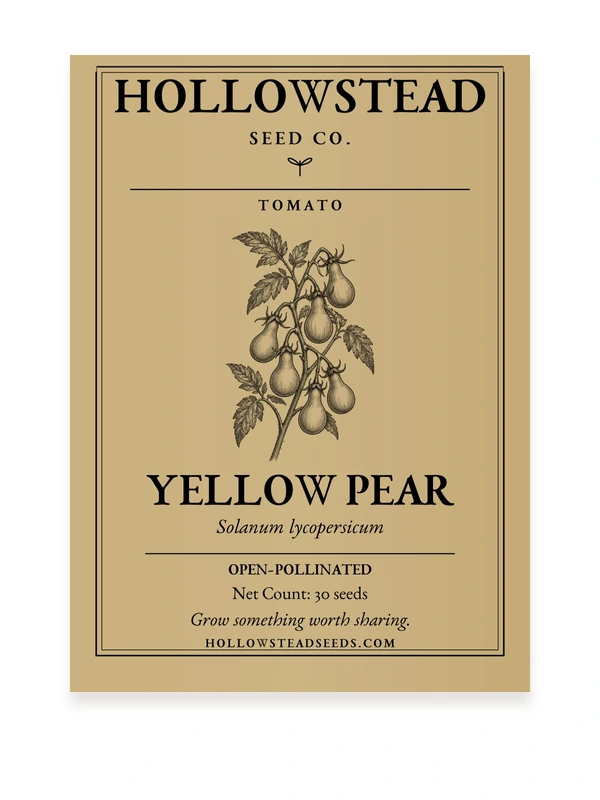
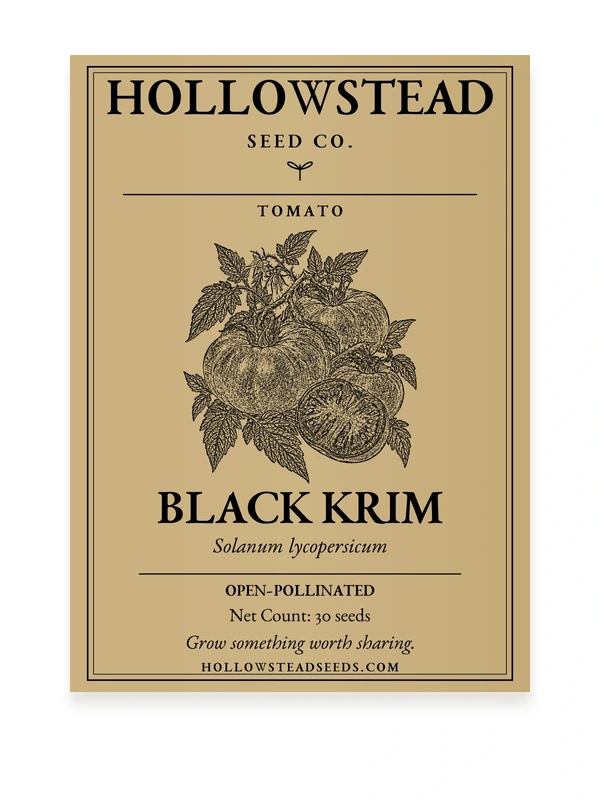
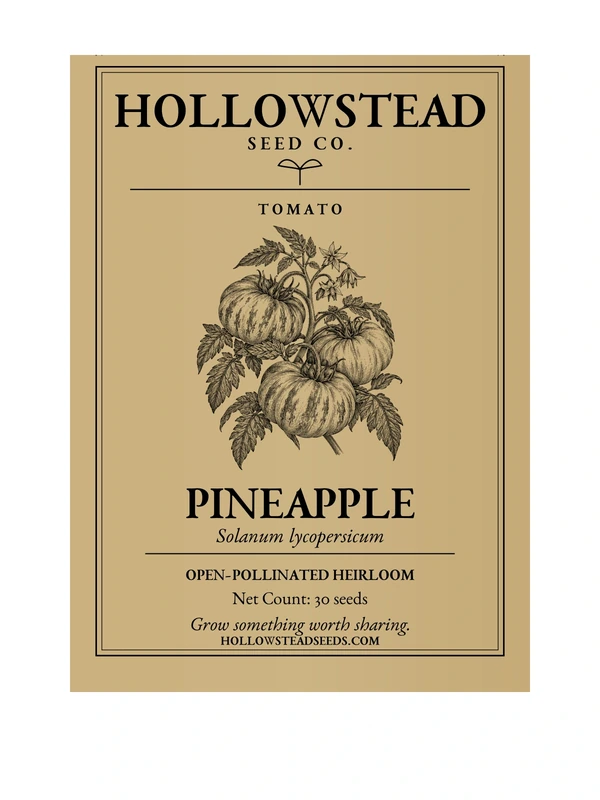
Black Cherry is the dusky cherry choice for repeated fresh picking. Yellow Pear offers yellow pear-shaped fruit in a similar fresh-harvest role. For large slices, choose Black Krim for dark fruit or Pineapple for golden-and-red bicolor fruit. Principe Borghese brings small meaty fruit and a more concentrated cooking harvest. Compare all five in the tomato variety comparison.
Read the Black Cherry growing guide for staged care, harvest decisions, sourced grower observations, and troubleshooting.
Growing references
Cultivar references and general crop guidance are identified below. Planting figures are planning estimates; seed count is not a guaranteed plant count. Reviewed September 24, 2026.
- Seed Savers Exchange — Growing tomatoes. Support, care, and seed saving.
- University of Minnesota Extension — Growing tomatoes. Seed starting, watering, fertility, and harvest.
- University of Minnesota Extension — Saving vegetable seeds. Open-pollinated seed and pollination.
- Victory Seed Company — Black Cherry. Cultivar identity, habit, and fruit description.
- University of Minnesota Extension — Cracks in tomato fruit. Moisture swings and cracking.
- University of Maryland Extension — Growing vegetables in containers. Minimum volumes and the benefits of larger containers.
- University of Maryland Extension — Poor blossom and fruit set. Temperature, light, water, and nitrogen effects.
- University of Maryland Extension — Growing tomatoes in a home garden. Caging and training choices.
- Seed Savers Exchange — 2018 catalog, Black Cherry entry. Archived cultivar reference for approximately 1-inch fruit and indeterminate habit.


Reviews
THIS PATCH IS JUST GETTING STARTED
Your garden could start the conversation.
No published reviews for this variety yet. Once you have tried these seeds, your experience can help another gardener decide what to plant.
A few honest details are worth more than a perfect growing season.