
PLANT PROBLEM GUIDE
Lettuce Pests and Common Growing Problems
Read lettuce damage before treating it. Compare aphids, slug and caterpillar feeding, seedling collapse, tipburn, mildew, and crown rot, with practical steps for a raw salad crop.
LettuceTroubleshootingBeginner → advanced
Published by Hollowstead Seed Co. · How this guide is prepared
Quick answer
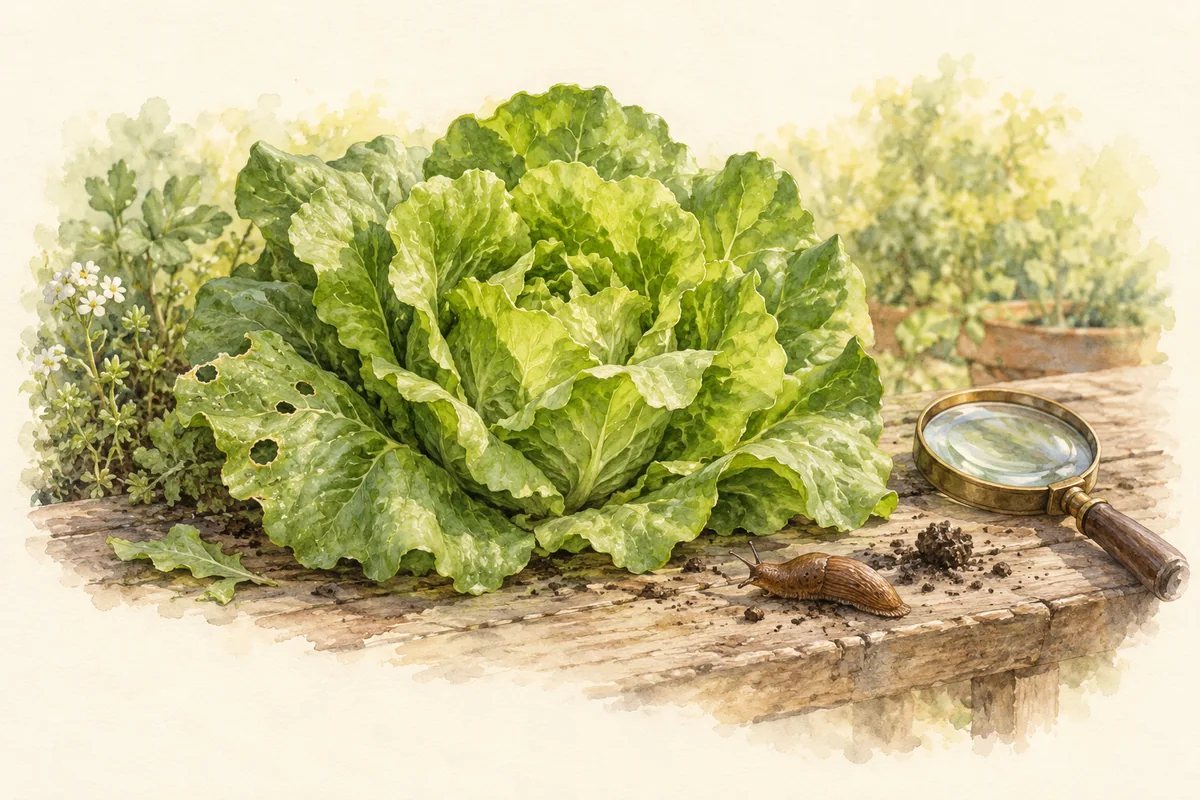
Identify the pattern before choosing a treatment. Holes suggest feeding; clusters of small insects suggest an active pest; brown edges or wilting can come from growing conditions. Several problems can occur together, and a damaged leaf alone is not a complete diagnosis.
Check leaf tops and undersides, the center, the crown at the soil surface, and the moisture around the roots. Start with a practical correction you can verify—removing identified pests, improving drainage, or correcting watering—and recheck new growth. Because lettuce is usually eaten raw, keep harvest cleanliness and spoiled tissue separate from the question of how to save the plant.
At a glance
| Decision | Useful starting point |
|---|---|
| First inspection | Whole plant, both leaf surfaces, crown, and soil |
| Holes | Look for the feeding animal and fresh damage |
| Sticky or curled leaves | Check for aphids and their natural enemies |
| Brown margins | Consider tipburn and other stress, not only insects |
| Wilt | Check moisture before adding water |
| Escalate | Ask local Extension about spreading, unexplained decline |
Inspect the whole plant before choosing a response
Choose one affected plant and one nearby healthy plant of the same age. Compare them in place. Is damage concentrated along a bed edge, beneath a wet cover, or in one low spot? Is every plant affected, or just one? A pattern across the planting often tells you more than the most dramatic leaf.
Take clear photographs of the whole plant, the affected leaf front and back, and the crown. Add a ruler or familiar object for scale if the pest is tiny. Record the variety, sowing date, recent weather, watering, and anything applied to the bed. Keep the notes short enough that you will actually make them.
Look for live insects, eggs, slime trails, droppings, or freshly cut stems. If feeding appears overnight, inspect after dusk rather than concluding that an insecticide failed to find an invisible pest. If the plant is wilting, check the medium before touching the hose.
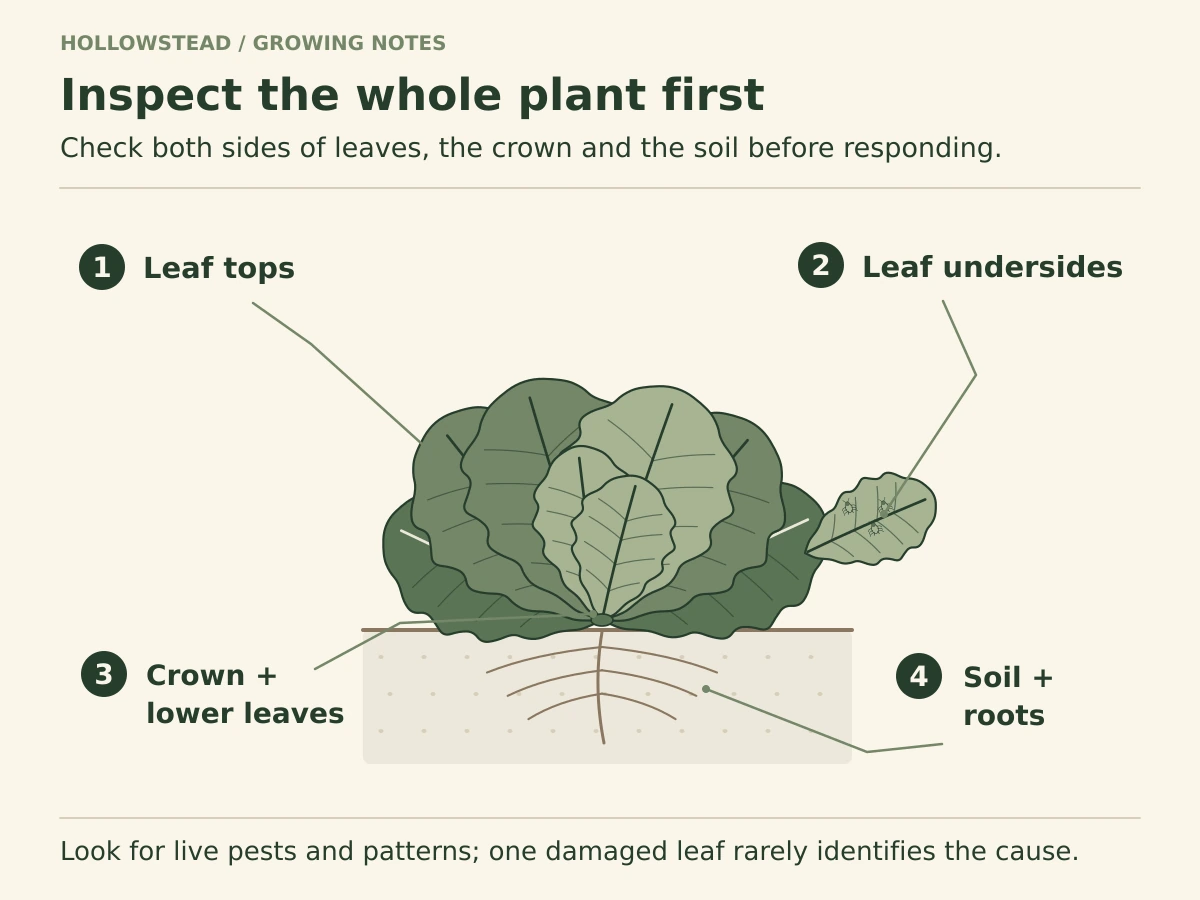 View full-size diagram
A useful first action is reversible and specific. Hand-remove an identified caterpillar, clear standing water from a pot, or open a crowded planting by harvesting plants. Avoid applying several products at once; afterward you may not know which change helped or what damaged the remaining leaves.
Separate feeding damage from growing stress
| What you see | Possible explanation | What would strengthen the diagnosis |
|---|---|---|
| Irregular holes or missing soft tissue | Slugs, snails, caterpillars, or other chewing pests | A live pest, slime, droppings, or new damage at night |
| Small clustered insects and sticky leaves | Aphids | Colonies on undersides or tucked into tender growth |
| Young stem narrowed and collapsed | Damping off | Soft water-soaked tissue rather than a clean bite |
| Dry brown edges, especially inside a head | Tipburn or environmental injury | No matching feeding pest; recent rapid growth or stress |
| Angular yellow spots with white growth below | Possible downy mildew | The upper and lower symptoms align on the same leaf |
| Whole plant wilts with a rotting base | Crown or root disease, including lettuce drop | Soft basal rot, white growth, or dark survival structures |
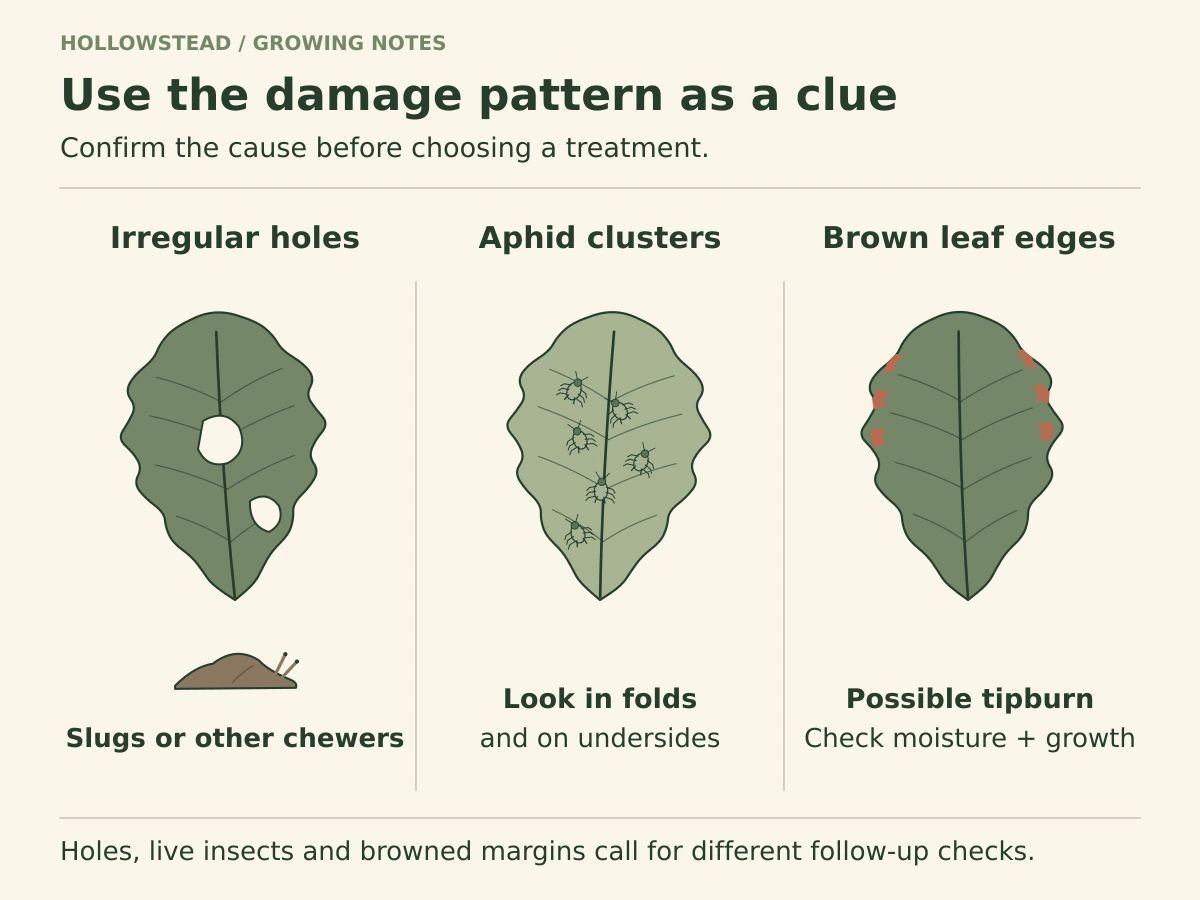 View full-size diagram
Use the table to decide what to inspect next, not to identify a disease from one color. Heat, cold, fertilizer injury, and root stress can overlap with disease symptoms. If a problem keeps spreading despite a reasonable correction, local Extension can advise whether to submit a plant sample.
Find aphids before they disappear into the head
Aphids are small soft-bodied insects that often cluster on tender growth or leaf undersides. Feeding can accompany curled leaves and sticky honeydew. Look into romaine’s overlapping leaves before the head closes tightly; hidden colonies are harder to reach later.[1]
For a small planting, remove heavily infested outer leaves or dislodge accessible aphids with a directed water spray that the plant can withstand. Support delicate leaves and avoid blasting soil onto the crop. Recheck rather than assuming one pass removed everything.
Look for naturally occurring predators and parasitized aphids before spraying. UC IPM recommends nonchemical measures first and avoiding broad-spectrum insecticides that disrupt beneficial insects.[1] A few insects and an expanding infestation are different management situations.
If a pesticide is warranted, choose a product labeled for lettuce and the identified pest, and follow its instructions, including harvest restrictions. Do not substitute a homemade dish-detergent recipe for a labeled insecticidal soap. Tender salad leaves are not a useful place to test an improvised mixture.
Investigate holes, missing seedlings, and cut stems
Slugs and snails can make irregular holes or remove tender young tissue. They favor moist shelter and may be easier to find at night or beneath objects close to the bed.[2] Check under pots, boards, thick debris, and dense mulch rather than drying out the lettuce’s roots in an attempt to make the whole garden inhospitable.
Hand collection and removal of unnecessary shelter can help a small patch. Keep necessary irrigation directed toward the root zone, and avoid leaving the surrounding surface wet all night when you can water earlier. If you use a bait, follow a product label appropriate to the site and keep it away from harvested leaves.
Caterpillars can leave holes and dark droppings. Inspect leaf folds and the crown, and remove identified larvae by hand when practical. A seedling cleanly severed at the soil surface suggests a different feeding pattern from a soft collapsing stem. Check nearby soil and nighttime activity before deciding the cause.
Physical exclusion can help when installed before pests arrive and secured appropriately, but a cover can also trap pests already present. Inspect beneath it regularly. Choose a material that fits the season: extra heat under a cover can make lettuce problems worse even if the insects remain outside.
Read wilting and seedling collapse carefully
A wilted plant needs a moisture check. Dry roots, saturated roots, damaged roots, and a decaying crown can all leave leaves limp. If a pot is wet and heavy, more water may worsen the condition. Check drainage holes and standing water first.
New seedlings that narrow, soften, and fall over at the soil surface may have damping off. The disease can also kill seedlings before emergence. Clean containers, fresh seed-starting mix, adequate drainage, and avoiding persistent wetness help prevent it.[3] Restart a badly affected tray under improved conditions rather than sowing into the same collapsing stand.
A sudden change after transplanting may relate to exposure or root disturbance. Compare the plant with an untransplanted reserve and the previous day’s weather. Protect young starts from abrupt sun and wind, maintain appropriate moisture, and avoid adding fertilizer just because the leaves have temporarily wilted.
If nothing emerged at all, move to the germination guide. The sequence of events distinguishes a seedbed problem from something that happened after the plant was established.
Treat tipburn as a growing disorder
Tipburn appears as brown edges on susceptible leaves and may be hidden inside a head. It is associated with inadequate calcium reaching rapidly growing tissue, which is not automatically the same as a lack of calcium in the soil. Inner leaves transpire less and can be particularly vulnerable.[4][5]
Review water consistency, temperature, and fertilizer use before adding a calcium product. High fertility and heat can aggravate the problem; good irrigation and avoiding excessive feeding are useful preventive steps.[4] A soil test is more informative than a guess based on one brown edge.
Damaged tissue will not become green again, so judge improvement on new growth. Open a harvested head to inspect its inner leaves. Secondary soft rot can enter damaged tissue; do not treat a soft, deteriorating head as harmless dry tipburn. Discard spoiled produce.
Recognize disease clues and reduce favorable conditions
Possible downy mildew presents as angular pale or yellow patches above and whitish growth below the affected leaf. Cool, wet conditions favor it. Better airflow, keeping leaves drier, and removing infected debris help limit risk.[6] Do not diagnose every white deposit as mildew; check whether it is residue, an insect, or living growth.
Lettuce drop, caused by Sclerotinia, can involve watery decay near the base, white cottony growth, and hard dark structures. Remove affected plants and address persistent wetness and crowding.[7] A photograph can help Extension decide whether this or another root or crown disease is plausible.
Do not carry a rotting plant through healthy rows or leave it touching the next sowing. Clean tools after removing diseased material. Review the site before replanting there; repeatedly replacing plants in the same failing spot without correcting the cause often repeats the loss.
Protect the harvest and improve the next planting
Discard rotten lettuce. Wash sound leaves under running water before preparing or eating them; rinsing reduces contamination but cannot guarantee its removal.[8]
For prevention, start with a manageable planting in suitable cool weather, enough mature spacing, careful watering, and regular inspection. The complete guide covers establishment, while container care explains drainage and root-zone checks.
Compare the normal forms in the Red Sails guide and Parris Island Cos guide before mistaking an open rosette for a failed head. Use maturity estimates and a reliable seed lot to plan replacements. Red Sails seed and Parris Island Cos seed offer different harvest forms, but neither removes the need for sound growing conditions.
GROW FROM SEED
Put this guide to work.
Choose a variety that fits the way you want to grow and harvest, then use the guide above as your reference through the season.
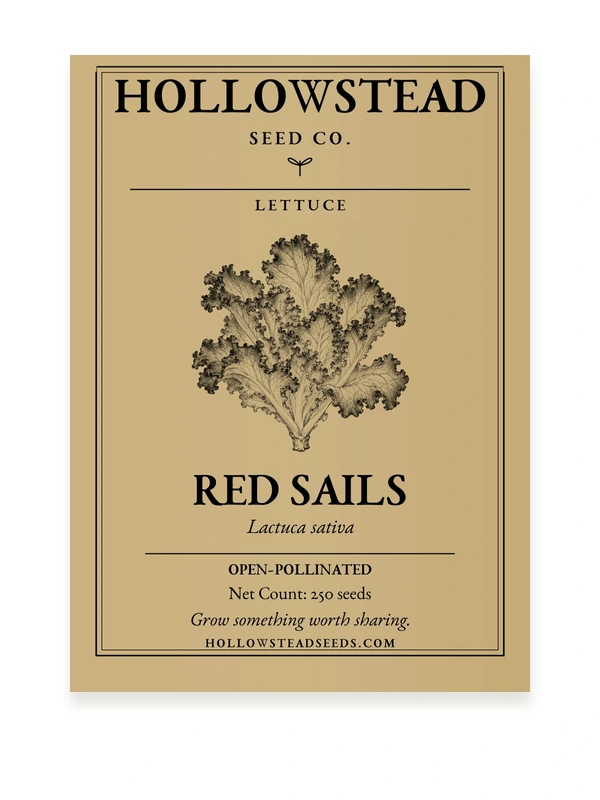
HOLLOWSTEAD SEED
Red Sails Lettuce Seeds
$3.49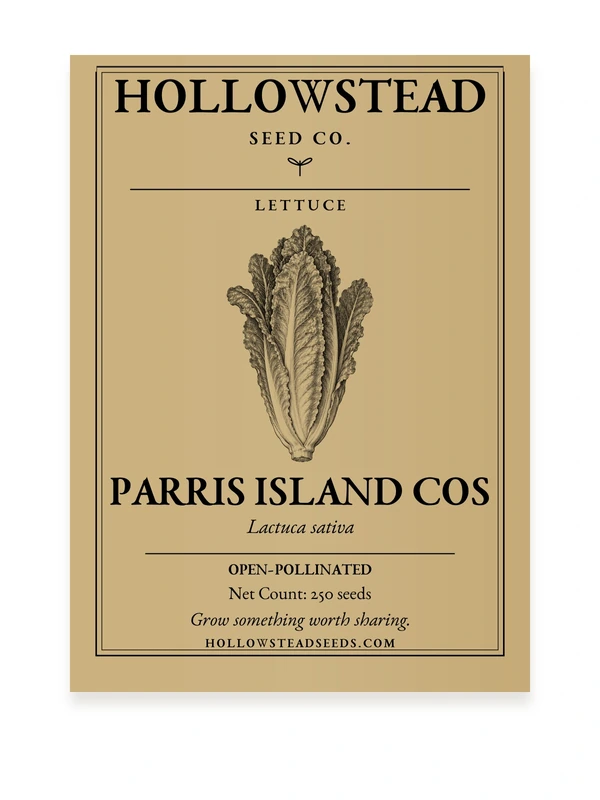
HOLLOWSTEAD SEED
Parris Island Cos Lettuce Seeds
$3.49KEEP LEARNING
Related growing guides
LETTUCE GROWING
Growing Lettuce From Seed: The Complete Guide
Grow leaf lettuce and romaine from shallow sowing through harvest. Plan for cool weather, choose your harvest style, keep moisture steady, and make room for a second crop.
Read the guide
GERMINATION HELP
Why Lettuce Seeds Don’t Germinate
Work through lettuce seed failures by checking the seed zone, sowing depth, moisture, and seed lot. Use a small controlled test to decide whether to wait, change conditions, or restart.
Read the guide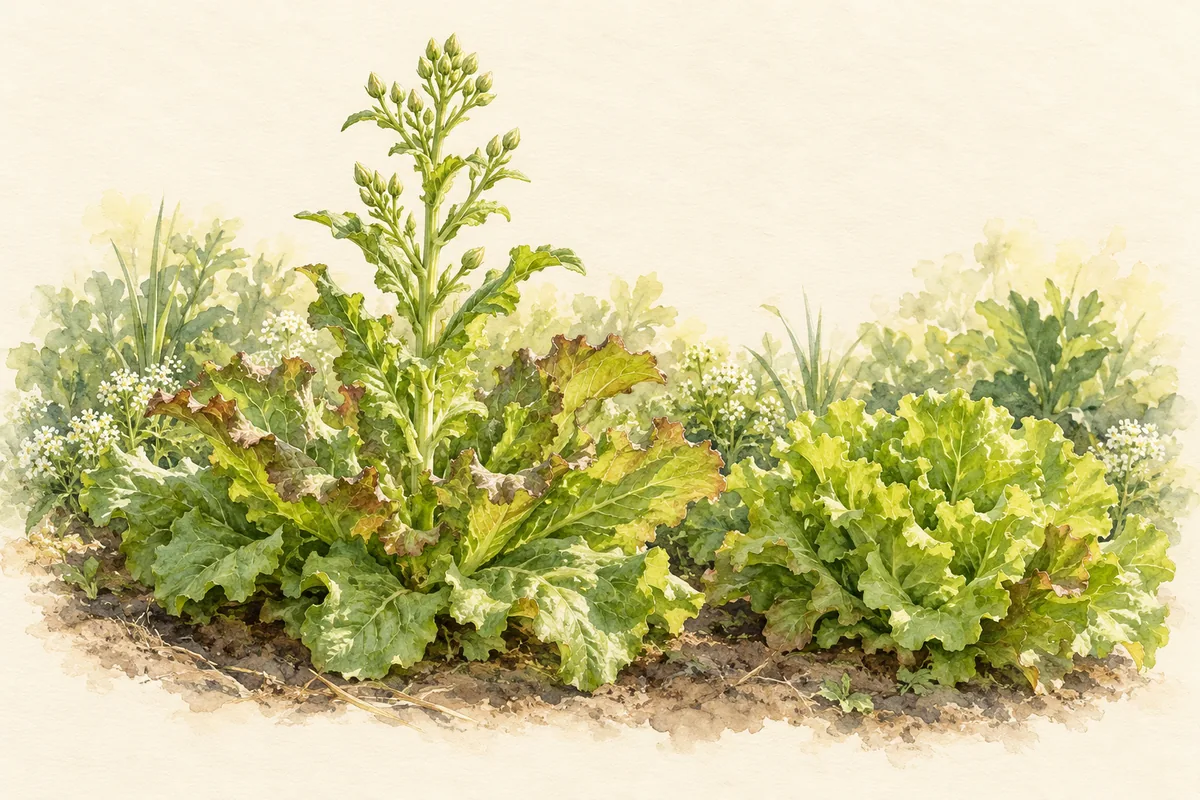
HEAT & BOLTING
Why Lettuce Bolts or Turns Bitter
Learn the difference between a forming romaine head and a rising flower stalk, why heat and season matter, and when to harvest, replace, or deliberately keep lettuce for seed.
Read the guideFrequently asked questions
Do holes mean I need an insecticide?
No. First identify what is feeding. Slugs, caterpillars, and other causes need different responses, and a small amount of old damage may not represent an active problem.
Why does wet lettuce wilt?
Saturated or damaged roots and crown disease can prevent water uptake. Check the root zone and base of the plant before adding more water.
Will calcium fix every brown leaf edge?
No. Tipburn concerns calcium reaching vulnerable tissue and is influenced by growth and water conditions. Other injuries also brown leaves; identify the problem before amending soil.
Are the illustrations a disease diagnosis?
No. They show clues to inspect. Worsening or unexplained symptoms deserve local advice and, when appropriate, a diagnostic sample.
Sources & further reading
- University of California Statewide IPM Program — Aphids
- University of California Statewide IPM Program — Snails and Slugs
- University of Minnesota Extension — How to prevent seedling damping off
- University of California Statewide IPM Program — Tipburn on Lettuce and Spinach
- University of California Statewide IPM Program — Tipburn: Lettuce Pest Management Guidelines
- University of California Statewide IPM Program — Downy Mildew on Lettuce
- University of California Statewide IPM Program — White Mold (Sclerotinia Lettuce Drop)
- U.S. Food and Drug Administration — Selecting and Serving Produce Safely
Hollowstead Growing Notes
A little help for your next growing season
Practical sowing advice, help choosing seeds, and occasional Hollowstead shop news. Usually one or two emails a month, plus a short welcome note.
Choose your topics and frequency after you confirm. Our guides and planting calendar are always free.