
TOMATO GUIDE
Yellow Pear Tomato Growing Guide
Grow small yellow pear-shaped tomatoes on a full-size vine. Learn sowing, support, ripeness, cracking, containers, seed saving, and how Yellow Pear compares with the other four Hollowstead tomatoes.
TomatoesVariety guideBeginner → advanced
Published by Hollowstead Seed Co. · How this guide is prepared
Quick answer
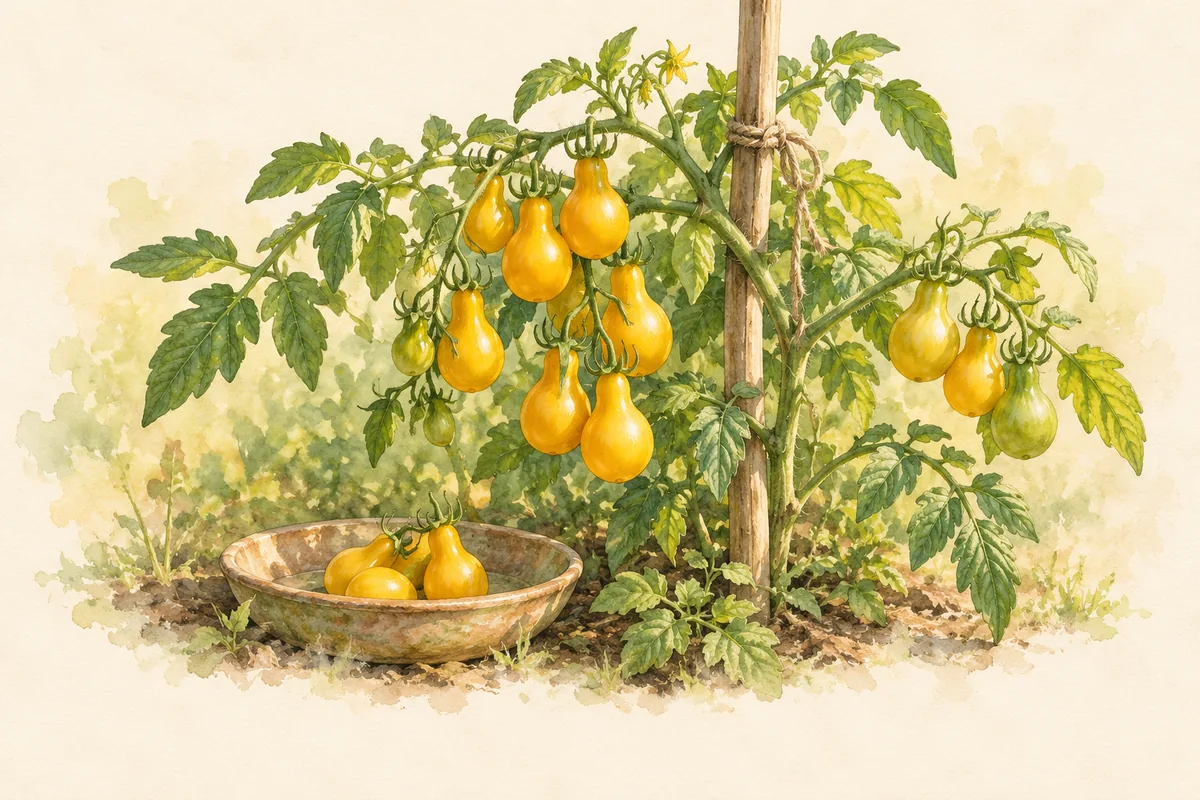
Yellow Pear is a small-fruited tomato with a full-size indeterminate vine. Grow it when you want yellow, pear-shaped fruit for salads and repeated fresh picking, and can provide a sturdy support. Cornell describes an open-pollinated main-season tomato with fruit about 1½ inches long and an approximate 70–80-day maturity range.[1]
Hollowstead’s packet uses about 78 days from transplanting, ¼-inch sowing depth and 24–36-inch plant spacing. Begin indoors, transplant into warm soil after frost danger, and pick by yellow color plus a slight softening. The most useful early decision is where the mature vine will go.
At a glance
| Planning point | Useful starting point |
|---|---|
| Botanical name | Solanum lycopersicum |
| Plant habit | Open-pollinated; indeterminate |
| Packet | 30 seeds |
| Sow / germination | ¼ inch deep; about 7–10 days in suitable warmth |
| Final spacing | 24–36 inches; allow access around the support |
| Light | Full sun |
| First harvest estimate | About 78 days from transplant |
| Eating stage | Yellow, pear-shaped fruit with a slight give |
SAVE FOR SOWING DAY
Five-step crop plan for Yellow Pear
Open the sow-to-harvest plan
- StartStart indoors about 6–8 weeks before a warm planting-out window; sow ¼ inch deep in a 75–85°F germination medium. Guide details
- PlantHarden gradually, then transplant after frost danger into warm soil; install a sturdy cage or trellis before the vine expands. Guide details
- MaintainSupport the indeterminate stems with loose ties and keep root-zone moisture steady; inspect ripening clusters for splitting. Guide details
- HarvestPick small pear-shaped fruit when fully yellow and slightly yielding; revisit clusters often and handle ripe fruit gently. Guide details
- Next sowing or seedSelect healthy typical plants; protect unopened blossoms when preserving identity, then ferment ripe-fruit seed pulp, rinse, dry fully and label. Guide details
- Space
- Allow 24–36 inches between plants plus an accessible picking aisle around a substantial cage or trellis.
- Timing
- Hollowstead lists about 78 days from transplanting to first harvest; the indoor seed-starting period comes before that count. Weather can shift the date.
Full growing guidehttps://hollowsteadseeds.com/yellow-pear-tomatoes-guide/Seed packethttps://hollowsteadseeds.com/product/yellow-pear-tomato-seeds/Find planting dates by ZIP code
Starting Yellow Pear from seed
Work backward from the date your garden is normally warm enough for tomatoes. A start about six to eight weeks before planting out is a useful home-garden schedule; sowing very early can leave you managing oversized plants while the bed is still cold. Use clean containers, a draining seed-starting mix, and labels that will survive watering.
Sow ¼ inch deep, moisten the mix, and maintain warmth until seedlings emerge. Minnesota Extension recommends roughly 75–85°F for germination and bright overhead light after emergence. Thin or pot up crowded seedlings after true leaves develop. The first smooth seed leaves are not the same as the later divided tomato leaves.[2]
Check the actual mix, rather than judging moisture from the tray’s appearance. A damp surface can conceal a dry plug; a wet saucer can keep roots saturated. Once plants have outgrown a small cell, move them into a larger container before roots become tightly crowded. For a complete indoor setup, see growing tomatoes from seed.
Harden plants gradually over one to two weeks, starting with shelter from strong wind and intense afternoon sun. Plant outside only after frost danger and after the soil warms.[2] Keep a backup plan for an unexpected cold night; a calendar date cannot account for every season.
Spacing and support
 View full-size diagram
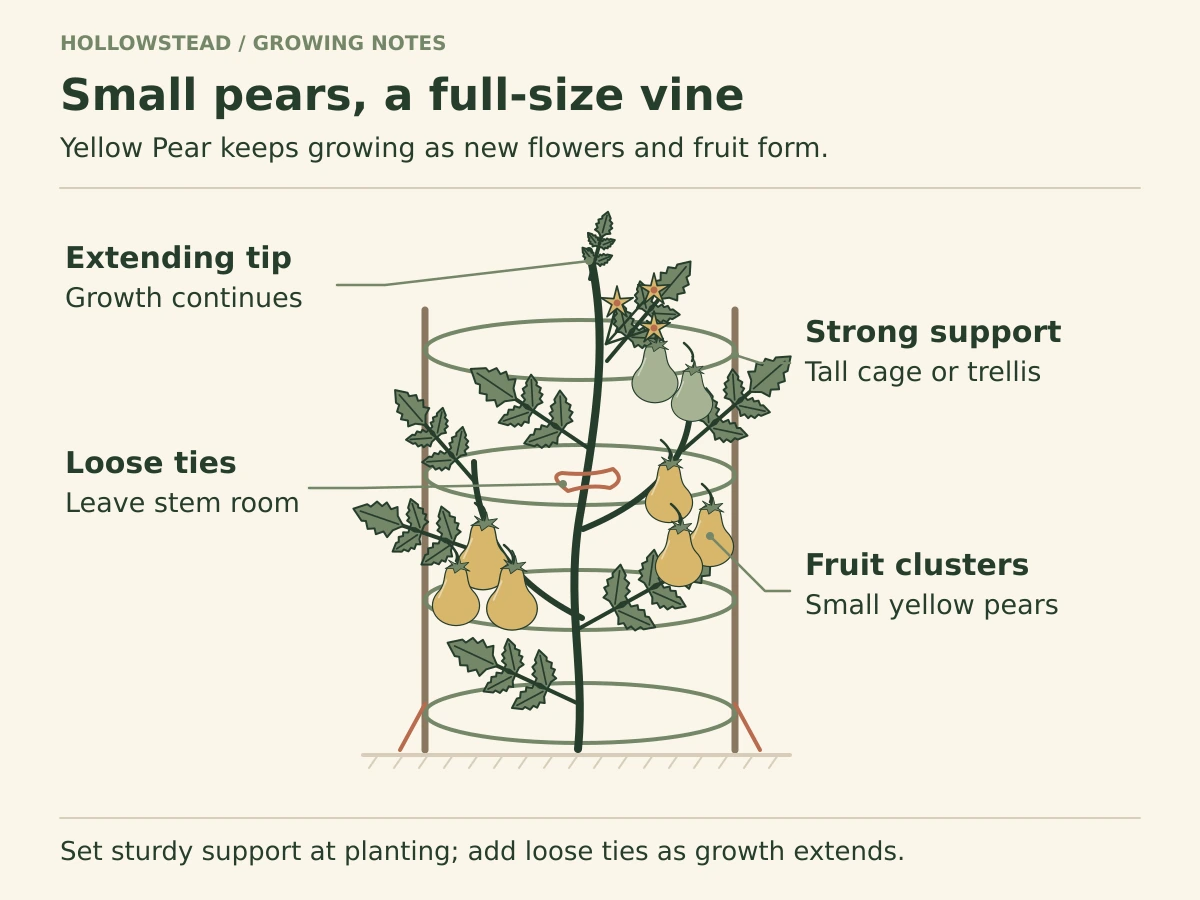
Choose the support before transplanting. A broad cage suits a branching plant; a stake or string system works when you will train and tie selected stems regularly. A short decorative cage often looks adequate in spring but offers little support above the first few fruit clusters.
The packet’s 24–36 inches is plant spacing, not the width of an entire picking aisle. Use the generous end when allowing more branches or when neighboring plants will also spread. Maryland’s tomato guidance makes spacing dependent on the support system and growth habit.[3] A useful layout check is to imagine reaching the back of a leaf-covered cage without stepping into the bed.
Guide stems while they are flexible, and leave room inside each tie for thickening. If two supported plants are already leaning into the same aisle, correct their direction before fruit adds weight. Heavy pruning is not a requirement for Yellow Pear. Remove or redirect growth to suit your structure, keeping enough foliage to shade developing fruit.
Watering and feeding
Keep the root zone evenly moist through flowering and fruit enlargement. Water should penetrate the occupied soil, not merely darken its surface. Feel beneath mulch before watering again, and recheck after a hot or windy day. A plant in a pot can need attention while a nearby garden bed still holds adequate water.
Base fertilizer decisions on the soil or potting mix and on plant growth. Excess nitrogen can produce a lush vine without the fruiting response you wanted; adding more fertilizer to a thirsty plant does not repair its water supply. Minnesota recommends a soil test, compost where appropriate, and avoiding unnecessary phosphorus applications.[2]
Keep a short record when something changes: date, rain or irrigation, fertilizer, and the part of the plant affected. That record helps you separate a recurring watering pattern from a one-time weather event. It also makes advice from an extension service much more useful than a description such as “it suddenly looks unhappy.”
Recognizing ripe Yellow Pear fruit
 View full-size diagram
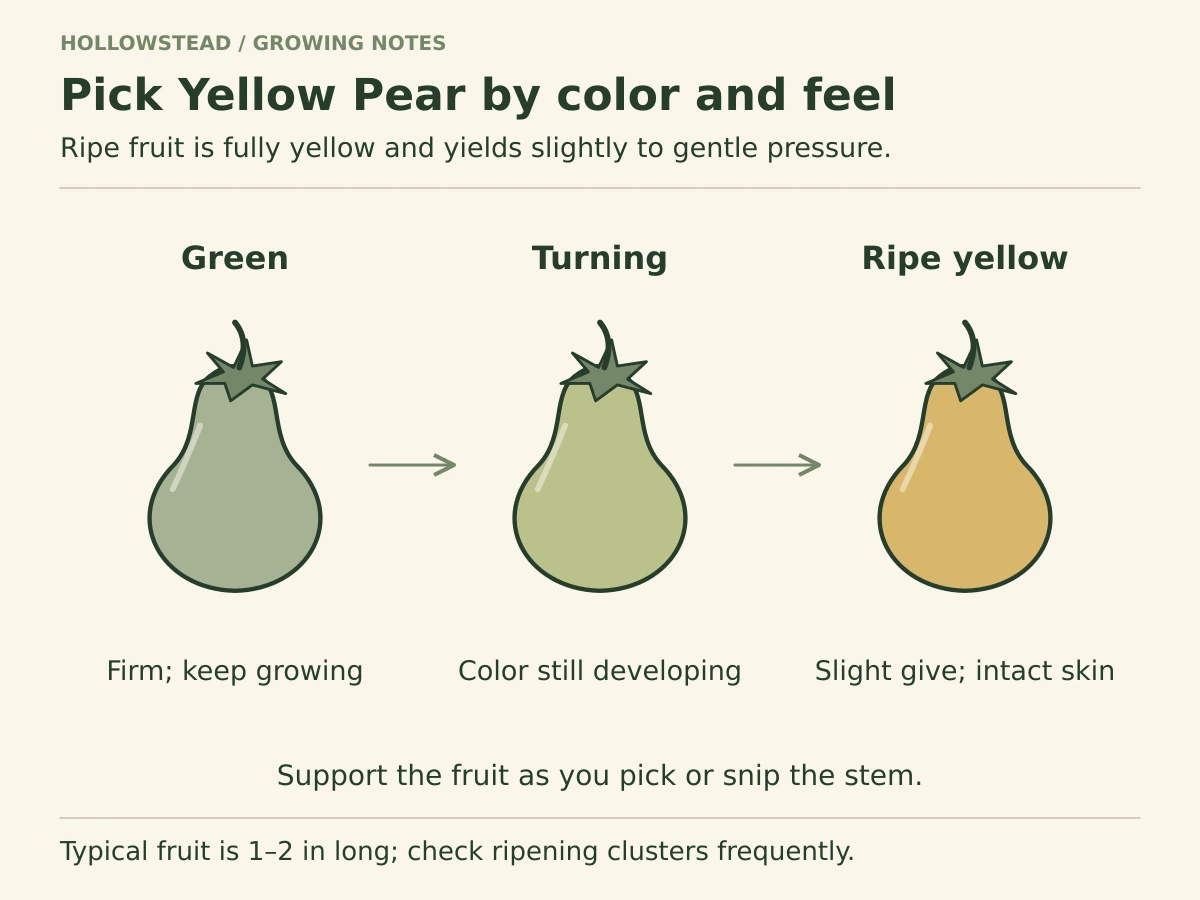
Watch a few reachable fruit through their color change. Yellow Pear should reach its yellow eating color; it will not turn red. A ripe fruit should yield slightly under gentle pressure without collapsing. The narrow neck and rounded lower end make the fruit recognizable well before it is ready, so the pear shape itself is not the harvest signal.
Pick one good-looking fruit and taste it before collecting an entire bowl. Compare a slightly firmer fruit with one left longer, then choose the stage you prefer. This is a practical way to judge your own crop without treating a catalog flavor description as a guarantee. Color, warmth, water supply and personal preference all affect the experience.
Support the cluster with one hand and detach individual ripe fruit gently with the other, or clip the stem if it resists. Put sound fruit in a shallow container so the lower layer is not crushed. Look behind the foliage, where a yellow fruit may be partly hidden by a leaf. Remove fallen and spoiled fruit during the same visit.
Splitting and other growing problems
Tomato cracking is commonly associated with rapid water uptake after the soil has been dry. Regular root-zone watering and timely picking reduce the conditions that encourage it, although neither eliminates cracking in every season. Minnesota’s diagnostic guide distinguishes radial cracks around the stem from rings circling the shoulder.[4]
| What you see | What to check | Useful next action |
|---|---|---|
| A split after heavy rain | Whether the bed dried sharply before the rain | Pick sound ripe fruit promptly and improve consistency of irrigation. |
| A black sunken blossom end | Moisture fluctuations and root stress | Review watering and soil testing before adding a calcium product. |
| Flowers fall without fruit | Recent heat, cold and plant condition | Track new flower clusters; do not assume fertilizer is missing. |
| Spots spreading through leaves | Pattern on older versus new leaves; both leaf surfaces | Photograph symptoms and compare a reliable diagnostic guide. |
| Leaves disappear rapidly | Stems and leaf undersides for feeding insects | Identify the pest before choosing a response. |
Maryland’s tomato diagnostic key covers these common symptom groups.[5] Several causes can produce yellowing or wilting, so a table cannot diagnose every plant. If the problem is spreading, take close-up and whole-plant photographs and note whether nearby plants are affected.
Do not treat yellow fruit as evidence of low acid or disease resistance. Fruit color is a variety characteristic. It does not establish a canning method, and this guide makes no claim that Yellow Pear is immune to blight or other tomato diseases.
Yellow Pear in containers
A container can work if you plan for the vine above it as well as the roots inside it. For a vigorous vine like Yellow Pear, a 15–20-gallon container for one plant is a practical home-garden starting point. Choose a draining container with potting mix and a support that is secure before the canopy becomes heavy. A narrow pot holding a tall cage can become top-heavy; place and brace the combination as a single structure.
Container roots rely on a limited reserve of water and nutrients. Maryland’s container guide emphasizes suitable growing media, drainage and matching container volume to the crop.[6] For Yellow Pear, the useful question is whether you can keep that root zone supplied on your hottest days. If a pot dries faster than your schedule allows, increase its water-holding capacity or choose a smaller-habit tomato for that spot. For pot size, support, watering and feeding together, use the tomato container guide.
Saving Yellow Pear seed
Save from healthy plants that match the variety, and label them before fruit picking becomes routine. Tomatoes usually self-pollinate, but crossing can occur. Seed Savers Exchange recommends 10–50 feet between varieties; in a small garden, bagging unopened blossoms provides a more deliberate way to protect a chosen cluster.[7]
Allow marked fruit to ripen, extract its seed and gel, and use a short fermentation to loosen the coating. Rinse the seed and spread it thinly to dry completely before storage. Keep the variety name, year and any isolation notes with the batch. Seed Savers recommends saving from several plants when maintaining a variety over time.[7]
A bowl of mixed cherry tomatoes is easy to confuse after picking. Process one labeled variety at a time, clean the work area between batches, and keep a separate container for seed fruit. Organization is as important as the extraction method when the goal is to grow Yellow Pear again.
Yellow Pear and the other Hollowstead tomatoes
| Variety | Main kitchen role | Habit in Hollowstead’s listing | What to plan around |
|---|---|---|---|
| Yellow Pear | Yellow pear-shaped fresh fruit | Indeterminate | A substantial vine and repeated small harvests |
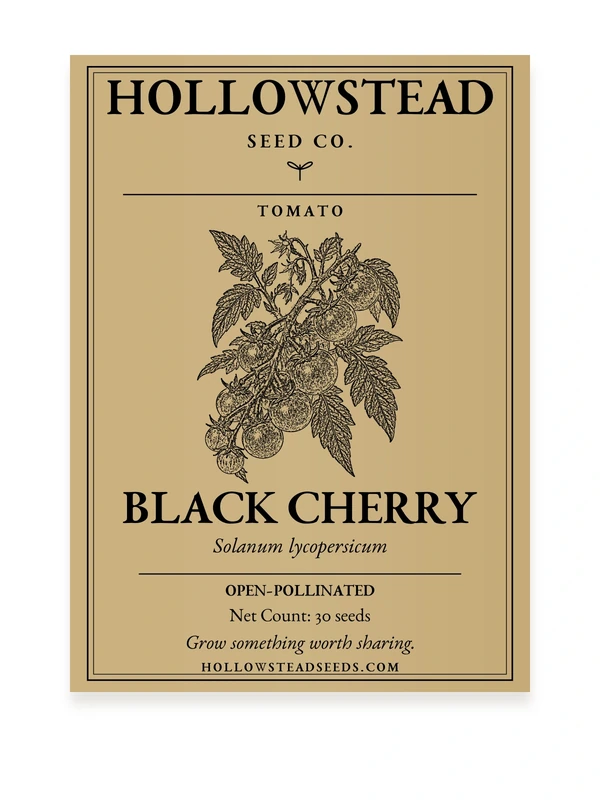
| Black Cherry | Dusky round cherry fruit | Indeterminate | Vine support and frequent picking |
| Black Krim | Large fresh slices | Indeterminate | Heavy fruit, ripeness judgment and cracking |
| Principe Borghese | Small meaty fruit for roasting and drying | Compact determinate in the current listing | Supporting the fruit load and organizing kitchen batches |
| Pineapple | Large golden-and-red fresh slices | Indeterminate | Heavy fruit support and time for a later first harvest |
Choose Yellow Pear for its fruit form and yellow color when you want a different addition to the fresh bowl. Choose Black Cherry when dusky round cherry fruit is the priority. Black Krim brings large dark slices, while Pineapple adds a golden-and-red bicolor slicer. Principe Borghese is the more focused choice for a drying or roasting project.
In a small garden, first decide how many full-size vines you can comfortably support. Adding Yellow Pear beside Black Cherry adds another climbing or caged plant even though both fruits are small. If you grow several types, place variety labels where they remain visible after the canopy fills in.
GROW THESE TOMATOES
Put this guide to work.
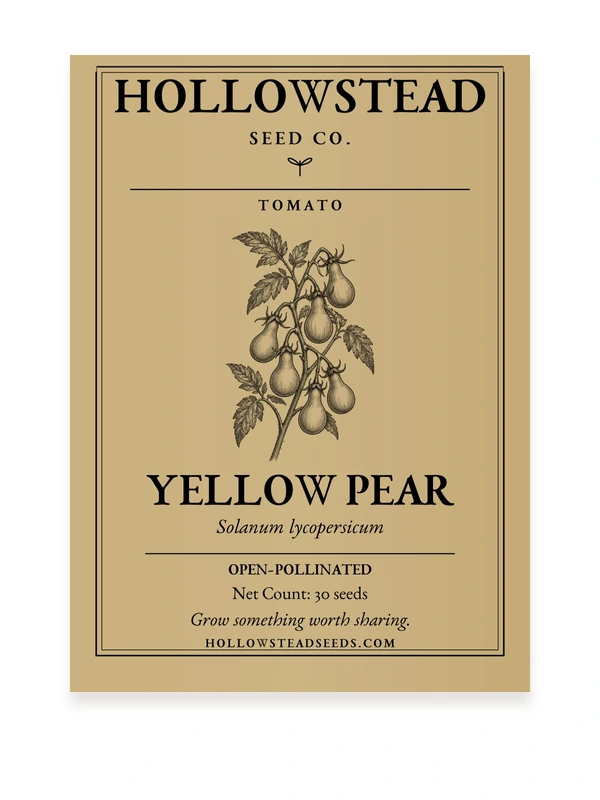
Yellow Pear Tomato Seeds come in a 30-seed packet. Pair the variety notes here with the complete tomato seed-starting guide.
HOLLOWSTEAD SEED
Yellow Pear Tomato Seeds
$4.49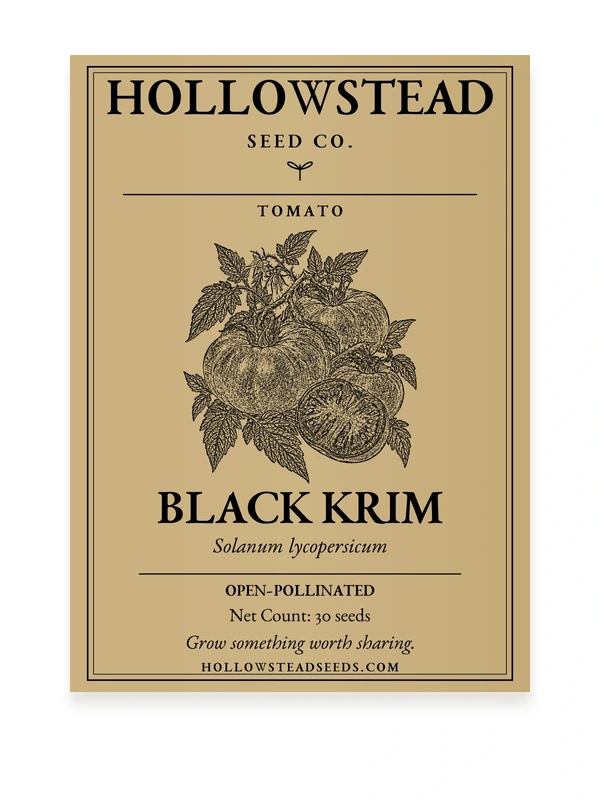
HOLLOWSTEAD SEED
Black Cherry Tomato Seeds
$4.49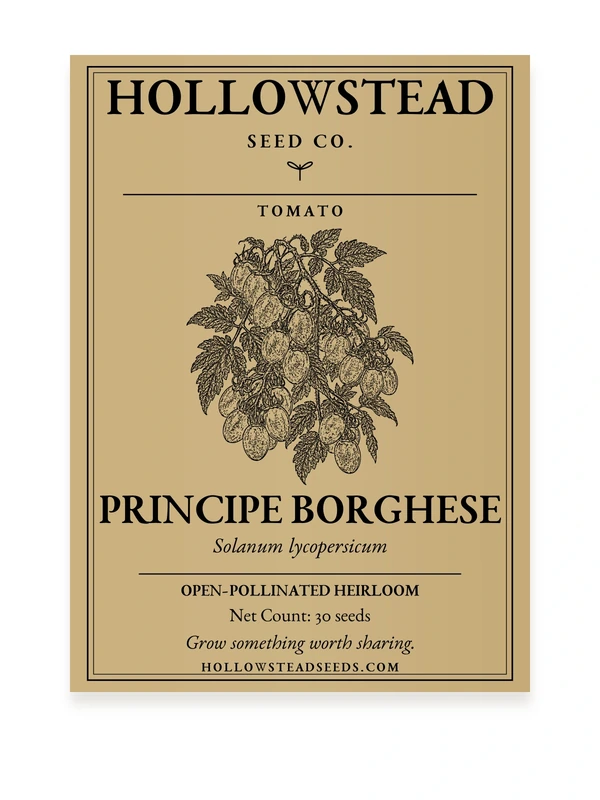
HOLLOWSTEAD SEED
Principe Borghese Tomato Seeds
$4.49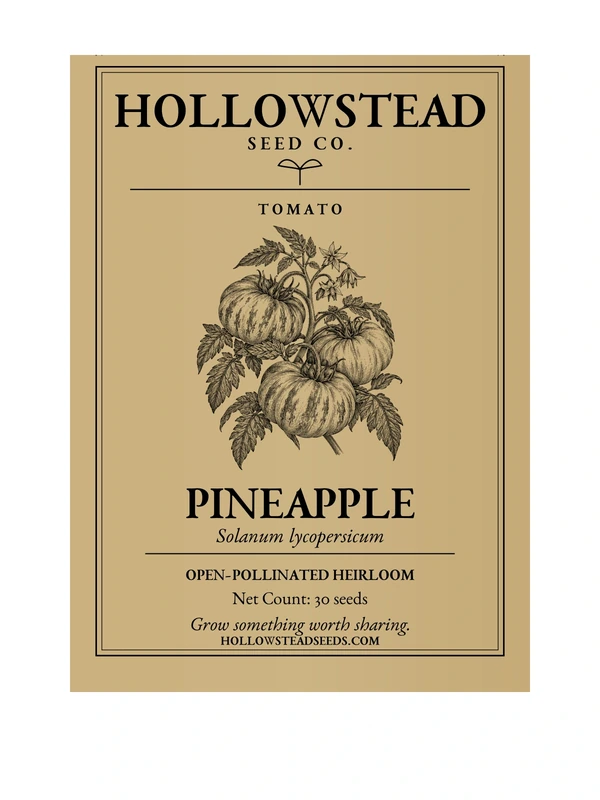
HOLLOWSTEAD SEED
Pineapple Tomato Seeds
$4.49KEEP LEARNING
Related Hollowstead guides

SEED STARTING
The Complete Guide to Growing Tomatoes From Seed
Start tomato seeds with confidence. This guide covers the quick version first, then goes deep on temperature, light, watering, potting up, hardening off, transplant timing, containers, and common seedling problems.
Read the guide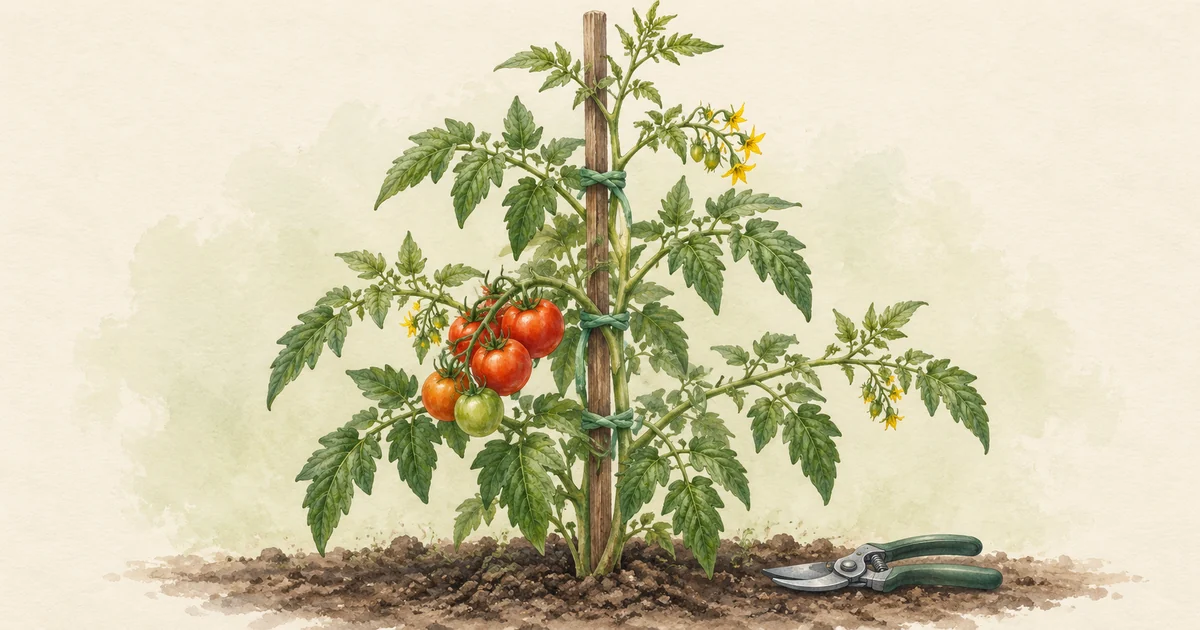
TOMATO SUPPORT & PRUNING
How to Support and Prune Indeterminate Tomatoes
Choose a cage, stake, or string system for Black Krim, Black Cherry, Yellow Pear, or Pineapple. Identify suckers, keep useful foliage, and distinguish indeterminate training from determinate care.
Read the guide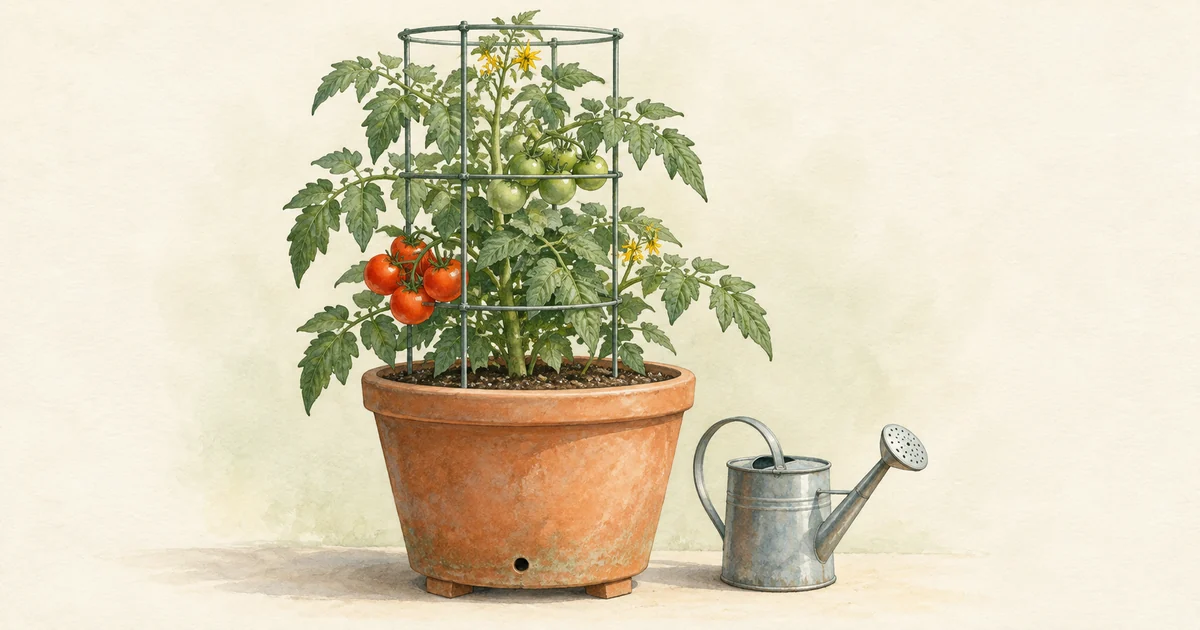
CONTAINER TOMATOES
Growing Tomatoes in Containers: Pots, Support, and Watering
Plan pots, support, and watering for all five Hollowstead tomatoes, including Yellow Pear and Pineapple. Compare growth habits, choose a generous root volume, and check moisture daily.
Read the guideFrequently asked questions
Is Yellow Pear determinate or indeterminate?
It is indeterminate. Expect continued vine growth and new flower clusters while conditions remain favorable; provide substantial support.
How long does Yellow Pear take to produce?
The Hollowstead estimate is about 78 days from transplanting. Seed-starting time comes before that, and weather can shift first harvest.
Will Yellow Pear turn red when ripe?
No. Its ripe color is yellow. Combine that color with a slight give and a sample taste rather than waiting for red fruit.
Is Yellow Pear a tiny patio tomato?
The fruit is small; the vine is not a dwarf. Containers need enough root space, water and anchoring for a full-size indeterminate plant.
Can I grow Yellow Pear beside the other tomatoes?
Yes for eating. If you plan to save named-variety seed, make an isolation plan before flowers open.
Are yellow tomatoes safe to can without added acid?
Yellow color does not establish safe acidity. Use a tested preservation recipe and its acidification directions for the tomato product you are making.[8]
Sources & further reading
- Cornell Cooperative Extension. Vegetable Varieties for Gardeners: Yellow Pear tomato. https://vegvariety.cce.cornell.edu/main/detail.php?filterBy=0&variety_id=1596
- University of Minnesota Extension. Growing tomatoes in home gardens. https://extension.umn.edu/garden-and-home/yard-and-garden/gardening-in-minnesota/growing-tomatoes
- University of Maryland Extension. Growing Tomatoes in a Home Garden. https://extension.umd.edu/resource/growing-tomatoes-home-garden
- University of Minnesota Extension. Tomato: cracks in fruit. https://apps.extension.umn.edu/garden/diagnose/plant/vegetable/tomato/fruitcracks.html
- University of Maryland Extension. Key to Common Problems of Tomatoes. https://extension.umd.edu/resource/key-common-problems-tomatoes
- University of Maryland Extension. Growing Vegetables in Containers and Salad Tables. https://extension.umd.edu/resource/growing-vegetables-containers-and-salad-tables
- Seed Savers Exchange. Growing and saving tomato seeds. https://seedsavers.org/grow-tomato/
- National Center for Home Food Preservation. Tomato acidification directions. https://nchfp.uga.edu/how/can/how-do-i-can-tomatoes/tomato-acidification-directions/
Hollowstead Growing Notes
A little help for your next growing season
Practical sowing advice, help choosing seeds, and occasional Hollowstead shop news. Usually one or two emails a month, plus a short welcome note.
Choose your topics and frequency after you confirm. Our guides and planting calendar are always free.