
CONTAINER GROWING
Growing Lettuce in Containers
Build a manageable lettuce container with the right mix, drainage, spacing, and light. Learn how to water a shallow-rooted crop and plan pots for baby leaves or finished heads.
LettuceContainer guideBeginner → advanced
Published by Hollowstead Seed Co. · How this guide is prepared
Quick answer
Lettuce grows well in a container when its roots have a moist, airy mix and the leaves have room for the harvest you want. Choose a pot or window box with drainage, use container potting mix, and place it where you can check water easily. A spring or fall planting is usually easier than maintaining lettuce on a hot summer patio.
Depth is only part of container size. A broad planter accommodates more plants than a narrow deep one; full romaine heads still need their normal horizontal spacing. For a manageable first attempt, grow one or two full-size plants or a small patch of baby leaves, then add another pot once you know how quickly the first dries.
At a glance
| Decision | Useful starting point |
|---|---|
| Container | Drainage holes, enough width, and a stable base |
| Practical depth | About 6–8 inches or deeper; extra volume makes care more forgiving |
| Growing medium | Lightweight container potting mix, pre-moistened |
| Full plants | About 12 inches apart for Hollowstead’s two lettuces |
| Light | Good spring/fall light; afternoon shade can help in heat |
| Water check | Feel below the surface and check the seed zone separately |
Choose a container that holds moisture and drains
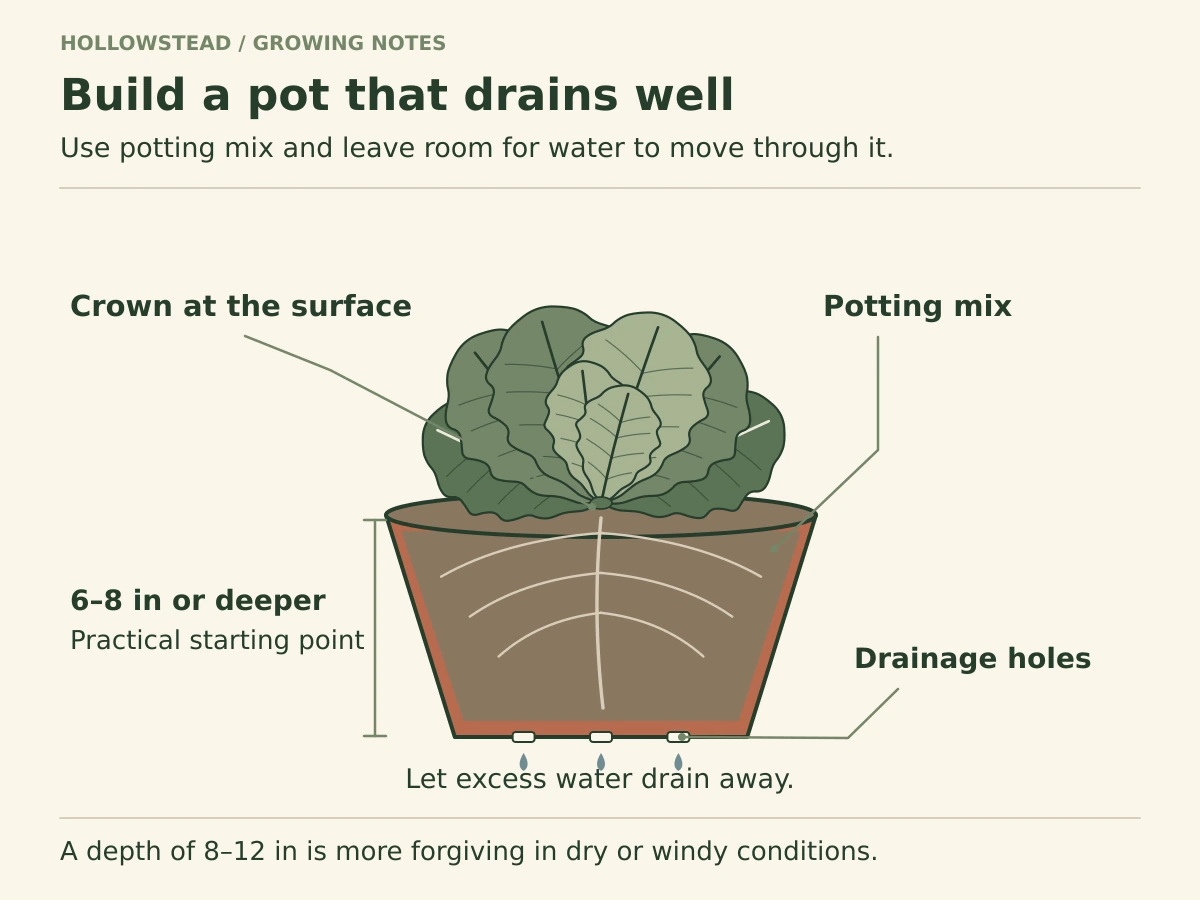
Lettuce does not need the huge root space of a full-size tomato, but the smallest possible pot is rarely the easiest pot to manage. A planter with roughly 6–8 inches of usable mix is a practical starting point; 8–12 inches can provide a more forgiving reserve in exposed conditions. Specialized shallow salad boxes can also work with close attention. There is no universal minimum independent of plant number and watering.
Choose the width first for mature plants, then consider depth and volume together. University of Maryland emphasizes matching both dimensions to the crop. A dark pot can heat more in sunlight, and porous materials dry faster than less porous ones.[1] A small terracotta bowl on a windy balcony therefore needs different attention from a broad plastic box in a sheltered garden.
Use a lightweight container growing mix. Ordinary garden soil can become dense in a pot, restricting air and drainage. Pre-moisten dry mix before sowing so water is distributed through it rather than running down the sides of a dry block.[2] Leave some headroom beneath the rim to make gentle watering easier.
 View full-size diagram
Do not put gravel in the bottom to “improve” drainage; it uses rooting space and can worsen waterlogging. Set an ordinary pot so its holes remain open, and empty a standing-water saucer after watering.[3] If reusing a container, choose one suitable for food growing and clean it before adding fresh mix.
Match the location to the weather
Watch the proposed location for a day before you plant. Record when it receives sun, when a wall or railing shades it, and whether the surface radiates heat late in the afternoon. Your lettuce experiences that small space, not the weather station’s average conditions.
In cool spring and fall weather, give lettuce good light so it can grow steadily. It tolerates partial shade, and protection from direct afternoon sun can help as conditions warm.[4] A place with bright morning light is often worth trying, but dense all-day shade can slow a crop enough to upset your harvest plan.
Move a manageable pot gradually if its original spot becomes too hot. Place it where you can still reach it with water and where runoff will not create a problem. A heavy planter should be positioned before filling. If you plan to move it regularly, test that the setup is practical while it is full and wet.
Container roots have less insulation from weather than roots in a garden bed. Keep forecast freezes in view, especially for young indoor-grown starts. A protected location or suitable cover can help; do not leave plants sealed beneath clear plastic in sunshine. Mild-winter production and cold-climate overwintering require different plans.
Space plants for the harvest you want
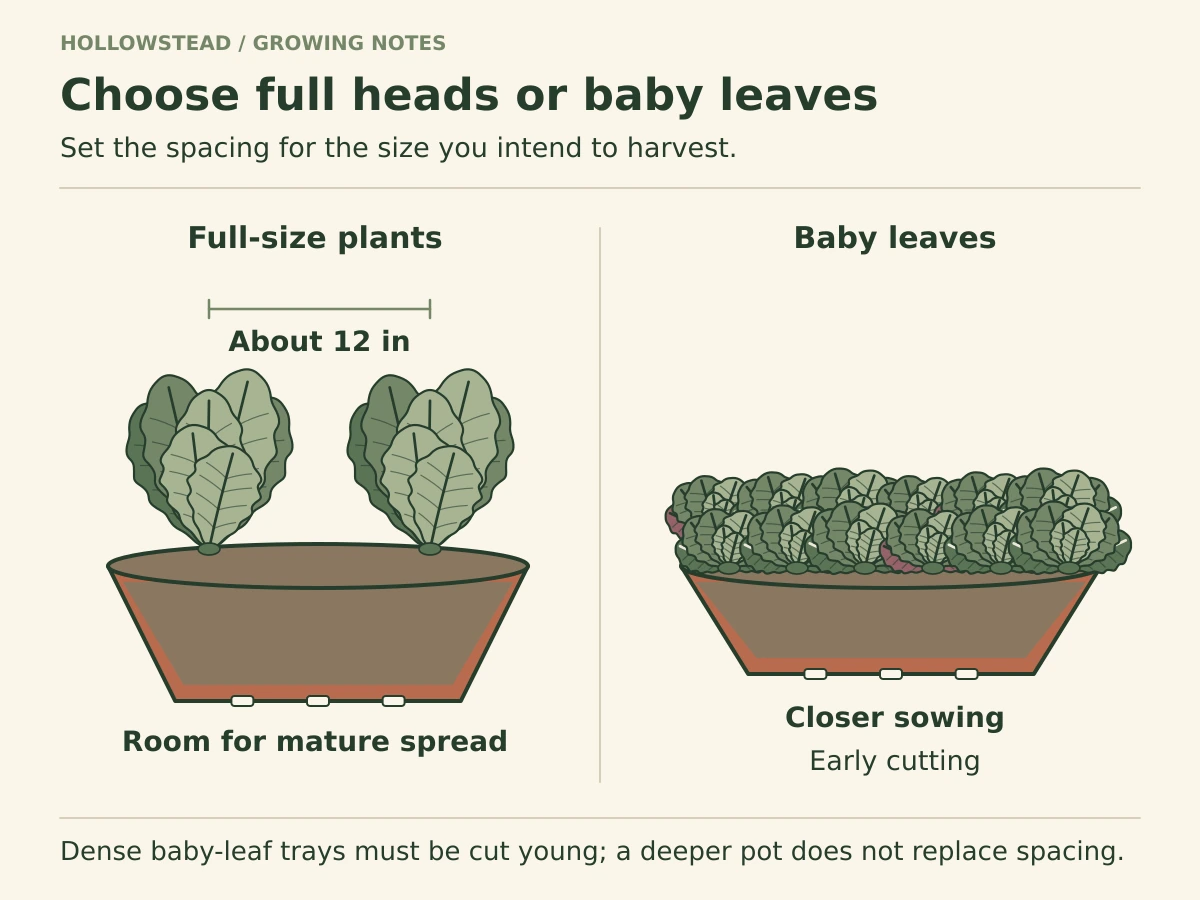
A packet’s plant spacing applies to a pot just as it applies to a bed. For full plants, give Red Sails and Parris Island Cos about 12 inches of space. A deep container does not compensate for leaves packed tightly across its top.
| Planter goal | How to use the surface | Harvest plan |
|---|---|---|
| One full plant | Place the plant with room for its mature width | Pick outer leaves or finish a romaine head |
| Several full plants | Use a wide box and maintain plant spacing | Harvest mature plants individually as they are ready |
| Baby leaves | Sow a small, more closely spaced patch and thin clumps | Cut young; start the next pot before this one is exhausted |
| Mixed salad planter | Keep varieties or sowing dates in marked sections | Harvest each section according to its growth |
 View full-size diagram
Do not sow the whole packet just because the surface looks bare. Overcrowding soon makes watering, inspection, and clean harvesting more awkward. If you prefer not to thin tiny seedlings in place, start a few plants in cells and transplant the strongest ones into the final layout.
Start a small planting carefully
Fill and pre-moisten the pot, smooth the surface, and mark where you want plants or small sowing sections. Sow the two Hollowstead varieties about ⅛ inch deep, water gently, and label the date. Keep a little unused seed dry for a later batch rather than sowing every seed at once.
A container in sun can become too warm for germination even when it is a reasonable place for an established lettuce plant. If a fall sowing repeatedly fails, start a tray in a cooler place and transplant compact seedlings. The germination guide explains how to measure the seed zone and test the seed.
Acclimate indoor seedlings gradually to the final location. Set their root balls near the original depth, with the center of each plant clear of mix. Water to settle them, then recheck for slumping or exposed roots. Keep spare seedlings only if you have a suitable place for them; a tray of neglected reserves offers little insurance.
Water the occupied root zone, then let excess drain
Check newly sown pots more closely than established ones because the seed lies near the surface. After establishment, feel the mix below the surface before deciding to water. For a light pot, learn the difference between its freshly watered weight and its weight as it approaches needing water.
Apply water slowly enough to re-wet the container throughout, then let excess drain. Repeated small sips can leave dry pockets deeper in the pot. Repeated soaking while the medium is already wet is also unhelpful. Base the decision on the mix rather than a rule that every pot must be watered once a day.[3]
Check your mix label for included fertilizer. If feeding becomes necessary, use a product suitable for edible container crops at its labeled rate. Keep a note of what you applied and when. More fertilizer does not fix a shaded plant, a drowned root system, or a lettuce plant already bolting.
Inspect the newest leaves as well as the outer ones. Pale growth, slow expansion, and dry margins deserve a check of water, roots, light, and feeding history together. If only one pot struggles, compare it with the others before changing care for every container. That simple comparison is often the most informative part of troubleshooting.
Catch problems while the planting is small
Turn a few leaves over each time you water. Check the crown without pulling the plant apart, and look under the pot for slug shelter. Containers make inspection convenient, but they do not exclude pests. A damaged plant at eye level can still go unnoticed if you only look for dry soil.
| Symptom | First check | Response to consider |
|---|---|---|
| Wilting with dry mix | How evenly the last watering soaked in | Re-wet gently and adjust checking frequency |
| Wilting with wet mix | Drain holes, standing water, and root condition | Correct drainage before adding more water |
| Crowded, thin growth | Plant number and light | Thin for the intended harvest and improve light |
| Brown inner leaf edges | Water stress, heat, and excess feeding | Investigate tipburn; avoid guessing at a calcium amendment |
| Rising central stem | Bolting rather than ordinary leaf growth | Harvest acceptable leaves and start a new seasonal batch |
For holes, insects, leaf spots, or rotting tissue, use the lettuce diagnosis guide. Isolate a badly affected pot from its neighbors while you decide what happened. If a previous crop had a serious disease problem, do not simply push its remains into the mix and sow the next crop through them.
Treat each pot as a small harvest cycle
Pick selected outer leaves while protecting the center, or harvest a whole plant when it reaches your preferred size. A finished head frees its space immediately. A plant kept for regrowth occupies the pot longer and may produce a smaller, less uniform second harvest. The harvest guide shows where to cut for each goal.
Two or three modest containers can be easier to manage than one large sowing. Use one for harvest, one for growing plants, and one for a new sowing whenever the season permits. In hot weather, pause rather than repeatedly losing fresh seed; resume when the remaining cool season makes sense.
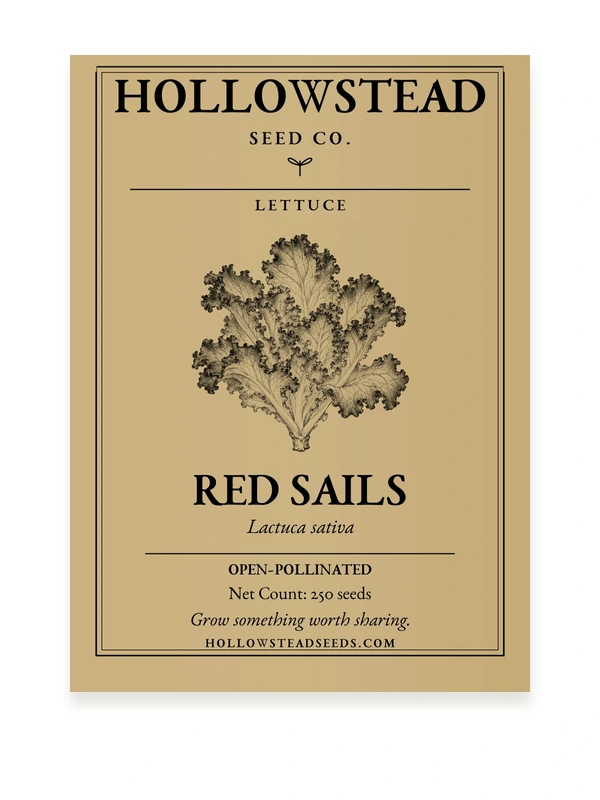
Use maturity estimates to choose between baby leaves and heads. Keep unused packets according to the seed-storage guide. For your next pot, Red Sails seed supplies red loose leaves and Parris Island Cos seed supplies upright green romaine.
GROW FROM SEED
Put this guide to work.
Choose a variety that fits the way you want to grow and harvest, then use the guide above as your reference through the season.
HOLLOWSTEAD SEED
Red Sails Lettuce Seeds
$3.49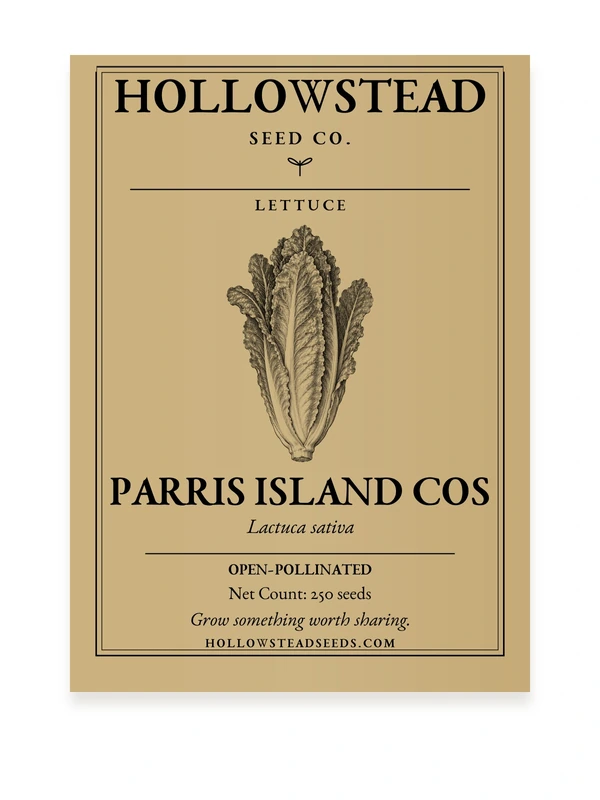
HOLLOWSTEAD SEED
Parris Island Cos Lettuce Seeds
$3.49KEEP LEARNING
Related growing guides
LETTUCE GROWING
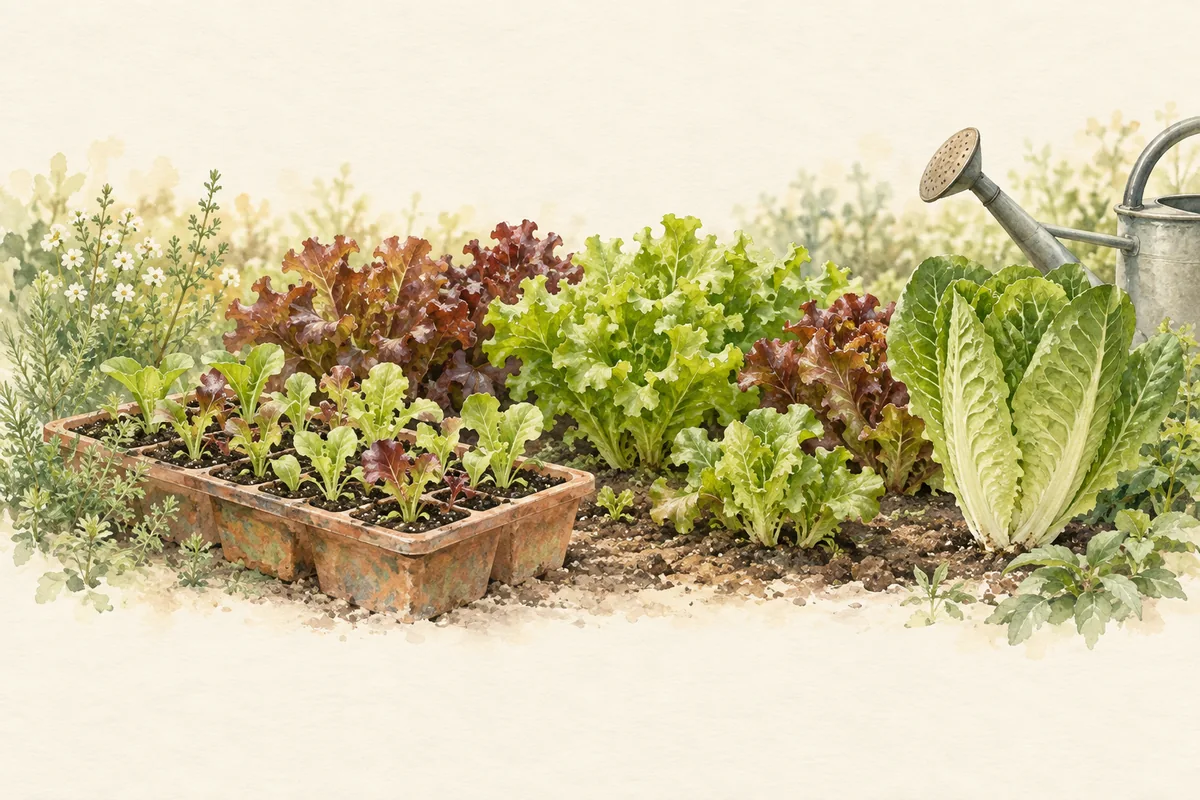
Growing Lettuce From Seed: The Complete Guide
Grow leaf lettuce and romaine from shallow sowing through harvest. Plan for cool weather, choose your harvest style, keep moisture steady, and make room for a second crop.
Read the guide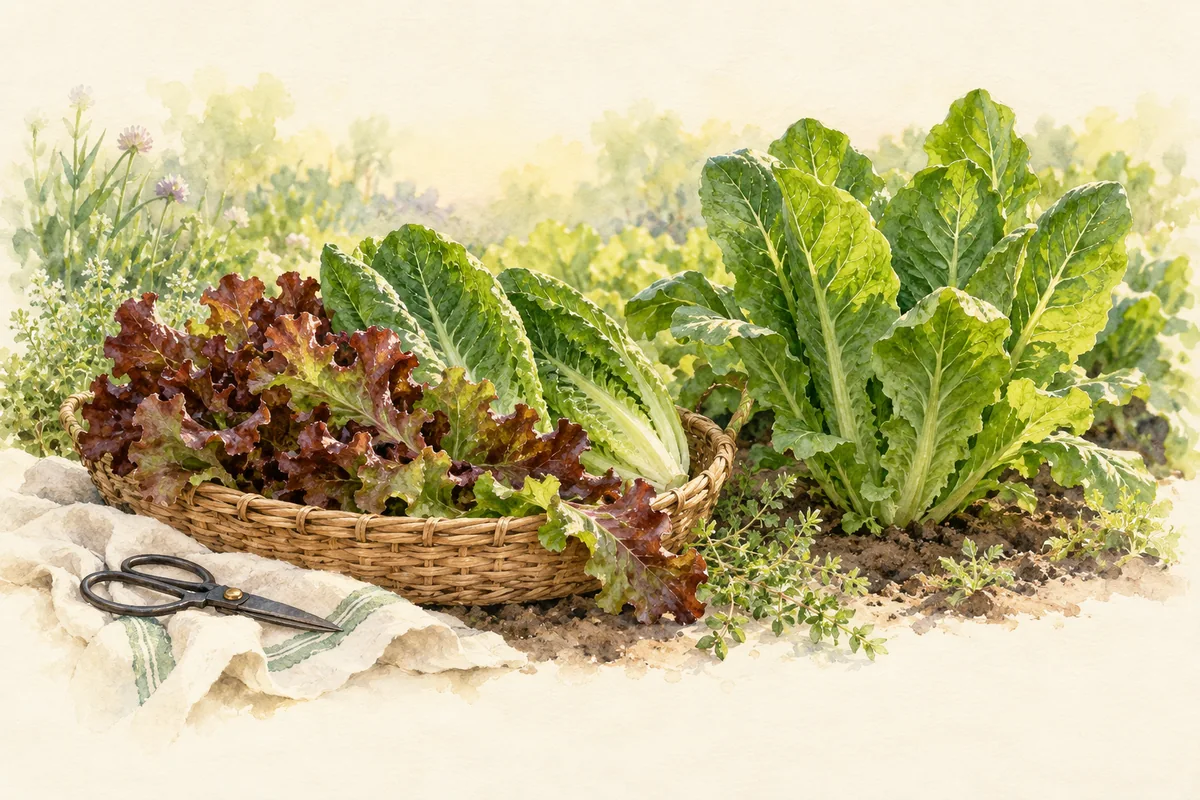
HARVEST GUIDE
How to Harvest Leaf Lettuce and Romaine
Choose between outer leaves, baby-leaf cuts, and finished romaine heads. Learn where to cut, what to leave for regrowth, when quality is slipping, and how to handle fresh lettuce safely.
Read the guide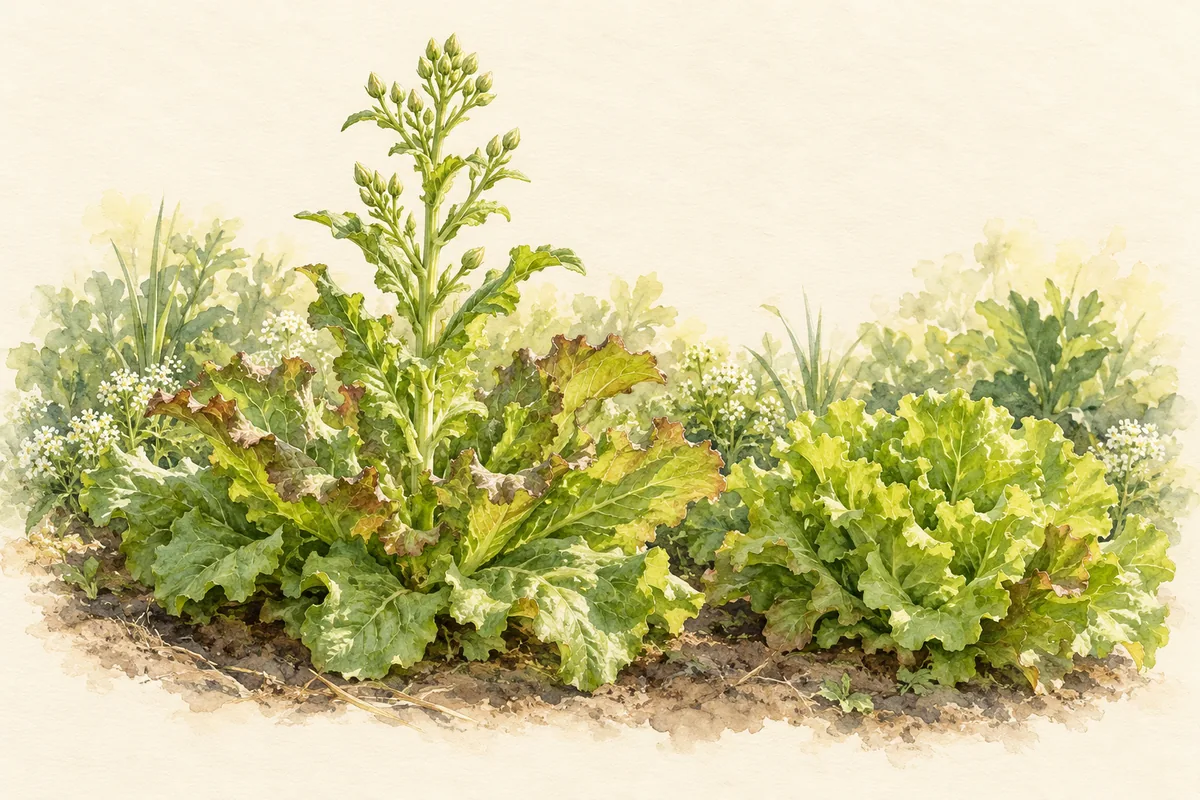
HEAT & BOLTING
Why Lettuce Bolts or Turns Bitter
Learn the difference between a forming romaine head and a rising flower stalk, why heat and season matter, and when to harvest, replace, or deliberately keep lettuce for seed.
Read the guideFrequently asked questions
Can I grow lettuce in a window box?
Yes, if it drains, holds enough mix, and has enough width for your chosen harvest. A narrow box is often simpler to use for young leaves than several full romaine heads.
Is one gallon enough?
It may support a small planting under close management, but volume alone does not tell you plant capacity. Consider surface width, mature spacing, drying speed, and whether you will harvest young.
Should I put rocks under the mix?
No. Use drainage holes and suitable potting mix. A gravel layer does not solve a container that cannot release excess water.
Can I reuse the mix?
Healthy used mix may be refreshed for another crop if its structure and fertility are still suitable. Remove roots and debris, and reassess disease history; fresh mix is the simpler choice after a serious root or seedling disease problem.
Sources & further reading
- University of Maryland Extension — Types of Containers for Growing Vegetables
- University of Maryland Extension — Growing Media (Potting Soil) for Containers
- University of Maryland Extension — Growing Vegetables in Containers and Salad Tables
- University of Maryland Extension — Growing Lettuce in a Home Garden
Hollowstead Growing Notes
A little help for your next growing season
Practical sowing advice, help choosing seeds, and occasional Hollowstead shop news. Usually one or two emails a month, plus a short welcome note.
Choose your topics and frequency after you confirm. Our guides and planting calendar are always free.