
Description
A PEPPER WITH A STORY
An edible ornamental with real heat.
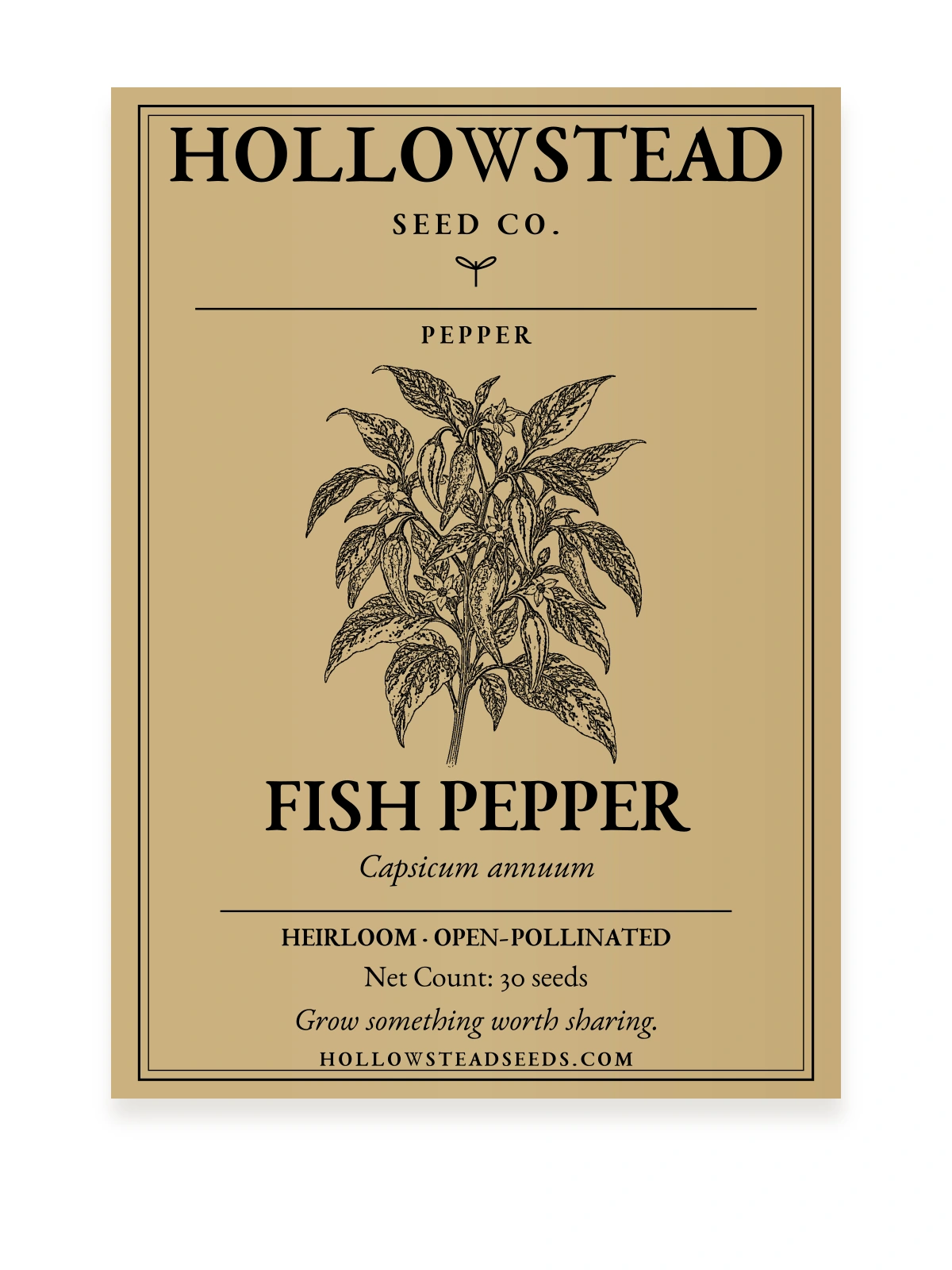
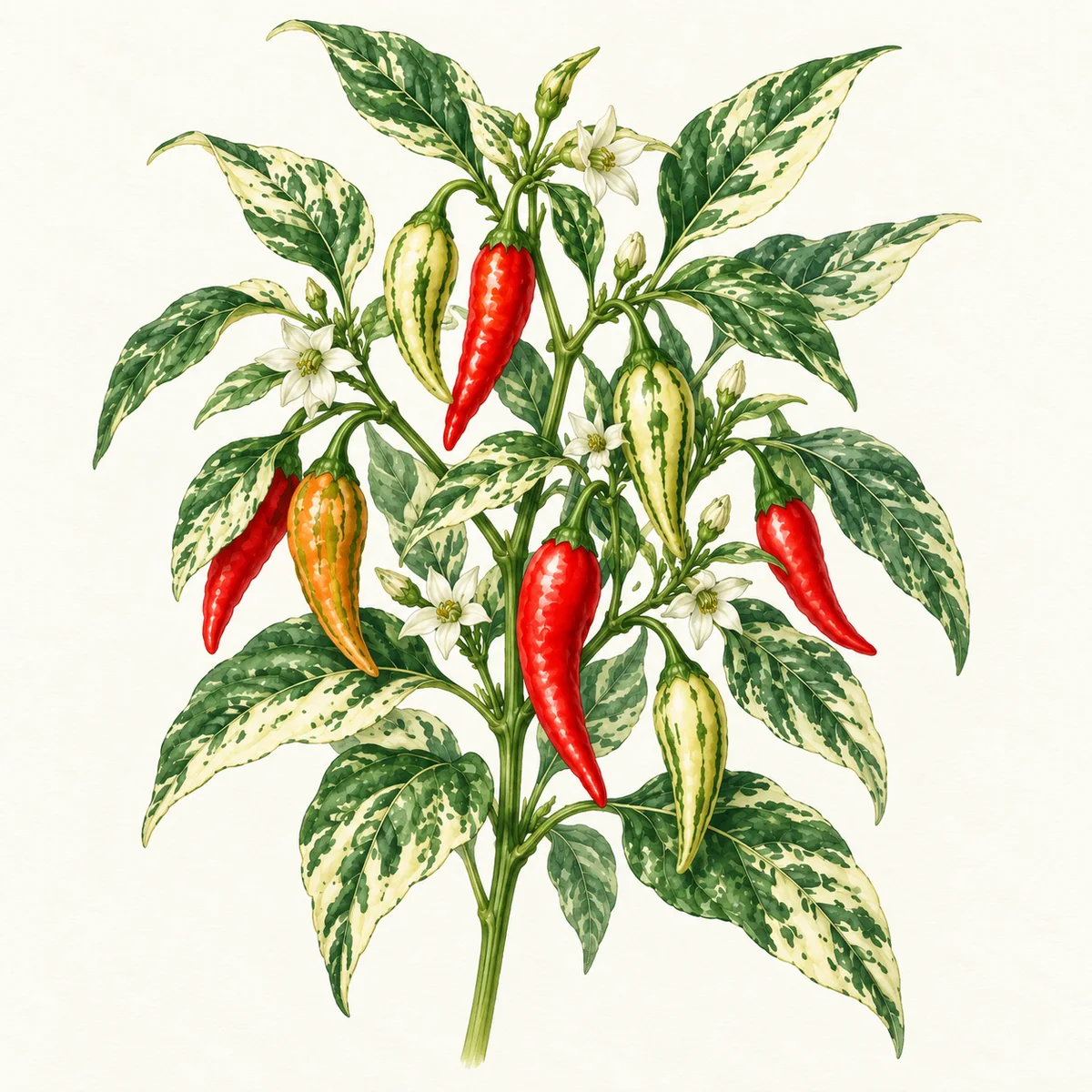
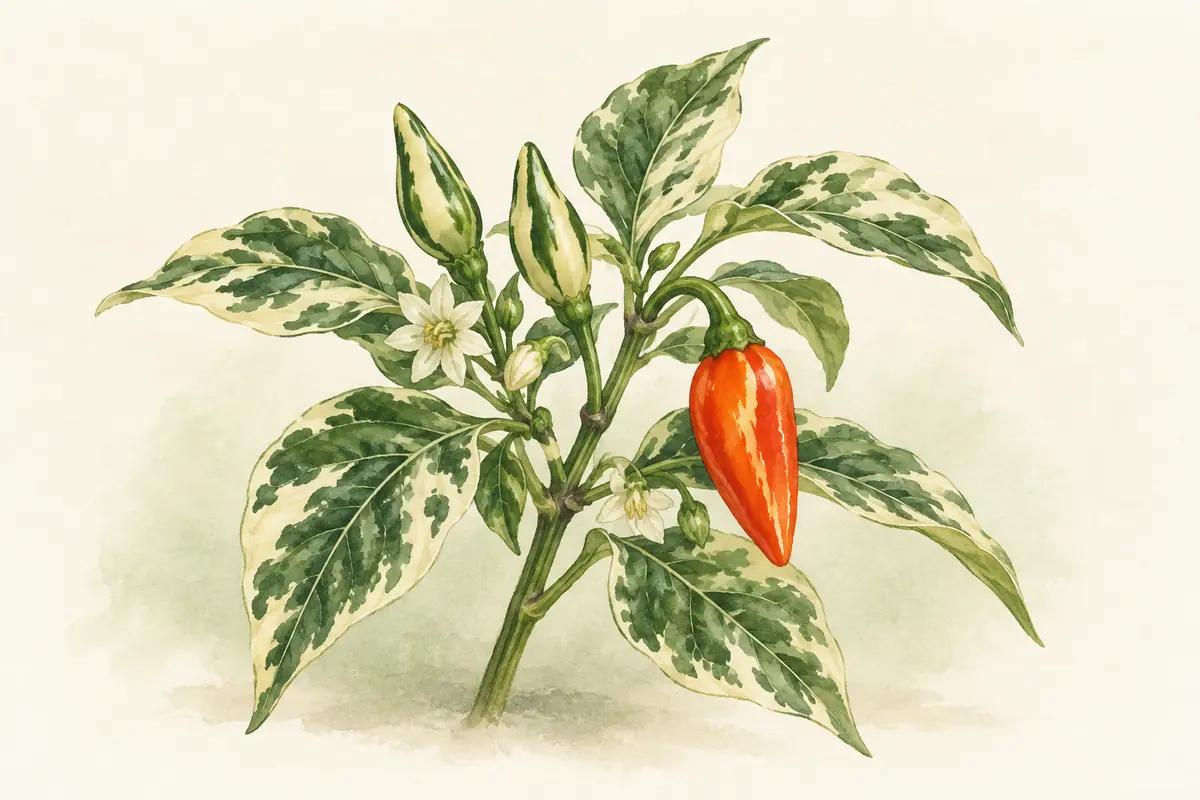
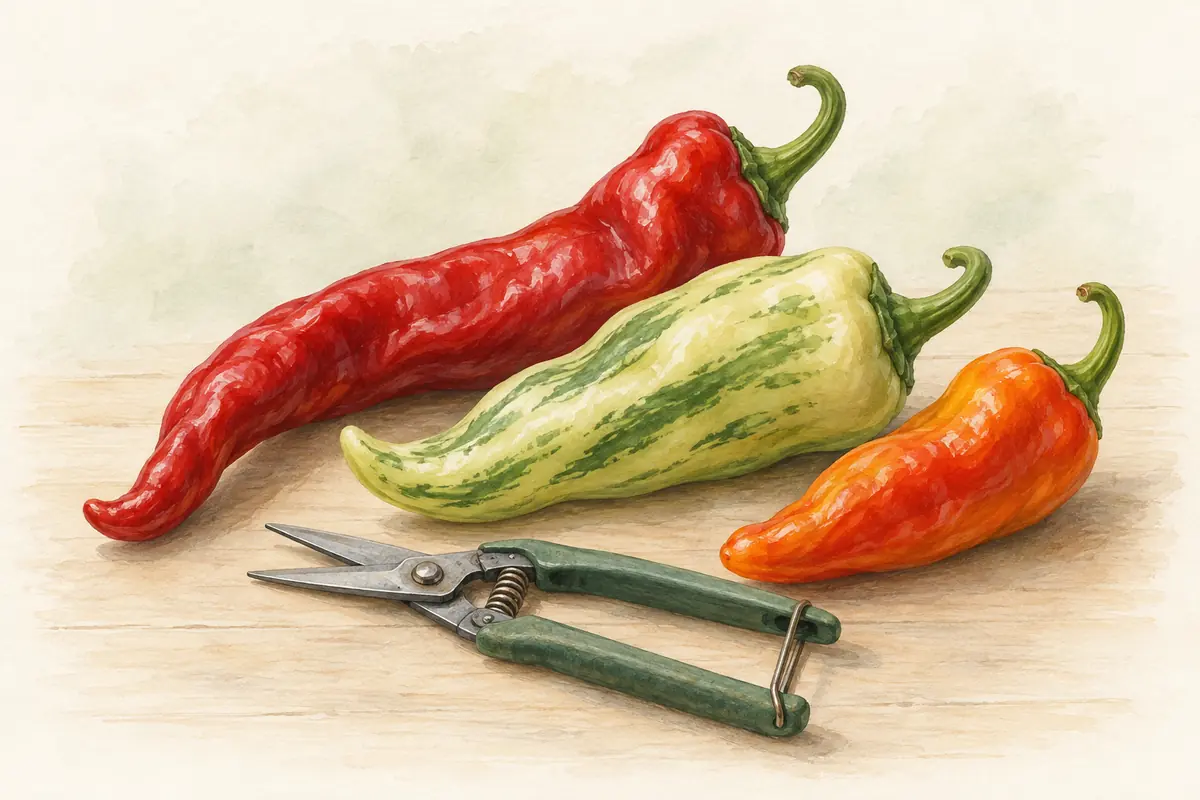
Choose Fish Pepper when you want a useful hot pepper and an attractive container or border plant. Green-and-white foliage is part of the variety, and fruit passes from cream with green stripes through warmer striped colors to red. Cornell lists plants around 18–24 inches with 2–3-inch fruit; size and markings vary. [3]
Choose it for: Hot sauces, seafood dishes, cooking with smaller hot peppers, and a plant that is distinctive before harvest.
THE DECISIONS THAT MATTER
Practical growing tips
Keep the hot variety labeled.
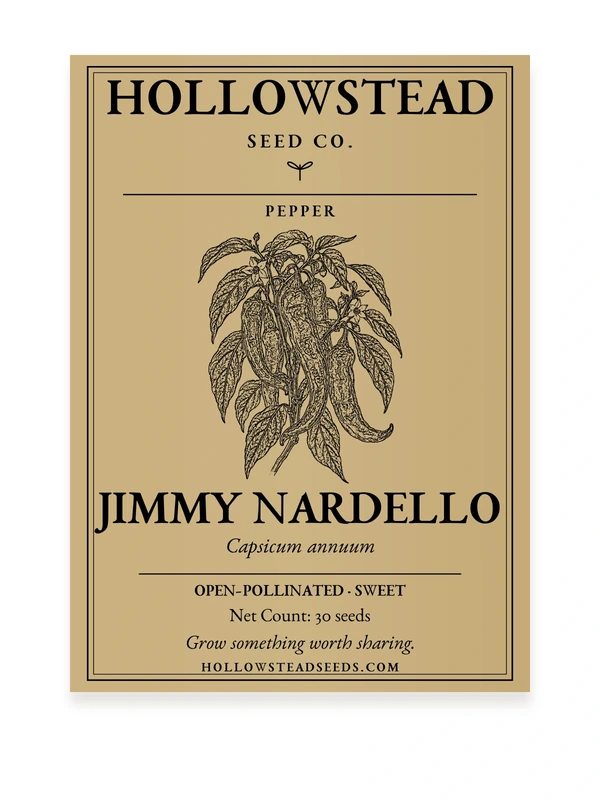
Fish Pepper and sweet Jimmy Nardello have different kitchen jobs. Label trays, plants, and harvest containers; foliage or fruit color does not measure heat.
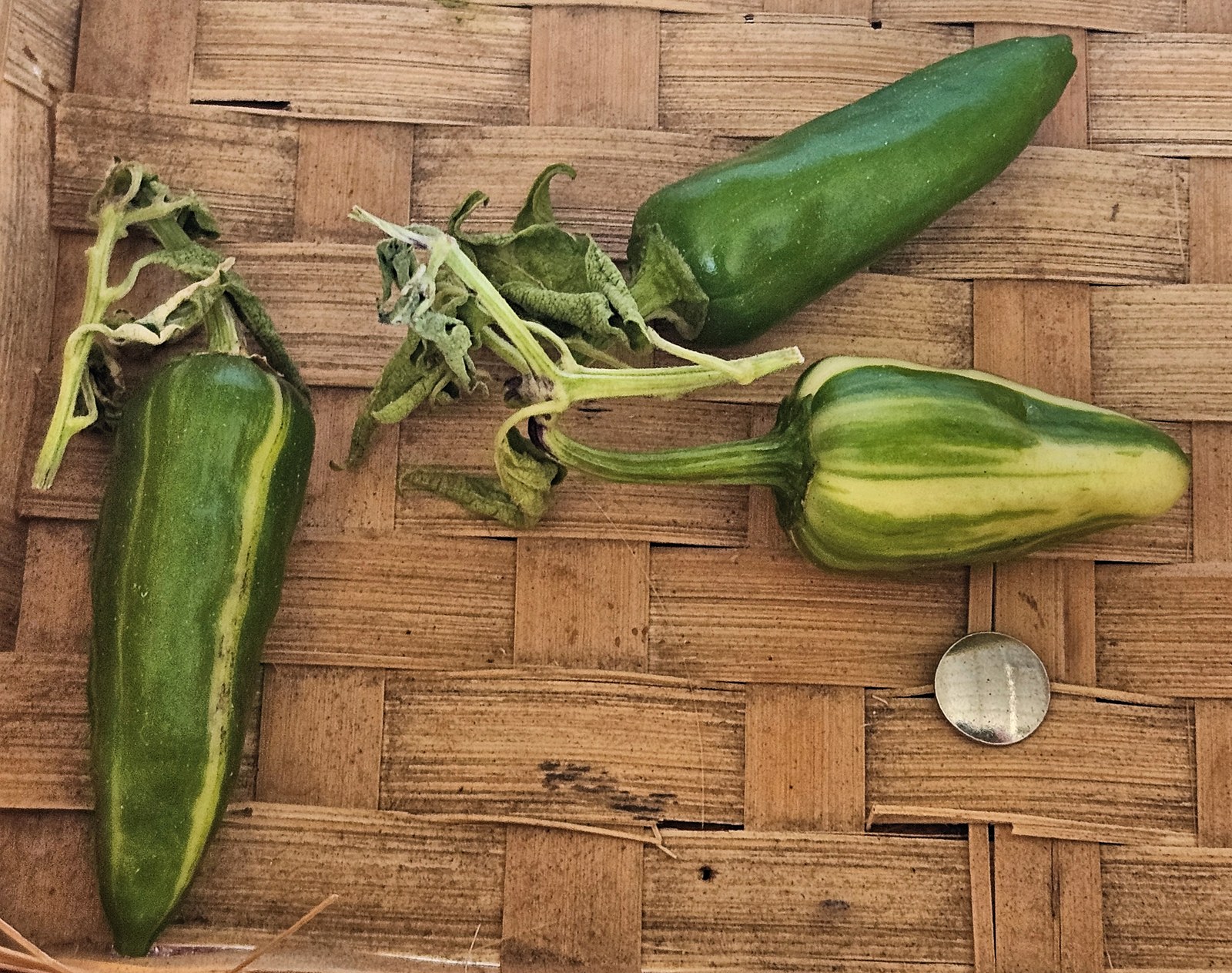
Learn its normal markings.
Healthy cream-and-green markings vary among plants. Inspect distortion or wilting separately; the guide helps seed savers choose deliberately among leaf pattern, vigor, and ripe-fruit traits. [3] [5]
Pick for the intended use.
Striped immature pods are usable in cooking; fully red fruit is mature. Leave selected seed-saving fruit to reach its final color and begin softening. [3] [4]
Buffer a hot patio.
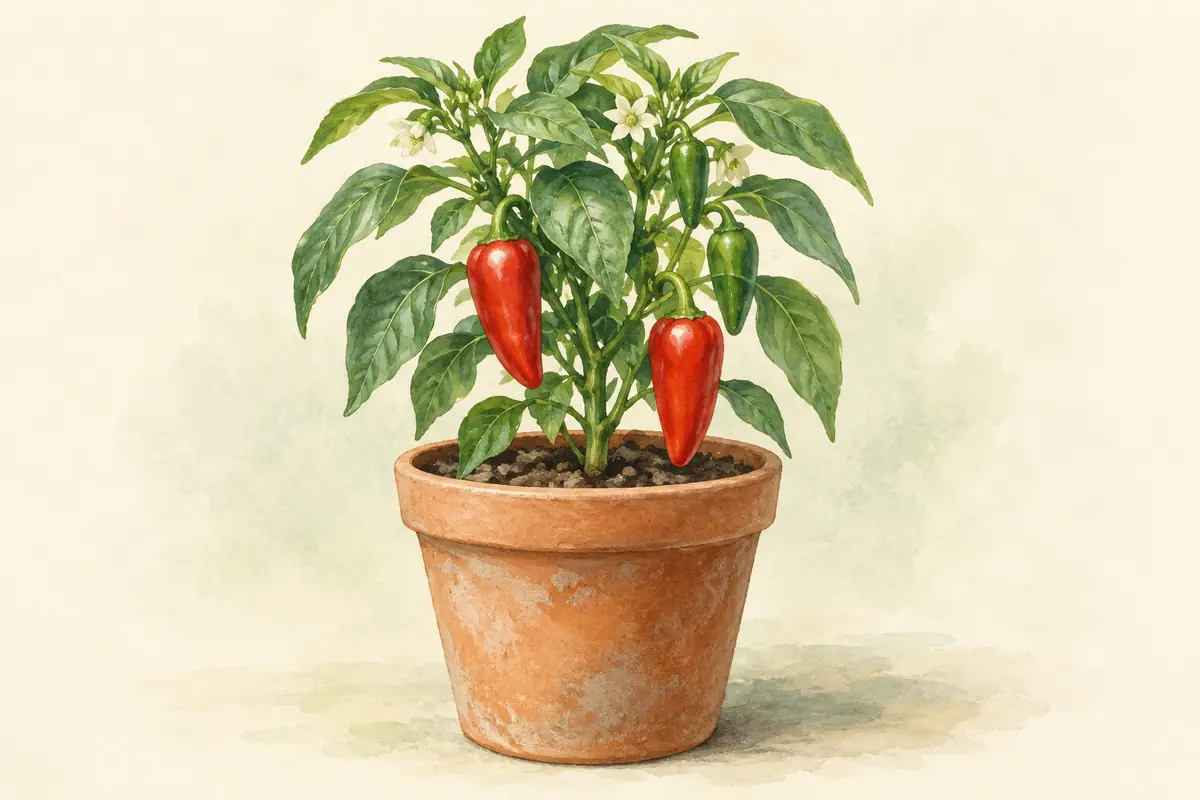
Give one plant a drained 5–10-gallon pot and a small support. More mix helps buffer drying; check moisture during hot or windy spells. [6]
FROM PACKET TO GARDEN
Start warm. Transplant warm. Keep it sunny.
Sow indoors.
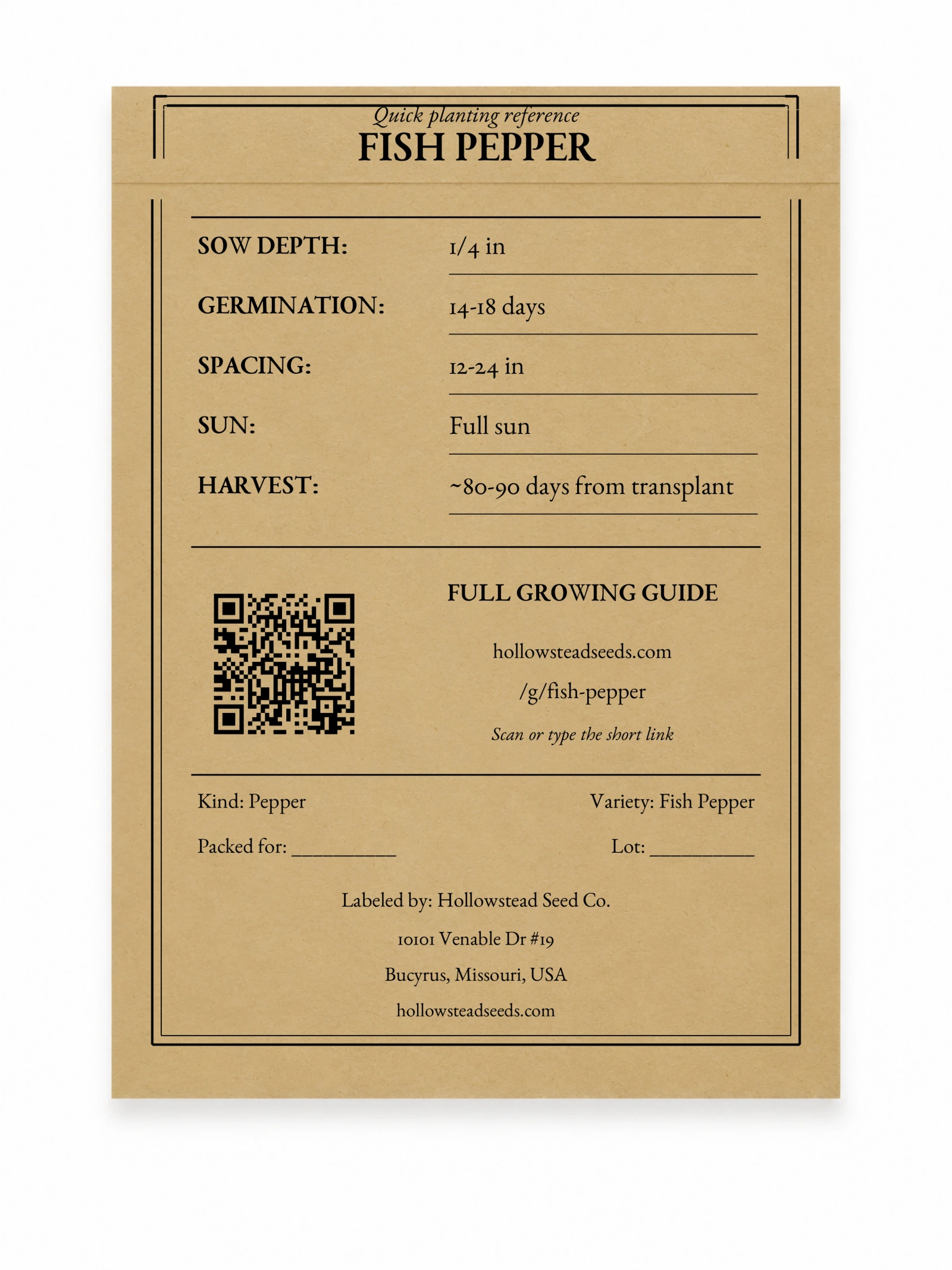
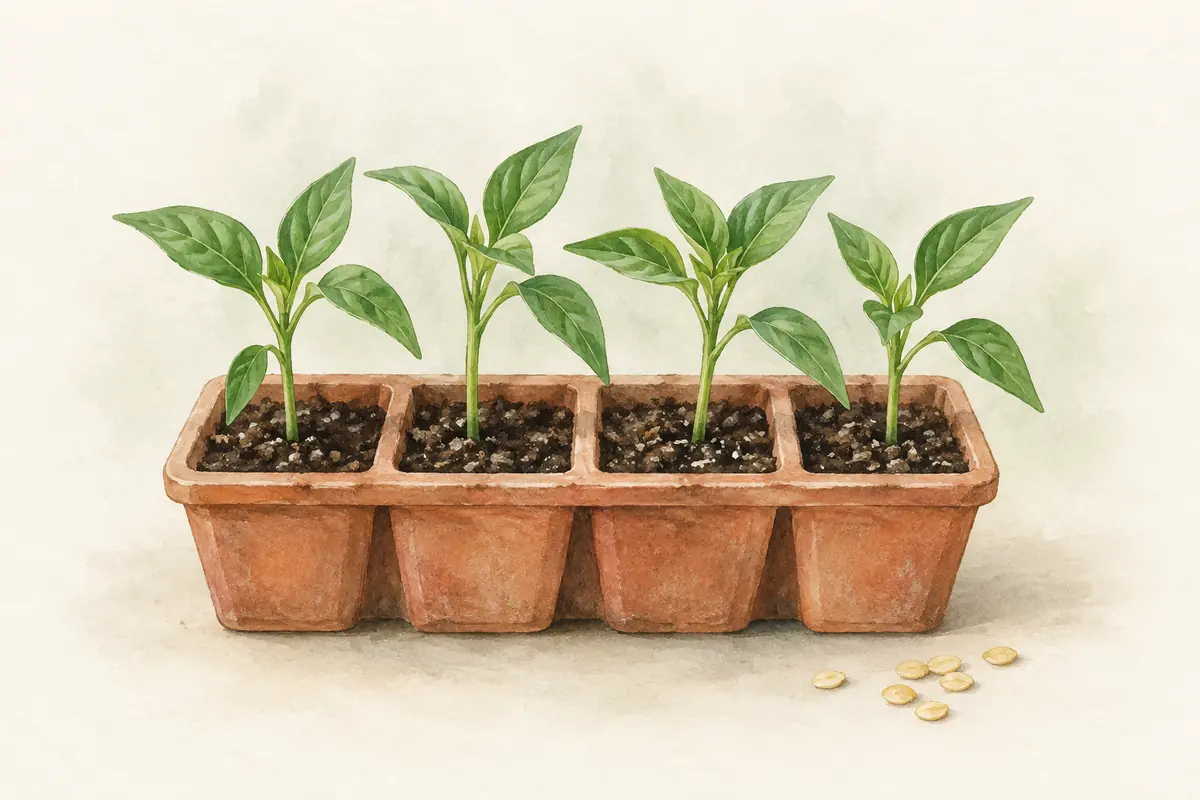
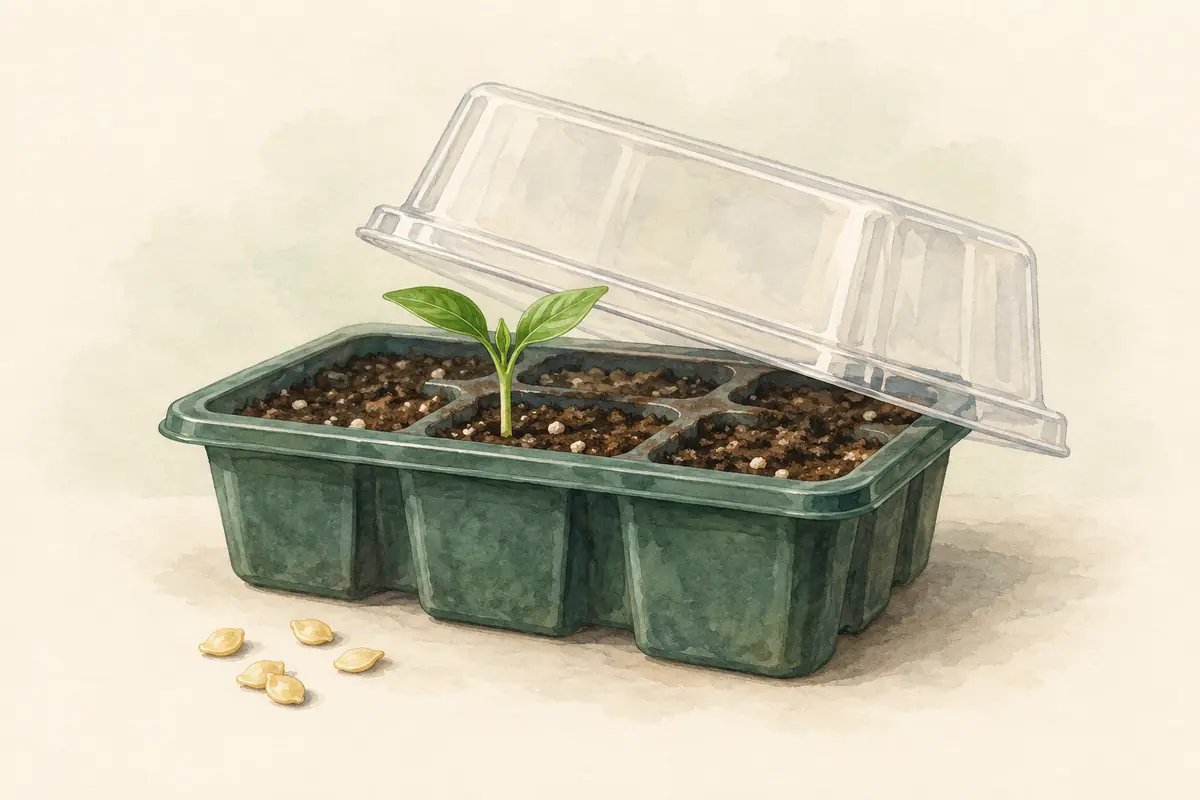
Start about 8 weeks before outdoor planting, ¼ inch deep. Warm seed-starting mix supports germination; monitor moisture carefully with a heat mat. [4]
Do not rush spring.
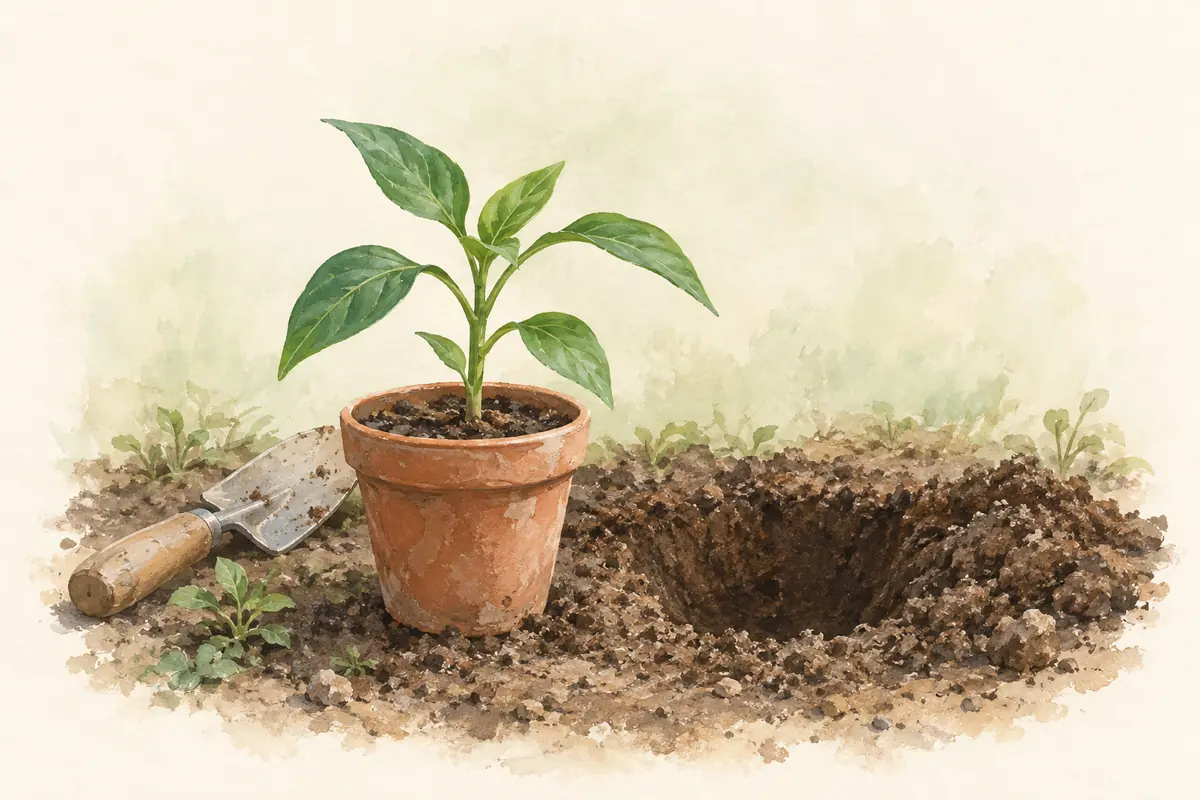
Provide bright light after emergence, harden gradually, and transplant after frost danger when soil is warm and nighttime lows are above about 50°F. [5]
Give each plant room.
Allow about 12–24 inches between plants in full sun. Use the wider end for broad cages or humid sites, and support branches before wind or fruit pulls them over.
The current listing gives around 80–90 days from transplant. Published references use red as the mature color; striped pods can be used earlier. [3]
FROM FLOWER TO HARVEST
Keep the canopy healthy as colors change.
Water at soil level and keep the root zone evenly moist without leaving it waterlogged. Support branches and retain healthy foliage to shade the fruit. Pale sunken damage on an exposed pepper is a different problem from its normal stripes. [5]
Clip fruit cleanly. Wear gloves when preparing hot peppers, avoid touching your eyes, and clean tools and surfaces after use. Start with a small amount in a dish and adjust; the published heat range cannot tell you the heat of a particular pod.
A FEW THINGS WORTH KNOWING
Before you plant.
Is the variegation just on the peppers?
No. Both foliage and developing fruit show variegation. The pattern can differ between leaves and individual plants. [3]
Can I eat the pale striped peppers?
Why is it called Fish Pepper?
Its documented name and history are linked to Chesapeake Bay seafood cooking, especially oyster and crab houses. [1]
Can I save seed beside other peppers?
Yes, but compatible peppers can cross. Bag unopened flowers or use suitable isolation to keep saved seed true to the variety. [4]
PLAN YOUR PLANTING
Choose the pepper for your table.
Fish Pepper brings heat and variegated foliage. Choose Jimmy Nardello for sweet, slender frying peppers. Growing them together does not change this year’s fruit; control pollination if you plan to save seed.
Read the Fish Pepper growing guide for staged care, harvest decisions, sourced grower observations, and troubleshooting.
Growing references
Cultivar references and general crop guidance are identified below. Planting figures are planning estimates; seed count is not a guaranteed plant count. Reviewed September 24, 2026.
- Seed Savers Exchange — Fish Pepper. Culinary and preservation history.
- Cornell — Fish Pepper. Reference dimensions, foliage, and fruit color stages.
- Seed Savers Exchange — Growing peppers. Sowing and seed-saving guidance.
- University of Minnesota Extension — Growing peppers. Warm transplanting, plant stress, and harvest care.
- University of Maryland Extension — Growing vegetables in containers. Minimum volumes and the benefits of larger containers.


Reviews
THIS PATCH IS JUST GETTING STARTED
Your garden could start the conversation.
No published reviews for this variety yet. Once you have tried these seeds, your experience can help another gardener decide what to plant.
A few honest details are worth more than a perfect growing season.