
TRANSPLANTING
How to Harden Off Tomato Seedlings Without Stunting Them
Indoor tomato seedlings need time to adjust to full sun, wind, temperature swings, and faster drying. This guide explains a flexible hardening-off process that protects plants without deliberately starving or stunting them.
TomatoesTransplantingBeginner → advanced
Published by Hollowstead Seed Co. · How this guide is prepared
Quick answer
Harden off tomato seedlings by gradually increasing their exposure to outdoor sun, wind, and temperature changes over roughly 7–14 days. Start in shade or gentle filtered light, protect seedlings from strong wind and cold, then add direct sun a little at a time as the plants adapt.[1][2]
Do not “harden” tomatoes by making them miserable. The goal is acclimation—not severe drought, cold damage, or nutrient starvation. University of Maryland advises modestly reducing watering frequency without allowing plants to wilt severely and bringing warm-season crops such as tomatoes inside when nights are expected below about 50°F.[1]
If a seedling gets sunburned, move it back to gentler light and let healthy new growth carry the plant forward. Damaged white/tan leaf tissue usually does not turn green again.
At a glance
| Topic | What to expect |
|---|---|
| Goal | Gradually acclimate seedlings to outdoor sun, wind, and temperature swings |
| Typical timeline | Usually about 7–14 days, adjusted for weather |
| Best starting point | Bright shade or filtered light on a mild day |
| Main risks | Sunburn, strong wind, cold nights, and letting small containers dry too far |
| Cold threshold | Bring tomatoes back in when nights are expected below about 50°F |
| Finished when | Plants can handle a full day outside and the conditions they will face after transplanting |
- Protected startBegin outdoors in bright shade or sheltered light for a short period.
- Add gentle sunIntroduce mild direct sun while avoiding the harshest midday exposure.
- Extend exposureIncrease time, light, and ordinary air movement as plants remain functional.
- Practice the siteLet plants experience conditions closer to the garden while weather remains safe.
- Long outdoor daysPlants tolerate most of the day outside without severe wilt, bleaching, or wind injury.
- Transplant readyMove to the garden when acclimated plants and the weather window are both appropriate.
What does hardening off actually do?
A tomato seedling grown indoors has experienced a protected world:
- lower light intensity;
- little ultraviolet exposure;
- mild air movement;
- relatively stable temperatures;
- regular watering;
- no pounding rain.
Outside, every one of those conditions changes at once.
Hardening off is the process of exposing the plant to those changes gradually enough that it can adjust before being permanently transplanted.[1]
Extension sources describe hardening as a process that slows tender growth and helps tissues adapt to stronger light, wind, and temperature variation.[1][2][3]
Why can’t you just put tomato seedlings outside on a warm day?
Because air temperature is only one stress.
A 72°F sunny spring afternoon can still expose an indoor seedling to:
- sunlight many times more intense than indoor lighting;
- drying wind;
- rapid pot evaporation;
- hot leaf temperature in full sun;
- large evening temperature decline.
A plant can sunburn on a pleasant day.
How long does hardening off take?
University of Maryland gives a 5–14 day range for vegetable transplants.[1] Other Extension examples use about a week or roughly two weeks.[2][3]
Hollowstead uses 7–14 days as the normal planning window, but weather decides the actual pace.
A cloudy mild week may make acclimation easy. A sequence of windy 85°F days followed by 42°F nights may force you to slow down.
Let plant response set the pace
Increase stress gradually only when the plant is handling the current level well.
Before you start: is the plant ready?
A tomato seedling should be reasonably healthy before hardening.
Ideal candidates are:
- actively growing;
- well-rooted in their containers;
- watered appropriately;
- not suffering from damping off or severe nutrient/root problems;
- not so root-bound that they wilt repeatedly within hours.
Hardening off does not cure a bad root system.
A flexible hardening-off schedule
Stage 1: introduce outdoor air and bright shade
For the first outing:
- choose a mild day;
- place seedlings in bright shade or filtered light;
- protect them from strong wind;
- give them a short outdoor session;
- bring them back into their protected area afterward.
Watch for immediate wilting. A little temporary droop after a change can happen, but a plant collapsing quickly suggests the exposure is too aggressive or the root ball is too dry.
Stage 2: add limited direct sun
Once plants handle shade comfortably, introduce direct sun during a gentler part of the day.
Morning sun is often easier than suddenly putting a tender plant into several hours of intense afternoon sun.
Increase sun exposure progressively.
Stage 3: increase wind and time outside
As leaves adapt, allow more normal outdoor air movement and longer days outside.
Keep watering under close observation. Small transplant pots can dry dramatically faster outside than they did on an indoor shelf.
Stage 4: approach the conditions of the garden
By the end, the plant should tolerate most of the daylight conditions it will experience after transplanting.
Nighttime exposure should still depend on temperature. Do not leave tomatoes outside merely because your schedule says they “should” be ready if a cold night is forecast.
Flexible tomato hardening progression
- Allow roughly 7–14 days, moving from shelter toward normal outdoor exposure. Repeat or pause stages when weather or plant stress requires it.
How cold is too cold during hardening off?
Tomatoes are warm-season plants.
University of Maryland advises bringing tomatoes and peppers indoors at night when temperatures are expected below about 50°F during acclimation and avoiding outdoor exposure for tender seedlings on especially cold/windy days.[1]
That does not mean 49°F instantly kills a hardened tomato. It means cold exposure is a stress with little benefit when the purpose is preparing the plant for warm-season growth.
Frost is different
Do not use hardening off as an excuse to expose tomato seedlings to freezing conditions. Frost can kill or severely injure them.
If the long-range forecast turns cold, pause the transplant plan.
How much sun should you add each day?
There is no nationally correct number because:
- Arizona sun and Maine spring sun are not equivalent;
- cloudy and clear days differ;
- greenhouse-grown and basement-grown seedlings start with different acclimation;
- leaf age and cultivar differ.
University of Maryland recommends increasing sunlight by roughly an hour or two per day as a general acclimation approach.[1]
Use that as a concept rather than a stopwatch.
What does tomato sunburn look like?
Sunburned seedling leaves often develop:
- bleached white or pale tan patches;
- papery dead areas;
- sharply damaged exposed surfaces while shaded tissue remains greener.
This is different from gradual lower-leaf yellowing caused by nutrition or root stress.
What to do if you sunburn seedlings
- Move plants back to bright shade/limited gentle sun.
- Keep roots normally moist; do not drown them in response.
- Do not fertilize aggressively trying to “repair” damaged tissue.
- Resume acclimation more slowly once the plant stabilizes.
- Judge recovery by new growth, not whether burned tissue turns green again.
If the growing point and much of the healthy foliage remain intact, tomatoes often recover.
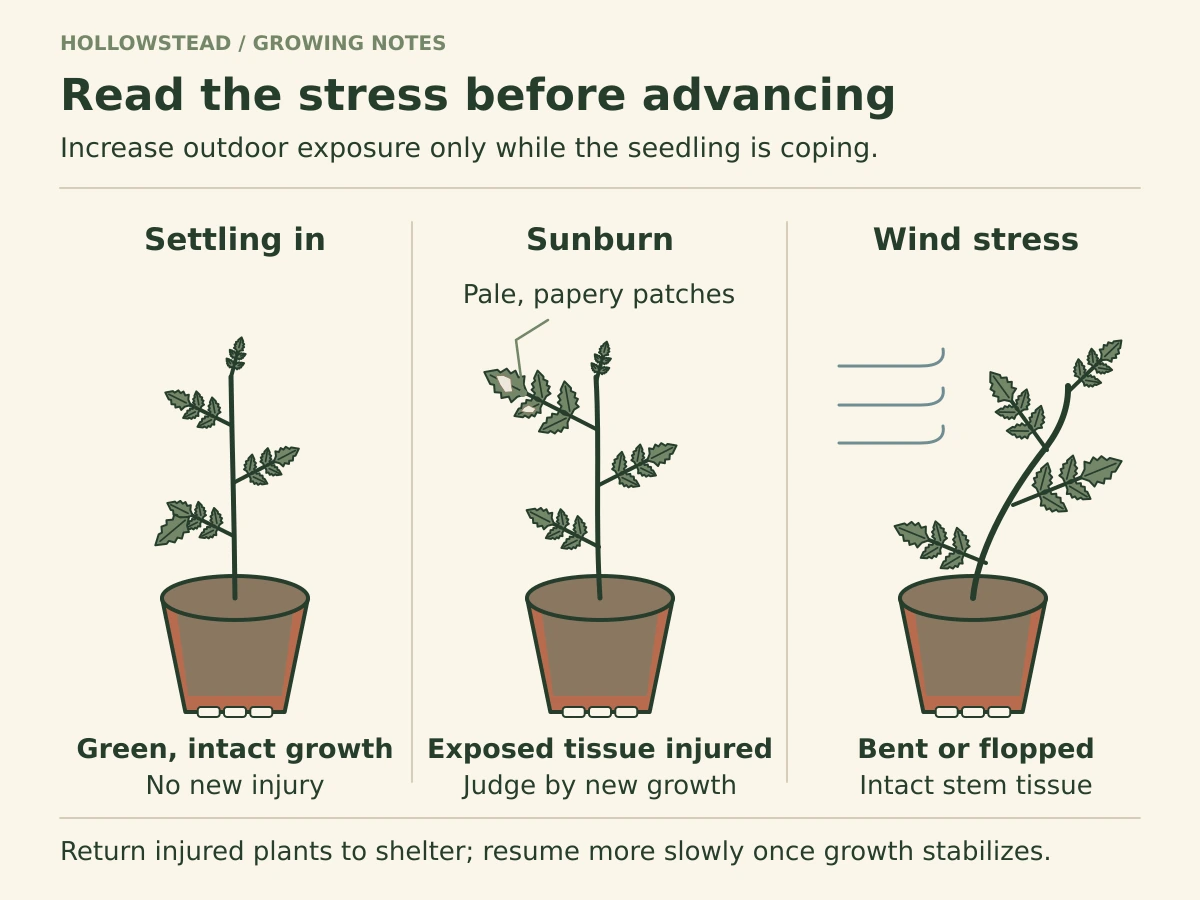 View full-size diagram
Hardening-off stress response chart
A little slower growth during acclimation is not automatically a problem. The more useful question is whether the plant is adjusting while remaining functional or showing actual injury. Use this chart to decide what to change before the next exposure.
Wind: the stress gardeners forget
Indoor seedlings may experience almost no wind. Outside, moving air:
- increases water loss;
- bends stems;
- can tear leaves;
- can knock over lightweight pots.
Start in a wind-protected location. Gradually expose the plants to normal breezes as they become accustomed.
Watering during hardening off
University of Maryland advises reducing watering frequency modestly as part of acclimation but not allowing severe wilt.[1]
Useful water stress
Allowing the mix to approach the normal point when it needs watering instead of keeping it constantly saturated.
Harmful water stress
Letting a small transplant dry until leaves collapse, roots overheat, and the plant stops growing.
Outdoor pots dry faster because of sun and wind. You may actually need to check water more often even though the goal is not to keep the mix permanently wet.
Should you stop fertilizing during hardening off?
Do not deliberately starve the plant.
Penn State’s seedling guidance cautions against using fertilizer reduction as the primary hardening method because excessive stress can produce stunted transplants.[3]
If a plant is already on a sensible dilute feeding schedule, there is no need to shock it with abrupt deprivation solely because hardening has begun.
What if you work all day?
A hardening schedule must fit real life.
Option 1: sheltered outdoor staging area
Use a bright-shade location protected from midday sun and heavy wind, such as:
- covered porch;
- east side of a building;
- under light row cover;
- shade cloth area.
Increase exposure on days you can monitor more closely.
Option 2: cold frame or vented mini-greenhouse
A cold frame provides a useful transition environment, but it can overheat rapidly in sun. Ventilation and temperature monitoring are mandatory.
Option 3: move on a weekend, maintain during weekdays
Use a weekend to introduce the next level of sun exposure, then maintain that level during workdays instead of escalating every day.
What if the weather turns bad halfway through?
Pause.
Plants do not lose all acclimation because they spend one stormy day under shelter.
Bring them in or move them to protection during:
- frost/freeze threats;
- severe wind;
- hail;
- prolonged cold rain;
- extreme heat beyond what the seedlings have experienced.
Resume when conditions are appropriate.
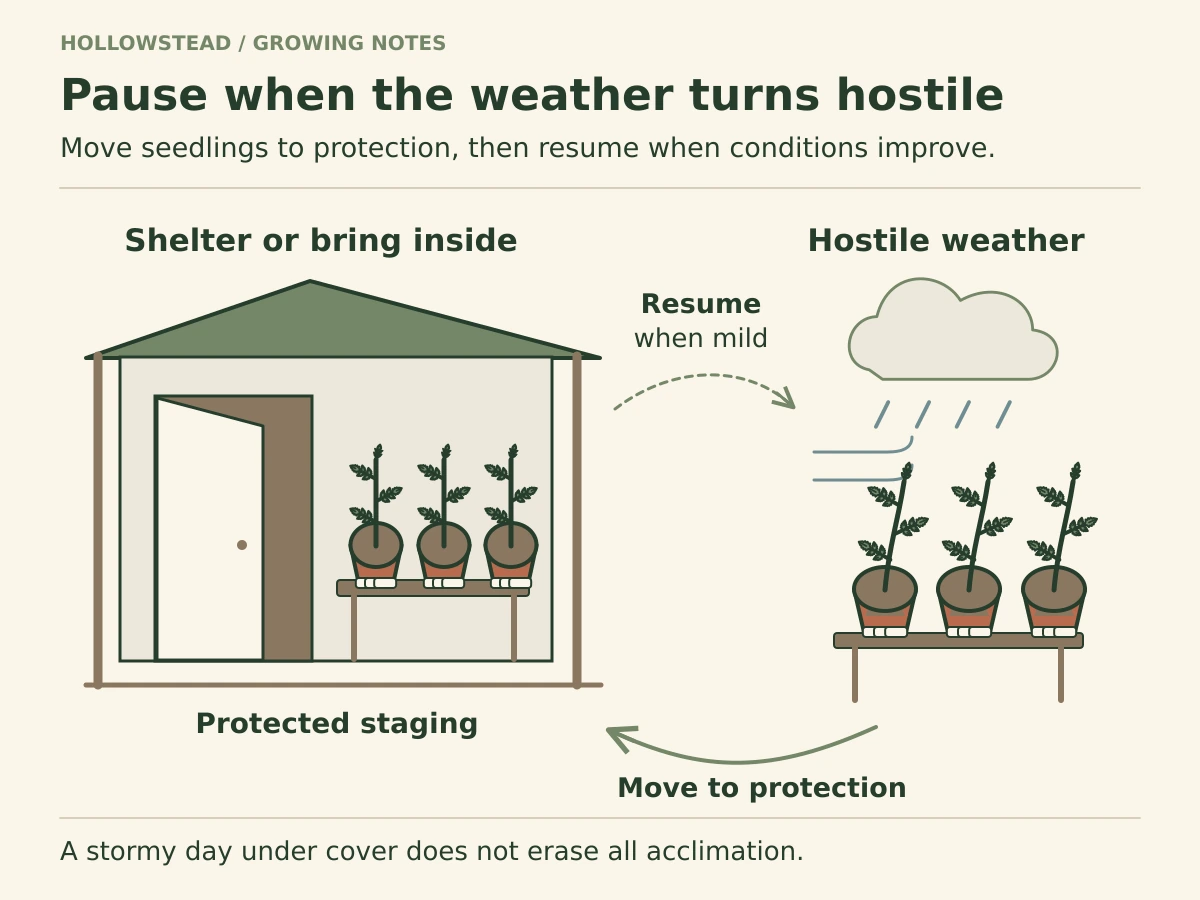 View full-size diagram
Do cloudy days count?
Yes. Outdoor cloud-filtered light can still be much stronger than indoor light, and the plants are also adapting to wind and temperature variation.
A cloudy mild day can be an excellent early hardening day.
But do not assume several cloudy days fully prepare leaves for sudden all-day clear-sky sun. Increase direct sun when the weather allows you to test it gradually.
When can tomato seedlings stay outside overnight?
When:
- the plants have been acclimated to long outdoor days;
- the forecast is mild enough for warm-season seedlings;
- wind/storm conditions are reasonable;
- the pots will not dry out unexpectedly;
- you are close to the conditions they will experience after transplanting.
During hardening, UMD’s ~50°F night guidance is a useful conservative reference for tomatoes.[1]
When is hardening off finished?
You are finished when the plant can tolerate the normal outdoor conditions into which it will be transplanted without obvious stress.
Look for:
- leaves remaining firm through normal outdoor exposure;
- no new sunburn as direct-light exposure increases;
- manageable water use;
- stems/leaves handling ordinary breeze;
- warm-season weather suitable for transplanting.
Hardening is not a badge the plant earns forever. If you harden tomatoes and then keep them indoors for another two weeks, you may need to reacclimate them to strong outdoor light.
Transplant day
Choose conditions that reduce unnecessary stress when possible:
- late afternoon;
- overcast mild weather;
- a calm day;
- moist but workable soil.
Water the transplants before planting so the root ball is hydrated but not waterlogged.
After planting, water the root zone thoroughly to settle soil around roots.
What transplant shock looks like
Some temporary slowdown is normal after roots are disturbed and the environment changes.
Concerning symptoms include:
- severe persistent wilt despite moist soil;
- widespread white sunburn;
- stem injury;
- cold-blackened tissue;
- root rot;
- no new growth for an extended period during otherwise favorable weather.
Do not diagnose transplant shock from one hot afternoon of drooping alone. Check root-zone moisture and observe whether plants recover in the evening.
Common hardening-off mistakes
Full sun on day one
The classic mistake. Air temperature feels nice, so plants get six hours of direct sun and bleach.
Leaving pots dry in wind
The seedling was watered in the morning, but wind strips moisture much faster than the indoor environment.
Treating wilt as desirable hardening
Mild changes in watering rhythm are not the same as repeated severe drought stress.
Using cold to “toughen” tomatoes
Tomatoes are not cabbage. Exposing them unnecessarily to cold can stall growth.
Following a schedule instead of weather
A printed day count cannot see tomorrow’s cold front.
Forgetting that outdoor light varies by region
A seedling in coastal fog and a seedling in high-elevation desert sun need different exposure pacing.
Advanced grower note: hardening is a controlled stress, not punishment
GROW THESE TOMATOES
Put the guide to work.
Choose a variety that fits the way you want to grow and harvest, then use the guide above as your reference through the season.
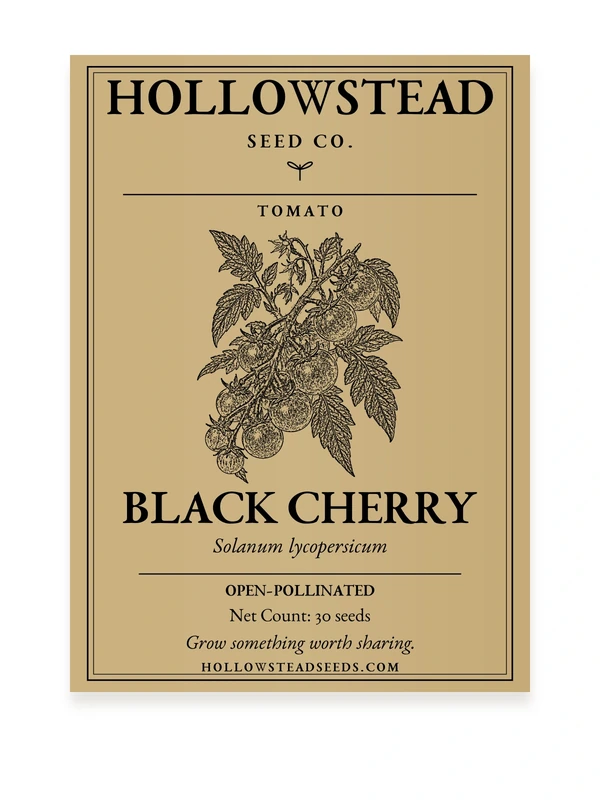
HOLLOWSTEAD SEED
Black Cherry Tomato Seeds
$4.49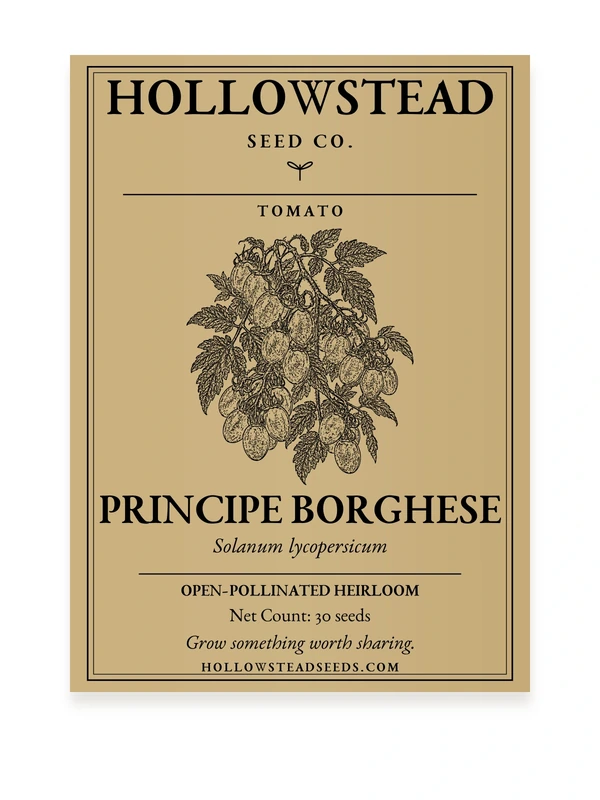
HOLLOWSTEAD SEED
Principe Borghese Tomato Seeds
$4.49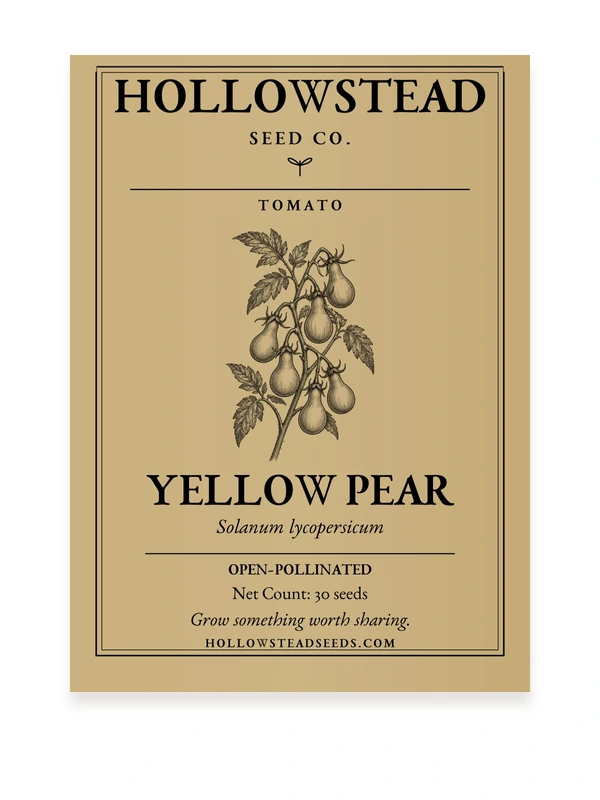
HOLLOWSTEAD SEED
Yellow Pear Tomato Seeds
$4.49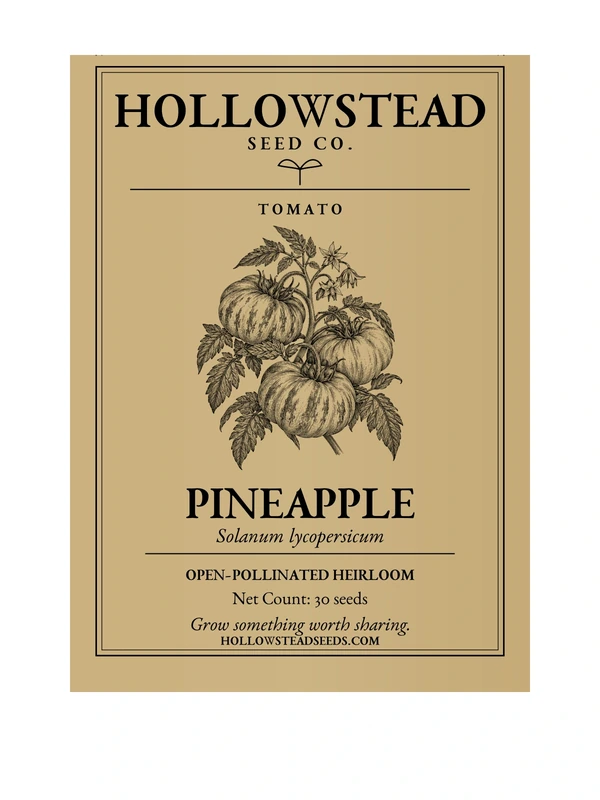
HOLLOWSTEAD SEED
Pineapple Tomato Seeds
$4.49KEEP LEARNING
Related Hollowstead guides

SEED STARTING
The Complete Guide to Growing Tomatoes From Seed
Start tomato seeds with confidence. This guide covers the quick version first, then goes deep on temperature, light, watering, potting up, hardening off, transplant timing, containers, and common seedling problems.
Read the guide
TROUBLESHOOTING
Tomato Seedlings Are Leggy: Causes, Fixes & Prevention
Leggy tomato seedlings usually mean the plant is growing faster than the available light can support. Learn how to diagnose the cause, rescue recoverable plants, and prevent the problem next time.
Read the guide
GARDEN BASICS
What “Days to Maturity” Actually Means for Tomatoes and Other Garden Crops
Days to maturity is a planning estimate, not a harvest appointment. Learn when the count starts, how transplanted and direct-sown crops differ, and how weather, containers, and transplant stress change the real timeline.
Read the guideFrequently asked questions
Can I harden off tomatoes in one day?
Not safely in ordinary circumstances. The point is gradual acclimation. Give plants multiple days to adjust to full sun, wind, and temperature variation.[1]
Should I leave tomatoes outside in 45°F weather to toughen them?
UMD advises against putting tender seedlings out in temperatures below about 45°F and recommends bringing tomatoes/peppers in when nights are expected below about 50°F during hardening.[1]
Can seedlings get sunburned through clouds?
Clouds reduce intensity, but outdoor light can still be far stronger than indoors. Cloudy days are useful acclimation days; they do not necessarily replace exposure to direct sun before transplanting into a sunny garden.
Should tomato seedlings wilt a little while hardening?
Do not intentionally drive them into severe wilt. Reduce watering frequency modestly if appropriate, but keep the plant functional.[1]
What if I forgot the seedlings outside overnight?
Check the minimum temperature and inspect the plants. If no freeze/cold injury occurred, move them to a protected area and continue based on their condition rather than assuming disaster.
Can I harden off under shade cloth?
Yes. Shade cloth can create an excellent intermediate environment as long as you progressively expose plants to the actual sunlight level they will receive after transplanting.
Sources & further reading
- University of Maryland Extension. Planting Vegetable Transplants. https://extension.umd.edu/resource/planting-vegetable-transplants
- Illinois Extension. Starting a Garden: Hardening Off Indoor Seedlings. https://extension.illinois.edu/blogs/good-growing/2020-04-06-starting-garden-hardening-indoor-seedlings
- Penn State Extension. Seed and Seedling Biology. https://extension.psu.edu/seed-and-seedling-biology
- University of Minnesota Extension. Growing tomatoes in home gardens. https://extension.umn.edu/vegetables/growing-tomatoes
Hollowstead Growing Notes
A little help for your next growing season
Practical sowing advice, help choosing seeds, and occasional Hollowstead shop news. Usually one or two emails a month, plus a short welcome note.
Choose your topics and frequency after you confirm. Our guides and planting calendar are always free.