
SEED SAVING
How to Save Lettuce Seeds
Reserve healthy lettuce plants, let them flower, and collect dry seedheads as they mature. Learn how selection, isolation, careful cleaning, labels, and a later test preserve a useful seed lot.
LettuceGrowing guideBeginner → advanced
Published by Hollowstead Seed Co. · How this guide is prepared
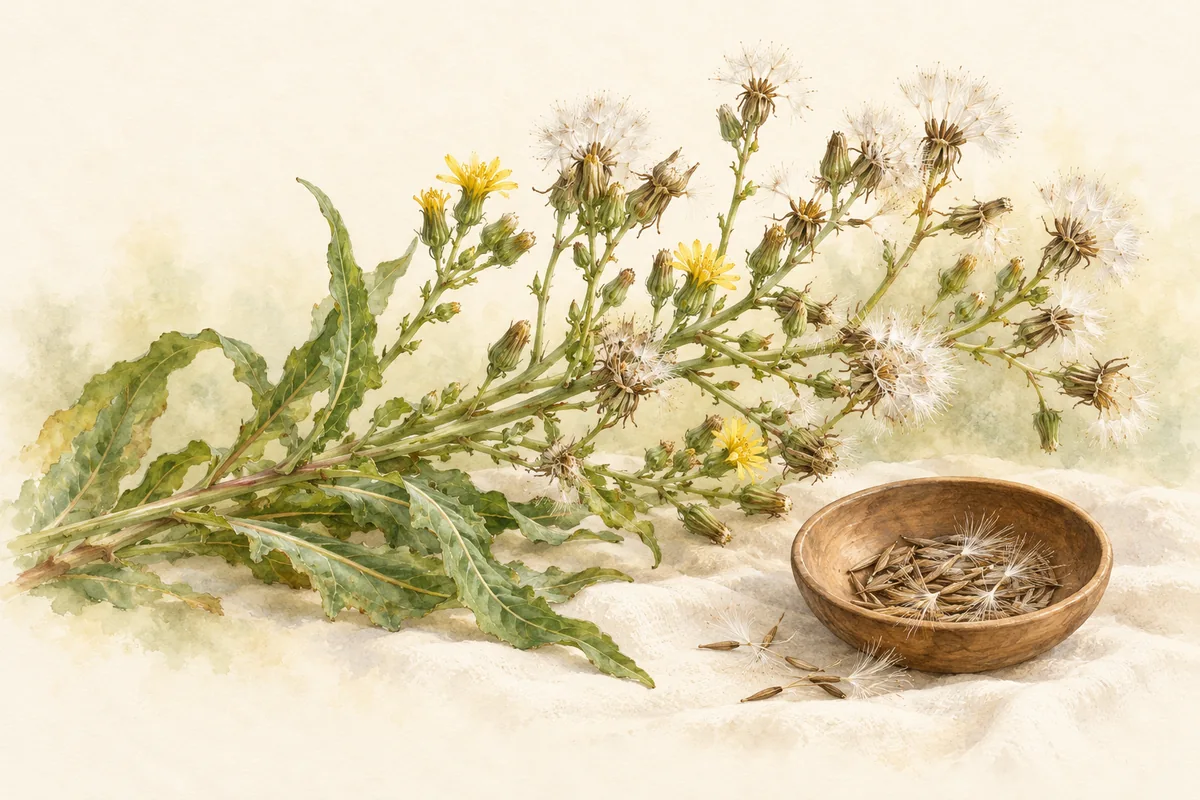
Quick answer
Leave selected lettuce plants beyond eating maturity, allow them to flower, then collect mature dry seedheads as they become fluffy. Lettuce is largely self-pollinating, but variety selection, isolation, and careful labels still matter.[1]
Save from healthy open-pollinated plants that showed the traits you wanted before bolting. Keep the crop long enough for seed to mature, gather it in dry conditions, gently separate seed from chaff, and finish drying before sealed storage. This is a dry-seed crop; it does not need the wet fermentation used for some other vegetables.
At a glance
| Decision | Useful starting point |
|---|---|
| Best starting material | A known open-pollinated variety and healthy typical plants |
| Harvest stage | Dry seedheads showing pale fluffy pappuses |
| Timing | Much later than leaf harvest; seedheads mature in stages |
| Collection | Labeled paper bags or clean containers, one variety at a time |
| Processing | Dry, gently rub, screen or winnow, then finish drying |
| Before next sowing | Run a small germination test and keep the result |
Give seed production its own space and season
A lettuce plant grown for seed occupies its place long after a salad plant would have been harvested. It becomes tall and branched, and its seed does not all mature on one date. Organic Seed Alliance’s lettuce manual treats seed production as a longer-season crop than marketable leaves.[2]
Reserve the seed plants before clearing the bed. Place a durable label beside each group and mark them on your garden sketch. If another person harvests from the same garden, make the purpose obvious so the best parents do not become an accidental salad.
Spring plants often have more time to flower and mature seed before severe cold than a late fall planting. That is a planning advantage, not a national calendar rule. Consider when your climate offers a suitable drying period and whether tall plants can remain in that space without blocking a path or shading the next crop.
Support stalks if wind threatens to lodge them, and keep the root zone appropriately watered while plants flower and fill seed. Avoid keeping seedheads unnecessarily wet. When rain is frequent at maturity, small repeated collections may be easier to manage than waiting for the entire plant to finish.
Choose parents before leaves become bitter
Start with a named open-pollinated variety. Red Sails and Parris Island Cos are open-pollinated lettuces with clearly different forms. Keep them separate and know which you are saving. Seed from a hybrid may grow, but its offspring can differ from the parent you intended to reproduce.
Evaluate plants while their eating-stage traits are visible. For Red Sails, look at the expected loose-leaf form, color, and vigor. For Parris Island Cos, look at upright growth and the head characteristics you want. Compare plants of similar age in similar conditions; a shaded or damaged plant is not a fair comparison with a healthy one in an ideal spot.
Do not simply save the first plant to bolt because it offers the first seed. If your goal is a longer leaf-harvest window, consistently choosing unusually early bolters works against that goal. Remove clearly diseased or uncharacteristic plants from the seed group before they contribute seed.
One plant can produce a useful first experiment, but a larger parent group better represents a variety. Seed Savers Exchange recommends 5–10 plants for maintaining lettuce over generations and 20 plants for preserving a rare variety.[3] Those are conservation guidelines, not a guarantee of purity or performance.
If space limits you to fewer plants, record that limitation rather than relabeling a small lot as a complete preservation effort. Keeping an honest record makes the seed more useful to you and to anyone with whom you later share it.
Manage variety identity while plants flower
Lettuce mostly self-pollinates, but crossing is possible. Seed Savers Exchange gives a 10–20-foot isolation guideline between lettuce varieties.[3] Treat distance as risk management rather than a promise; surrounding compatible plants and conditions also matter.
For a small garden, the simplest option is often to let only one lettuce variety flower for seed at a time. You can still grow another variety for leaves if you harvest it before it flowers. Isolation by differing flowering times is also possible, but confirm the actual flowers do not overlap rather than relying only on sowing dates.[4]
Organic Seed Alliance notes that cultivated lettuce can cross with compatible wild lettuce.[1] Check what is flowering near the seed crop and seek local identification help if needed. A nearby plant that resembles a lettuce relative deserves attention; it does not automatically prove your seed is crossed.
Physical isolation requires an appropriate method, timing, and monitoring. If purity is important and distance is limited, consult a detailed seed-saving protocol rather than improvising an airtight bag over the whole plant. Airflow and plant health still matter.
Label each collection at the moment you make it. Include the variety and date on the bag itself, not only on a loose tag that can blow away. Clean your hands and work surface between varieties. Simple mechanical mixing during harvest can undo otherwise careful isolation.
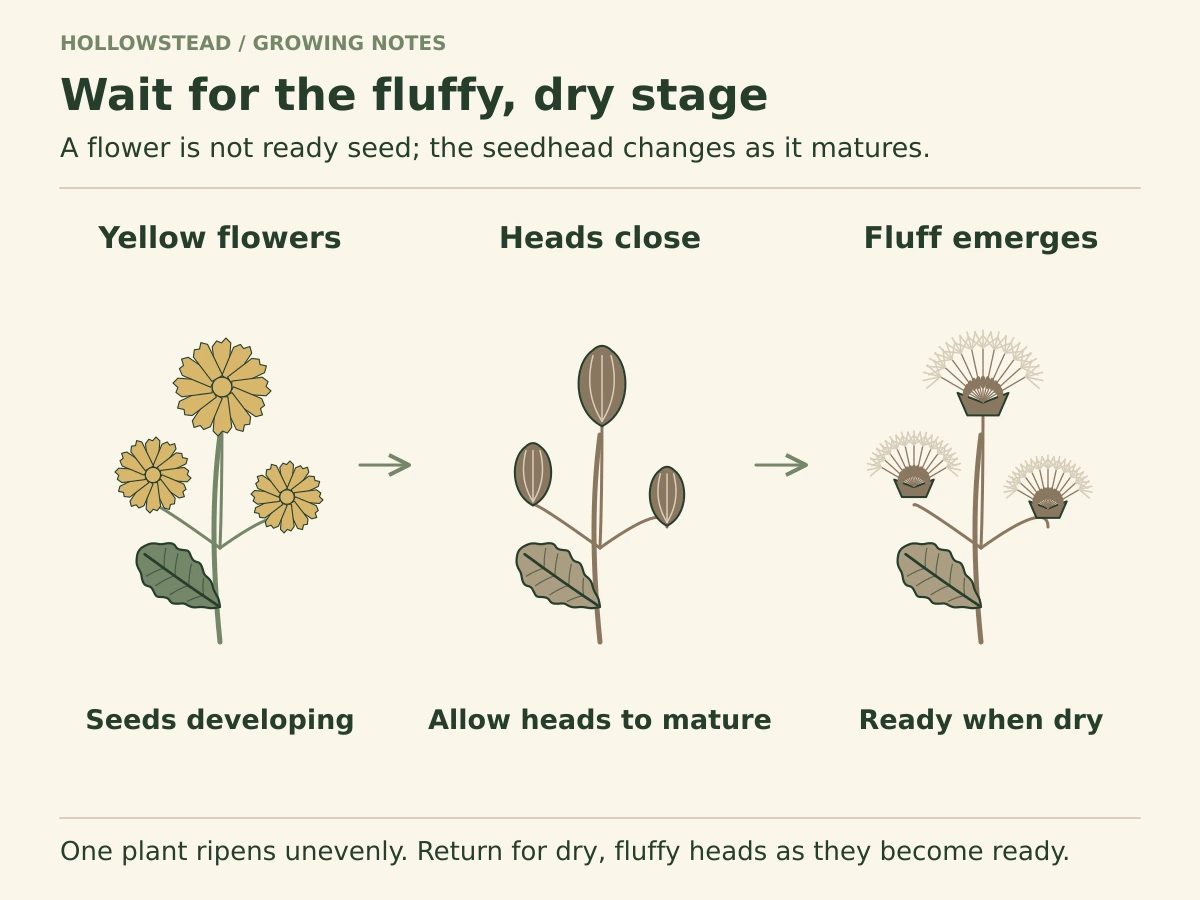
Wait for dry, fluffy seedheads
The plant first elongates, branches, and opens small yellow flowers. Later, mature seedheads develop pale fluffy structures called pappuses. Seed Savers Exchange identifies this feathered stage as a practical sign that the enclosed seeds are mature.[3][1]
A plant can carry buds, flowers, and mature seedheads at the same time. Inspect individual heads instead of expecting the whole plant to turn ready together. Check more frequently once mature heads appear, especially before windy weather that can disperse seed.
 View full-size diagram
Open a mature-looking head over a clean tray to learn what your seed looks like. Separate the small elongated seeds from attached fluff and fragments. Avoid judging readiness from flower color alone or gathering every closed green head into the same batch.
The packet’s days-to-maturity figure describes an eating harvest, not seed maturity. Our maturity guide helps distinguish the stages. A 45-day leaf crop does not promise ready-to-store seed 45 days after sowing.
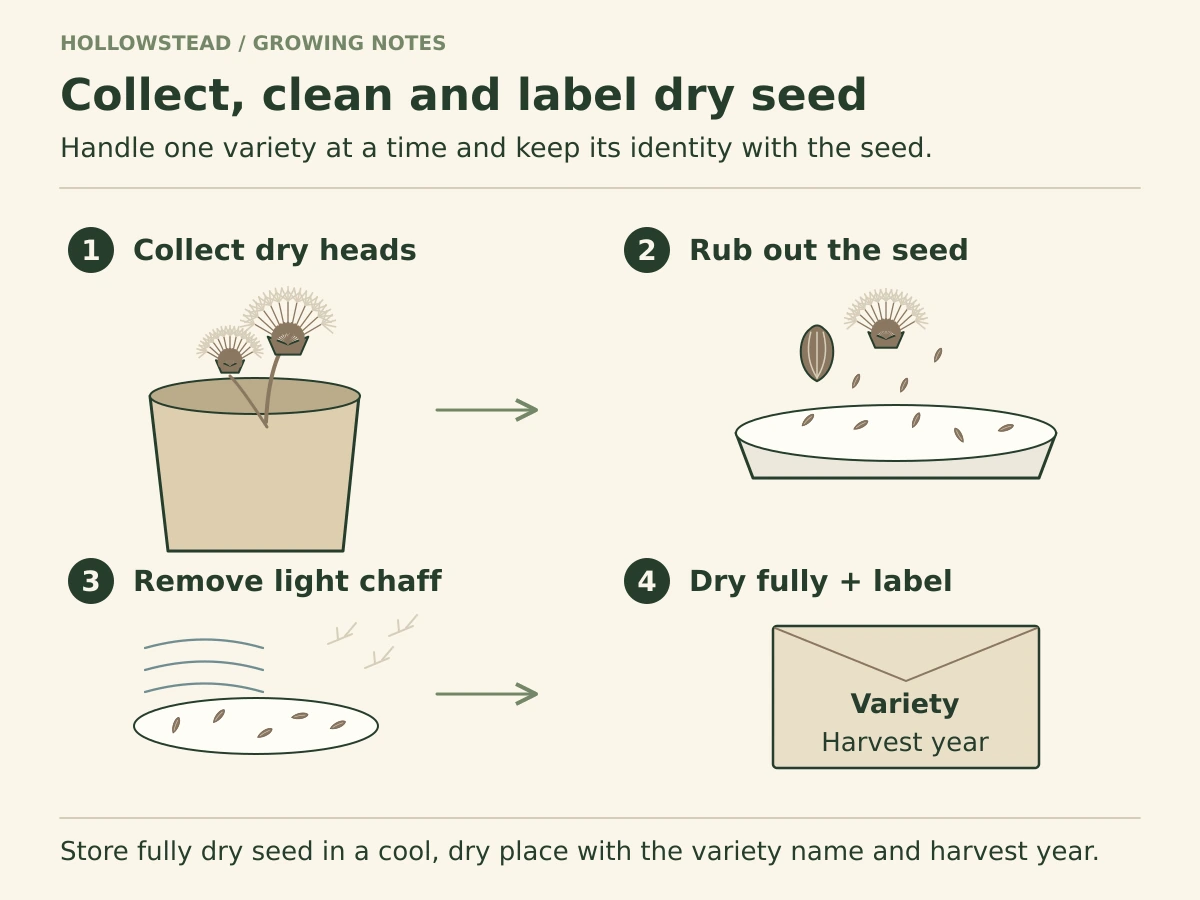
Collect, clean, and finish drying
Use a labeled paper bag, bowl, or tray and work one variety at a time. You can pick individual mature heads, or gently bend a mature section over a container and tap it. Leave less mature portions on the plant for a later collection. Repeated harvest is well suited to a small home seed crop.[2]
- Collect dry material. Wait for dew to dry when conditions allow. Keep dirt, wet leaves, and diseased tissue out of the collection.
- Spread it thinly. Let harvested material dry further in a sheltered, airy place. A shallow layer is easier to inspect than a packed bag.
- Rub gently. Separate seed from the fluffy material with light rubbing rather than crushing the seedheads aggressively.
- Remove the coarse debris. Pick out stems or use a suitable screen. Test a small portion first so valuable seed does not pass into the discard.
- Winnow cautiously. Use a very gentle air movement over a catch tray. Lettuce seed is light; strong wind can remove it along with the chaff.
- Finish drying and label. Keep collections separate until they are adequately dry and you are sure of their identity.
 View full-size diagram
Perfectly clean seed is less important than sound, dry seed with an accurate label. A little harmless dry chaff is preferable to blowing away much of the seed while chasing a commercial appearance. Keep the discarded fraction until you have inspected it, especially while learning a new screen or winnowing setup.
Do not ferment lettuce seed or use a water-floating test as your main sorting method. Its normal harvest is dry processing. Introducing water creates another drying task and does not substitute for checking mature seedheads or running a later germination test.
Store a labeled lot and test it before relying on it
Store fully dry seed in a labeled packet inside a moisture-resistant sealed container in a cool location. Heat and moisture work against long storage; the collection year alone cannot tell you whether a lot will perform.[5][6]
A useful label includes variety, harvest year, garden location, approximate parent-plant count, and any isolation concern. Add a short note such as “one variety flowering” or “another lettuce flowered nearby.” That keeps an uncertain lot from acquiring an unwarranted claim of purity as it moves between containers.
Before an important sowing, test a counted sample using the home germination method. Use conditions appropriate for lettuce, then record the number tested, number germinated, and dates. A result describes the sample; it does not certify every remaining seed.
Freshly harvested lettuce seed sometimes has dormancy that eases after dry storage. Organic Seed Alliance advises allowing time and retesting rather than immediately discarding a newly saved lot after one poor test.[1] For a later failure, also check storage history and use the lettuce germination guide.
Let next season’s plants complete the learning
Grow a small labeled sample of your saved seed alongside a known source if you want to compare it. Look at emergence, normal plant form, vigor, color, and harvest behavior. One unusual seedling is useful information, but it cannot by itself explain whether the cause was crossing, selection, environment, or a labeling mistake.
Keep seed from different years separate until you understand their performance. You can choose Red Sails seed or Parris Island Cos seed as a named starting population, then preserve the records that connect later generations to it.
For plants destined for salads, return to leaf and romaine harvesting. For selected seed parents, let bolting proceed as part of the intended crop. The skill is deciding which plants serve each purpose before the season makes the choice for you.
GROW FROM SEED
Put this guide to work.
Choose a variety that fits the way you want to grow and harvest, then use the guide above as your reference through the season.
HOLLOWSTEAD SEED
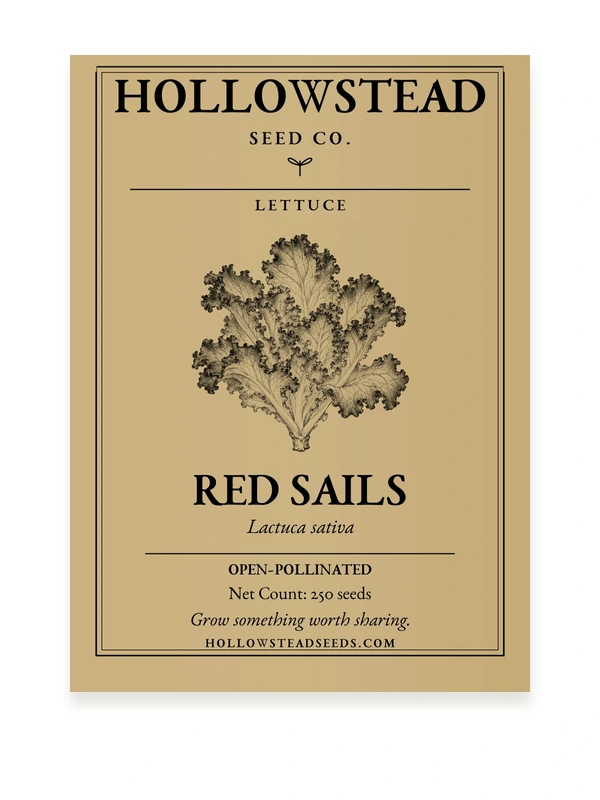
Red Sails Lettuce Seeds
$3.49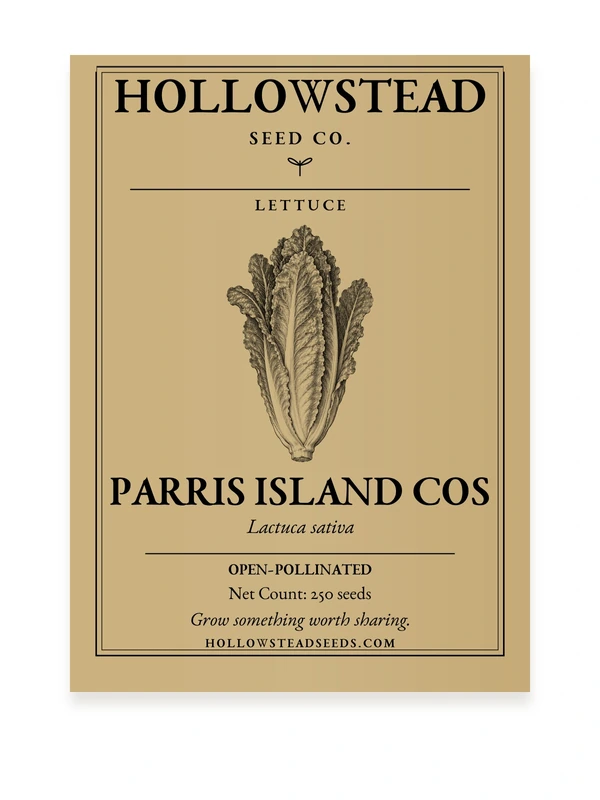
HOLLOWSTEAD SEED
Parris Island Cos Lettuce Seeds
$3.49KEEP LEARNING
Related growing guides
SEED STORAGE & STARTING
How to Store Garden Seeds and Test Old Seed
Keep leftover seed dry, cool, and labeled, then use a small germination test to decide what deserves space in the next planting. Includes a counting example, storage checklist, and crop-specific next steps.
Read the guide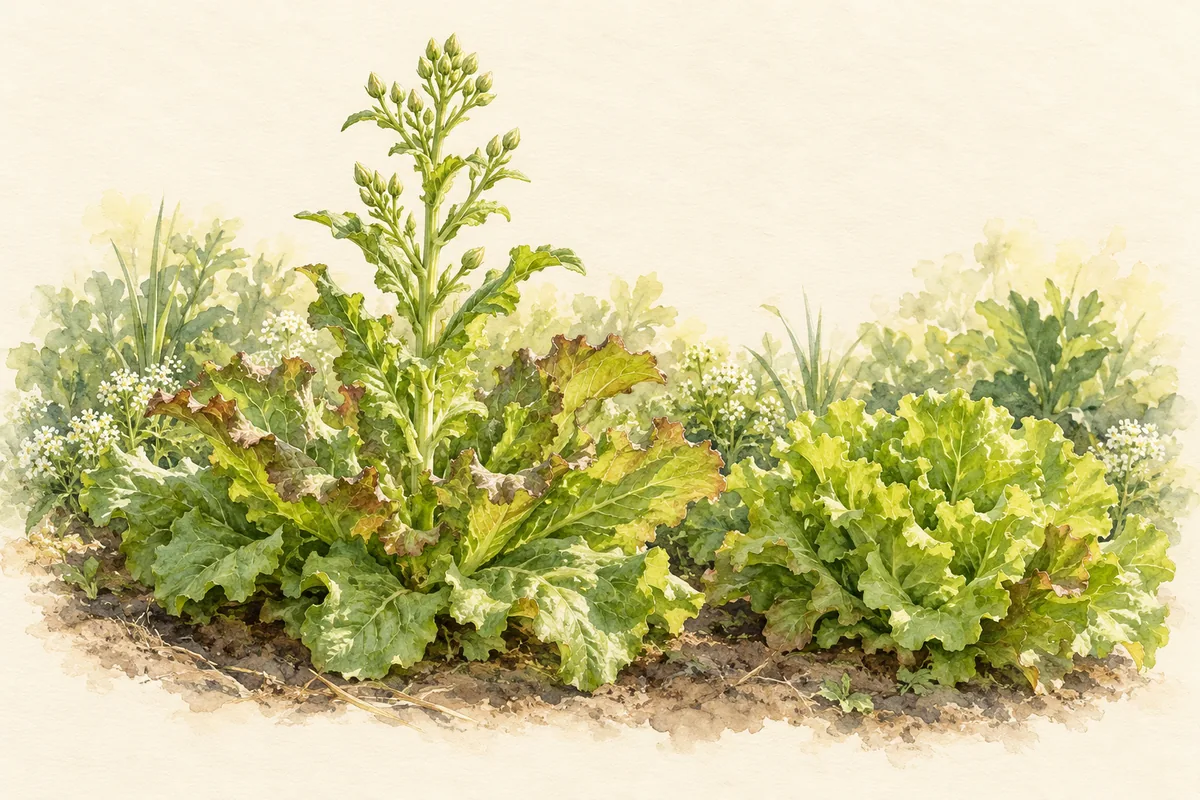
HEAT & BOLTING
Why Lettuce Bolts or Turns Bitter
Learn the difference between a forming romaine head and a rising flower stalk, why heat and season matter, and when to harvest, replace, or deliberately keep lettuce for seed.
Read the guide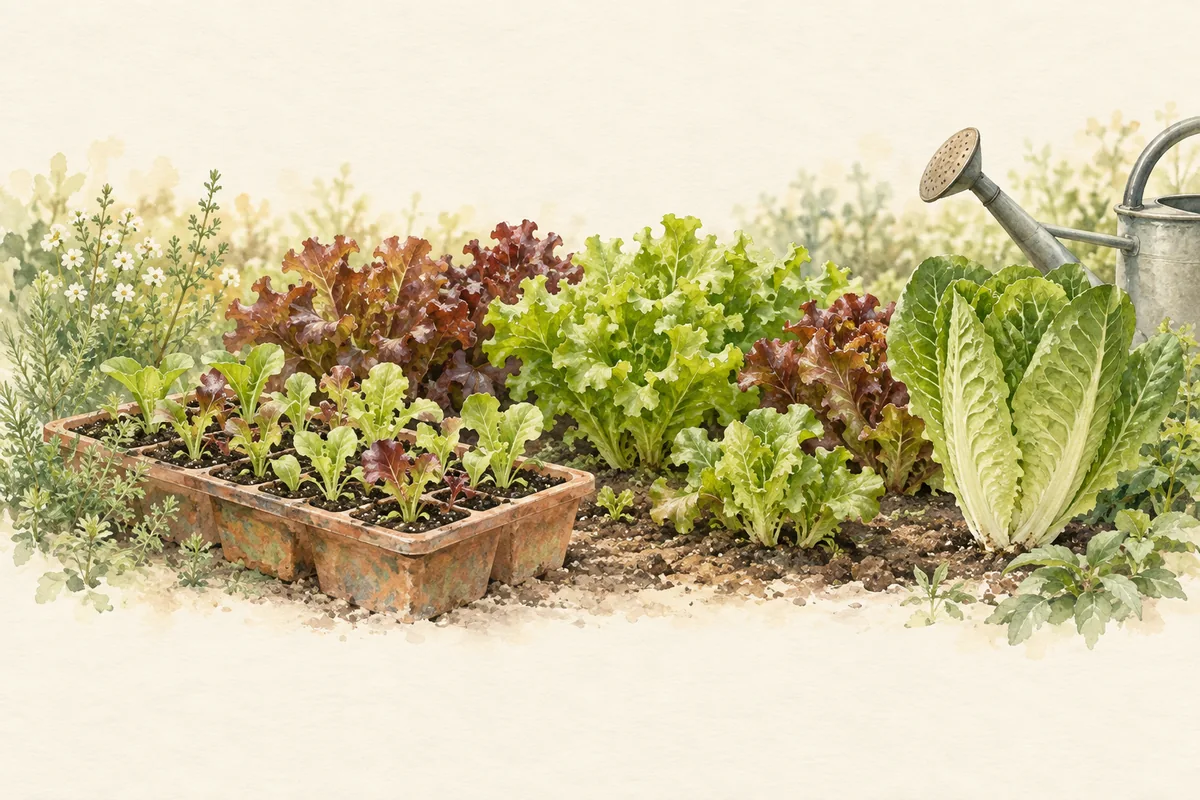
LETTUCE GROWING
Growing Lettuce From Seed: The Complete Guide
Grow leaf lettuce and romaine from shallow sowing through harvest. Plan for cool weather, choose your harvest style, keep moisture steady, and make room for a second crop.
Read the guideFrequently asked questions
Can I save seed from a bolted lettuce?
Yes, if it is a suitable healthy parent and has time to finish mature seed. Bolting begins the reproductive stage; it is not the same as having ripe seed ready to collect.
Do Red Sails and Parris Island Cos cross?
Both are Lactuca sativa and can cross despite lettuce’s strong tendency to self-pollinate. Manage isolation when preserving them as distinct varieties.
Do I need to ferment lettuce seed?
No. Lettuce is normally collected and cleaned as a dry-seed crop. Fermentation is not part of this process.
Why did newly saved seed fail its first test?
It may be immature, damaged, poorly dried, tested under unsuitable conditions, or temporarily dormant. Keep the lot labeled, correct the test conditions, and retest after storage when fresh-seed dormancy is plausible.
How many years will my saved seed last?
Storage conditions and the lot itself matter more than a fixed expiration promise. Keep it dry and cool, and use a current test when the planting window is important.
Sources & further reading
- Organic Seed Alliance — A Seed Saving Guide for Gardeners and Farmers
- Organic Seed Alliance — Principles and Practices of Organic Lettuce Seed Production in the Pacific Northwest
- Seed Savers Exchange — Growing Guide: Lettuce
- Seed Savers Exchange — Isolation Methods
- Oregon State University Extension — Collecting and storing seeds from your garden
- University of Minnesota Extension — Saving vegetable seeds
Hollowstead Growing Notes
A little help for your next growing season
Practical sowing advice, help choosing seeds, and occasional Hollowstead shop news. Usually one or two emails a month, plus a short welcome note.
Choose your topics and frequency after you confirm. Our guides and planting calendar are always free.