
CONTAINER TOMATOES
Growing Tomatoes in Containers: Pots, Support, and Watering
Plan pots, support, and watering for all five Hollowstead tomatoes, including Yellow Pear and Pineapple. Compare growth habits, choose a generous root volume, and check moisture daily.
TomatoesContainer guideBeginner → advanced
Published by Hollowstead Seed Co. · How this guide is prepared
Quick answer
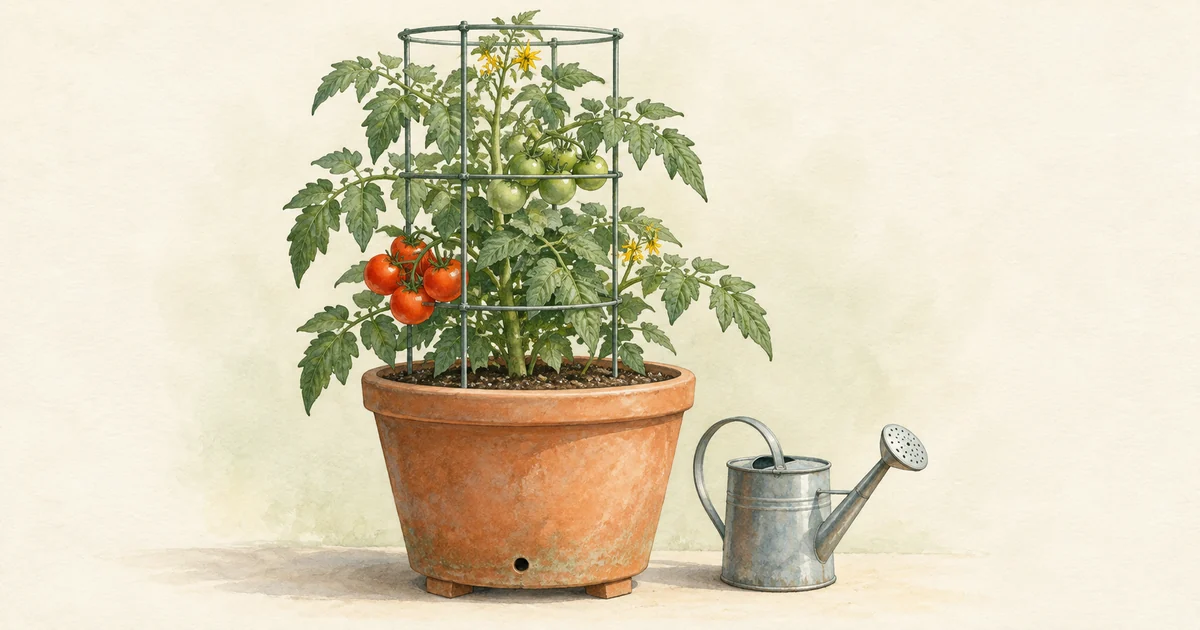
Grow one tomato plant per substantial container, with drainage, container potting mix, and support installed at planting. Match the pot to the mature plant. Maryland Extension gives 8–10 gallons of growing medium and 12–16 inches of depth as its minimum range for large vegetables including tomatoes.[1]
A small fruit does not necessarily mean a small plant: Black Cherry and Yellow Pear are indeterminate vines. Choose the variety, available support, and watering routine together.
At a glance
| Decision | Useful starting point |
|---|---|
| Plants per pot | One tomato as the starting plan |
| Root volume | 8–10 gallons is an Extension baseline for large vegetables; generous pots offer more buffer |
| Growing medium | Container potting mix, with a clear drainage path |
| Support | Installed before the plant becomes heavy |
| Daily decision | Check the root zone; water when needed rather than by a fixed dose |
Choose a growth habit before choosing a pot
| Hollowstead variety | What to plan around | Container implication |
|---|---|---|
| Black Krim | Indeterminate vines carrying large slicers | Plan substantial support and space to reach the fruit. |
| Black Cherry | Long-growing vine with small fruit | Do not choose a small patio pot just because the tomatoes are small. |
| Principe Borghese | Current Hollowstead listing: compact determinate | Support the fruit load and preserve productive side shoots. |
| Yellow Pear | Indeterminate vine with small pear-shaped fruit[5] | Allow root space and a full-size support despite the small fruit. |
| Pineapple | Indeterminate vine carrying large bicolor slicers[6] | Plan a generous pot and well-anchored support for the mature vine and fruit. |
“Determinate” describes growth habit; it does not automatically mean dwarf. New Hampshire Extension notes that determinate tomatoes can be a more manageable container choice, while containers still need room and regular care.[2] Use the current packet’s description when seed-source listings differ.
How large should the container be?
Think in volume as well as diameter. A wide pot and a narrow pot with the same rim measurement may hold very different amounts of mix. Maryland’s large-vegetable guidance is a useful baseline.[1] For vigorous indeterminate tomatoes, our practical preference is to go larger when space, weight, and budget allow, giving yourself more room for roots and a steadier moisture reserve.
Can a five-gallon bucket work? New Hampshire includes that approach in its tomato-container guidance.[2] It is a constrained setup that deserves close watering and support attention. An 8–10-gallon or larger pot is the more forgiving starting recommendation here; it is not a yield guarantee.
Place and fill the container where you intend to grow it. Consider the weight of wet mix and the mature vine before putting a large planter on a raised deck or moving it after planting. A grow bag must also have somewhere to drain.
Use potting mix and keep drainage open
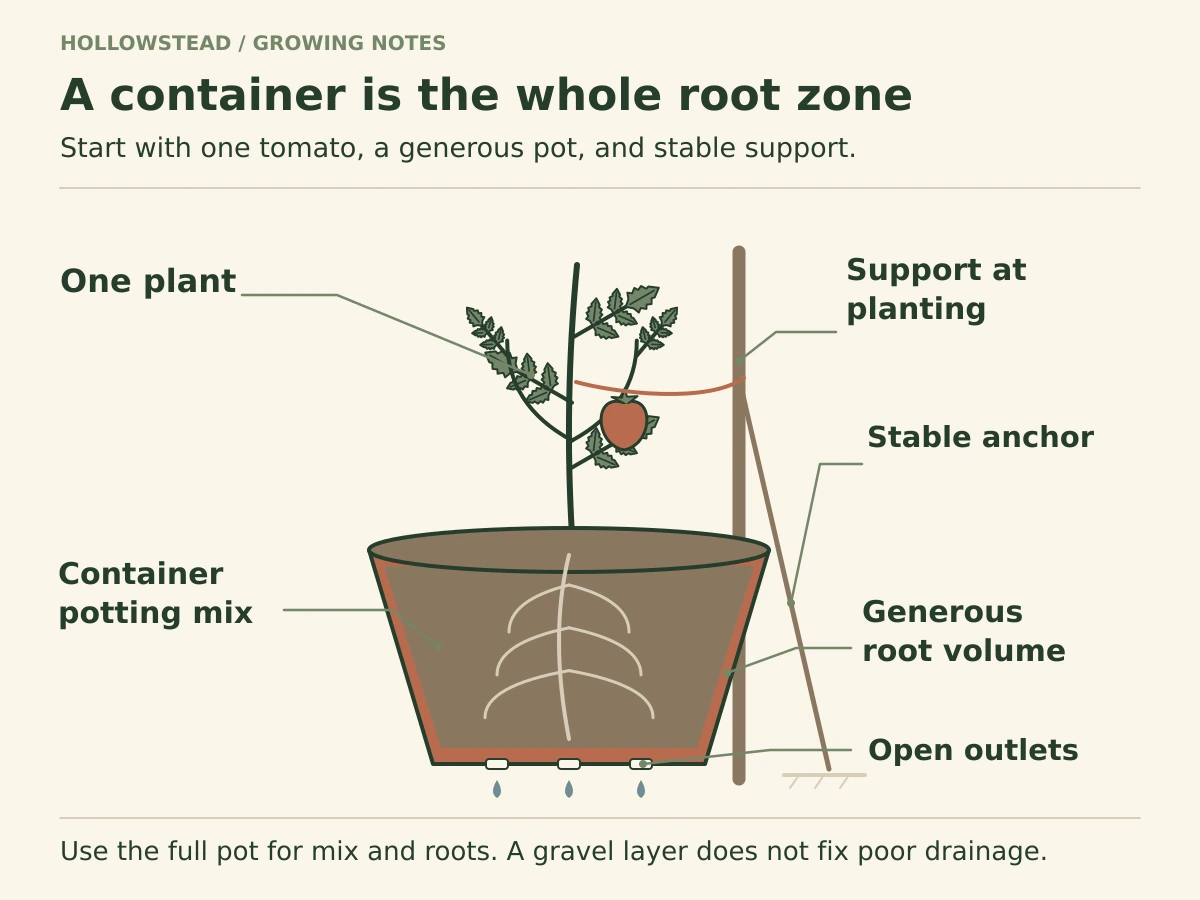
Use a mix intended for containers. Dense garden soil can behave poorly in a confined pot. Check the container’s outlets before planting, and do not leave a conventional pot standing in a full saucer. Purpose-built reservoir planters are a separate system; follow their fill and overflow instructions.[1][3]
A layer of gravel does not solve poor drainage. Keep the growing space available for the mix and roots, and raise the pot slightly if its outlets would otherwise sit flat against a hard surface.[1]
Plant once the weather is suitable, and install support
Harden off indoor-grown seedlings before moving them permanently outside. A portable pot still exposes foliage to wind, strong sunlight, and chilly nights. Choose a sunny location and leave room for checking the plant from more than one side.
Fit the cage or stake at planting. Confirm that it will remain stable when the vine is tall, the fruit is heavy, and the mix is wet. A tall cage resting loosely in a light container is not a complete support plan. Use the tomato support guide to match the structure with your intended pruning routine.
Build a moisture-check routine
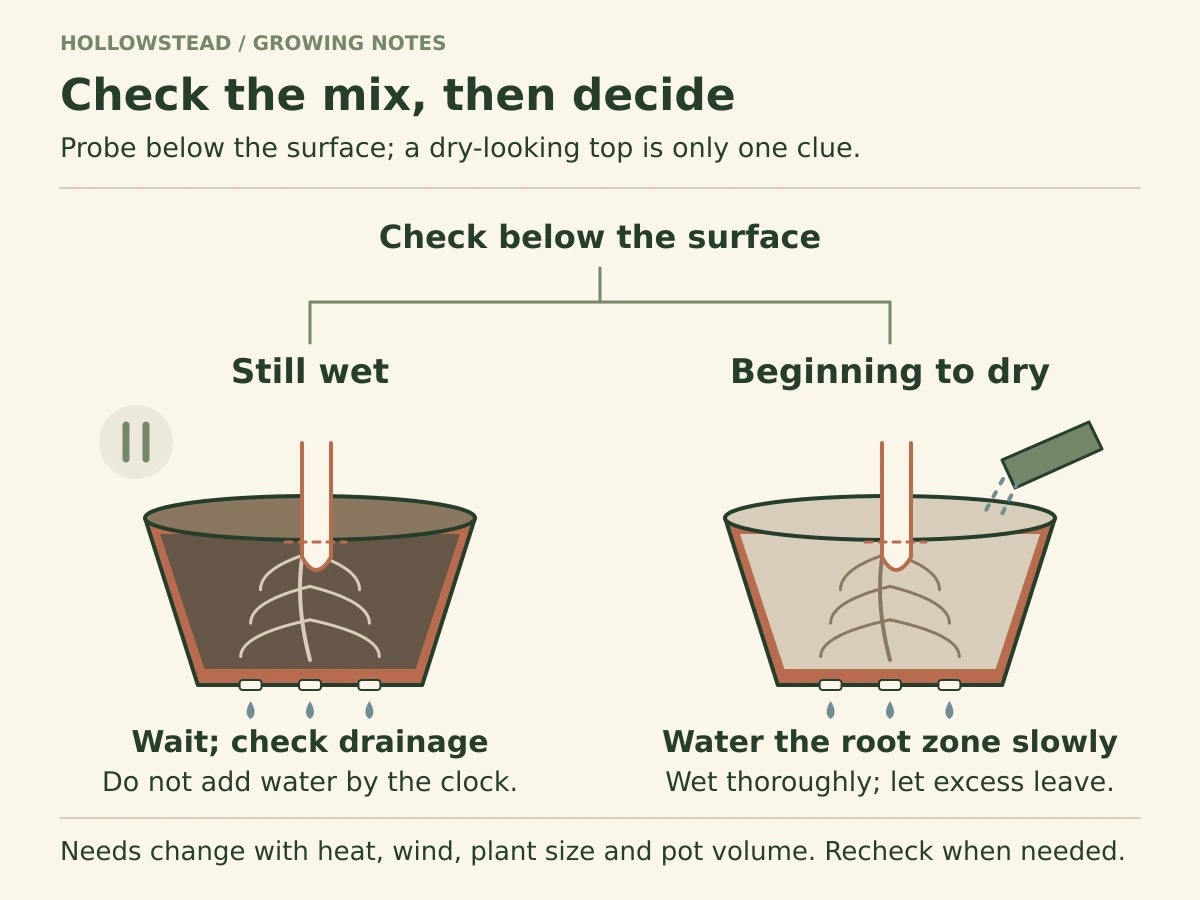
Check the mix below the surface and water the root zone when needed. In a conventional draining container, water slowly enough to wet the mix thoroughly and allow excess to leave the drainage holes. Needs change with temperature, wind, plant size, and pot volume; repeated shallow splashes are a poor substitute for wetting the root zone.[3]
For your first week, inspect at a consistent time and record whether the pot actually needed water. Recheck later in hot or windy weather. A rain shower may wet the leaves while leaving a sheltered container dry. Your record should describe the pot’s condition, not simply whether it rained.
If mix has pulled away from the sides, water may bypass the dry center. Rewet carefully and verify the center is moist. If the pot remains wet, check drainage before adding more water.[3]
Feed according to the mix and fertilizer label
Read the potting-mix label first: some mixes already contain fertilizer. Choose a fertilizer labeled for the crop/container use and follow its rate and interval. Regular irrigation can remove nutrients, but extra fertilizer is not a remedy for every yellow leaf.[3][4]
Keep a simple feeding record. “Added more because growth looked slow” is difficult to troubleshoot; “used the labeled dose on this date” is useful. If growth stalls, review moisture, light, temperature, and root space before stacking several amendments.
Three problems worth separating
| Observation | First checks | Next guide |
|---|---|---|
| Dark, sunken patch at the blossom end | Moisture swings, root stress, and nutrition history | Blossom-end-rot checks |
| Vine outgrows the cage | Growth habit, anchoring, and training choices | Support and pruning |
| Harvest later than expected | Whether the maturity count starts at transplant; recent conditions | Days to maturity |
Do not diagnose blossom-end rot from any dark spot alone. Use the location and texture of the damage and inspect the rest of the plant. If leaves or stems are also deteriorating, broaden the investigation.
A practical one-plant plan
- Choose the variety and read its growth habit.
- Reserve one generous pot, its drainage space, and a stable support.
- Harden off the plant and place it outside in suitable conditions.
- Record moisture checks during the first week, then adjust as the canopy grows.
- Check ties, fruit, and drainage during each watering visit.
- Keep the feed label and a dated feeding note together.
This makes a small garden easier to learn from. Change one part of the routine at a time when troubleshooting so you can see what helped.
GROW WITH A PLAN
Choose the variety that fits your garden
Use each variety’s guide alongside these shared growing techniques.
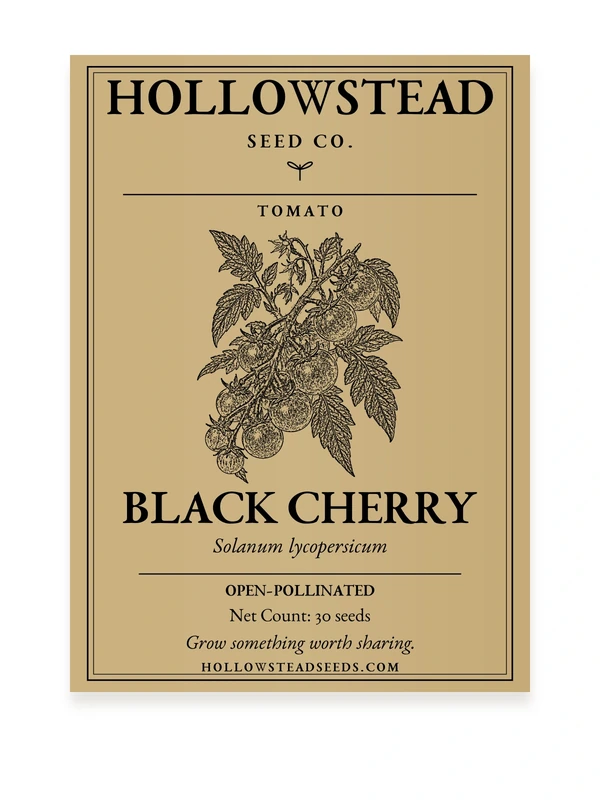
HOLLOWSTEAD SEED
Black Cherry Tomato Seeds
$4.49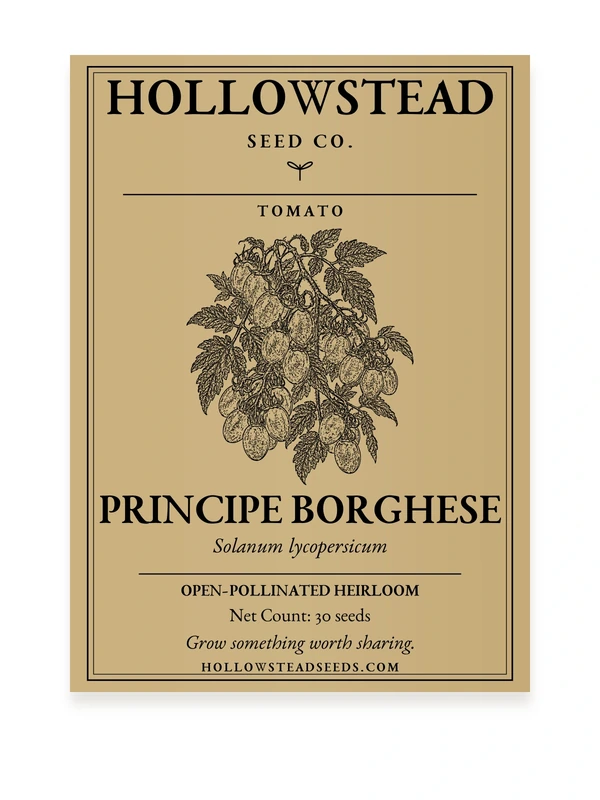
HOLLOWSTEAD SEED
Principe Borghese Tomato Seeds
$4.49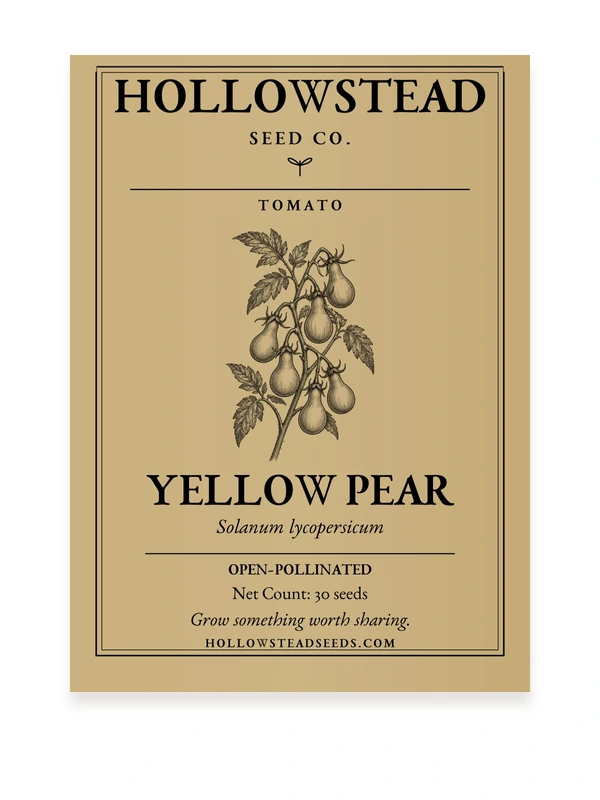
HOLLOWSTEAD SEED
Yellow Pear Tomato Seeds
$4.49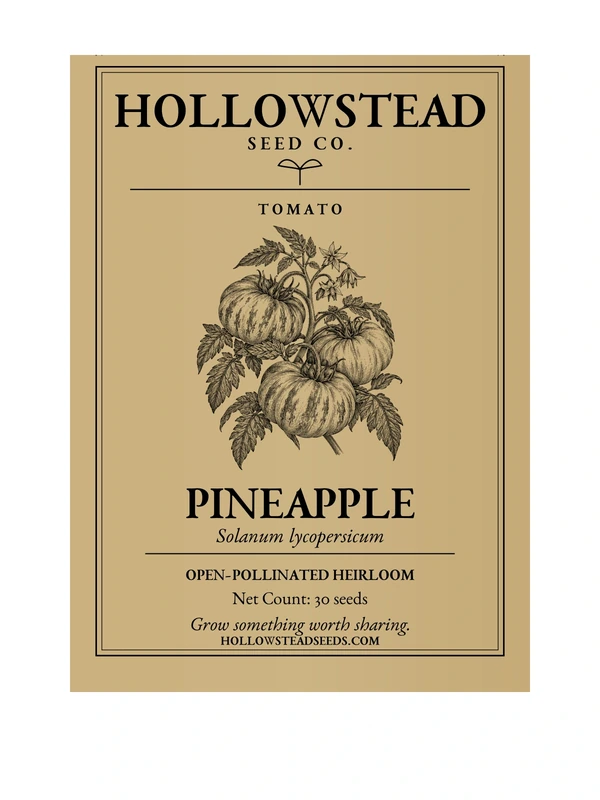
HOLLOWSTEAD SEED
Pineapple Tomato Seeds
$4.49KEEP LEARNING
Related growing guides
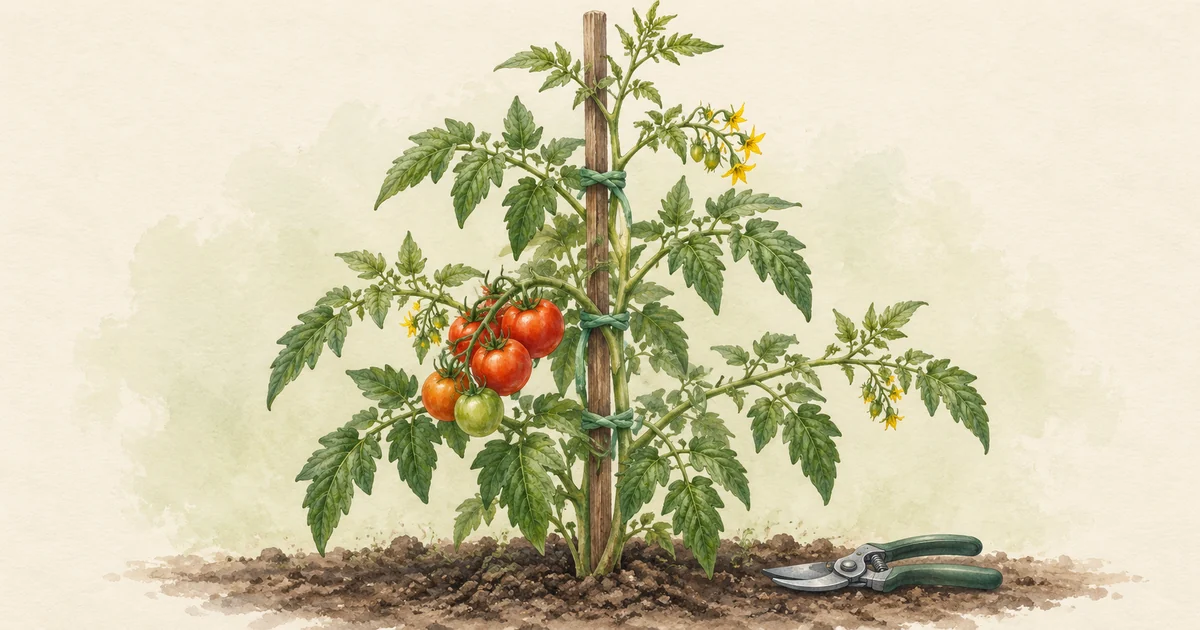
TOMATO SUPPORT & PRUNING
How to Support and Prune Indeterminate Tomatoes
Choose a cage, stake, or string system for Black Krim, Black Cherry, Yellow Pear, or Pineapple. Identify suckers, keep useful foliage, and distinguish indeterminate training from determinate care.
Read the guide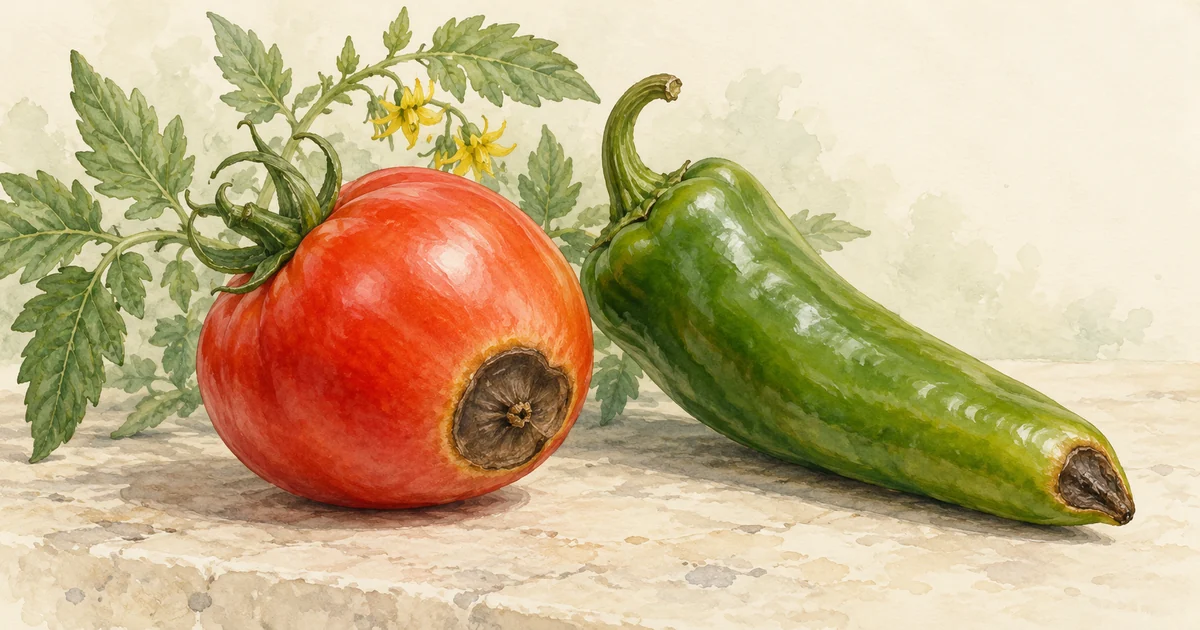
TOMATO & PEPPER PROBLEMS
Blossom-End Rot in Tomatoes and Peppers: What to Check
A dark fruit tip calls for a diagnosis, not an automatic dose of calcium. Check symptom location, root-zone moisture, and feeding history, then protect the next developing fruit.
Read the guide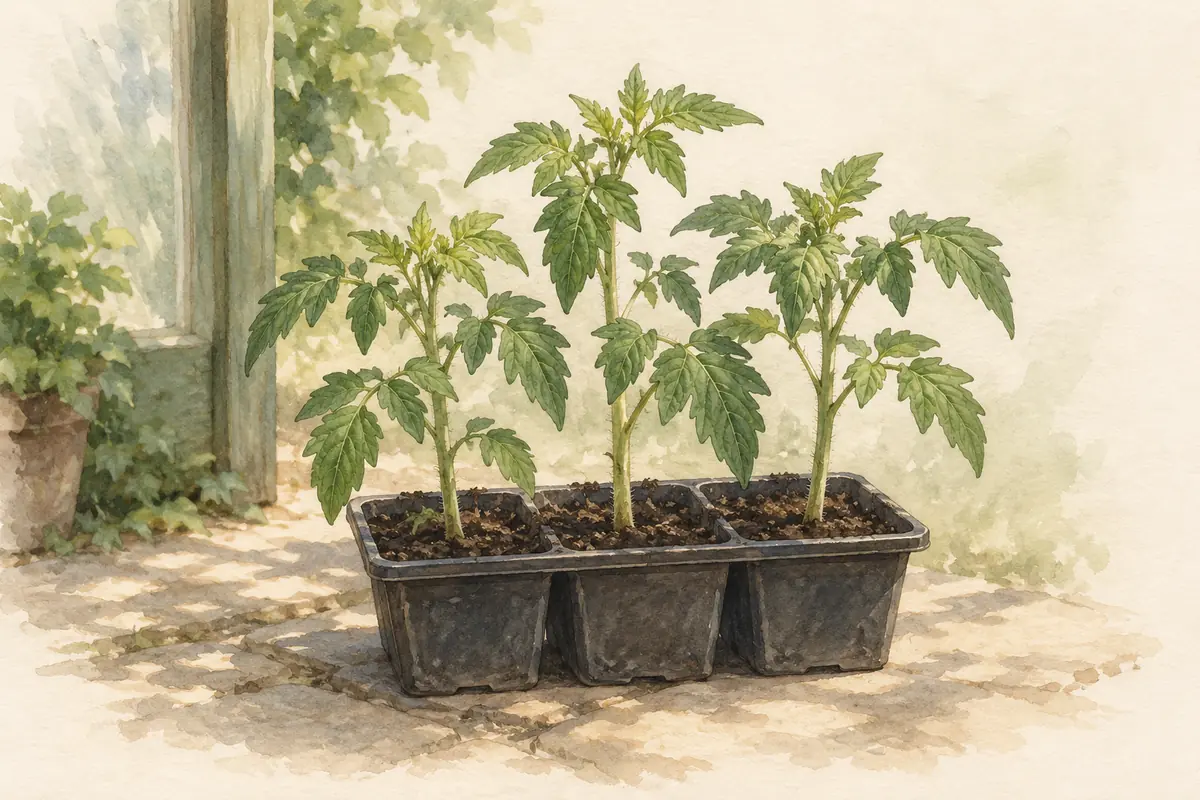
TRANSPLANTING
How to Harden Off Tomato Seedlings Without Stunting Them
Indoor tomato seedlings need time to adjust to full sun, wind, temperature swings, and faster drying. This guide explains a flexible hardening-off process that protects plants without deliberately starving or stunting them.
Read the guideFrequently asked questions
Can I plant two tomatoes in one pot?
This guide starts with one plant per container. A shared planter needs substantially more volume, support, and access; squeezing two plants into a one-plant pot removes the buffer you were trying to create.
Is Black Cherry a dwarf because its fruit is small?
No. Hollowstead’s Black Cherry is an indeterminate tomato. Plan for the vine, not the diameter of the fruit.
Should I water every morning?
Check every morning as a routine, then water according to the mix and conditions. A hot, mature plant may need another check later; a still-wet pot does not need water just because it is morning.
Should I remove all suckers from Principe Borghese?
No. The current Hollowstead listing is determinate. Preserve its productive side growth and use support rather than routine single-stem pruning.
Sources & further reading
- University of Maryland Extension — Types of Containers for Growing Vegetables
- University of New Hampshire Extension — What is the best way to grow tomatoes in a container?
- University of Maryland Extension — Maintaining Container Grown Vegetables
- Illinois Extension — Fertilizing container gardens
- Cornell Cooperative Extension — Vegetable Varieties for Gardeners: Yellow Pear tomato
- Cornell Cooperative Extension — Vegetable Varieties for Gardeners: Pineapple tomato
Hollowstead Growing Notes
A little help for your next growing season
Practical sowing advice, help choosing seeds, and occasional Hollowstead shop news. Usually one or two emails a month, plus a short welcome note.
Choose your topics and frequency after you confirm. Our guides and planting calendar are always free.