
TOMATO GUIDE
Black Cherry Tomato Growing Guide
Black Cherry produces small dusky tomatoes on a full-size indeterminate vine. Learn how the plant grows, how to judge ripeness, what causes splitting, and whether it fits your garden.
TomatoesVariety guideBeginner → advanced
Published by Hollowstead Seed Co. · How this guide is prepared
Quick answer
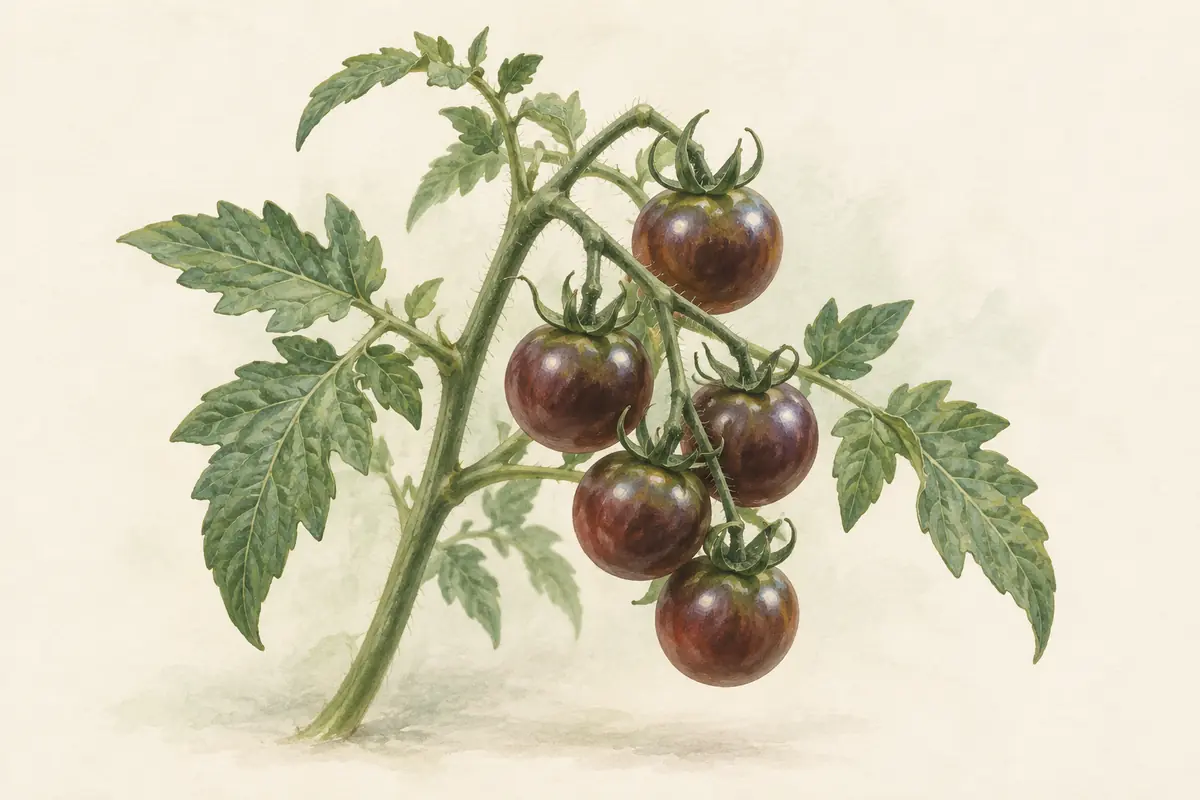
Black Cherry gives you the fruit size of a cherry tomato without the plant size of a compact patio tomato. The current Hollowstead listing gives about 75 days from transplant. Published cultivar references span roughly 65–75 days and describe approximately 1-inch fruit on an indeterminate vine.[1][2]
Published descriptions commonly call the fruit sweet, rich, complex, or full-flavored. Those are useful expectations, but taste is subjective; Hollowstead treats them as cultivar descriptions rather than guaranteed flavor outcomes.[1][3]
For the gardener, the important facts are more concrete: plan on a vigorous vine, install substantial support early, pick repeatedly through the season, and pay attention to moisture consistency as fruit begins ripening. Small tomatoes can still split when water availability changes abruptly.
Black Cherry at a glance
| Trait | What to expect |
|---|---|
| Type | Open-pollinated dark cherry tomato |
| Plant habit | Indeterminate |
| Fruit | Roughly 1-inch dusky purple/red-brown cherry tomatoes |
| Maturity | Current Hollowstead listing: ~75 days from transplant; published references ~65–75 |
| Support | Strong cage or trellis |
| Harvest style | Repeated cluster picking over an extended season |
| Primary use | Fresh snacking, salads, roasting, mixed tomato dishes |
| Small-space fit | Fruit is small; vine is large—container possible with support |
| Start indoors | About 6–8 weeks before transplant; ¼ inch deep; 75–85°F germination medium |
| Current listing spacing | 24–36 inches between plants |
SAVE FOR SOWING DAY
Five-step crop plan for Black Cherry
Open the sow-to-harvest plan
- StartStart indoors about 6–8 weeks before planting out; sow ¼ inch deep in a 75–85°F germination medium. Guide details
- PlantHarden and transplant after frost danger, warm soil and nights consistently above about 50°F; anchor a sturdy cage or trellis. Guide details
- MaintainGuide flexible shoots onto support and check moisture below the surface as fruit fills, especially in a pot. Guide details
- HarvestPick dark red-purple/brown, full-size fruit with slight give that releases without wrenching; revisit clusters often. Guide details
- Next sowing or seedProtect unopened flower clusters and mark resulting fruit for seed identity; clean, dry and label seed by parent and lot. Guide details
- Space
- Allow 24–36 inches and substantial support: small fruit grow on a large indeterminate vine.
- Timing
- Hollowstead lists about 75 days from transplant; repeated cluster picking extends into the suitable season, not to a fixed final date.
Full growing guidehttps://hollowsteadseeds.com/black-cherry-tomatoes-guide/Seed packethttps://hollowsteadseeds.com/product/black-cherry-tomato-seeds/Find planting dates by ZIP code
Variety reference photo
From seed to an established plant
Start indoors about 6–8 weeks before your likely planting-out date, sow ¼ inch deep, and keep the germination medium around 75–85°F. Expect roughly 7–14 days for emergence in good conditions; the packet estimate is not a germination guarantee. Remove a humidity cover when seedlings emerge and give strong overhead light.
Pot up once true leaves and roots are developing, before the plug becomes tightly root-bound. Choose a stocky transplant with a root ball that holds together, then harden gradually over about 7–14 days. Transplant after frost danger, into warm soil, with nights consistently above about 50°F. Healthy tomato stems can be planted deeper after lower leaves are removed; keep leaves above the soil.[8]
The current Hollowstead spacing is 24–36 inches between plants. Favor the wider end with cages or humid weather, and leave an accessible path between rows. Install the support while planting so later stakes do not cut established roots. For the complete light, watering and feeding setup, use the tomato starting guide.
Where did Black Cherry come from?
Victory Seed Company attributes the variety’s introduction to the late Vincent Sapp, co-founder of Tomato Grower’s Supply Company, and says Black Cherry was introduced in 2003 from a reported natural occurrence.[3]
Tomato Growers Supply calls its Black Cherry a vigorous indeterminate and says its founder selected for sweetness, increased crack tolerance and yield. These are the originator’s selection aims, not measured resistance or a yield forecast for this packet.[13]
Seed Savers Exchange has distributed Black Cherry as an open-pollinated variety, and its catalog descriptions characterize the plant as vigorous, indeterminate, and covered in clusters of dark cherry fruit.[1]
A classification note
Cornell’s Vegetable Varieties for Gardeners page currently labels Black Cherry “Hybrid,” while Seed Savers Exchange and Victory describe it as open-pollinated.[1][2][3]
Grow Black Cherry as an open-pollinated, indeterminate tomato. Seed Savers Exchange and Victory support that classification; the conflicting Cornell database field does not change the care or seed-saving guidance here.[1][3]
What do Black Cherry tomatoes look like?
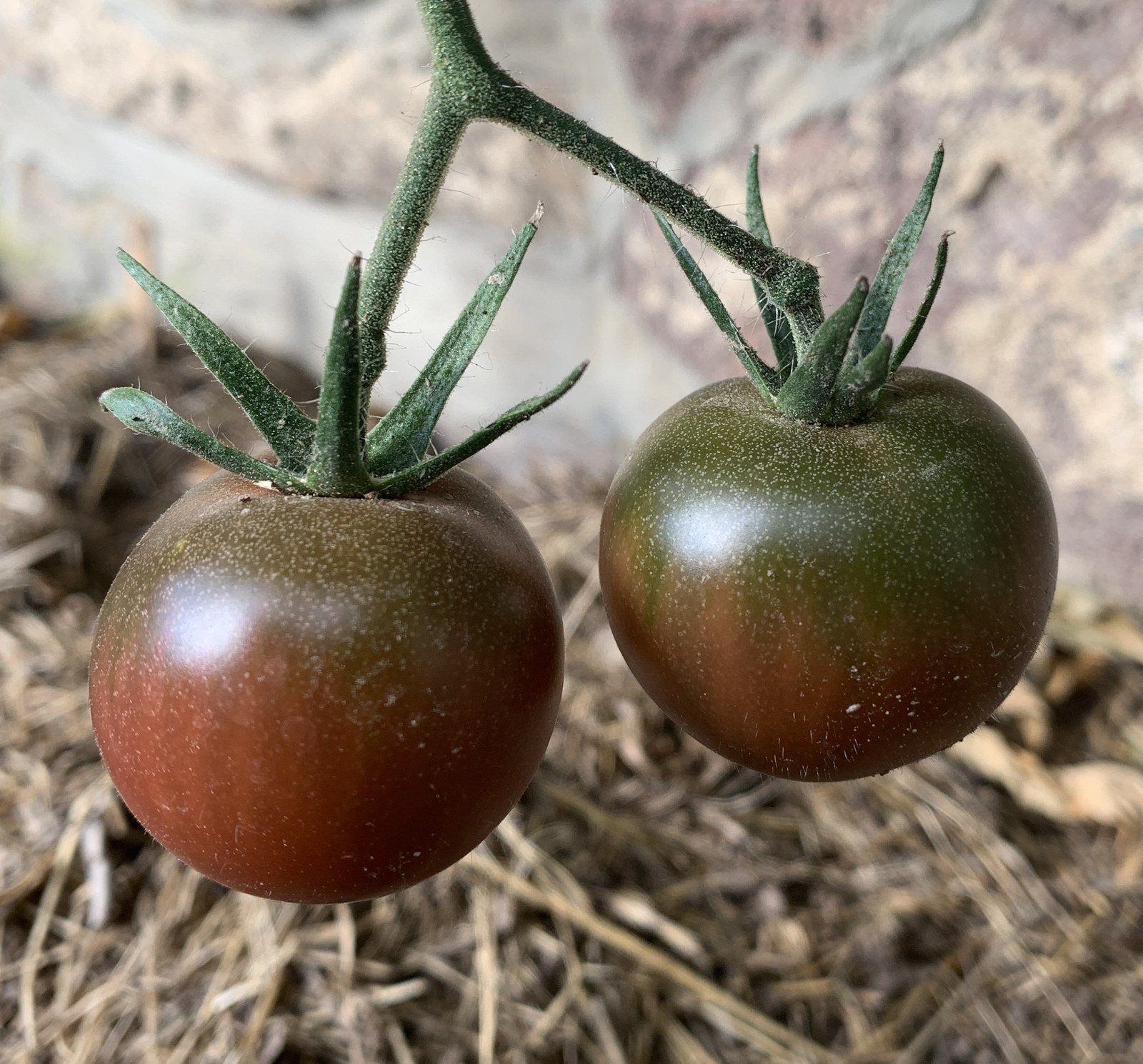
Expect round cherry fruit around an inch across, with coloration described as dusky red-purple, purple-black, or brown-purple depending on source and growing conditions.[1][2]
Like other dark tomatoes, “black” is a horticultural color category, not a literal black surface. Ripe fruit usually shows a dark blend of red, purple, and brown.
Why fruit color can vary
Pigment expression changes with:
- ripeness;
- light exposure;
- temperature;
- plant stress;
- individual fruit position within the canopy.
Use the plant’s own ripe fruit as your reference once harvest begins rather than insisting every tomato match a catalog photograph.
What does Black Cherry taste like?
Seed Savers Exchange describes Black Cherry as sweet and complex; Victory uses descriptors such as fruity, balanced, rich, sweet, and intense.[1][3]
Those descriptions tell you why people choose the cultivar, but they are not chemistry specifications. Two gardens can produce different flavor intensity because water, sun, ripeness, fertility, and weather all affect fruit quality.
Once harvest begins, compare a few sound fruit at different ripe shades. Note which color and texture you prefer so later picking follows your own garden’s conditions.
How large does a Black Cherry plant get?
Black Cherry is indeterminate.[1][2][3]
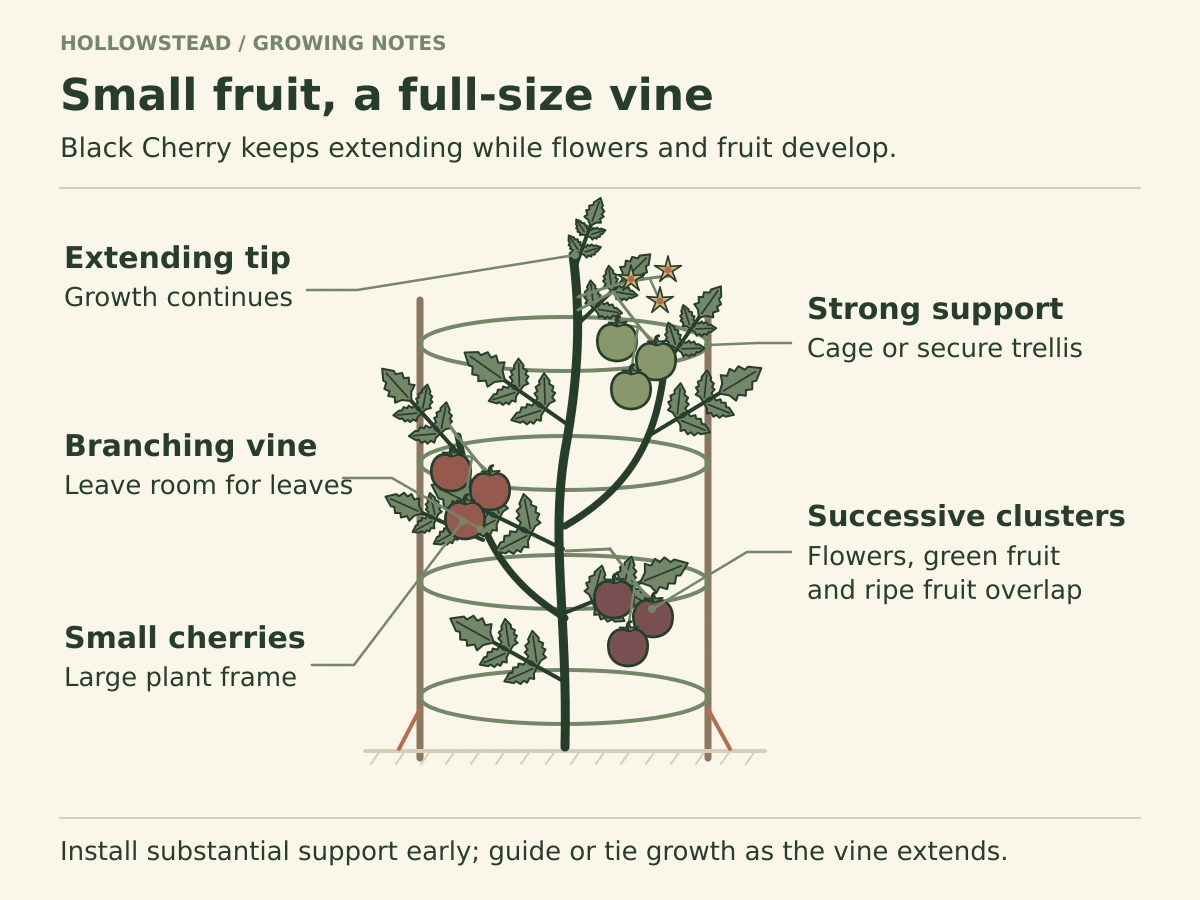
That means the main growing points continue extending and producing new flower clusters as long as conditions permit. A cherry tomato can therefore make a very large vine even though each fruit is tiny.
The most common planning mistake
Do not choose the support based on fruit size.
A “cherry tomato” label can make a gardener picture a small plant. Black Cherry needs the kind of support you would use for a full-size indeterminate tomato:
- heavy cage;
- tall stake system;
- strong trellis;
- vertical string system with a secure overhead frame.
 View full-size diagram
How does Black Cherry produce and ripen?
Indeterminate tomatoes flower and set fruit along continually growing stems. Black Cherry therefore behaves more like a repeated harvest crop than a once-and-done batch.
You may have flowers, green fruit, coloring fruit, and ripe fruit on the plant at the same time.
Pick frequently
Regular harvesting helps because:
- ripe fruit is less likely to split after sudden rain;
- you notice pest/disease issues earlier;
- clusters are easier to manage;
- fully ripe cherry fruit does not sit outdoors through multiple weather cycles.
During peak production, checking plants every day or two is often more practical than waiting for a weekly harvest.
How do you know when Black Cherry is ripe?
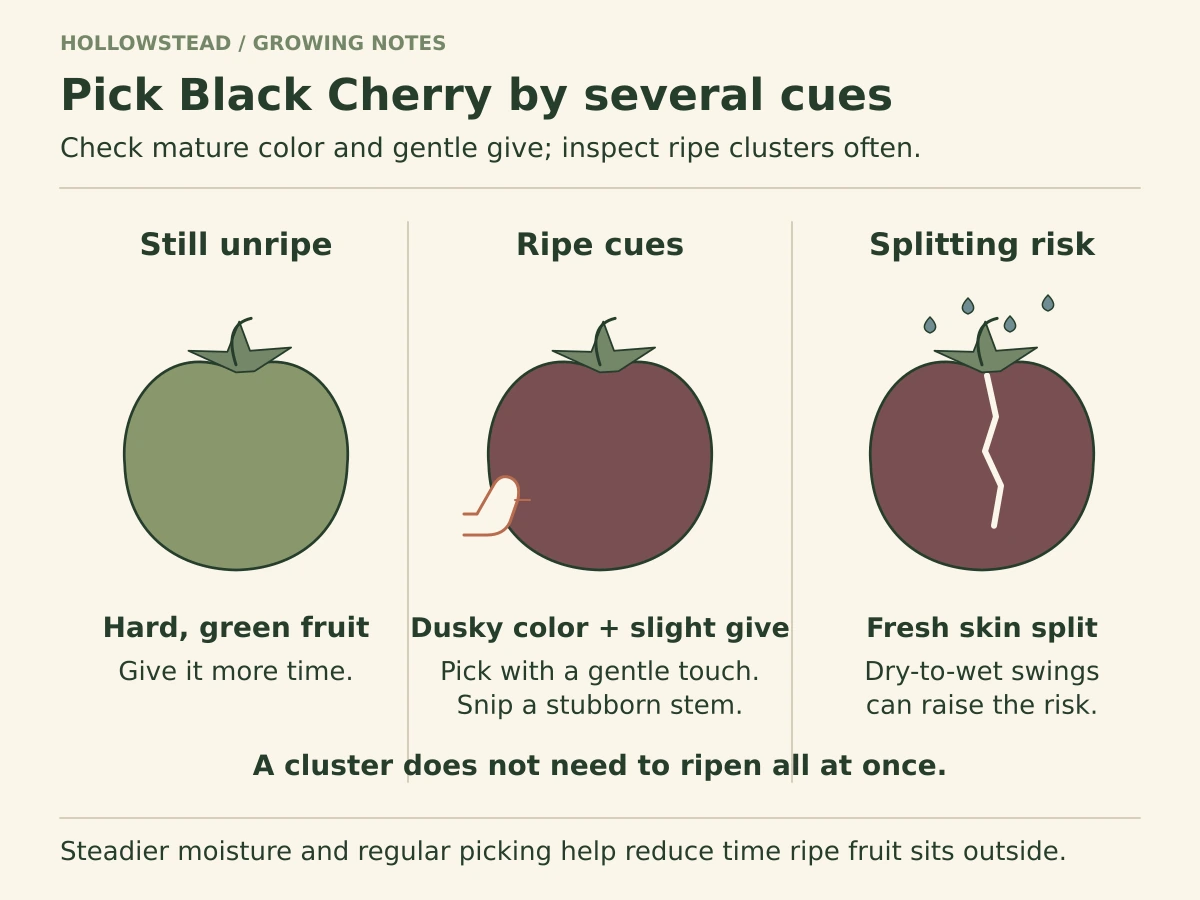
Look for a combination of:
- the characteristic dark red-purple/brown mature color;
- a slight softening compared with hard green fruit;
- full fruit size;
- easy removal without having to wrench the stem.
Do not wait for “black.” The fruit will remain visibly tomato-colored.
If the first ripe fruit tastes underdeveloped, allow later fruit to color a little further and compare. Your own plant becomes the best local color reference after the first few harvests.
Handle and store the harvest
Cradle ripe fruit rather than pulling on the vine; snip a stubborn stem. Keep sound, uncut fruit at room temperature out of direct sun until ripe. Refrigerate ripe fruit if you need to hold it longer, and refrigerate cut tomatoes promptly. Use soft or cracked fruit quickly only if it remains sound; discard moldy, leaking or decaying fruit. For shelf-stable sauce or canned tomatoes, use a tested preservation recipe rather than assuming this cultivar is acidic enough.
Why do Black Cherry tomatoes split?
Splitting is not unique to Black Cherry. Tomato fruit in general is prone to cracking when internal expansion outpaces the skin, especially during rapid dry-to-wet moisture shifts.[4][5]
Gardener reviews of Black Cherry sometimes mention splitting, but Hollowstead does not treat anecdotal frequency as a guaranteed cultivar defect. The evidence-supported management approach is the same:
- maintain steadier root-zone moisture;
- mulch after soil warms;
- avoid severe drought followed by heavy irrigation;
- harvest ripe fruit before a forecast deluge when practical;
- preserve enough foliage to reduce fruit temperature extremes.
Cherry fruit can split fast
Because cherries are often eaten fully ripe, the fruit may already have softer skin when a rain event hits. Frequent picking is useful insurance.
 View full-size diagram
Does Black Cherry need pruning?
Prune to fit the support and access you have. It is a management choice, not a prerequisite for an indeterminate plant to fruit.
Reasons to prune
- keep a narrow trellis system manageable;
- improve access between closely spaced plants;
- reduce a jungle of overlapping stems;
- simplify tying.
Reasons not to prune heavily
- foliage shades fruit;
- leaves produce the carbohydrates that support growth and fruiting;
- excessive pruning creates more sun exposure and labor;
- a large cage can support multiple stems without constant intervention.
For a home garden with room, Black Cherry can be allowed to branch within a strong cage. For a narrow row, one to three trained leaders may be easier.
Choose the support system before deciding how much to prune. Compare cages, stakes, and string training for indeterminate tomatoes.
Managing Black Cherry through the season
Use the plant’s stage to decide what needs attention. A vigorous vine can be healthy while one flower cluster fails or one ripe fruit splits; check the new growth and the next clusters before changing the whole routine.
| Stage | Look at | Useful next move |
|---|---|---|
| New growth after transplanting | Whether stems are reaching beyond the support | Guide flexible shoots into the cage or tie selected leaders loosely. Reinforce a small cage from outside; forcing thick stems back through it can break them.[12] |
| Flowering | Recent hot days and warm nights; whether the next flowers set | Sustained heat can interrupt pollination. Maintain root moisture and wait for more favorable weather rather than trying to force set with fertilizer.[10] |
| Fruit filling | Moisture below the mulch, not just the dry soil surface | Water deeply when needed. A pot can dry faster as the canopy grows, so reassess its watering rhythm during summer.[6][8] |
| First colored clusters | Individual fruit color and slight softening | Pick ripe cherries every day or two at peak harvest; a cluster need not ripen uniformly. Look inside the canopy and remove damaged fruit during the same pass. |
Containers and small gardens
A workable container example is one plant in a 15–20-gallon pot, at least about 18 inches deep, with free drainage and an independently secured tall cage or trellis. This generous recommendation suits a vigorous indeterminate vine; smaller minimum-volume categories are less forgiving of missed watering. Check root-zone moisture daily in summer and water until the full mix is wetted and excess drains.
University of Maryland lists about 2 gallons as a minimum reference for cherry tomatoes and about 5 gallons for standard tomatoes, but that category-level table includes compact cherries as well as larger vines.[6]
For a vigorous indeterminate Black Cherry plant, Hollowstead would choose substantially more root volume than the bare minimum, especially in hot climates.
A larger container buys you:
- slower drying;
- more stable root temperatures;
- more nutrient reserve;
- a better anchor for the support system.
For a pot-grown plant, work through container size, support, watering, and feeding for tomatoes as one plan.
Black Cherry vs. a compact patio cherry
The meaningful difference is not that dark tomatoes require a different seed-starting method. They do not.
Choose Black Cherry because you want:
- darker fruit color;
- an open-pollinated cultivar;
- the flavor profile associated with dark tomatoes;
- an indeterminate, season-long harvest.
Choose a compact red patio cherry instead if your priority is:
- a small balcony plant;
- minimal support;
- a predictable compact habit.
“Cherry tomato” describes fruit size, not plant architecture: plenty of red cherries also make large indeterminate vines. Compare named compact patio habits with this full-size vine when support space is limited.
Best kitchen uses
Black Cherry fits naturally anywhere you want whole or halved cherry tomatoes:
- eaten directly from the garden;
- salads;
- tomato-and-herb plates;
- pasta;
- roasting;
- skewers;
- mixed-color tomato dishes.
The dark skin/flesh color is especially useful when visual contrast matters.
Saving seed from this open-pollinated tomato
Keep the named line, not just viable seed
For a practical small-garden isolation method, place a breathable blossom bag over an unopened flower cluster before insects visit. Remove any already-open flowers from that cluster first. Gently tap the protected cluster to assist self-pollination, and mark the set fruit before removing the bag. Save only those marked fruit if varietal purity is your goal; nearby unbagged flowers can still cross. [9]
For variety maintenance, save from several healthy, typical plants when practical; label parent plant, supplier or lot, and year. Ferment the gel briefly, rinse, and dry the cleaned seed completely before cool, dry storage. Test a counted sample before the next sowing.[7]
Common Black Cherry problems
Start with the pattern, then choose an action. These are general tomato checks, not proof of a particular problem on your plant.
| What you see | Check first | What to do next |
|---|---|---|
| Ripe cherries split after rain | A dry-to-wet change in the root zone | Pick sound ripe fruit promptly; review irrigation and mulch. Do not respond by letting the next crop dry out severely.[4][5] |
| Leaves roll upward but stay green | Heat, moisture stress, and whether new growth remains normal | Correct the growing conditions and observe. Leaf rolling alone does not identify an infection.[11] |
| Small spots spreading on lower leaves | Both leaf surfaces, recent wet weather, and progression upward | Keep water off the foliage and compare the pattern with an Extension diagnostic guide before choosing a treatment.[8][11] |
| Tiny pale speckles rather than broad color changes | Leaf undersides for mites or fine webbing | Use a hand lens if available; identify the pest before spraying. A general yellow-leaf diagnosis can miss feeding damage.[11] |
Large vine, small fruit? That is normal for Black Cherry. Manage excess stems to suit the support while retaining healthy canopy. If flavor disappoints, compare fruit at full ripeness and record the weather and watering pattern before judging one harvest as the cultivar’s limit.
Black Cherry and the other Hollowstead tomatoes
| Variety | Fruit and kitchen role | Habit and support | Harvest and management |
|---|---|---|---|
| Black Cherry | About 1-inch dusky cherries for snacking and salads | Indeterminate; substantial support for a full-size vine | Frequent cluster picking; watch splitting. Container growing is possible with enough root volume and water. |
| Black Krim | Large dusky, juicy slicer; about 8 oz is a published reference | Indeterminate; substantial support and working space | Pick individual ripe fruit through the season; judge dark color and watch cracking. Containers need generous root volume. |
| Principe Borghese | About 1–2 oz, relatively dry, meaty fruit for roasting, sauce, and drying | Compact determinate in the current listing; support the fruit load | Organize small-fruit kitchen batches; one plant per generous pot is a container option. |
| Yellow Pear | Small yellow pear-shaped fruit, about 1–2 inches long, for fresh eating | Indeterminate; substantial support despite small fruit | Repeated fresh picking; judge yellow ripeness. Containers still need room for a full-size vine. |
| Pineapple | Large golden-and-red bicolor slices for fresh plates and sandwiches | Indeterminate; substantial support for heavy fruit | Allow time for the 85–90-day first-ripe estimate from transplant; use bicolor harvest cues. |
Yellow Pear adds yellow, pear-shaped fruit to the fresh-harvest choices. Its indeterminate habit needs substantial support even though the fruit is small; Cornell describes fruit about 1½ inches long and a main-season maturity range.[14] Choose it for shape and color in salads or snacking, and see Yellow Pear Tomato Seeds for the packet. For large golden-and-red slices, compare Pineapple with Black Krim’s dark-slicer role; both need room and sturdy support.
Who should grow Black Cherry?
Black Cherry is a strong choice if you want:
- a dark-colored cherry tomato;
- a long harvest instead of one concentrated batch;
- an open-pollinated cultivar;
- a plant that can use a tall cage or trellis;
- frequent fresh eating.
Choose something else if you specifically need a compact patio cherry or a determinate processing crop.
Sourced grower observations
These are attributed experiences from other growers, checked against the linked horticultural references. They are not Hollowstead trials of the seed offered here.
A Virginia zone 6b Seed Savers Exchange member reports fruit cracking after rain. That is one grower’s experience, not a cracking rate for this lot. If ripe clusters are developing ahead of wet weather, inspect and harvest sound ripe fruit promptly; Minnesota Extension identifies shifts in water availability as a common cracking factor.
GROW THESE TOMATOES
Put the guide to work.
Choose a variety that fits the way you want to grow and harvest, then use the guide above as your reference through the season.
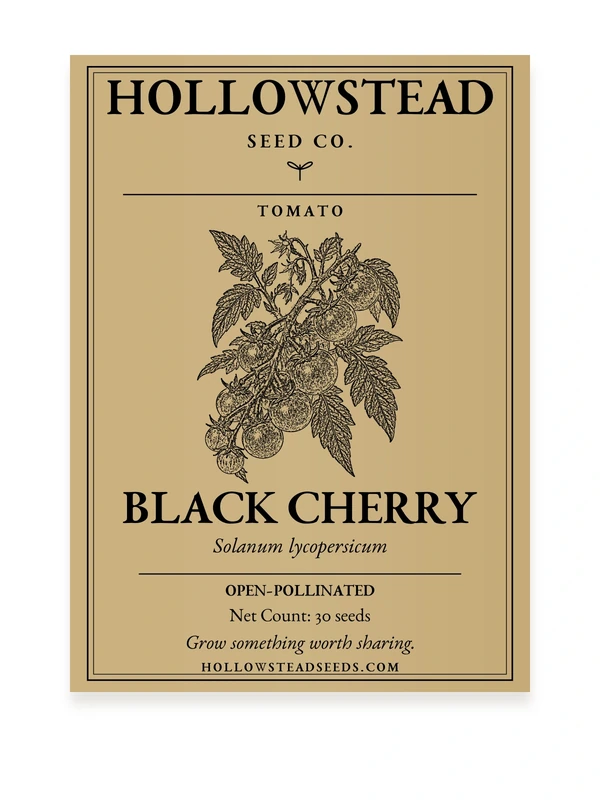
HOLLOWSTEAD SEED
Black Cherry Tomato Seeds
$4.49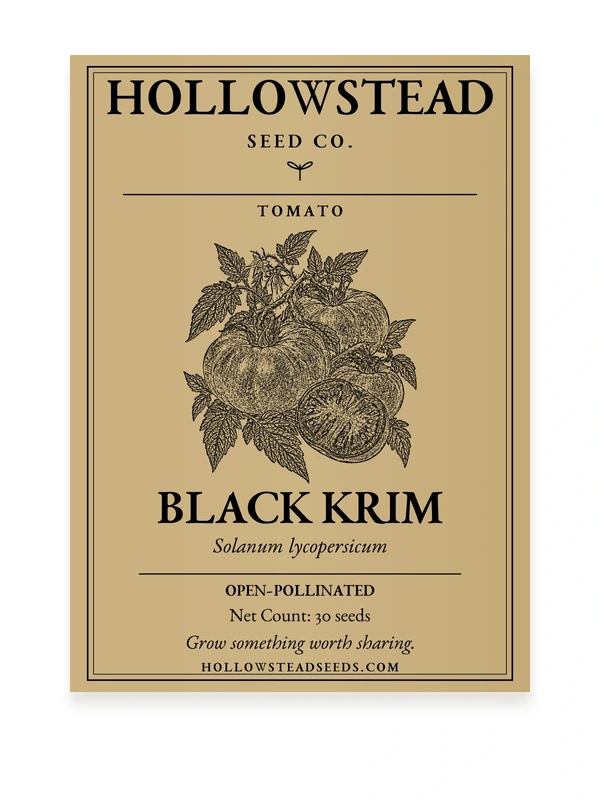
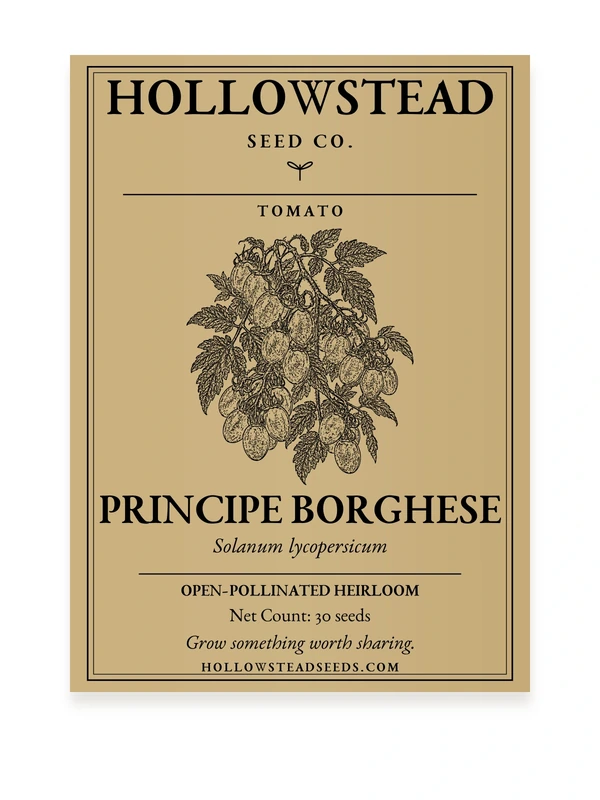
HOLLOWSTEAD SEED
Principe Borghese Tomato Seeds
$4.49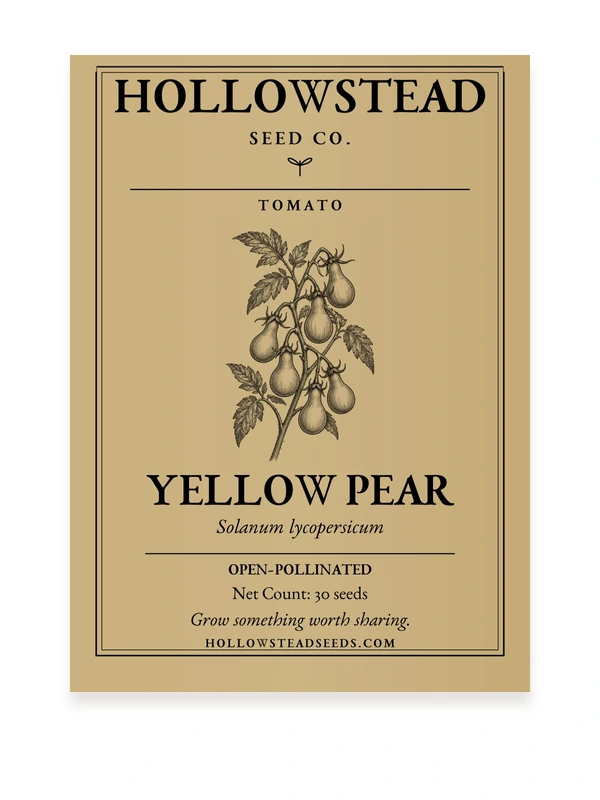
HOLLOWSTEAD SEED
Yellow Pear Tomato Seeds
$4.49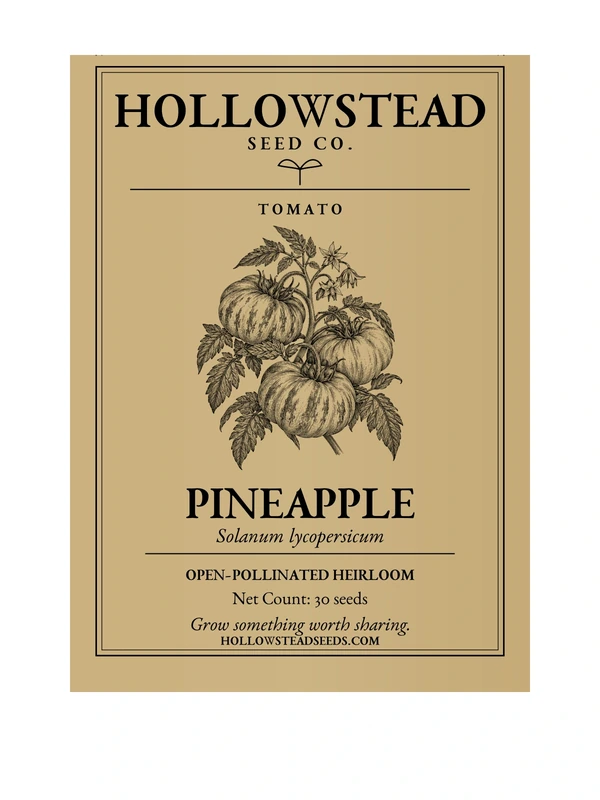
HOLLOWSTEAD SEED
Pineapple Tomato Seeds
$4.49KEEP LEARNING
Related Hollowstead guides

SEED STARTING
The Complete Guide to Growing Tomatoes From Seed
Start tomato seeds with confidence. This guide covers the quick version first, then goes deep on temperature, light, watering, potting up, hardening off, transplant timing, containers, and common seedling problems.
Read the guide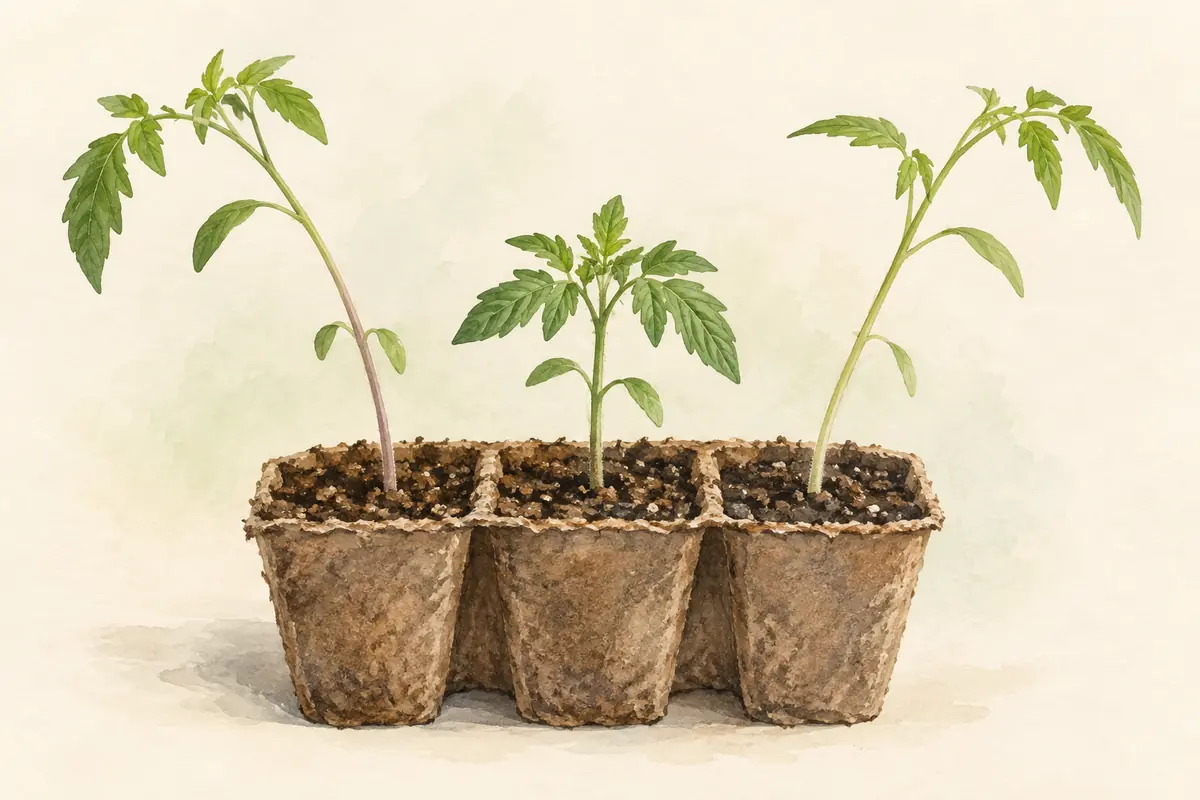
TROUBLESHOOTING
Tomato Seedlings Are Leggy: Causes, Fixes & Prevention
Leggy tomato seedlings usually mean the plant is growing faster than the available light can support. Learn how to diagnose the cause, rescue recoverable plants, and prevent the problem next time.
Read the guide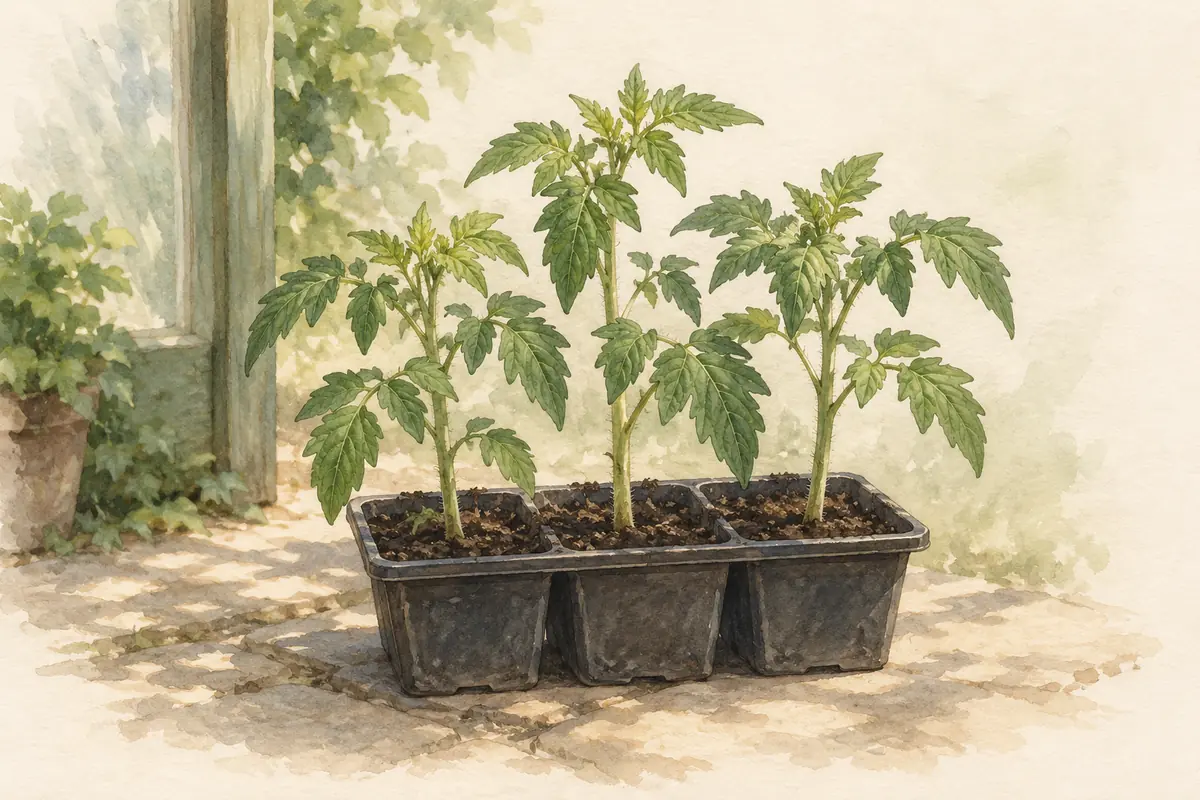

TRANSPLANTING
How to Harden Off Tomato Seedlings Without Stunting Them
Indoor tomato seedlings need time to adjust to full sun, wind, temperature swings, and faster drying. This guide explains a flexible hardening-off process that protects plants without deliberately starving or stunting them.
Read the guideFrequently asked questions
Is Black Cherry determinate?
Is Black Cherry open-pollinated?
How long does Black Cherry take to ripen?
Does Black Cherry need a cage?
It needs some form of strong support. A substantial cage is convenient, but a stake or trellis system works too.
Can I grow Black Cherry in a five-gallon bucket?
You can, but a vigorous indeterminate plant becomes much easier to keep watered and supported with more root volume. A five-gallon container is better understood as a minimum reference than an ideal target.
Why are my Black Cherry tomatoes brown instead of black?
Normal. Mature fruit is typically dusky purple-red/brown rather than literally black.
Sources & further reading
- Seed Savers Exchange. Black Cherry catalog description. Current variety listing; 2018 catalog also records approximately 1-inch fruit and indeterminate habit.
- Cornell Vegetable Varieties for Gardeners. Black Cherry Tomatoes. https://vegvariety.cce.cornell.edu/main/detail.php?filterBy=0&variety_id=3136
- Victory Seed Company. Black Cherry Tomato. https://victoryseeds.com/products/black-cherry-tomato
- University of Minnesota Extension. Tomato — Cracks in fruit. https://apps.extension.umn.edu/garden/diagnose/plant/vegetable/tomato/fruitcracks.html
- Penn State Extension. Why Are My Tomatoes Cracking and What Can I Do About It? https://extension.psu.edu/why-are-my-tomatoes-cracking-and-what-can-i-do-about-it
- University of Maryland Extension. Growing Vegetables in Containers and Salad Tables. https://extension.umd.edu/resource/growing-vegetables-containers-and-salad-tables
- University of Minnesota Extension. Saving vegetable seeds. https://extension.umn.edu/garden-and-home/yard-and-garden/gardening-in-minnesota/saving-vegetable-seeds
- University of Minnesota Extension — Growing tomatoes in home gardens https://extension.umn.edu/garden-and-home/yard-and-garden/gardening-in-minnesota/growing-tomatoes
- Seed Savers Exchange — Growing and saving tomato seeds https://seedsavers.org/grow-tomato/
- University of Maryland Extension. Tomato flower and fruit-set interruption during sustained heat. https://www.extension.umd.edu/resource/expect-poor-fruit-set-tomatoes-week
- University of Maryland Extension. Leaf rolling, leaf spots, and mite-feeding symptoms in tomatoes. https://extension.umd.edu/resource/key-common-problems-tomatoes
- University of Maryland Extension. Staking, caging, training, and harvesting tomatoes. https://extension.umd.edu/resource/growing-tomatoes-home-garden
- Tomato Growers Supply Company — Black Cherry originator-associated listing Founder selection aims and indeterminate habit of its own listing. https://tomatogrowers.com/products/black-cherry
- Cornell Cooperative Extension. Vegetable Varieties for Gardeners: Yellow Pear tomato. https://vegvariety.cce.cornell.edu/main/detail.php?filterBy=0&variety_id=1596
Hollowstead Growing Notes
A little help for your next growing season
Practical sowing advice, help choosing seeds, and occasional Hollowstead shop news. Usually one or two emails a month, plus a short welcome note.
Choose your topics and frequency after you confirm. Our guides and planting calendar are always free.