
TOMATO & PEPPER PROBLEMS
Blossom-End Rot in Tomatoes and Peppers: What to Check
A dark fruit tip calls for a diagnosis, not an automatic dose of calcium. Check symptom location, root-zone moisture, and feeding history, then protect the next developing fruit.
TomatoesTroubleshootingBeginner → advanced
Published by Hollowstead Seed Co. · How this guide is prepared
Quick answer
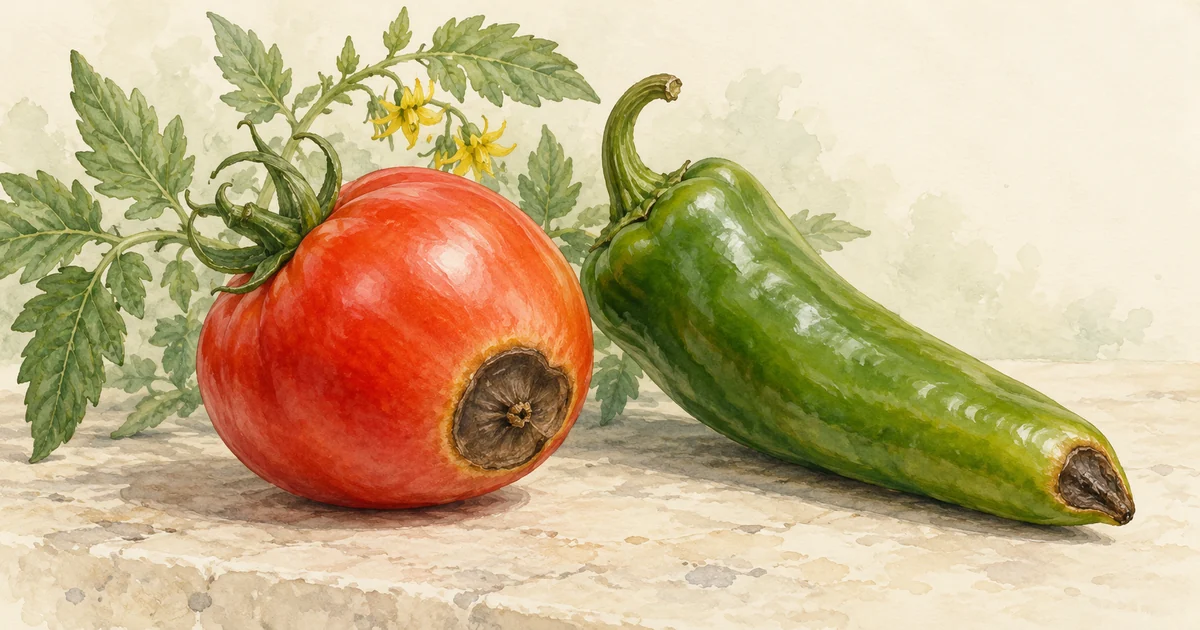
Blossom-end rot commonly appears as a dark, sunken, leathery patch at the end of a tomato opposite the stem; peppers can also be affected. It is associated with insufficient calcium in developing fruit. That does not automatically mean your soil needs more calcium. Moisture fluctuations and other growing stresses can interfere with supply.[1][2]
Inspect the symptom, check the root zone, and review recent watering and feeding before adding amendments. The goal is to improve conditions for developing fruit; an existing damaged patch will not become healthy tissue again.
At a glance
| Decision | Useful starting point |
|---|---|
| Typical clue | Sunken or leathery damage near the blossom end |
| First checks | Moisture pattern, drainage, root stress, and feeding |
| Calcium decision | Use a suitable soil/media assessment before adding amendments |
| Fruit already damaged | Do not expect the affected tissue to heal |
| Next observation | Whether later developing fruit remains sound |
Check location and texture before treating
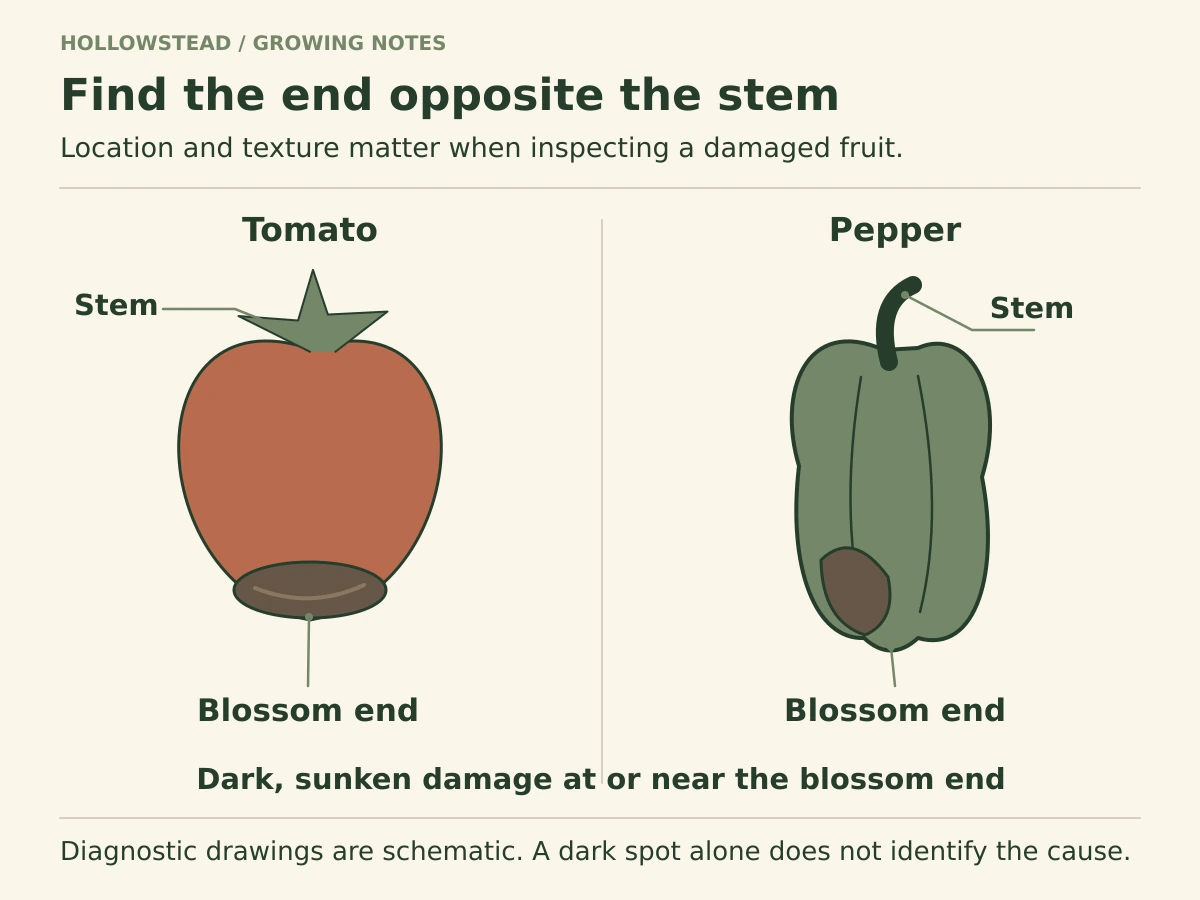
On tomatoes, look at the end where the flower was attached, opposite the stem. Maryland describes the familiar progression toward a dark, shrunken, leathery area, often on early developing fruit.[1] Pepper symptoms can involve the blossom end or nearby fruit wall, so use the whole pattern rather than the name alone.[3]
| What you see | What it suggests checking |
|---|---|
| A sunken, leathery area near the blossom end | Blossom-end rot and the root-zone moisture history |
| A pale, bleached patch on a strongly sun-exposed side | Sunscald and lost leaf protection |
| Holes, chewing, or visible insects | Feeding damage |
| Expanding rot or spots together with sick foliage or stems | A broader pest/disease diagnosis |
The comparison is a starting point, not a diagnosis from one sentence. Maryland’s tomato problem key shows a wider range of symptoms.[4] Take clear photos of the fruit, both sides of leaves, and the whole plant when seeking help.
Why calcium and watering belong in the same explanation
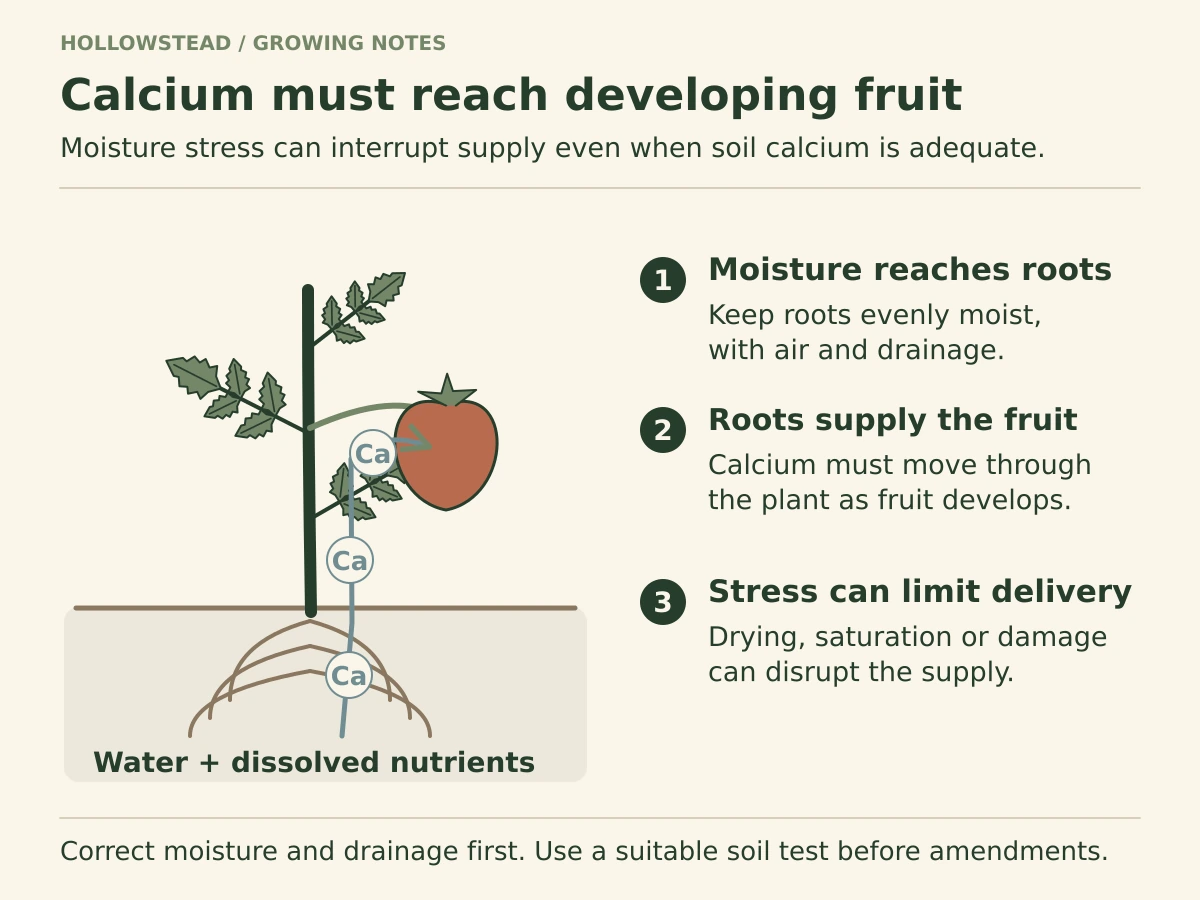
Calcium must reach the growing fruit. A soil test can show adequate calcium while the plant still experiences uneven supply under moisture stress. University of Minnesota’s irrigation guidance identifies inconsistent moisture as an important contributor to blossom-end rot.[2]
Review the period when the damaged fruit was developing. Did the pot repeatedly wilt dry? Did irrigation fail for a few days? Did heavy rain leave the roots saturated? Did a new fertilizer dose coincide with a burst of growth? The present appearance of the soil may not describe the conditions that caused the injury.
Check the actual root zone rather than assuming the whole bed received the same water. Two plants on the same line can differ if one emitter is blocked or one container drains differently.
What to do when you find the first affected fruit
- Confirm the pattern. Look for the location and texture described above, and inspect foliage for other problems.
- Check moisture below the surface. Inspect drainage as well as dryness. Correct an irrigation fault before adding fertilizer.
- Remove badly affected fruit. Maryland recommends removing affected fruit; keep checking the rest of the crop.[1]
- Review recent inputs. Record the fertilizer and dose already used before adding another product.
- Mark a small group of newer fruit. Recheck those as they develop so you can judge the next crop instead of repeatedly inspecting an old scar.
A photograph and a short dated note make this easier: “damage found; pot dry at midday; emitter cleared.” Avoid changing watering, fertilizer, pruning, and several supplements all at once unless there is a clear reason for each change.
Prevent moisture swings without keeping roots waterlogged
Water according to root-zone conditions and keep drainage functioning. In the ground, a suitable mulch can help moderate moisture changes. In pots, volume, plant size, exposure, and weather determine how often you need to check.[2][5]
Use the container-tomato watering routine or pepper container guide for a more specific plan. A weekly rule for a garden bed should not be copied directly to a mature tomato in a small, exposed pot.
After correcting a dry-down problem, maintain a consistent routine. Do not respond by leaving the planter permanently flooded. If the root zone stays wet and the plant remains distressed, investigate drainage and root health.
Calcium, eggshells, and Epsom salts
Use a soil test and local recommendations to decide whether ground soil needs lime or another amendment. Commercial potting mixes require a different assessment from mineral garden soil. Do not add several calcium products on the assumption that every fruit blemish proves a soil deficiency.[5][6]
Epsom salts supply magnesium and sulfur, not calcium. They are not a routine blossom-end-rot treatment. Minnesota Extension also explains that eggshells break down too slowly to serve as an immediate correction and that many garden soils already contain sufficient calcium.[6]
Recommendations about supplemental calcium vary with conditions. For a recurring problem, bring your soil/media information, irrigation history, and photos to Extension. A supplement cannot substitute for correcting a dry root zone or faulty irrigation.
Apply the same checks to peppers, then follow the new fruit
For Jimmy Nardello and Fish Pepper, check fruit damage separately from normal ripening color and variegation. A dark patch, a color change, and a dropped flower are different observations. If blossoms fall before fruit develops, use the pepper blossom-drop guide.
Keep supporting and caring for an otherwise healthy plant while checking later fruit. One affected cluster is useful evidence about the growing conditions; it is not, by itself, proof that the variety cannot grow in your garden. If damage continues despite a stable routine, seek a diagnosis instead of repeatedly increasing fertilizer.
GROW FROM SEED
Put this guide to work.
Choose a variety that fits the way you want to grow and harvest, then use the guide above as your reference through the season.
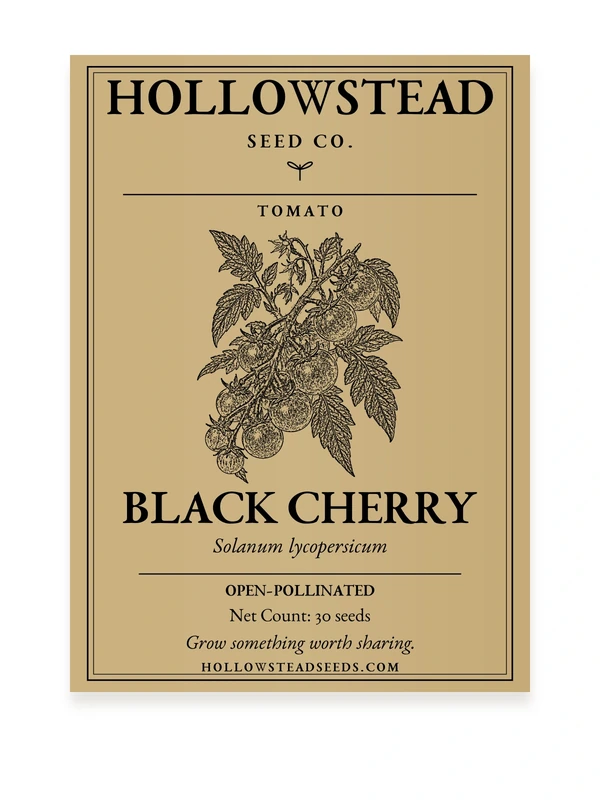
HOLLOWSTEAD SEED
Black Cherry Tomato Seeds
$4.49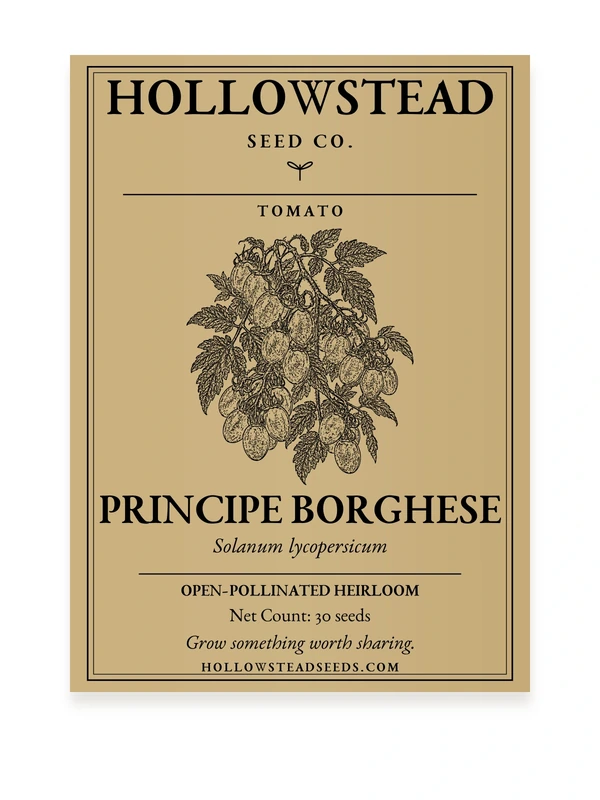
HOLLOWSTEAD SEED
Principe Borghese Tomato Seeds
$4.49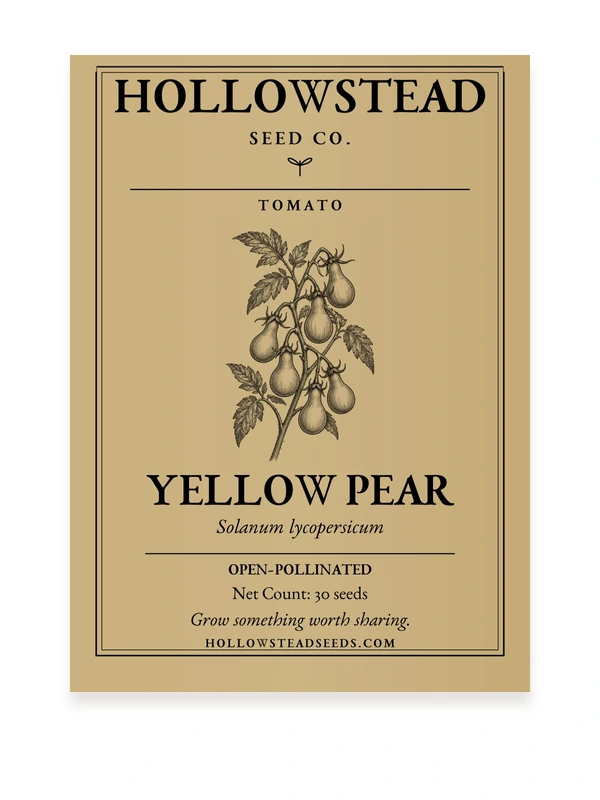
HOLLOWSTEAD SEED
Yellow Pear Tomato Seeds
$4.49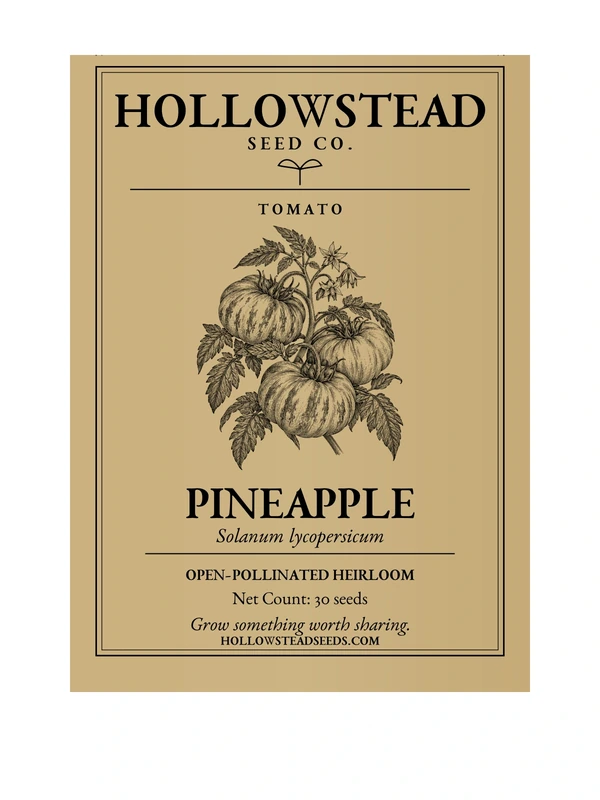
HOLLOWSTEAD SEED
Pineapple Tomato Seeds
$4.49KEEP LEARNING
Related growing guides
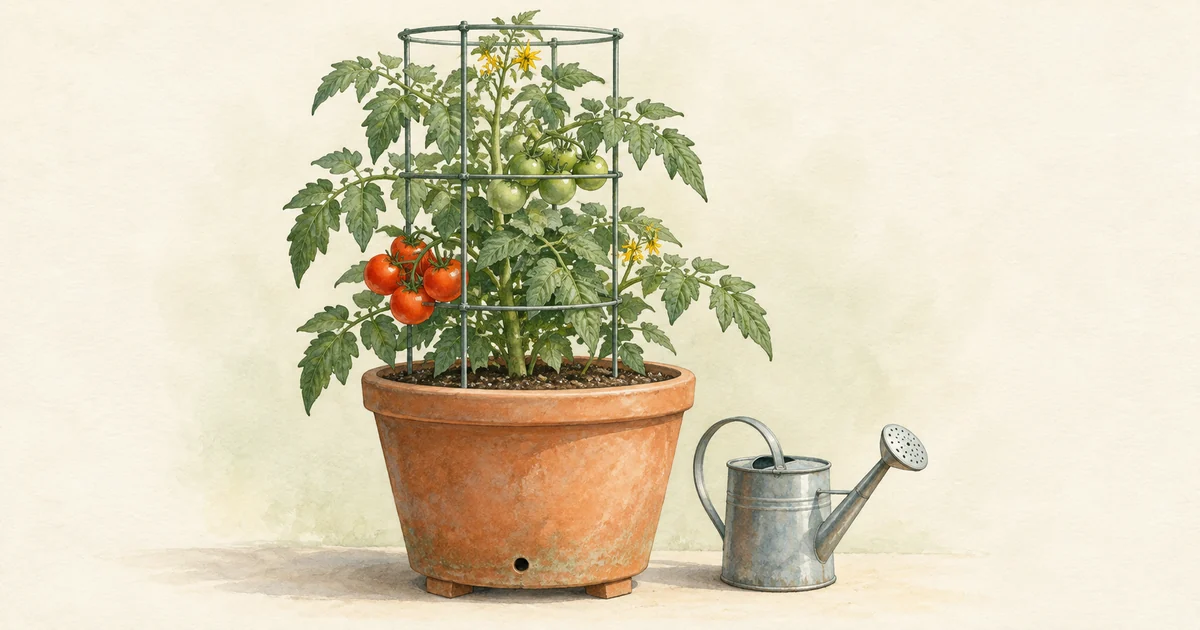
CONTAINER TOMATOES
Growing Tomatoes in Containers: Pots, Support, and Watering
Plan pots, support, and watering for all five Hollowstead tomatoes, including Yellow Pear and Pineapple. Compare growth habits, choose a generous root volume, and check moisture daily.
Read the guide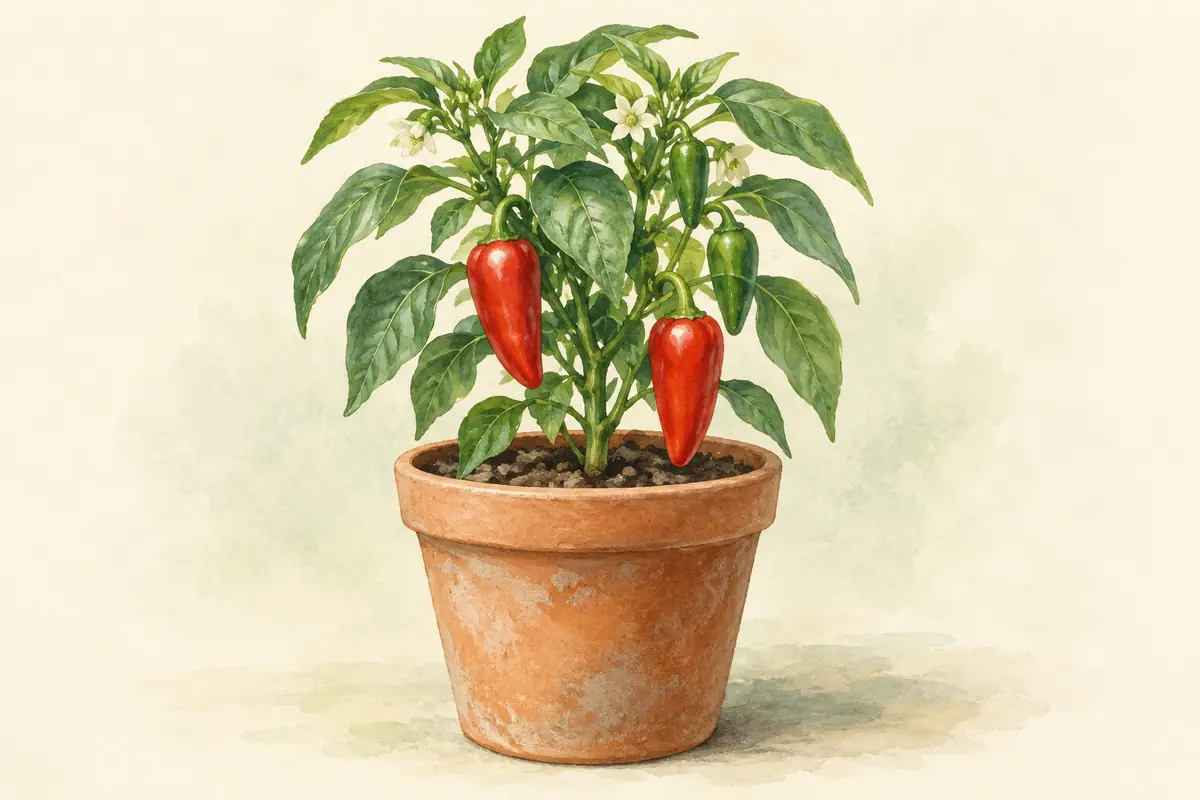
CONTAINER GUIDE
Growing Peppers in Containers
Grow productive peppers in containers with enough root volume, airy potting mix, drainage, sun, steady water, moderate fertilizer, branch support, root-zone heat management, and troubleshooting.
Read the guide
TROUBLESHOOTING
Why Pepper Flowers Fall Off or Don’t Set Fruit
Diagnose pepper blossom drop with temperature thresholds, moisture and fertility checks, pollination context, early-flower guidance, container heat clues, and a fast fruit-set decision chart.
Read the guideFrequently asked questions
Will the dark patch disappear after I water correctly?
No. Judge progress on subsequently developing fruit. Damaged tissue on the original fruit will not return to normal.
Is blossom-end rot contagious?
Blossom-end rot itself is a physiological disorder. Damaged fruit can also develop secondary decay, so do not use that fact to dismiss mold, soft rot, or symptoms elsewhere on the plant.
Does blossom-end rot prove that I need lime?
No. Soil calcium, pH, moisture, and root conditions must be considered together. Choose amendments using a suitable test and recommendations.
Should I remove leaves to dry out the fruit?
Removing healthy cover is not a blossom-end-rot treatment and can expose fruit to sunscald. Review watering and root conditions first.
Ready for the next sowing? Browse crop-by-crop growing guides or Hollowstead seed varieties.
Sources & further reading
- University of Maryland Extension — Blossom End Rot on Vegetables
- University of Minnesota Extension — Irrigation strategies for vegetables
- University of Minnesota Extension — Pepper fruit problem diagnosis
- University of Maryland Extension — Key to Common Problems of Tomatoes
- University of Maryland Extension — Maintaining Container Grown Vegetables
- University of Minnesota Extension — Do common soil health home remedies work?
Hollowstead Growing Notes
A little help for your next growing season
Practical sowing advice, help choosing seeds, and occasional Hollowstead shop news. Usually one or two emails a month, plus a short welcome note.
Choose your topics and frequency after you confirm. Our guides and planting calendar are always free.