
TOMATO GUIDE
Black Krim Tomato Growing Guide
Black Krim is a dark, indeterminate heirloom slicer with dramatic color and a reputation for rich flavor. Here is how to recognize ripe fruit, reduce cracking, support the vine, and decide if it belongs in your garden.
TomatoesVariety guideBeginner → advanced
Published by Hollowstead Seed Co. · How this guide is prepared
Quick answer
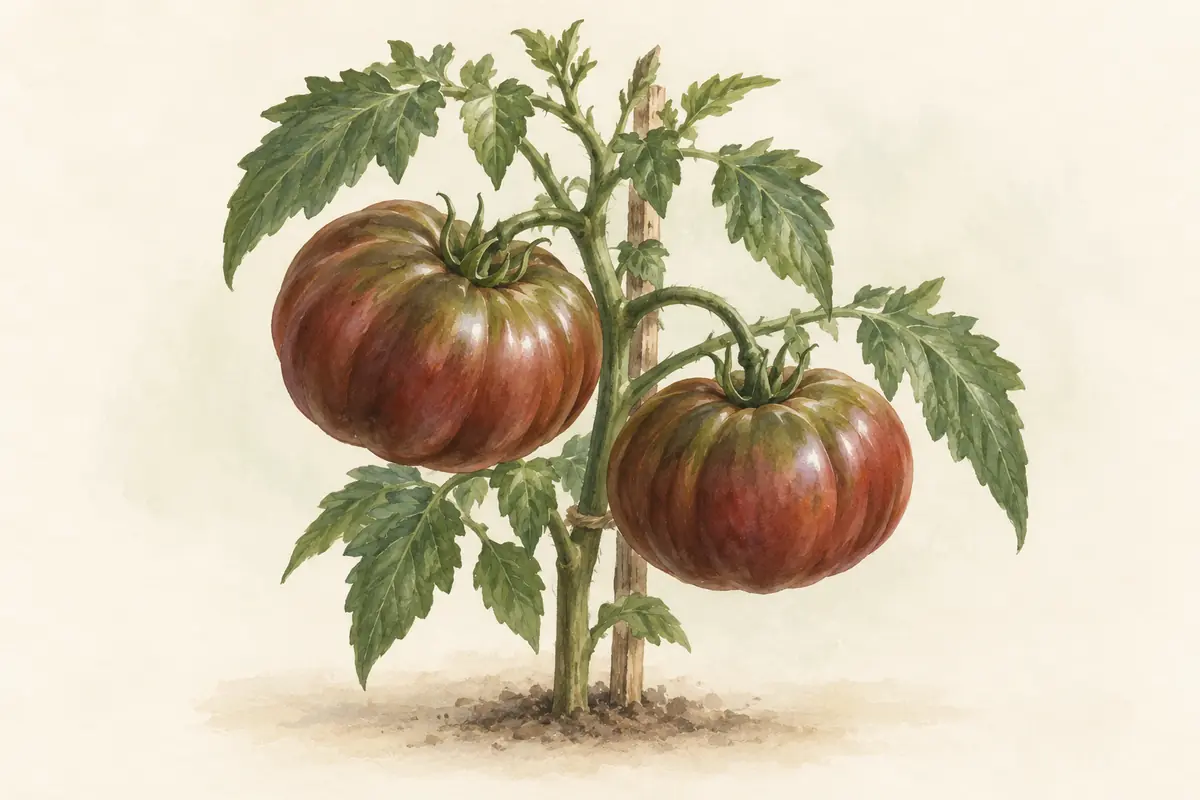
Black Krim is an open-pollinated, indeterminate heirloom tomato associated with the Crimean region. Expect a dark, flattened beefsteak with green-brown shoulders. The current Hollowstead listing gives about 75 days from transplant; Cornell’s approximately 80-day reference is a broader comparison, not a different harvest clock.[1][2][3]
Gardeners choose Black Krim for a very different experience from a standard red slicer: dusky violet-brown to purple-red fruit, large slices, and a flavor that seed-preservation and cultivar sources commonly describe as full, rich, or complex. Flavor is subjective, so Hollowstead treats those words as published cultivar descriptions, not laboratory facts.[2]
The two practical things to know before growing it are simple: give the vine real support, and expect a large heirloom tomato to be more vulnerable to cracking when water availability changes abruptly. Consistent soil moisture and timely harvesting can reduce cracking risk, but no watering schedule can completely remove weather or cultivar effects.[4][5]
Black Krim at a glance
| Trait | What to expect |
|---|---|
| Type | Heirloom, open-pollinated slicing/beefsteak tomato |
| Plant habit | Indeterminate |
| Fruit | Dark flattened-globe fruit, often around 8 oz but variable |
| Color | Violet-brown / purple-red / dark red-brown with green-brown shoulders |
| Maturity | Current Hollowstead listing: ~75 days from transplant; some references ~80 |
| Support | Strong cage, stake, or trellis |
| Harvest style | Repeated harvest through the season rather than one concentrated flush |
| Best fit | Gardeners prioritizing distinctive slicers and willing to manage a large vine |
| Container fit | Possible, but much easier in a large container with substantial support |
| Start indoors | About 6–8 weeks before transplant; ¼ inch deep; 75–85°F germination medium |
| Current listing spacing | 24–36 inches between plants |
SAVE FOR SOWING DAY
Five-step crop plan for Black Krim
Open the sow-to-harvest plan
- StartStart indoors about 6–8 weeks before a realistic planting-out window; sow ¼ inch deep in a warm 75–85°F medium. Guide details
- PlantHarden gradually, then set out after frost risk in warm soil when nights stay consistently above about 50°F; install a strong support. Guide details
- MaintainKeep the indeterminate vine supported and soil moisture steady; check ties, heavy clusters and cracking fruit. Guide details
- HarvestPick mature dusky fruit using lower-fruit color, gentler give and changed shoulders together; green-brown shoulders can be normal. Guide details
- Next sowing or seedMark healthy, typical parents; protect unopened flower clusters before pollen visits if keeping the line, then label and dry cleaned seed. Guide details
- Space
- Allow 24–36 inches between plants and a reachable path for a substantial cage or trellis.
- Timing
- Hollowstead lists about 75 days from transplant as a planning estimate; the planting window follows local frost and warm-night conditions.
Full growing guidehttps://hollowsteadseeds.com/black-krim-tomatoes-guide/Seed packethttps://hollowsteadseeds.com/product/black-krim-tomato-seeds/Find planting dates by ZIP code
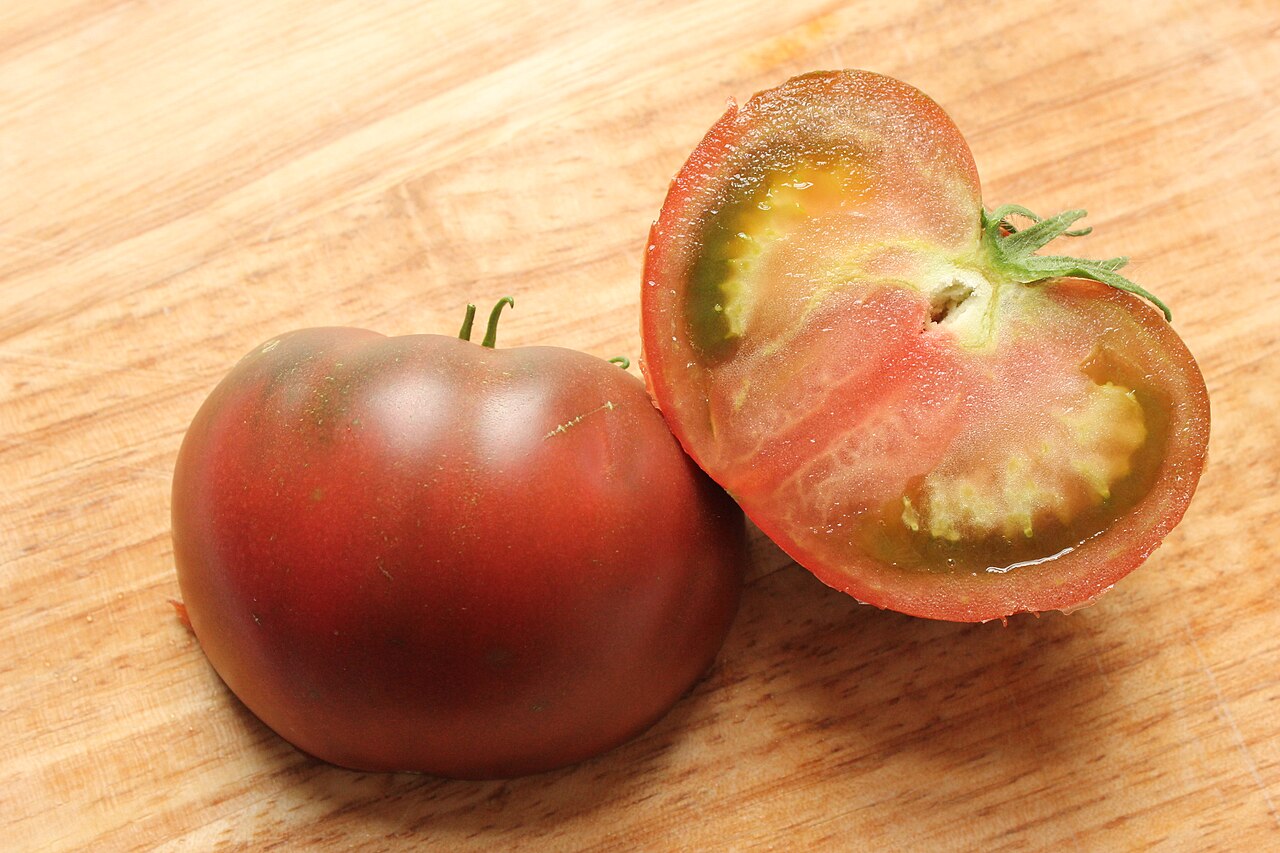
Variety reference photo
View cut Black Krim fruit
From seed to an established plant
Start indoors about 6–8 weeks before your likely planting-out date, sow ¼ inch deep, and keep the germination medium around 75–85°F. Expect roughly 7–14 days for emergence in good conditions; the packet estimate is not a germination guarantee. Remove a humidity cover when seedlings emerge and give strong overhead light.
Pot up once true leaves and roots are developing, before the plug becomes tightly root-bound. Choose a stocky transplant with a root ball that holds together, then harden gradually over about 7–14 days. Transplant after frost danger, into warm soil, with nights consistently above about 50°F. Healthy tomato stems can be planted deeper after lower leaves are removed; keep leaves above the soil.[9]
The current Hollowstead spacing is 24–36 inches between plants. Favor the wider end with cages or humid weather, and leave an accessible path between rows. Install the support while planting so later stakes do not cut established roots. For the complete light, watering and feeding setup, use the tomato starting guide.
Where does Black Krim come from?
Seed Savers Exchange identifies Black Krim—also called Black Crimea—as a variety introduced to SSE by Swedish seed collector Lars Olov Rosenstrom, with origin in the Crimean peninsula.[2] Rutgers lists its origin as Ukraine and classifies it as an heirloom, open-pollinated, indeterminate tomato.[1]
For a home gardener, the history is interesting but the genetics matter more: because Black Krim is open-pollinated, seed can potentially be saved true-to-type when cross-pollination is adequately controlled. That does not mean every seed collected from an open-pollinated tomato will automatically remain pure when multiple tomato cultivars are flowering nearby; seed-saving isolation and flower handling are a separate subject.
What do Black Krim tomatoes look like?
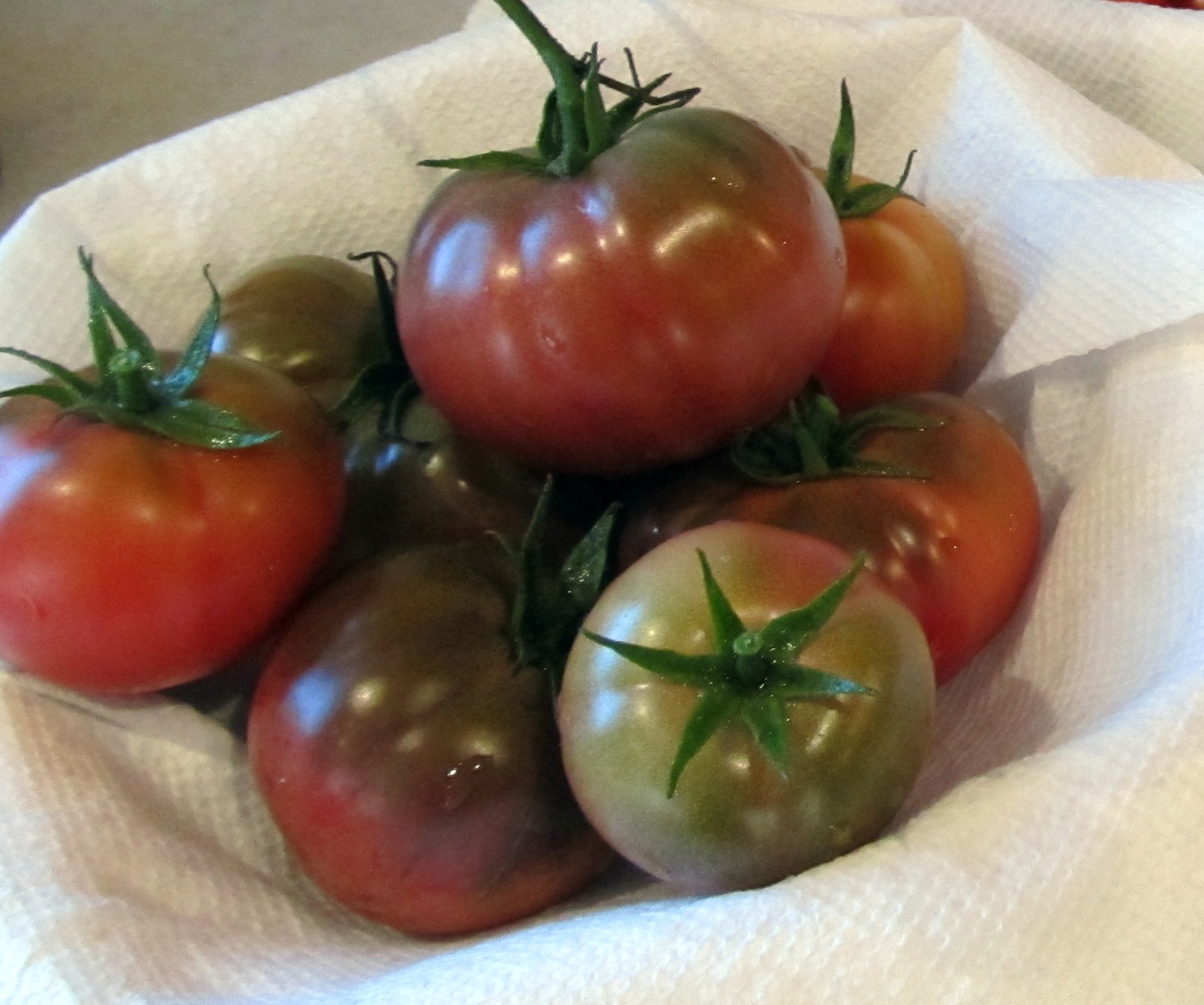
Black Krim is called a “black” tomato, but do not expect a jet-black fruit.
Published descriptions use colors such as:
Seed Savers Exchange notes that fruit can become very dark with sufficient sunlight and heat.[2] That is useful because Black Krim’s appearance can change with growing conditions. A gardener comparing their fruit with one perfectly lit catalog photograph may think something is wrong when the real fruit is simply showing a different balance of red, brown, purple, and green.
Why are the shoulders still green?
Green/brown shoulders are a documented characteristic in Rutgers and Cornell variety references.[1][3] The shoulder area near the stem may remain darker or greener than the lower fruit even as the tomato ripens.
Do not use “the whole fruit must turn one uniform color” as your ripeness test for Black Krim.
What does Black Krim taste like?
This is where seed catalogs often become too certain.
Seed Savers Exchange describes Black Krim as having “excellent full flavor,” while gardeners and seed companies often use words such as rich, complex, balanced, earthy, sweet, or even slightly salty.[2] Those descriptions are useful as a pattern, but taste depends on:
- harvest stage;
- temperature during ripening;
- watering;
- fertility;
- sunlight;
- the individual taster.
A better expectation is:
Black Krim is grown as a flavor-focused heirloom slicer, not as a firm shipping tomato.
Expect a juicy slicing fruit whose appeal is fresh eating—sandwiches, tomato plates, salads, bruschetta, and other uses where the fruit itself is the point.
How can you tell when a Black Krim tomato is ripe?
Dark tomatoes are easy to misread because “red” is not the only visual cue.
Use several cues together:
- The lower fruit has developed its mature dusky color. It should no longer look hard, flat green.
- The fruit feels slightly yielding rather than rock hard. Do not squeeze aggressively; use gentle pressure.
- The shoulder color has changed even if it remains green-brown. A mature shoulder often looks less raw-green than an immature fruit.
- The fruit separates more readily when harvested. This is supportive evidence, not a perfect test.
- You know the fruit has reached full size for that plant. Fruit size is variable, so compare with neighboring fruit on the same vine.
Why harvesting by color alone fails
A fully colored Black Krim does not necessarily match somebody else’s photograph. Sun exposure and temperature affect pigment expression, and green shoulders are part of the variety’s appearance.[1][2]
If you repeatedly wait for the shoulders to become uniformly red, you may leave fruit on the vine longer than necessary and increase the opportunity for cracking or overripeness.
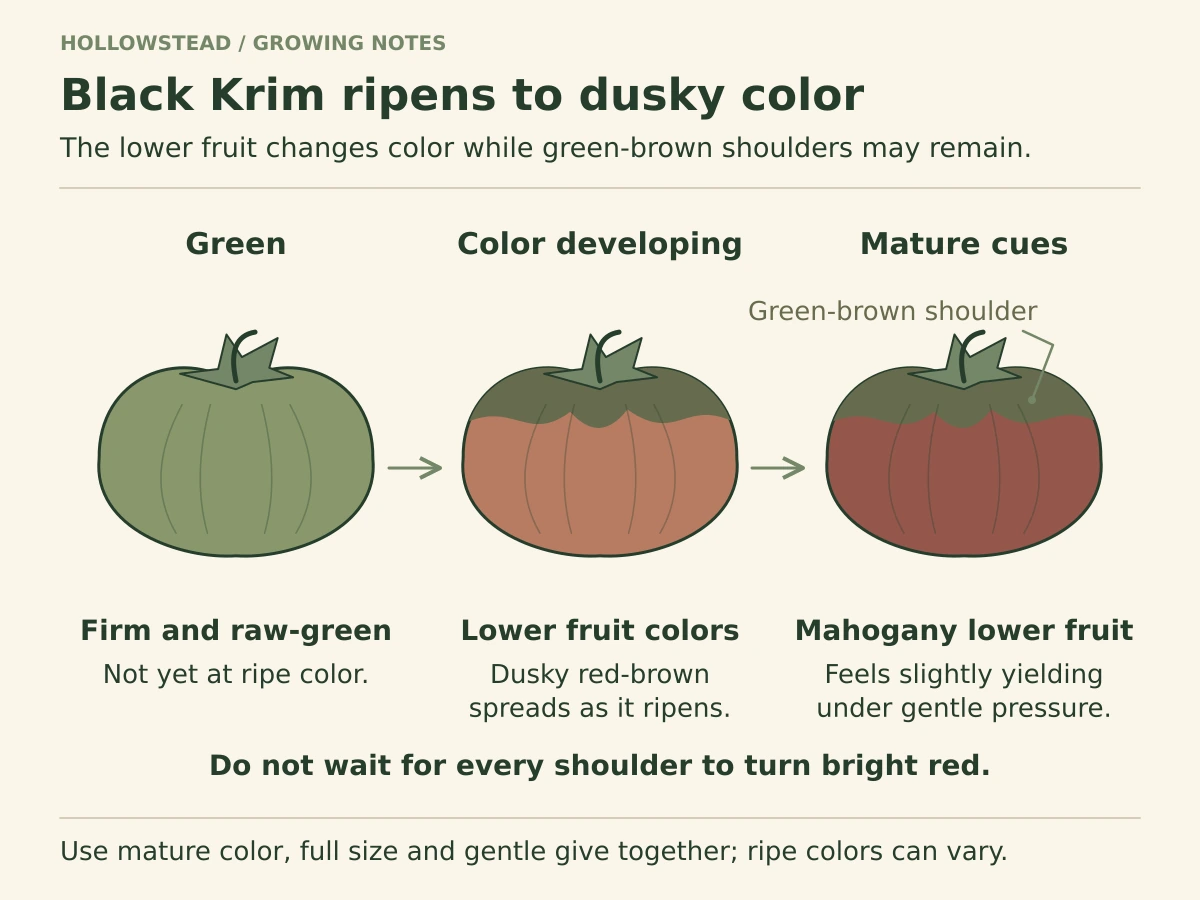 View full-size diagram
Handle and store the harvest
Cradle ripe fruit rather than pulling on the vine; snip a stubborn stem. Keep sound, uncut fruit at room temperature out of direct sun until ripe. Refrigerate ripe fruit if you need to hold it longer, and refrigerate cut tomatoes promptly. Use soft or cracked fruit quickly only if it remains sound; discard moldy, leaking or decaying fruit. For shelf-stable sauce or canned tomatoes, use a tested preservation recipe rather than assuming this cultivar is acidic enough.
Why does Black Krim crack?
Black Krim is a large-fruited heirloom type, and large/heirloom tomatoes are among those commonly affected by growth cracking.[4]
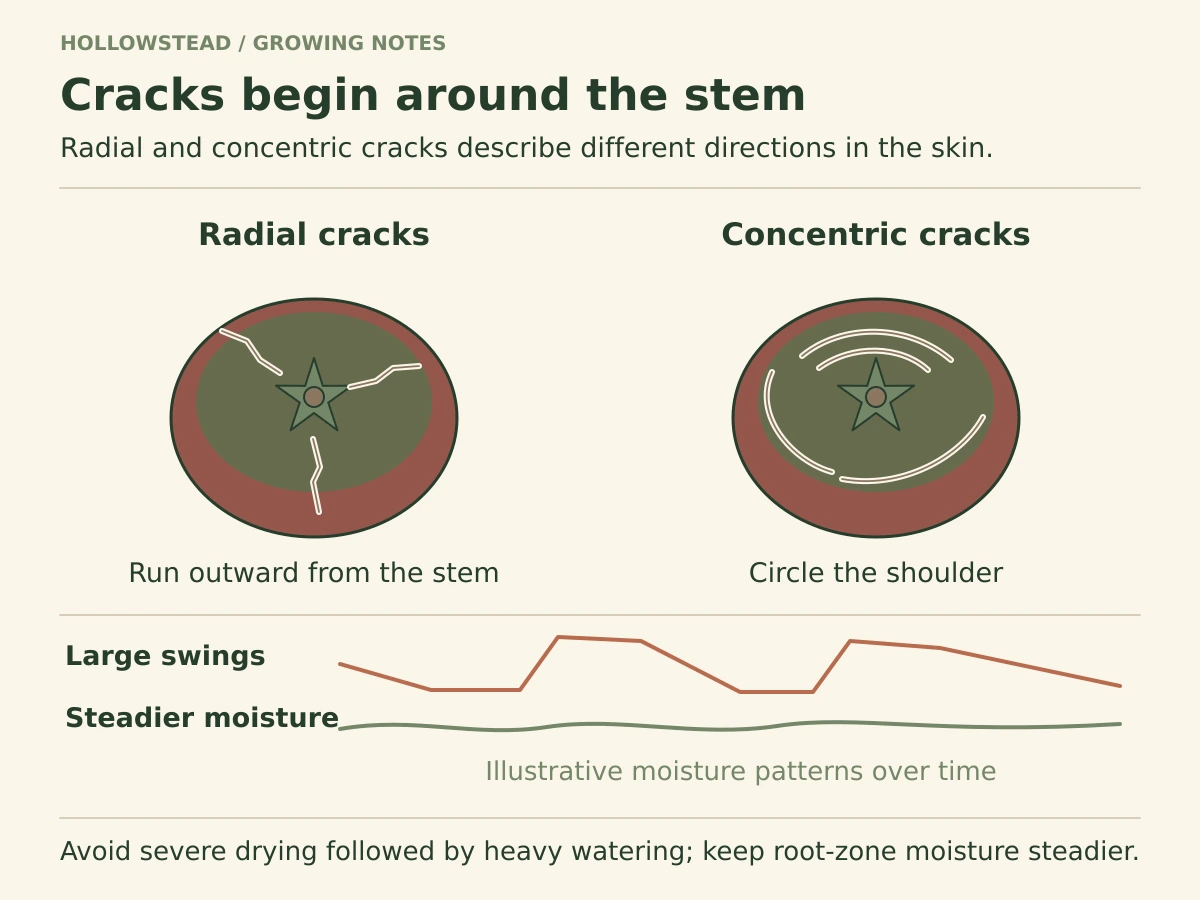
Cracking is not one single defect. Tomatoes can develop:
- radial cracks, running outward from the stem area;
- concentric cracks, circling the shoulder near the stem.[5]
The underlying problem is often that the inside of the fruit expands faster than the skin can accommodate. Risk increases when soil moisture shifts rapidly from dry to wet—for example, a dry spell followed by heavy rain or heavy irrigation.[4][5]
Heat, fruit maturity, direct sun exposure, cultivar genetics, and water entering around the stem scar can also contribute.[5]
How to reduce cracking
You cannot control a thunderstorm, but you can reduce avoidable stress:
- water deeply enough to wet the root zone instead of giving repeated shallow sips;
- avoid letting the plant become severely dry and then flooding it;
- use mulch to buffer soil-moisture swings once the soil is warm;
- maintain enough healthy foliage to shade fruit from extreme direct sun;
- harvest fruit that is sufficiently mature before an expected heavy rain when cracking has been a recurring problem.[5]
Is a cracked tomato ruined?
A superficial healed crack is different from a fresh split exposing wet tissue.
Use ordinary food judgment. Deep fresh cracks can allow insects and microorganisms into the fruit and accelerate spoilage. If a fruit smells off, is leaking, moldy, or has questionable decay, discard it. Hollowstead’s growing guides are not a substitute for food-safety guidance.
 View full-size diagram
How large does the Black Krim plant get?
Rutgers lists Black Krim as an indeterminate tomato with a reference height around six feet.[1] Cornell likewise lists it as indeterminate.[3]
“Six feet” should not be treated as a fence line painted on the plant. Indeterminate height depends on season length, fertility, pruning, support, disease pressure, and whether frost ever stops the vine. In a long season on a tall trellis, an indeterminate tomato can exceed catalog height references.
Give it real support
For Black Krim, avoid the tiny cone-shaped cages sold for compact patio plants unless you plan to reinforce them substantially.
Better options include:
- a heavy-gauge tomato cage;
- a strong stake-and-tie system;
- cattle-panel or rigid trellis;
- vertical string support under a strong overhead frame.
Install support at planting time if possible. Driving a stake through a mature root system later is avoidable trouble.
Should you prune Black Krim?
Pruning is a management choice, not a requirement for the plant to produce tomatoes.
Pruning can:
- narrow a large plant for tighter spacing;
- improve access and airflow;
- simplify a single- or double-stem trellis system.
But removing too much foliage can:
- reduce leaf area;
- expose fruit to sunscald and heat;
- demand more frequent tying and management.
If you are growing Black Krim in a large cage with generous spacing, minimal pruning may be perfectly reasonable. If you are growing several plants on a narrow trellis, more disciplined pruning may make the space workable.
Choose the support system before deciding how much to prune. Compare cages, stakes, and string training for indeterminate tomatoes.
Does Black Krim handle heat well?
Dark fruit color is not evidence of heat-tolerant fruit set.
Maryland Extension describes tomato pollination failures during sustained hot days and warm nights. This explains how a green, growing vine can temporarily stop setting fruit; it does not establish a special heat advantage for Black Krim.[11]
So the useful advice is not “Black Krim loves heat.” It is:
- choose a planting window that lets flowering occur in favorable weather when possible;
- maintain water consistency during heat;
- preserve healthy leaf cover;
- expect fruit set to change during extreme temperatures.
Black Krim season-management snapshot
A useful weekly check follows the fruit load rather than a fixed fertilizer calendar. Keep the indeterminate canopy supported and follow several individual fruit as they develop.
A located comparison: In a 2015 UF/IFAS high-tunnel trial in Jay, Florida, Black Krim was one of five heirlooms in four replications; yield differences among the five were not statistically significant in that system. Use the result to understand a protected-culture comparison, then pick your own fruit by developed lower color and gentle give even when shoulders stay green-brown.[15]
| When | Check | Decision |
|---|---|---|
| Before the first clusters become heavy | Cage anchors, stem ties, and access to lower fruit | Reinforce supports now. Leave room inside ties for stem growth and support leaning fruiting branches without bending them sharply.[13] |
| At flowering in a hot spell | Day/night weather and whether dropped flowers occur on several plants | Treat a temporary set interruption as a weather possibility. Retain healthy foliage and maintain water; new flowers may set when conditions moderate.[11] |
| As the first slicers color | The underside, shoulders, and feel of one representative fruit | Learn the ripe color of your plant. Green-brown shoulders are a cultivar trait, but hard pale tissue or a spreading lesion deserves a separate check.[1][9] |
| Before a soaking rain | Sound fruit already developing mature color | If cracking has been recurring, harvest sufficiently mature fruit to finish indoors. Keep green developing clusters evenly watered.[4][5] |
Can Black Krim grow in a container?
Yes, but an indeterminate heirloom is a demanding container plant.
University Extension references use about 5 gallons as a practical minimum reference for standard tomatoes, but larger containers are more forgiving for vigorous vines because they hold more water, nutrients, and root volume.[6][7]
A workable container example is one plant in a 15–20-gallon pot, at least about 18 inches deep, with free drainage and an independently secured tall cage or trellis. This generous recommendation suits a vigorous indeterminate vine; smaller minimum-volume categories are less forgiving of missed watering. Check root-zone moisture daily in summer and water until the full mix is wetted and excess drains.
Container priorities
- excellent drainage;
- high-quality potting mix;
- large root volume;
- a support system anchored independently or in a heavy container;
- frequent moisture checks in hot weather;
- regular nutrition appropriate to container culture.
The smaller the pot, the faster the root zone swings between wet and dry—exactly the kind of moisture instability that can complicate fruit quality and cracking.
For a pot-grown plant, work through container size, support, watering, and feeding for tomatoes as one plan.
Saving seed from this open-pollinated tomato
Keep the named line, not just viable seed
For a practical small-garden isolation method, place a breathable blossom bag over an unopened flower cluster before insects visit. Remove any already-open flowers from that cluster first. Gently tap the protected cluster to assist self-pollination, and mark the set fruit before removing the bag. Save only those marked fruit if varietal purity is your goal; nearby unbagged flowers can still cross. [10]
For variety maintenance, save from 5–10 healthy, typical plants where practical, keeping each parent’s supplier/lot, plant number and year labeled until you decide whether to combine lines.
Black Krim is documented as an open-pollinated tomato, so gardeners can save seed when they want to carry a successful line forward.[1] University of Minnesota Extension identifies tomatoes as good home seed-saving candidates because they are self-pollinating and recommends open-pollinated varieties when you want offspring that remain similar to the parent.[8]
Choose seed from healthy, vigorous, true-to-type plants and fully ripe fruit. Scoop the seed and gel into a small labeled container with a little water, stir or swirl the fermenting mixture twice daily, then rinse once viable seed has settled and dry the cleaned seed thoroughly. Minnesota Extension says tomato fermentation should finish within about five days.[8]
Common Black Krim problems and misconceptions
Normal shoulder color, a healed scar, and active fruit damage need different responses. The checks below use general tomato diagnostics; they are not diagnoses from a photograph.
| What you see | Check first | Next action |
|---|---|---|
| Green-brown shoulders with dusky, slightly yielding lower fruit | Whether this matches other ripe fruit on the plant | Use the combined ripeness cues; do not wait for every shoulder to turn red.[1] |
| A hard pale/yellow area at the top | Whether the tissue stays hard after the lower fruit ripens | Consider a ripening disorder separately from normal dark coloration. Keep canopy shade and compare with the Extension disorder guide.[9] |
| Dry corky folds or scarring at the blossom end | First clusters after cool weather; whether tissue is dry rather than rotting | Catfacing is a possibility. It will not heal into a smooth fruit; inspect deep openings for decay and keep damaged fruit out of preservation batches.[12] |
| A sunken dark patch at the blossom end | Watering swings during fruit growth | Review root moisture and avoid root injury. Blossom-end rot is different from harmless shoulder color; already damaged tissue will not recover.[12][14] |
| A split radiating from the stem or circling the shoulder | Rain, heavy irrigation, and fruit ripeness | Reduce moisture swings and pick timely. Fresh cracks exposing wet flesh need prompt inspection for spoilage.[4][5] |
Two labels that do not prescribe care: indeterminate does not mean every sucker must be removed, and heirloom does not establish disease resistance. Train the vine for its space and use any resistance claim only when the seed source documents it.
For a dark, sunken patch at the blossom end of a fruit, use the blossom-end-rot diagnosis and prevention guide before adding a supplement.
Black Krim and the other Hollowstead tomatoes
| Variety | Fruit and kitchen role | Habit and support | Harvest and management |
|---|---|---|---|
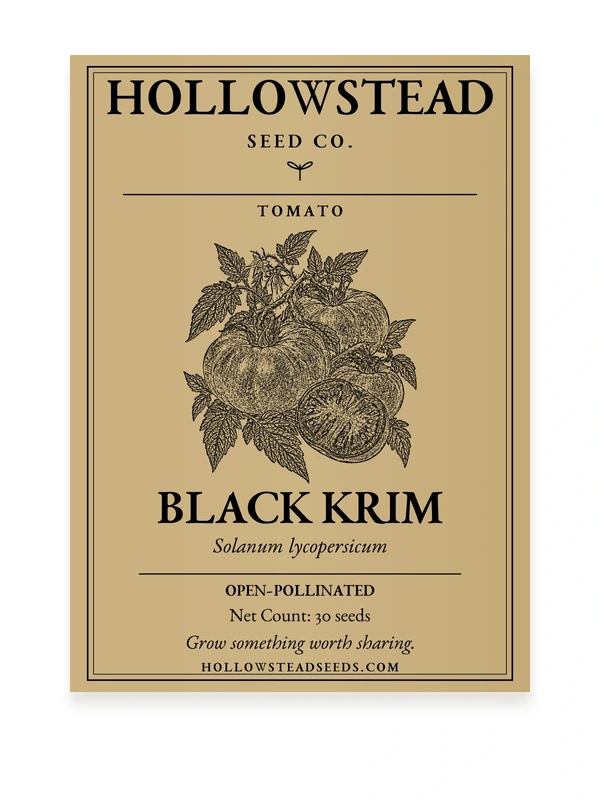
| Black Krim | Large dusky, juicy slicer; about 8 oz is a published reference | Indeterminate; substantial support and working space | Pick individual ripe fruit through the season; judge dark color and watch cracking. Containers need generous root volume. |
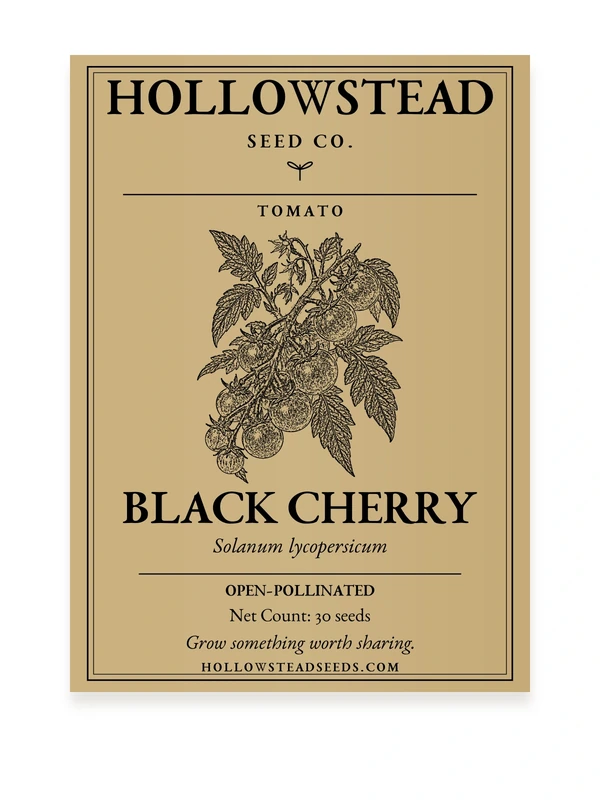
| Black Cherry | About 1-inch dusky cherries for snacking and salads | Indeterminate; substantial support for a full-size vine | Frequent cluster picking; watch splitting. Container growing is possible with enough root volume and water. |
| Principe Borghese | About 1–2 oz, relatively dry, meaty fruit for roasting, sauce, and drying | Compact determinate in the current listing; support the fruit load | Organize small-fruit kitchen batches; one plant per generous pot is a container option. |
| Yellow Pear | Small yellow pear-shaped fruit, about 1–2 inches long, for fresh eating | Indeterminate; substantial support despite small fruit | Repeated fresh picking; judge yellow ripeness. Containers still need room for a full-size vine. |
| Pineapple | Large golden-and-red bicolor slices for fresh plates and sandwiches | Indeterminate; substantial support for heavy fruit | Allow time for the 85–90-day first-ripe estimate from transplant; use bicolor harvest cues. |
Yellow Pear adds yellow, pear-shaped fruit to the fresh-harvest choices. Its indeterminate habit needs substantial support even though the fruit is small; Cornell describes fruit about 1½ inches long and a main-season maturity range.[16] Choose it for shape and color in salads or snacking, and see Yellow Pear Tomato Seeds for the packet. For large golden-and-red slices, compare Pineapple with Black Krim’s dark-slicer role; both need room and sturdy support.
Who should grow Black Krim?
Black Krim makes the most sense if you want:
- an heirloom slicer rather than a generic red tomato;
- a large vine you are prepared to support;
- fruit for fresh eating;
- unusual color;
- an open-pollinated cultivar suitable for learning seed saving later.
It may be a poor fit if you need:
- a tiny patio plant;
- a concentrated all-at-once harvest;
- perfectly uniform, crack-free shipping-style fruit;
- a cultivar with a long list of documented modern disease-resistance genes.
Sourced grower observations
These are attributed experiences from other growers, checked against the linked horticultural references. They are not Hollowstead trials of the seed offered here.
A Wisconsin zone 4 Seed Savers Exchange member describes brownish-green fruit at eating quality. This reinforces checking the lower fruit’s developed dusky color and slight give instead of waiting for shoulders to turn uniformly red; Rutgers’ Black Krim description also records green/brown shoulders. It is an outside garden observation, not this lot’s measured color.
GROW THESE TOMATOES
Put the guide to work.
Choose a variety that fits the way you want to grow and harvest, then use the guide above as your reference through the season.
HOLLOWSTEAD SEED
Black Cherry Tomato Seeds
$4.49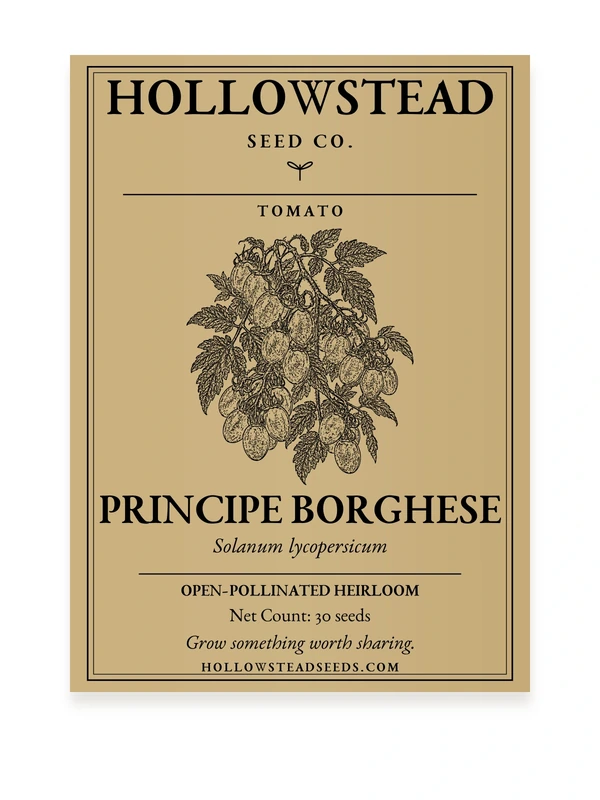
HOLLOWSTEAD SEED
Principe Borghese Tomato Seeds
$4.49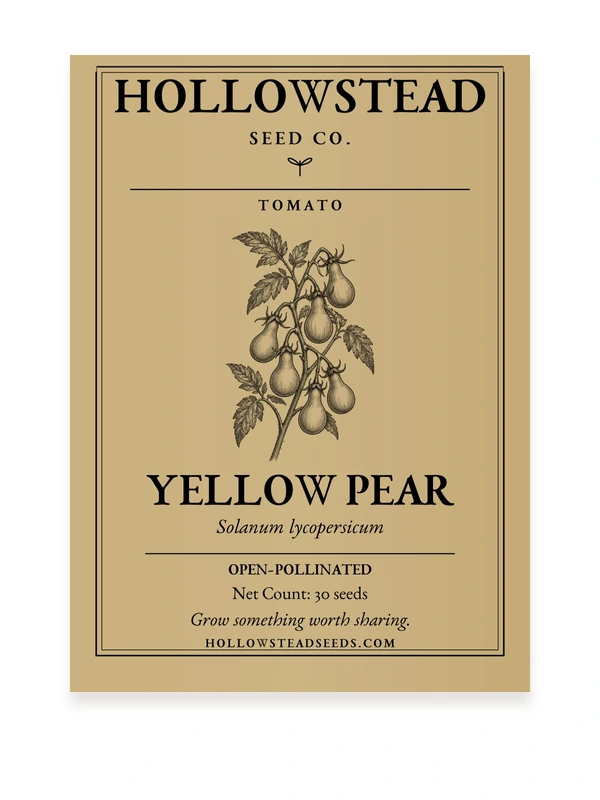
HOLLOWSTEAD SEED
Yellow Pear Tomato Seeds
$4.49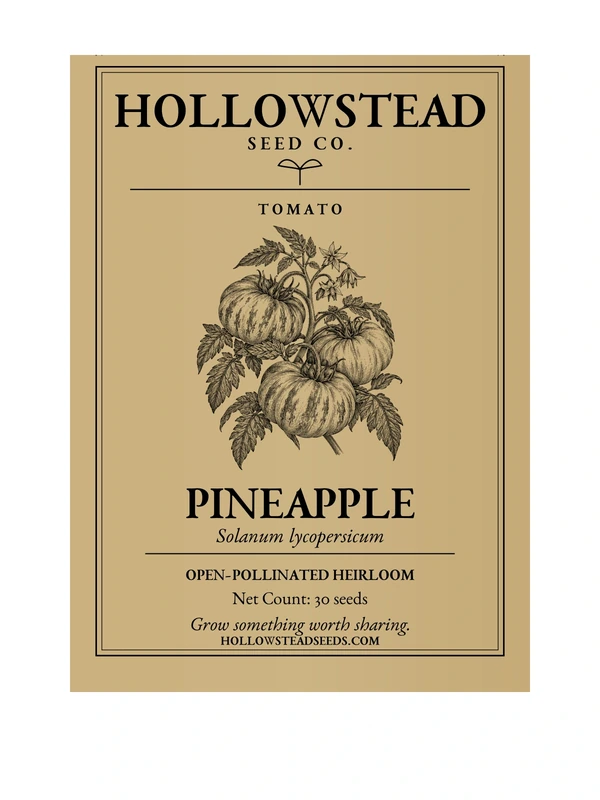
HOLLOWSTEAD SEED
Pineapple Tomato Seeds
$4.49KEEP LEARNING
Related Hollowstead guides

SEED STARTING
The Complete Guide to Growing Tomatoes From Seed
Start tomato seeds with confidence. This guide covers the quick version first, then goes deep on temperature, light, watering, potting up, hardening off, transplant timing, containers, and common seedling problems.
Read the guide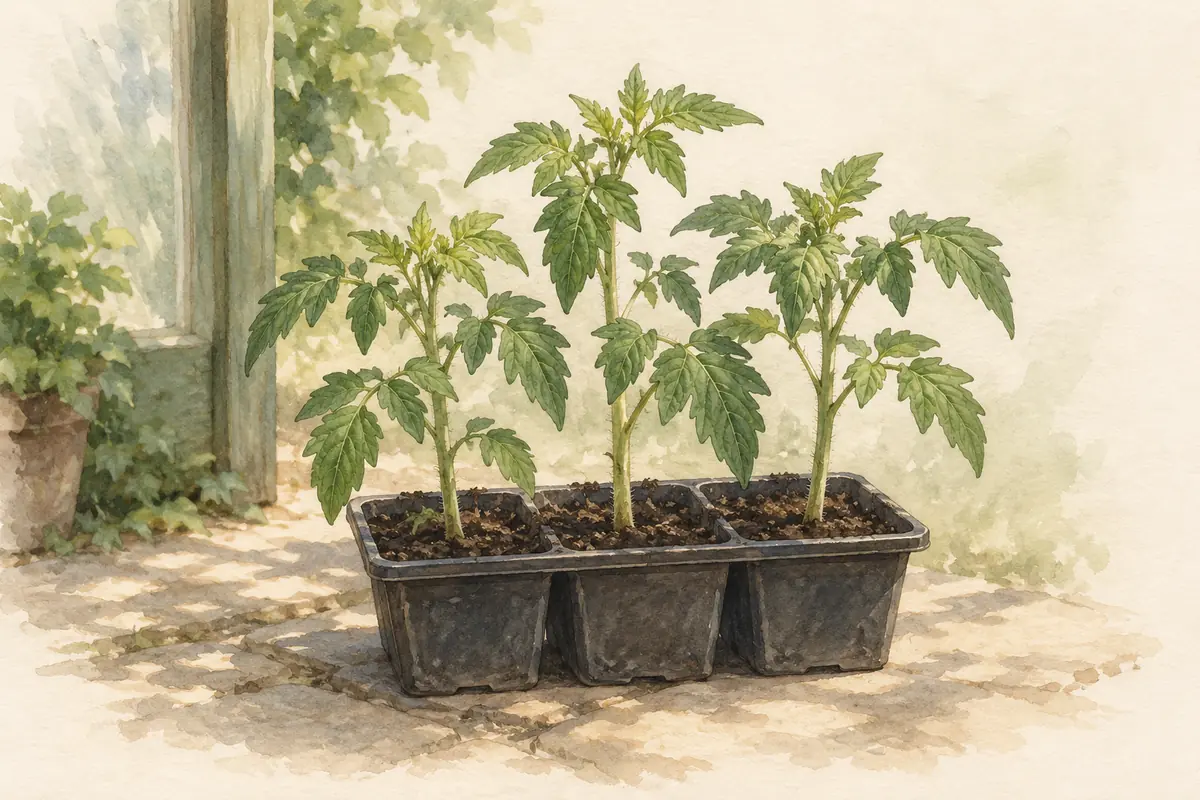
TRANSPLANTING
How to Harden Off Tomato Seedlings Without Stunting Them
Indoor tomato seedlings need time to adjust to full sun, wind, temperature swings, and faster drying. This guide explains a flexible hardening-off process that protects plants without deliberately starving or stunting them.
Read the guide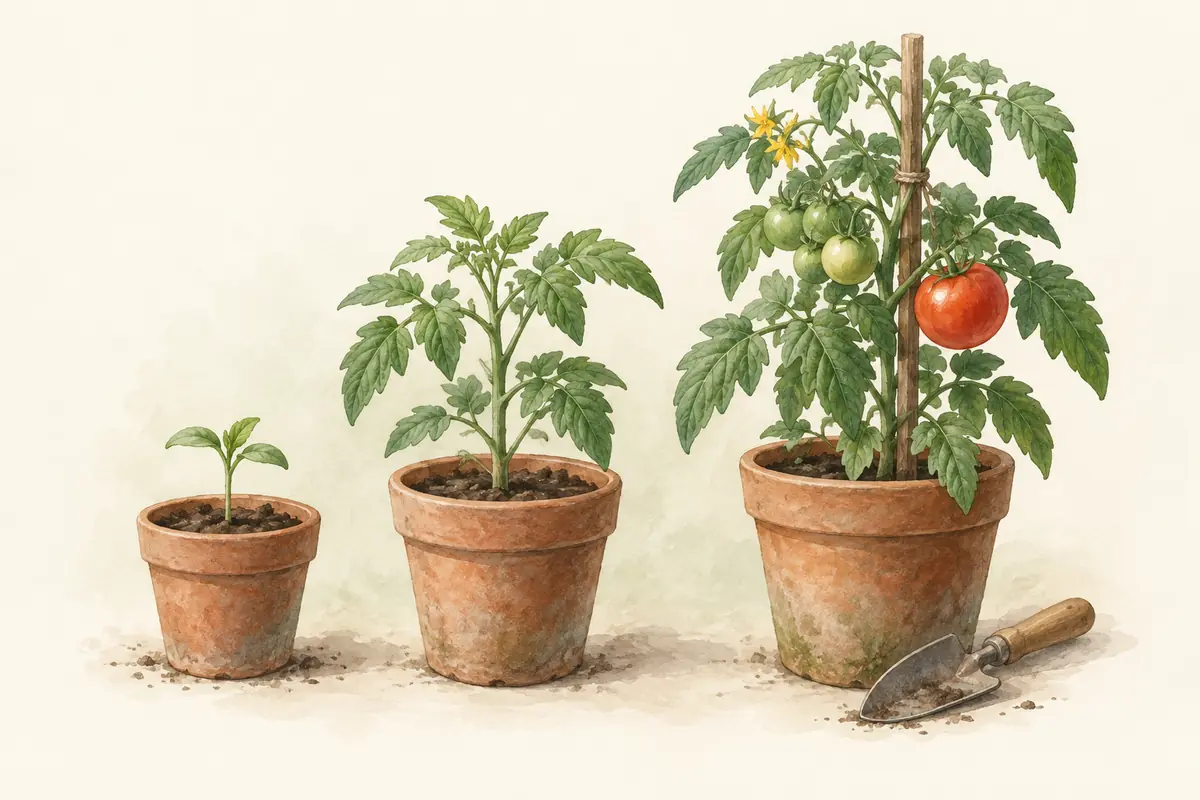


GARDEN BASICS
What “Days to Maturity” Actually Means for Tomatoes and Other Garden Crops
Days to maturity is a planning estimate, not a harvest appointment. Learn when the count starts, how transplanted and direct-sown crops differ, and how weather, containers, and transplant stress change the real timeline.
Read the guideFrequently asked questions
Is Black Krim determinate or indeterminate?
Is Black Krim open-pollinated?
How many days does Black Krim take?
Use the current Hollowstead estimate of about 75 days from transplant for planning. Cornell lists about 80 days; temperature, light and transplant stress shift actual harvest.[3]
How big are Black Krim tomatoes?
Rutgers lists about 8 ounces as a cultivar reference.[1] Home-garden fruit can be smaller or larger depending on plant load and conditions.
Why is the top of my Black Krim green?
Green/brown shoulders are a documented cultivar characteristic.[1] Use overall color, feel, maturity, and fruit development together rather than waiting for a uniformly red shoulder.
Is Black Krim a good container tomato?
It can be grown in a container, but it is not a compact patio type. Use a large container, strong support, and expect frequent watering management.
Sources & further reading
- Rutgers New Jersey Agricultural Experiment Station. Tomato Varieties — Black Krim. Rutgers tomato varieties — Black Krim entry (page 29)
- Seed Savers Exchange. Hope and Practice: Jane Frandsen — Black Krim. https://seedsavers.org/hope-and-practice-jane-frandsen/
- Cornell Vegetable Varieties for Gardeners. Black Krim Tomatoes. https://vegvariety.cce.cornell.edu/main/detail.php?filterBy=0&variety_id=1670
- University of Minnesota Extension. Tomato — Cracks in fruit. https://apps.extension.umn.edu/garden/diagnose/plant/vegetable/tomato/fruitcracks.html
- Penn State Extension. Why Are My Tomatoes Cracking and What Can I Do About It? https://extension.psu.edu/why-are-my-tomatoes-cracking-and-what-can-i-do-about-it
- University of Maryland Extension. Growing Vegetables in Containers and Salad Tables. https://extension.umd.edu/resource/growing-vegetables-containers-and-salad-tables
- University of Minnesota Extension. Early season tomato sleuthing. https://extension.umn.edu/about/our-stories/news/yard-and-garden-news/early-season-tomato-sleuthing
- University of Minnesota Extension. Saving vegetable seeds. https://extension.umn.edu/garden-and-home/yard-and-garden/gardening-in-minnesota/saving-vegetable-seeds
- University of Minnesota Extension — Growing tomatoes in home gardens https://extension.umn.edu/garden-and-home/yard-and-garden/gardening-in-minnesota/growing-tomatoes
- Seed Savers Exchange — Growing and saving tomato seeds https://seedsavers.org/grow-tomato/
- University of Maryland Extension. Tomato pollination and fruit set during sustained heat. https://www.extension.umd.edu/resource/expect-poor-fruit-set-tomatoes-week
- University of Minnesota Extension. Distinguishing catfacing, blossom-end rot, and distorted fruit. https://apps.extension.umn.edu/garden/diagnose/plant/vegetable/tomato/fruitdistorted.html
- Iowa State University Extension and Outreach. Support choices and the canopy tradeoffs of training tomatoes. https://yardandgarden.extension.iastate.edu/how-to/how-train-tomatoes-home-garden
- University of Minnesota Extension. Blossom-end rot: damaged fruit do not recover; water movement and roots matter. https://extension.umn.edu/about/our-stories/news/yard-and-garden-news/august-garden-checklist
- University of Florida IFAS — 2015 Jay high-tunnel heirloom tomato comparison Five heirloom cultivars, four replications, conventional high-tunnel management. https://wfrec.ifas.ufl.edu/media/wfrecifasufledu/docs/pdf/variety-trials/specialty-crops/Heirloom-Tomatoes-Grown-in-a-High-Tunnel-System-using-Conventional-Practices.pdf
- Cornell Cooperative Extension. Vegetable Varieties for Gardeners: Yellow Pear tomato. https://vegvariety.cce.cornell.edu/main/detail.php?filterBy=0&variety_id=1596
Hollowstead Growing Notes
A little help for your next growing season
Practical sowing advice, help choosing seeds, and occasional Hollowstead shop news. Usually one or two emails a month, plus a short welcome note.
Choose your topics and frequency after you confirm. Our guides and planting calendar are always free.