
BICOLOR HEIRLOOM
Growing Pineapple Tomatoes: A Bicolor Heirloom Guide
Grow large yellow-and-red Pineapple tomatoes with a warm start, steady watering, strong support, and a patient harvest. Compare this bicolor slicer with the other Hollowstead tomato varieties.
TomatoesVariety guideBeginner → advanced
Published by Hollowstead Seed Co. · How this guide is prepared
Quick answer
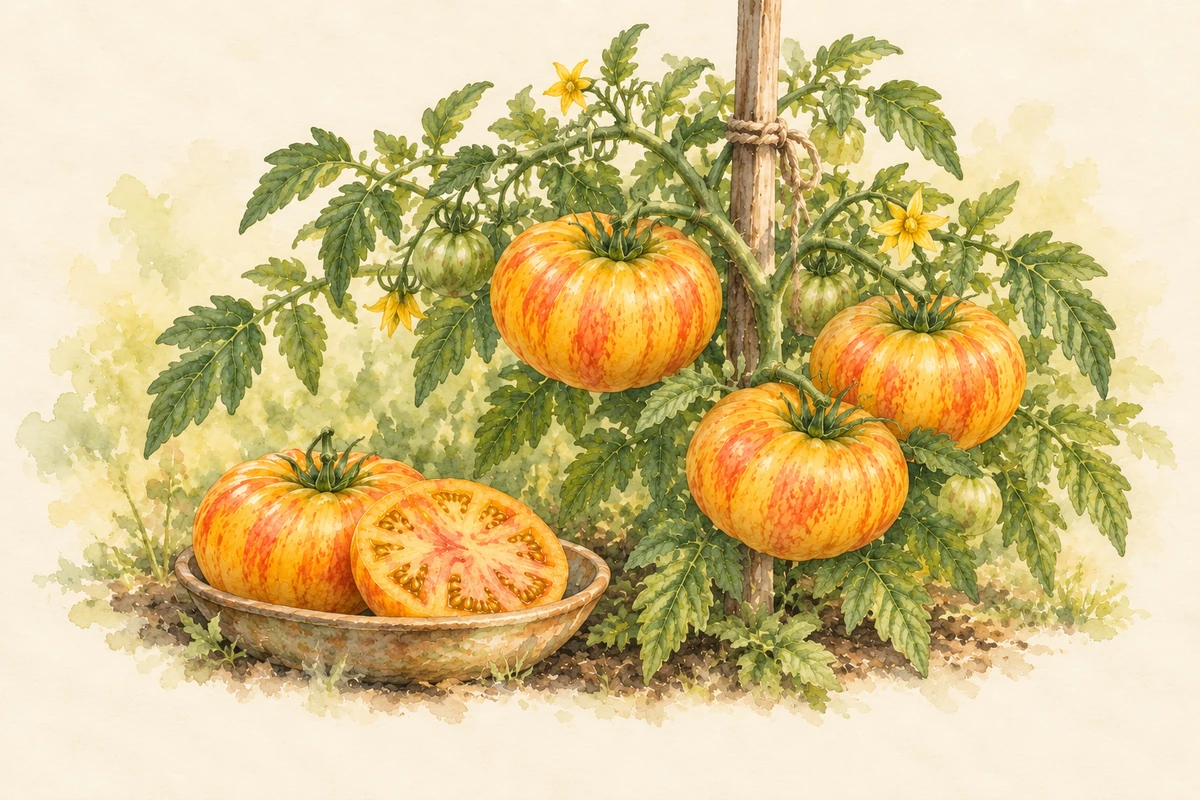
Pineapple is a large bicolor slicing tomato on an indeterminate vine. Choose it for golden-yellow and red slices when you can provide substantial support and a long enough warm season. Cornell’s cultivar description identifies an open-pollinated heirloom beefsteak with fruit around 1–2 pounds.[1]
Hollowstead uses 85–90 days from transplanting as the first-ripe estimate. Start indoors, transplant after frost into warm soil, and support the plant before heavy clusters develop. At harvest, combine developed bicolor skin with a slight give; waiting for an entirely red tomato can mean waiting too long.
At a glance
| Planning point | Useful starting point |
|---|---|
| Botanical name | Solanum lycopersicum |
| Habit | Indeterminate; open-pollinated heirloom |
| Packet | 30 seeds |
| Start indoors | About 6–8 weeks before a realistic outdoor transplant window |
| Sowing depth | ¼ inch |
| Emergence estimate | Typically about 7–14 days around 70–80°F |
| Supported spacing | 24–36 inches; wider for broad cages and separate picking access |
| Light | Full sun |
| First ripe estimate | 85–90 days after transplanting |
| Fruit and use | Large yellow-and-red slicer for sandwiches and fresh plates |
Is Pineapple right for your garden?
Begin with the plate you want and the space you have. Pineapple offers broad, colorful slices; it is not a small patio plant or a tomato chosen for one compact batch of drying fruit. A single well-supported plant may suit a garden better than several crowded ones. Keep its label visible so a green fruit is not accidentally picked according to another variety’s color.
Its maturity estimate begins when the seedling is planted outside. Count indoor growing time separately, and compare the expected first harvest with your local autumn frost window. If that leaves little margin for cool weather, include an earlier tomato alongside it. Starting Pineapple much too early indoors does not turn it into an early variety; oversized, root-bound seedlings are harder to manage.[4] The days-to-maturity guide explains the separate sowing and transplant clocks.
Starting Pineapple from seed
Plan a six-to-eight-week lead before a realistic outdoor transplant window. Choose that window for when frost danger has passed and your garden normally warms enough for tomatoes. Illinois Extension describes six to eight weeks for raising tomato transplants; other extension schedules are shorter under strong growing conditions.[2] The goal is a sturdy seedling ready when the garden is ready.
Sow ¼ inch deep in moist seed-starting mix in clean, draining containers. Keep the mix warm and evenly moist; about 7–14 days around 70–80°F is a useful emergence planning window, not a germination test for your lot. Minnesota recommends 75–85°F for efficient tomato germination, so a cool windowsill may take longer.[3] Check the mix temperature if a tray is slow instead of adding more water to an already wet container.
After the first seedlings emerge
Remove a humidity cover and supply bright overhead light. Keep labels with the plants when moving them into larger pots after true leaves develop. Read the potting-mix label before feeding: a mix that already contains fertilizer may support early growth without extra nutrients. Excess fertilizer can damage small seedlings.[4]
Look at the whole tray during watering. Edge cells may dry before the middle, and a heavy wet pot needs a different response from a light dry one. If stems are stretching toward the light, use the leggy-seedling guide. For the full indoor setup, see growing tomatoes from seed.
Transplanting and spacing
Harden seedlings gradually for about one to two weeks, increasing exposure to outdoor sun and wind. Transplant after frost danger has passed and the soil has warmed. Water the root ball before planting, keep the leaves above the soil, and settle soil around the roots. Healthy tomato stems can form roots along a buried section.[3] The hardening-off guide offers a weather-based progression.
Use 24–36 inches between supported plants as a starting point, not a promise that any cage fits that distance. A widely branching caged plant can need more: Maryland recommends at least four feet between its large cages.[6] Leave a separate path where you can reach the rear of the support after leaves fill the space. Set the support while planting, when it is easiest to position without disturbing established roots.
Supporting the vine and heavy fruit
 View full-size diagram
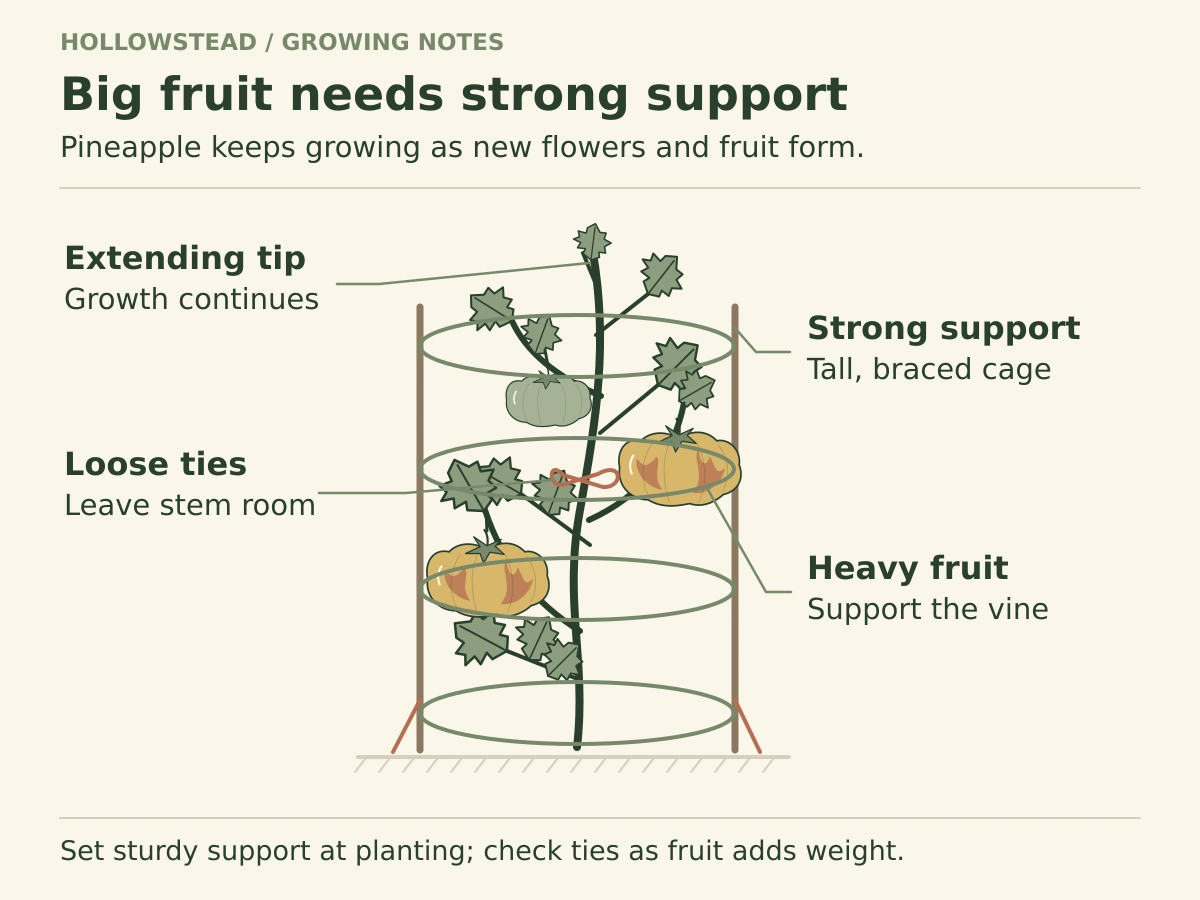
A tall cage lets the plant branch within a frame. A stake or string system works when you will select leaders and keep tying new growth. Choose the system you can maintain, then prune to suit it. Iowa State notes that single-stem training reduces the leaf canopy and can expose fruit to sunscald; a bare vine is not the goal.[5]
Use flexible, broad ties with room for the stem to thicken. On a stake, a loose figure-eight tie separates the stem from the hard support. Check again after wind and as each cluster fills.[5] Look for a loaded branch bending over a narrow wire, a tie cutting into a stem, or a cage leaning away from its anchors. Correct those points before trying to lift a fully loaded vine.
Make picking access part of the structure. You need space to cradle a large fruit with one hand and reach its stem with the other. Guide young flexible shoots into position; do not force a thick branch through a small cage opening. The tomato support and pruning guide compares the maintenance each system requires.
Watering, feeding, and fruit set
Water the root zone thoroughly, then check beneath the surface before watering again. Mulch after the soil warms to slow drying and reduce soil splash. Base feeding on a soil test and plant growth; excessive nitrogen can produce a leafy plant and delay fruiting.[12] Use the condition of the roots and soil to guide care rather than watering because a fixed number of days has passed.
As fruit enlarges, pay particular attention to a dry bed followed by a soaking rain. Rapid water uptake can split tomato skin; regular moisture and timely picking reduce the conditions that encourage cracking.[7] Picking sound coloring fruit before a wet spell is one option. Withholding water until the vine wilts is not a useful substitute for steadier care.
Flowers can fail while the plant remains healthy. Sustained hot days and warm nights can interfere with pollen and fruit set. Maintain moisture and watch later flower clusters as weather improves; adding fertilizer does not repair heat-damaged pollen. This is general tomato behavior, not a Pineapple heat-tolerance claim.[8]
Recognizing a ripe Pineapple tomato
 View full-size diagram
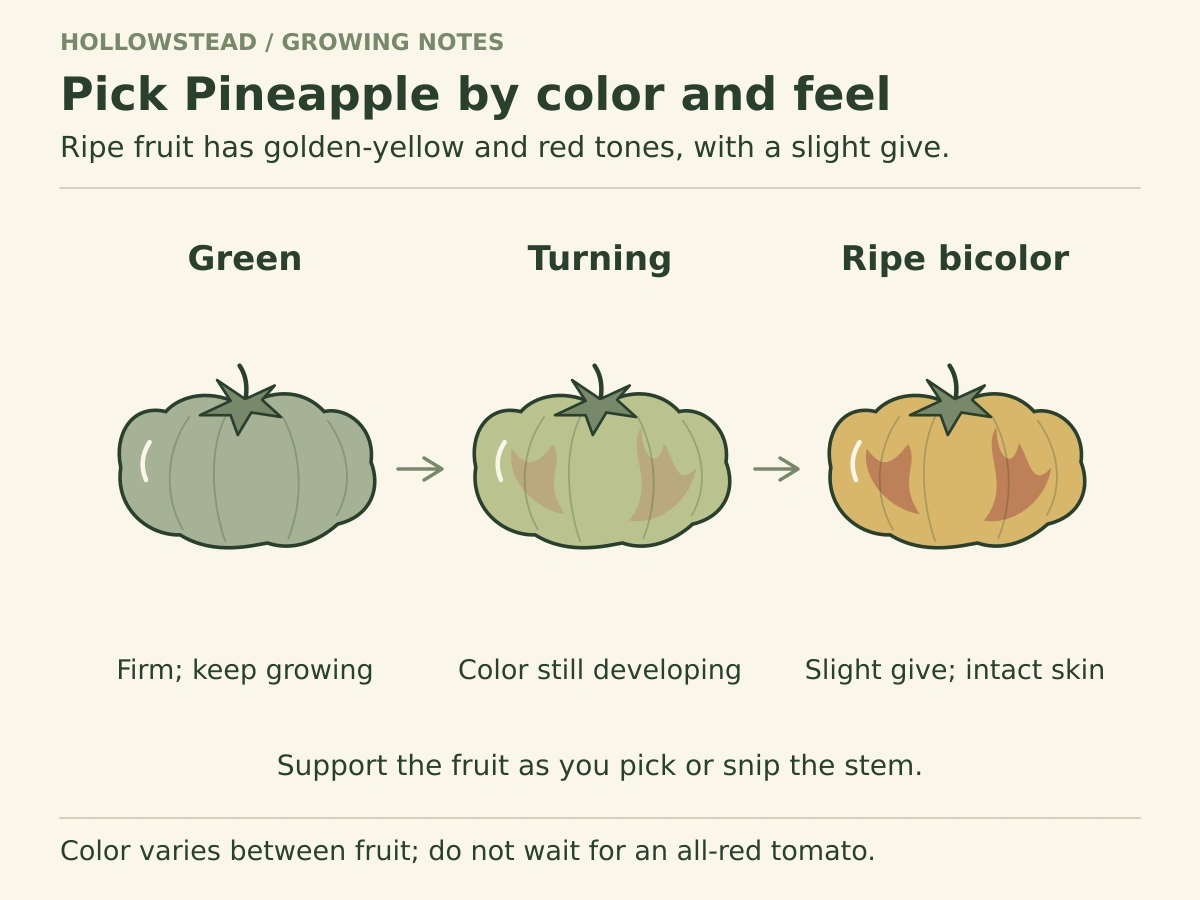
Follow a few reachable fruits through their color change. Green gives way to the variety’s yellow, orange, and red tones; the balance differs between fruit. At eating ripeness, the fruit should yield slightly under gentle pressure while still holding its shape. A large diameter alone does not establish ripeness, and an all-red surface is the wrong target for a bicolor tomato.
Pick at first color or finish on the vine?
Both can be useful. Sound fruit can finish indoors once its color begins changing, reducing its exposure to cracking and feeding damage. Maryland recommends harvesting at color change and notes that light is not required for ripening.[6] Leave a sound fruit longer if conditions are favorable and you want to learn its fully ripe feel; pick it sooner if rain or damage is becoming the greater concern.
Cradle the fruit and clip a stem that resists gentle removal. Place the harvest in a shallow layer instead of piling heavy fruit over softer tomatoes. Let sound coloring fruit finish at room temperature out of direct sun, inspect it regularly, and use ripe fruit promptly. Taste the first few harvests and keep a note of the color and firmness you liked. A catalog description cannot choose that stage for your garden.
Common growing problems
Use the pattern of damage to decide what to investigate. A table can narrow the next check; it cannot identify every cause of a wilted plant or discolored fruit. Maryland’s diagnostic key distinguishes fruit disorders, insect injury, and foliage symptoms.[10]
| What you see | Check first | Useful next action |
|---|---|---|
| Cracks around the shoulder or stem | Recent rain or irrigation after dry soil | Review moisture consistency and pick sound coloring fruit promptly. |
| Dark, sunken blossom end | Root stress and moisture fluctuations during fruit growth | Review watering and soil conditions before adding a supplement; see the blossom-end-rot guide. |
| Pale, papery patch on an exposed side | Lost leaf cover and strong sun | Retain healthy canopy and compare the symptom with sunscald guidance. |
| Dry folds or scars at the blossom end | Whether early fruit formed during cool conditions | Catfacing is a possibility; inspect openings for decay instead of assuming all misshapen fruit is sound. |
| Spots spreading on older leaves | Both leaf surfaces and whether the pattern is moving upward | Keep a dated photograph and seek a diagnosis before choosing a treatment. |
Keep normal bicolor ripening separate from damage. A hard pale patch, sunken tissue, or spreading rot needs its own explanation. The term heirloom does not document disease resistance, and no particular resistance is claimed here. Remove spoiled fruit during picking and keep notes when the same symptom returns.
Pineapple in containers
Use one plant in a generous container, draining potting mix, and a support anchored for the mature canopy. A 15–20-gallon pot is a practical home-garden starting example, not a variety trial or a universal minimum. Maryland’s container guidance shows why root volume, drainage, and stability all matter for large plants.[9]
Choose the location with water access in mind. Check moisture frequently in hot weather and use a feeding plan appropriate to the potting mix. A large vine in a small pot can become both thirsty and top-heavy. If that care will not fit your schedule, a compact tomato may fit the site better. Work through the tomato container guide before planting.
Saving Pineapple seed
For seed saving, begin with healthy plants that match the variety and fully ripe fruit. Tomatoes commonly self-pollinate, but maintaining a named variety still requires attention to possible crossing and careful labeling. Keep Pineapple seed fruit separate from other bicolor tomatoes in the kitchen.
Scoop the seed and surrounding gel into a labeled container with a little water. Minnesota describes a short fermentation, stirring or swirling twice daily, followed by rinsing and thorough drying; its process should finish within about five days.[11] Store clean, fully dry seed with the variety, year, and parent-plant notes. If preserving exact varietal identity matters, plan isolation before flowering rather than after the harvest.
Compare the five Hollowstead tomatoes
| Variety | Distinctive harvest | Habit in the current listing | Plan around |
|---|---|---|---|
| Pineapple | Large golden-and-red fresh slices | Indeterminate | Heavy fruit, strong support, and a later first harvest |
| Black Krim | Large dusky slices | Indeterminate | Support, cracking, and dark-fruit ripeness cues |
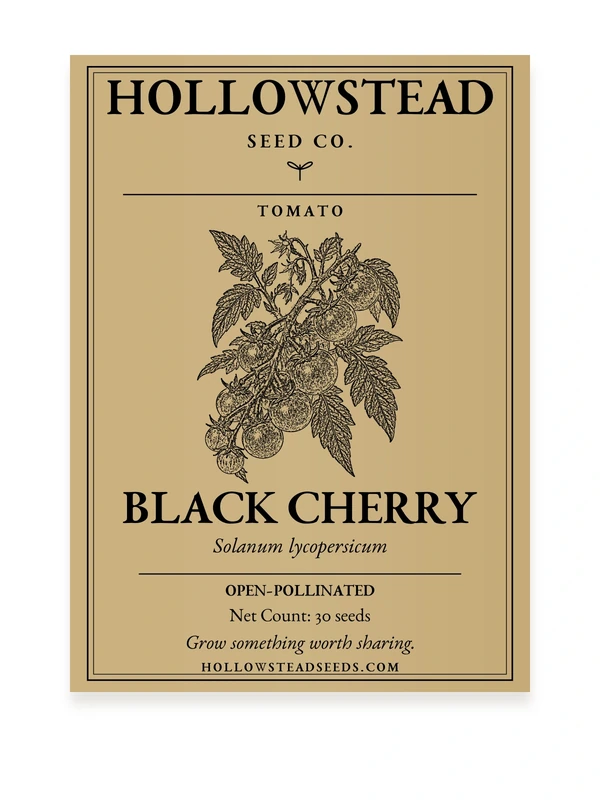
| Black Cherry | Small round dusky fruit for snacking and salads | Indeterminate | A full-size vine and frequent picking |
| Yellow Pear | Small yellow pear-shaped fruit for fresh eating | Indeterminate | A full-size vine and yellow-fruit harvest cues |
| Principe Borghese | Small meaty fruit for roasting and drying | Compact determinate | Supporting its fruit load and organizing kitchen batches |
Pineapple and Black Krim both belong in the slicer part of the garden; their color and ripeness cues differ. Black Cherry and Yellow Pear give two forms of small fresh fruit. Principe Borghese is the focused cooking and drying choice. Growing one of every variety still means making room for four indeterminate vines plus a compact plant with its own support needs.
GROW THESE TOMATOES
Put this guide to work.
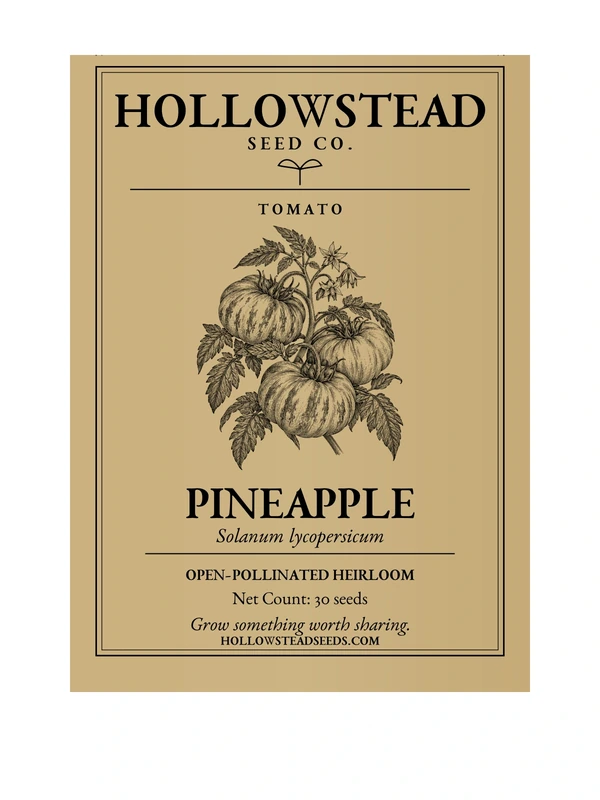
Pineapple Tomato Seeds come in a 30-seed packet. Choose the number of plants your supports can hold, then keep this guide handy as the fruit begins to fill.
HOLLOWSTEAD SEED
Pineapple Tomato Seeds
$4.49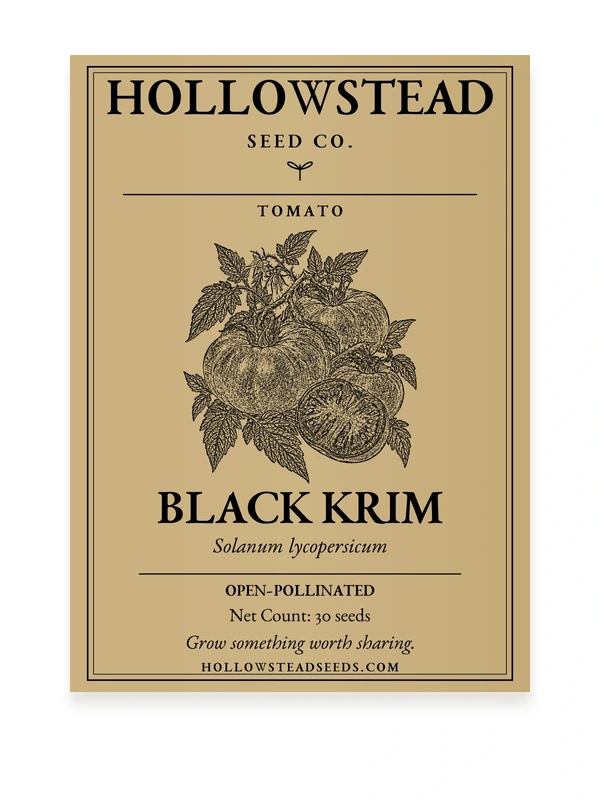
HOLLOWSTEAD SEED
Black Cherry Tomato Seeds
$4.49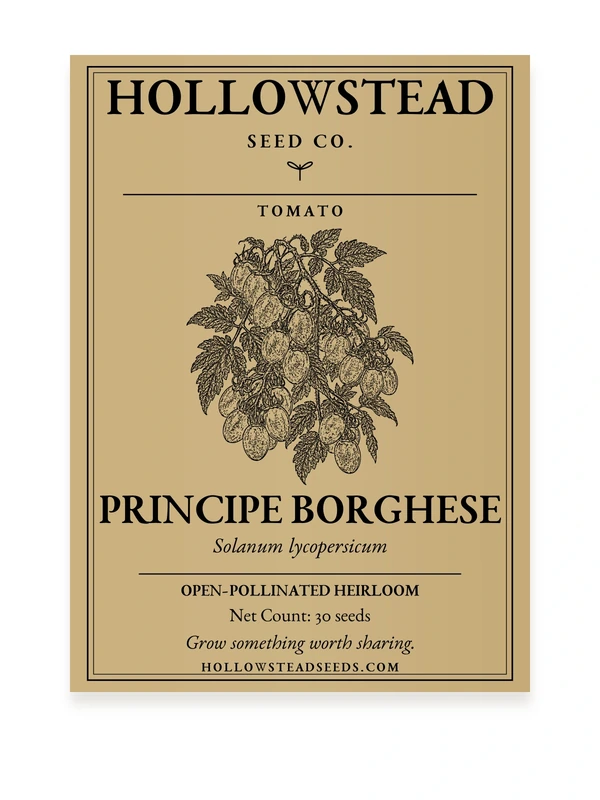
HOLLOWSTEAD SEED
Principe Borghese Tomato Seeds
$4.49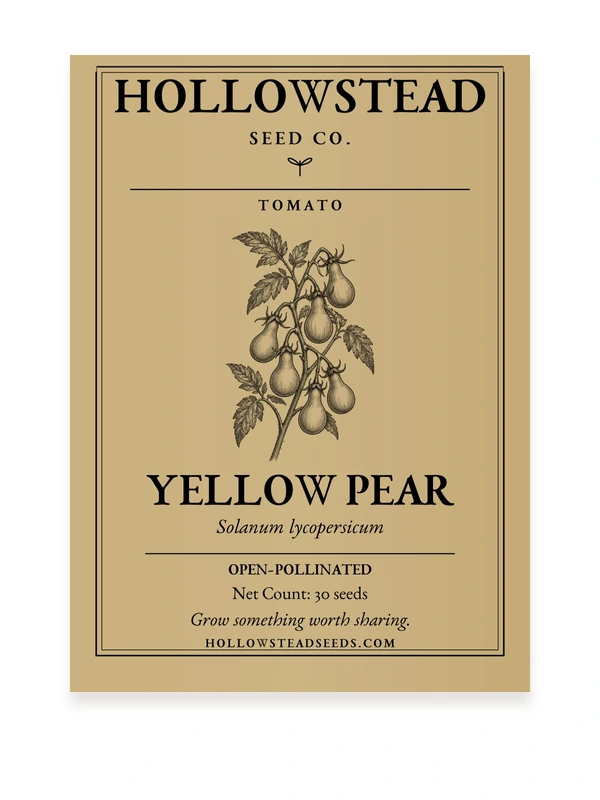
HOLLOWSTEAD SEED
Yellow Pear Tomato Seeds
$4.49KEEP LEARNING
Related Hollowstead guides

SEED STARTING
The Complete Guide to Growing Tomatoes From Seed
Start tomato seeds with confidence. This guide covers the quick version first, then goes deep on temperature, light, watering, potting up, hardening off, transplant timing, containers, and common seedling problems.
Read the guide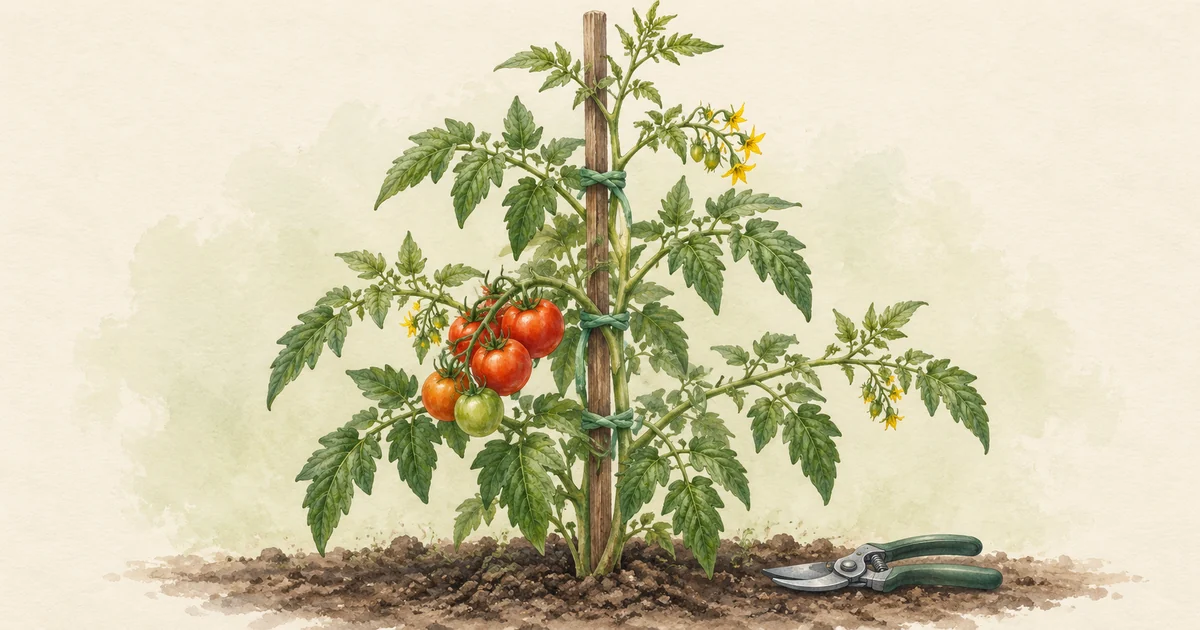
TOMATO SUPPORT & PRUNING
How to Support and Prune Indeterminate Tomatoes
Choose a cage, stake, or string system for Black Krim, Black Cherry, Yellow Pear, or Pineapple. Identify suckers, keep useful foliage, and distinguish indeterminate training from determinate care.
Read the guide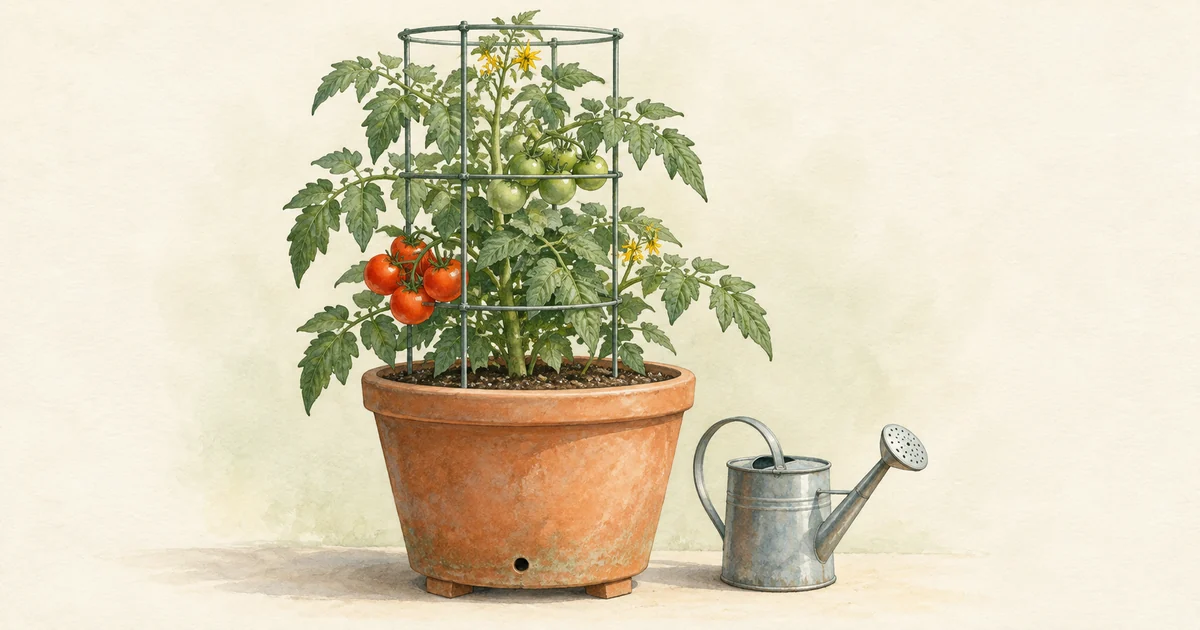
CONTAINER TOMATOES
Growing Tomatoes in Containers: Pots, Support, and Watering
Plan pots, support, and watering for all five Hollowstead tomatoes, including Yellow Pear and Pineapple. Compare growth habits, choose a generous root volume, and check moisture daily.
Read the guideFrequently asked questions
Is Pineapple determinate or indeterminate?
Indeterminate. Plan for continuing vine growth and additional flower clusters while growing conditions allow.
When should the first tomatoes ripen?
Use 85–90 days after transplanting as a planning estimate. Seed-starting time comes first, and weather can move harvest earlier or later.
Does a ripe Pineapple tomato turn fully red?
Do not use full red as the target. Look for developed yellow-and-red color with a slight give, then use the first ripe fruit as a reference for later picking.
Does it taste like pineapple?
The name is not a flavor guarantee. Ripeness, growing conditions, and your own preferences affect how a harvest tastes.
Must every sucker be removed?
No. Train the plant for its cage, stake, or trellis. Keep enough healthy foliage to shade the fruit and avoid turning routine pruning into canopy removal.
Can I pick fruit before it is fully ripe?
Yes. Sound fruit that has begun changing color can finish indoors. That is different from relying on small, immature green fruit to develop good eating quality.
Sources & further reading
Variety figures are planning references; general tomato guidance is not a trial of a Hollowstead seed lot. The illustrated stages show what to inspect, not a guarantee of exact fruit color or size.
- Cornell Cooperative Extension. Vegetable Varieties for Gardeners: Pineapple tomato. Published cultivar description.
- Illinois Extension. Starting seeds. Timing tomato transplants.
- University of Minnesota Extension. Growing tomatoes in home gardens. Sowing, warmth, transplanting, and harvest.
- University of Maryland Extension. Starting vegetable seeds indoors. Mix, light, potting up, and seedling feeding.
- Iowa State University Extension and Outreach. How to train tomatoes in the home garden. Support systems, ties, and leaf-canopy tradeoffs.
- University of Maryland Extension. Growing tomatoes in a home garden. Cage spacing and harvesting at color change.
- University of Minnesota Extension. Tomato: cracks in fruit. Moisture-related cracking.
- University of Maryland Extension. Poor tomato fruit set during heat. Pollen and flowering response.
- University of Maryland Extension. Growing vegetables in containers and salad tables. Root volume, drainage, watering, and stability.
- University of Maryland Extension. Key to common problems of tomatoes. Symptom-based diagnosis.
- University of Minnesota Extension. Saving vegetable seeds. Open-pollinated plants and tomato seed fermentation.
- Utah State University Extension. How to grow tomatoes in your garden. Soil testing, watering, mulch, and excess nitrogen.
Hollowstead Growing Notes
A little help for your next growing season
Practical sowing advice, help choosing seeds, and occasional Hollowstead shop news. Usually one or two emails a month, plus a short welcome note.
Choose your topics and frequency after you confirm. Our guides and planting calendar are always free.